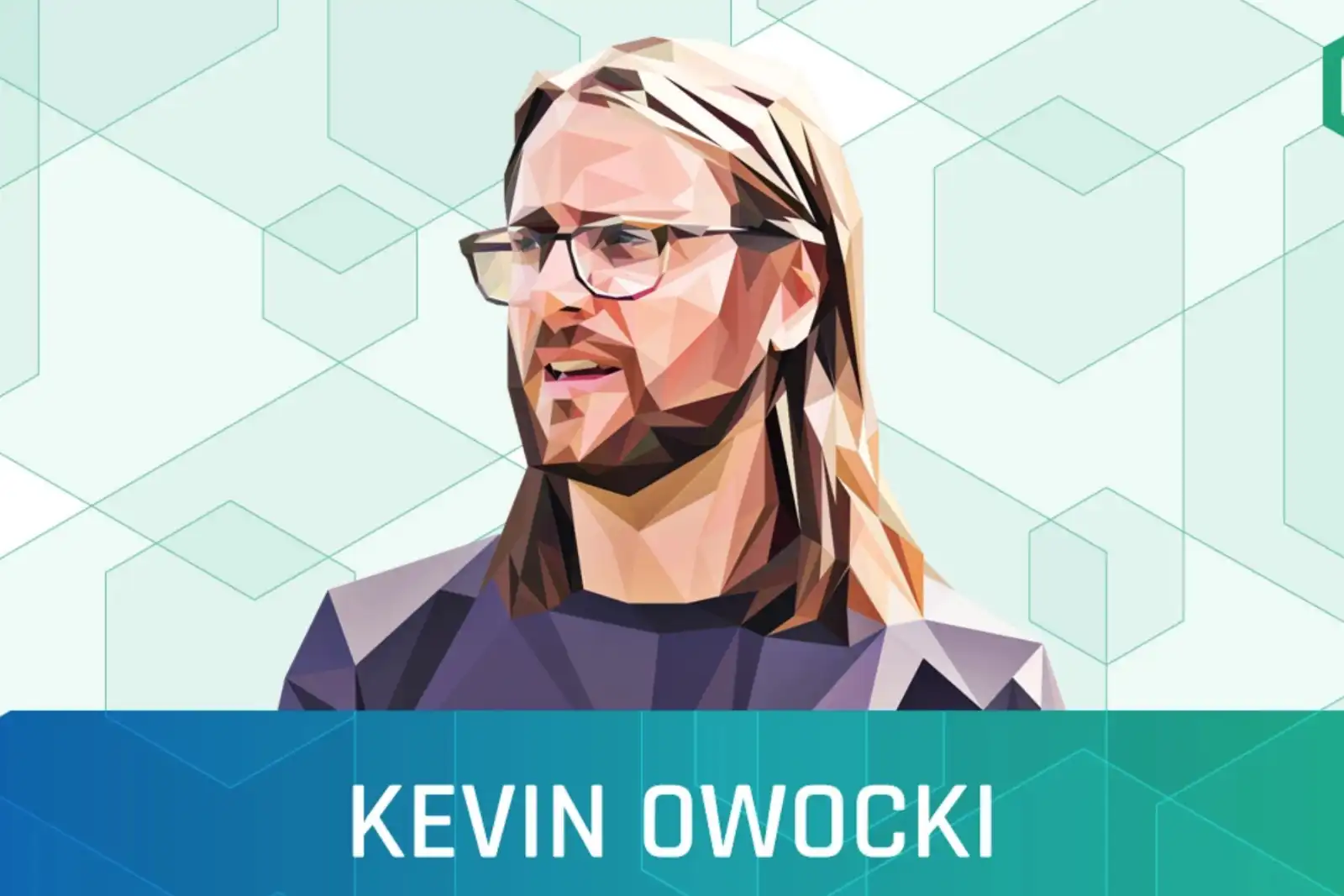
Gitcoin founder: Crypto may reshape the world
原文标题:《 How Crypto Can Regenerate the World 》
原文作者: Kevin Owocki, Gitcoin 创始人
shaun@DAOrayaki.org
Regenerative crypto economics, a little green pill that could cure the world of destruction.
Our world is facing many existential threats: climate change, internal political and cultural conflicts, local geopolitical wars, the gap between rich and poor, the invasion of superbugs, etc. We ourselves are the cause of these problems.
How can we solve these problems?
The big social organizations we rely on have failed us. We try to believe that they have the power to improve our lives, but they indulge in playing politics, painting us one future after another for their short-term gain.
Inevitably, these formidable challenges will hit this generation hardest. That's where nihilism comes in. But I can offer an alternative to this nihilism.
Please take this little green pill.
This is Kevin Owocki's vision of the future. A future that rejects nihilism, a future that makes full use of human collaboration and human wealth in the service of society.
We have seen many successful experiments with this theory:
Gitcoin provides over $51 million for public goods KlimaDAO buys 14 million tons of on-chain carbon offset Ethereum itself -- a public good that continues to create more public goods
In fact, this is no longer the realm of cryptocurrencies in the traditional sense, but a cryptoeconomic system with regenerative, remodeling and repair functions.
The little green pill I was talking about. Let's find out.
How are cryptocurrencies reshaping the world

Humanity is facing a failure of coordination on a global scale, which is a systemic risk to its future prosperity.
These include conflicts to combat climate change, the construction of an insecure digital information infrastructure, the exchange of massive misinformation and false prosperity without the support of the real economy. Our existing traditional institutions do not have the capacity or the tools to deal with these problems.
But I reject the legacy of traditional institutions and the jinx of past generations. I believe that by creating new regenerative cryptoeconomic systems, we can create a Schelling point where people who still have hope of building a better world can meet.
I believe there is no better time to build a better world for our generation, and for our children. By taking advantage of Web3's unique attributes, we can build a more renewable crypto economy, create a more positive external environment, and create a SolarPunk like just world in harmony with nature. And can kill Moloch in the future world.

With the launch of Greenpill.party, GitcoinDAO is exploring the intersection of programmable currency, game theory and mechanism design to find new and more powerful ways to fund, design, develop and market applications and digital assets in the web3 era of the renewable web. This is a party about how cryptocurrencies are reshaping the world, and I invite you to join us.
Key problem: coordination failure
In an economic system with multiple equilibria, coordination failure usually occurs when the desired result can be achieved through cooperation but the result fails due to uncoordinated decisions. Coordination failure is a dystopia without a dictator. Usually in this situation, everyone involved, including the leader, hates the system, but because of the lack of good coordination between each other, the failed system persists.
If we look at a system that fails to coordinate from the perspective of God, it is not difficult to find that there is an obvious problem here. Every system that fails to coordinate often lacks an actor who can create change.
Examples of global co-ordination failures are everywhere:
Climate change,
Nuclear proliferation
misinformation
Blackmail software
Cancer (failure of coordination in the body)
Lack of education or employment opportunities
Loss of biodiversity
Be in danger
With the globalization of human development, our coordination problems have become increasingly global, and our ability to deal with these global coordination problems has been challenged as never before. We are a generation that has inherited crumbling infrastructures, with most people having declining faith in existing institutions and with monopolistic institutions that are incapable of dealing with open networks or beyond their network boundaries. Each of these co-ordination failures causes human suffering. The scale of these co-ordination failures seems global, but the local effects are more immediate and sweeping:
- The property of people living in coastal areas has been submerged because of the failure of coordination on climate change
- A dictatorial leader was elected because of misinformation
- A hospital has been hijacked by ransomware because of unsafe Internet, causing senseless deaths and injuries.
Moloch: Our enemy
From a more internal perspective, it's like there's an all-powerful demon out there manipulating us and preventing our collective success. The common psychological manifestation of failure to coordinate is similar to Moloch, the human god of failure to coordinate. Moloch is the reason we can't have nice things. We name Moro so we can fight him.
Our weapon of choice
We need a truly global, indestructible and clean coordination mechanism to solve the problem of global coordination failure. In fact, we've already found one, in the form of a new mechanism design deployed in a decentralized blockchain network.

We don't have to put up with coordination failures any more. Is there any chance we could kill Moloch?
Yes.
Can you guarantee that?
No, but we need to choose it. All coordination is a choice. We need to constantly reinforce this choice individually, or even build a complete system to do so.
Solution: Regenerative cryptoeconomics
The regenerative cryptoeconomic system is such a system.
- Meet human needs
- Positive external conditions that create positive energy
- Create balance and find balance
In order to create positive externalities, we first have to be harmless. The world is currently engaged in a debate about the energy used to mine (PoW) on blockchain systems such as Bitcoin. Unless proven otherwise, the carbon impact of Bitcoin and other PoW blockchains could be both huge and extremely negative. And generative encryption systems benefit each other.
Fortunately, there are many second - and third-generation blockchains that meet this criterion. When Ethereum switches protocols from proof of work to proof of equity in The Merge, The energy consumption of The Ethereum network is reduced by 99.95%. Ethereum will then be close to carbon neutral. On such a near-carbon neutral basis, it is possible to create cryptocurrency economies that benefit each other.
ImpactDAO, a DAO positioned to create net positive externalities for any ecosystem around it, is the scalable, atomic building block of the regenerative crypto economy movement.
Some examples of impactDAOs, and the size of the positive externalities they generate:
Visualizing the economics of regenerative cryptography
As we define what regenerative cryptoeconomics is around, we should also define what it is not.
Regenerative cryptoeconomics can sometimes be resilient or sustainable, but it cannot be exploitable.

The reason we built it

We can design a renewable Internet of values that can be used to achieve shared prosperity for diverse citizens across the globe. An Internet of values that can create human prosperity for more people.
Scalable regenerative cryptoeconomics systems will ensure that the funds for digital infrastructure are not owned by any billionaire or tech giant. Through the Little Green Pill initiative, tens of thousands of Web3 native founders, engineers, designers, and bystanders can break through the bottleneck of being more productive and more negative in the past blockchain networks and create a net positive cycle for them that is constantly igniting itself. The regenerative crypto economy system would make it possible for the point-to-point metasomes to win by providing public funds for private plots in the metasomes.
Weaving our values into our wealth

As of January 2022, the open source financial system was valued at $2.1 trillion. What if we could use all that money for good?
Inspired by first Principles:
- Blockchain-based networks have a market cap of $2.1 trillion
- It's all built on open source software, which is a public good, and it's the public good we care most about
- Some funds can be reallocated to support public goods
All the money that used to go to some back office on Wall Street in the old financial system will now go to open source software. Given the legitimate need to prevent black Swan events (hacks, unplanned outages, etc.) by supporting the digital infrastructure under the digital assets we own, it should be necessary to build a channel to provide financial support for these essential public goods.
Using programmable money, we can program our values into our currency and make public goods financially sustainable.
This is of course a double-edged sword, as value systems can vary widely. However, in order for participants to become a powerful combination of power and wisdom, system designers can provide participants with a way to create as wide an economy with externalized interests as possible by constantly adjusting the incentives for participants.
Phenomenal regeneration cryptoeconomics
Our big idea is that by embracing and building renewable cryptoeconomics, we can:
Establish a parallel opt-in system to fund digital native public goods that can operate with greater efficiency on a larger scale.
Such parallel opt-in systems can increasingly support non-digital public goods.
As more and more people quit their jobs to work on public goods, this passionate energy will spill over into other public goods, and the participants will feel a sense of pride that they are truly 21st century native citizens, radiating the positive momentum of passion through the cycle.
More global public goods are funded. Decades later, large economies and democracies around the world upgraded to the higher bandwidth of the digital age, creating more prosperity for humanity.

Of course, no outcome is predetermined. Like any technology, cryptoeconomics can be used for the common good or strictly for personal gain. As humanity continues to upgrade its infrastructure in the digital age, there will be many questions and answers, and there will certainly be constraints that need to be overcome.
The gift we were born with, combined with this rare opportunity, is one of the greatest opportunities that can be harnessed for the benefit of humanity. In my earlier book on the subject, I delved into the mechanics of how public goods are produced and distributed. I also outlined some of the outstanding issues and opportunities that will be addressed as the regenerative crypto economy continues to evolve.
Take the Green pill

All coordination is a choice.
To win the coordination game, we need to choose coordination and make it a multiplayer game. Once multiplayer is booted, we need to choose coordination to win it. Once we win it, we must work together to preserve its legitimacy.
If we collectively take the green pill and choose to collaborate, we will create a more regenerative world. If we collectively don't do that, we continue with the status quo. The crypto economics of regeneration is here, it's important, and it's happening. But it is also immature. In order to grow, it needs you.
The Overton window is open. Join the movement and do what you can only do with your unique skills. Tell the people around you the term regenerative cryptoeconomics. Learn from your mistakes, correct them, and improve on them. Have a party and be honest about your victories and shortcomings. Do what feels right, do your own research, and beware of any "charismatic" leader (including me) who claims to have all the answers.
If we collectively choose and consistently reinforce this outcome, a regenerative crypto economy becomes inevitable as hope generates more hope and momentum generates more impetus.
If you want to learn more, read my website and join the battle to "kill Morro by building a more regenerative crypto economy for the future".
You can even contribute to the next edition of Regenerative Crypto Economics, as creating the next edition of the book will also be a collaborative multiplayer game.
The original link
Welcome to join the official BlockBeats community:
Telegram Subscription Group: https://t.me/theblockbeats
Telegram Discussion Group: https://t.me/BlockBeats_App
Official Twitter Account: https://twitter.com/BlockBeatsAsia
 Related Articles