Can Cosmos stand out and lead the future of the multi-chain universe?
Original title: "Cosmos - the future of the multi-chain universe"
Original source: OP Research
Why Cosmos?
2021 is a year full of surprises for the blockchain industry. We have witnessed the historical ATH of Bitcoin reaching 69,000, the ingenuity of DeFi2.0, the flourishing of NFT, and the first signs of DAO. Everything is built on Ethereum On the blueprint of the world computer described; and the Gas fee problem brought about by the high usage rate of Ethereum has led to the current situation of Ethereum value spillover, and the cross-chain interoperability problem that Ethereum did not consider in the initial design , has also become a problem criticized by later generations.
The first principle of a new technology or product revolution is to improve efficiency and reduce costs, otherwise it cannot be popularized and commercialized. At present, the entire industry is still in the stage of building infrastructure: Web3.0 is the infrastructure of the metaverse, blockchain and cryptocurrency are the infrastructure of Web3.0, Bitcoin is blockchain 1.0, Ethereum is blockchain 2.0, and now , Cosmos is the infrastructure of blockchain 3.0 - "blockchain interconnection" multi-chain universe.
This report will start from the current situation of Ethereum today, and interpret the development trend of Layer1 and Layer2 in the current blockchain world, and bring out the introduction of Cosmos, combined with our understanding of Comos /Polkadot design comparative analysis, and finally give our future outlook for the Cosmos ecology.
Ethereum with value spillover is predictable
p>
With the rapid development of the blockchain field, a large number of on-chain interaction requirements have caused Ethereum to be overcrowded. The high Gas fee prevents a large number of users from entering the Ethereum main network, and Ethereum's limited block generation speed and TPS are also limited. These disadvantages will still be an indisputable fact for a foreseeable period of time without affecting the efficiency of user interaction. In this context, we believe that the unacceptable requirements of Ethereum Layer 1 will naturally overflow to the following solutions to Ethereum scalability problems:
Layer1
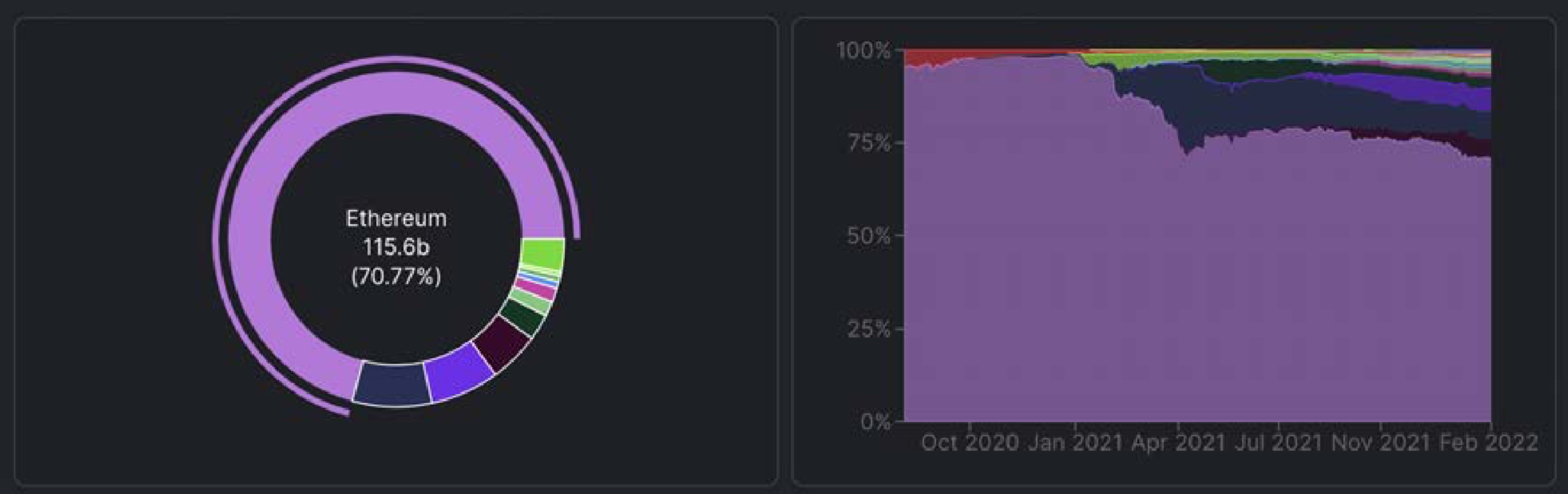
The competition on the Layer1 track that supports EVM is fierce, and various public chains are grabbing the overflow funds and traffic of Ethereum. At present, BSC is the leader of the EVM public chain besides Ethereum. Fantom, Avalanche and other latecomers have also begun to make efforts, and some popular projects have appeared on the chain. However, in the EVM public chain, Ethereum still accounts for more than 70% market share (see Figure 1). With the help of the bull market in 2021, Layer 1 has absorbed a large amount of funds, but in the long run, it is still unknown whether Layer 1 other than Ethereum can cross the bull and bear and create value in the public chain ecology.
< /p>
Figure 1: Total Value Locked EVM Chains in February 2022, and its share over time (data from Defilama)
Layer2
Although Layer2 sounds like the status quo of Ethereum The most perfect solution, which is directly optimized based on Ethereum itself, Matic's performance in 2021, whether it is the currency price or on-chain interaction and tvl, also reflects everyone's expectations (see Figure 2 and Figure 3). However, Layer 2 is actually not as effective as the side chain, because the optimized Gas fee still prevents a large number of users from entering Layer 2. At the same time, using Layer 2 to access assets still needs to interact with the Ethereum main network, which further restricts users from using Layer 2. will. But on the other hand, Layer2 provides a good soil for new applications. GameFi, which will emerge at the end of 2021, needs to do low-value and high-frequency interactions. This has found a new direction for Layer2, that is, the exclusive chain-a chain that is only used for specific needs. At present, Layer 2 public chains of GameFi such as Ronin and Immutable X are developing rapidly.
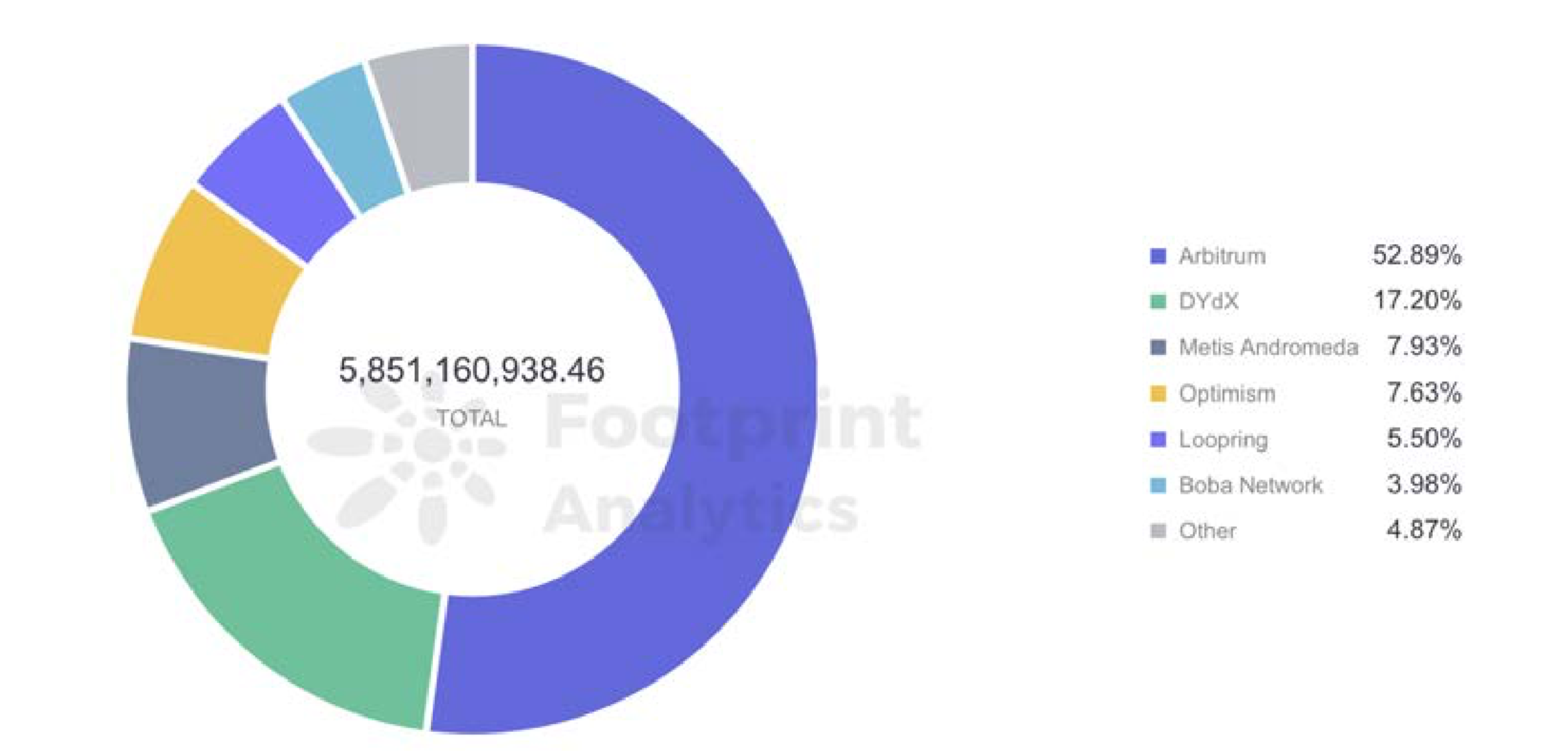
Figure 2: February 2022 Total Value Locked Layer2 Chains (data from Footprint Analytics)
< h4>Other Layer1
Solana, Near and other new public chains independent of EVM have achieved significant growth in 2021, although part of the reason for this phenomenon is external Capital continues to operate, but the low Gas fee does hit the pain point of Ethereum. New public chains such as Solana and Near meet the needs of some users, create real value, and attract many users outside the circle. However, in view of the fact that EVM is still the absolute core of the market (see Figure 3), it is easier for developers to reuse and many infrastructures developed based on EVM, Near launched Aurora, and Cosmos will soon launch Evmos in order to realize the docking with the Ethereum ecosystem. In addition, similar to Layer 2’s dedicated chain, Layer 1 also has many dedicated chains focusing on different fields, such as Flow, which focuses on the NFT field, and Oasis, which is dedicated to private transactions. In addition, there are many game public chains such as Gala, WAX, WEMIX, etc.
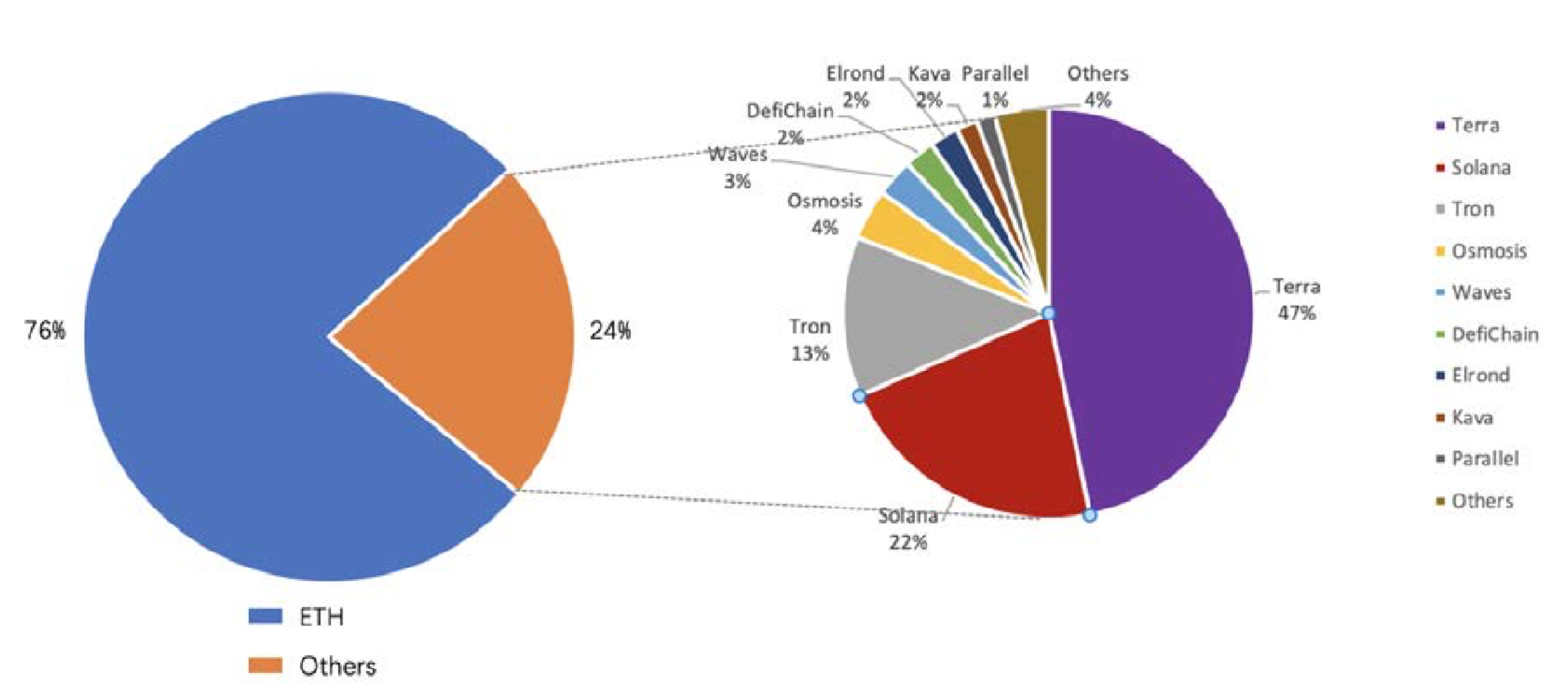
Figure 3: February 2022 Total Value Locked of ETH and other non-EVM chains( Data from Defilama)
We believe that Layer 1 of Ethereum may be mainly responsible for processing important data in the future or become a public chain for the B-side. Its essence is the data settlement layer of the entire blockchain world and the function of providing a consensus layer. The public chain for primary users and oriented to more diverse market demands will most likely become a type of role for long-term value creation. Based on this vision of the future, the demand for interaction between many public chains will also increase accordingly. Therefore, cross-chain projects between public chains are emerging in an endless stream, the most famous of which is Multichain (formerly known as Anyswap), but such The security of the cross-chain bridge has been criticized since the project was born, and the subsequent coin theft incident also confirmed people's concerns.
So people turned their attention to another solution - multi-chain mode. This model aims to connect each chain in the form of a parent chain or a hub, so that it can achieve atomic-level interaction and fundamentally solve the cross-chain problem. Representative projects in this model include Polkadot and Cosmos, and this article will focus on Cosmos. As mentioned above, the Cosmos ecology born for the multi-chain universe will play an important role in the future market. More blockchains focusing on subdivided applications will be born in the Cosmos ecology. At the same time realize the docking with Ethereum ecology (see Figure 4).
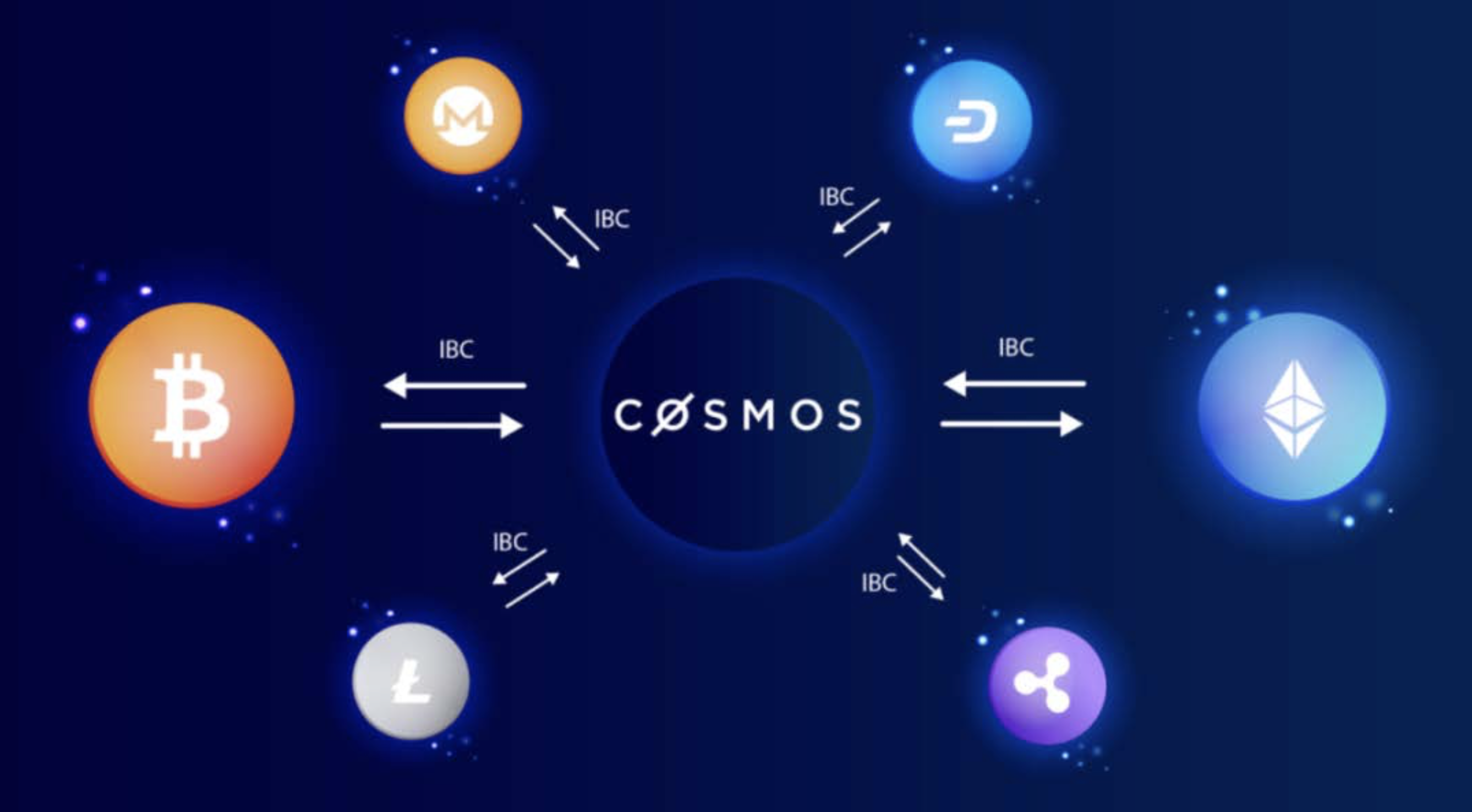
Figure 4: Cosmos multi-chain universe connection diagram
Born for the multi-chain universe Cosmos
< p>Different from the narrative of Ethereum, Cosmos adheres to the concept of applying blockchain and believes that the future is a multi-chain universe composed of blockchains focusing on different functional applications. Based on this idea, Cosmos consists of three basic components: 1) Tendermint consensus protocol, 2) Cosmos SDK, 3) IBC (Inter Blockchain Communication) cross-chain communication protocol. Cosmos hopes to create a common development framework for blockchains and solve cross-chain issues, making a multi-chain universe possible.
Tendermint Consensus Protocol
Generally speaking, the blockchain has a three-level architecture, from bottom to top are the network layer, Consensus layer, application layer, the Tendermint consensus protocol generalizes or encapsulates the development of the complex network layer and consensus layer, allowing developers to focus on business-level research and development, and supports multiple programming languages at the application layer. As shown in Figure 5, Tendermint Core encapsulates the network layer and the consensus layer.
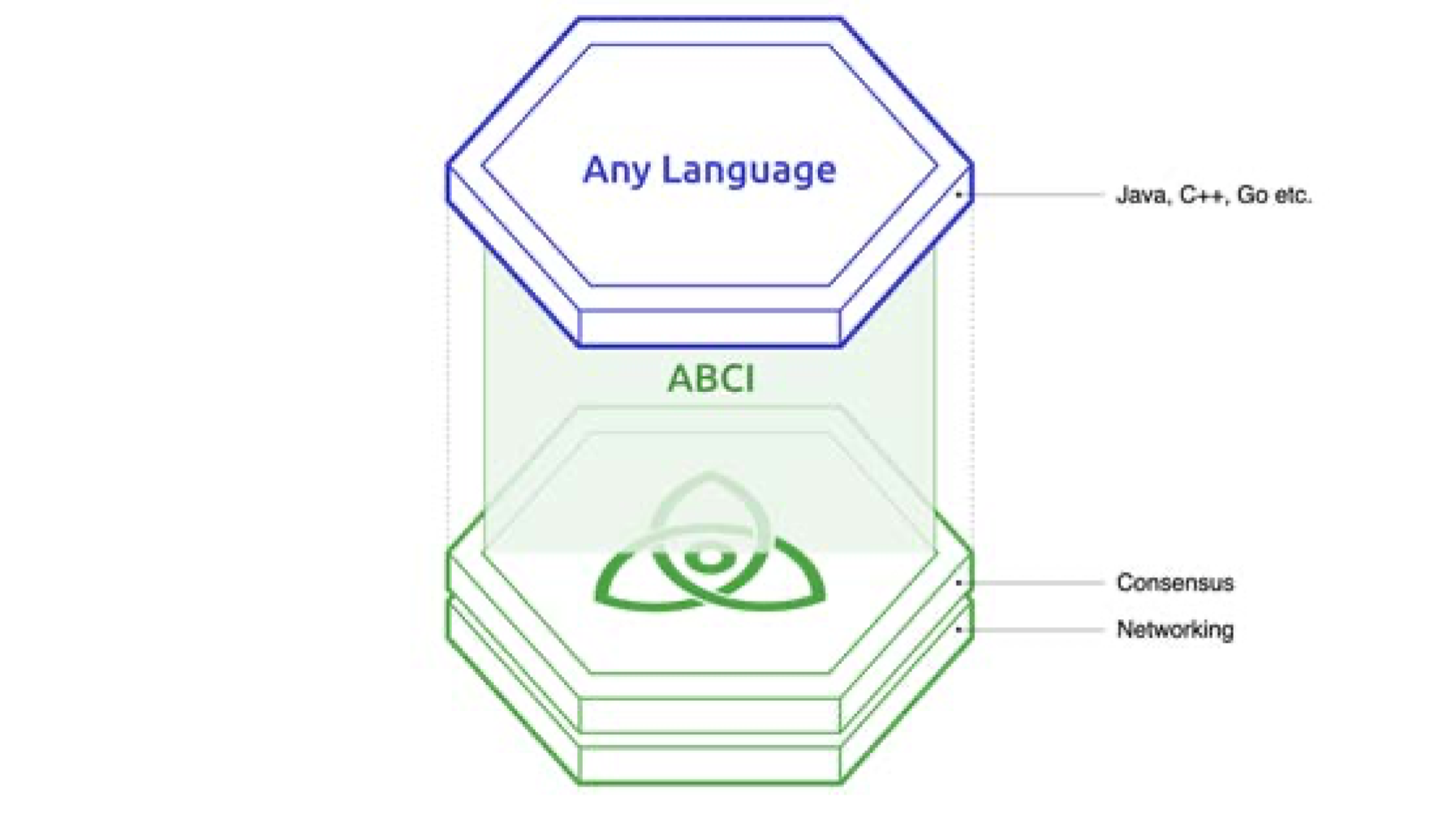
Figure 5 :Schematic diagram of Cosmos layered architecture (from official)
Cosmos SDK and IBC cross-chain communication protocol
Cosmos SDK provides the basic functional modules of the current blockchain, such as Pledge, punishment, governance, and Token supply distribution (as shown in Figure 6), greatly reduce the cost of user development and avoid the overhead of repeated wheel creation. IBC is an important module in the SDK, which solves problems such as communication and asset transfer of each chain in the Cosmos ecosystem. For example, in the figure below, Hub1 and Hub2, and between Hub and Zone can communicate through the IBC protocol, as shown in Figure 7.
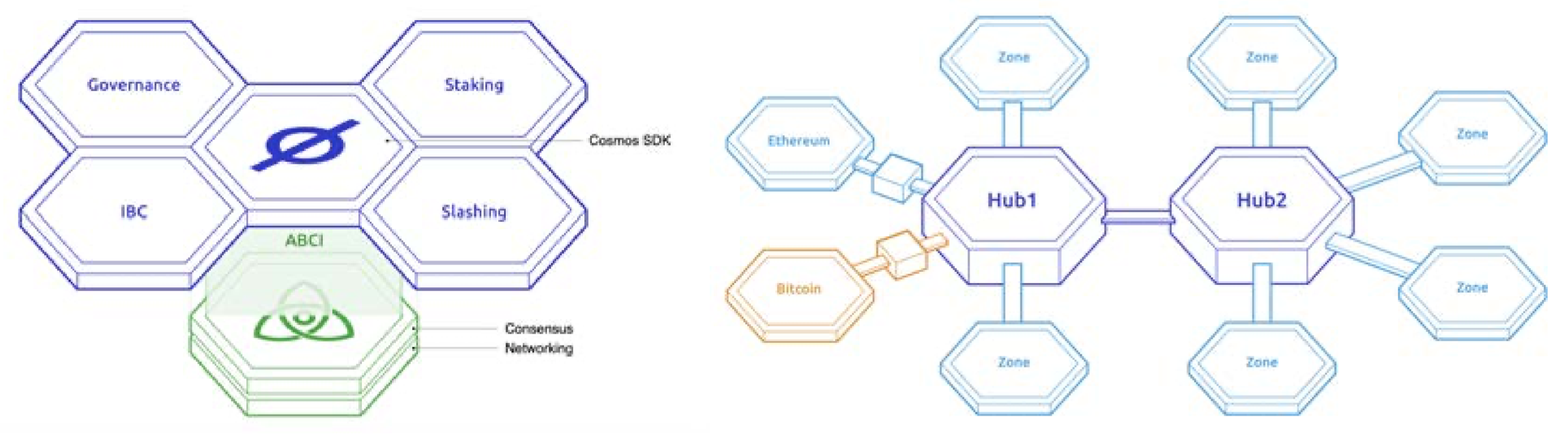
Figure 6 (left): CosmosSDK module ( From the official) Figure 7 (right) Hub and Zone structure of Cosmos (from the official)
Cosmos vs Polkadot
Differences in ecological philosophy
< /p>
On the cross-chain track, Polkadot and Cosmos are often compared with each other. We believe that the core difference between the two lies in the ecology philosophy. The design of the Cosmos ecology is more open, while the design of the Polkadot ecology is relatively closed. First of all, no permission is required to join the Cosmos ecosystem. Any developer can use the Cosmos SDK to develop their own blockchain and realize cross-chain communication through the IBC protocol. However, Polkadot developers must pass the parachain slot auction to access the Polkadot ecosystem, and there are certain entry barriers. The resulting status quo is that the blockchain developed based on the Cosmos SDK has produced LUNA, CRO, OSMO and other projects with a market value of more than 1 billion US dollars, and star projects such as LUNA's own ecology are also very prosperous. Polkadot ecology currently does not seem to have an outstanding public chain other than Polkadot/Kusuma. In terms of ecological market value, the market value of the Cosmos ecology is second only to Ethereum and BSC, and is significantly ahead of the Polkadot ecology (see Figure 8).
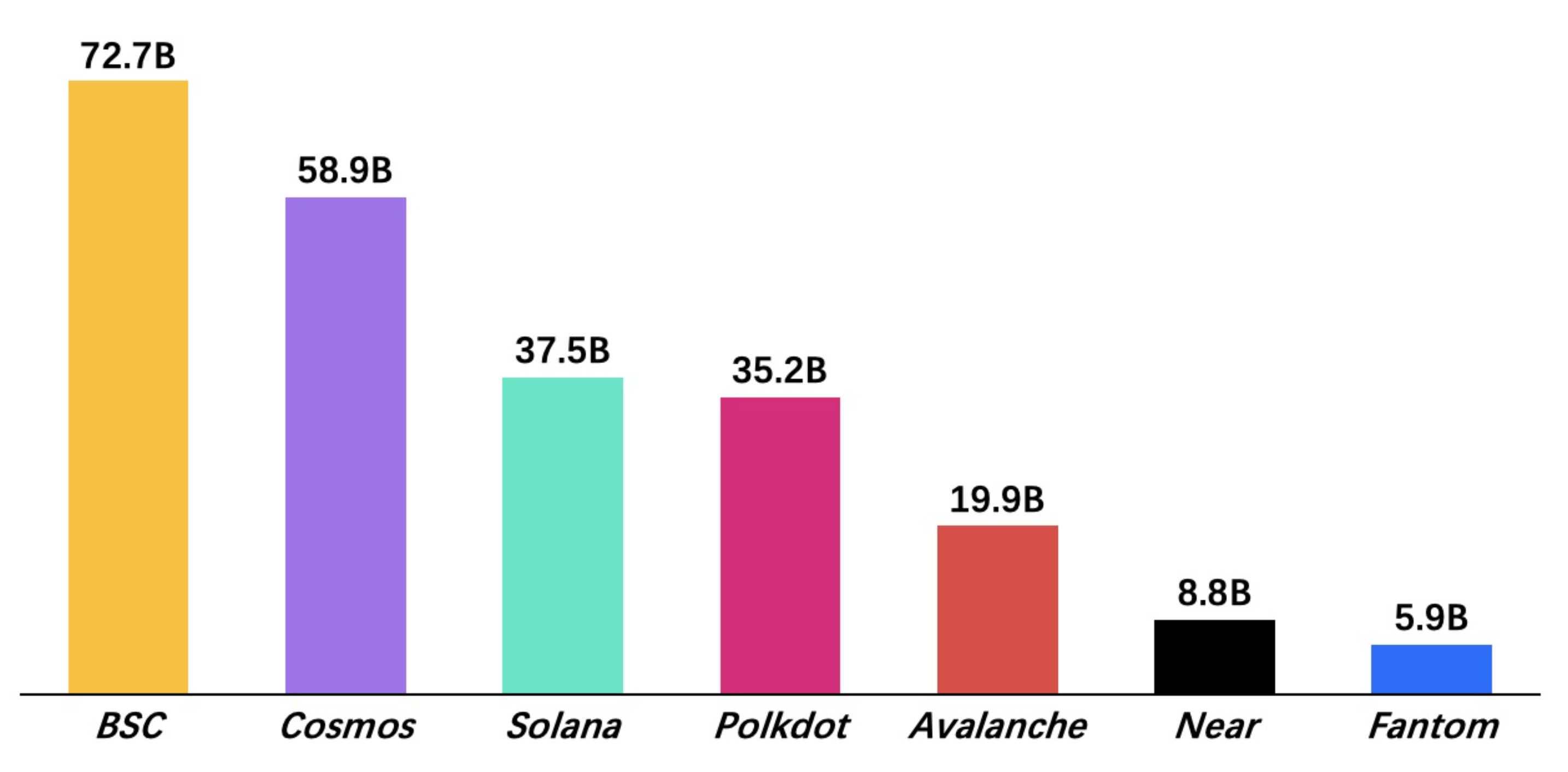
Figure 8: As of February 2022 6 The daily ecological market value of public chains other than Ethereum (including itself and projects on the chain)
In Figure 9, a phenomenon worthy of attention is that the market value of Terra, a project in the Cosmos ecosystem, exceeds that of Cosmos, which makes Cosmos even more special. For other public chains, the public chain is the ceiling of the market value of its ecological projects. Except for Cosmos, it has not been found that the market value of projects in the public chain ecology exceeds the market value of the public chain. For the ecological projects on Cosmos, the market value can have There is a lot of room for imagination, which is also the unique "charm" of Cosmos. We believe that this trend will continue in the future, and more blockchains based on the Cosmos SDK will emerge to further prosper the overall Cosmos ecosystem.
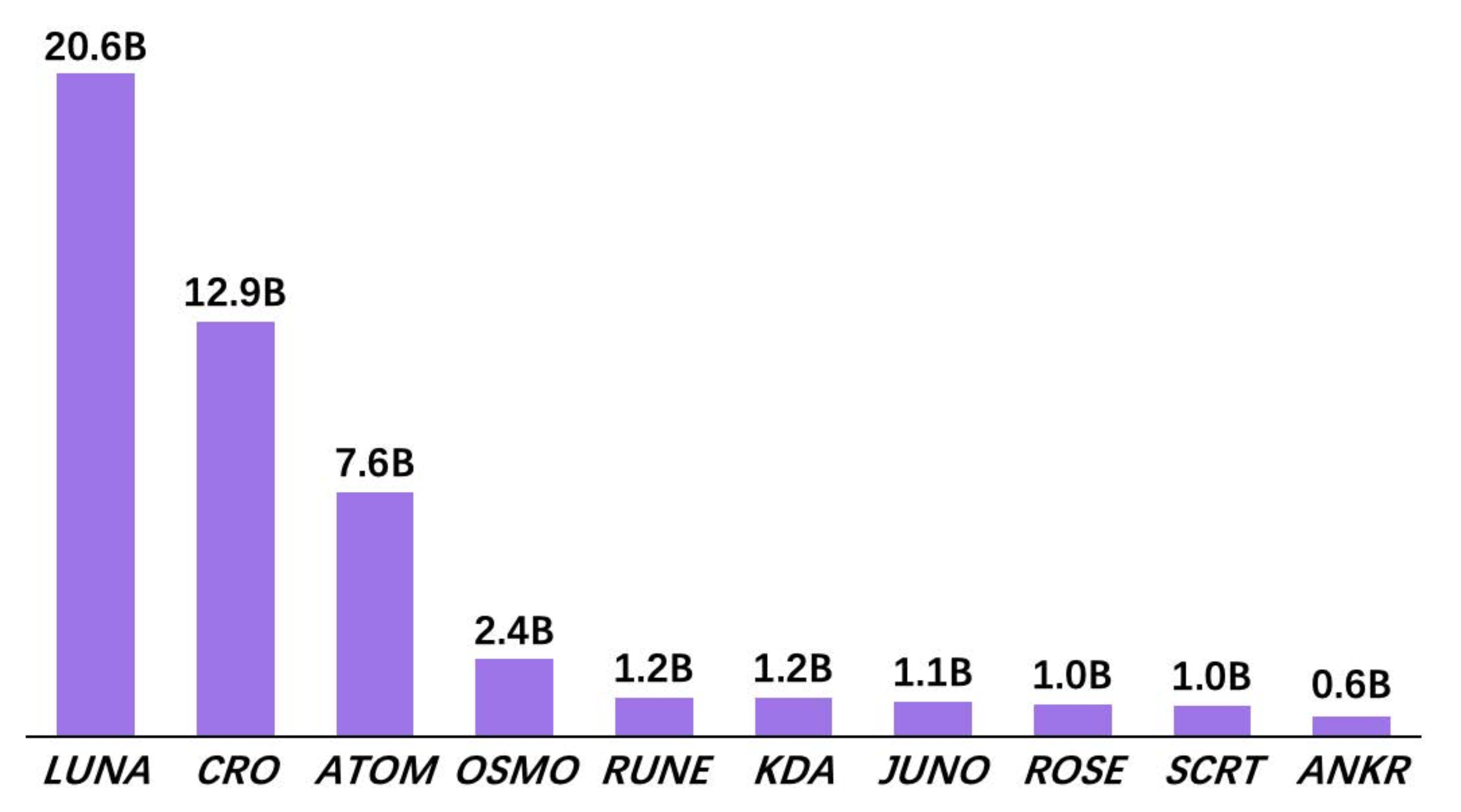
Figure 9: As of February 13, 2022 Market Value of Top 10 Cosmos Ecological Projects in Daily
Token Value Capture Difference
The openness of Cosmos comes at a price. First of all, from the perspective of the economic model, the ability of Cosmos Token ATOM to capture the value of other public chains and their applications in the ecosystem is doubtful. Compared with Polkadot, another leader in the cross-chain field, the value capture mechanism of its native Token is clear and clear. For example, bidding for parachains in Polkadot’s cross-chain ecology needs to pledge Polkadot’s native Token ATOM, thus creating demand for Tokens. In contrast to the cross-chain ecology of Cosmos, other blockchains using the Cosmos SDK and the Tendermint consensus protocol have nothing to do with the original Cosmos Token in theory, and ATOM is only used to ensure the security of the Cosmos Hub (see below for details). ATOM gave up the capture of the value of each public chain on the hub, and each public chain has strong autonomy, which is conducive to the development of the Cosmos ecology and is also the main difference between Cosmos and Polkadot. Cosmos and Polkadot actually made a trade-off in different directions of the cross-chain track: Polkadot is relatively closed, with clear value capture and deeper cross-chain (supporting the interaction of cross-chain call contracts and assets); Cosmos is relatively open, and its own value capture is vague. The cross-chain depth is relatively shallow (supports cross-chain assets, and cannot call contracts across chains).
Regarding the issue of value capture, in the subsequent development of the ecology, there may be improvement measures for this problem, just like ETH has become the Ethereum ecology Like the trading pair on the right, ATOM has the potential to become the right trading pair in the Cosmos ecosystem and become the carrier of value interaction in the ecosystem. It is widely used in various ecological applications and adds liquidity or drainage to various applications in the ecosystem. For example, like Osmosis, which focuses on AMM in the Cosmos ecosystem, the pool with the best liquidity is the OSOM/ATOM trading pair. In addition, we believe that in the future Cosmos ecology, when new projects are in the Bootstrap stage, because the new projects are still in the early stage and their overall market value is small, there are hidden dangers in security. These projects can share security by renting ATOMs from the Cosmos Hub (Shared Staking), thereby stimulating the market demand for ATOM and improving the value capture mechanism. Finally, staking ATOM can get airdrops of various projects in the ecosystem, which is attractive to users in the short term at least, and enhances the value capture of Token. As of February 21, 2022, there are 5 snapshot projects in 2022, namely Nomic (NOM), RAW (RAW), Racoon (RAC), Omniflix, Orbem Wars / Domerium Labs.
In fact, Token is like a stock, which represents the market's attitude towards the company's future development potential, and is also endowed with expectations for the future growth of its track. With the growth of the Cosmos ecosystem, its future The development of Token is also more certain, and the market will reflect these expectations in its Token price. Although ATOM's ability to absorb blood from Cosmos ecological projects is not strong, ATOM can also be used as a Cosmos index to represent the value of the overall ecology, thus having a good currency price performance. Solana can be a good example, its transaction fee to the node is very low, but the currency price of SOL is doing very well. This is because SBF has been using the money it earns to buy back SOL. This phenomenon also shows that the support of the capital behind the project is also a support for Token prices.
Security differences
The second is safety From a security perspective, the Polkadot ecosystem as a whole is safer, because all chains in the ecosystem have the same level of security depending on the credit of Polkadot itself. The security of each chain in the Cosmos ecosystem is uneven, and the security of initial projects is relatively low. However, in future Cosmos updates, Shared Security may be adopted, that is, the security of the Cosmos Hub is shared by staking ATOM, which is very beneficial to some early projects.
But from a macro perspective, in In the context of Web3.0, openness has more advantages than closedness. Although some security is sacrificed, an open environment is more conducive to the growth of the ecology—related technologies and applications have a greater probability of emerging in an open environment . Compared with Polkadot, Cosmos is a more open path. The threshold for joining the ecology is lower, attracting more developers to join, which is conducive to the development and growth of the ecology in the long run.
The Future of Cosmos
If Ethereum's The upgrade is delayed, the optimization of Gas fee is not satisfactory, old users continue to flow out, and new users also pour into other public chains, so more and more new developers will choose to deploy on more suitable public chains, and Original developers may also gradually transfer a dedicated chain that is more suitable for their own projects, or create their own application chains on Cosmos, Pokadot, and Octopus. At the same time, Web3.0 and Metaverse have also given enough opportunities to other public chains, so it is very likely that Ethereum’s leading position will be greatly weakened or even replaced by revolutionaries such as Cosmos. The attributes of Cosmos naturally fit the high-degree-of-freedom and high-frequency interaction characteristics of Web3.0 and Metaverse. Especially as a new public chain, Cosmos has no "historical burden" and can realize many innovations in technology to meet current needs to transform the public chain. The underlying architecture of the chain, such as Celestia's data availability layer technology, will eventually serve as the infrastructure of Internet 3.0.
If Ethereum solves the problem of excessively high gas fees in the future and lowers the threshold for users, application developers will return to Ethereum, forming a situation of "superior" but not "superior". At present, Ethereum still outperforms other public chains in terms of user quality, brand, developer ecology, decentralization, and the quantity and quality of on-chain applications, and it is likely to maintain its leading edge in the future. Nevertheless, Cosmos still has room to make a difference in the two new directions of Web3.0 and metaverse, and after Ethereum achieves considerable optimization, it can still occupy a certain market share on these two tracks. Because there will still be many non-EVM public chains to solve different user needs in the future, the open multi-chain model of Cosmos will still have a place. In addition, as mentioned above, since there is no "historical burden", Cosmos can explore more technical feasibility, especially to extend its own advantages and establish a unique ecological structure.
This article is from a contribution and does not represent the opinion of Rhythm BlockBeats
Welcome to join the official BlockBeats community:
Telegram Subscription Group: https://t.me/theblockbeats
Telegram Discussion Group: https://t.me/BlockBeats_App
Official Twitter Account: https://twitter.com/BlockBeatsAsia

 Related Articles