Web3 will bring a revolution of certainty to media and marketing
Web3 will revolutionize certainty in media and marketing
By Justin Peyton& NBSP;
Block unicorn
While it feels like endless news, and the price drop of almost every token continues to make headlines, I'm focused on how quickly the entry points into cryptocurrencies continue to grow.
- Facebook and Instagram are reporting plans to integrate and support NFT sales.
- Twitter creates a bridge to formally link the NFT you own to your profile picture. It is believed this could accelerate further.
- Coinbase partnered with mastercard to boost NFT sales.
- Wal-Mart filed a trademark application, marking their entry into the meta and digital realm.
- StockX launches vault NFT to facilitate trading and investment.
- Microsoft bought Blizzard Activision for $68.7 billion to boost its Metaverse features and footprint.
- YouTube is studying how they can embrace Web 3.0 and NFT.
The first NFT generated 11,391 transactions of ETH on OpeanSea, valued at over $43 million.
-- Samsung has partnered with Theta Labs to distribute NFT to pre-orders of the Galaxy S22 and THE S8 tablet on Decentraland.
In short, big businesses and Web 2.0 giants are now building portals to Web3.0. There is a growing sense that all roads lead to Web3.0, but even if they don't, one thing is for sure: these actions have the potential to significantly increase adoption.
Now understand what Web3.0 means for marketing and media.
The Web is still in its early days
At least that's the perception of Web3.0, NFT, and the crypto market in general. With the crypto market valued at around $2 trillion (down from $3 trillion in November 2021) and NFT sales on OpenSea surpassing $4 billion this month, "we're too early" may sound hard to believe, but it's not.
I say this because while the money may come through new venture capital funds, acquisitions and through direct crypto. And NFT buying and investing flows into the category, but the reality is that most people (even many active crypto investors) still don't understand what Web3.0 does, and as the Web3.0 market matures, it will be unlocked.
This is most likely because the headlines surrounding explosive NFT valuations have drowned out articles and interest in Web3.0 applications. In turn, we see the public focused primarily on NFT valuations and the launch of new NFT projects. (If it sounds critical of NFT, that doesn't mean I'm very bullish on their future utility, as shown below).
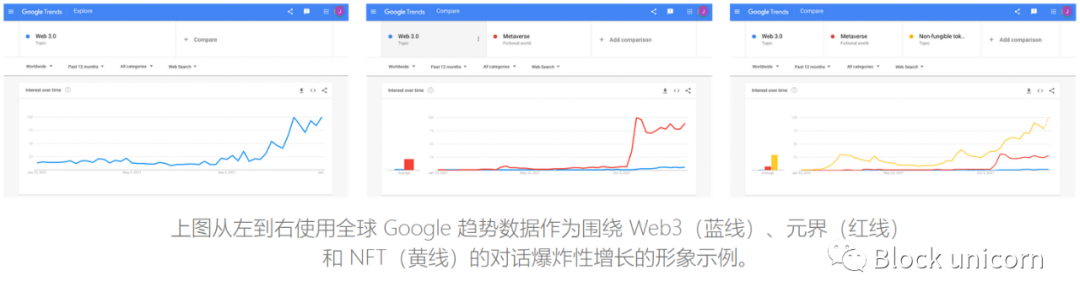
Instead of discussing valuation, the rest of this article will explore the potential (and likely) future impact of Web3.0 on marketing, media, and CRM.
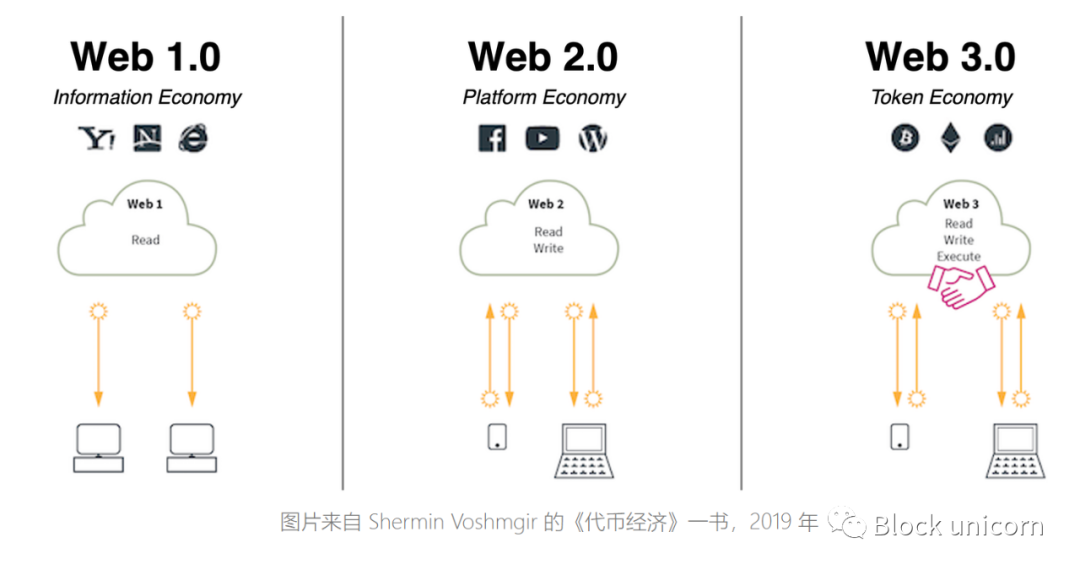
There are different charts that are often looped around on Twitter and LinkedIn to try to simplify the differences between Web 1.0, Web 2.0, and Web 3.0. All of these are true, but none of them can satisfactorily explain what this means for brands and the impact it will have on their communication.
This diagram shows the evolution from a functional perspective, from read-only in Web 1.0 to Read + write in Web 2.0, and then to Web 3.0, which allows read + write + execution. In short, the transition from consuming content to creating content, and finally to owning content.
Here is one of my favorites. It takes a more user-centric approach by showing how people will engage and identify the digital applications and services they use. But unless you already understand the potential for a crypto wallet to become your digital identity, this chart doesn't make much sense to people.
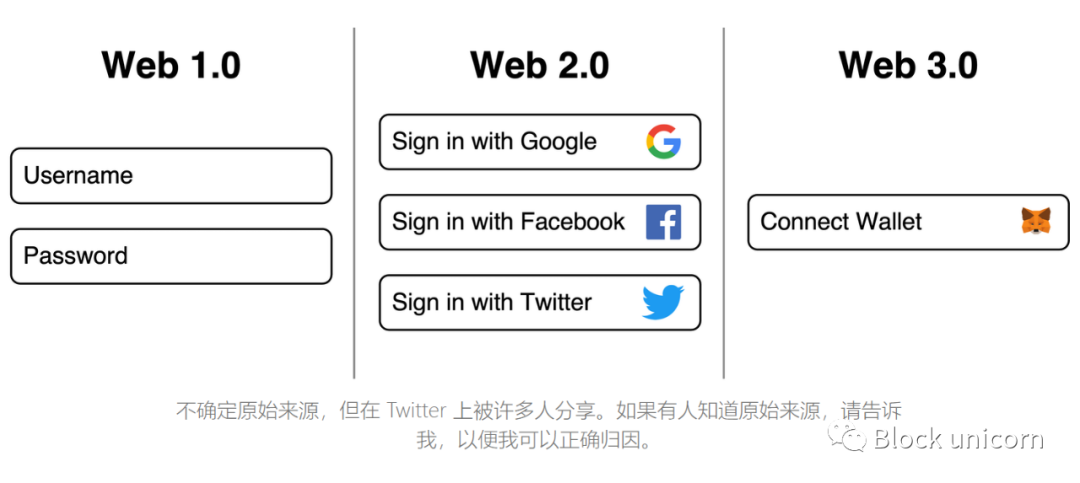
Even if you have a thorough understanding of cryptowallets and how they evolve, you may still associate this diagram only with login and digital property/content ownership.
Hence the need for a third chart, which I've put together to give an overview of what all this means for brands and marketers who rely on Web 1.0 and Web 2.0's reach and targeting capabilities to connect with consumers.
Below, you can see how coverage and targeting has evolved from Web 1.0's publishe-based media (how digital copies of media were traditionally purchased offline) to Web 2.0 and probabilistic media (where platforms leverage the digital breadcrumbs left behind) to infer a person's interest from every action they take online, So that they can be grouped), to Web 3.0, the shift to deterministic media positioning will fundamentally change supply chains and value chains.
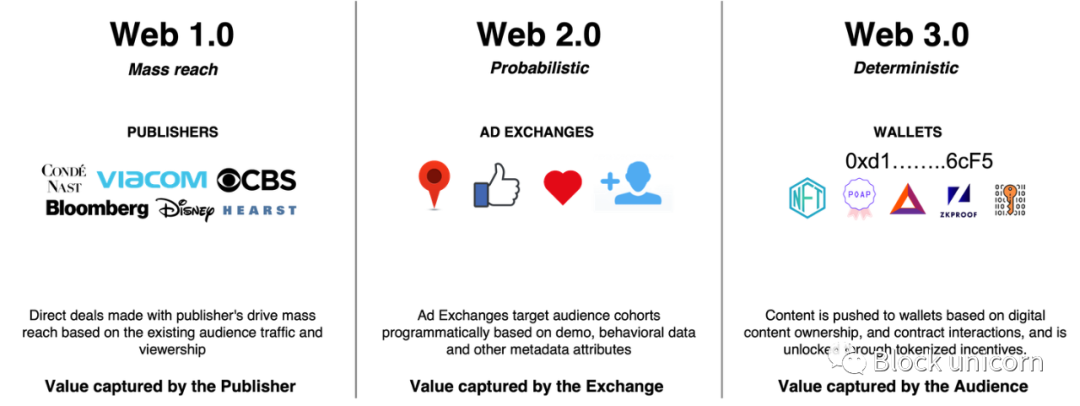
At the heart of the change is identity, and in the case of Web 1.0, personal-level identity data was never a factor, knowing broad basic demographic details was sufficient. Web 2.0 brings with it a focus on identity and the promise of increased relevance, targeting, efficiency, and effectiveness. To drive and deliver on this promise, platforms need to track and attribute signals that can connect back to people. From search history to movie views to likes, shares and more, these platforms create and own infographic images associated with our digital identities.
In Web 3.0, by contrast, individuals will own and control their identity data. Stored in encrypted wallets and managed by smart contacts, this will form the basis of how the digital world understands people.
"  I know half my media budget is wasted, I just don't know which half." That's what every media manager in history has said.
What they say is probably true when you consider the prevalence of AD fraud, the challenges associated with end-to-end attribution (value attribution), and the excessive range and margin of error accepted in probabilistic systems. This is the deterministic question that Web 3.0 features will address.
To understand how to consider the various technologies and paradigms for Web 3.0:
Encrypted wallet
The big shift for consumers will be the adoption of cryptowallets, and I've written in past newsletters about why this is happening, but all in all, it's because your cryptowallet will contain:
- Your identity data - Everything will be in your wallet: from government documents like driver's licenses to medical records to basic PII data like birth dates and addresses.
- NFT as a deed to the digital property you own - yes, we will all own the digital property.
- NFT as a deed to some real-world property you own - your car deed will be NFT, your mortgage will be NFT, and so on.
- POAPS (Proof of attendance Agreements) - can be an indicator of the loyalty program you belong to, the events you've been to, or even the restaurants you frequent. The POAP version may also capture detailed information about your online behavior. Just like Google and Facebook track your actions today, this will be done with the Wallet of the future.
- Access to decentralized financial accounts - in short, broker your bank account
I could go on, but hopefully you get the point. It's important to know that, aside from the fact that "everyone" will have one, it's safe. Accessing all data through a single wallet may sound like a risk, but for exercise books, let's accept that the information will be secure and that it will be managed by a combination of private and public keys.
1. Private keys manage access to identity and other sensitive, valuable, or otherwise confidential data, and these areas are only available to third parties through auditable access systems and smart contracts.
2. Public keys can provide access to behavioral data, POAP, or other information designed to enhance reputation or communicate areas of interest.
Decentralized advertising transactions
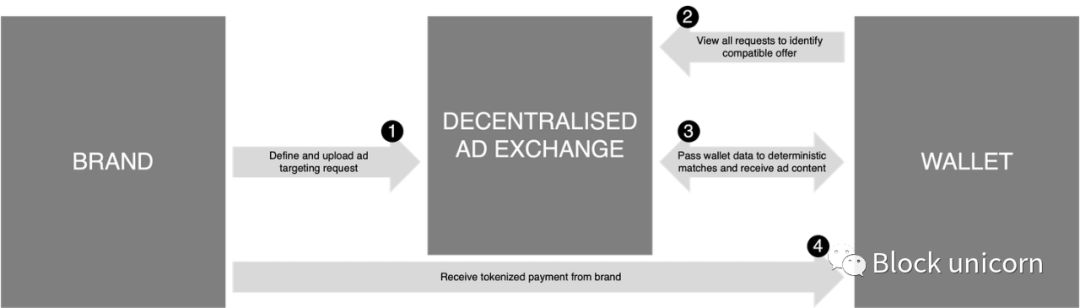
A decentralized AD exchange (DAEX) is to today's AD exchanges what Uniswap is to centralized online exchanges. To put it more clearly, DAEX is an application that acts as a link between supply and demand by using code to match parties directly, allowing them to conduct transactions if they need a middleman.
What this means for media buying is that advertisers will be able to go directly to DAEX and buy coverage and impressions that are deterministically targeted to people based on the data held in their encrypted wallets, without paying a commission to a middleman.
That sounds great, but most people don't connect their encrypted wallets to every website they visit, so wouldn't this process simply result in significantly less coverage?
Yes, that is true today, but that will change as security improves. The Brave browser already integrates the wallet directly into the browser, allowing for comprehensive data collection. This level of integration will soon become the norm, as will the collection of behavioral data within wallets.
If the data is in a person's private wallet, why would they share it with advertisers? After all, most people don't even like ads.
Right again, but there will be incentives. Since brands pay little commission to middlemen, the money currently associated with placing ads will be paid in tokens to the people who receive them. An early form of this incentive structure is in place today: it's called a basic attention token.
To better understand how decentralized Ad Exchange works, I've put together this (intentionally simplified) chart. Or, if you really want to learn more, you can check out Alkimi Exchange, a pioneer technology in this field.
personalized
Now that we've covered the basics, let's talk about something interesting: personalization.
Imagine you're a fast-food chain and you want to run ads that not only make people hungry, but also remind them that your restaurant is just a short drive from your hotel. You can tell people how many locations you have around the country, or you can simply show them ads that look like they were made near them.
This will be made possible by advanced AI technology such as NVIDIA's GauGAN2, which is already capable of creating photo-realistic landscapes based on simple verbal descriptions, no matter where people live. Combining geolocation data with access to image libraries from around the world, these systems will soon be able to simulate any location around the globe.
Or imagine that you want viewers to see someone in an AD they can relate to. Through their encrypted wallet's identity data, age, gender, race, income -- and even spouse/partner details. Technologies like those developed by Soul Machines will allow the creation of avatars designed to resonate with audiences on a personal level.
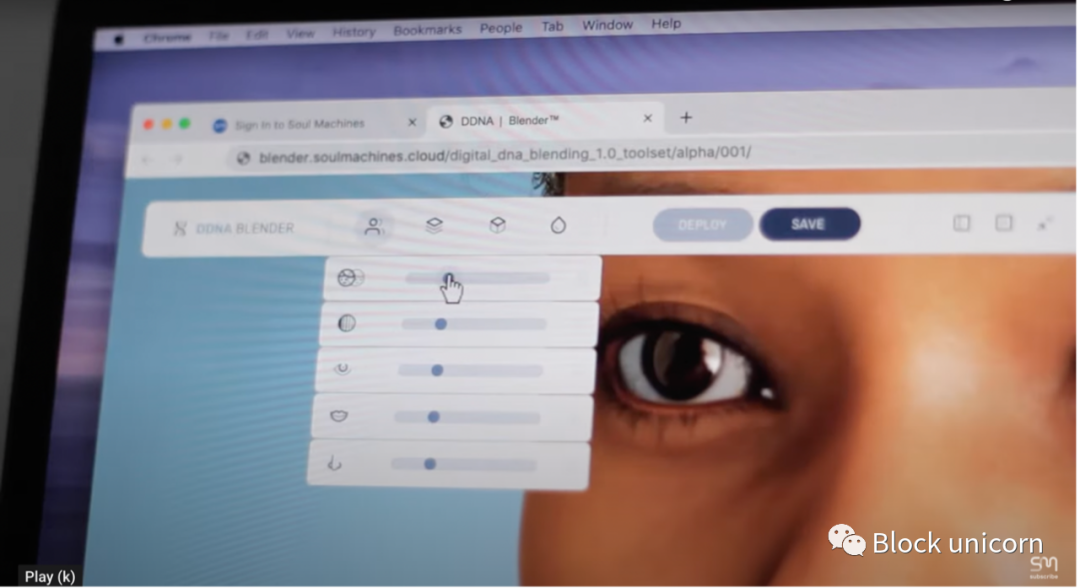
Image from soul Machine
But it's when we put digital landscapes and digital characters together that we really start to have fun. Think of it as an NFT project, except instead of using features to build 10,000 boring apes or cool cats, the AI will use a combination of identity data, geo-location data, and so on from your wallet to build an infinite number of different ads.
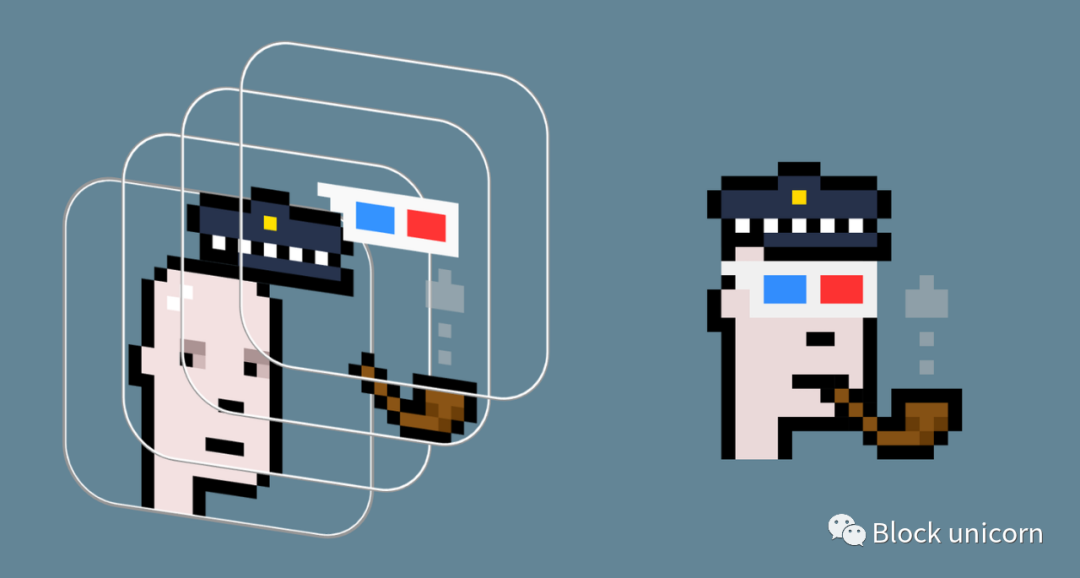
It may sound strange to build content using the same strategies people use to build NFT. But whether it is a moving image or a still image, it still boils down to digital background and digital figures. So as AI continues to accelerate its capabilities, this will become the norm -- it will be the cheapest way to do things.
Attribution (value attribution)
One of the most valuable improvements Web 3.0 will bring to brands will be attribution.
At present, it is almost impossible for brands to accurately assign value across media channels, touch points, and journey stages. There are too many different data sources, walled gardens and measurement ideologies, all of which need to be combined to be understood in detail. After all, your customers may be interacting with your brand and content in search, video, social media, mobile web, and even chat apps before they finally land on your site and make a purchase, and that's a lot of different partners and touchpoints to try and track people.
Brands such as Liveramp are already trying to solve this problem by developing deterministic identity maps. It's not perfect, however, and their approach relies on stitching together data from multiple parties to build a network of partner data that provides a better understanding than either party has on its own.
While I like deterministic identity maps as a tool, they do not provide the integrity (and result accuracy) of data tracked across every touchpoint by a single source (an encrypted wallet).
summary
While much of what I've written in this article has been about how the deterministic features of Web3.0 will bring new promise to marketers and media buyers, the truth is that this is not the end of Web 2.0. We read the headlines all the time about the death of television or the end of print. But a lot of people watch TV and a lot of people read magazines. Yes -- numbers are down sharply from their peak, but the world is not a one-size-fits-all place.
The deterministic nature of Web 3.0 will share the stage with the probabilistic nature of Web 2.0. In fact, there are some areas and use cases where Web 2.0 May still be the better answer.
But if I look at the signals I've seen over the past 10 days, with Microsoft, Facebook, Twitter, YouTube, mastercard, and walmart all dabping in NFT and Web3.0, I suspect the Web3.0 certainty media invasion will happen sooner than most people expect.
The original link
Welcome to join the official BlockBeats community:
Telegram Subscription Group: https://t.me/theblockbeats
Telegram Discussion Group: https://t.me/BlockBeats_App
Official Twitter Account: https://twitter.com/BlockBeatsAsia
 Related Articles