The next ten years in the eyes of ARK: how will Bitcoin, Ethereum, and Web3 develop
Original title: "Excerpt from ARK Investment Annual Report: The Next Decade of Bitcoin, Ethereum, and Web3"
Original author: Yassine Elmandjra, ARK Investment Analyst
Original text Compilation: Haillsman, ChainCatcher
ARK Investment led by Cathie Wood released "ARK's Big Ideas 2022" today, which talked about Bitcoin, DeFi, The development status of Web3 and the development trend of the next ten years, Chain Catcher translated and organized these three parts.
1. Bitcoin: Currency Revolution
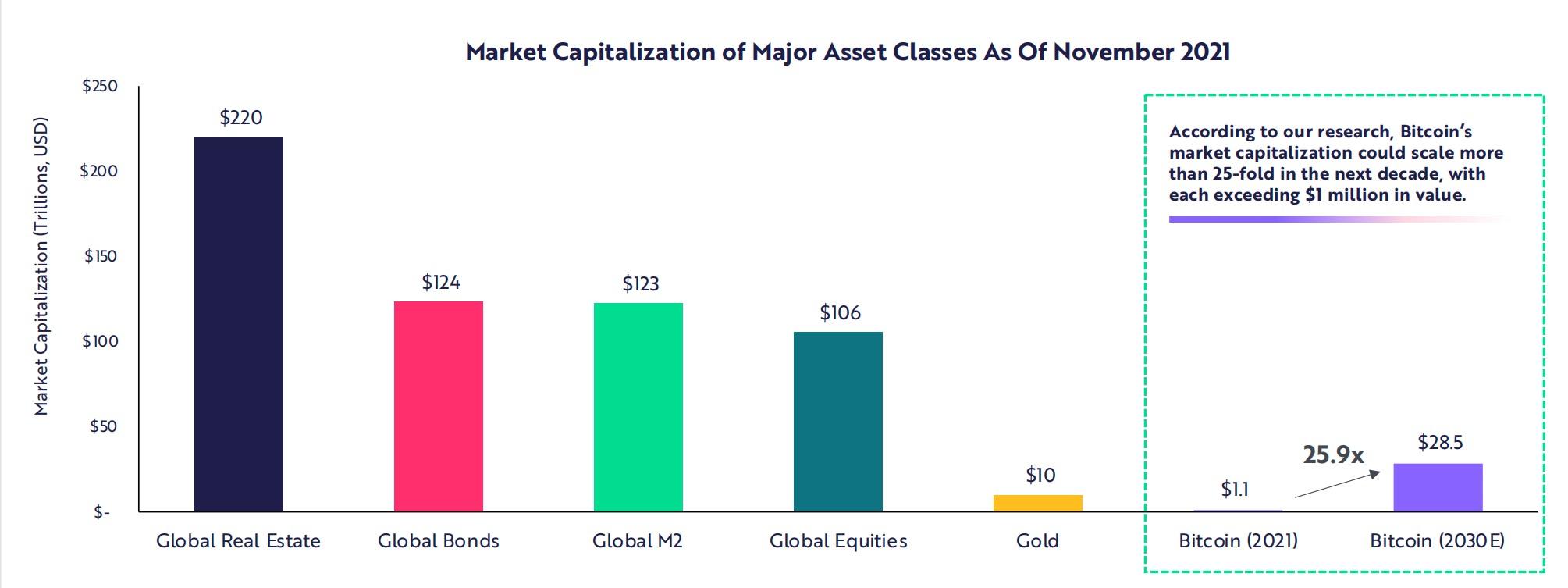
Because the market value of Bitcoin reaches history in 2021 At the highest level, ARK's research shows that its network foundation remains healthy. Bitcoin's market capitalization remains a small fraction of global assets and is likely to grow as countries adopt fiat currencies. According to our estimates, the price of one bitcoin could exceed $1 million by 2030.
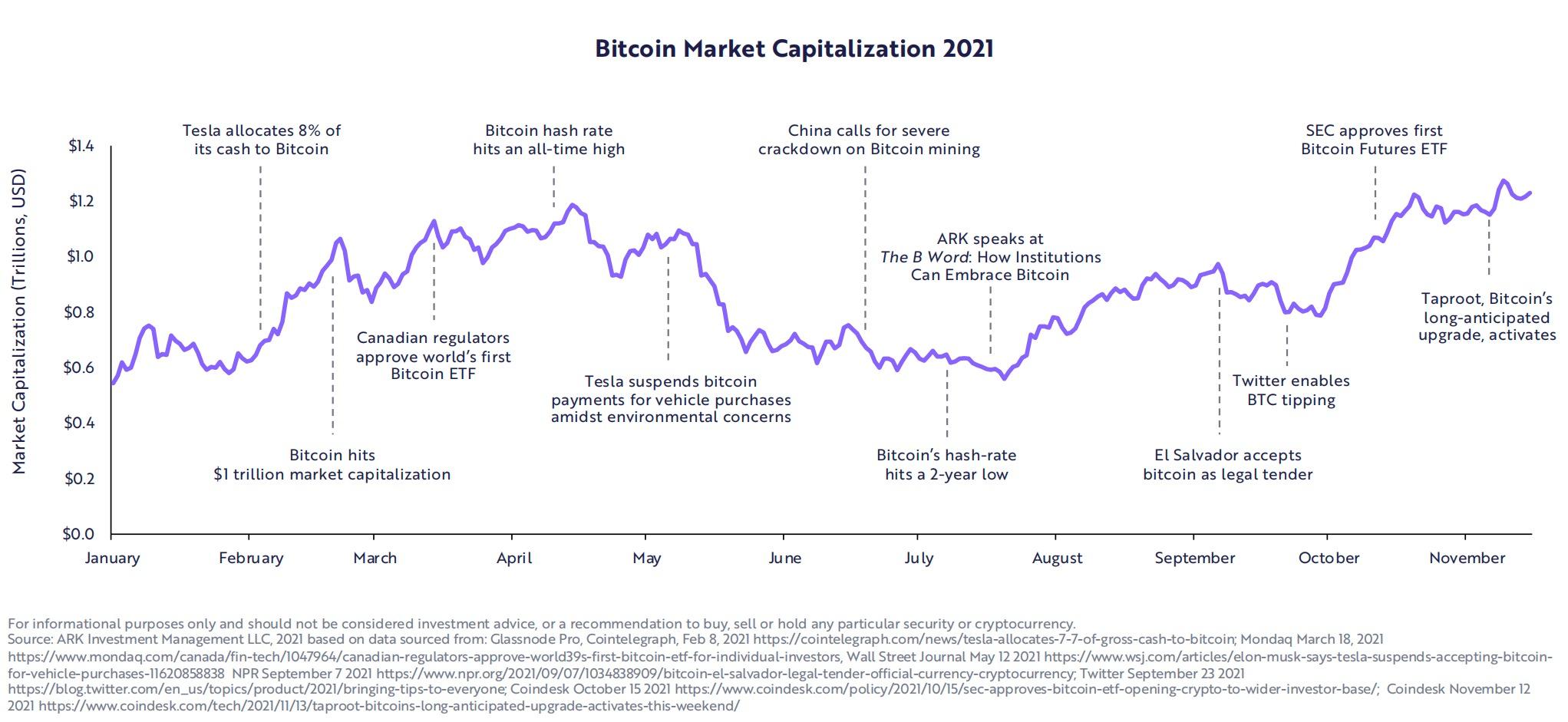
1. The total market value of Bitcoin will reach 1 trillion US dollars in 2021
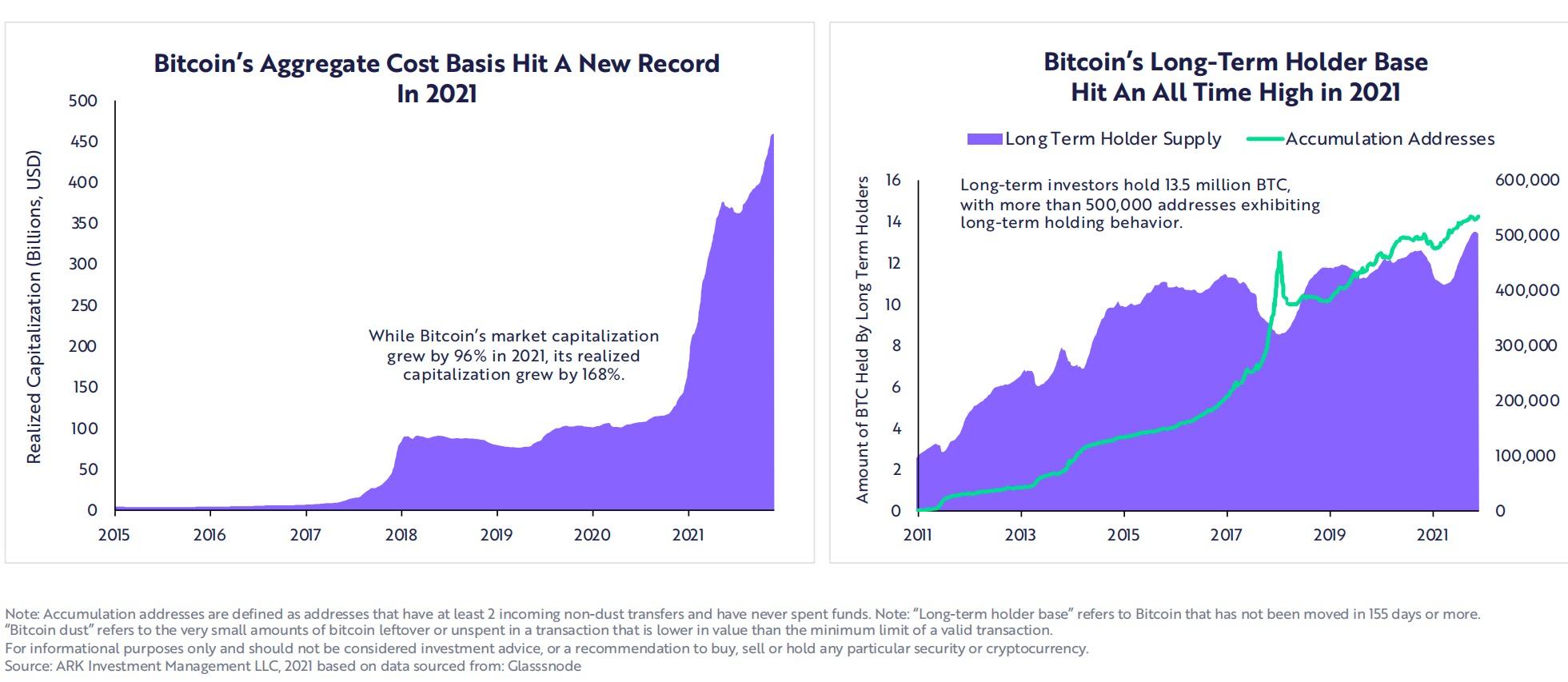
2. Bitcoin's market players are maturing and focusing on the long-term
Although there has been some level of exuberance as Bitcoin's price has risen to record highs increase, but on-chain data suggests that Bitcoin holders are focused on long-term growth potential.
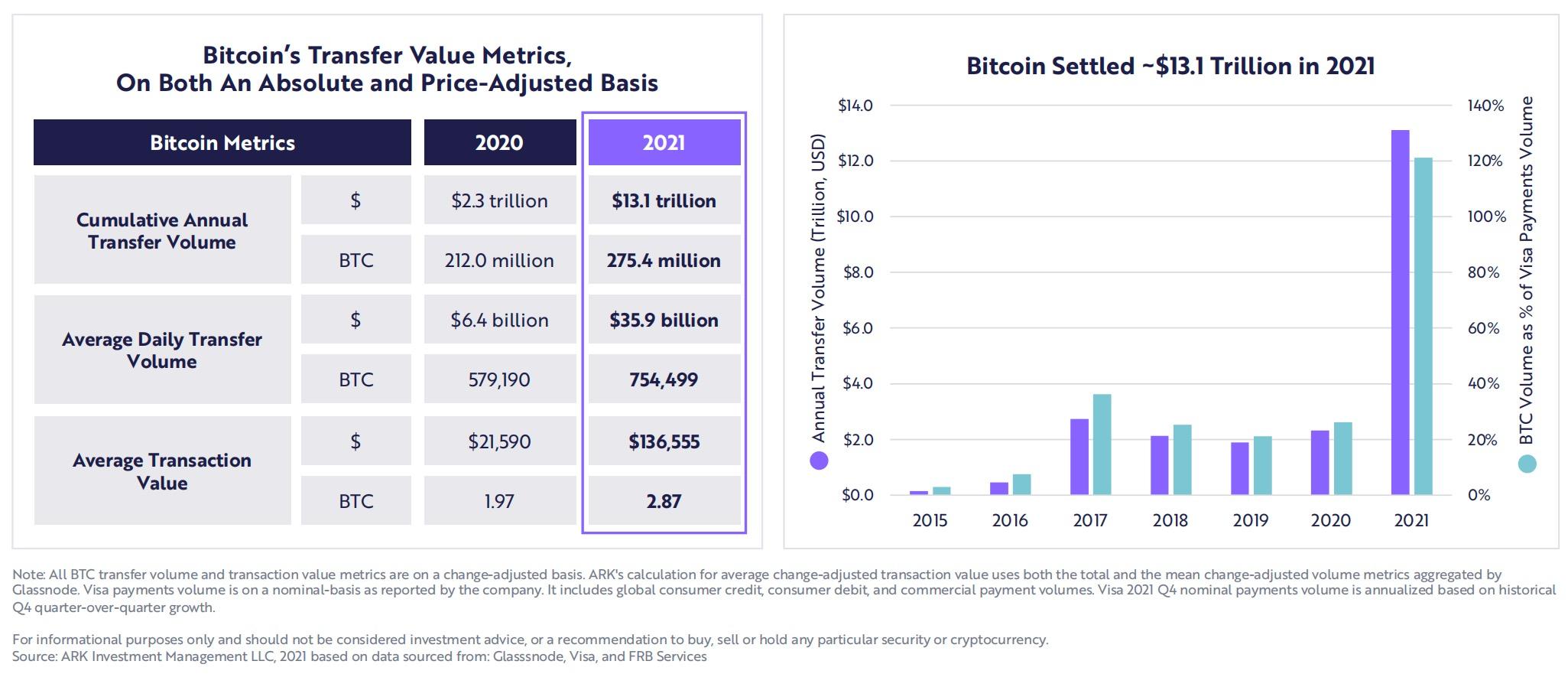
3. Bitcoin, as a global settlement network, is grabbing market share
The accumulation of Bitcoin in 2021 Transfer volume increased by 463%. Bitcoin's annual settlement volume has surpassed Visa's payment volume.
4. Bitcoin may continue to scale up in response to technological breakthroughs
Last year, Bitcoin Conservative strategic enhancements at the base layer while encouraging "off-chain" experimentation

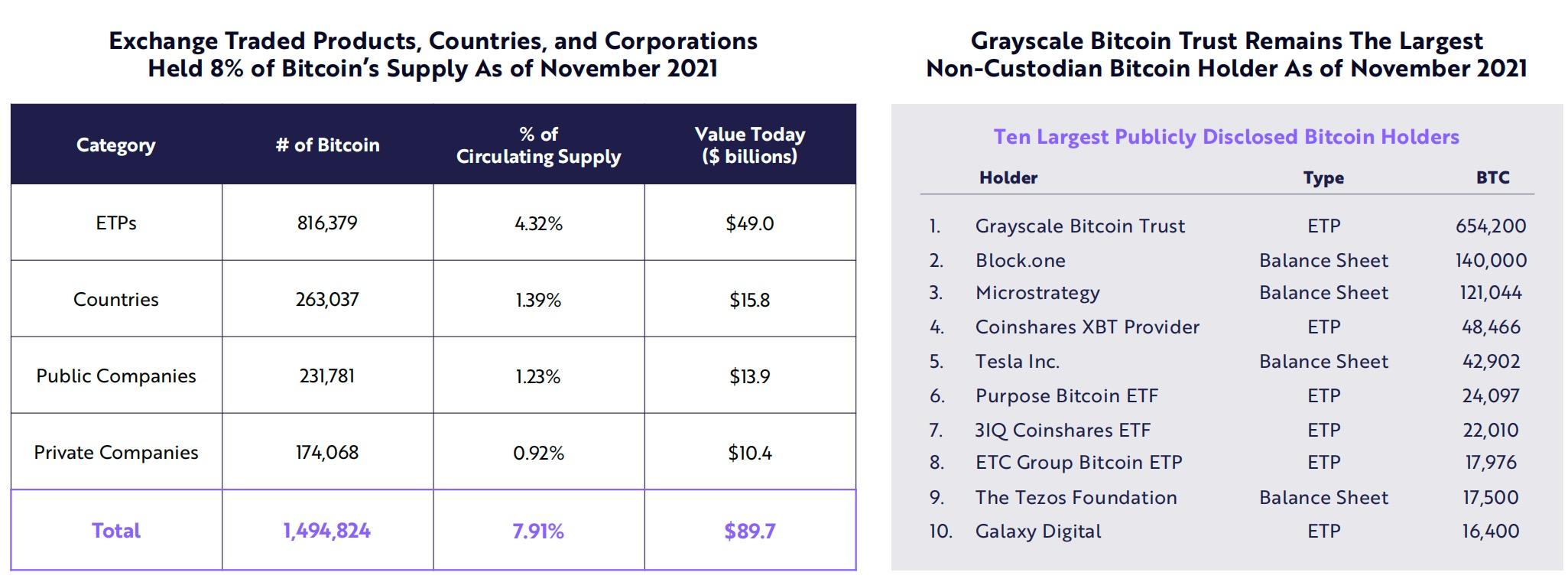
5. Bitcoin is attracting institutional holders
< br>
Bitcoin appears to be expanding its institutional holder base following the launch of more regulated products and adoption by businesses and countries.
6. El Salvador is the first nation-state to adopt Bitcoin as legal tender
This year 9 In January, El Salvador became the first country to adopt Bitcoin as legal tender.
As of December 31, 2021, El Salvador has purchased 1391 BTC.
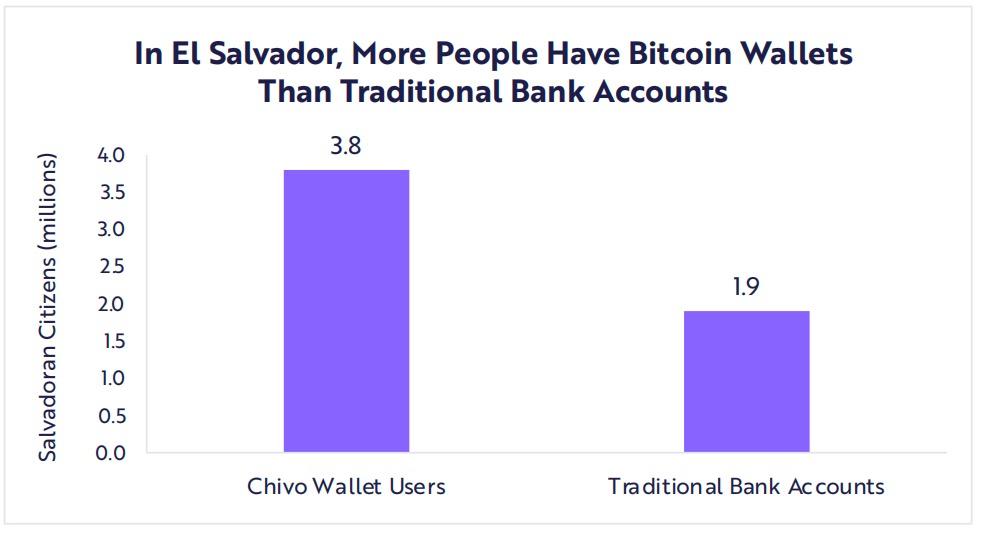
Approximately 3.8 million people use El Salvador’s digital wallet Chivo, which suggests that BTC covers 84% of the country’s legitimate citizens.
Chivo sends $2 million in remittances every day, about 12 percent of El Salvador's $6 billion in remittances, and annual remittances exceed 2 percent of its GDP.

7. Concerns about Bitcoin's "lack of sustainability" are unfounded
Our research shows that Bitcoin could change the history of money by providing financial freedom and empowerment in a fair, global and distributed way.
Environment : Bitcoin encourages new, more efficient ways of producing energy. Bitcoin mining will take advantage of natural gas that would otherwise be vented or flared. Bitcoin mining could encourage investment in intermittent energy systems, increasing the share of renewable energy in grid energy supply.
Society: Bitcoin provides a property rights system independent of nation-states, protecting the The purchasing power of people in countries that lack a stable government. Bitcoin is open to anyone because it does not rely on a central authority to determine the eligibility of participants.
Governance: Bitcoin is open, transparent, auditable and predictable. Bitcoin has no central point of failure, reducing potential human bias and error. Bitcoin contains a unique system of checks and balances designed to encourage protocol innovation and maintenance, ensuring that any changes are in the interest of stakeholders.
8. Bitcoin mining has grown into a multi-billion dollar industry
Converting energy into monetary assets can be critical in times of geopolitical uncertainty and financial market volatility.
Digital Currency Energy Network
Bitcoin's innovative potential lies in its The ability to facilitate the transfer of value under circumstances. The key enabler is Proof of Work.
Bitcoin incentivizes the discovery of cost-effective energy, independent of geography and consumer demand. With China cracking down on mining, the U.S. has emerged as the leader in Bitcoin mining, accounting for more than 35% of the total hash rate in November 2021.
Countries such as El Salvador are investing heavily in bitcoin mining infrastructure. In October 2021 of this year, El Salvador announced the use of volcanic energy for bitcoin mining. Previously, El Salvador had announced that the state-owned geothermal power company LaGeo planned to develop bitcoin mining.

9. Bitcoin mining may completely change the energy production structure
Based on our research, Bitcoin mining will encourage renewable carbon-free energy generation and generate more electricity.
As buyers of energy, bitcoin miners can incentivize new, more efficient ways of producing energy.
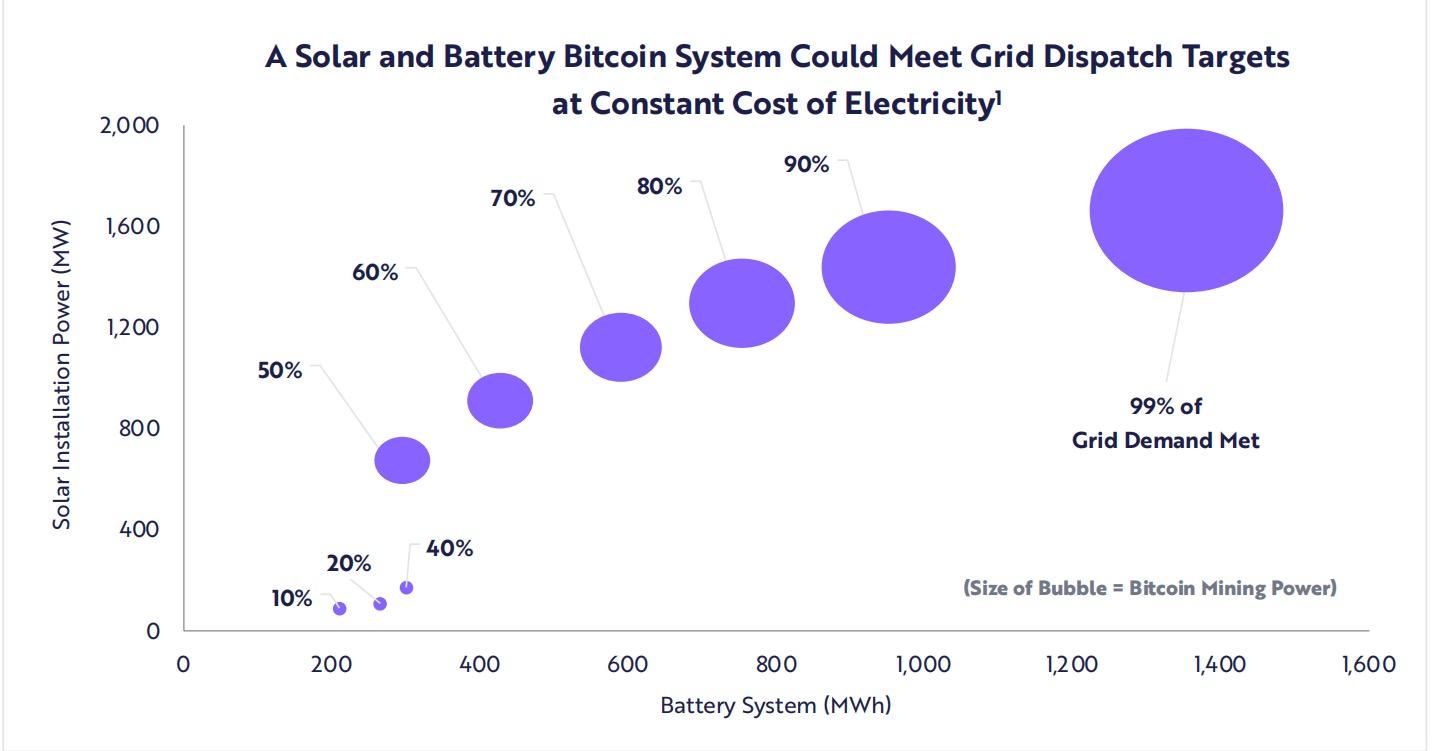
According to ARK's research, if bitcoin mining impacts the utility grid, intermittent energy sources such as wind and solar could meet a greater percentage of grid demand.
Energy asset owners could become bitcoin miners.
Adding bitcoin mining to the toolbox of power developers should increase the overall addressable market for renewable and intermittent energy. In the bottom left corner of the graph, without Bitcoin mining, renewable energy might only be able to meet 40% of the grid's needs. In the upper right corner of the chart, with the introduction of Bitcoin mining, solar and batteries can meet 99% of grid demand.
10. At present, Bitcoin only accounts for a small part of the global asset value and has huge appreciation potential
According to our research, the market value of Bitcoin may expand by more than 25 times in the next ten years, with a single coin exceeding $1 million.
11. By 2030, the price of one bitcoin may exceed $1 million
< img src="https://www.chaincatcher.com/upload/image/20220126/1643186880714792.jpg" alt="image">
2. Ether Fang and DeFi: Financial Revolution
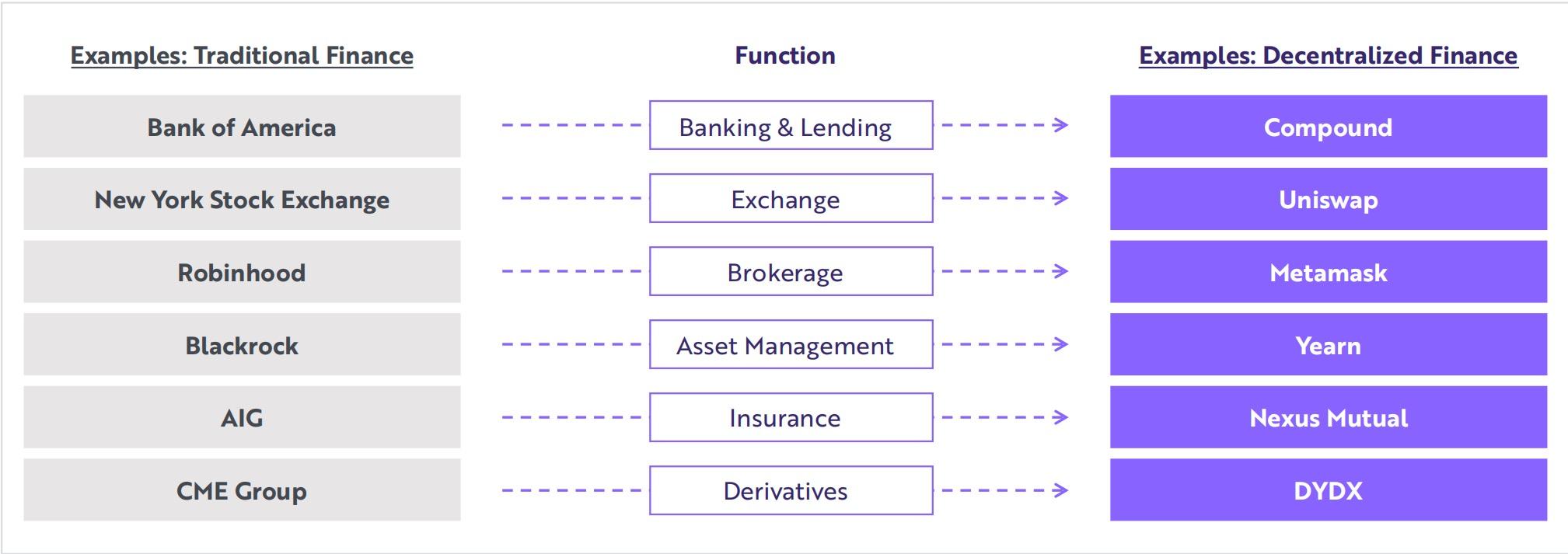
1. Smart contracts are marginally occupying traditional financial functions
Smart contract platforms such as Ethereum are open and transparent. They do not rely on traditional financial intermediaries, thus reducing counterparty risk.
2. Ethereum hits a new high with DeFi and NFT
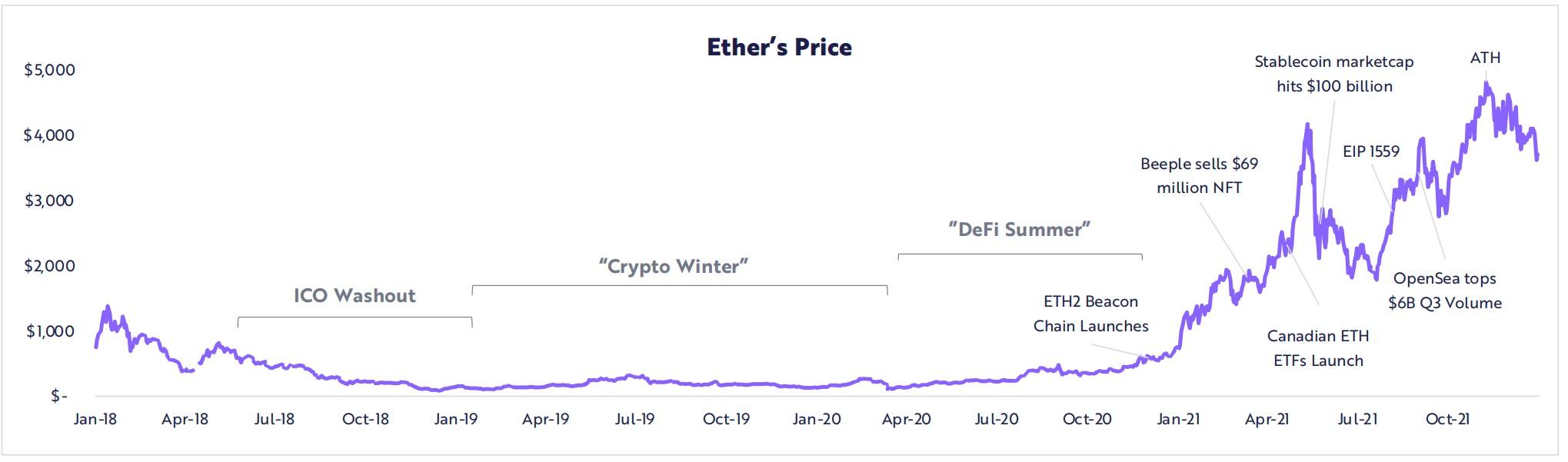
Building on the basis of Ethereum DeFi, Stablecoins, and NFTs are propelling Ethereum to unprecedented highs in late 2021. Since the speculative ICO shuffling in 2018, there has been a lot of activity on Ethereum.
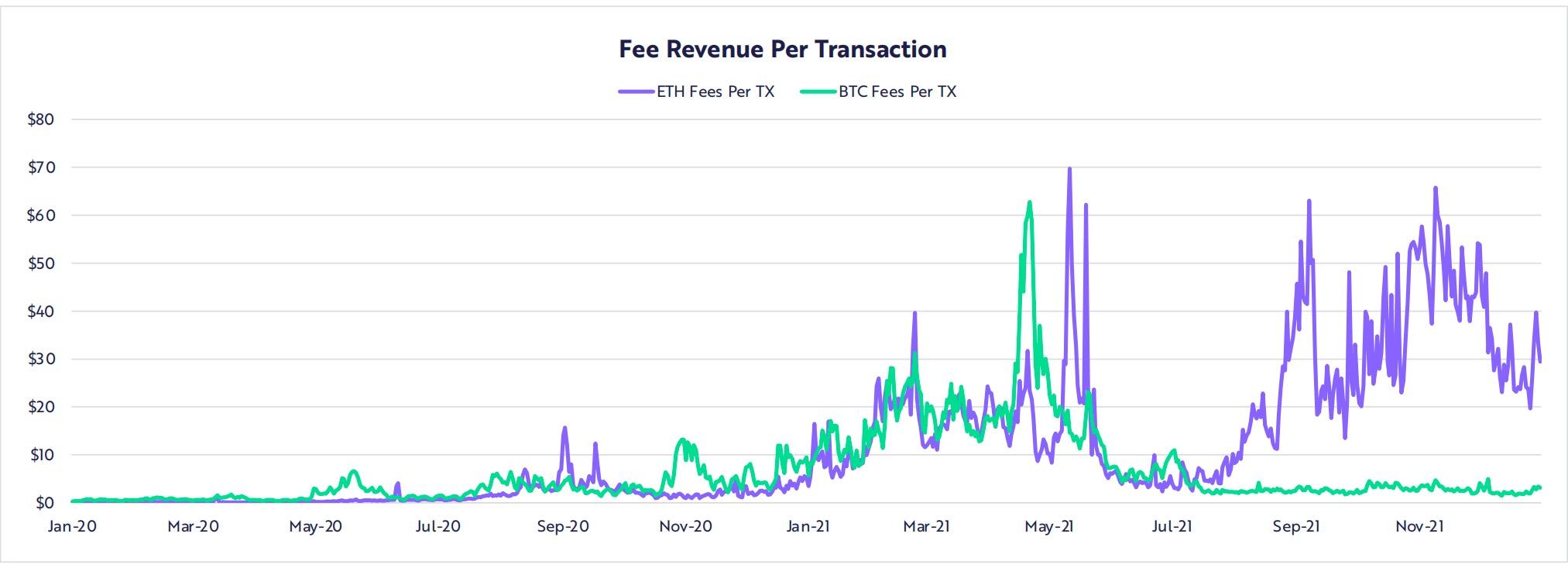
3. Increased network activity makes Ethereum transaction fees higher than Bitcoin
Higher The fees created the need for L2 scaling solutions to reduce transaction fees on Ethereum while maintaining security.
4. Encrypted finance may scale more effectively than traditional finance
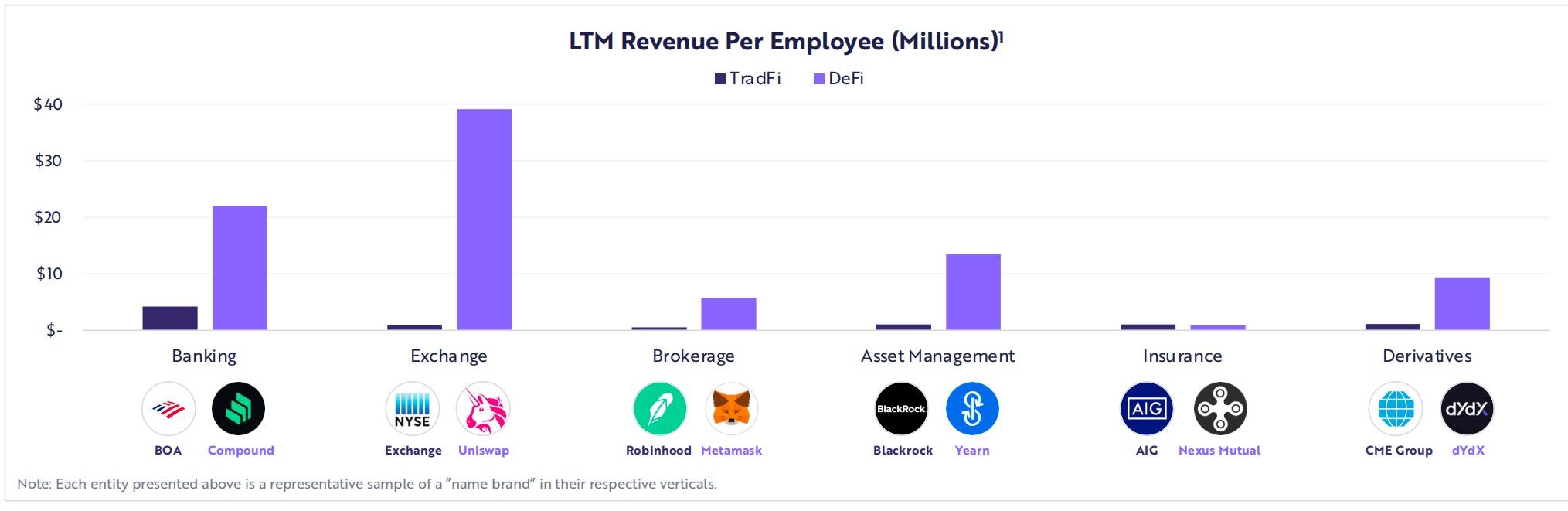
Smart contract-based financial transactions Settle in near real-time almost anywhere in the world. The revenue per employee illustrates the efficiency of DeFi compared to traditional finance (TradFi).
5. DAO implements a new form of coordination and governance
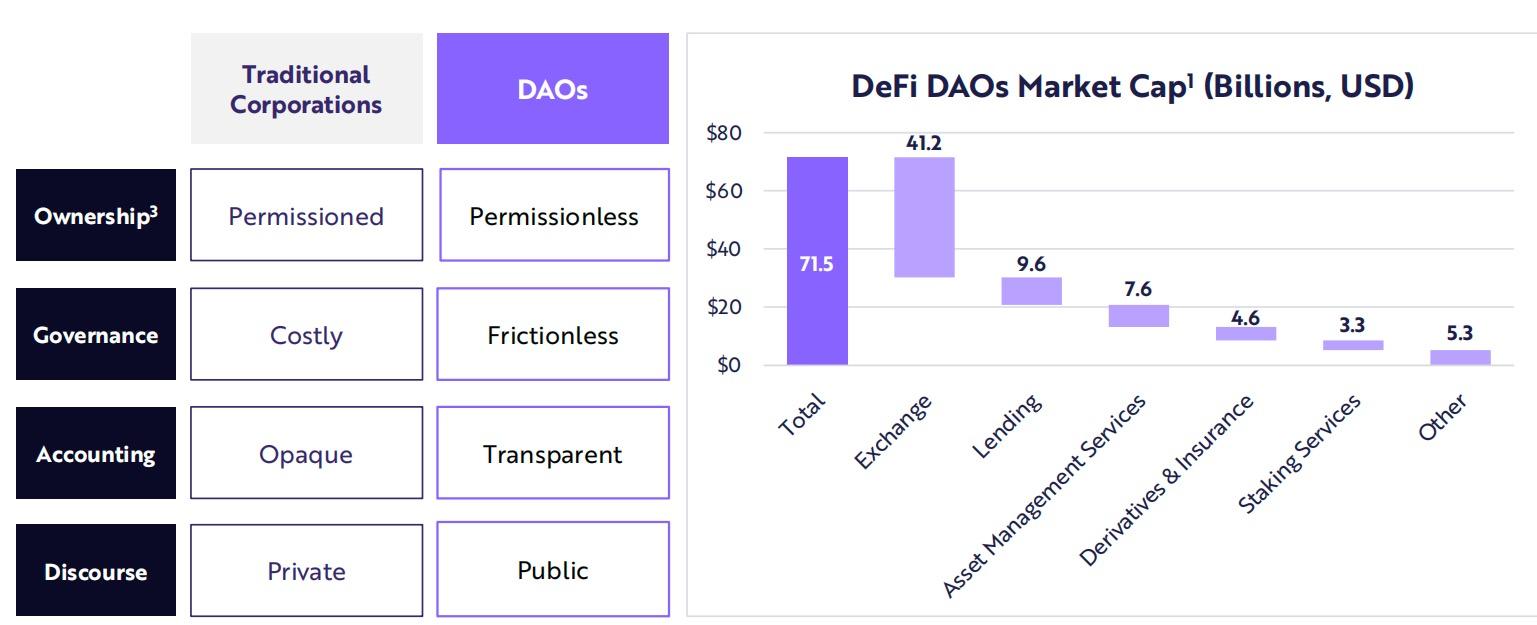
Governance of DeFi to Crucially, DAOs are replacing centralized, hierarchical corporate structures with decentralized communities.
For example Uniswap DAO:
UNIToken will be launched in September 2020;
60% of the genesis supply is allocated to early community members;
The market value of UNI Token is about 7.8 billion US dollars;
About 296,000 unique addresses holding UNIToken.
6. Stablecoin promotes encrypted transactions, lending and payment
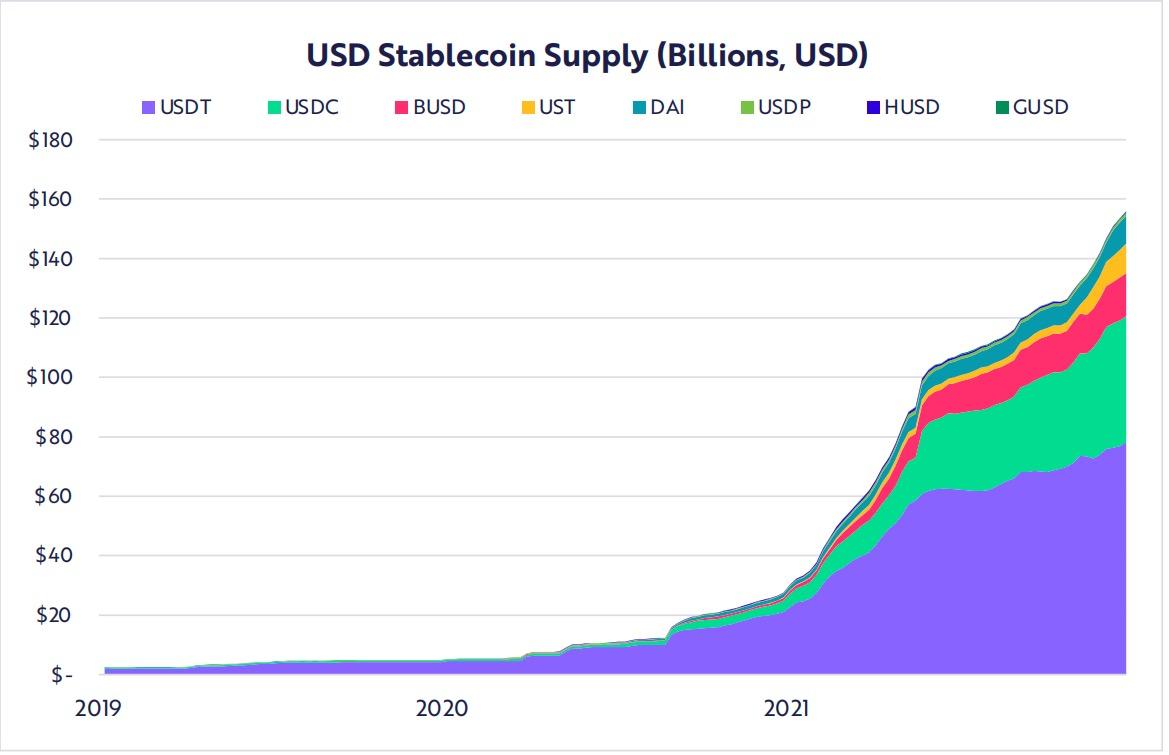
Stablecoin is linked to legal tender Cryptoassets, typically the U.S. dollar, act as fixed-value assets for crypto transactions, lending, and payments in both centralized and decentralized marketplaces. They have increased nearly 5 times in 2021.
On Binance and other international encrypted trading platforms with limited access to US bank accounts, Stablecoin-denominated trading pairs account for more than 70% of the total trading volume of centralized encrypted trading platforms , much higher than dollar-denominated trading pairs, accounting for only 15%. Stablecoins are heavily used in DeFi, accounting for 95% of the portfolio's total outstanding debt and 22% of Uniswap's total liquidity.
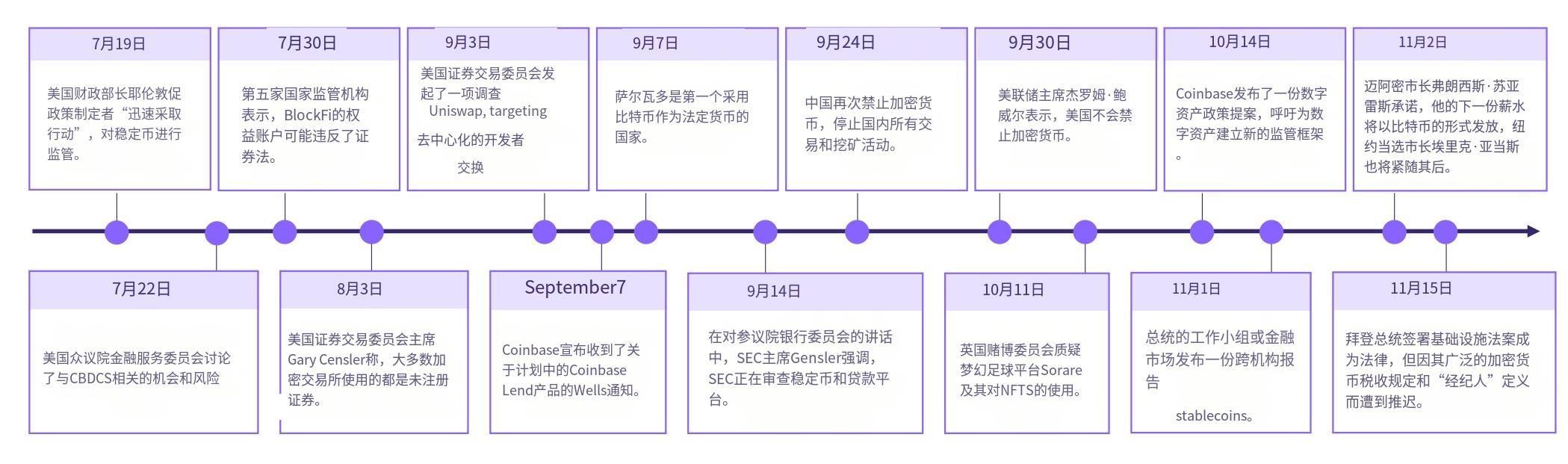
7. Regulators are prioritizing crypto innovation, especially DeFi
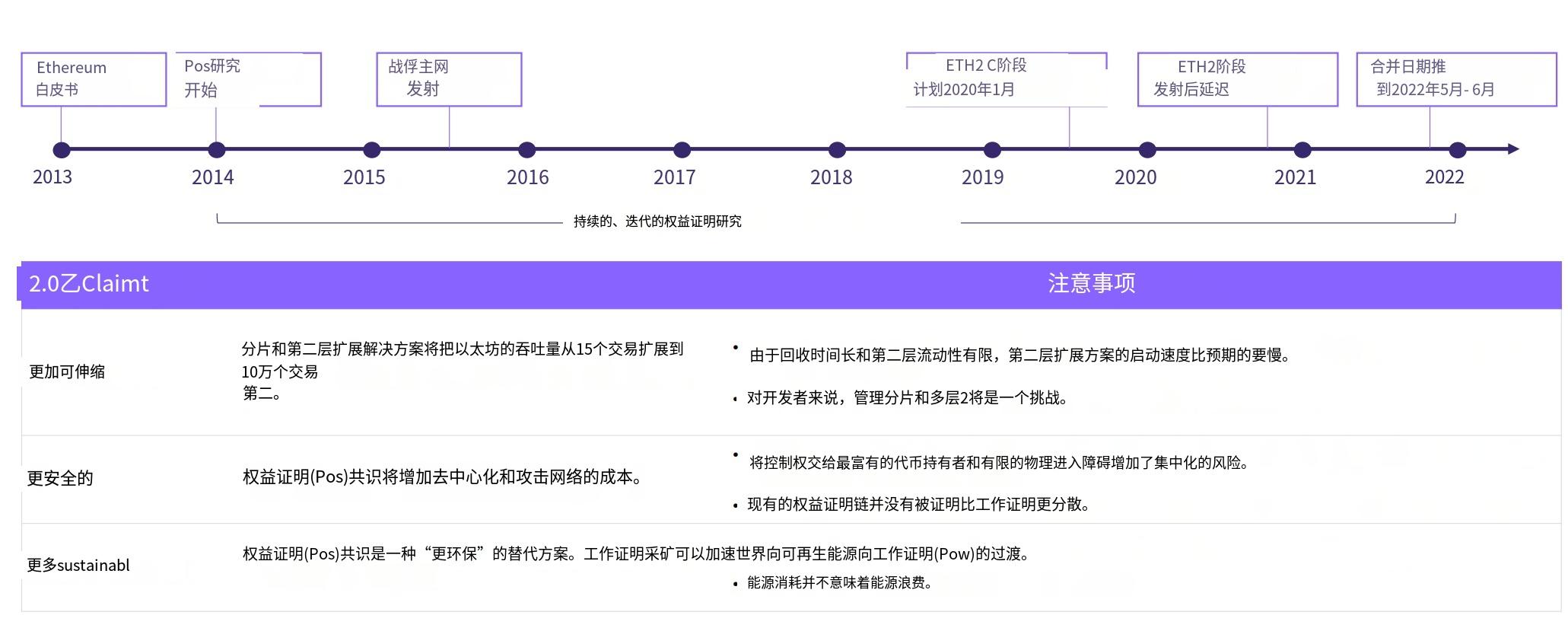
8. Work progress of Ethereum
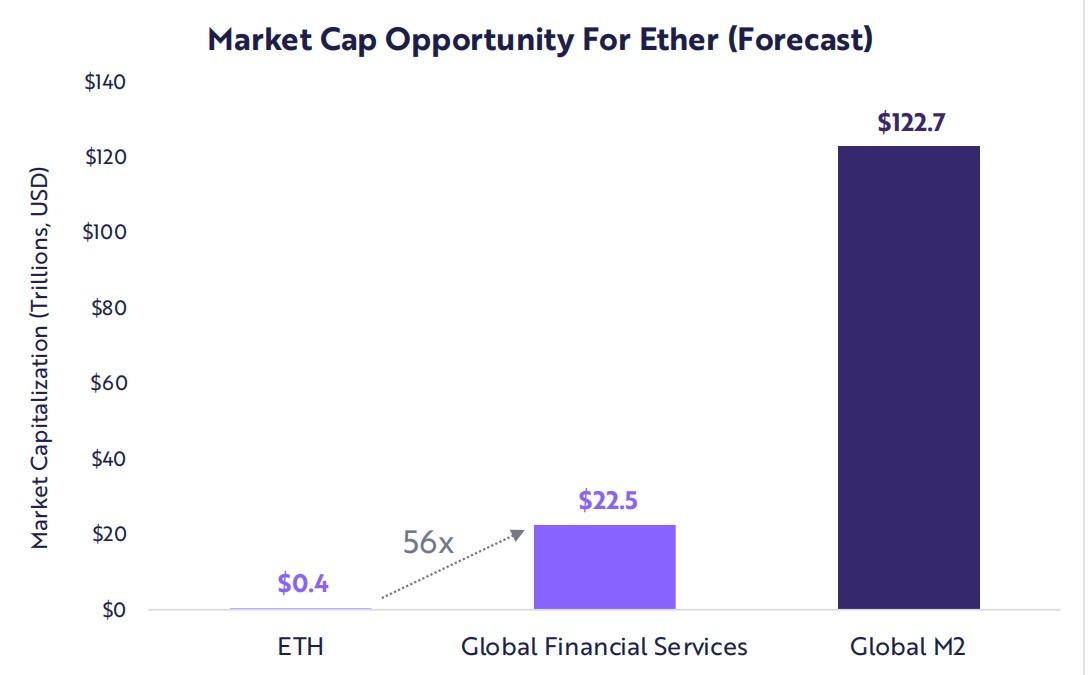
9. The market value of Ethereum may exceed 20 trillion US dollars in the next 10 years
According to our According to research, Ethereum can replace many traditional financial services, and its native Token ETH can also compete as a global currency. As financial services evolve on-chain, decentralized networks are likely to take share from existing financial intermediaries. The beneficiaries of this shift include Ethereum, base protocols, and DeFi, that is, Dapps built on top of Ethereum. As the collateral of choice in DeFi and the unit of account in the NFT market, Ether (ETH) has the potential to capture some of the $123 trillion in global M2.
3. Web3: The Internet Revolution
As consumers turn to the virtual world to spend more time , resources, and the importance of digital assets may increase significantly. A new globalization framework, such as NFT, provides a stable way to take the ownership and control of digital assets away from companies, thereby benefiting individuals.
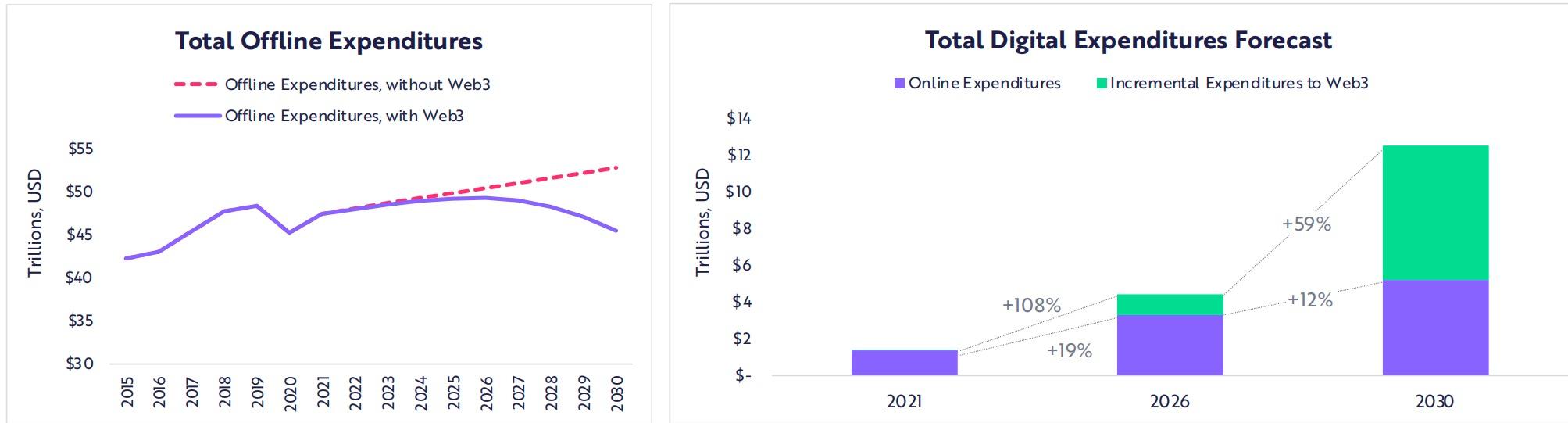
By 2030, we expect Web3 to reduce annual offline consumption by $7.3 trillion and directly contribute to a 28% annual increase in online consumption from now on from $1.4 trillion to $12.5 trillion per year.
1. Digital ownership can accelerate the transition of human activities from the physical world to the digital world
We believe that the Web3 virtual ecosystem will thrive if the number of online participants can truly own digital assets (not just use, rent).
In the traditional Web2.0 business model, users usually face various restrictions on the product or service when they exit. For example, they cannot port in-game assets from one game to another, and in addition, they risk censorship from social media platforms that profit from their content. In contrast, public and decentralized blockchains allow users to store and trade assets in a legal secondary market.
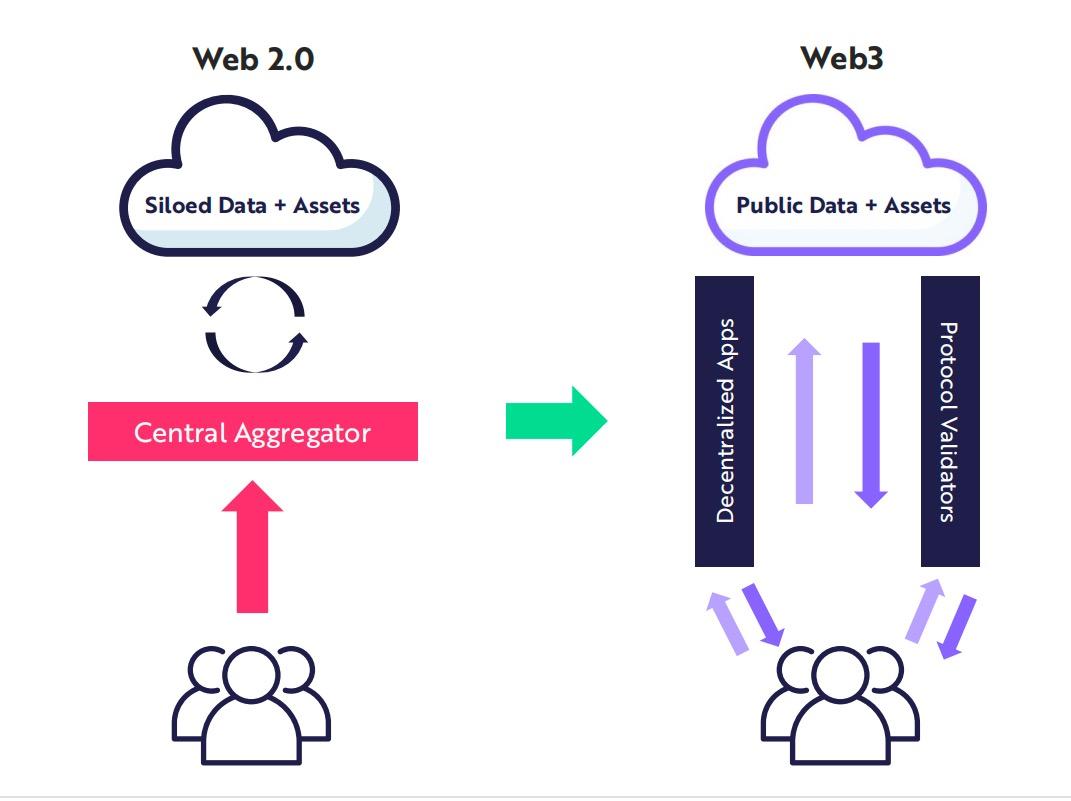
2. An open blockchain facilitates the confirmation of digital assets
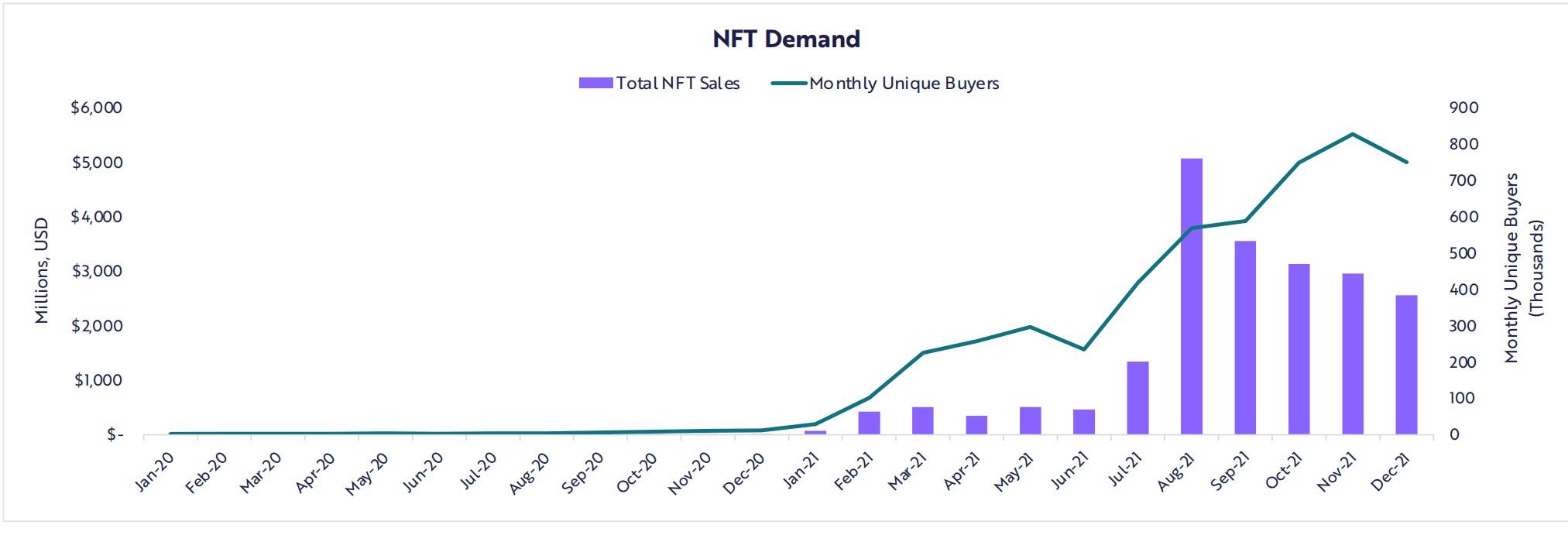
NFT as a smart contract , used to verify the ownership of digital assets on public blockchains, they have the ability to take back the right to deposit, control and verify assets on centralized platforms. In 2021, NFT will generate $21 billion in sales, and the number of individual buyers per month will soar nearly eightfold to more than 700,000.
3. So far, Ethereum has been the first choice for deploying smart contracts
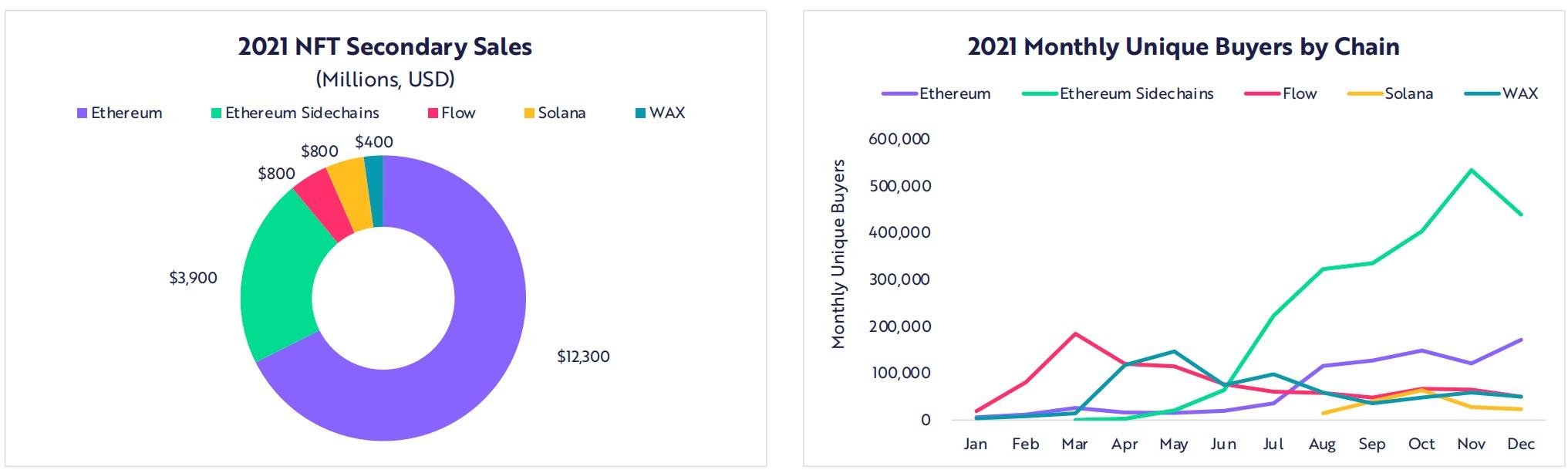
Based on public data, Ethereum is the dominant smart contract platform and the blockchain of choice for NFT issuance, sales and transactions. However, as Ethereum’s fees continue to rise, competition from other layer-1 blockchains and layer-2 scaling technologies increases, and new technologies continue to emerge.
4. NFT may shift from static collectibles to dynamic digital assets
Currently, collectibles and Digital art accounts for more than 75% of Ethereum NFT sales. NFT transactions in virtual worlds such as The Sandbox and games such as Axie Infinity account for about 25% of total Ethereum sales. Based on the development of the video game market, NFT's demand for blockchain-based games and virtual worlds may exceed digital collectibles and art, especially in the next five to ten years, when collectibles and artworks begin to appear in various More use cases emerge in games.
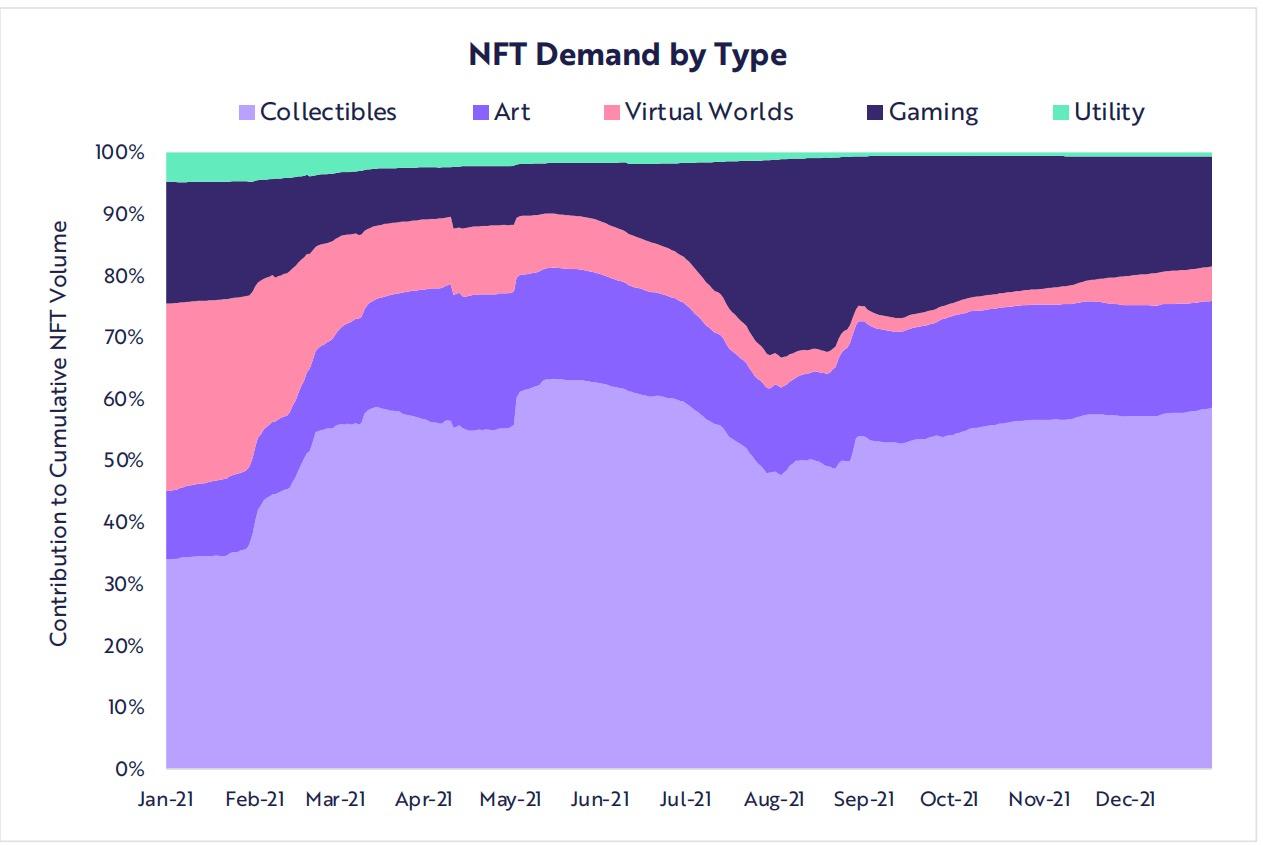
5. Dynamic NFT has created a new and active way of entertainment
NFT's increasing Interoperability enables the convergence of collecting, gaming, socializing and investing.
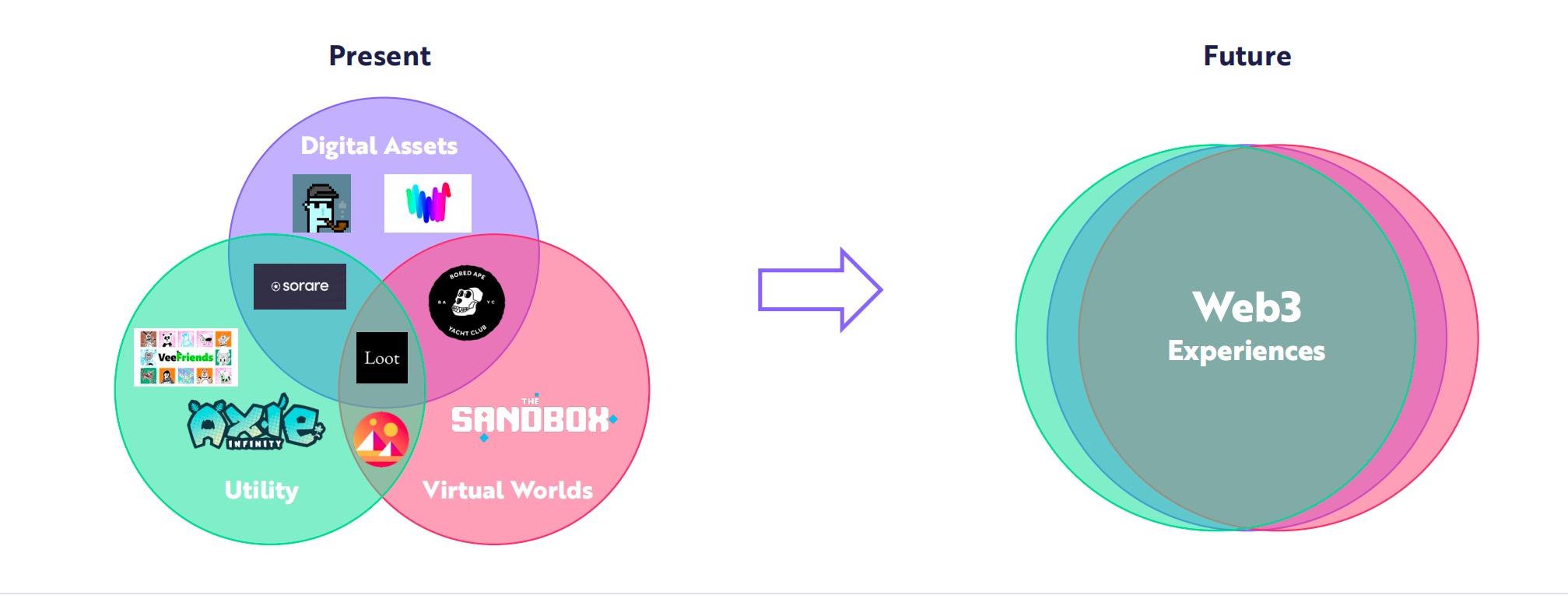
6. We believe that NFT will blur the line between consumption and investment
NFT provides A liquid marketplace where consumers can invest in different digital assets and trade them peer-to-peer. NFT buyers and sellers determine the market clearing price on the block, rather than the data aggregation platform, creating a new form of asset monetization.
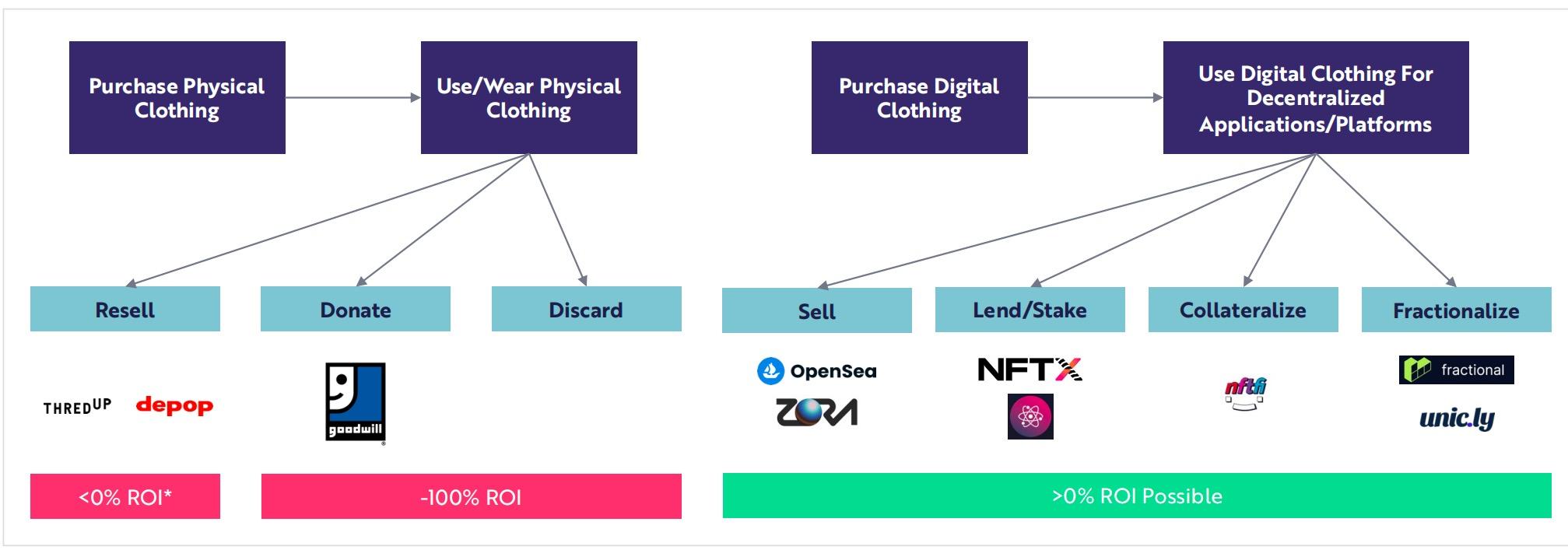
7. Blockchain-based games can both entertain and monetize
Pay-to-play: model requires end users to purchase games for a fixed cost.
Free to play: model is replacing paid play model and unlocking a larger user base. Virtual goods and games-as-a-service are increasing revenue growth for game developers.
Because NFT recognizes the ownership of in-game assets and enables the play and earn mode. Games can raise funds and reward users through NFT sales and in-game rewards.
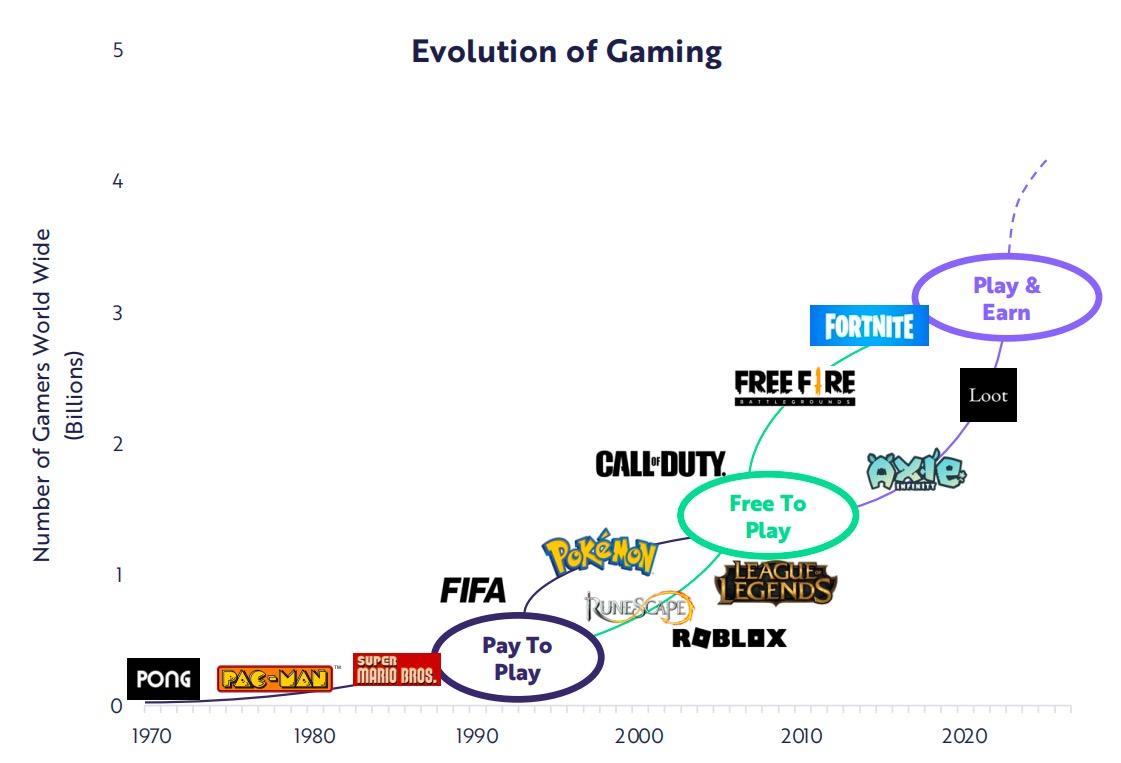
8. NFT projects can maximize returns to individual buyers and sellers
Compared with Amazon, etc. NFT aggregation platforms like OpenSea only charge a fraction of transaction fees compared to centralized platforms. Of course, as the demand for blockchain-based assets grows, so does the gas fee, and there needs to be a measure. But various scaling solutions are currently being developed to help reduce the cost of using the blockchain.
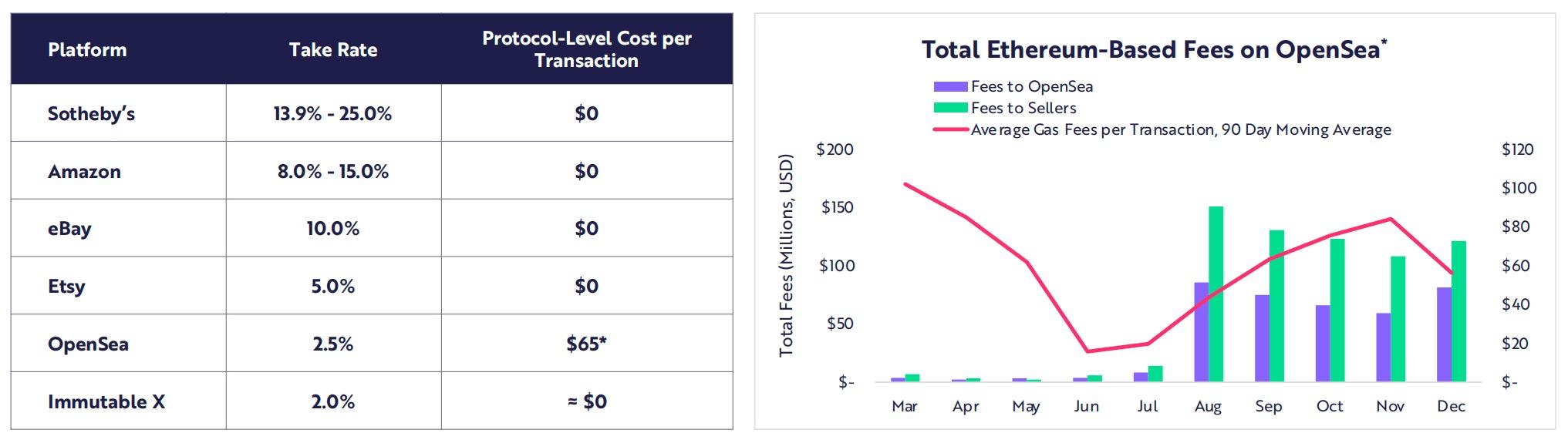
9. If Web3 continues to grow, the monetization rate of online consumption will be close to offline consumption by 2030
Our research shows that monetization of time spent online will grow at a CAGR of 19% over the next decade with Web3, compared to just 8% without Web3.
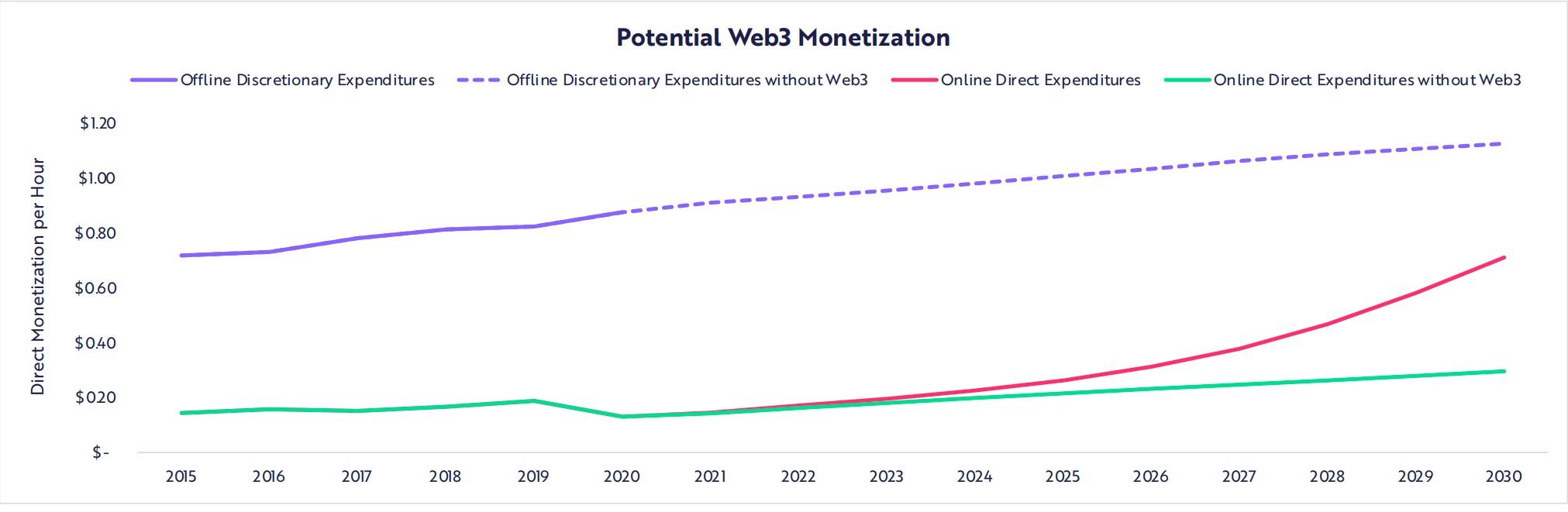
10. Due to Web3, the annual online consumption may reach 12.5 trillion US dollars in the next ten years
According to ARK research, offline consumption will peak at $49 trillion per year by mid-decade and then decline with the advent of Web3. Without Web3, online consumption is likely to grow at a rate of 16% per year, from $1.4 trillion in 2021 to $5.2 trillion in 2030. With Web3, annual online spending could grow at a 28% annual rate to $12.5 trillion.
Original link< /a>
Welcome to join the official BlockBeats community:
Telegram Subscription Group: https://t.me/theblockbeats
Telegram Discussion Group: https://t.me/BlockBeats_App
Official Twitter Account: https://twitter.com/BlockBeatsAsia

 Related Articles