Analysis of the intersection of AI, art and NFT
Original title: " A Gentle Introduction to the Intersection of the AI, Art & NFT "
Original author: Can Kocagil
Original compilation: Babbitt
This article will discuss a very hot topic at present-AI (artificial intelligence), art and NFT intersection. This is a non-technical article, we will discuss the following topics:
1. Blockchain and Machine Learning
2. Algorithms and Generation Art and AI (GANs)
2.1 Application of algorithms and generative models in the field of art
2.2 How deep learning models generate works of art
2.3 The trade-off between AI and art
3. Encrypted art and NFT
1. Blockchain and machine learning
In recent years, ML (machine learning) and Blockchain technology is undoubtedly two influential technologies in the market, and they have set off a boom in various industries.
With the advent of ML, statistics-driven businesses are converting their models to ML models that capture real-world dynamics and randomness. It has huge implications for industries such as gaming, self-driving cars and autonomous transportation, personalized digital media, and customer service.
A blockchain, on the other hand, is a digital ledger of transactions that is distributed across networks of computer systems that support protocol-based programmability (i.e. smart contracts), decentralization, encryption (security), time stamping and immutable transactions. Blockchain has many very practical use cases. Below are some application cases of blockchain systems.
·DeFi
·dApps (Decentralized Application)
·NFT Market
< p>·Internet of Things (IoT) real-time operating system·Personal identity security
·Supply chain and logistics monitoring
·Safe sharing of data
The following figure is a simple distribution map of blockchain applications in different industries.
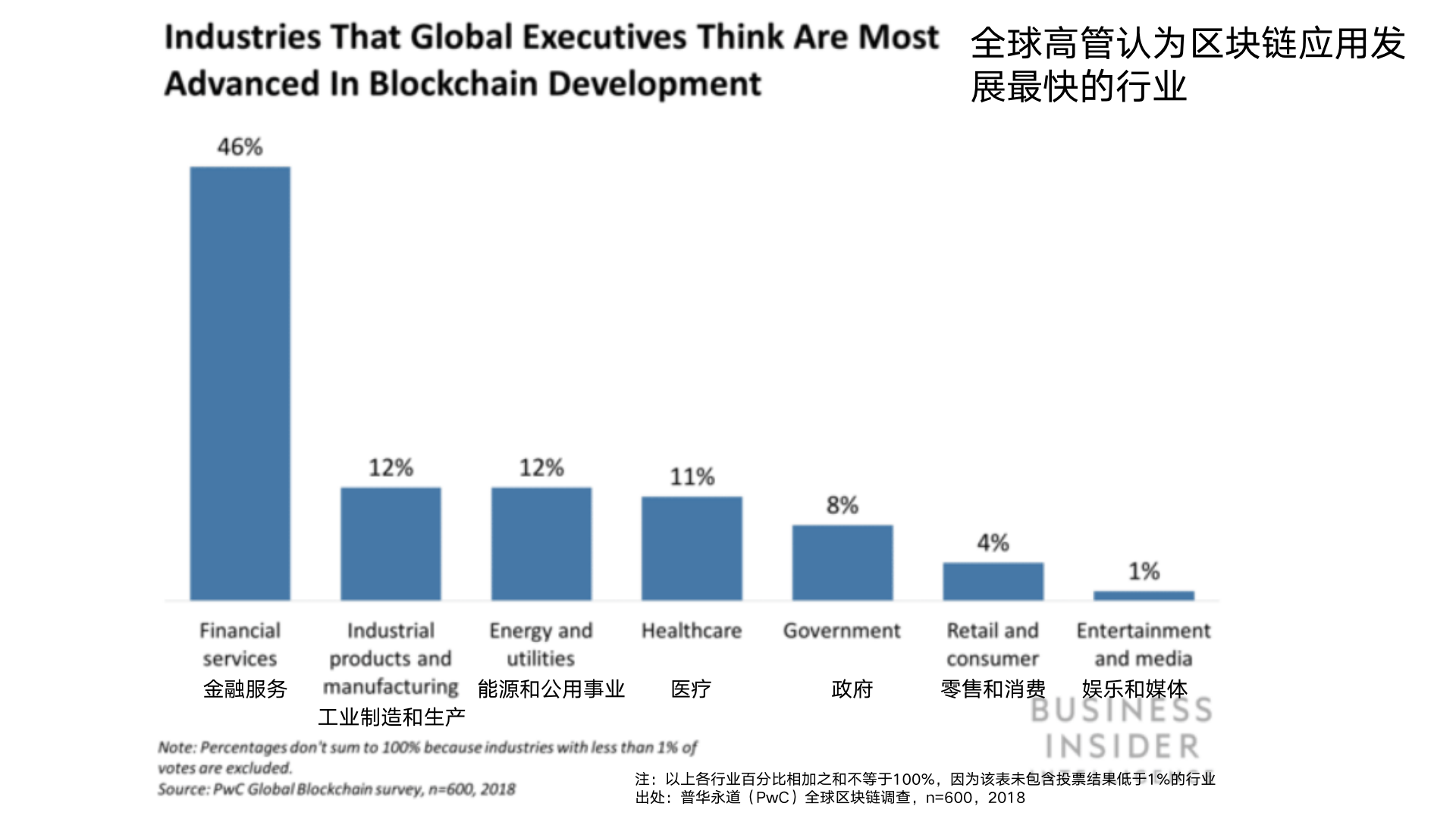
From the picture above, we can see that there are many intersections between AI and blockchain. Next, I will introduce The intersection of NFT (powered by blockchain technology) and AI art (powered by machine learning technology).
2. Algorithms and generative art and AI (GANs)
< br>
First of all, what is algorithmic art? Wikipedia's explanation is,
"Algorithmic art is an art form, mainly referring to visual art designed by algorithm generation. ”
So, in essence, algorithmic art is a combination of computer science and many generative algorithms and art. Therefore, algorithmic artists refer to artists who use algorithms to generate works. Wikipedia's definition is:
"An algorithmic artist is a digital artist who creates algorithmic art."
Hbert is generally credited with coining the term and giving its definition in his own algorithmic form, below is a quick definition of an algorithmic artist.

This explanation is very reasonable. What about "generative art"? We continue to ask Wikipedia -
“Generative art is art created in whole or in part using autonomous systems. Autonomous systems are usually non- Human beings can independently determine the characteristics of artworks without the need for artists to make direct decisions."
Generative art usually refers to algorithmic art, Therefore, we will use the term "generative art" uniformly in the future.
2.1 Application of algorithms and generative models in the field of art
We enter the following The flow chart analyzes each component element one by one.
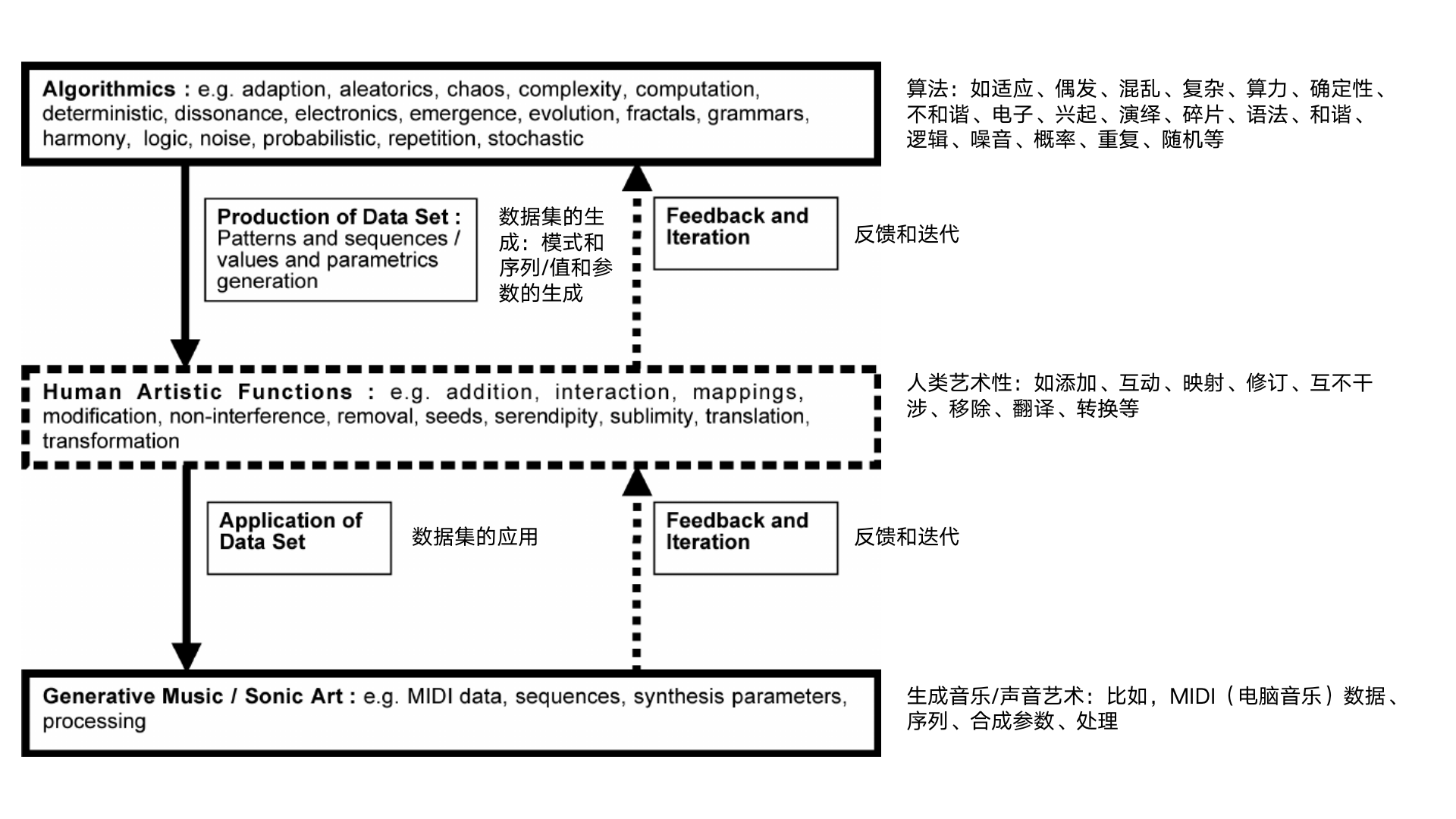
In short, it is to generate algorithm + art data set. From a computer science perspective, that's all we need. So what about from an artistic point of view? What we need is human artistry. We have done a lot of augmentation of algorithms and data to generate "art perspective". This is unique to artists in the context of generative art. In fact, all of the elements in the above chart are scalable to differentiate this artist from others. In the next chapters, I will briefly discuss the importance of human artistry.
In simple terms, an algorithm expert uses a large number of algorithms and data that fit his/her needs or visions to generate a work with human enhancements.
2.2 How does a deep learning (AI) model generate artwork?
When we talk about AI, we usually mean Machine Learning (ML) or Deep Learning (DL), although there are exceptions. In this article, when I use the term AI, I mean ML&DL. So the question becomes "How to generate artwork using ML&DL?"
Let's take a quick look at the diagram above. Now, the "algorithm" element in the diagram above is replaced by ML&DL. So we feed art data into ML&DL algorithms to generate artwork. There are also many ML&DL algorithms that are generative in their respective contexts through visual effects and signals. Probably the one we use most often is the Generative adversarial network (GAN). I won't go into the details of GANs in this article, but I can briefly describe them. GANs are very powerful generative networks that learn the distribution of training data. For non-technical people, it means that when we estimate the distribution of training data, we can use existing methods such as visual art, music, video, etc. (depending on its contextual requirements) to generate new data. For To humans, it looks pretty real on the surface, and is both realistic and artistic.
Therefore, GANs are very powerful systems that can create, design, draw, compose, enhance, generate works of art. Refik Anadol, a well-known artist in the field of algorithmic art, is a media artist, director and pioneer of the aesthetics of machine intelligence. He and his team applied a series of state-of-the-art ML&DL algorithms to focus on the challenges and possibilities of ubiquitous computing for human beings, and to explore what it means to be human in the age of artificial intelligence. He explores how our perception and experience of time and space has fundamentally changed as machines dominate our everyday lives.
2.3 AI and art balance
This part is mainly is a subjective evaluation. The question here is: "What is the exact balance between AI and art when generating AI art?" I don't think that balance exists. For an application itself, every manipulation and extension of the algorithm and data ends up in a different combination. Art data, of an artistic nature, reveals more than just pixels, and the fact that "generative" models can be formed in their own context through a few manipulations. The success criterion here is that without metrics in our test set, or even using the model's most successful points, we still have room to learn from an AI perspective, but is this necessary?
< br>
3. Crypto art and NFT
In today's art world, digital artwork has developed rapidly in recent years in the field of traditional art crafts such as painting or sculpture. With their tireless pursuit of art, artists have embarked on the road of digitalization in keeping with the times. Works that have physical form are unique. However, this is not the case for digital artwork. Because digital works of art, stored on computers or in the cloud in the form of digital files, can be easily copied and printed. The situation is different when converting works of art into encrypted art and NFT (non-fungible tokens), because the blockchain retains "uniqueness and irreplaceability." Let's learn more through Wikipedia's definition:
"Crypto art (Crypto art, which can also be written as CryptoArt or Cryptoart) is an art related to blockchain technology category.
In the mid to late 2010s, with the development of blockchain networks such as Bitcoin and Ethereum, it became a niche art category. Encrypted art has rapidly gained popularity largely because the underlying technology provides unprecedented capabilities for anyone to buy, sell, or collect purely digital artwork in a decentralized manner."
< p>We can think of encrypted art as collecting and trading digital works in the form of blockchain. What about NFTs? Let me introduce NFT below.
The buyer of the NFT artwork owns the "original" version of the work. In this way, this one-of-a-kind piece will forever belong to its buyer. Thanks to NFT technology, digital artwork can maintain its originality and be traded. This technology proves the uniqueness of digital design and artwork, which is a revolution in the history of fine art. It not only adds great value to works of art and artists, but also realizes the globalization of works and artists, allowing artists to meet art lovers from all over the world, and allowing artists to find each other's peers in similar fields. This model has a wide range of effects.
Art data and algorithms are not only the combination of pixels, but also have their artistry. Advances in artificial intelligence and the existence of NFTs allow us to unify the field and present the resulting "generated" artwork as a unique work.
Original link
Welcome to join the official BlockBeats community:
Telegram Subscription Group: https://t.me/theblockbeats
Telegram Discussion Group: https://t.me/BlockBeats_App
Official Twitter Account: https://twitter.com/BlockBeatsAsia
 Related Articles