The influence of NFT art on digital art from the perspective of digital art, creators, market ecology and structure
原文标题:《 DAOrayaki |NFT 艺术对数字艺术的影响 》
Original author: MoMo@THUBA
Abstract
With the development of blockchain technology and non-homogenous token NFT on blockchain, more and more NFT artworks appear, and NFT gradually attracts the attention of the art circle. The smart contract on the blockchain can be a way to confirm the copyright or ownership of digital artwork. NFT is a general term for digital artwork after it is linked on the blockchain technology.
Due to the early development of blockchain technology and NFT art, there is a lack of research related to NFT art in the art world. From the perspective of digital art, this paper introduces the influence of NFT art on digital art and digital art market, and then studies and analyzes digital art, creators, market ecology, market structure and other aspects. In addition, this paper also reveals the future development direction of NFT, and provides creative ideas for related artists.
Q1 Chapter 1 Status quo of digital art and NFT Art
With the birth of computers and the development of related technologies, digital works of art are constantly innovating and iterating. Compared with homogeneous digital currency, non-homogeneous Token NFT (Non-Fungible Token) is a digital item on the chain based on blockchain technology. Such works of art are called NFT works of art. This chapter introduces the development status of digital art and NFT art respectively, mainly including the origin, classification, development, characteristics and other aspects.
NFT art is a new art expansion brought by technological innovation, just as the invention of photography technology has brought great changes to western painting art, promoted the emergence of western modern art schools, and also formed a separate category of photography art. Today's NFT technology can not only promote the development of modern art, but also eventually develop into a unique art category due to its own unique artistic characteristics.
1.1 Introduction to digital art
1.1.1 Definition of digital art
Digital art refers to artistic works created or processed by digital equipment. On the one hand, using new media and means to create or reproduce existing art forms, on the other hand, using media or creative means to create new art forms, which are mainly determined by computers or algorithms. Such works of art are usually spread through the media of the Internet, bringing people a brand new aesthetic experience and feelings.
From the form of presentation and the classification of technical means, digital art mainly includes the following forms: digital image, interactive installation, virtual reality, multimedia, cartoon animation, digital games, network art, digital design, animation, digital photography, digital music and so on. In other words, digital art is a multidisciplinary interdisciplinary field that integrates art and science and technology, covering art, science and technology, culture, education and many other aspects. All media culture produced by digital technology and with independent aesthetic value can be attributed to the category of digital art.
Compared with traditional works of art, digital art is characterized by diversity, virtuality, convenience and interactivity, as follows:
Diversity: Digital art is no longer constrained to the traditional art and the material in the real world of physical limits, you can use digital means repetition reality or existing form of art, can be automatically generated by computer algorithm creation in the form of art, is a collection of nature, the humanities and social sciences comprehensive discipline, digital art breakthrough the limitation of time and space, It makes artistic expression more extensive and pluralistic. Rapidness: Digital art is a virtual art form composed of 0 and 1 bytes, existing in the virtual world, it does not have the carrier in the physical world, can be quickly spread in the Internet, as long as a upload button, the whole world can appreciate the art work. The transmission of digital art is fast, avoiding the problems of handling and display in the traditional world. Interactivity: Digital art to break the traditional art form, will change original single static display way to experience, interactive way of multiple experiences, the viewer's perspective and from a parallel change in order to cross the line, into the work of art, as an input part of the works of creation, and artists together to complete, feeling work dimension more widely and deeply.
Virtuality: Digital art consists of bytes stored as data in virtual space. Storage and dissemination are realized in the virtual world with the help of Internet technology, fast conversion, dissemination, storage and replication. At the same time, this attribute also makes digital art needs to rely on computers and networks and other electronic equipment.
1.1.2 Development of digital art
Digital art originated in the 1960 s, initially engaged in the study of computer scientists use computers to explain the image, aesthetic mathematical theory of sound painting, and other visual phenomena, but their results for the people has brought great inspiration, made a groundbreaking work to the generation of digital art. Later, artists began to try to use new techniques for artistic creation. During this period, digital painting was very simple, with only lines, circles, triangles or polygons and other figures, and the colors were monotonous and boring. With the development of computer technology, more and more artists begin to understand and pay attention to digital painting using computers, and digital art also integrates into the art field, forming an independent branch.
Nowadays, more and more artists use computers to create art, and digital art has become an important category of many galleries and exhibitions, from The Electronic Art Festival Linz in Austria [1] to the Digital Art Forum NODE15 in Frankfurt [2], China International Digital Art Exhibition [3], Tsinghua University Art and Science Exhibition and other world-class exhibitions provide a special platform for the display of digital art and promote the development of digital art. At the same time, the world's top universities are also actively exploring, for example, the Massachusetts University of Technology in the United States set up the media Lab, Tsinghua University set up the Tsinghua Institute of Arts and Science Innovation, are actively exploring the combination of technology and art theme research.
1.2 NFT is introduced
1.2.1 Definition of NFT art
NFT is a non-fungible Token. It is a non-homogeneous Token based on blockchain technology. All nodes in the global blockchain network jointly guarantee the ownership of NFT and store and trade NFT through smart contracts on the blockchain. NFT is now being used to commercialize digital objects in different environments, such as GIFs, tweets, virtual trading cards, physical images, games, sports collectibles, virtual real estate, and more. The emergence of NFT makes digital products easy to copy and compatible with ownership.
NFT art refers to a way of copyright or ownership confirmation of digital art, which was originally called replicable and difficult to trace, through blockchain, to transform it into a unique, verifiable and easily traded digital asset. NFT art is mainly manifested in the completion of data storage on the blockchain and the interaction of smart contracts.
NFT art is characterized by composability, programmability, uniqueness, tradability, provable scarcity and community. The specific performance is as follows:
1. Composability: Various elements in NFT art works are easy to split. Artists can split and draw elements in NFT, and then combine them by computer to generate DIFFERENT combinations of NFT. For example, the popular head picture of the Boring Ape (Figure 1) has this attribute. The artist designed the background, clothes, earrings, eyes, fur, hat and mouth of the boring ape, and then randomly generated them according to the 7 attributes. The artist then selected and generated NFT.
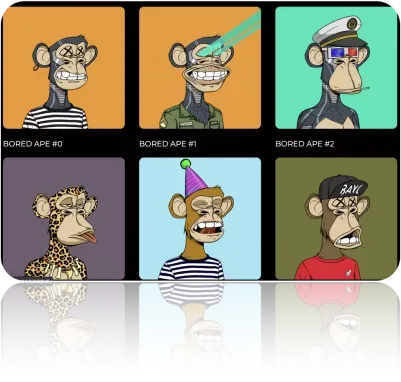

FIG. 1 Boring Ape Yacht Club Series FIG. 2 The Last Supper
2. Programmability: Based on blockchain technology, artists can create more personalized scenes and conditions through smart contracts when generating NFT art, so that holders of NFT art can perform secondary programming or re-creation of NFT art. For example, the Crypto cat NFT combines DNA of different crypto cats into a new generation of crypto cat NFT through different combinations and reproduction using smart contracts. Another example is The Last Supper (Figure 2), which consists of 22 layers, with different layers for characters, backgrounds, decorations and other elements. The owner of the layer can change one element of the painting to make the whole painting change, but the owner of the main painting can't decide how the painting changes.
3. Uniqueness: NFT art is stored in the block chain, each NFT art it mapping block only the serial number of the chain and through the node to prove ownership and uniqueness, makes digital art authentication, solve the problem of copyright of digital art, the uniqueness of this distributed node to prove ownership greatly solve the problem of the trust of the storage, The data is stored in the chain, which is open, transparent and accessible, greatly avoiding the occurrence of copies of digital artworks and the trust problem of digital artworks forged by centralized companies through the modification of data.
4. Tradability: NFT art has uniqueness, do not tamper with the sex and the characteristics of traceable, make it become the digital art is stored in the digital proof of the chain, also is the commercialization of art, by trading contracts for chain, ensure reliable trading, solved the plight of digital art is difficult to buy and sell, for a certain liquid, It has also brought digital art to Christie's, one of the world's top auction houses.
5. Provable rarity: When NFT art is released, artists upload a series of works or set the number of editions of individual works of art when their works are generated into NFT. These NFT art works can be queried and traceable on the chain, and the scarcity of each work of art can be understood through calculation. For example, the Crypto Punk series [10] has a total of 10,000 heads, but only 9 of them are alien heads. Due to their scarcity, the high collection value is created, which leads to the increasing selling price of the Crypto Punk alien NFT series.
6. Community: NFT art has a high degree of community, relying on the advantages of social networking on the Internet. Artists can directly communicate with members in the community, and at the same time, they can make art by voting in the community. Participants in the community are both consumers and disseminators. Members of the community will spontaneously build and maintain the common interests of the community and promote the exposure of information such as artistic works. For example, with the emergence and spread of various emojis, such as Rainbow Cat and Frog, artists can directly draw emojis and other works in the community to generate NFT and then sell them. Because there are a large number of audiences in the community, such works of art are easier to sell and change hands. The tradability of NFT has also made it valuable to have pictures, avatars or videos that were once thought to be lacking.
Currently, there are many different ways to classify the types of NFT art, but they lack completeness and systematicness. According to the different forms of expression and creation methods, NFT art is divided into seven categories: painting, photography, generation, avatar, game, video and GIF.
1. Painting: Digital paintings created by artists through digital technologies, such as Beeple artist's NFT art work Every Day: The First 5000 Days (Figure 3) [15] auctioned at Christie's.
Figure 3. Every Day: The First 5000 Days Beeple
2. Generation: artists create unique works of art by using computers to set specific programs and finally run algorithms through computers. For example, NFT Art works sold on the platform Art Block are generated by computer algorithms, and then selected by artists, and then generated by the chain of NFT Art.
3. Heads: This type of NFT art is usually composed of heads of different people or animals in the form of a series. For example, CryptoPunk is a collection of 10,000 pixelated water faces that are grouped into different categories: human, ape, zombie, and alien.
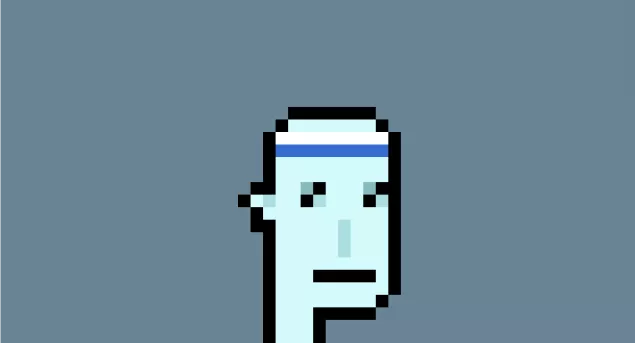
Figure 4 Crypto Punk 3100 & NBSP;
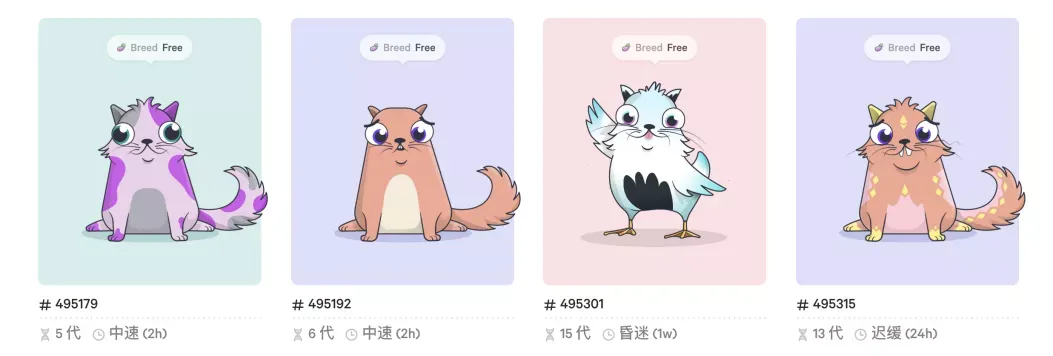
Figure 5. Crypto Cat
4. Games: This kind of NFT works of art add new playing methods to the works of art through smart contract, making the works of art have the characteristics of games. CryptoKitties[10] (Figure 5) is the representative of this series. The owners of these CryptoKitties can breed new breeds of cats according to the content set on the smart contract.
5. Age: 43 NFT is mainly generated by video, which includes artist-led artistic creation and highlights of various streaming stars. A typical feature is NBA Star card [8] (FIG. 6), which is composed of short videos of NBA players' highlights shooting moments, from the shooting video clip of the player James. Hundreds of thousands of dollars.
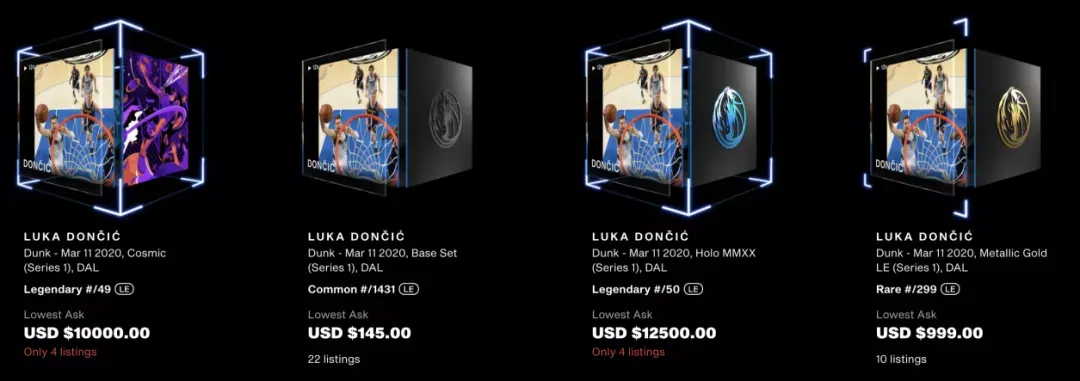
Picture 6 NBA Star Card
6.GIF: this kind of art works compress the pictures using special algorithms, and form the picture through multiple frames, so that the art works can achieve the effect of animation. Different from NFT of video, this kind of artwork has less information and the picture quality is not clear and smooth, but it can save the time of information transmission and is very conducive to spread on the Internet, usually in the form of expression packages.
7. Photography: NFT generated by up-chain photography works shot or produced by digital equipment. Compared to the traditional photography works need to print the signature for sales, in order to prevent the theft of copyright, or directly to the copyright authorization, to get a little income, NFT can make photography for digital format on the web site directly, make the digital work was made by the protection of the rights of the photographer, at the same time, the trading models that have changed the traditional photography.

FIG. 7 Photographic work NFT Twin Flames sold for $1.1 million [4]
1.2.2 Development of NFT art
The first popular example of NFT art was CryptoKitties, a group of artistic images representing virtual cats. It allows collectors to buy, collect, breed and sell them on Ethereum. In December 2017, CryptoKitties caused a boom that led to congestion on the Ethereum network, and CryptoKitties are considered to be the prime example driving the cryptocurrency market in 2017.
In July 2020, the NFT market began to grow and attracted great attention in March 2021, when the artist known as Beeple sold his NFT work Every Day: The First 5,000 Days at Christie's for $69.3 million [5]. The purchase was the third highest auction price for a living artist, behind Jeff Koons and David Hockney. In September of the same year, Sotheby's NFT netshot "Ape in! The 101 boring ape heads were auctioned at $24.393 million [12], becoming the second highest NFT price after Beeple's Every Day: The First 5000 Days. In addition, other NFT artworks such as Cryptopunks and Auction Winner Picks Name are also traded at high prices on the market. Christie's auction of 9 Cryptopunk heads sold for $16.96 million [6], and the first tweet sold for $2.9 million. Auction Winner Picks Name, an NFT with music videos and dance music, sold for $1.33 million. NFT works of art, which have been auctioned off at new highs, are gradually coming into the public eye.
Many mainstream artists have also joined in the creation of NFT art, trying to create and explore new things. Artist CAI Guoqiang successively launched two NFT art works, The Eternity of A Moment -- The Detonation of 101 Gunpowder Paintings, which was sold at 2.5 million DOLLARS [6], and Blow Yourself up, a total of 99 editions, at 999 dollars per edition [7].
NFT art has not only entered the traditional old auction houses, but also become a new means for artists to try to explore, and has been recognized by the mainstream art world.
Q2 Chapter 2 The influence of NFT art on digital art
NFT art is a general term for digital art through block chain confirmation, which belongs to a branch of digital art. Both are also art forms that exist in virtual space in the form of information and can be copied and transmitted through the Internet. NFT art is different from digital art in that digital art has the problem of forgery. NFT art can be traced from its creation to its transaction and becomes the chain proof of digital art. The programmability of NFT is a further step in the interactivity of digital art, with the ability to interact with viewers around the world through smart contracts to produce new and verifiable works of art. Moreover, NFT art is generated and traded in ways that bypass the traditional dominance of physical gallery and museum systems and lead to new artistic trends. With the development of NFT art, NFT art has brought new changes and great influence to the creation and market of digital art.
2.1 The influence of NFT art on digital art works
2.1.1 Protect the copyright of digital artwork
In traditional art circles, the digital artist's works hard to get the copyright protection of digital format is easy to copy, copy, copyright is difficult to define, although this kind of digital art works often appear in many galleries, institutions and so on each big top art fair, but it was rejected from the art auction houses throughout the year, As a result, digital art works are constantly marginalized in the art trade, and also greatly weaken the enthusiasm of artists to create. The emergence of NFT technology makes the copyright of digital artwork get a verifiable way. Although the digital artwork that generates the NFT can still be viewed and downloaded on the Internet, its ownership is unique and recognized by the entire network.
2.1.2 Expand the financial and social attributes of digital artworks
Artwork has financial attributes due to its scarcity, historical and cultural value, creativity and other characteristics. NFT art, as a form of digital art on the chain, not only makes digital art obtain copyright certification, but also solves the problem of lack of digital art, making it among the ranks of fine art. NFT art provides digital art with flexible and diverse circulation modes and trading scenes to expand the financial attributes of digital art. For example, NFT works of art can be quickly circulated and bought and sold through the Internet and blockchain technology. Secondly, multiple NFT works of art can be sold in the form of blind boxes, and NFT holders can only know the content of their OWN NFT works after buying them, so as to meet the demand for novelty. Or the expensive NFT works of art can be fragmented transaction, the copyright of the work will be split, participants only need to spend a very small part of the money, can own part of the copyright of the work; Or through smart contracts for NFT art pawns and so on. And these diverse trading patterns are secured by smart contracts on the blockchain, providing trust to buyers and sellers who have never met.
NFT art expands the social nature of digital art. In today's society, the Internet link to the world, became known as a means of communication, but also become a display personality identity platform people through online social media for personal promotion, avatar has become the social showcase, a factor of NFT works of art, makes digital social graphs also owns the copyright and uniqueness, The high transaction fee makes this kind of NFT art become a point for people to show off in social networking. For example, Stephen Curry, a famous NBA star, changed his twitter profile picture to buy a boring ape with 180,000 DOLLARS [11]. NFT art adds social attributes compared with digital art.
2.1.3 The means and content of artistic creation are more diversified
The content of the conventional digital art creation is more of a picture by static or dynamic video, or combined with some means of interaction, NFT art is the digital art on the chain after generating NFT, combined with intelligent contracts on the chain, make digital art creation means more diversification, strengthen the combination of creation and secondary creation creation means such as shift, circulation.
1. Combination creation: separate the various parts of the art work, draw them separately, and then combine them through computer algorithms to create a number of different combinations of art works.
2. Secondary creation: Through the smart contract, the artist can give NFT the right to create the artwork again. The artist can give the owner the right to change some parameters in the work, so that the NFT art works can present different artistic appearance for different owners, or combine two or more NFT works by setting specific scenes. In this way, a new NFT is born or a new upgraded version of NFT art is synthesized, or NFT art works created in the form of words are Loot[9], and then expanded through the community.
3. Circulation transformation: Usually an art work is the final appearance when the art is completed, but NFT artists can change the art work every time it is traded through the smart contract, so that collectors do not know what the final appearance of the purchased art work will be.
2.2 The influence of NFT art on digital art creators
2.2.1 Expansion and extension of the role of the creator
NFT art allows the role of art creators to be expanded and extended. Artists can not only with traditional art creation is the main body of self expression, also can directly through the Internet platform and collectors community dialogue, the content of the artists can be generated by the community to vote, to make art, this new relationship makes artists can became the center of its artistic creation but not the only participants. For example, the "Text Gene Project" created by domestic artists builds a huge text gene bank based on a large number of interdisciplinary words, and generates poems with unique samples according to the words left by community participants for artistic creation.
At the same time, NFT art has the characteristics of secondary creation, which makes the artistic creation completed by the artist alone become the joint creation of the artist and the holder. The holder has changed from a simple relationship of buying and selling to a cooperative relationship, which makes the secondary creation according to the rules formulated by the artist and completes the artistic creation jointly with the artist. The creator of a work of art can be a large number of unknown holders from all over the world, making the role of the creator expanded and extended.
2.2.2 Protection of rights and interests of art creators
Based on blockchain technology, NFT Art realizes immutable and distributed storage of content, ensuring that the transaction price and process of NFT works are open, transparent and truly traceable. Traditional royalty mechanism is difficult to monitor the secondary transaction and circulation of art works. After solving the problem of digital art's true and false copyright and orderly inheritance, NFT Art can obtain corresponding royalties after each on-chain transaction through on-chain contract execution, and permanently have the right to profit from art works. NFT protects the rights and interests of art creators and has a positive and far-reaching impact on artists' creation and the market.
At the same time, the emergence of NFT art has lowered the threshold for artists to enter the public horizon. The decentralized trading platform and simple online trading mode help those young, non-mainstream and personalized artists' works to enter the market and gain more recognition in the face of NFT art collectors from all over the world.
Q3 Chapter 3 NFT's impact on digital art market ecology
3.1 Ecological status of digital art market
Nowadays, with the development of science and technology, digital art become each big exhibition as well as the main rendering of various media, become a backbone of contemporary art, because of its convenience, fast speed and maneuverability features make digital art has become the choice of contemporary art, art is usually use sound and light, mechanical, Internet, artificial intelligence, etc. Various materials and techniques of expression have also generated many creative themes, such as futurism, industrial punk, cyberpunk and so on.
Despite the boom in digital art exhibitions, the art trade market is not active, and most collectors are worried about whether to buy and collect digital art. On the one hand, they are worried that someone may have copied the content of the original work, on the other hand, they do not understand how to assess the ownership of works of art and the value of digital art. According to the research report of Art Basel in the first half of 2021, the sales volume of digital art works only accounts for 1% of all the sales volume of art, and the sales volume of digital art is basically concentrated in the primary market [13]. The concentration effect of the head of the traditional art market is obvious. According to statistics, The transaction volume of the top 1% of art works accounts for more than half of the annual art transaction volume [13]. This series of data shows that digital art is unsatisfactory in terms of transaction volume, cost and circulation, and is mainly concentrated in the top artists, while emerging artists occupy a small share in this market.
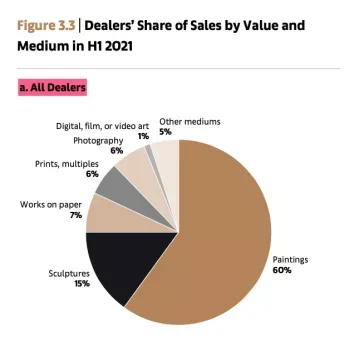
Figure 8 Proportion of sales of art works [13]
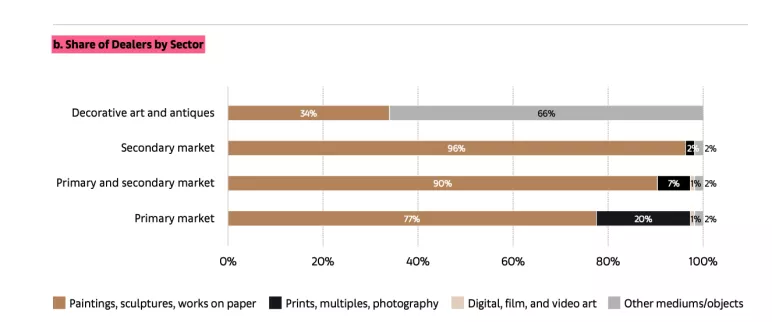
FIG. 9 Proportion of transactions in the primary and secondary markets of art works [13]
3.2 NFT art market ecological status quo
NFT works of art have also changed the mechanism of the art market significantly. At the beginning of this year, Christie's sold the art work "Every Day: The First 5000 Days" at a high price of $69.3 million [15], and the market's attention to NFT art increased significantly. Subsequently, major auction houses successively sold NFT art works. For example, the famous street artist Banksy's work Mornos, whose creator destroyed the original work and generated the electronic version into NFT, was finally sold in OpenSea at a high price of about 2.47 million yuan, three times more than the purchase price of the original work. In August, Christie's held its first design NFT auction, featuring a collection of 10 colorful NFT designs by American designer Misha Kahn, whose biological forms are imagined as functional furniture. In September, the world's first NFT physical gallery, Creation Art Gallery, officially opened at K11 Musea in Hong Kong, along with the first diversified exhibition of NFT art themed for educational purposes. It can be seen that NFT art has gradually entered the horizons of the public through various channels and become a hot spot in the emerging art market and the object pursued by the collection market.
According to sales data statistics for all NFT on the Ethereum network [14], both sales and volume on the blockchain increased significantly in 2021. Sales grew from $17.4 million in the first half of 2020 to nearly $1.3 billion in the same period in 2021, with the number of buyers and sellers at the NFT Art Market reaching 53,198 and 18,429, respectively, by the end of the second quarter of 2021.
As can be seen from the data chart, the collection category and the art category occupy almost half of the NFT market respectively, while the NFT category such as games, sports and meta-universe is also rising slowly [14]. Although the volume of transactions and unit prices in the NFT market are relatively small, the proportion of active artists, artworks and collectors in the NFT market is much higher than in the traditional art market.
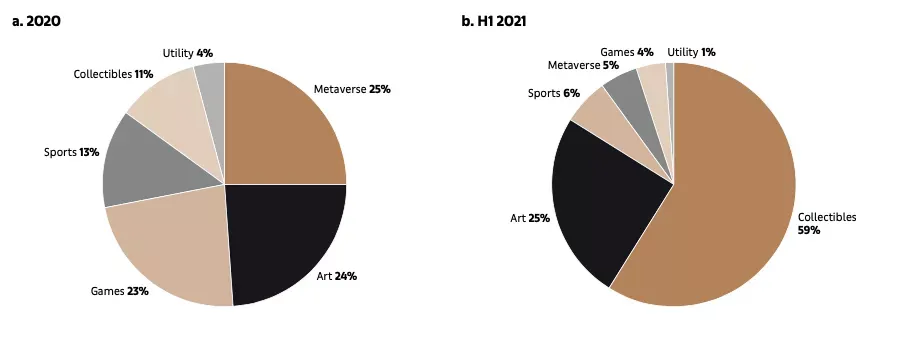
Figure 10 market share of 2020NFT artwork sales Figure 11 Market share of 2021NFT artwork sales
3.3 The impact of NFT on digital art market ecology
3.3.1 Impact of market structure
As can be seen from the distribution of the transaction value of the art market in 2020, the transaction value of digital art is only more than 66 million US dollars, accounting for 0.6% of the total transaction value of art in 2020. That figure changed dramatically in the first half of 2021, when transactions reached $1.3 billion, up 747% from a year earlier. The positive attitude of most dealers and collectors towards NFT art has had a very positive impact on NFT art. According to statistics from the first half of 2021, 16% of the works currently owned by collectors are digital art works, video and video art works, and the purchase of digital art accounts for 12% of the median expenditure of collectors. Although mainstream art forms still account for a large portion of collectors, But nearly half of the collectors surveyed said they would be interested in buying digital art in the next 12 months. It shows that digital art has gradually become an important category of collectors after the recognition of copyright.
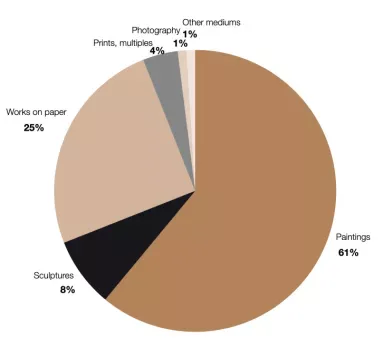
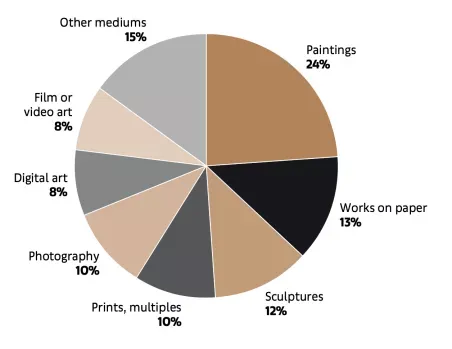
Figure 12 2020 Distribution of transaction volume of art market & NBSP; Figure 13 2021H1 Classification of artworks owned by collectors
In the traditional trading market, the trading of digital art is basically concentrated in the primary market, and relatively few in the secondary market. NFT art has changed the structure of the digital art market. In 2020, the majority of art-related NFTS were sold in the primary market, accounting for 65% of sales and 71% of turnover. However, by the end of the second quarter of 2021, although the primary market volume is still dominant, the ratio of the value of the secondary market to the primary market sales is half, indicating that the secondary market transaction is more hot. This is mainly due to the fact that blockchain has solved the trust problem of the scarcity of digital artworks, enabling digital artworks to execute the transaction of digital artworks on the chain through smart contracts, which no longer requires the guarantee of the centralized platform, and collectors can safely buy digital artworks from the secondary market. The simple trading mechanism and the round-the-clock online trading mode of the decentralized trading platform also enable collectors to invest and buy and sell artworks with higher efficiency and enhance the liquidity of the secondary market.
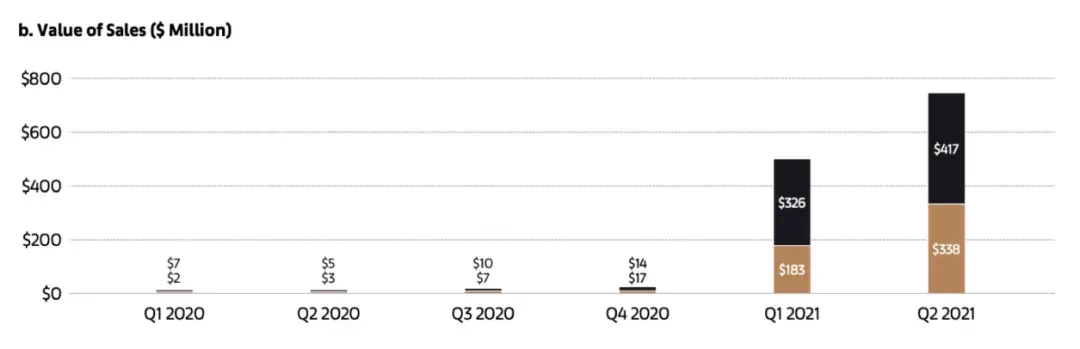
FIG. 14 Comparison of NFT primary and secondary trading markets
3.3.2 Diversification of sales channels
Traditional art market, galleries dealers artist ACTS as the agent, manager, the promotion of the role of people, and at the same time they are in the middle of the collector and the artist mediator, long-term to maintain the interests of both sides, and according to the survey, on average, a primary market dealer agent of 19 artists usually (while artists working in primary and secondary market for 32), This centralization mechanism enables the selected artists to gain more exposure opportunities and space for promotion, while the unselected artists are outside the mainstream art circle, which makes it possible for more excellent works of art to be ignored. Gallery dealers exhibit and sell works of art through art fairs. Art fair has become an important position in the traditional art market. It provides sales and exhibition sites, brings direct profits and potential opportunities to dealers, and becomes a platform for collectors and artists to communicate and a channel to obtain market information. In addition, art fairs have become a centralized trading platform, providing intermediate guarantees for the authenticity of these works of art.
Blockchain-based NFT art allows the authenticity of digital art to be authenticated by contract, which enables digital art to be traded not only at fairs and auction houses, but also on decentralized NFT online trading platforms such as OpenSea. These online trading platforms not only have the functions of traditional art agency intermediaries, including information integration and recommendation of artworks, but more importantly, the rules of the blockchain-based platform are more credible and the trust base based on smart contracts is stronger. The on-chain trading platform Bridges the gap between the elite world of top collectors, artists and galleries and the general public, enabling artists to have more traffic and voice, making art more popular. Artists can have direct contact with collectors around the world through the trading platform, which weakens the discourse power of galleries, auction houses and other intermediaries. In addition, compared with the traditional trading market, there is no time limit and threshold for on-chain trading, so any collector can browse and buy their favorite works of artists. The simple and reliable trading mechanism greatly expands the speed of NFT art trading and circulation.
Q4 Chapter 4 Summary
4.1 NFT's influence on digital art
NFT art has gradually become an important branch of digital art, enhancing the credibility and traceability of traditional digital art. NFT protects the copyright of digital artworks, expands the financial properties of digital artworks, and makes the means and content of artistic creation more diversified. In addition, NFT makes the role of artistic creators expand and extend, and greatly protects the rights of artistic creators.
NFT makes the structure of the art market take place. In terms of the percentage of the transaction of artworks, digital art accounts for an expanding proportion. From the perspective of the primary and secondary markets, digital art is more active in the secondary market. NFT has also expanded the role of collectors, broadening the distribution channels for art.
4.2 NFT art challenges
The immutable and decentralized nature of blockchain has enabled more digital art works to be validated. NFT art has brought great benefits and value to the art world, but at the same time, it has also produced a lot of confusion. For example, the lowering of the threshold of artistic creation has resulted in the phenomenon of surplus digital artworks; Secondly, without the control of traditional gatekeepers, a large number of unfiltered works of art flow into the market, resulting in the uneven quality of the art market. For example, on opensea, a digital art trading platform, a large number of works of art are held there to make up the number, which requires collectors to have better judgment ability.
At the same time, NFT art also faces some technical challenges, each piece of art on the chain needs to have high transaction costs; On-chain transactions require records of global nodes, resulting in slow transactions. The small storage space on the chain leads to the storage of high-definition images and videos and other art works after the chain.
4.3 Future development direction
In the future, IN the direction of NFT art creation, NFT art can promote the new field of art language and art concept development, and carry more diversified art forms, such as audio, articles, art creation, etc. Based on the characteristics of digital art and blockchain technology, NFT works of art make digital art collection has more ways, and then also promote the development of digital art.
In terms of creative content, NFT art will be more integrated with existing culture. For example, Tencent launched the NFT trading platform "Magic Core" [16]. Its first NFT is "Thirteen Invitations", which shows dunhuang art, promotes traditional culture on the chain, or recombines various elements of traditional culture through creativity and shares them with NFT enthusiasts around the world.
In the direction of commercial applications, NFT will be more integrated with the metasverse in the future. In the meta-universe, games, user-generated content, art, finance, avatars, multiplayer, social, etc. There will be fewer constraints in the creation of art in the virtual space of the meta-universe. For example, clothing materials can be made without regard to comfort, sculpture can be made without regard to gravity and connection, and photography can have more hard-to-reach perspectives. Of course, in the meta-universe, you can also build classic scenic spots of various countries and promote tourism culture. Barbados, for example, has announced plans to set up an embassy in the metasomes to promote national visas.
In the future, the meta-universe will be combined with more realistic industries to promote the upgrading of realistic industries.
The original link
Welcome to join the official BlockBeats community:
Telegram Subscription Group: https://t.me/theblockbeats
Telegram Discussion Group: https://t.me/BlockBeats_App
Official Twitter Account: https://twitter.com/BlockBeatsAsia
 Related Articles