O 'reilly founder on Web3: we're going to live through 1999 all over again
Why It's Too Early to Get Excited about Web3
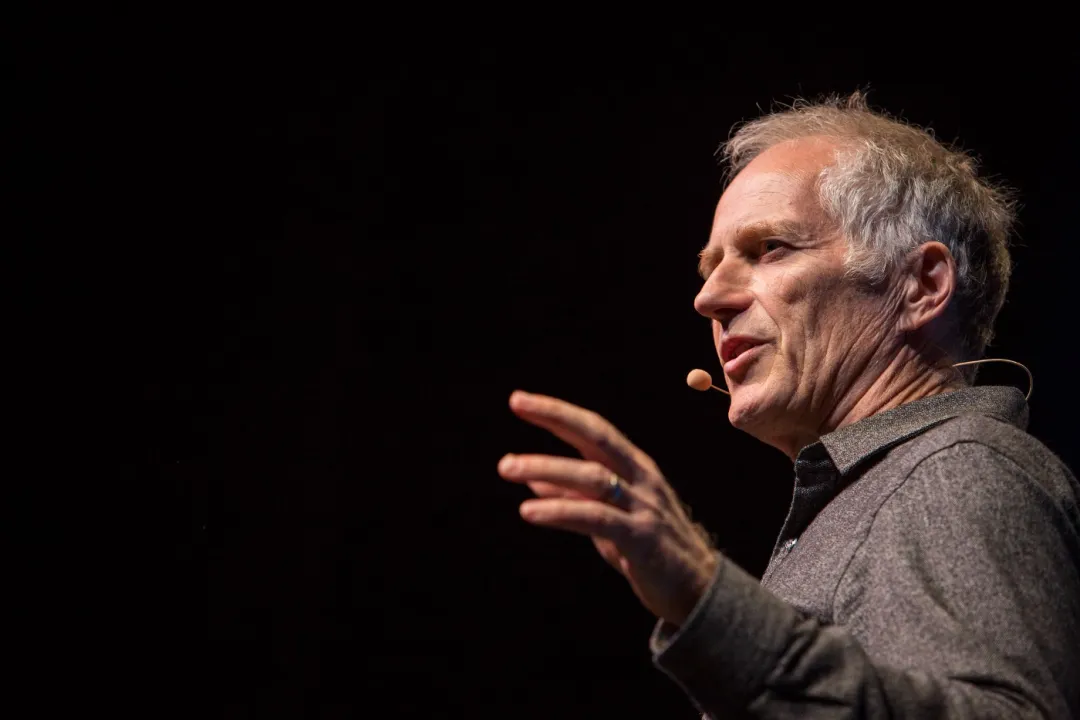
Tim O'Reilly, founder of O'Reilly & NBSP;
Overnight porridge, the way of the meta-universe
There's been a lot of talk about Web3 lately, and as the person who defined "Web 2.0" 17 years ago, I'm often asked to comment on Web3. But I usually avoid doing so because most predictions about the future turn out to be wrong. What we can do, however, is to ask ourselves questions that will help us see deeper into the soil in which the present, and hence the future, is rooted. As William Gibson famously said, "The future is here, just unevenly distributed."
We can also use Mark Twain's observation (" History doesn't repeat itself, but it rhymes ") as a lens through which to look at economic and social patterns and cycles.
What can we say about Web3 using these filters?
Decentralization and centralization
The term Web 3.0 was first used in 2006 by Tim Berners-Lee, creator of the World Wide Web, as a vision of the next phase of the Web beyond Web 2.0, and he sees the "semantic Web" as central to this evolution. But it didn't work out the way he envisioned it, and the next generation of networks, as people now think of them, will be crypto-based.
The concept of "Web3" that we're talking about today was proposed by One of ethereum's co-founders Gavin Wood in 2014. As Gavin Wood explained in a recent interview with Wired, his definition of Web3 is simple: "Less trust, more truth." (The less trust, the more truth.)
In making this claim, Gavin Wood compares Web3 to the original Internet protocols, and Jon Postel's "robustness principle" is perhaps the best summary of the spirit of the original Internet protocols: "TCP implementations should follow the general principles of robustness: do things conservatively and accept things freely from others." This spirit became the basis for a global decentralized computer network, in which no one was held accountable as long as everyone tried to follow the same protocols and tolerated deviations, and the system quickly overtook all proprietary networks and changed the world. Unfortunately, time proved that the creator of the system was too idealistic. He failed to consider the bad guys, and perhaps more importantly, he failed to foresee the huge concentration of power that big data could bring, even if built on a decentralized network.
Wood's point is that blockchain replaces well-meaning trust in others with the transparency and irrevocability built into the technology. As explained on Ethereum.org:
"Cryptographic mechanisms ensure that once transactions are validated and added to the blockchain, they cannot be tampered with. The same mechanisms also ensure that all transactions are signed and executed under the appropriate 'permissions' (no one should be able to send digital assets from Alice's account except Alice herself)."
The Ethereum.org document continues:
"Web2 refers to most of us know that the Internet version of today, it is by providing services in return for your personal data companies dominate the Internet. In the environment of the etheric fang, Web3 refers to the block chain running on decentralized application. These applications allow anyone to participate in, without having to monetize their personal data."
Crypto enthusiast Sal Delle Palme goes further:
"We are witnessing the birth of a new economic system whose character and purpose have just been designed and perfected in a transparent way by millions of people around the world. Web3 welcomes everyone."
I love the idealism of the Web3 vision, but we've had that dream before. In my career, we have gone through several cycles of "decentralization" and "re-decentralization." The PC enabled decentralized computing by providing a commodity PC architecture that anyone could build and no one controlled, but Microsoft figured out how to re-dominate the industry around a proprietary operating system. Open source software, the Internet, and the World Wide Web broke the stranglehold of proprietary software with free software and open protocols, but within a few decades, Google, Amazon, and others built huge new monopolies based on big data.
Clayton Christensen encapsulates this pattern as the attractive law of conservation of profits:
"When attractive profits disappear at a stage of the value chain as products become modular and commoditized, opportunities to make attractive profits from proprietary products often arise at adjacent stages."
Blockchain developers think they've found the structural answer to "re-centralization" this time around, but I'm inclined to doubt it. An interesting question is what the next point of centralization and control might be. The rapid consolidation of bitcoin mining into the hands of a few people by lowering the cost of computing energy is one form of recentralization, and there will be others.
The hype cycle
The ethereum community's early writings on the subject offered a measured assessment of the trade-offs and challenges ahead for Web3, but most popular accounts today revolve around hype and financial speculation, with a recent New York Times article providing an example:
"Venture capitalists are betting billions of dollars to create an alternative world of finance, commerce, communications and entertainment on the web that could fundamentally change major elements of the global economy, all built on the blockchain technology popularized by Bitcoin."
Crypto backer Andreessen Horowitz (A16Z) has made a series of investments in games, decentralized finance, NFT, and decentralized social networks, according to the article. All of the examples in this article focus not on the utility of the content being created, but only on the possibilities that they will enrich investors and creators.
And it's not just the mainstream media that breathlessly reports on the money to be made, as if creating actual value is irrelevant. The stories of those who fell down the crypto rabbit hole are compelling on the theme of acquiring wealth:
"One of the great things about Crypto is how it democratizes investment opportunities. For example, Kraken already offers easy access to 95 vetted crypto assets. If you're tech-savvy, you can directly invest in over 1,150 crypto assets around the world, each with a market cap of over $10 million (at the time of writing)...
In order to get early-stage venture capital deals in technology, traditionally you had to have silicon Valley endorsements and contacts. Theoretically, the only real barrier to entry to Crypto should be consciousness..."
Repeat after me: Neither venture capital investments nor easy access to risky, high-inflation assets predict the lasting success and impact of a particular company or technology. Remember the dotcom boom and subsequent bust? Charlie Munger, the legendary Berkshire Hathaway investor, recently noted that we are in a "crazier era than the dotcom era".
Cryptocurrencies may well be the future of finance, but right now it's hard to see what's really working and how much smoke is being blown away. Yes, trading platforms like Coinbase make a lot of money, but unlike traditional financial trading platforms, they don't trade common currencies, but a speculative asset class that can be wildly overvalued. Nor did blockchain replace trust, as Gavin Wood had hoped. Binance, the world's largest crypto asset trading platform by volume, is under investigation for tax fraud and money laundering. A recent headline also noted that "a small group of insiders are reaping most of NFT's gains."
If Web3 is to become a universal financial system, or a universal system of decentralized trust, it needs to develop strong interfaces with the real world and its legal systems and operating economies. The Story of ConstitutionDAO illustrates how difficult it is to bridge the gap between the world of Web3 crypto assets and non-Web3 assets. If the Constitutional DAO (decentralized autonomous organization) succeeds in buying a rare copy of the U.S. Constitution at auction, its members would have no legal ownership over the actual object or even clear governance over what might happen. It will be owned by a limited liability company set up by the project's sponsors, which even had trouble returning the money to its backers when DAO lost the bid.
To the existing legal and commercial thinking and establish the failure of the interface, in contrast with previous generations of network, the previous generations of Internet soon became the all things digital shadows in the physical world - people, objects, places, which has the function of interconnection enterprise can easily in the existing economic create new service has economic value. Speculating in crypto assets is easy money, which seems to distract developers and investors from their efforts to build useful real-world services.
This is not to say that there are no real opportunities for Web3 beyond financial speculation. Crypto is well suited to purely digital assets valued and used in a self-contained world, such as computer games or the long-coveted Metaverse. There may be opportunities in digital art markets and sporting events, as Sal Delle Palme says, "New applications of Crypto, such as NFT Markets, DAO, DeFi and DEX, CeFi, GameFi, DeSo, etc., are being invented, funded and built, And it's growing at an amazing rate."
But we are still a long way from the emergence of a new economic system.
Of course, crypto and Web3 are just a microcosm of today's speculative excesses. Many startups also have sky-high valuations, and it's not at all clear that valuations are an accurate measure of the actual value being created. They are probably just a scam that benefits a few insiders, much like the financial instruments that enriched so many on Wall Street before the world economy nearly collapsed in 2009. So, as Matt Stoller recently wrote: "Web3 is a pile of bullshit, the question is, compared to what?"
The current economic system is also riddled with fraud, and it is also conducive to insider manipulation. Web3 dreamers like those behind Celo are right, we do need a new economy.
Two kinds of foam
The Dutch tulip mania of 1634-37 was a classic example of the huge difference between the nominal financial value of an asset class and its intrinsic value. When the bubble burst, the tulip returned to being a flower. Beautiful as it was, the tulip was no longer valuable and had no lasting impact on the booming Dutch economy. Since then there have been many speculative bubbles, most of which have faded into the background noise of history.
But economist Carlota Perez, in her book The Technological Revolution and Financial Capital, identifies a different kind of bubble. She points out that almost every major industrial transition (the First Industrial Revolution, the age of steam power; The age of steel, electricity and heavy machinery; The age of automobiles, oil and mass production, and the Internet) were accompanied by financial bubbles.
Perez identified four stages in each of these 50-60 year innovation cycles. In the first phase, it is foundational investment in new technologies. This gave way to a speculative frenzy as financial capital sought sustained excess returns in a rapidly developing market that was beginning to consolidate. The bursting of speculative bubbles is followed by a more sustained period of consolidation and market correction, including regulation of excess market forces, followed by a mature "golden age" of new technological integration. Eventually, the technology becomes mature enough that capital moves elsewhere to finance the next nascent technological revolution, and the cycle repeats.
A key conclusion of Perez's analysis is that a true technological revolution must be accompanied by the development of massive new infrastructure. For the first industrial Revolution, this included a network of canals and roads; The second industrial revolution involved railroads, ports and postal services. Third, electricity, water and distribution networks; For the oil age, it was interstate highways, airports, refining and distribution capacity, hotels and motels; For the information age, it is chip factories, ubiquitous telecoms and data centres.
Much of this infrastructure was financed during the bubble phase. As Peres put it:
"Maybe the key role of the financial bubble, is to promote excessive investment in new infrastructure is inevitable. Such is the nature of the network, unless they achieve adequate coverage for widespread use, otherwise they are unable to provide adequate service to achieve profitability. Foam for investors to provide the necessary asset inflation, let they expect capital gains, even if there is no profits or dividends."
Hence the history of the canal bubble, the rail bubble and, of course, the dotcom bubble. The frenzy of inefficient investment has left dark fibre, empty data centres and a wealth of talent and know-how that can be reused during the consolidation phase.
In Perez's narrative, many smaller technical cycles are combined into one cycle. If you consider the history of modern digital computing, it has gone through several phases, each dominated by a new generation of technologies: mainframes, personal computers, the Internet and the World Wide Web, smartphones and now, perhaps, cryptocurrencies and the meta-universe. Each has its own cycle of innovation, speculation, bust and maturity.
So is what we call Web3 the underlying investment period of the new sub-cycle, or the bubble period of the previous cycle? In my opinion, one way to judge is the nature of the investment. Is the abundance of financial capital building useful infrastructure in the way we have seen in previous cycles?
I don't know if NFT fits the bill. Still, there is little doubt that financial disruption, just as the Internet has already upended media and business, will represent the next big stage in the current technological revolution cycle. In particular, it would be a fundamental advance if capital could be allocated efficiently without the trust and authority of a large, concentrated provider of capital, arguably "Wall Street". In this regard, I am looking for evidence of capital allocation to productive investments in a working economy through cryptocurrencies, rather than to fictitious assets. Let me hear if you have any good examples.
To make it clear what I'm talking about, let me put Crypto and Web3 aside and look at another technological revolution: the green energy revolution. It is clear that bubble valuations are already funding the development of durable infrastructure. Elon Musk has been a master speculator in Tesla's stock (which was briefly valued at 1,500 years of profits a year or two ago) and his ability to turn it into an international network of electric car charging, battery gigafactorsand self-driving cars, And has been pushing the industry to pursue his future. Jeff Bezos has also used Amazon's outsized valuation to build a new real-time commerce infrastructure. Both are investing in infrastructure for the commercial space industry.
While evaluating the progress of the much-ballyhooed Web3, I would also compare cryptocurrencies for other functions in the financial system (purchases, remittances, etc.) with traditional banking networks and other emerging technologies. For example, are Ripple and Stellar's cross-border money transfer platforms more successful than bank transfers, credit cards or PayPal, just as Google Maps was better than the first generation of GPS pioneers like Rand McNally or Garmin? There is some evidence that Crypto is becoming a meaningful player in this market, although regulatory hurdles are slowing adoption. Instead of remittances, shall we talk about more general payments? How does the growth compare to non-crypto payment startups like Melio that focus on building use cases for small businesses? Given their interest in Crypto, companies like Square (now Block) and Stripe can tell us a lot about crypto's progress relative to more traditional payment mechanisms.
Similarly, if Web3 is going to be the future of identity or social media, we need to ask ourselves, what evidence is there that adopting Web3 is really better than previous generations of Internet technologies? And I think there's very little coverage of that right now.
Where are we in the cycle?
One might ask whether the current phase of Web3 is more like 1995 or 1999 (the early days or the end of the bubble). Given current valuations for crypto assets (compared to the average tech startup), it's hard to argue that it's in an earlier period.
I want to remind people that I wrote in What Is Web 2.0 that five years after the dotcom bubble burst, the explicit goal was to explain why some companies survived and others didn't. Again, I suspect we won't really know what Web3 is made of (if any) until after the next bubble bursts.
In addition to the technological and business model changes I tried to capture in What is Web 2.0 from the last bubble, I can offer some pragmatic observations:
All the surviving companies are making money, and their valuations, while high, are supported by reasonable models of future earnings and cash flows. , & have spent
By today's standards, none of them needed to raise huge amounts of capital. (Yahoo's total pre-IPO investment was $6.8 million, Google's $36 million and Amazon's $108 million.) When you see companies that go to investors again and again for funding but never turn a profit, then they are probably not real businesses and are best viewed as financial instruments. , & have spent
They all have millions, then tens of millions, then hundreds of millions (and eventually billions) of daily active users for new services that change the world. , & have spent
Each has built unique, substantial and enduring assets in the form of data, infrastructure and differentiated business models. , & have spent
The companies that dominate tech in the next generation aren't always upstarts. Apple and Microsoft have made the transition to the next generation with ease, with Apple even leading the transition. , & have spent
Remember, it was early when the dot-com bubble burst. Google Maps hadn't been invented yet, nor had the iPhone or Android. Online payments are still in their infancy. No Twitter or Facebook. No AWS or cloud computing. Much of what we rely on today doesn't exist.
I suspect the same is true of Crypto, and there's a lot more to be created. Let's focus on the parts of the Web3 vision that have nothing to do with easy riches and focus on solving the hard questions of trust, identity, and decentralized finance. Most importantly, let's focus on the interface between Crypto and the real world in which people live, as Matthew Yglesias says about housing inequality, "Over time, societies become rich by accumulating stocks of long-term capital goods."
If, as Sal Delle Palme, Web3 herald the birth of a new economic system, then we let it become a real increase of wealth system, not just for those lucky enough to bring paper wealth, but real change life of goods and services, they will make everyone's life better.
The original link
Welcome to join the official BlockBeats community:
Telegram Subscription Group: https://t.me/theblockbeats
Telegram Discussion Group: https://t.me/BlockBeats_App
Official Twitter Account: https://twitter.com/BlockBeatsAsia
 Related Articles