How do we make moral Choices in virtual worlds?
原文标题:《 专访 NFT 游戏开发者 Peter Molyneux:在虚拟世界中,你是要当个好老板还是只管昧着良心搞钱? 》
原文来源: TheVerge
原文编译: 翻译官侦探,老雅痞
Peter Molyneux, who has worked on fables, Populous, and Black and White, is the legendary developer of many of Steam's most famous games, and has once again added another name to his portfolio: NFT game developer.
On Saturday in Las Vegas, Molyneux announced a partnership with cryptocurrency gaming platform Gala Games, with 22Cans to launch Legacy, a management game that Molyneux first released in 2019. The new version of Legacy will incorporate a new digital currency, LegacyCoin (on the Ethereum blockchain), which players will purchase to join the game. Players start businesses, build towns around them, and compete or collaborate with other players to increase their LegacyCoin funds. The game, like the better-known Axie Infinity, should be a broad "play while you earn" genre, with the triad and management system Molyneux wanted to build.
Although some companies, such as Ubisoft, have announced that they will allow players to obtain NFT of in-game usable items. Tradable in-game items such as skins, vehicles, and weapons are officially called "Digits" by Ubisoft and released on the Tezos blockchain.
But Molyneux could still be one of the most accomplished game developers in the industry, and in an industry full of talk, he and NFT might find a magical fit.
Just before Gala announced Legacy, I spoke with Molyneux over Zoom to discuss his new project. I was curious how a developer known for fine-tuning fantasy worlds could apply his ideas to a game that people would play for real money, even as a real world job. I was curious about the structure of the game world, which in previous introductions was a complex mix of business simulation and city management. The most important thing is what blockchain actually does to games. These answers are always worth thinking about.
* The interview has been edited
Q: I saw the trailer for the game, city building, business operation, manufacturing and production, auction and sale, that's all in the game?
Peter Molyneux:When I first thought about Legacy, I thought wouldn't it be cool to make a game that everyone felt passionate about making? I find that when it comes to creativity, like painting, singing, composing music, gardening, I'm not very good at it. So what we need is a game that really helps you be creative.
I thought it would be fun to have a game where you could start your own business. Start a business in a small town that grows into a big city because of manufacturing, and that's what city building is all about, because you're responsible for designing all the products that the business is going to sell, you're responsible for manufacturing, you're competing with other players.
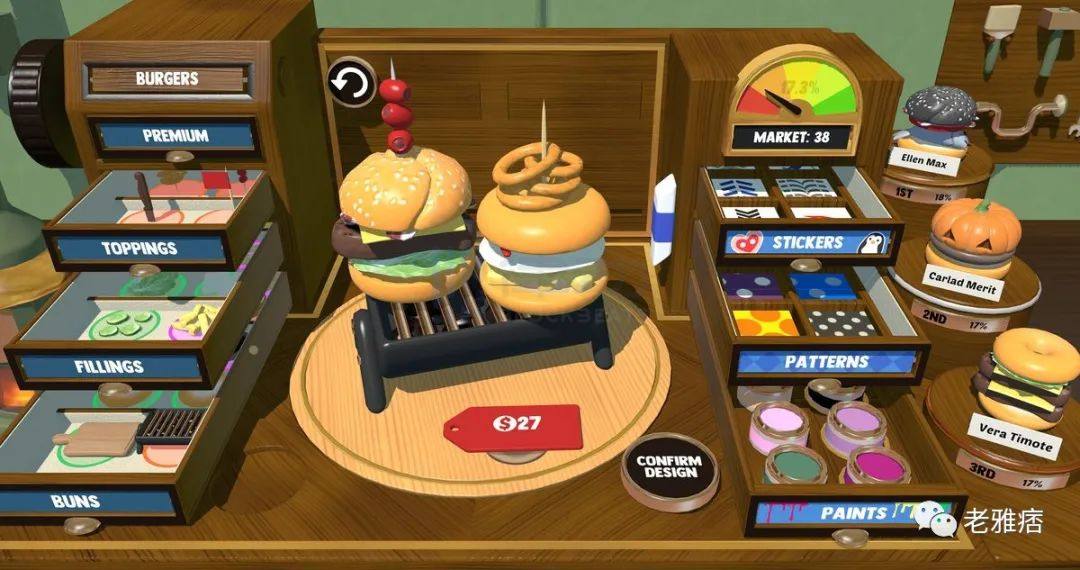
But actually, I don't think that's enough. Urban construction alone is not enough. There is also a need to design other buildings that the city will use, like a narrative process, that can work with the city, within the larger ecosystem.
During production activities in the game, players can earn something called Legacycoins. The simulated reality of competition is advanced, dramatic, and even involves moral choices.
So the player has to figure out, what business do you want to run in the game? Is it to be an ethical entrepreneur who cares about environmental pollution, or is it to exploit the employees at the bottom of the company? It's a game that involves all the thinking. In blockchain games, something like this is a big step forward.
Q: How do blockchain and LegacyCoin contribute to plot development, moral choices, and creativity?
Peter Molyneux:First of all, because players are competing with other players, other players are using blockchain, and blockchain can bring a lot of interesting content and make players unique. The choice to be a loving person or a mean person is the charm of a living world.
I think it's very unique as a living world. Every building you design, every product you build, and every worker you hire is simulated to an amazing degree. There are moral choices and competing interests in the game world, which is rich and colorful in this world. This is the significance of the combination of blockchain and game.
Q: All of this can be done with a common game database. Why is blockchain an important way to do this?
Peter Molyneux: Players have some rights to create their own blockchain projects within Legacy. For example, you create a factory, and if the factory wants to do whatever it wants, it depends on which blocks you unlock. The factory, the workers, and the entire world gain unique experiences that are embedded in how the player progresses in the game. You can build a factory, run it for 100 hours or more, and then you can put that building on top of the blockchain itself, and that's pretty impressive.
Q: Will the real money economy work in the game? This seems to add to moral choices, such as the likelihood that conscientious bosses earn less.
Peter Molyneux:Of course, this is a real incentive for players to play well and earn game points, which can be translated into real world money.
The blockchain experience I've had so far has become more of a mechanism for making money than the game itself. I think we have to have iconic features to bring some change to the game industry.
At the decisions made in the game, the benefits are not only about ownership, but also about the consequences.
Q: Players make enough money in the game to become full-time jobs like In Axie Infinity, which leads to a sharp drop in profits that affects the economy. How do you balance and reconcile this phenomenon so as not to affect players' real life income?
Peter Molyneux:This is exactly what we are doing now, when entering a complex simulation world, players must get the balance and refinement absolutely right. We've implemented all the features in the game, and now we need to balance it so that it doesn't tip to one side in extreme cases.
For example, if the player finds a workaround to make a bunch of money, basically through fraud, because it becomes work, the player needs the money, but it takes the fun out of the whole game, and that leads to consequences that need to be looked at.
We have to monitor it carefully and pay attention to the impact of small changes. I've made so many games, but it would be such a proud honor to think that someone could make money playing my game, and that's why we have to be more careful.
Q: How much of your design is based on your understanding of real life economic development? How many are creative?
Peter Molyneux: I learned this lesson when I worked on Theme Park and Theme Hospital, that creativity is about being inspired by what happens in the real world. Running a theme park, running a hospital, economic benefits are a kind of "temptation" of business purpose. But the core of these games is this: If the purpose of what you're doing gets in the way of the game itself, I think you should resist the temptation. I don't want to go to a Hospital inspired by Theme Hospital, and I definitely don't want to go to a Theme Park inspired by Theme Park.
I want players to imagine, not actually run a business, but rather assume it works.
Q: Can Legacy be described as a game where players build and run companies to build towns?
Peter Molyneux: Yeah, if you look at Bournville, there's a company called Bournville Chocolate. When it was founded, it was paid in Bournville Chocolate tokens, the houses were built, the schools were built, everyone was employed in the Chocolate factory, that was the real inspiration. If you look at China, many Chinese company owners provide dormitories for their workers, this is a real world example.
Q: In the United States, "company town" is a term with negative connotations. It is considered a byword for corporate control over workers' lives. Is that intentional?
Peter Molyneux:Not every time I went to my former company, Microsoft, I was looking for inspiration. You never know where inspiration will come from, but it does happen magically. But everyone in Microsoft's gym works for Microsoft. You're naked in the locker room, and you think Steve Ballmer or anyone else is there, and you realize, "Oh my God, I'm part of this family."
Q: While there is a general perception that the game is utopian, is that something you would like to see happen?
Peter Molyneux: I wanted to give the player the absolute ability to make a perfect town, to make sure all the workers were happy, with cafes, cinemas, schools, getting married, having children, going to school, etc. But I also want the player to know that there are consequences, that the business may not be successful, and that things can be handled in a completely different way. For example, instead of cafes and cinemas, more factories could be built. There is a complete pollution system in the game, if you build a lot of factories around the trees will start to fall, workers will have a very bad cough. That's what's interesting and fascinating.
I've been obsessed with this for almost two decades, and I've been obsessed with giving people the freedom to make that choice. What I've been trying to do for years is to induce the player to be good or bad, but not force the player to follow the inevitable path. It's fascinating, especially because it's in the blockchain world, to be able to see what people actually do.
Q: Blockchain games have a feature where the player's items can live outside of the game. Let's say someone created something and mined it as NFT, and for some reason you decided to shut it down, is there some way to keep it going?
Peter Molyneux: That's a good question, and to be honest, I don't know the answer yet.
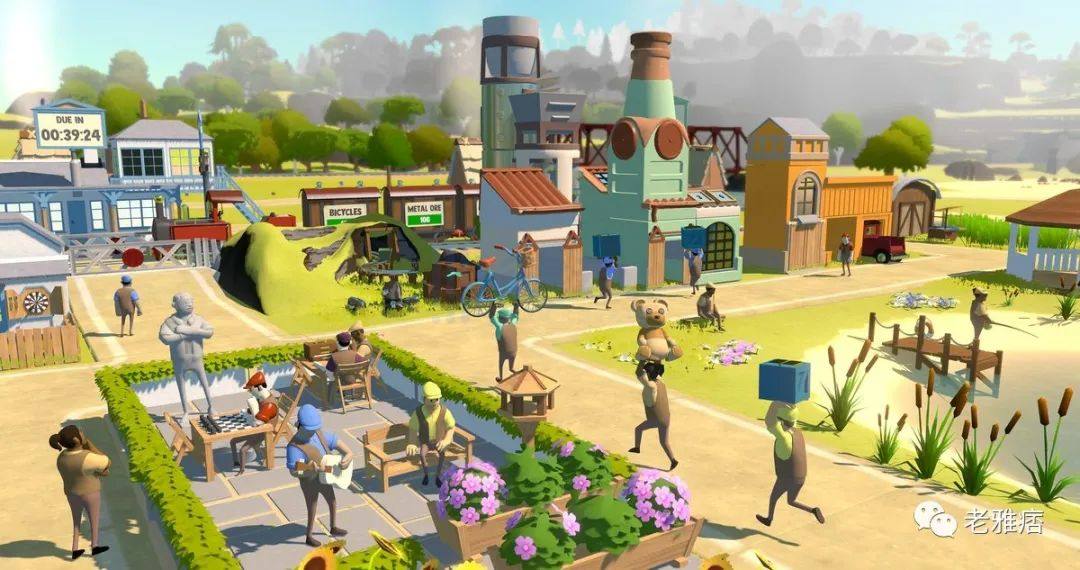
But I'm very proud that if you build something in your world, and you trade it to somebody else, whether it's a builder, whether it's a worker, with all the benefits that you've instilled into it. I think that's what really appeals to me, that what you get on the blockchain is going to make your world a better place. If you take a worker and put him in the mine, over time that worker will become an expert miner. And then if you take this worker and you let him operate in a bar, he becomes an expert owner. This experience is accumulated throughout Legacy. This is a fully connected system.
Q: I'd like to know more about the role of blockchain outside of the real economy. Why did you choose to use a decentralized cryptocurrency ledger?
Peter Molyneux: A lot of undesirable things happen in silence, and if everything is just built on a central database, it can throw what should be a very pleasant system out of balance.
First, the great thing about blockchain is that it brings "integrity" in the sense that it costs you LegacyCoin to place something, and LegacyCoin means that the market is not disturbed by spam.
Second, Legacy is a game that inspires creativity. To make you feel that your creation is meaningful, a plate of delicious pasta or a beautiful picture, if no one sees it, no one appreciates it, no one buys it, then you might as well not do it. The fact that the player's design is seen and appreciated by others, and can make money, is the most important thing. Besides, it's a blockchain game where people can make money while simulating business.
Q: Will Godus and Godus Wars be withdrawn from Steam Early Access?
Peter Molyneux: I'd love to get them out of Early Access, and I want Godus to have a happy ending. 22Cans has a team dedicated to Godus and they are very motivated. Before Christmas, we will announce the first set of new Godus features for almost two years, which will be available around Christmas time. I hope I don't get kicked out of the team for saying that. In a perfect world, I'd love to see that happen.
The original link
Welcome to join the official BlockBeats community:
Telegram Subscription Group: https://t.me/theblockbeats
Telegram Discussion Group: https://t.me/BlockBeats_App
Official Twitter Account: https://twitter.com/BlockBeatsAsia
 Related Articles