Du Yu: Exploring the meta-universe from blockchain
Du Yu: Exploring the Meta-universe from the perspective of blockchain
Vientiane Blockchain
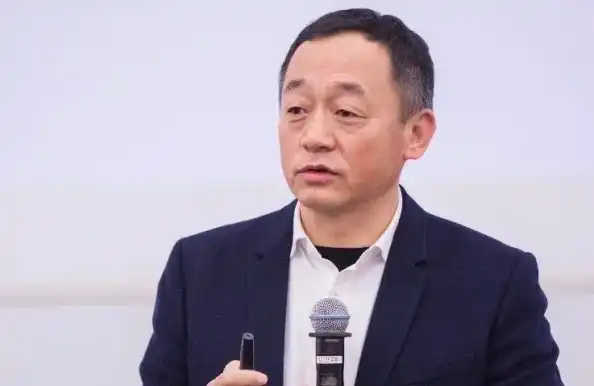
On the afternoon of October 25th, "Digital Future: Meta-universe" co-hosted by Wanxiang Blockchain and Tencent News & NBSP; International Week Open Day theme activity successfully concluded. Du Yu, head of Wanxiang Blockchain Laboratory, attended the meeting and delivered the keynote speech "Exploring the Meta-universe from the Perspective of blockchain", discussing the relationship between blockchain and the meta-universe from the perspective of blockchain, and looking into the future development direction of the meta-universe.
The full text of the speech is as follows, the article according to the on-site shorthand arrangement, some do not affect the original intention of the deletion, for readers.

Du Yu, head of Wanxiang Blockchain Lab
Thank you to the host, and also to our expert guests from all over the world. Thank you for your support to our event.
Today, IT is my great honor to join Tencent News and industry partners on the stage of Shanghai Blockchain International Week to do some cutting-edge exploration of what is the meta-universe? I would like to take this opportunity to talk about the relationship between blockchain and the metaduct as well as what the metaduct is from the perspective of blockchain practitioners. The topic of my speech today is to discuss the relationship between blockchain and the metaverse from the perspective of blockchain practitioners.
Let's talk about what's trending in the industry. It's a big deal for Facebook to become a meta-universe company; Before that, Roblox was worth 48 billion dollars. The most important thing is that it's an open environment where everyone can create, and that's the trend of the industry because games are so popular; SANDBOX, which is related to the blockchain industry, has many organizations setting up their virtual headquarters on SANDBOX platform.
What is the meta-universe? We need to find out what a thing is when we discuss it. Facebook defines it as a "virtual world that you explore and create with your friends," and points to the concept of Roblox and SANDBOX: you want to be able to create on your own initiative, as opposed to world of Warcraft, which is open but preprogrammed so you can only explore, not create.
Wikipedia defines it as a 3D virtual sentient universe that is in continuous operation and can be shared.
These concepts are quite abstract. If you are interested, I recommend you to read the research report on the metasemes by the New Media Research Center of Tsinghua University, which is very comprehensive. Its definition of the metasverse is simple, the virtual world multiplied by the real world, so it is not simply a parallel relationship, nor a plus relationship, but a mutually reinforcing relationship. The things in the original virtual world are derived from reality, and the meta-universe is the mutual promotion of the real world and the virtual world. I think this formula sums up nicely.
Is there a standard definition of the metasverse now? There isn't. Our approach, or my own approach, is that we look at what features it has, for example, the identity of wechat is also an element of the meta-universe; In the case of World of Warcraft, immersion counts. When it comes to the meta-universe, some people think it is necessary to mention AR and VR. Is there no meta-universe without AR and VR? Not necessarily. And AR and VR are not the final form, the final form may be brain computer interface.
The theme of this year's summit is "Digital Transformation". In my view, the meta-universe is an extension of the digital economy. The other is digital industrialization, where much of what's on the Internet today exists in the digital world. The meta-universe is a further deepening of the digital economy, and it is inevitable. The real world is bound to have a lot of physical limitations. For example, it may take you two or three hours to travel from other cities to Shanghai, but in the digital world, you are limited by your imagination. Of course, the digital world has its own rules. Today, the marginal effect of growth in the physical world has been reduced to a point, while the marginal effect of growth in the digital world remains high. From a capital point of view, when the physical world has low returns, you have to look for places to grow better, which is one of the reasons why the concept of the metasverse is so popular.
Mr. Xiao, the chairman of our board, has made classifications: digital twin, digital primitive and virtual reality, which are also the different stages and paths of the development of the meta-universe. Today in the digital transformation of cities, we've talked a lot about digital twinnings, and we've done some work on that.
Digital native, on the other hand, is unconstrained by the rules and regulations of the physical world. So whether it's Facebook or SANDBOX, these are all digital natives. I think the next five or ten or twenty years will be driven by digital native, because it has its own logic and is not bound by physical rules. In the end, virtual reality is the real metasverse, the real world multiplied by the virtual world. From the point of view of blockchain enterprises and non-blockchain industries, digital twinning has been developing for many years and may not be applied to a large scale yet, but it is a red sea. The next 10, 20 years of development space, must be in the digital native world. The development of blockchain is the same, we see different classifications of blockchain at home and abroad. I think the focus of the future has to be on digital native. The metagverse is the same, there is no need to combine it with what is already there, and when it is developed to a certain extent, nature will have a natural and growing union with the physical world, not one you impose. But I think it's a long way from that, and that's my personal point of view.
This is the macro structure of the meta-universe mentioned by General Manager Xiao Fengzong in his speech some time ago. I agree with the content and will continue to improve with the development of time. He is speaking from the point of view of the meta-universe, and you have seen some very familiar words in the field of blockchain.
Several major technologies in the meta-universe are dependent on blockchain. As a blockchain practitioner, I am very willing to explore what different things blockchain will bring to the metauniverse, or whether the metauniverse can be without blockchain. Now let's talk about the relationship between blockchain and the metasverse.
In the past few years, we have done a lot of application scenarios in the blockchain industry, and I often ask myself a question: what is blockchain and what is its essence? After much thought, I decided to quote the Economist: it is a trust machine. In a variety of domestic scenarios, such as food traceability, inclusive finance, industrial Internet, is to use technology to build trust at low cost, in essence, is to apply blockchain in different fields, the so-called value Internet.
Let's go back to the macro architecture of the meta-universe. Block chain at the value level, the effect of common tamper-proof, memory card back and so on in yuan universe, first of all, I want to be in yuan universe has an identity, the identity can casually being tampered with, my assets, records in the information world, with the trust chain blocks as infrastructure, there are many things worthy to be discussed.
The metasurverse concept is still in the early stage of exploration, and I also put forward some of my own ideas and ideas on blockchain to see how to do research with the metasurverse.
First, a meta-cosmic governance tool. Many people say that the metasexes are decentralized, and that decentralization is at least decentralized and distributed for large companies. For example, there is a book called The Rules, which talks about the life of cities and the life of businesses. We rarely see century-old enterprises, domestic statistics, most of the enterprises live less than five years. So why did cities survive for thousands of years? The core is openness. Businesses are managed from the top down, whereas city managers set a set of rules and can come and go as they please as long as the rules are followed. Cities have rules, and they have guardians of them. The metasemes may eventually move in that direction.
Second, the sovereign guardians of the users of the meta-universe. Recently, people talk a lot about social death. Digital death is also an interesting concept. Take Tencent for example. If Tencent shuts down my wechat account, 99% of the people I know will no longer be reachable and I will be "digitally dead". This is especially true in the meta-universe, where all my digital social relationships are. A company shuts me down, I "die," and the definition of "dead" has a new definition.
Third, the meta-universe open ecology enabler. Blockchain is a bit like Lego. It's open source, and everyone builds their own application scenarios on top of other people's open source projects, so iterations can be fast. SANDBOX and Roblox are building meta-universes in the lego way.
Fourth, metacosmic economic infrastructure. Just so you know, the morning after tomorrow our chief economist will be giving a keynote on metasomeric Economics. You can think about how meta-cosmic economics is different from blockchain economics, and how game economics is different.
Above is my some immature idea, throw a brick to attract jade, thank you!
The original link
Welcome to join the official BlockBeats community:
Telegram Subscription Group: https://t.me/theblockbeats
Telegram Discussion Group: https://t.me/BlockBeats_App
Official Twitter Account: https://twitter.com/BlockBeatsAsia
 Related Articles