From virtuality to reality, who will the Metaverse belong to?
Original title: "Dream and Reality of Yuan Universe"
Original author: turbulence
Original compilation: Block unicorn
To what extent can human senses be replaced or deceived? Is full digitization the way forward for mankind? If everything in life can be digitized, what is the meaning of life itself?
The term "metaverse" first appeared in science fiction. American science fiction writer Neal Stephenson (Neal Stephenson) first coined the term "metaverse" in his science fiction novel "Avalanche" (Snow Crash) published in 1992. In this novel, the so-called metaverse refers to a state in which the real world is mixed with the virtual world created through augmented reality technology and virtual reality technology. Although the influence of this work in the science fiction world is not as good as that of another science fiction master William Gibson (William Gibson) published in 1984 with a similar theme "Neuromancer", but since then, with the network world With the rapid development of "Metaverse", the term "Metaverse" has been in people's field of vision, and has been used for reference by various works from time to time.
The 2018 sci-fi film Ready Player One is considered by many to be the most visual interpretation of the metaverse concept. With the help of virtual devices, people can freely shuttle between the real world and the virtual world. Needless to say, the more unrestrained virtual world can bring people far more surprise and joy than the real world.
If it is borrowed from science fiction movies, the concept of metaverse was still limited to the scope of science fiction fans at that time, then starting from October 2021, this concept It officially "broke the circle", and people who didn't know anything about it before began to scramble to discuss it.
In October 2021, Mark Zuckerberg, the founder of the 17-year-old American social networking giant "Facebook" (Facebook) Zuckerberg published a "Founder's Letter: 2021" (Founder's Letter, 2021), announcing that Facebook has changed its name to "Meta" to demonstrate its determination to enter the metaverse-a major event in the Internet world has happened. Although the creator of the term metaverse, Neil Stephenson, later made it clear on his social account that the concept of the metaverse he created has nothing to do with the metaverse that has just been renamed Meta. It has swept the world with lightning speed. Subsequently, in a video presentation featuring Zuckerberg, the word "metaverse" appeared more than 80 times in nearly 90 minutes, aiming to explain to the audience what the metaverse is.
After watching this nearly 90-minute video, apart from the English origin of the word "Metaverse", I feel even more confused. According to Zuckerberg, the so-called metaverse is a combination of the roots "meta" and "universe". The Greek word "meta" means "beyond" or "beyond". For example, "metaphysics" in Chinese is a combination of "meta" and "physics", and was once translated as "metaphysics".
What about other aspects? In this video, Zuckerberg and some of Meta's researchers try to show the magic that people living in the Metaverse can experience. It seems that people are no longer bound by the body, and the limitation of time and space is no longer a problem. People move at the speed of light, and even their appearance can be chosen at will. They can show people their true colors, or choose a "virtual avatar" ( Avatar) with family and friends... The question is, which elements of the metaverse life shown in the video have become reality, and which are just distant fantasies? To enter the metaverse, what kind of effort do people need to make, and what kind of changes will people's real life experience? These questions, just like the face of Zuckerberg in the video, make it difficult to distinguish which ones are his real person and which ones are computer special effects?
There are many articles and videos about the metaverse nowadays, but it is still difficult for us to give a precise definition of the metaverse. What is certain is that the birth and development of the metaverse, and some concepts related to it, are mostly related to science fiction and computer games. Not only does the metaverse itself originate from science fiction, but the word "virtual avatar" used by people in the metaverse, although it is rooted in Hinduism, actually has a closer relationship with computer games - game designer theory Richard Garriott first used "avatar" in 1985 to describe the image of a game player in a game.
It can be said that everyone has a metaverse defined by himself in his heart. For example, many people believe that Metaverse is the next form after the evolution from the Internet to the mobile Internet, but it is difficult to define the core characteristics of the new generation of Internet form. In people’s descriptions of the metaverse, many technologies are integrated: when old and new technologies such as blockchain, virtual reality and augmented reality, sensors, cameras, and 5G networks are superimposed, what will be changed? Many people are still confused.
In January 2020, venture capitalist Matthew Ball published a long article "The Metaverse: What It Is and Where to Find It" , and How to Build It" (The Metaverse: What It is, Where to Find it, and Who Will Build It), the article discusses some characteristics of the metaverse, such as the expansion of the real and virtual worlds in the metaverse, including fully mature economical form factor, offering unprecedented interoperability, and more. But when we look at the Internet that people are currently using, most of them actually have these characteristics, or are perfecting towards these goals. Some people also conclude that the so-called metaverse means that everything that people can do in real life can be done in the virtual digital world-but what is the significance of such a metaverse?
Zuckerberg defines the metaverse as a new form of the Internet with people as the main body. In the metaverse, people no longer need to stare at the screens of computers or mobile phones (or screens are everywhere in the metaverse), but become part of the content of the metaverse themselves. In the Metaverse, people can communicate and interact with relatives and friends (or their virtual avatars) without barriers, read each other's eyes and movements, and get rid of the constraints of the real world and the body to the greatest extent. This may be the Meta company that has just been renamed. The core value of the metaverse described.
It can be said that the concept of the metaverse not only bears the distinctive imprint of the generation who grew up in the Internet and game world, but also has Zuckerberg himself as a technology The beliefs of progressives and futurists. He believes that a new generation of technology is the key to solving most social problems, and every 10 to 15 years, there will be a new disruptive new technology or new machine - in this way, the emergence of the Metaverse is exactly Just in time. It is also under this belief that Facebook will transform rapidly under his leadership.
The question is, how far is this unfettered virtual world from reality? To what extent can people get rid of the shackles of real life, so as to obtain the freedom of mind to the greatest extent? If everything can be virtual, what is the meaning of real life? What is the relationship between virtuality and reality, and how do people tell the difference between the two?
The Past and Present of "Virtual Reality"
To what extent can people believe in themselves It is a question of how much you can deceive your own senses. In what sense the "reality" we recognize by relying on our own senses is real is another question. Thinkers, both Chinese and foreign, have been troubled by the subtle distinction between reality and dreams. Therefore, Zhuangzi put forward a hypothesis: We may not have a clear standard to distinguish between reality and dreams, which is closer to reality. As the saying goes, "In the past, Zhuang Zhou's dream was a butterfly, and the butterfly was so vivid. He used himself as a metaphor for his ambition, and he didn't know Zhou Ye. Suddenly, he realized that he was a butterfly. The dream of Zhou and the butterfly was Zhou Yu? Zhou and Hu Die, Then there must be a distinction. This is called materialization”—whether Zhuang Zhou turned into a butterfly in his dream, or Zhuang Zhou appeared in the butterfly’s dream, the two are really indistinguishable.
French thinker Descartes was also wary of too many similarities between dreams and reality, so he believed that reality perceived through the senses was really just a an indirect truth. So where does the most direct truth come from? From a rationalist point of view, sensory experience is not trustworthy, only thought is trustworthy. Hence the saying "I think, therefore I am".
Some people also deny the reality of the real world itself. The Pythagoreans believed that "everything is number" and that the world was just a reflection of mathematics; as for the ancient Greeks, the world that people felt might be just a projection of a more fundamental reality in this world, just as The prisoners in the prison can only see the images left on the walls of the outside world, which is to doubt reality from another level.
Reality may not be credible, and the senses are easily deceived-this is what people have learned from psychology and life for a long time. People often complain about the constraints brought by reality, and the inconvenience of the body will bring them mental pain; on the other hand, they also hope to achieve the separation of spirit and body, so that the mind can roam without hindrance. Like the scene described in Shakespeare's poem:
If the dull substance of my flesh were thought, (If the dull substance of my flesh were thought,)
A distance that is not beautiful cannot stop me; (Injurious ditance should not stop my way.)
Because (For then despite of space I would be brought,)
No matter how isolated, I will be brought to your apartment. (From limits far remote where thou dost stay.)
So, even if my legs stand away from you, (No matter then although my foot did stand,)
The farthest end of the world, what hinders me? (Upon the farthest earth removed from thee?)
No matter where the ethereal thought wants to go, (For nimble thought can jump both sea and land,)
It can fly over mountains and seas immediately. (As soon as think the place where he would be.)
People are surprised to find that by cleverly deceiving the senses and with the blessing of modern technology, Sarah Ong's scenario might actually come true—if only people are willing to enter a virtual world made of digital technology, or as it's more fashionablely called: the Metaverse.
From this level, no matter the so-called metaverse or the so-called virtual reality, in the final analysis, it is a kind of deception with people's knowledge and consent. One's own senses create the art of illusion. And to separate one's spirit from the body to the greatest extent, making oneself seem to be in an illusory world, can even be said to be a "basic need" of human beings on the spiritual level, and it is also a kind of "freedom" to the greatest extent. Perhaps it is precisely because of this awareness that the word "teleport" was mentioned many times in Zuckerberg's video presentation. If you want to change the position and scene of your physical body in life, you must be constrained not only by the laws of physics, but also by the social environment-but if you just want to achieve spiritual travel, even with the current technical conditions For example, you only need to wear a virtual reality device to achieve it.
In retrospect, I myself had two brief experiences with the Metaverse. One time was in Hong Kong Ocean Park. Before riding a roller coaster, every passenger wore special glasses. As the roller coaster started, various three-dimensional images began to appear in the glasses. There were all kinds of magical animals and giant dragons. Flying around me, I was in the blue sky for a while, and dived into the bottom of the sea for a while... I must admit that in that short minute or so, although I knew that what I saw were only illusory three-dimensional images, the excitement and excitement The feeling is still in my memory.
Entering the metaverse again, I visited the Casa Battl designed by the talented architect Gaudí in Barcelona, Spain. I put on a pair of glasses and walked into this ocean-life-inspired and themed apartment. When I walked into every room of the apartment, I could see all kinds of marine life images around me. From time to time, giant whales swam past me. The illusory images blended perfectly with the surrounding environment.
Of course, my experience is not really entering the metaverse. Interact with other people. Still, the feeling of being out of reality and momentarily entering a foreign world is still fresh. By the standards of the Metaverse, my two experiences, one called virtual reality and one called augmented reality, were both enabled by headsets.
The idea of building a virtual sensory world has been around for a long time. In fact, this kind of technology was first used in some special scenarios to train people's reactions in the real world. In the 1920s, American engineer Edwin Link invented the world's first flight simulator to train pilots. Later, there were theaters with vibrating seats and special smells in the room to simulate movie scenes. As computer technology advanced, in the 1980s computer scientist Jaron Lanier coined (or at least popularized) the term "virtual reality." Lanier founded a company in the 80s to develop virtual reality goggles and gloves, and the first wave of hype around virtual reality in the United States began. But it soon became clear that for most people, virtual reality headsets were of little use, and the hype quickly faded.
After entering the 21st century, when there is another round of hype about virtual reality technology, in order to reduce the sci-fi color of the hype, some engineers prefer to use "virtual environment" ( Virtual environment) is a more realistic term; by the 2020s, even the term "virtual reality" could not meet the needs of hype, and a more sci-fi "metaverse" was born.
Hype is not useless, in modern society, we can think that hype is a necessary business behavior. Hype can quickly attract people's attention, pool funds, and stimulate the emergence of new technologies, and more importantly, attract new users and content developers to join. It's just that Zuckerberg's hype of directly changing the name of the 17-year-old "Facebook" company to Meta is really rare, and it may be expected that it will cause such a strong reaction around the world.
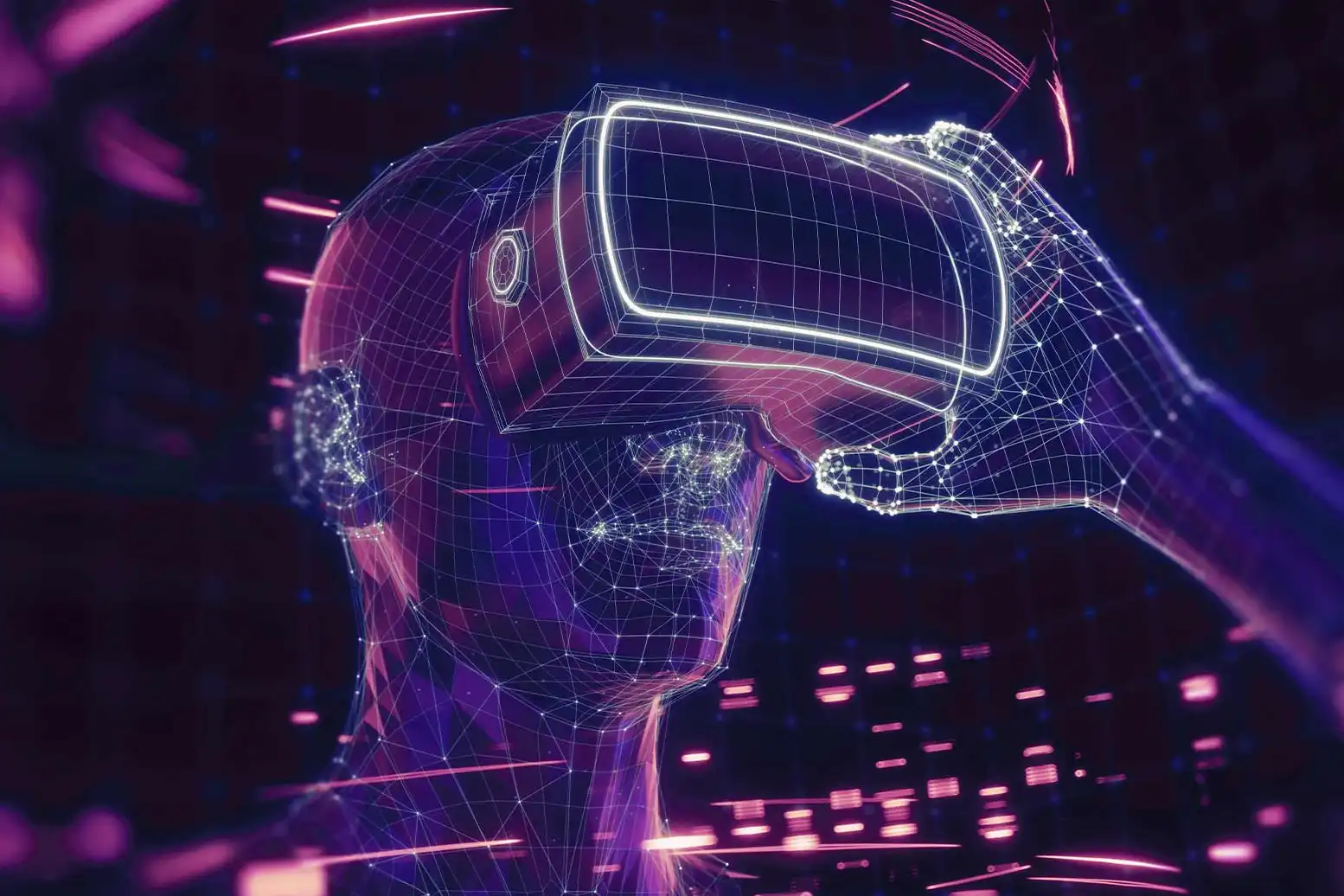
Based on the current technical conditions, the most basic requirement for entering the metaverse is to have a head-mounted virtual reality device, which can virtual into the digital world. Facebook acquired the virtual reality technology company "Oculus" in 2014, and the virtual reality equipment produced by the latter has become the hardware foundation for Facebook's layout of the Metaverse.
Unlike philosophers who speculated about the difference between reality and fiction, and thus cast doubt on reality itself, the metaverse concept does not involve doubt on reality. On the contrary, the metaverse creates a substitute or supplement to reality based on the complete affirmation of reality. Although people hope that the metaverse has many functions, it is undeniable that one of the important functions is that people can temporarily escape the reality bound by the physical body, and people can live in the fantasy of themselves or others.
Metaverse, a concept that has not yet been fully formed, has an obvious role in promoting the industry. Virtual reality devices have come a long way in a few years. A virtual reality device with a goggle as the main body is a more refined computer. To integrate a supercomputer into a blindfold is a great challenge for the entire computer industry. This new type of computer has extremely high requirements on the computing speed and quality of images, so it will also greatly stimulate the development of image processing technology and equipment. When the Internet was just born, it stimulated the emergence of a large number of new technologies, and then developed from the Internet to the mobile Internet, and many technology industries around the world have undergone major transformations accordingly. It is conceivable that if the Metaverse replaces the existing mobile Internet, people's lifestyles in the online world will change from text to images to videos, and then develop into immersive, becoming the content of the Internet itself, which will definitely stimulate many people again. Industrial transformation and upgrading.
On the other hand, people have always had concerns about virtual reality equipment: Although in the instructions for the latest virtual reality equipment "Oculus Quest 2" launched by Meta It is mentioned that one in every 4000 users will experience dizziness or even seizures, but from a practical point of view, if the update speed of the virtual reality device cannot keep up with the movement of the human head , are prone to nausea or dizziness. In addition, there is no in-depth research on the long-term impact of wearing virtual reality equipment on human eyesight for a long time.
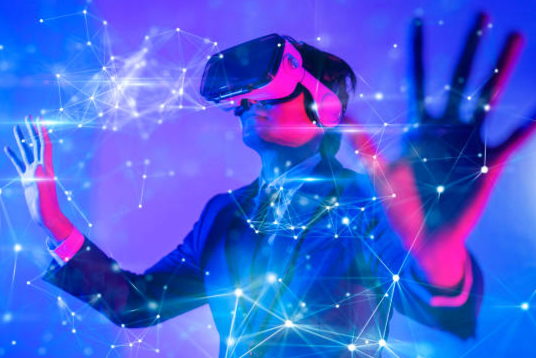
This kind of head-mounted virtual reality device is far from being comfortable, and whether it can attract people to use it for a long time is still unknown. The key lies in whether it can bring users an "immersive" experience, which means that users can temporarily forget the existence of the real world around them. In the eyes of outsiders, users wearing virtual reality equipment dancing and yelling will inevitably find it a little funny, but as long as they can immerse themselves in it, they will naturally linger. Just as modern people are used to staring at a rectangular computer or mobile phone screen for several hours a day - this behavior certainly does not seem "natural", but as long as the content in it can make people addicted, users will also get used to it. It became natural.
Criticisms of the Metaverse and virtual reality devices have of course always existed, most notably entrepreneur Elon Musk’s criticism of the Metaverse in an interview. Comments from the universe. He believes that this change from the mobile Internet to the metaverse is "not compelling" (not compelling), which is more of a hype element; and virtual reality devices feel uncomfortable and unnecessary to wear.
Zuckerberg himself admits that the existing virtual reality equipment is still too heavy and bloated, but he firmly believes that the perfect state will evolve in 10 years. Wearing a virtual reality device is equivalent to obtaining an infinite screen, and can ignore the influence of the surrounding environment to the greatest extent. The more important question now is, what method should be used to make people indulge in the metaverse, at least to live alternately in the real world and the metaverse every day? At present, it seems that the most likely to be the first to achieve this goal are the various virtual reality games that are close to the concept of the metaverse.
Many people believe that allowing users to have a small world of their own in the digital world, such as online games "Fortnite" (Fortnite), "My World "(Minecraft), "Animal Crossing" (Animal Crossing), etc., its form is very close to the Metaverse. Stimulated by the new crown epidemic, the time people spend on the Internet, including playing online games, has increased significantly, and the time spent by teenagers on online games is particularly considerable-these people are likely to become metaverse the first permanent residents.
According to a survey, the time spent using social networks and playing online games by American teenagers aged 12 to 17 increased by 60% in 2020 compared to 2019 . According to statistics from the metaverse game platform "Roblox", in the first quarter of 2021, users spent a total of 10 billion hours on the platform, with an average of 42 million users per day, and they spent a total of 650 million US dollars. Buy gear. Inspired by such data, Dave Baszucki, CEO of Virtual World, believes that the gaming platform will evolve into a metaverse, attracting more adults to join.
Although Metaverse games continue to be popular and virtual reality devices are becoming more and more common, overall, the biggest problem with Metaverse is still the lack of popularity. The metaverse platforms that have just emerged not only need richer metaverse games to attract teenagers, but also need more and more metaverse content creators if they want to evolve into the next generation of the Internet. At present, this is a "chicken or egg" dilemma - without interesting content, it is difficult to attract users to wear virtual reality devices for a long time to immerse themselves in the Metaverse; without enough participants, it is impossible to If reasonable income is obtained, there will not be enough content creators to devote themselves to the Metaverse.
Whose metaverse does it belong to?
How to enter the Metaverse? In other words, how can I judge whether I am already one of the "residents" of the Metaverse? In the absence of a clear definition of the metaverse itself, it is indeed difficult to distinguish. If we talk about investing in the digital world to realize the interconnection with distant friends, then the online chat rooms and communities that appeared as early as the 1990s, including the "World of Warcraft" game that appeared later, can be said to be to a certain extent. metaverse. At the roughest level, the metaverse can be understood as the greatest possible overlap of the virtual world and the real world.
However, as a new form of the Internet, the Metaverse should have a much higher standard than online chat rooms, otherwise people will easily understand the Metaverse as a kind of A new type of online game, or a new form of video conferencing. "Putting a TV on your nose does not mean you have entered the metaverse" - Elon Musk's criticism of the metaverse focuses on the fact that the virtual reality equipment that enters the metaverse is not comfortable to wear, and people do not enter the metaverse. The universe desperately needs both. In fact, this is also the core of people's vagueness and unconvincing concept of metaverse.
If we believe that the metaverse is a new form after the mobile Internet, according to the latest standard, if you have a non-homogeneous Token (Non -fungible token), or just encrypted currency, or you have created a space that belongs only to you in a virtual electronic world, or even used an avatar in a web conference, then it can be said that you have entered the Metaverse . The key to these standards is "participation"-that is, you substitute yourself as part of the Internet content through an avatar.
As a comparison, when conducting a video conference through the previous generation of network technology, you are sitting at home, watching the faces of the participants listed on the computer screen, a group of People speak through the microphone, and your own image will also appear on the computer screens of other participants through the computer's built-in camera. The meeting experience in the metaverse world will be completely different. Participants wearing virtual reality equipment feel that they are in a virtual meeting room. What appears in the meeting room may be their real image, or it may be an avatar. This more realistic sense of participation stems from the sense of space in the virtual world. After the meeting is over, you may still remember the colleagues sitting next to you and their avatars. The meeting rooms, as well as various scenes and settings that appear in the virtual meeting, are actually works created in the metaverse, and belong to a brand new content form.
There is also a seemingly clear but vague question: Who will the Metaverse belong to? Many people believe that since the metaverse will be synonymous with the next generation of the Internet, it must be a public place, and there is no so-called owner. Just as everyone can build their own website, every company can build their own social network, but these are only part of the Internet. Discussing the question of belonging to the Metaverse is as meaningless as discussing the question of belonging to the Internet.
The problem is that it is not easy to create a virtual digital platform in the metaverse, and it requires extremely high technical capabilities and a lot of resources. At present, only a few Internet giants have such strength. They may become the masters of the metaverse in the future. The former Facebook—now the Meta company—is currently the most prosperous company in the Metaverse field. Some developers believe that it is precisely because Facebook cannot reach an agreement with Apple in the traditional Internet field that it is determined to take the lead in becoming a dominant player in the Metaverse field that is similar to Apple and integrates hardware and system platforms. In addition to the virtual reality device Oculus, Meta has launched a social platform "Horizon Home" and a work platform "Horizon Workrooms" in the Metaverse. Another Internet giant, Microsoft, is currently focusing on the commercial application of the metaverse, and has developed a collaborative communication platform "Microsoft Mesh" that can be used for virtual online conferences.
Theoretically, any company can create its own metaverse and become a part of the entire metaverse. In fact, apart from Meta and Microsoft, no other start-up company has the ability to create an independent metaverse platform, but can only be attached to these two giants. Apple is currently not focusing on the development of virtual reality technology related to the metaverse, but is developing wearable devices; while Google's parent company "Alphabet" is focusing on the research of augmented reality technology-developers expect that future augmented reality devices will be compatible with Real life blends in better. For example, through an augmented reality device, when a person sees the signboard of a restaurant on the street, the menu of the restaurant and the comments of all his friends who have visited the restaurant will automatically appear on the screen of his glasses. Although such a technology also belongs to the metaverse concept, it seems that its commercial value is far less than that of virtual reality.
On the one hand, people believe that the Metaverse, as the form of the next-generation Internet, cannot be exclusively owned by one or a few large companies. Zuckerberg also repeatedly emphasized that the metaverse will have more space and more income for creators, and it will expand to the entire industry, involving almost all Internet companies. On the other hand, the metaverse has not yet been formed, and it has been almost divided by large companies. At the same time, real estate hype, advertising... These business models that have appeared in real life have experienced another round of upsurge in the Metaverse.
Major commercial brands have adopted Metaverse as the next-generation social network, and have begun to promote it; through the virtual platform "Decentraland", hundreds of We can also see the judgment of bold investors on its commercial value. Speculators would like to believe that buying real estate in the metaverse now is like buying real estate in deserted Manhattan 250 years ago. Perhaps when a complete metaverse is formed, human beings will repeat everything they have done in the real world in the virtual world. It is also hard for us to believe that the so-called decentralized virtual world will be more equal or better than the real world.
On October 28, 2021, Facebook, Inc. changed its name to Meta. Just 5 days later, an Australian artist, Thea-Mai Baumann (Thea-Mai Baumann) discovered that her account "Metaverse" registered on the former Facebook website "Instagram" had been frozen. Bowman has been using this account for more than 9 years and has less than 1,000 fans. Most of the space is used to record his artwork. Such an inconspicuous account was frozen by the website 5 days after Facebook changed its name to Meta because it was suspected that Bowman was "impersonating someone else." The incident came to light and Bowman filed a complaint with the site, and her account was eventually reinstated on Dec. 4.
No matter why Bowman’s account was frozen and how it was restored, this incident reminds people that they should pay more attention to the ownership of property in the Metaverse question. Although in the online game world, players are used to trading various game equipment, but for most Internet users, they still habitually think that all kinds of information they leave in the online world, including so-called virtual property, are Belonging to different Internet companies, completely ignoring the benefits that I have created for Internet companies by browsing and clicking on various advertisements on the Internet, and the value I created in the virtual world should also belong to myself.
If Metaverse, as a virtual "citizen square", is occupied by Meta in advance, then from the perspective of Facebook's previous business style, Metaverse and The biggest similarity in the real world may be the ubiquitous and overwhelming advertising. In addition to the function of "citizen square", the ownership of various items is also a problem in the Metaverse. If we want the metaverse to truly belong to everyone, or let people become the most important content in the metaverse, then whether it is the image of various virtual avatars in the metaverse or the various decorations on this image, including in the virtual All items in the world should belong to their creators or buyers, not to build a commercial platform for metaverse. Many people believe that the "decentralized" metaverse community can achieve this goal by replacing the functions of banks with blockchain technology and encryption technology. This also means that in the metaverse, everyone may gain profits through the content they create and their activities on the Internet, rather than creating profits for those Internet giants.
It can be said that the metaverse concept has a natural need for decentralization. If you want everyone in the virtual world to have property rights, you must require that the Metaverse is an open ecosystem, rather than being owned by a large company. In the metaverse where personal property rights are guaranteed, making virtual avatars, decorations, and even virtual pets, or performing artistic creations, may become new economic opportunities. Ideally, commerce in the metaverse and the real world could be linked through cryptocurrencies. In a beautiful imagination, the metaverse is continuous, dynamic, immediacy and interactive, and everyone has an "immersive" experience, thus forming a comprehensive economic form-this is not the same as the current Internet There is no essential difference, but its scope is wider, and there is more space for individuals to create and play. Its biggest feature is the virtual reality experience.
Not only does the metaverse need to be decentralized, all virtual items need to be consistent across the entire metaverse - personal avatars, decorations and all possessions , must remain the same on all occasions in the Metaverse—which in turn requires all companies developing the Metaverse to abide by a common set of rules. All the technologies currently being applied to the metaverse are collectively referred to as "extended reality" (eXtended Reality, XR for short). Nvidia, which designs and sells graphics processors, is developing an "Omniverse" (Omniverse) system, trying to create a common set of tools and standards for Metaverse developers.
In such a conception of a decentralized virtual world, the functions of the government are greatly weakened or ignored. In fact, Facebook changed its name to Meta, and the concept of metaverse was hyped just as the U.S. government gradually tightened regulation on Facebook. However, the emergence of the metaverse concept still cannot make people ignore the supervision of virtual space. Excessive control by the government will make the virtual space lose its vitality, and the metaverse may indeed bring convenience to the lives of ordinary people, but it has been proved that false information spreads faster in social networks than in real life. Official supervision of the metaverse is still necessary, but various new problems will inevitably arise in the process.
More questions than answers
The metaverse is, after all, a fledgling concept , it doesn't even have a prototype yet. When we examine it from reality, we will find that there are still many unsolvable problems, and we can only hope for the future. In the metaverse imagined by technology giants, everyone is by no means just a cartoon avatar. The so-called "virtual avatar" refers to the fact that although the image in the virtual world is different from the appearance and clothing in the real world, your gestures, gestures, habits, and even facial expressions and eyes will be copied to the virtual world. In virtual worlds - Only when these goals are achieved will interaction and even eye contact between virtual avatars in the metaverse become possible.
Although this future scene with a strong sci-fi color has been demonstrated vividly in Zuckerberg's video, it is obviously far from becoming a reality. And people can easily see that this goal is definitely beyond the reach of current virtual reality devices like glasses. For example, if you want to realize eye contact between people in the metaverse, the current virtual reality device that can only track people's head movements can't do it at all. In addition to the movement of the head, the instrument needs to be able to track the movement of the human eye at least.
The so-called "eye contact" also includes that in the metaverse, people can read each other's facial expressions through each other's avatars-you know , the human face can present tens of thousands of expressions, which all rely on the subtle combination of facial muscle movements to achieve. If you want to copy tens of thousands of subtle facial expressions to the faces of virtual avatars in the metaverse, any existing virtual reality equipment may not be able to do it. Zuckerberg mentioned in the video that Meta is developing a project called "Cambria", which will be able to project human faces more faithfully into the Metaverse in the future. Even the scenes shown by computer special effects in the video are only caricatured first, which greatly weakens the effect of communication between people through facial expressions.
The difference between this real and virtual world is not difficult to understand. The rich facial expressions of human beings are the result of long-term evolution and social life, which contain a huge amount of information, and it is difficult to complete virtualization through simple data processing. As for whether this problem can really be solved when the future technology is more mature, it is still difficult to predict. In addition to facial expressions, I want my virtual avatar to be able to walk freely in the Metaverse, and to be able to copy my action habits in the real world. Such a goal is far from a control device similar to a gamepad. Finish.
If you want the virtual avatar to imitate your own walking posture, you need to copy the coordinated movements of many muscles and bones in the human body. It can only be done with motion capture equipment costing millions of dollars. Most of the game companies have this requirement in order to design the movements of the characters in the game. If every member in the metaverse requires their virtual avatar to simulate their facial expressions and action habits in real life to the greatest extent, then in addition to a set of equipment that can perfectly scan the subtle changes in the face, at the very least they need A set of wearables full of sensors will do.
It can be seen that if you want to enter the so-called "everything can be virtual" metaverse, let a virtual avatar perfectly copy yourself in real life, in a wonderful At present, it seems that there are still almost insurmountable technical problems-even if the economic and technical difficulties are not considered, it is still necessary for most people to wear motion capture devices to enter the Metaverse in real life every day. A few hours of continuous immersive experience is also an elusive goal.
In order to show that people can work more conveniently in the metaverse, in Zuckerberg's video, a person wears a virtual reality device while holding Electrodes are also attached, so that workers can tap with their fingers while looking at the screen displayed by the virtual reality device in front of them-the electrodes track the movements of the fingers, which is equivalent to tapping the fingers on a virtual keyboard, so that they can send Information to complete the interaction with the other party.
The problem is that people in the metaverse need far more contact and interaction than that. If traditional office work is still dominated by making phone calls, writing, sending and receiving emails, which can be barely completed by tracking finger movements alone (such work efficiency may not be higher than tapping a real keyboard facing a computer screen), then think To realize the real and natural interaction between people in the Metaverse advocated at present, it is simply impossible to realize it with the existing technology. After all, there is no program that can replace a real hug and kiss.
Considering these practical difficulties, it is more likely that people will mostly use comics or artistic avatars in the Metaverse presented in the future. The so-called virtual avatar is nothing more than a variety of collocations among several pre-set images. If you want to get a more personalized image and decoration, you need to spend non-homogeneous Token to buy it. As for how to digitize the contact and interaction between people, or between virtual avatars, how to approach reality step by step, and simulate human touch and even smell, there is still no answer.
In the Metaverse, the concept and volume of data will be completely different from what it is now. The movements, expressions and words of billions of avatars will be stored. These huge data are not only difficult to save and process, but also have privacy. Matthew Ball believes that we have five basic unresolved issues regarding the Metaverse: data rights issues, data security issues, radicalization issues, disinformation issues, and platform power issues. To put it simply, who does the data in the metaverse belong to, who does the metaverse platform belong to, and how to ensure the various security issues in it? There are no clear answers to these questions.
In the Hong Kong movie "King of Killers" released in the 1990s, the computer repeatedly compared the back posture of the killer walking in a surveillance video, The identity of the killer played by Ren Dahua was finally confirmed. The plot of this kind of sci-fi movie is likely to continue to be staged in the future metaverse world-you must know that everyone's walking posture, gesture of making a certain action, and even expression have their own uniqueness. In the metaverse era where everyone's every move is recorded and saved as virtual data, these characteristics will allow users to reveal their true identity like everyone's fingerprints. In a virtual world that appears as an avatar, there is nowhere to hide a person's true identity. If the privacy of these data cannot be guaranteed, but is owned by some business giants, then in the metaverse, everyone will see more tailor-made advertisements and carefully crafted news...
< p>What kind of reaction will the rise of metaverse have on the real world? This will be a new sociological topic. Technology can not only expand human ability to express and experience the world, but also limit and distort human ability to perceive the real world. The experience gained by using virtual identities in the metaverse can certainly serve as a certain educational value. Studies have shown that when virtual images appear, people are more honest and loyal to their own experiences. When using virtual avatars to communicate, people have a stronger sense of psychological security and communicate more efficiently. For shy, introverted, and even people with physical defects, avatars are more likely to allow them to find their true selves... But on the other hand, if people in the future are used to immersing themselves in the illusory world of the Metaverse, they will inevitably There will be various discomforts in the real world, which will lead to frustration.
Some metaverse game players said that after getting used to the game world, they would not be able to break into the real world at will, or from any place without scruples. Very uncomfortable jumping out of a window. It is conceivable that the more realistic the metaverse is made, some extreme or virtual scenes will definitely have a huge reaction on people's behavior in the real world. Many behavioral norms of human society will be redefined in the metaverse, but the metaverse is more likely to become a refuge for the frustrated in real society.
To what extent should one be obsessed with the Metaverse? Will the metaverse create greater inequality in the real world, or the other way around? People are obsessed with the metaverse, and although many new occupations and economic forms may be created, their reaction to the real world is also unpredictable at present. If the metaverse allows people to spend more and more time in the virtual world, which is originally used for work and leisure, how can people solve real-life poverty, income inequality, medical difficulties and other stubborn diseases that have lasted for thousands of years?
It is conceivable that no matter how far the metaverse develops, these questions are worth exploring repeatedly: to what extent can human senses be replaced or deceived? ? Is full digitization the way forward for mankind? If everything in life can be digitized, what is the meaning of life itself? Will the "embodied internet" be the ultimate form of the internet?
Whether in Zuckerberg’s open letter or in his more than an hour video speech, his description of the metaverse intentionally or unintentionally combines reality and The future is mixed. In the video full of computer special effects, he wants people to believe that this will be what the residents of the metaverse see and feel, and people's senses will be perfectly replicated in the metaverse by electrodes and cameras. The boundaries between reality and fantasy, body and soul will no longer be clear in the Metaverse.
The pioneers of the Internet passionately preached how perfect the metaverse building would be, how creative, and more humane it would be; on the other hand However, the materials needed to build the metaverse building are far from ready. More people are still on the sidelines, wondering if they can live in the Metaverse Mansion in the future, how will it be different from their original life?
The metaverse is gradually taking shape, and the Internet will eventually be changed again. Standing at the crossroads of another new era, we can imagine that the extent to which the metaverse can develop ultimately depends on the extent to which human beings can accept the virtual way of life. What these pioneers of the Internet industry want to create is not only a brand new Internet, a new economic model, but also a brand new social form. Between the dream and reality of the metaverse, between the virtual and the real, we should be full of confidence and expectations for the future, and at the same time keep calm and prudent.
Original link a>
Welcome to join the official BlockBeats community:
Telegram Subscription Group: https://t.me/theblockbeats
Telegram Discussion Group: https://t.me/BlockBeats_App
Official Twitter Account: https://twitter.com/BlockBeatsAsia
 Related Articles