Comb decentralized stablecoin, where is it now?
原文标题:《 Decentralized Stablecoins: An Unfulfilled Promise? 》
Original source: Ling Young Loon, Nathan   analysts
原文编译: Kyle,巴比特
introduce
As experts envision cryptocurrency as an independent monetary system that can replace traditional finance, stablecoins (cryptocurrencies pegged to the US dollar) are still widely circulated on the blockchain today. According to Coingecko, stablecoins typically account for more than 50% of daily cryptocurrency transactions. However, less than 10% of the total cryptocurrency market capitalization consists of stablecoins; They may serve more as a medium of exchange between assets than as a store of value.
Most of these tokens are issued by a single legal entity and have many centralized risks that Defi users aim to avoid. But what if we could decentralize stablecoin itself? Easier said than done. Many agreements have proposed various innovative mechanisms for creating such decentralized stablecoins, but few have survived.

Staying anchored does not equal increasing
The chart above depicts the supply of stablecoins with relatively stable anchors as of today. Even the stablecoins that survive are not guaranteed success, since price stability is only one of the pillars of growth. To be successful, stablecoin protocols must achieve three growth goals: liquidity, stability, and user adoption.

This research article delves into the data, details our elusive search for the perfect stablecoin model, and offers some lessons on how protocols can achieve the three goals of liquidity, stability, and user adoption.
Different stablecoin models
Although there have been many iterations of different stablecoin protocols, most of them have similar characteristics. This is my usual categorical framework for thinking about the broad realm of decentralized stablecoins. Note that some technical parameters and mechanisms vary within the same category of protocols.

Redeemable refers to the user's ability to exchange the stablecoin for an equivalent asset.
MakerDAO is a fully reserved, fiat pegged stablecoin protocol. Someone deposits reserve assets, such as ETH, into Maker. He can then mint the DAI based on the dollar valuation of the asset. Most cryptocurrency assets are volatile, so Maker only allows DAI to be issued based on a certain percentage of the asset's value. Now, this ensures that DAI is almost always backed by corresponding assets worth $1.
Because of this, Maker acts like a full-reserve bank, ensuring that DAI's users can redeem its value. This guarantee means that the full stablecoin reserve is over-collateralized and therefore capital inefficient. Maker usually has lower loan-to-value ratios and higher interest rates than other loan agreements. That means the people who forged the DAI can often borrow dollars more cheaply elsewhere.
Full reserve agreements also have a natural limit on growth: stablecoin supply is limited by the leverage demand for crypto assets such as ETH. Think about it: Imagine if every USDT user in the world today wanted to convert to DAI, but no one was willing to deposit ETH to mint them (for example, ETH might be locked in staking). There simply isn't enough DAI to go around.

As ETH prices fall, the full reserve stablecoin supply falls
The algorithmic stablecoin protocol is designed to circumvent these problems. The defining feature of the algorithmic stablecoin protocol is that it does not guarantee that users can exchange their stablecoin for an underlying asset of the same market value at any time. Algorithmic stablecoins generally have three ways to stay pegged:
● 公开市场操作。在这里,协议通过智能合约为稳定币本身交换储备资产来保护锚定自己,反之亦然。 Fei Protocol 通过在其 Uniswap 流动性池上直接买卖来实现这一点,而 Float Protocol 则进行荷兰式拍卖。
● Rebasing。对于 Ampleforth,稳定币的供应量将根据钱包拥有的数量按比例收缩和扩张。假设我有 10 个 $AMPL 并且 $AMPL 的总流通供应量为 100。$AMPL 的价格为 1 美元。如果 $AMPL 跌至 0.90 美元,则在重新调整即 rebasing 后我的钱包中只会发现 9 $AMPL,总流通供应量应降至 90 $AMPL。(实际机制要比这更精细)。
● 二级代币。在二级代币模型中,稳定币脱钩的风险不断被二级代币持有者吸收。让我们以 Basis Cash 为例。当稳定币交易价格低于挂钩时,用户可以以折扣价将稳定币换成债券(bond),比如 0.70 美元的债券。一旦重新挂钩,债券持有人就可以按面值(1 美元)赎回他们的债券。当稳定币交易高于挂钩时,新的稳定币被铸造并发行给股票代币的持有者,奖励承担此类风险的股东。
Since 2021, a new type of vertical stablecoin has emerged: those that are not tied to the price of any fiat currency at all. How does this work?
These protocols have a variable target price for stablecoins, which fluctuates less and is updated regularly. So how does this target price come about? Reflexer's target price increases and decreases (gradually) as the agreement's demand for ETH leverage increases and decreases. Because of its redemption mechanism, it essentially faces the same capital efficiency challenges that plagued earlier all-reserve stablecoin models.
Float protocols can be classified as algorithmic stablecoins using a secondary token model. At higher levels, the target price of a Float rises and falls (gradually) as the overall price of its collateral rises and falls.
These models are ambitious but untested on a large scale.
Designing stablecoin protocols is difficult.
Where money is involved, it becomes a tricky business. Stablecoin protocol designs are often proven in theory, but become ineffective in practice.
Due to the complexity of user interaction with the stablecoin protocol, a protocol that works for a smaller scale may not work for a larger implementation, and vice versa. One reason is that as the rate of user adoption increases, so does the percentage of participants who do not understand protocol mechanics. As Mr Vance of Framework Ventures points out, a death spiral is more likely because more participants sell in panic.
The growth of stablecoin protocols is also path-dependent: anchoring losses can completely undermine confidence in a model once issued governance tokens cannot magically be redistributed to the right people. In the early days of the agreement, it is important to cultivate a strong community of users who want the agreement to last for the long term and are therefore willing to bet on your stablecoin staying pegged. This is an irreplaceable community "moat" that takes time to build.
Finally, participants cannot communicate with each other and do not know what others are thinking on the blockchain. Due to our loss aversion and mass psychology, users are actually more likely to sell stablecoin, causing it to move further and further away from the peg. Communication between teams is strong, and participants can agree to converge at a certain price point, which is important up to a point. This decoupling of FEI prices was quickly reversed after the proposal was submitted that FEI holders could exchange for $0.95 worth of ETH under any circumstances. Even before the proposal was passed, the price of FEI jumped from $0.71 to $0.85.
As a further illustration of these two points, let's look at $FRAX and $IRON. The general mechanics of Iron Finance are not that different from Frax Finance. But unlike $IRON, the stablecoin $FRAX does not deviate significantly from the peg.
The implementation of FRAX is more robust because it has a feature that allows users to lock in FRAX Shares ($FXS) and $FRAX Liquidity Pool tokens. Having a group of supporters lock in their capital to absorb $Frax fluctuations can act as a buffer against a death spiral and signal to the average $Frax user that they are not playing Prisoner's Dilemmas.

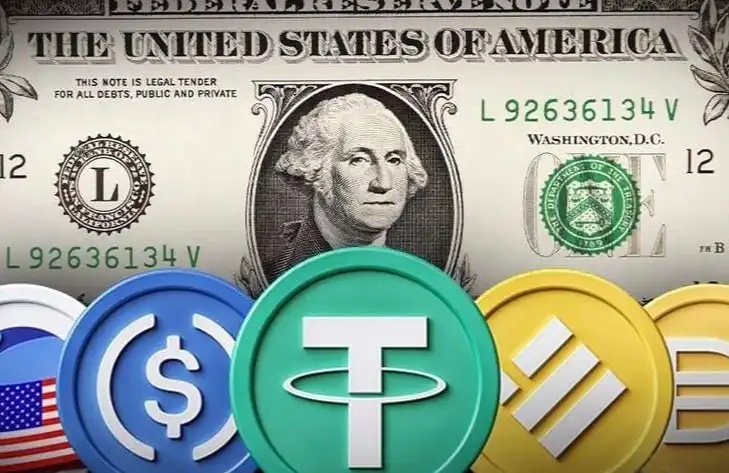
Centralized stablecoin (USDT, USDC, BUSD) offerings vs. all decentralized offerings
conclusion
No wonder the total circulation of the centralized stablecoin today exceeds the market value of the decentralized stablecoin by more than 10:1. For many, the security of a stablecoin issued by a centralized custodian far outweighs the risks involved in a decentralized stablecoin.
It is also questionable whether the user adoption rate is actually growing, as many people use these stablecoins as a temporary source of income. Apart from DAI, no other decentralized stablecoin has had more than 3000 unique active senders since July! In this year's NYAG and NBSP; Tether With the settlement, most of the concerns surrounding the lack of support for the USDT have also dissipated to some extent. As consumers continue to pass. Coinbase Entities like Defi, using a centralized stablecoin is still the de facto choice for many people.
Still, the quest for a decentralized stablecoin continues.
The original link
Welcome to join the official BlockBeats community:
Telegram Subscription Group: https://t.me/theblockbeats
Telegram Discussion Group: https://t.me/BlockBeats_App
Official Twitter Account: https://twitter.com/BlockBeatsAsia
 Related Articles