Pastel: Building an NFT Ecology on the Bitcoin Chain
近日,去中心化 NFT 平台 Pastel 做客律动 AMA,进一步讲述为何想要在比特币区块链上创建 NFT 生态,以及该项目代币机制和未来发展计划。近日 Pastel 已上线 Uniswap(v2),并计划开始进一步扩展亚洲市场。
Pastel Network 是一个去中心化 NFT 平台,允许用户注册、存放和交易「NFT」及其他「稀有」资产。该平台为创造者提供了一种与粉丝安全连接并销售独特限量版数字资产的方式,但无需支付高额手续费用或受到存储限制。
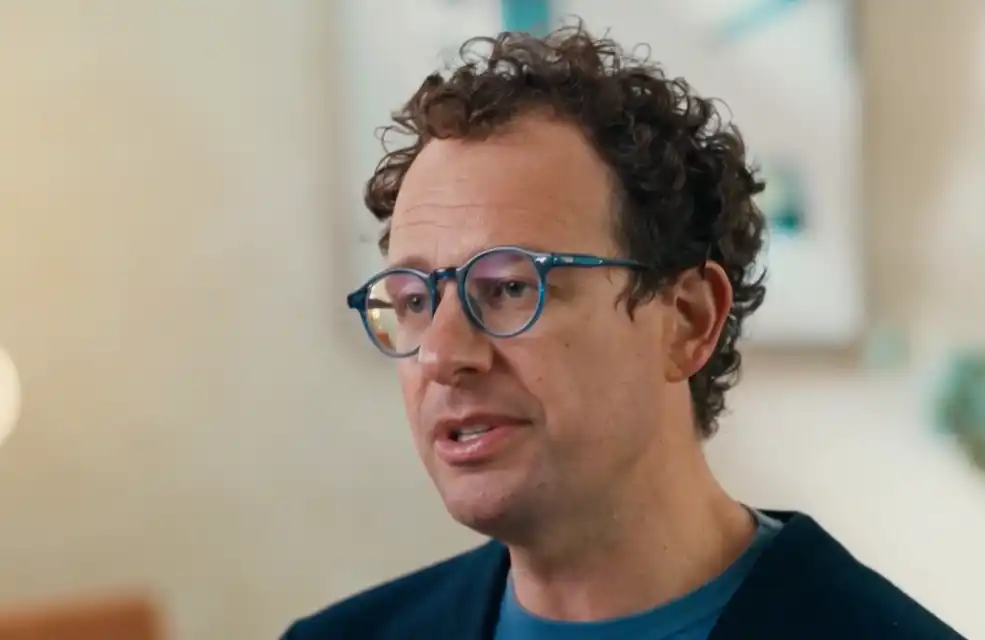
Pastel's founder and CEO, Jeff Emanuel, and co-founder and COO, Anthony Georgiades, share their vision for Pastel and their token system.

The following is the content of the AMA:
Rhythm Blockbeats: Can you briefly introduce yourself to the Rhythm fans? What is your personal background and how did you get into blockchain?
Pastel:I majored in mathematics in college and have been working in hedge fund companies since 2008, focusing on fundamental and quantitative investment. I first noticed bitcoin in 2013, and since then I've been fascinated by cryptocurrencies and decentralized systems.
I came up with the idea of Pastel three years ago when I saw the potential to create rare artworks on blockchain. The first project I heard of built on top of the Bitcoin blockchain is now forgotten, and it's called a Rare Pepe. Rare Pepe had a number of issues at the time, including the high cost and the fact that many aspects of the system were not decentralized, relying on a fully centralized website to store image files rather than relying on blockchain.
I thought there was a better way to do that, so we set out to design and build a blockchain specifically for the rare digital art (known today as NFT). We chose to build on top of Zcash, a project built on top of the Bitcoin code, taking the MasterNode code from the Dash project. We built on this a powerful and flexible "note" system for registering and trading NFTs that trade using special tokens. We also added our own storage layer to store image files, and there are a lot of other cool technologies that we'll tell you about in an upcoming AMA.
Rhythm Blockbeats: Tell us about Pastel, what is its vision and mission?
Pastel:Pastel is the world's first dedicated, decentralized NFT platform that allows users to register, store, and trade "provably rare" assets. The platform provides a way for creators to connect with fans and sell unique, limited-edition digital assets without the high fees or storage restrictions that other projects face.
Using a proprietary local blockchain, Pastel deployed many key features, such as a deep learning-based repeat detection system to ensure authenticity verification. The network, a division of Zcash, uses the proof-of-work (PoW) algorithm EquiHash and supports supernodes, providing computing resources to the network to support asset registration, asset allocation, and permanent storage. Pastel is built and managed by a team of professional developers, code-breakers and technologists, and supported by experienced marketers, influencers and third party agencies. Pastel is backed by key stakeholders including Innovative Capital, a prominent venture Capital fund.
Our mission is to empower global creators by enabling fans and collectors everywhere to create and trade rare NFTs. We offer low price, no license registration, and truly decentralized storage without sacrificing security and user experience.
Beat Blockbeats: Almost all NFT platforms are based on existing networks such as Ethereum or BSC. Why did Pastel make his own public chain? Was he inspired by Dapper Labs?
Pastel:A few years ago, when we started preparing for this project, we thought that we could only exercise full control by making an application-specific blockchain (rather than an Ethereum standard token). Because the other methods have their own problems, such as they don't provide storage for the image files themselves, and users can't put the data directly into the blockchain unless scaling issues are quickly addressed.
In addition, whereas other NFT projects rely entirely on the artist's digital signature to ensure rarity, Pastel uses our image fingerprinting technology to add an extra concept of rarity to the underlying pixel pattern level of the image itself. The best thing about the Pastel architecture is that it is based on the Zcash code. All NFTs on Pastel are ultimately "minted" by special token transactions in the blockchain, so they inherit all the security and reliability of the Bitcoin /Zcash code.
But there are other questions that are really just as important: How do you prove that digital images are really rare? Of course, you can calculate the hash of an image file. But what if someone tries to capture another artist's image and just changes a pixel in the corner of the image? No one's going to notice, but they're going to have different hash values.
In order to protect artists and collectors, we realized that we needed a way to detect duplicate images. This is the most innovative part in the whole project, we use the top five deep learning algorithms of image recognition and statistics to detect a fake, even if they are modified in the form of various (such as use photoshop filters, or shear, or flip, or change the contrast/color, adding random noise pixel, etc.), we'll still be able to distinguish authenticity.
In order to provide these services (such as CPU-intensive storage of image files and repeated detection) to users in a decentralized manner, we used a master node system similar to DASH. This allows anyone to buy enough tokens to start their own master node and actually participate in running the system -- you don't need permission from anyone, the system never stops running, even if we get tired (or even if we get hit by a car) -- as long as anyone wants to run the server themselves.
We believe that digital art on the blockchain is the future of art. Because it avoids the expensive middlemen (galleries, dealers, agents) who serve as gatekeepers in the art world for the rich and sought-after "hot artists" in the big cities and make it expensive for collectors to trade/sell.
But for it to really take off and grow sustainably, you need a project that covers all the needs. You don't want to spend a lot of money making art on another system only to find that the link to a Google or Amazon server breaks down 10 years later because the company no longer exists or has no users.
Blockbeats: Why did you choose the Bitcoin +Zcash code? What is the role of zero-knowledge proof in PASTEL?
Pastel:When we first launched the blockchain, we chose the one with the longest proven track record of security, reliability, and decentralization: Bitcoin. While Pastel's inherent data integrity is largely based on the Bitcoin codebase, the project is also based on PoW mining mechanisms and maximum decentralization.
We designed the PSL to be the native cryptocurrency on the Pastel network, which can be used for money transfers and savings just like Bitcoin. However, PSL also has a special purpose in the system: allowing participants to securely register and store their assets on the Pastel Network. In this case, the PSL is essentially a version of Bitcoin as the core cryptocurrency layer on which rare asset-related functionality is built directly. This is done by using the tokens themselves to encode the collected data into a particular transaction. The benefit of this unique design is that data written in this way inherits all the security attributes of cryptocurrencies like Bitcoin, providing a solid and reliable base layer.
We believe it is better to add crypto innovations such as the ZK-Snark system introduced by Zcash than to develop the ticket system directly on top of Bitcoin. The system allows provably secure "blocking" (private) transactions that can be authenticated over the network without disclosing the receiving address. Apart from crypto transactions, Zcash is very similar to Bitcoin's codebase, with a few tweaks, most notably its use of EquiHash as a proof-of-work algorithm instead of the SHA-256 algorithm used in Bitcoin.
The company behind Zcash has raised a lot of venture capital, hired employees in the crypto field, and hired several prominent third-party security researchers to conduct an exhaustive security audit. The feedback from all of these audits is then integrated into the system, reinforcing it in a way that goes well beyond the careful and rigorous standards of 99% of cryptocurrency projects. This is why we decided to use the Zcash codebase as the best starting point for the Pastel codebase.
Rhythm Blockbeats: What is Pastel ID? Why do players in a network need an on-chain identity?
Pastel:By designing Pastel from the beginning, we focused on our target audience. Users can create a Pastel ID consisting of public and private keys to develop an identity on the blockchain. More importantly, the Pastel ID system ensures that creators and collectors can share their Pastel ID keys on their websites or various social media accounts -- abstracts out the messy string identifiers associated with the pub/priv key pair.
This is important because in a decentralized system, anyone can impersonate themselves and put their "name" into the system, for example: Banksy, with the Pastel ID system, the real Banksy can share his Pastel ID public key on his website or social media account, and then everyone can see if a piece of art is a real Banksy, Because only a real Banksy can sign a work of art with a valid signature.
Rhythm BlockBeats: Can you introduce the storage features of Pastel? Why not choose AWS or IPFS?
Pastel:Almost every NFT project completely ignores the storage of the underlying NFT assets. Users mistakenly believe that NFT exists on the blockchain in a decentralized manner. However, NFTs are virtually irreplaceable because they refer to the actual tokens, not the ownership of the rare asset itself. Most platforms simply outsource the storage of actual scarce assets to a third party. In this case, the owner actually only owns NFT tokens to authenticate files stored on a distributed protocol such as IPFS, or even just URLs pointing to where the files are stored, such as Google or AWS.
Storing NFT's metadata and assets on a centralized server, or relying on IPFS to maintain files, leaves any creator or owner vulnerable to asset loss if the central entity shuts down or the protocol link fails.
Pastel is the first NFT platform to have its own fully integrated, decentralized storage layer based on advanced technologies such as Raptorq fountain codes. Pastel ensures that the digital asset itself is uploaded, verified, and registered on the Pastel Blockchain -- not just the creation of its tokens.
Through a series of smart notes on Pastel's ledger, artists can store their masterpieces in a distributed fashion across a variety of super nodes, rather than just ensuring that tokens are irreplaceable. Our goal is to ensure that even after 100 years, the world will not lose access to any NFT entrusted to the Pastel Network.
One of the core functions on Rhythmic Blockbeats: Pastel is to check the weight, which relates to the copyright of NFT works. Why was this feature designed? Does this inspire artists to create their own works?
Pastel:The standard way for many encryption projects to describe NFT is to use the hash of the file as the ID or fingerprint of the underlying image. The problem with this approach is that someone can copy the NFT, say a digital work of art, and then re-upload it to the system. This will cause the hash value to change completely, even though the file is the same.
What we need is a kind of inner nature or content of the NFT powerful method to record for the digital fingerprint image, when the same file is uploaded, or even if the image is modified by some surface to upload, such as cutting, change the color and brightness, or apply various PS types of filters, such as edge detection or distorted, Our digital fingerprints don't make any real difference.
Pastel's approximate repeat image detection method utilizes Keras application TensorFlow. The method found all the ways to convert each image into a fixed list of about 8,000 numbers. This digital vector is called a digital image fingerprint, and it allows us to compare two images by comparing their fingerprints, which take up only a small portion of the actual image space. We can think of each fingerprint as a point in a space of 8,000 dimensions, rather than 3. In this 8,000-dimensional space, images with similar content have "close" fingerprints to each other. We found suspiciously similar images by looking at the correlation between a given image fingerprint vector and all image fingerprint vector databases previously registered on Pastel (aligned with an open image database, such as Google).
To generate those 8,000 numbers more intelligently, we leveraged the combined efforts of Google, Open-AI, and many other researchers in machine learning. We selected five trained deep convolutional neural network models that have performed well in the famous ImageNet computer vision recognition and classification competition (e.g., the RESNET model).
We convert all candidate images to the same 225-pixel resolution, and each model outputs a set of probability estimates for over 10,000 categories. The category with the highest probability is the model's "best guess" about the content of the image.
In effect, we take the penultimate output of five neural network models (each based on a different method and architecture), which are basically a bunch of numbers summarizing the internal state of the model when it is excited by a given image. Then we combined the five differential output vectors into a string as the final fingerprint. Such a neural network system is highly sensitive to show their images, and had "learning" of semantic content, so that they can effectively use Numbers to describe the content of nature - even if the original image for the various changes or made a variety of changes, the original image and even every pixel of original image and repeat image is different, The system will also detect a degree of similarity that is unlikely to occur by chance.
Rhythm Blockbeats: How was Pastel's Token Economy Designed?
Pastel:The PSL token (" PSL ") served as the native cryptocurrency on the Pastel network, allowing it to be used for money transfers and savings just like Bitcoin. In the PSL is the accessibility basis for running a blockchain that is entirely dedicated to a specific use case of a rare NFT. Essentially, PSL offers a permission-free, borderless economic model for rare digital assets.
The PSL also has various special uses within the Pastel ecosystem: artists can use the PSL to pay for the cost of securely registering and storing their artwork on the Pastel Network. The underlying mechanism supports the low inflation model through constant "burning proofs". Collectors can also use the PSL to buy rare works of art created by others.
PSL is the functional native currency on the Pastel Network. From registering NFT to providing governance, PSL empowers all types of users to participate in the ecosystem. The PSL can be acquired by network participation and stored, transferred or traded with other Pastel users in an unlicensed peer-to-peer manner.
Token holders can pledge the PSL and run supernodes to provide operations, storage services, and network security enforcement. Creators can issue rare digital assets and receive a perpetual royalty of up to 10 per cent on all future sales of such NFT. Third-party developers can design Pastel Network-based applications by seamlessly integrating PSL into their applications, and in turn, they can charge users for services or design reward systems without worrying about billing specifications.
The PSL is a standard utility token used for:
Operations: create Pastel ID, register NFT, trade;
Pledge: SuperNode holds collateral and is rewarded for providing computing and verification services;
Governance: Stakeholders can vote on how network resources are allocated.
Although Pastel emissions according to our schedule inflation follows a relatively simple solution (for more information please read: https://pastel.network/token/), but we have been developing a burning proof plan, in order to provide the deflation mechanism in the system.
For every activity on the network, the user "spends" a small amount of PSL. Some of these features cause the PSL to be assigned to an address that is encrypted unusable, resulting in a reduction in the overall supply of the PSL (or the PSL being "destroyed"). Over time and as the network matures, PSL may evolve into some use cases for users.
Key network features of Proof of Burn include:
Pastel ID creation: 1000 PSL for user;
Art registration: verification of super node costs 1000 PSL;
Transaction :2% fee paid by the seller, 1% fee paid by the buyer;
Transaction ticket :1000 PSL to be paid by buyer.
Rhythm Blockbeats: How do you see the current NFT market? Is there any hype?
Pastel:There is certainly hype in the current NFT frenzy. However, I think this happens on the individual NFT, not on the platform. I think we had a brief period where people without much artistic talent or social media following could quickly make NFTs and sell them for thousands of dollars.
Not surprisingly, there has been an explosion in the number of NFT products on the market and a sharp drop in prices. However, it is quite different for artists of exceptional ability with legions of fans. Or, if you're a celebrity or sports star, make an NFT collectible, which is also very different.
The biggest competition may not be Ethereum, but Flow. The problem with Flow is that it is also very centralized and also uses proof of stake (POS), which is far less secure and combat-tested than Pastel Blockchain PoW based on Zcash's Equihash algorithm. Flow has a lot of relationships with Hollywood and music publishers. What happens if users post copyrighted material? Will Flow stand up to its big corporate partners in the name of resisting censorship?
So the get-rich-quick bubble of untalented, unknown artists is now over, which is a good thing for the sector. But in terms of the total market capitalization of all NFT trading platforms, I think that number will be much higher in three years than it is today, at least in terms of Bitcoin. Hopefully Pastel will be the biggest of them all.
Rhythm Blockbeats: What kind of partnerships are you currently seeking or have obtained? What are your current partners? Could you share with us the future development plan of Pastel?
Pastel:We are currently working with CoinCentral, Search, and Innovating Capital. Over the next few months, we will be working to build partnerships with the community, the gallery and the platform.
This is part of our multi-pronged approach to overall marketing, adoption and promotion.
First of all, we are trying to grow our community through Telegram, Discord and Weibo. At the same time, we have a direct outreach program on Instagram and various channels to bring existing and aspiring creators to the platform. We started working with PR firms in different regions (US, China, Europe) to promote content strategies and specific marketing campaigns for these regions and specific user types (creators, collectors, crypto enthusiasts and builders).
We are also running a full partnership program with various third parties, such as well-known talent agencies or auction companies, all directly on Pastel to build applications. For example, a third-party talent agency can maintain a website for its clients, who can then access the network through the company's Pastel account. Such a system will call the Pastel blockchain directly through the RPC and API, automatically performing a variety of underlying NFT operations. Virtually any platform can have the system perform actions on their behalf over the network, such as generating a Pastel ID for the user and registering an artwork on the Pastel blockchain -- all the settlement logic is abstracted from the local builder.
Finally, we have been working with various influencers to begin targeted outreach efforts on our behalf. We work with celebrities, sports stars, global talent agencies, artists, well-known art dealers and more. In addition, we have hired leading public relations firms in the United States and Asia to help us spread our story in the media. So far, we've been operating more in "stealth mode," focusing on technology and user experience, but it's time to start promoting Pastel to the public.
BlockBeats: Thanks to Jeff Emanuel and Anthony Georgiades, that concludes the AMA.
Welcome to join the official BlockBeats community:
Telegram Subscription Group: https://t.me/theblockbeats
Telegram Discussion Group: https://t.me/BlockBeats_App
Official Twitter Account: https://twitter.com/BlockBeatsAsia
 Related Articles