Terra CEO: What are Anchor, Mirror and Chai? How do they work?
Original title: "Terra CEO: What are Anchor, Mirror, and Chai and How Do They Work?"
Original source: Coinlist blog
Original compilation: Alyson

Over the past 12 months, the DEFI industry has grown rapidly and through Defi projects such as Uniswap, Maker, AAVE and Compound into multi-billion dollar agreements, we have seen a shift from "declining finance" to "regenerative finance" with the community setting a higher gate cloud in terms of financial accountability, smart contract security and user experience.
Recently we have invited one of the most exciting projects of DEFI Ecosystem 2021 -- the Anchoring Protocol.
Integrated by the team of blockchain chain platform Terra, Anchor is a storage protocol that provides the crypto world's indigenous people, fintech companies and regular investors with Defi's stable high yield interest rate. Do Kown had a panel discussion about what they are building and what makes Anchor more reliable and attractive than other Defi storage protocols. Let's get started.
1. First, can you tell us a little bit about Terra and what problems it solves?
Terra is a platform for a Tendermint Consensus based POS blockchain platform built using the Cosmos SDK. Terra's design is based on making it easier to consume, save, and invest by using the tools of the new financial system, leading to mass adoption of cryptocurrencies, blockchain, and DEFI.
Terra differentiates itself from other blockchain networks in several main ways:
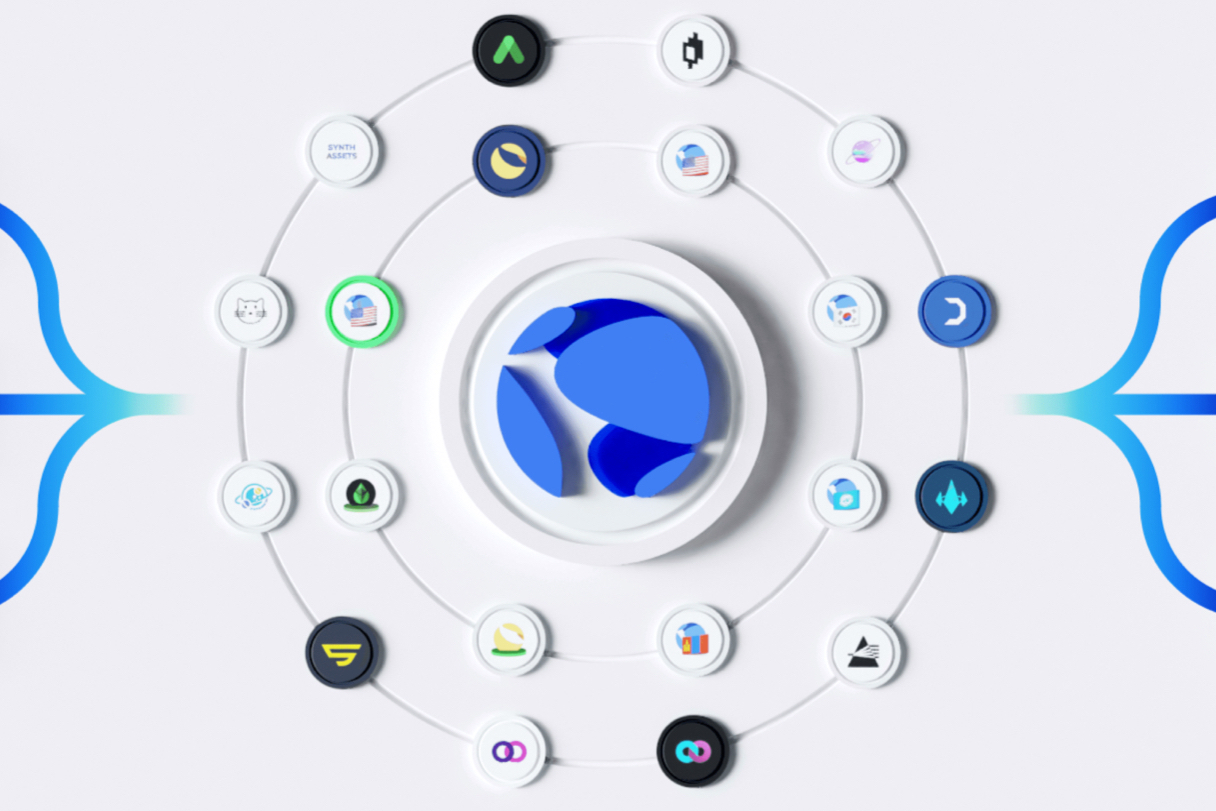
First, Terra's network is based on an elastic supply model, with its native token Luna used for mortgage bond stablecoins, which make up Terra's various applications such as Chai (payment), Mirror (investment/trade) and Anchor (savings). The presence of stablecoins forms Terra's infrastructure, thus creating an environment conducive to network speed and application availability.
Stablecoin on Ethereum has become the medium of choice for online transactions, while on Terra, Stablecoin is integrated into the underlying protocol and even provides an on-chain exchange function that makes it a high-carbon, low-cost foreign exchange market.
Essentially, Terra is built in using the Cosmos SDK, which means that the Network is compatible with the IBC standardized communication protocol as well as other Tendermint-based applications in the Cosmos Network ecosystem, such as Thorchain, Oasis Labs and Cosmoshub. IBC supports rapid interoperation between Terra and other network pathways, thus enabling the network to benefit from the application-specific blockchain and its significant advantages to each other.
2. How does Terra UST achieve stability without the support of real assets?
The money supply of the LUN is elastic, meaning that the supply of Luna in circulation is based on the demand for Terra Stablecoin (e.g., UST). And expand or contract.
Our thinking is that more demand for Terra stablecoins is equivalent to a contraction in the supply of Luna, since it is always possible to trade $1 worth of Luna at the agreed rate for a stable currency like the UST.
For example, if excessive demand for UST pulled the fixed exchange rate above $1, then arbitragers would be motivated to destroy $1 worth of Luna to create 1 UST, thereby shrinking the supply of Luna. To sell at a profit. Importantly, this capability has been integrated into Terra's agreement and can be implemented on a large scale, producing up to $10 million of UST mints per day before the slippage point becomes unreasonable.
In addition, if the pegged exchange rate of UST moves below $1, then arbitragers are incentivised to purchase UST on the open market and redeem it with $1 worth of newly minted Luna, thus expanding the supply of Luna.
As you can see, the increased demand for Terra stablecoins (such as UST) will trigger a contraction in the supply of Luna, making Luna increasingly scarce. The scarcer the Luna, the value of the unit Luna can be realized.
In addition, through the use of Terra applications such as Mirror, Chai and Anchor, the usage of Terra Stablecoin increases at the same time as the circulation speed of the stablecoin increases, thus providing more profit for Luna Asset Management. While Terra's stable assets are volatile in the short term, these individuals accumulate profitable long-term cash flows over time.
3. Terra supports a rich ecosystem of products, including Mirror, Chai and MemePay. Can you briefly describe why the ecosystem is established and what the products on these ecosystems do?
Terra, the main spirit is to achieve scale landing. However, this does not necessarily mean that users need them they are using the blockchain network to make a profit. Much of the complexity of encryption technology can be abstracted out when users interact with the Terra ecosystem. Sex and benefits (such as DEFI) have been a major barrier to encryption adoption.
Through Terra, we hope to identify two main aspects from the perspective of simplifying things:
A. Let users use intuitive and contrast applications.
B. Establish robust incentives for network stakeholders.
On the first front, Terra has built a rich ecosystem of applications, including Chai, Mirror, and Anchor. Chai, a South Korean payments app with more than 2 million users and more than $2 billion in transactions last year, recently raised a $60 million Series B funding round.
Mirror is a thriving synthetic asset protocol on Terra that provides "versions" of real assets (such as stocks, commodities, indexes, crypto assets, etc.). Since its launch, the Mirror's total value locked in (TVL) has surpassed $1 billion in just 12 weeks. And Mirror is a community-managed protocol that offers a censorship-resistant and user-friendly alternative to competing with companies like Robinhood.
Anchor is Terra's savings protocol, which shapes the composability of DEFI and presents it to the end user in a simple way to achieve stable, high-yield savings with just a few indirect strokes. Among other things, Anchor standardizes derivative returns on other proof-of-stake (POS) blockchains, freeing up liquidity from key stakeholders in its network and channeling cash flows into their regular margin positions to depositors.
The second aspect deals with a specific question: What are the common themes of the integrated applications on Terra?
Since they are the primary mechanism for interacting with the protocol, they increase the demand for UST and Terra Stablecoins. The use of mirroring, Anchor, and Chai sparked further market demand for UST, which triggered more and more Luna destruction for a risk-free arbitrage profit.
As a result, Terra's long-term stakeholders, the users of Luna's pledge who can absorb short-term changes, are rewarded with a virtuous cycle of increasingly scarce Luna, adoption of UST and increased cash flow from increased transaction speed.
4. Where do you think Terra is most widely used?
Chai is the most widely used crypto app outside of our estimates, and it's not purely speculative, with over 2 million active users and $2 billion in transactions last year, and is now growing at a new pace.
In the 12 weeks since launch, Mirror has generated over $1 billion in revenue on TVL, translating into being in the top 15 of TVL's DEFI protocols on any blockchain (including Ethereum). At a minimum, Mirror's synthetic assets can be traded on platforms such as Terra, Ethereum, Binance Chain, etc. The idea is to take advantage of the specific applications of various public chains to provide Mirror users with selectivity -- a strong incentive to participate. Once people in economically disenfranchised areas begin to understand the potential of DEFI and Synthetic Asset Agreements, Mirror's prospects are limitless.
Ultimately, Terra's vision is to use Mirror, Anchor and Chai to capture raw financial data (e.g., investment, payments, savings areas) to democratize the new financial infrastructure so that DEFI can replace trillions of fixed capital and billions of new users from a financial system that previously excluded them.
5. Delve into your latest product announcement about anchor protocols in January. Can you give us an overview of the protocols and where the idea came from?
The Anchor agreement is a Terra based savings instrument that provides a benchmark interest rate to DEFI. Anchor is mainly suitable for two different audiences:
- Cryptographic world natives
- Ordinary investors in fintech companies
For indigenous people, one of the main difficulties faced by DEFI users or professional crypto funds is the variable yield, which is a byproduct of speculative demand. There are other external market factors. Stable yields are the key to trade finance, and fixed interest rates are found everywhere in financial institutions, corporations and other companies. Translated, pledged positions in DEFI are illiquid because a large number of native tokens are locked into the network to generate block rewards and participate in consensus and governance.
For fintech companies and typical traditional financial investors, one of Defi's main limitations is the complexity of the space. With the proliferation of income agriculture, DEXs, money markets, derivatives, and other platforms, DEFI is a dense jungle - not to mention the challenges of accurately understanding composability.It is also exceptionally difficult to obtain high yields in an environment of prolonged low interest rates, leading investors and funds to move into riskier environments, such as the stock market.
So the question becomes: How do we build the power of composability while keeping it simple? Such as high yield and composability. More easily, how can we create a simple DEFI app for the average investor or fintech company to integrate the factors that keep yields stable to attract farming farmers and professional crypto funds to help release liquidity from pledged positions.
Next, enter the Anchor.
First, on the supply side (assets), the pledgers of the anchor point's large POS public chain are able to deploy their pledge positions in the money market as working capital. The cash flow was transferred to UST depositors within Anchor, ordinary retail users.
Anchor stabilizes the income generated by pledged gold derivatives and transfers it to anyone interacting with the agreement as a stable, high-yield note savings account. It may be an ordinary investor looking to accumulate interest at a fixed rate, but it has also attracted fintech companies, mobile wallets and exchanges that want to integrate low-volatility, high-yield savings as a feature product on the platform and offer it to users via an anchored API.
Anchor makes this process so simple that the application can downplay the power of composability (for example, getting a high yield from a pledge derivative) in its product, while hiding most of its complexity for a win-win.
For a DEFI user, the anchor point represents a stable savings account that requires minimal administration. As long as the UST is stored in the anchor, you can earn a high yield, fixed interest rate.
To sum up, Anchor provides a savings tool for ordinary investors who are included in traditional financial low-yield opportunities, a way for fintech platforms to provide instant, high-yield savings, and improves the capital efficiency of stakeholders by releasing capital.
6. How does the Anchor saving protocol work? What makes it more reliable than other DEFI storage over gravity?
Anchor forms a stable rate of return based on the income generated by liquid mortgage derivatives, which is converted and forwarded to the users who deposit the UST (demand side) into Anchor. Anchor can function through any decentralized money market protocol (for example, compound protocol), but it only accepts liquid mortgage derivatives of the POS function chain as collateral.
Anchors are attractive because of their simplicity, stability and attractive yield. For risk holders on the point-of-sale public chain, anchors also open up a way to deploy their pledged capital in ways that were not previously possible. This can improve capital efficiency and pass yields to ordinary investors through anchoring, who can easily access the agreement through integration with fintech platforms, exchanges or wallets.
7. What crypto trends interest you most in 2021?
First, observe how the current macroeconomic and financial backdrop interacts with Defi's new users.
Broadly speaking, 2021 has the potential to be a landmark year for interoperability in the industry, as cross-chain routes are evolving and assets can be easily transferred between specific application chains. The concept of super-liquid collateral can really be realized.
Access to DEXs like Uniswap, a savings protocol like Anchor, or a derivative platform like the Injective protocol should be as easy as browsing popular social-media apps or using one like Robinhood.
The original link
Welcome to join the official BlockBeats community:
Telegram Subscription Group: https://t.me/theblockbeats
Telegram Discussion Group: https://t.me/BlockBeats_App
Official Twitter Account: https://twitter.com/BlockBeatsAsia
 Related Articles