Wanxiang Xiao Feng: 5G+ blockchain may build a truly upgraded value network
Title: "Wanxiang Blockchain Xiao Feng's Speech at MWC Conference: 5G+ Blockchain May Build a Real Upgrading Value Network"
Source: Universal Blockchain
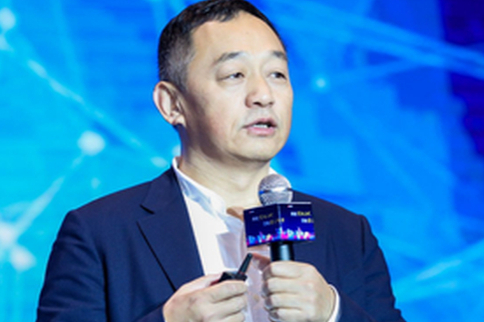
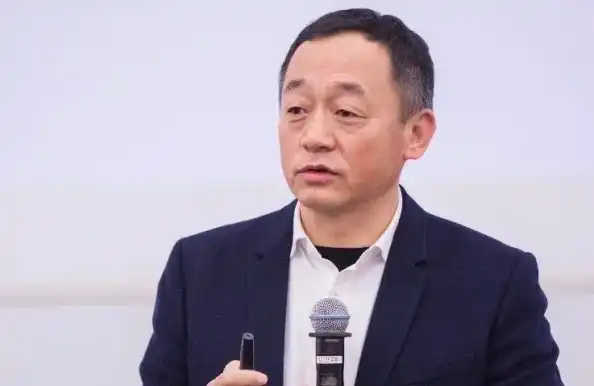
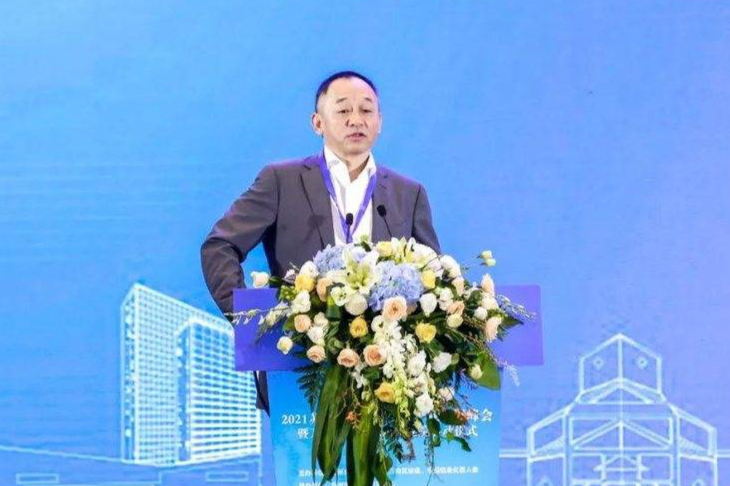
On February 23, Dr. Xiao Feng, chairman and general manager of Wanxiang Blocker, was invited to give a speech at the "2021 Mobile World Congress". In his role as an observer, Dr. Xiao shared his three observations on the 5G industry and how 5G technology can bring the greatest value to human society and the digital economy.

Xiao Feng, chairman and general manager of Wanxiang Blockchain, is giving a speech
Hello, everyone. I am a little nervous to come to the global communication industry event, because I have no engineering background and no communication industry experience. So today, I'd like to share with you my three observations on the 5G era from an outsider's perspective.
Observe 1: From 3G, 4G to 5G, communication technology is developing step by step. 4G isn't about making better phone calls, and 5G isn't about making better videos. Therefore, the network technology is in the iteration, progressive, should be from the communication network to the information network, finally to the value network.
Observation 2: As the complexity of the network grows, and as the volume of transactions is processed, the network is stratified. The communication layer is to solve the exchange of information, the network layer is to trade goods, and finally to the application layer, that is, the exchange of value.
Observation 3: Sink. This is what I found from my financial experience. Ten years ago, third-party payment was a very profitable business. Now, who can still make money by third-party payment? Third-party payment can no longer be called an independent business. Although third-party payment is very important, without third-party payment, Meituan, Didi and other Internet business models cannot be established. But can you still make money from third-party payments? No, it has sunk into financial infrastructure where payment is free.
The sinking scenario is also happening in the communications industry, where making phone calls is no longer the most valuable business, and 70 percent of the value and volume of the communications industry doesn't happen here. As technology sinks, many applications become infrastructure, free stuff. The interaction is no longer of commercial value, the new value-added business value is very high, and that's where we're going to look for commercial value.
Based on these three observations, I look at 5G from an outsider's point of view, and 5G is clearly not about making better calls, or even downloading a movie at a faster rate, but more about:
(1) Enabling vertical industries. For example, "5G+ Smart City", "5G+ Smart Education", "5G+ Industrial Internet", etc. I have also seen operators release white papers on 5G private networks.
(2) The Internet of Everything. Maybe hundreds of billions of nodes connected together.
(3) VR/AR. In the future, the virtual world and the real world will be connected through 5G as a bridge. VR/AR is actually a very important technology for commercial implementation in the future, but it obviously cannot be established without 5G.
This is where you talk about the new value of 5G. I have also carefully read the White Paper on 5G Information jointly issued by the three major carriers. After reading it, I found that we are still talking about information interaction, peer-to-peer or business-to-individual. From the customer's perspective, do we need an enhanced version of SMS? Don't need. Do we have to do exactly the same WeChat? Don't need. I believe that the commercial vision of 5G should be for it to build networks of value.
The "value network" is what I want to talk about today. Before I talk about the "value network", let me tell you a real case, which can better illustrate my point.
Two years ago there were two trading systems, one trading system was built on the Internet, and now this trading system is going to be listed in two or three weeks on the NASDAQ, and so far the market capitalization on the NASDAQ OTC market is 100 billion dollars. Another trading system, it is two years ago, three young men trading system which is based on Ethernet fang block chain, the trading system is only 500 lines of code, a total of 11 workers, is now ranked one of the world's top five digital currency trading system, based on the size of more than once said before the Internet set up the trading system.
What about internet-based trading systems? It has hundreds of thousands of lines of code, 1,400 employees, and it starts from the very bottom, from the very first line of code, and it takes care of security, custody, transaction confirmation. You have to do everything yourself. However, a system based on the Ethereum blockchain provides security for the application of the trading system. At present, there are 90,000 nodes maintaining the security of the Ethereum system. Each person joins the network with his or her own Token and becomes one of the verification nodes. They provide the basis of security and trust. You only need 500 lines of code to do the same thing, you only need to write a simple smart contract, you only need 11 employees, you can support more than a billion dollars of transactions a day. This is the difference between the Internet approach and the value-based web approach.
Based on this case, I think 5G is about letting operators build value networks like blockchain. Before that, all the Internet, all the communication networks, all the information networks, were dealing with information, and it was very difficult to deal with transactions, transactions and the exchange of resources. When you're dealing with this, there's a problem -- the information can be double-flowable, but the value has to be authenticated, and you have to be able to be sure that the thing gets from A to B, that A won't use it anymore, and that B will receive it. So, we need value networks.
The first characteristic of value network is the economic system of stakeholders.
Value network is no longer a top-down, centralized business mechanism. Instead, all relevant participants, from shareholders to stakeholders, can get appropriate incentives and actively participate in the game, making the game an infinite game in which there is no one final winner.
The second feature of value networks: built-in economic incentives.
Instead of me contributing to the network and being evaluated by a third party, and being paid for by someone else, the network has built in incentives to evaluate me. The so-called proof of work mechanism in blockchain, why would anyone pay their own money, out of the server to be a miner? Who organized them? No one organized it. They are motivated by the economic model in the blockchain, by the incentives built into the system. If 5G messaging can become automatic participation, it may be a WeChat disrupter. If it is based on the way the existing white paper is written, I don't think it will subvert WeChat.
The third characteristic of value network: decentralized governance mechanism.
It is no longer top-down governance, but bottom-up, decentralized, distributed community governance, which is determined by a set of mathematical consensus algorithms. There's a very famous book on economics, Buchanan and Musgrave's The Calculation of Consent, and from the title of the book, you'll get an idea of what decentralized governance is.
In the value network, people can agree or disagree with each other through consensus algorithm, not necessarily in a board meeting, not necessarily in a staff meeting. Blockchain is "consent computing," where consent or disagreement is achieved by solving mathematical problems.
The fourth characteristic of value network is distributed business settlement system.
Because of the real-name system, the operator network is a good network to set up a settlement system. The distributed commercial settlement system has done the settlement, security and trust. Based on the 5G network, it can also do a business application with 500 lines of code like the case mentioned above. All the basic stuff is provided by the basic network, and you only need to run an application on top of it, so 500 lines of code is all you need.
The fifth characteristic of value networks: open source networks of large-scale collaboration.
Two months later, there will be a blockchain networking app with a decentralized Tik Tok written in 1,000 lines of code. Can you imagine that? Tik Tok or Douyin require only 1,000 lines of code. As an app developer, it's easy, but that doesn't mean Tik Tok is really that simple. It just means that a lot of the services that sink into the infrastructure (settlement, clearing, security, trust) are provided for free by the infrastructure. Therefore, building 5G into an open-source, open, community-based and large-scale collaboration network is the biggest value that 5G can bring to human society and the digital economy.
My conclusion is that 5G+ blockchain is a great way to build a network of value, from interaction to transaction to exchange. We know that as the complexity of the network, the complexity of the transaction, the order of magnitude continues to rise, the distributed network is obviously better than the previous network to cope with the development of network and application.
I have a view that with 100 billion devices connected, the existing network architecture is likely to collapse as well, so it's going to go from a centralized network to a distributed network to a decentralized network. In terms of decentralized networks, blockchain is by far the best solution we can see. Therefore, from my perspective as an investor, I think 5G+ blockchain could build a truly upgraded network of value.
This is my personal view, improper place please criticize, thank you!
The original link
Welcome to join the official BlockBeats community:
Telegram Subscription Group: https://t.me/theblockbeats
Telegram Discussion Group: https://t.me/BlockBeats_App
Official Twitter Account: https://twitter.com/BlockBeatsAsia
 Related Articles