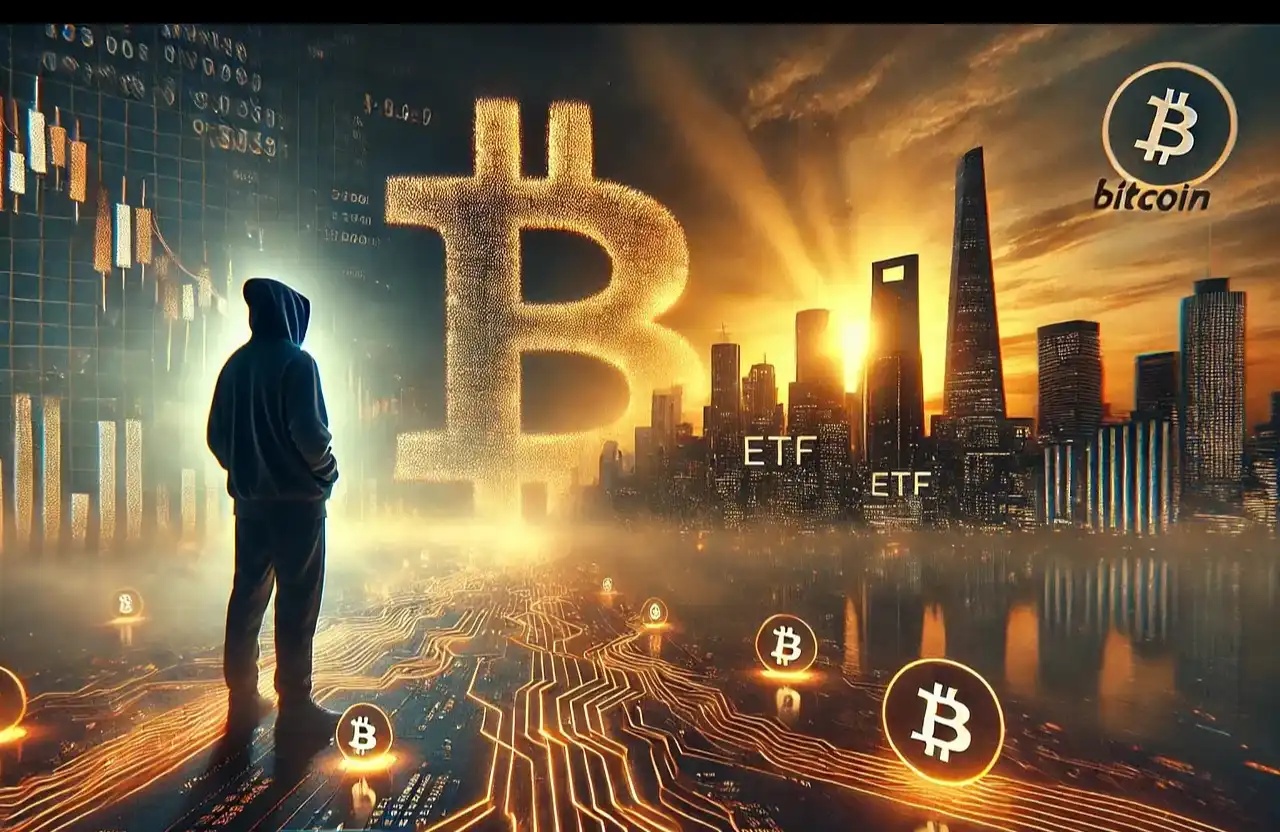
Bitcoin has not changed in recent years, but the world has changed
Original title: "What Explains Bitcoin's Resurgence?"
Original source: Nic Carter
Original compilation: 0x88
Nic Carter, as a partner of Castle Island Ventures and a joint venture of encrypted data aggregation provider Coin Metrics, has been deeply involved in macro encryption economics for many years. Castle Island Venture focuses on investing in encrypted infrastructure and has invested in the lending platform BlockFi, while Coin Metrics, as a leading data provider in the industry, has been favored by many encryption companies including CoinGecko.
Before starting his business, Nic Carter worked for Fortune Fidelity served as the first encrypted asset analyst in the firm, and Fidelity also became an important limited partner of Castle Island Ventures. Nic Cater once proposed the concept of Proof of Reserve that influenced the industry and published countless in-depth works that inspired the industry to think.
This article Nic Carter briefly introduces the encryption market The ins and outs of the bull market, and an in-depth analysis of the specific cause and effect. Rhythm BlockBeats translated this article for readers:
Bitcoin is back. Last month, the price of bitcoin quietly breached all-time highs, well past its previous high of $19,600 in 2017, and is hovering around $36,000 at the time of writing. At the end of 2018, the price of bitcoin was down nearly 90% from its high point. This wave of Bitcoin's quiet operation is called by many people "Quiet Recovery". Perhaps the most interesting thing about this price action, which is up nearly 1,000% from its March lows, is that "people don't seem to be very happy."
In the weeks since Bitcoin posted its three-year all-time high, Katy Perry ) did not get the bitcoin icon manicure. Floyd Mayweather has not launched cryptocurrency-related products in a high-profile manner. The New York Times did not publish an article titled "Everyone's Wealthy and Free, But You're Not." Googling "bitcoin" still well below its 2017 peak. Entrepreneurs continue to quietly build financial infrastructure around crypto assets, but the general public has largely ignored it.
So, when the traditional cognition is still comparing the king of the Internet’s native currency to a tulip, Bitcoin is quietly What has changed? Technically, nothing. The last major update to the core protocol (the actual transfer rules for Bitcoin) was accepted by the community in July 2017. The latest update to the protocol Likely to be adopted by the community, but with improvements for privacy and efficiency. Implementing even these small changes to the protocol can take years.
From a technical point of view, the fact that "Bitcoin is fairly static" is one of its most classic paradoxes : Although the creation of Bitcoin was a major technological leap that combined and recombined important elements from cryptography, computer science, economics, and peer-to-peer networking, the protocol itself was quite rigid. As its anonymous creator Satoshi Nakamoto put it: "Once Bitcoin 0.1 is released, its core design will remain unchanged throughout its lifetime."
< /p>
In the past three years, Bitcoin has not changed, but the world around it has changed.
As a Venture capitalist, I invest in various start-ups that support the core financial infrastructure required by Bitcoin and other public chains, which also allows me to clearly see crypto assets development process. Entrepreneurs working to make the entire process of buying, holding, and trading cryptocurrencies easier have been waiting for an opportunity to cash in on their full cash. Today, it seems like that moment may be around the corner.
In my opinion, the current Bitcoin bull market is not a fluke, and there is no bubble.
For professional investors, there is no longer any professional risk in buying Bitcoin
;
This idea of completely stripping people's discretion from the monetary system is so antithetical to how central banks operate today that Bitcoin has been criticized by many old-school economists (see Twitter posts by Paul Krugman and Nouriel Roubini).
In spite of this, more and more people who did not believe in Bitcoin have become Bitcoin supporters. In the earliest days, those who supported Bitcoin were venture capitalists and entrepreneurs like Mark Andreessen, Fred Wilson and Chamath Palihapitiya, They are all based on experience investing in software, so they understand the explosive potential of network effects. Today, however, there is a new class of Bitcoin enthusiasts: veterans with decades of market experience who are more familiar with interest rates and commodities than tech startups.
These hedge fund experts recently made it clear why they are allocating various assets. Former Legg Mason CEO Bill Miller points to the Fed’s unprecedented rate of money printing and mentions Bitcoin: “This is something we’ve never seen technology innovation, and it is being accepted by more people every day.” Stanley Druckenmiller, who participated in Investors in George Soros' block on the pound, who will Bitcoin compared to gold and cites its 12-year track record and growing credibility.
Hedge fund star Paul Tudor Jones, famous for currency betting, said in an interview "The conclusion I've come to is that bitcoin is going to be the best anti-inflation weapon -- the defensive weapon," he said. Keep Tudor Jones' analysis in mind and maybe find that you need to allocate some bitcoin.
Famous Bitcoin skeptics on Wall Street have now begun to reconsider their stance. Larry Fink, chief executive of BlackRock, which manages $7 trillion in assets, has previously been indifferent to bitcoin. Now he admits that bitcoin could become a global asset and replace gold (worth almost $10 trillion) in investors' portfolios. JPMorgan CEO Jamie Dimon called Bitcoin a "fraud" in 2017, but he has recently changed his mind and started Interacted with players in the crypto space. Ray Dalio, who runs the world's largest hedge fund, is also less skeptical about Bitcoin, saying in a recent Reddit AMA: "I think Bitcoin (and some other digital currencies) have been in the past ten years. It has established its status as an alternative gold-like asset by mid-year"
When final financial institutions need to make decisions, Bitcoin got something it never had before: buying it without risking getting fired. Grouping is very common on Wall Street. If you make a mistake that no one else makes, it's career over for you. But now on Wall Street, Bitcoin has begun to be regarded as an effective currency asset, and analysts and traders can no longer have to suffer from the "contemptuous eyes" of others to buy Bitcoin. The full support of the widely respected commodities trader has done what Crypto Twitter could never do: make Bitcoin acceptable in the world of financial giants.

< /p>
All this indicates that institutional money is pouring into the Bitcoin market
In 2013, If you want to buy Bitcoin, your best bet is probably to wire your money to an unregulated exchange in Japan, the The Exchange was originally used to trade and sell Magic: The Gathering. (Unsurprisingly, the exchange was hacked and hundreds of millions of dollars worth of bitcoins were stolen.) Clearly, professional investors would not consider such an investment. Even during Bitcoin’s rally to $20,000 in 2017, very little institutional money flowed into Bitcoin. At that time, the price surge of Bitcoin was mainly driven by retail investors who believed that they had surpassed Wall Street, or used Bitcoin as a vehicle to invest in other tokens.
But retail investors tend to be too sensitive to price changes, and when prices started to fall in 2018, many retail investors sold After collecting their bitcoins, they packed their bags and continued on the road. In contrast, institutional investors—hedge funds, mutual funds, endowments, pension funds, insurance companies, family offices, sovereign funds, etc., those institutions with tens of trillions of dollars in their hands—operate when they trade more cautious. A sea change is afoot in the crypto world, and institutional investors are getting their hands on Bitcoin for the first time ever.
The biggest reason for this progress is that Bitcoin’s financial infrastructure has made great progress in the past three years, especially is on the hosting side. That is, if you are an institutional investor and you want to buy some bitcoins, who will host it for you? Unlike retail investors, institutional investors don’t keep digital assets in a device in a desk drawer, or go directly to Coinbase to trade through an iPhone app. Upcoming exchanges like Coinbase and the Winklevoss brothers' Gemini were initially built primarily for retail investors to trade cryptocurrencies, without institutional needs in mind.
But since 2017, there have been a number of brokers and custodians with a service bureau at their core: Coinbase launched Prime offering; my former employer, Fidelity, a multi-trillion dollar asset manager, launched Fidelity Digital Assets, which focuses on institutional Bitcoin custody and trade execution; many other "big players" Also added to the game. Pension funds, endowments and sovereign funds may not trust a cryptocurrency exchange, but they may trust a familiar brand like Fidelity as a counterparty. Here's what happened: NYDIG, a subsidiary of $10 billion asset management firm Stone Ridge, recently facilitated the $100 million purchase of bitcoin by insurance company Mass Mutual; meanwhile, Coinbase helped Virginia-based enterprise software The company Microstrategy bought and escrowed over $1 billion worth of Bitcoin.
So, a lot of money is buying through convenient vehicles for good reason. Ruffer Investment Company, a $27 billion asset management firm, calls itself an “All-weather allocator” and allocated 2.5% of its portfolio to Bitcoin, explaining: “Negative interest rates, extreme Monetary policy, rising public debt, dissatisfaction with the government — all of these undoubtedly provide a strong impetus for Bitcoin's success at a time when traditional safe-haven assets, especially government bonds, are extremely expensive." On December 16, Guggenheim Investments CIO Scott Minerd spoke at Bloomberg revealed in an interview that its analysis shows that the value of each bitcoin is $400,000, more than ten times higher than current levels. And, you can be sure there are many more high-net-worth individuals, hedge funds, trusts, and family offices that are quietly allocating to Bitcoin, but they won't explain any reason on CNBC.
The U.S. government has given the green light to regulation
In addition to infrastructure issues, many investors are also cautious about Bitcoin regulatory issues. None of this makes sense if you're an institution and you have assets that one day become illegal. But in this regard, there is still a lot of good news for Bitcoin bulls. In the U.S., the Office of the Comptroller of the Currency, the banking regulator, clarified that banks can store bitcoin private keys for customers. With this policy in place, it is only a matter of time before major banks offer Bitcoin investment vehicles to their clients. You might not trust a small cryptocurrency brokerage, but you almost certainly trust a bank. Additionally, the OCC recently awarded a specialized "crypto bank" called Anchorage Commonwealth Bank Charter, which paves the way for a closer connection between the traditional financial system and the world of cryptocurrencies.
As crypto start-ups gradually enter the unfamiliar regulated banking space, established banks also see opportunities in digital assets, and have begun to form alliances with each other. As many entrepreneurs in the crypto space know, getting involved with banking in the US used to be nearly impossible. Now, as the crypto ecosystem is seen as an increasingly important market opportunity, banks are vying to attract the attention of crypto companies. “Blockchain, not Bitcoin!” was the catchphrase of Bitcoin naysayers in 2017, no more.
The Commodity Futures Trading Commission also expressed a clear view that "digital assets such as Bitcoin and Ethereum are commodities" , which paved the way for them to gain a foothold in regulated derivatives markets and institutional portfolios, trading bitcoin and ethereum is like trading oil, gold or wheat futures. The Chicago Mercantile Exchange launched its Bitcoin futures product on December 17, 2017 (the highest point it pulled up in the previous cycle), then launched options trading, and announced the launch of futures on the second largest cryptocurrency Ethereum product. Open interest in the Bitcoin CME futures market has reached record highs in recent weeks. When a $110 billion hedge fund like Renaissance gets in the game, whether it's long or short, it's often through derivatives.
Bitcoin's new missionary
Perhaps the most active Bitcoin bull of late is Microstrategy CEO Michael Saylor, who has deployed over $1 billion of his company’s assets into Bitcoin, making his firm the first Public companies with Bitcoin as an asset on their balance sheet. He does this because "Bitcoins offer a higher rate of return and greater preservation of value than holding cash."
Saylor expressed his confidence in Bitcoin by allocating personal assets, corporate assets and issuing bonds, and spared no effort to promote the advantages of Bitcoin through podcasts and other media forms. He called Bitcoin "the most efficient system in human history for transmitting energy through time and space." He blasted inflation in traditional currency markets, arguing that the problem is vastly underestimated; called Microstrategy’s dollar cash holdings “melting ice”; Non-superior speculation.
While Saylor’s statement may sound exaggerated, he has allocated bits for real money currency, which makes him qualified to evaluate Bitcoin as an asset. So far, bitcoin has not let him down: Microstrategy stock was trading around $120 before the company announced it was putting some of its reserves into bitcoin. The stock price is now close to $600.
People like Saylor, Abigail Johnson at Fidelity and Billionaires like Twitter’s Jack Dorsey are endorsing Bitcoin — once, only the marginalized libertarians and crypto-anarchists By. The themes repeated by new investors seem to be no different from what has been heard in the past. Bitcoin remains intact and sound even when the protocol forks, loopholes appear, and exchanges are hacked. Since genesis, Bitcoin has a nearly 100% uptime record and has settled transactions worth trillions of dollars without a rollback. Under the traditional monetary system, negative real interest rates seem to be inevitable, and may be further reduced. At this time, zero-yielding monetary assets such as gold and Bitcoin have a new appeal. Many former skeptics cite bitcoin's recovery from the 2018 crash as proof of its prowess as a store of value. In fact, the second recovery pull is more convincing. For the first time, it might pique your interest, but you'd be wary of buying something that looks frothy. The second time around, you realize that what you mistakenly thought was a bubble is actually just cyclical activity in a long-term trend.

;
Many people are uneasy about the dollar system
Bitcoin's rally before 2017 is related to There is an essential difference in the recent rebound: three years ago, Bitcoin’s sharp appreciation benefited from its important role as the underlying asset of the encryption industry’s reserve (but the speed of the plunge was as fast as its rise). It's a completely separate phenomenon that has little to do with the outside world. In contrast, the Bitcoin rally that began in 2020 is essentially driven by fears that massive money printing and debt spending by countries around the world will destabilize the global monetary system.
The ravages of the new crown and the resulting economic recession have become a powerful excuse for central banks to accelerate money printing to make up for fiscal deficits. As the world's most important central bank, the Federal Reserve has been exceptionally aggressive in its monetary stimulus policies, causing the US money supply surge. At the same time, the dollar's status has been shaken for many investors. Measured against a basket of sovereign currencies, the U.S. dollar rebounded in the spring of 2020, but has since suffered a prolonged decline. Many dollar bears in the market are seeing more and more U.S. debt on the market, but no one is buying it, there are fewer believers in the dollar as the global reserve currency, and other major currencies are facing their own problems.
This distrust of the U.S. dollar and concerns about the stability of the current global monetary system have led more people to Bitcoin has generated interest, and Bitcoin's predictable currency issuance policy towards zero has made it known as the strongest currency in the world. While there are many other inflation-hedge assets to choose from, Bitcoin also offers unlimited room for growth — just as you would buy stocks of tech giants. In a sense, it’s two things in one: a sound, impenetrable currency protocol and a reserve asset in a rapidly expanding crypto-financial network.
While it has been a banner year for Bitcoin, it still accounts for only a small fraction of global assets, And it is still accepted by fewer people. The Cambridge Center for Alternative Asset Finance expects the global crypto user base to be anchored at around 100 million people, or 1% of the global population. With a current market capitalization of $650 billion, Bitcoin is only 2% of the 6% of the value of above-ground gold and the U.S. Treasury. But at the same time, its market cap has tripled in the past few months. Just like before, someone is bound to have hindsight and point out that Bitcoin is risky. Personally, the story of Bitcoin is far from over and this revolutionary digital asset has a long way to go.
Original link
Welcome to join the official BlockBeats community:
Telegram Subscription Group: https://t.me/theblockbeats
Telegram Discussion Group: https://t.me/BlockBeats_App
Official Twitter Account: https://twitter.com/BlockBeatsAsia

 Related Articles