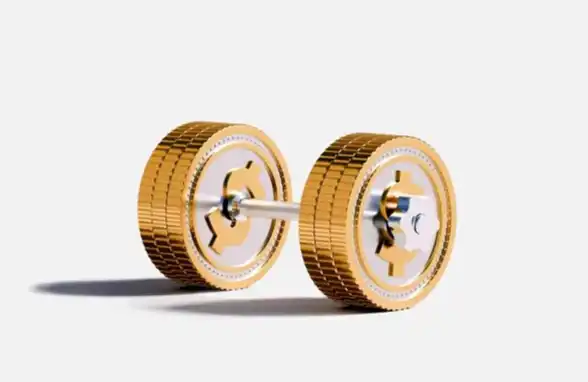
Is the spring of compliant stablecoins coming?
Original title: "The Encrypted Ambition of USDC丨Industry"
Original source: Blocklike
In the stable currency market, USDT issued by Tether takes the lead in drawing Made a bold stroke.
However, incidents such as opaque account funds, mortgage rate issues, and USDT being accused of random additional issuance have occurred frequently, which has caused the market to question USDT many times and stabilized The "latecomers" in the currency market have identified the direction of their efforts.
USDC, which has been the "second place" stable currency for a long time, one of the main directions of effort is "compliance". Backed by Coinbase and Circle, USDC in early 2021 has already begun gearing up.
The beginning of 2021 is a special time point, which coincides with the change of the SEC and the surge in the digital currency market. Stablecoins have collectively ushered in less stable market regulation environment.
In the past two weeks, relevant U.S. regulatory agencies have frequently raised their voices on the regulation of stablecoins. On January 5, the U.S. Office of the Comptroller of the Currency allowed banks to issue and use stablecoins for payment, and the final word was finalized.
On the other hand, debank data shows that the supply of stablecoins on Ethereum has increased from US$3.425 billion at the beginning of the year to US$21.092 billion, an increase of 516%. Among them, the supply of USDT ranks first, accounting for 63.29% of the total supply of stablecoins, followed by USDC, accounting for 20.36%.

Data source: debank
In the new market environment, the USDT cake is far from what it was a few years ago. Perhaps it is time to share it?
USDC’s ambition
Jerblockquotey Allaire, Founder of USDC Issuer Recently, there have been constant speeches on Twitter, and it seems that I can't bear it anymore.
On the evening of January 4th, the U.S. Department of the Treasury’s Office of the Comptroller of the Currency (OCC), the largest banking regulator in the United States, announced on its official website that U.S. banks are allowed to use chain and USD stablecoins serve as settlement infrastructure in the U.S. financial system.
The document stated that banks may use stable coins to facilitate customer payment transactions on independent node verification networks, including issuing stable coins and Convert to fiat currency. This news is widely regarded by the community as "an important step for the public chain to replace SWIFT (the financial communication network between banks worldwide)".
In this regard, Jerblockquotey Allaire, CEO of Circle, the issuer of the stablecoin USDC, posted 9 tweets in a row, praising the "huge victory" of this digital currency and stablecoin ", its main viewpoints include:
1. The breaking news from the U.S. Office of the Comptroller of the Currency (OCC), the largest banking regulator in the U.S., under the guidance of the new policy , U.S. banks can use the public chain and U.S. dollar stable currency as the settlement infrastructure for the U.S. financial system.
2. The new letter of explanation stipulates that banks can regard public chains as infrastructures similar to SWIFT, ACH and FedWire, and stablecoins such as USDC as electronic Store of value, the significance of which should not be underestimated.
3. Decentralized, license-free, open source, and network-mediated software is gradually becoming the foundation of the US financial system and even the global economy.
4. This paves the way for the use of advanced US dollar digital currencies, such as USDC, as a mainstream payment medium for all payments and settlements, helping the United States Take the lead in embracing the power of the public chain.
5. It also provides the basis for financial institutions to run blockchain nodes. These institutions can even become verification nodes, but they must be supervised.
As early as the end of last month, the U.S. President’s Financial Market Working Group reaffirmed its position on stablecoins. Payment innovations in U.S. dollar-backed payment systems and related stablecoins, provided that stablecoins must comply with applicable U.S. laws, regulations and regulatory requirements.
These regulatory requirements mainly include that stablecoins must comply with anti-money laundering, anti-terrorist financing and one-to-one redemption. There are various signs that the U.S. authorities seem to be tightening the regulatory framework for stablecoins.
As a compliant USD stablecoin jointly issued by Coinbase and Circle, USDC is considered a beneficiary under the new regulatory framework. The second-ranked stablecoin has only been launched for more than two years, and it has recently expanded its market share again, and its issuer's payment ambitions in digital assets have been revealed.

Active Circle CEO Jerblockquotey Allaire
Circle Development History: Broken Arm Survival 2019, Institutional Year 2020
Currently, USDC is in stable currency Second only to USDT in China.
In September 2018, USDC was launched as a "fully collateralized USD stablecoin", which is a compliant USD stablecoin jointly issued by Circle and Coinbase. Meets most regulatory requirements.
Among them, Circle is a digital currency-based startup under Goldman Sachs, and Coinbase is the first bitcoin exchange with a formal license in the United States. This background allowed USDC to be recognized by the first batch of digital currency exchanges.
Aiming at the point that "the issuer of USDT, Tether, does not have a third-party audit of its 100% reserve ratio", Circle's CEO long before launching stablecoins , he said bluntly: "Because of the loopholes in USDT, it only makes sense for major companies to create a stable currency that is trusted by the world."
Indeed, Circle has always emphasized that the company's operations are transparent at the beginning of USDC issuance, and regular and credible reports from third-party audit companies can be used to prove that the issuance of these stable coins is based on sufficient funds deposited in third-party banks. Amount of USD is reserved. At the same time, USDC's assets are under the custody of banks, and banks have higher regulatory requirements, and funds are relatively safer.
In terms of compliance, Circle has already prepared payment licenses for the United States, the United Kingdom, and the European Union, and has compliance channels for the entry and exit of digital assets in US dollars, British pounds, and euros. Circle was once known as the company with the largest number of global licenses in the encrypted asset industry. In addition, partners who subsequently joined its system and issued USDC must also hold local digital asset industry licenses.
Back to the beginning of USDC issuance, in September 2018, the timing is not so good. Looking at the development of the digital currency market, after this point in time, the market has gradually turned from a bull market to a bear market.
Faced with the slow bear market in 2019, Circle's choice is to cut off side branches and focus on "stable coins".
At the end of 2018, Circle first sold its cryptocurrency exchange Poloniex, and then sold its over-the-counter (OTC) exchange. In April 2019, Circle launched its retail digital asset business, Circle Invest, to focus entirely on USDC-related businesses.
In 2020, Circle's main line layout is still on "payment".
In cooperation within the blockchain industry, the issuance of USDC is increasing. Last year, Circle successively cooperated with Stellar, Solana, Algorand and other public chains with faster computing speeds, and issued corresponding versions of USDC on the chain.
In August 2020, in the face of the menacing DeFi, Circle quickly introduced the concept of "sending transactions without gas" and launched USDC 2.0.
On the other hand, cooperation with traditional inter-institutional payments is also an important direction for Circle to expand.
In March 2020, Circle launched a stablecoin business API and USDC business accounts to allow more businesses to accept USDC as a payment method. The number of such accounts Soon there were more than 1,000. Jerblockquotey Allaire publicly stated that most of these new users come from Internet companies. Judging from the feedback from Asian market participants, these growing demands mainly come from small and medium-sized enterprises, and their demand for digital dollars with security and practicality.
At the end of July of the same year, Circle and Genesis reached a strategic cooperation and received investment. Public information shows that the main purpose of this investment is still to promote the adoption of USDC globally.
Just a month ago, Circle released its big news in the direction of payment at the end of the year: on December 2, 2020, the payment giant Visa will cooperate with Circle has partnered to integrate its payments network of 60 million merchants with USDC, a stablecoin led by Circle.
The partnership with Visa takes digital currency payments a step further. At this stage, the cooperation between the two is mainly to integrate USDC into the platforms of selected Visa credit card issuers to support USDC payments. Previously, companies that have signed a digital asset service with Visa can try to integrate USDC.

Visa-Circle partnership draws attention
USDC also won some special titles during the global outbreak last year. Last year, SDC was used to distribute aid money for the Venezuelan people. The aid party used the original funds to mint the US dollar stable currency USDC, and transferred it through the US dollar-denominated payment platform based on blockchain technology. Therefore, some foreign media commented on USDC as "a new weapon for the United States to infiltrate other countries."
All kinds of "penetration" feedback on real data is the rapid rise of USDC circulation value. Jerblockquotey Allaire said at the beginning of this year that the USDC circulation increased by 1 billion in December last year, and the increase will reach 800% in 2020. Currently, USDC circulation has reached 436 million.
Although it is still far from USDT's circulation, the second-ranked USDC is paying off.
2021: Stability and instability of stablecoins
Except USDC Such a compliant stablecoin with a large institutional background is advancing, and the stablecoin DAI of MakerDAO, a decentralized autonomous organization on Ethereum, has sprung up, standing on the second line of stablecoins. From the perspective of liquidity and transaction volume, although Tether still maintains its leading position in the near future, other stablecoins are still likely to catch up.
While innovative products continue to appear, supervision is gradually becoming stricter. In November 2020, members of the U.S. Congress jointly proposed the "STABLE" stablecoin regulatory draft, which requires stablecoin issuers to hold a banking license and must be approved by the competent authority before issuing the currency, which instantly ignited the industry. Many dissatisfaction within. Subsequently, when the White House Financial Market Working Group issued comments on the draft, although its attitude eased, it still did not further clarify the legal status of stablecoins.
The controversy continues and some uncertainty remains.
However, many remain optimistic. Huang Tianwei, founder and chairman of Bit Times Group, mentioned in his market forecast for 2021: "USDT is challenged, USDC, DAI and other second-tier stablecoins have risen on a large scale, euro/Korean won/yen multi-national stablecoins have come out, and DCEP has begun. Commercially used for overseas trade settlement.”
With the maturity of blockchain technology and the birth of more applications, the stablecoin market is gradually maturing. If encrypted assets are eventually used on a large scale for purposes such as international payments and global remittances, then stablecoins will naturally become a true cryptocurrency exchange medium. Since stablecoins are a new entry point for cryptocurrency user adoption, their importance is self-evident.
Original link
Welcome to join the official BlockBeats community:
Telegram Subscription Group: https://t.me/theblockbeats
Telegram Discussion Group: https://t.me/BlockBeats_App
Official Twitter Account: https://twitter.com/BlockBeatsAsia
 Related Articles