Future Trillion-Dollar Stablecoin Factories


Image Source: Modern Times (1936)
Author | Sleepy.txt
Bridge, the stablecoin issuance platform under Stripe, one of the world's largest online payment infrastructures, has collaborated with MetaMask, a wallet application with over 30 million crypto users, to launch the native stablecoin MetaMask USD (mUSD).
Bridge is responsible for the full issuance process, from reserve custody and compliance audits to smart contract deployment, while MetaMask focuses on refining the frontend product interface and user experience.
This collaborative model represents one of the most significant trends in the stablecoin industry today, where more and more brands are choosing to outsource the complex issuance process of stablecoins to professional "manufacturers," similar to how Apple entrusts iPhone production to Foxconn.
Since the birth of the iPhone, Foxconn has almost always taken on the core production tasks. Today, about 80% of iPhones are assembled in China, with over 70% coming from Foxconn's factories. At one point, Foxconn's factory in Zhengzhou accommodated over 300,000 workers during peak seasons, earning the nickname "iPhone City."

The collaboration between Apple and Foxconn is not merely an outsourcing relationship but a typical case of division of labor in modern manufacturing.
Apple concentrates its resources on the user end, such as design, system experience, brand narrative, and sales channels. Manufacturing is not a source of differentiation for Apple; instead, it represents significant capital expenditure and risk. Therefore, Apple has never owned its factory but opted to entrust production to professional partners.
On the other hand, Foxconn has built core capabilities in these "non-core" areas. They have constructed production lines from scratch, managed raw material procurement, process flows, inventory turnover, and shipping rhythms, continuously reducing manufacturing costs. In terms of supply chain stability, delivery reliability, and production capacity flexibility, they have established a complete set of industrial processes. For brand clients, this means fundamental support for frictionless expansion.
The logic of this model is collaborative division of labor. Apple avoids the fixed costs of factories and workers and the manufacturing risks during market fluctuations; meanwhile, Foxconn, through economies of scale and multi-brand production capacity utilization, extracts overall profits from low margins per unit. Brands focus on creativity and consumer engagement, while contract manufacturers handle industrial efficiency and cost management, creating a win-win situation.
This shift has not only transformed the smartphone industry. Since the 2010s, computers, TVs, home appliances, and even cars have gradually adopted the contract manufacturing model. Companies like Foxconn, Quanta, Wistron, and Jabil have become critical nodes in the global manufacturing industry restructuring. Manufacturing has been modularized, packaged, and turned into an operable and sellable capability.
Several years later, this logic began to be transplanted into what seemed like an entirely unrelated field: stablecoins.
On the surface, issuing a stablecoin only requires minting it on-chain. However, to truly make it operational, the work involved behind the scenes is far more complex than outsiders imagine. Compliance framework, bank custody, smart contract deployment, security audits, cross-chain compatibility, account system integration, KYC module integration—completing these steps requires long-term investment of both financial strength and engineering capability.
We have previously detailed this cost structure in "How Much Does It Cost to Issue a Stablecoin?": for an issuing institution starting from scratch, the initial investment is often in the millions, and mostly consists of non-negotiable upfront costs. After launch, annual operating costs may even reach tens of millions, covering legal, audit, operations, account security, and reserve management modules.
Nowadays, some companies are starting to package these complex processes into standardized services, offering plug-and-play solutions to banks, payment institutions, and brands. They may not necessarily be in the spotlight themselves, but behind the issuance of a stablecoin, their presence is often felt.
In the stablecoin world, the "Foxconns" are also beginning to emerge.
The "Foxconns" of the Stablecoin World
In the past, issuing a stablecoin almost meant simultaneously playing three roles: a financial institution, a tech company, and a compliance team. Project teams needed to negotiate with custodial banks, build a cross-chain contract system, complete compliance audits, and even deal with licensing issues in different jurisdictions. For most enterprises, this threshold is too high.
The emergence of the "outsourcing factory" model is precisely to address this issue. The so-called "stablecoin outsourcing factories" refer to entities that specialize in providing stablecoin issuance, management, and operation services to other companies. They are not responsible for creating the final user-facing brand but provide all the necessary infrastructure behind the scenes.
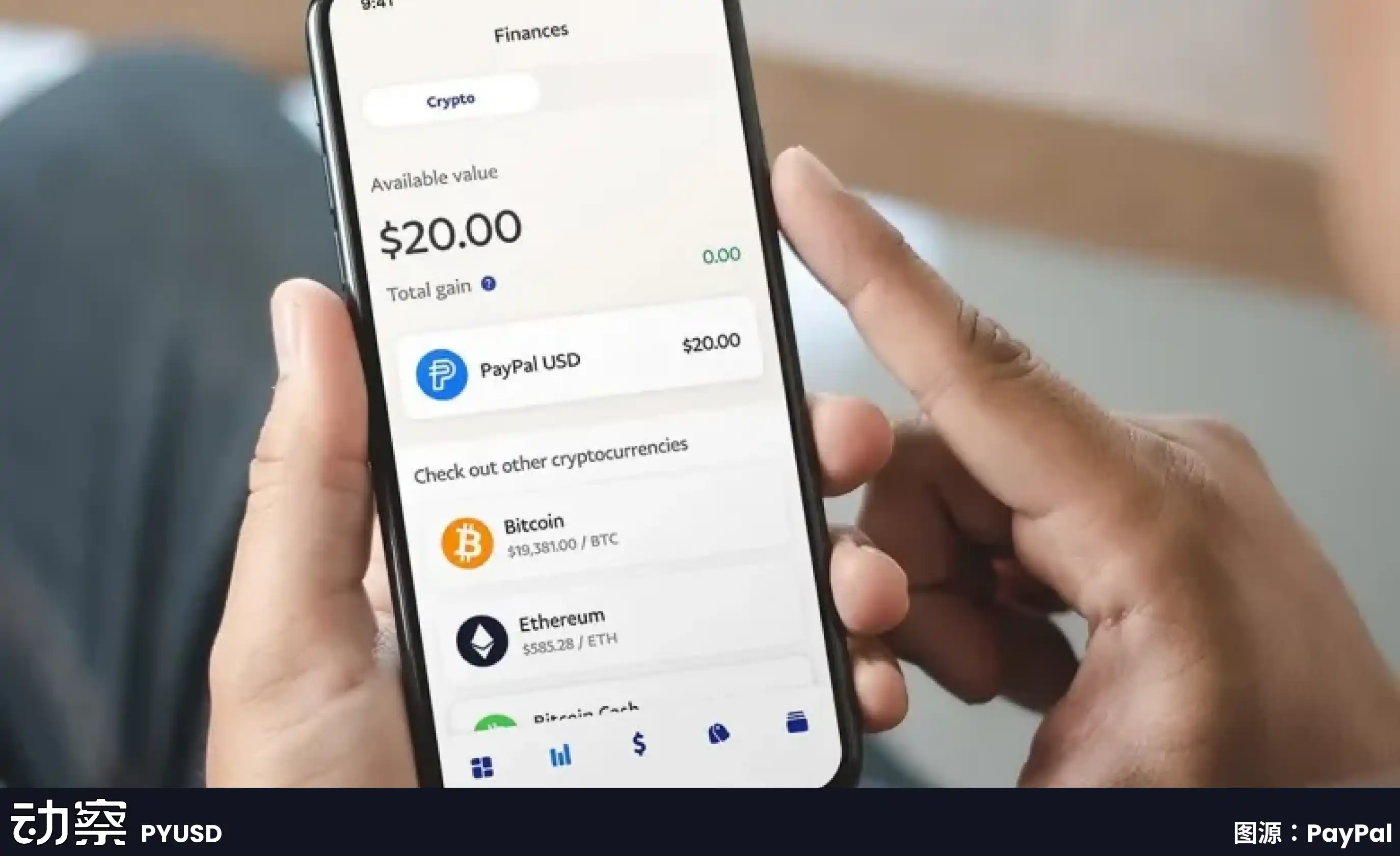
These companies are responsible for building a complete set of infrastructure from front-end wallets and KYC modules to back-end smart contracts, custody, and audits. Customers only need to specify which currency to issue and on which markets to list, and the outsourcing factory can handle all other aspects. Paxos played such a role when collaborating with PayPal to issue PYUSD: custodial of the USD reserves, responsible for on-chain issuance, and completing compliance integration, while PayPal only needed to display the "stablecoin" option in the product interface.
The core value of this model is reflected in three aspects.
The first is cost reduction. If a financial institution were to independently build a stablecoin system from scratch, the upfront investment could easily reach millions of dollars. Compliance approvals, technical development, security audits, bank partnerships—each step would require individual investment. By standardizing the process, outsourcing factories can significantly reduce the marginal cost for a single customer compared to a self-built model.
The second is to shorten the timeline. The time to market for traditional financial products is often measured in "years," and if a stablecoin project were to take a fully self-developed path, it would likely take 12–18 months to launch. The white-label factory model allows customers to launch a product in just a few months. Stably's co-founder has publicly stated that their API integration model can enable an enterprise to launch a white-label stablecoin in a matter of weeks.
The third is to transfer risk. The biggest challenge for stablecoins lies not in technology but in compliance and reserve management. The Office of the Comptroller of the Currency (OCC) and the New York Department of Financial Services (NYDFS) have strict regulatory requirements for custody and reserves. For most enterprises looking to test the waters, assuming full compliance responsibility is not realistic. Paxos was able to win over major clients like PayPal and Nubank because they hold a New York Trust license, allowing them to legally custody USD reserves and fulfill regulatory disclosure obligations.
Therefore, the emergence of stablecoin white-label factories has somewhat changed the industry's barriers to entry. The high upfront investment that only a few giants could afford can now be divided, packaged, and sold to more financial or payment institutions in need.
Paxos: Turning Process into Product, Compliance into Business
Paxos set its business direction early. It does not emphasize brand or market share but instead focuses on building the capability around one thing: transforming the issuance of stablecoins into a standardized process that others can purchase.
The story begins in New York. In 2015, when the New York Department of Financial Services (NYDFS) opened its digital asset license, Paxos became one of the first licensed limited purpose trust companies. That license was not just symbolic; it meant Paxos could custody customer funds, operate blockchain networks, and settle assets. Few companies in the U.S. hold such qualifications.
In 2018, Paxos introduced the USDP stablecoin, with the entire process placed under regulatory oversight: reserves held in banks, monthly audits disclosed, and on-chain minting and redemption mechanisms. Not many people adopted this approach because of the high compliance costs and slow pace. However, it did create a clear and controllable structure, breaking down the birth process of a stablecoin into several standardized modules.
Later on, Paxos did not heavily promote its own coin but packaged this set of modules as a service to be used by others.
Two of the most representative clients are Binance and PayPal.
BUSD is the stablecoin service Paxos provides to Binance. Binance controls the brand and traffic, while Paxos handles the issuance, custody, and compliance responsibilities. This model operated for several years until 2023 when the NYDFS required Paxos to halt new minting due to insufficient anti-money laundering checks. It was only after this event that the public began to realize Paxos was the issuer behind BUSD.
A few months later, PayPal launched PYUSD, with Paxos Trust Company still listed as the issuer. PayPal has users and a network, but lacks regulatory qualifications and does not intend to build its own. Through Paxos, PYUSD can legally and compliantly go live and enter the U.S. market. This is one of the most representative demonstrations of Paxos's "OEM" capabilities.
This model is also being replicated overseas.
In Singapore, Paxos obtained a major payment institution license issued by the Monetary Authority of Singapore (MAS) and used it to issue the stablecoin USDG. This was the first time Paxos completed the entire process outside the United States. It also established Paxos International in Abu Dhabi, focusing on overseas business, and launched the interest-bearing U.S. dollar stablecoin USDL using local licenses to bypass U.S. regulations.
The purpose of this multi-jurisdictional structure is straightforward: different customers and markets require different compliant and executable issuance pathways.
Paxos has not stopped issuing. In 2024, it launched a stablecoin payment platform, began accepting corporate payments and settlements, and also participated in the establishment of the Global Dollar Network, hoping to connect stablecoins from different brands and systems to enable seamless clearing. It aims to provide a more comprehensive backend infrastructure.
However, the closer to regulation, the easier it is to be scrutinized. NYDFS once specifically mentioned Paxos's inadequate anti-money laundering investigation in the BUSD project. As a result, Paxos was fined and required to make corrections. While not a fatal blow, this incident indicates that Paxos's path is bound to be compliance-heavy, with no room for ambiguity. It can only continuously strengthen compliance, clarify boundaries, and incorporate every regulatory requirement and security measure into its product processes. When others want to use it, they only need to put their brand on it to issue stablecoins. Paxos handles the rest. This is its positioning and a business model deeply tied to technology and regulation.
Bridge: The Heavyweight OEM Factory Brought by Stripe
Bridge's entry has brought a true giant to the stablecoin OEM factory race for the first time.
In February 2025, Bridge was acquired by Stripe, one of the world's largest online payment infrastructures, processing billions of transactions daily and serving millions of merchants. Compliance, risk control, and global operational models that Stripe has already established are now being transplanted to the blockchain through Bridge.

The positioning of Bridge is very straightforward, providing enterprises and financial institutions with a complete stablecoin issuance capability. It is not merely technical outsourcing, but more like modularizing mature segments of the traditional payment industry and packaging them into standardized services. Reserve custody, compliance audit, contract deployment—all of these are taken care of by Bridge, and customers only need to call the API to integrate stablecoin functionality into their front-end products.
The most illustrative case of cooperation for MetaMask. As one of the world's largest Web3 wallets with over 30 million users, it lacks financial licenses and reserve management qualifications. Through Bridge, MetaMask was able to launch mUSD within a few months without spending years building a compliance and financial system.
The business model chosen by Bridge is platform-based. It is not tailor-made for a single customer but aims to build a standardized issuance platform. The logic is consistent with Stripe's approach to payments, lowering the threshold through APIs, allowing customers to focus on their core business. Just as countless e-commerce platforms and applications adopted credit card payments in the past, now enterprises can issue stablecoins in a similar way.
Bridge's advantage comes from its parent company. Stripe has already established a compliance partnership network globally, which facilitates Bridge's entry into new markets. At the same time, Stripe's existing merchant network also serves as a natural potential customer base. For those enterprises looking to explore stablecoin business but lacking on-chain technology or financial qualifications, Bridge provides a ready-made solution.
However, limitations also exist. As a subsidiary of a traditional payment company, Bridge may be more conservative than crypto-native enterprises, and its iteration speed may not be fast enough. Within the crypto community, Stripe's brand influence is also far less than in the mainstream business world.
Bridge's market positioning leans more towards traditional finance and enterprise customers. MetaMask's choice illustrates this point—it needs a trusted financial partner, not just a technical supplier.
The entry of Bridge signifies that the stablecoin OEM (Original Equipment Manufacturer) business is receiving attention from traditional finance. With more players from similar backgrounds joining, competition in this field will intensify, but it will also drive the industry towards maturity and standardization.
For the full article, please visit the official account of Dōngchá Beating on WeChat.
Welcome to join the official BlockBeats community:
Telegram Subscription Group: https://t.me/theblockbeats
Telegram Discussion Group: https://t.me/BlockBeats_App
Official Twitter Account: https://twitter.com/BlockBeatsAsia
 Related Articles