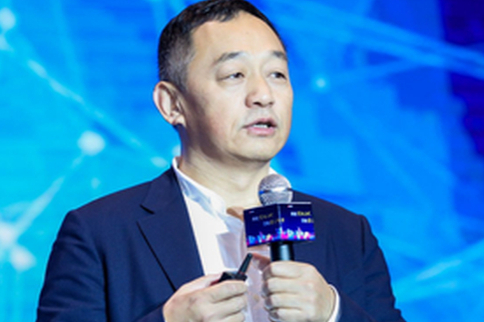
Wan Xiang Xiaofeng: It is imperative to promote the integration of AI and blockchain
Original title: world artificial intelligence conference | universal blockchain xiao feng: data element market and distributed AI platform
Source: Universal blockchain
On July 10, 2020 world conference on artificial intelligence first block chain theme BBS "block chain can be integrated with the AI development", "block chain and how to change financial AI", "path" in the development of international chain blocks, "block chain how to change our lives" four big issues discussed, intended to explore blocks the possibility of chain technology and artificial intelligence technology integration innovation and bring the value.
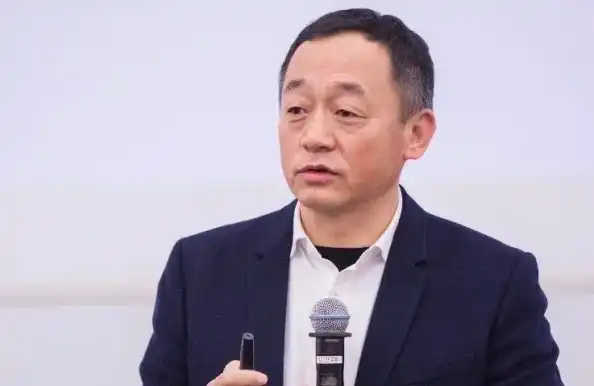
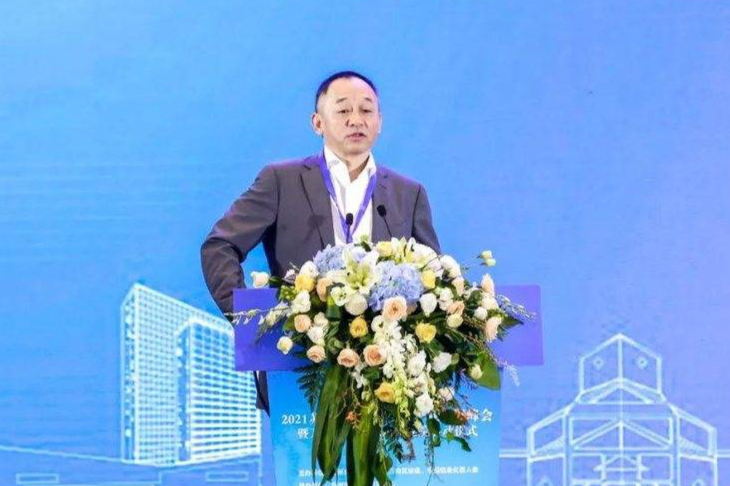
Dr. Xiao Feng, chairman and CEO of Wanxiang Blockchain, was invited to attend the forum and delivered a speech entitled "Data Factor Market and Distributed AI Platform". In his speech, he analyzed the technological migration facing human society and the role of blockchain and artificial intelligence in the data factor market.
The full text is as follows:

I am very glad to have the opportunity to participate in the Blockchain Forum of the World Ai Conference, which is a cross-border forum. So my topic today also tries to talk about some of my personal thoughts from the perspective of "crossing boundaries".
Massive data is the premise of efficient operation of all artificial intelligence algorithms. Small and medium-sized enterprises, small and medium-sized research institutions may not be able to collect massive amounts of data. Some time ago, the state proposed to establish a "data factor market". I think its original intention is to make data flow through the establishment of data factor market, so that small and medium-sized enterprises can own and trade data in line with their needs, so that they have the intelligence ability of artificial intelligence.
The epidemic of the century has suddenly thrust us into unfamiliar territory - a digital world. Suddenly everything was online overnight. If you are not online, you will feel very inconvenient, even work life can not be normal.
Based on my personal observation, I have summarized three steps of "digital migration" : online - digital - intelligent.
Online is the use of ICT to bring industrial r&d, production, sales, product processes and personal life processes to the Internet. After the completion of online, we can collect massive data through the Internet and the Internet of Things at a low cost, and these data are necessary production factors for artificial intelligence algorithm. Digitalization is the collection, storage and analysis of data through the Internet of Things and the Internet. Only when we are digital enough can we move to intelligence, that is, to run ai algorithms effectively.
After completing these three steps, we can begin to talk about the application of ARTIFICIAL intelligence.
As we all know, artificial intelligence has gone from high tide to low tide, with three ups and downs. Why is it so widespread and profound that it affects everyone's life, manufacturing and even the governance of cities? Now that we have access to the Internet and the Internet of Things, having huge amounts of data at low cost is a very important premise.
Characteristics of data elements
As a factor of production, data has its own characteristics, which are completely different from other factors of production. I have summarized the following four characteristics:
First, data confirmation. It is not easy to protect property rights because data is illusory and highly mobile. Press the send button on the computer and the data may be sent. In addition, the data is very easy to copy, unlike using a photocopier to copy a book, a book may be two or three hundred pages long, which is expensive to copy. And the duplication of data is zero cost, which is very unfavorable to data as a factor of production.
Second, the ownership of data cannot be separated. For example, my genetic data doesn't belong to me just because you bought it out. Thus it can be seen that data ownership and subject are inseparable. Unlike A share, the transfer of ownership from A to B is A buy-out, in which the buyer buys A piece of the company from the seller and the seller loses it.
Third, the more data is Shared, the greater the value. If a piece of data is used by only one person, it is of very little value; If there are 10,000 people to use it, it can really play its value. So data is very social, and we need to make it more widely Shared.
Fourth, the marginal cost of using data is zero. Once the data is produced, whether it is for one person, 10,000 people or 100 million people, the marginal cost is zero.
Characteristics of data factor market
Because of the above characteristics of data elements, the data element market we want to establish is very different from the stock market, bond market and land market we are familiar with.
First, data element market transactions is the use of data, not ownership. I just said that data ownership can't be separated from the subject, can't be bought out.
Second, all data transaction requirements are related to specific USES and scenarios. Any standardised trading and buying data will not be for appreciation, but to meet demand.
Third, data trading is a point-to-point trading organization with specific trading objects. One party holds certain data and the other has certain needs, so the transaction is done point-to-point. In practice, it is difficult to organize all data trading by centralized big data exchange.
Fourth, data transactions are subject to multi-party licensing, multiple licensing. A single piece of data can be sold to 10,000 users, and a scientist may have to collect data from 10,000 people before it is statistically significant or universally applicable. So data trading is a multi-licensing, multi-licensing market.
Fifth, the data factor market is not standardized and cannot be traded according to fixed standards like stocks and bonds.
The value of blockchain to the data factor market
I have always believed that the organizational form of big data exchange is not suitable for the data factor market, and the point-to-point diversified OTC market (Over the Counter) is more suitable for the trade of data factor. To establish such a data element market, I personally believe that blockchain and privacy computing and other technologies are indispensable.
1. Data credibility:As a point-to-point data factor market, how to ensure the credibility of data? This requires the use of blockchain distributed ledger features, common accounting, non-deletion, non-tampering, only under the block chain technology, the credibility of the data can be guaranteed.
2. Data confirmation:If data rights are not well established, how can they be traded? Block chain can confirm data rights at a very low cost, mainly relying on the block chain can be documented, traceable, traceable, audit and other characteristics. These are the signature features of distributed ledgers that are good for validating data.
3. Data protection:Many cryptographic algorithms used in block chain, such as hash function, asymmetric encryption, zero knowledge proof and other cryptographic algorithms, provide very good data protection for distributed data element market. If the data is not protected, it is bound to be stolen.
4. Data Exchange:After the data is protected, it needs to be exchanged, without which the value of the data cannot be realized. Many cryptographic algorithms are also needed to exchange encrypted data, such as verifiable computation, homomorphic encryption, secure multi-party computation, etc. These cryptographic algorithms can help data participate in collaborative computation after encryption, so as to draw some conclusions we need.
5. Cost reduction and efficiency improvement:In the process of data exchange, how can the point-to-point distributed data market help people complete this value exchange cheaply, conveniently and quickly? Intelligent contracts on the blockchain are obviously the most appropriate method and tool.
6. Value distribution:Let's imagine a scientist collecting enough sample data from 10,000 data owners to calculate the target function he needs. He would have to pay 10,000 strangers for the value of his data, and the easiest way to do that would be to use a programmable digital currency and convince everyone that it would get that value. This method of clearing is also the cheapest and most efficient.
In each of these six areas, blockchain and privacy computing are well suited to the point-to-point data element market.
We can see that block chain technology and private computing technology will give artificial intelligence "flying wings", so that data privacy can be protected, data assets can be confirmed, data sharing can be encouraged, data computing can be opened, and data governance can be carried out orderly. The ai data element market is inseparable from the blockchain and privacy computing technology.
To sum up, given that the ownership of data is very dispersed, the right to use data can often be licensed and traded by multiple parties, and the market for data trading is a point-to-point distributed market. A distributed AI platform based on blockchain and private computing technology will be a promising one.
In addition to the characteristics of the data factor market discussed above, distributed AI platform is more important to empower smes. So far, it's the Internet giants that have been able to use AI very well and very effectively. That's because they have a great Internet platform to collect huge amounts of data, and they have the money to use that data to optimize their AI algorithms. But a large number of small and medium-sized enterprises without the financial resources to access massive amounts of data also need the power of AI, because individuals and small and medium-sized enterprises also have a lot of data.
On the one hand, we need to use distributed AI platforms to better collect data scattered in the market and the private sector, on the other hand, we need to empower small and medium-sized enterprises to gain the support of ARTIFICIAL intelligence. Distributed AI platform is the next artificial intelligence, blockchain community should seriously discuss the topic.
The above is my share today, thank you!

Question and answer session
The host:At present, both blockchain and AI technologies are in the relatively early stage of development. The two technologies should be combined with each other. Is it possible to realize in this stage? Or should we wait for both technologies to mature before we can have better interactions?
XiaoFeng:First, it is debatable whether artificial intelligence technology and blockchain technology are in the early stage of development. Since the 1960s, ARTIFICIAL intelligence has experienced three waves of highs and lows, and I think it is in the mature stage.
Second, we must join the "battlefield" at an early stage of technology. The Internet was also in its infancy in 1999 and 2000, as the TCP/IP model was finalized in the mid-1990s (1993, 1994). In today's view, almost all the great Internet companies were born at that time, so don't wait. If you wait until the technology is mature to enter, then basically no chance, this market does not belong to you.
Third, both technologies are maturing. The continuous integration of artificial intelligence technology and blockchain technology is a necessary condition for their maturity. They become more mature as they merge. If they never do, their respective growth rates may slow, so it is imperative to promote the convergence of the two technologies.
Text link:https://mp.weixin.qq.com
Welcome to join the official BlockBeats community:
Telegram Subscription Group: https://t.me/theblockbeats
Telegram Discussion Group: https://t.me/BlockBeats_App
Official Twitter Account: https://twitter.com/BlockBeatsAsia

 Related Articles