The Defi outbreak is not necessarily a good thing for Ethereum
Original text: Nervos
Source: Nervos
Original title:"The more successful DeFi is on Ethereum, the more dangerous is Ethereum?"
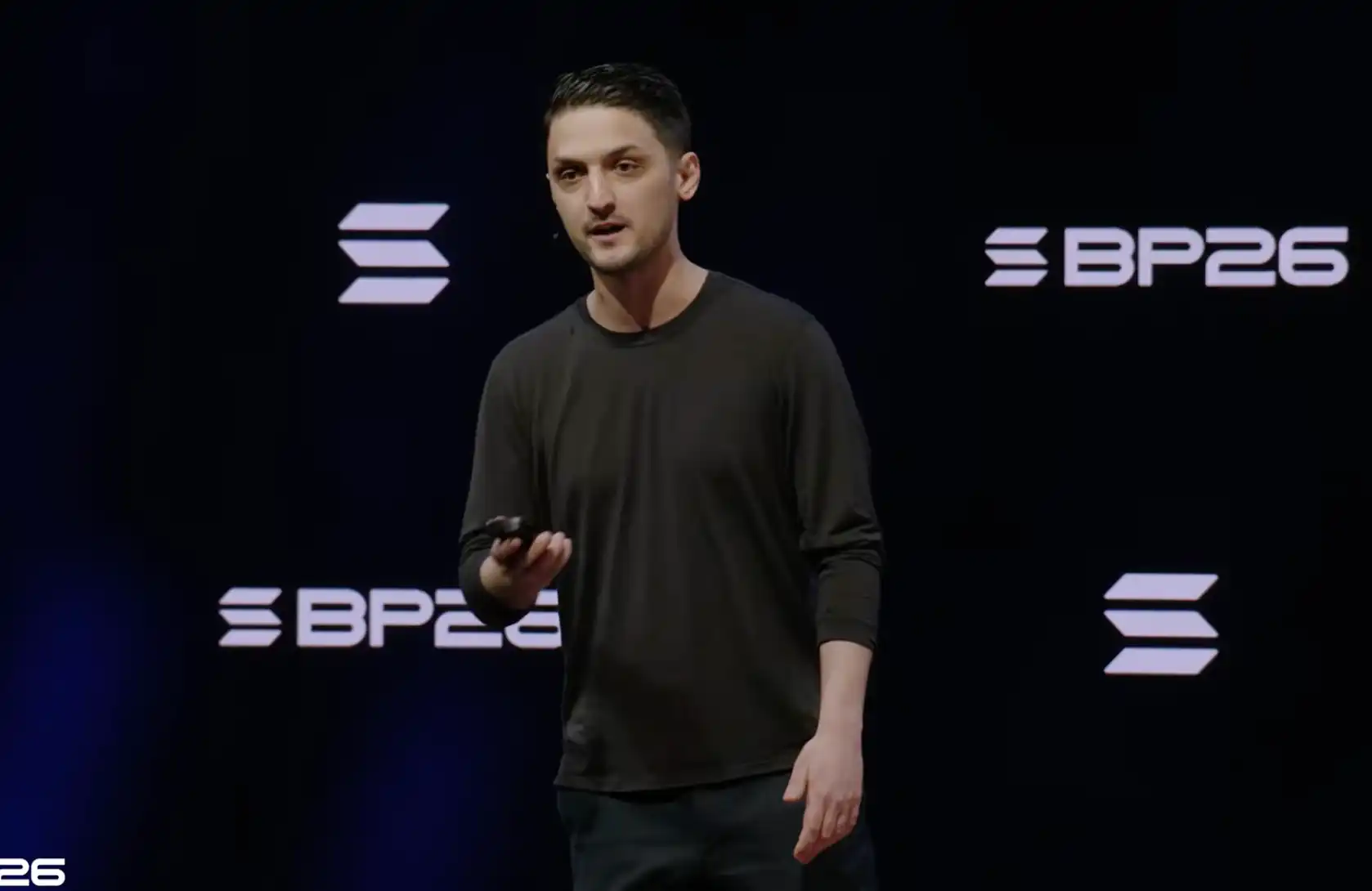
Jan Xie, Nervos chief architect, recently sat down with Flipside Crypto, a blockchain business intelligence service, to talk about the logic behind layered architecture and its impact on growing DeFi.
The challenge for Bitcoin and Ethereum
The challenge Shared by Bitcoin and Ethereum is scalability.
The fundamental issue with Bitcoin is sustainability
An often-overlooked fundamental issue for Bitcoin is sustainability. Put another way: "Will Bitcoin last 100 years?" The bitcoin issuance curve (halving every four years) and the transaction fee model mean that the rewards for the miner protection network will get smaller and smaller unless the bitcoin price doubles every four years or the transaction fee increases.
The first is highly uncertain, even impossible. The second is a vicious circle: higher transaction costs reduce activity on the chain, and reduced activity on the chain requires higher costs.
Currently, bitcoin's "value store" and the extensibility goals of Tier 2 reduce transaction activity at tier 1, as well as the costs of paying miners and protecting network security.
The more successful DeFi on Ethereum is, the more dangerous Ethereum is
Ethereum faces a different challenge, which we call the "heavy asset problem." Ethereum pays ETH to the miners to encourage consensus and keep the network safe. However, Ethereum carries a lot of different tokens that benefit from the security of Ethereum but don't contribute to the growth of Etherum's security. Instead, the ETH owner must pay for its continuous storage costs (paid to the miners by creating the ETH).
In fact, the more successful these non-ETH tokens (such as the development of DeFi) are, the more attractive Ethereum becomes to attackers. And network security does not increase in proportion to the total value of all tokens stored on the network.
Ethereum's economic model contradicts the ecosystem it promotes. Without sustainability, blockchain will eventually hit a ceiling on growth. The more successful you are, the faster you grow, and the sooner you run into an inherent bottleneck.
We think these are the most important issues to address in creating a truly decentralized and sustainable blockchain network. These problems can only be solved by a completely new design.
Defend Permissionless with a layered architecture to ensure scalability
Because DeFi currently poses some risks in smart contract platforms such as Ethereum, Nervos also offers its own solutions in this area. Nervos's solution is the Cell model, a generalization of the Bitcoin UTXO model designed specifically for storing multiple assets and layered architectures. Miners are rewarded in direct proportion to their trading activity and how long they hold their tokens. We make Nervos very simple and abstract, so it can evolve gradually. Add in the right economic model, and we believe it will outlast us.
The main advantages of a system are often also its main disadvantages. In the case of blockchain, both are based on consensus. We trust the blockchain because anyone can participate in verified transactions. But as a result, this limits scalability because every vote and transaction needs to be broadcast and processed by everyone.
Let's look at the two extremes of scalability. One is that we have a centralized system that scales well, but only one entity can verify the results. The other is that we have a decentralized system where everyone can verify everything, but it cannot be scaled up.
If we want blockchain to be a value store that everyone in the world can access, truly verifiable and trusted, then the only possible option is for everyone to verify everything. So this also makes layered solutions the only option for scalability.
This is also Nervos's design philosophy: The first level aims for security, finality and decentralization, and the second level aims for scalability.
Promote network decentralization with as simple an algorithm as possible
The most important thing about Bitcoin is that it doesn't require a license. No matter who controls the supply of tokens or the hash rate, the system is always open to newcomers. Of course there are financial requirements for participants, but the process itself is open and fair.
It doesn't matter whether bitcoin's computing power is concentrated at 70 percent or 20 percent at any given moment, as long as it's a permission-free network, it will eventually become decentralized. It's a dynamic system, and we should look at it over time. As technology improves, power generation will become more fragmented. I also believe that energy sources like solar, wind, and hydroelectric are more dispersed than resources like pre-distributed tokens or reputation (for PoS).
In addition, we need to make ASICS as ubiquitous as possible, so that anyone can mine. That's why we designed a new hash function, Eaglesong, that focuses on security, novelty, and simplicity. Novelty means there is no existing hardware optimized for Nervos before the main network starts, so everyone starts from the same starting line. Simplicity means that hardware is easier to manufacture and more easily decentralized.
According to our current situation, this design decision has also produced very good results. In the six months since Nervos CKB went online, the difficulty of mining has increased more than 100-fold, with about three ASIC vendors competing with each other. PoW networks are not inherently secure, only PoW networks that can be successfully started are secure, and I think we've done that.
Lower barriers to entry and bring in more developers to join the DeFi ecosystem
New ideas, new developers, new users.
Today the DeFi ecosystem is too much affected by Ethereum: tokens are concentrated in the ERC20 contract; Transactions must be hash checked by Keccak and signed by Secp256k1; Transaction costs must be paid by THE ETH, even if the transaction fails; It's too easy to trade ahead and so on.
DeFi on Nervos would be quite different. First, Nervos USES different signing algorithms to validate transactions, which means DeFi can be supported by more devices. Second, Nervos accepting non-native tokens gives more users access to DeFi. Third, the Nervos deal is deterministic, which makes it difficult for miners to trade ahead.
Since the Nervos blockchain design pushes a lot of functionality to the upper layers, DeFi on Nervos naturally relies more on open trading (layer 1.5) and layer 2 protocols. I hope we can bring some new ideas to this space.
A thriving DeFi ecosystem needs builders. On Nervos, instead of trying to keep down the cost of trying to develop an intelligent contract, you don't need to learn a new language. This free choice lowers barriers to entry for developers outside the blockchain community, allowing more developers to enter the nascent DeFi ecosystem.
One of the benefits of a layered architecture is that the base layer can remain neutral while allowing the upper layer to be customized to different regulatory conditions in different countries and regions. That is why, based on this trait, we can also work actively and closely with different needs and institutions. For example, Nervos has partnered with Huobi Corporate chain to expand the DeFi market in China.
It will take a lot of effort and understanding of the market to get users from different countries and cultures to use DeFi, and we will continue to explore and strive to achieve this goal as soon as possible.
Welcome to join the official BlockBeats community:
Telegram Subscription Group: https://t.me/theblockbeats
Telegram Discussion Group: https://t.me/BlockBeats_App
Official Twitter Account: https://twitter.com/BlockBeatsAsia
 Related Articles