Chapter 1 general introduction of PoS
Block chain card baa
Title of original text: "introduction of PoS in chapter 1"
Chapter 1 introduction of PoS
1.1. What is block chain consensus
Block chain is a block chain formed by a block link, and each new block generation (including transaction records) needs to participate in the common confirmation of the verifier, which is the block chain consensus. Since the development of blockchain in 2009, a variety of consensus has evolved. Different consensus has solved the problems of attack, cheating, delay, consistency, and final certainty in different ways.
By 2018, the mainstream consensus algorithm, including the PoW (Proof of Work effort to prove), PoS (Proof of gaining equity proves that mechanism), BFT (Byzantine fault tolerance mechanism), mixed consensus, etc., and some out of the mainstream evolution based on the consensus of the algorithm, such as PoA) prove (Proof of Authorization Authorization mechanism, PoI (Proof of the Importance of Importance that mechanism), DPoS (Delegate Proof of Stake), PBFT (Practical Byzantine Fault Tolerance), etc.
Among them, in the mainstream algorithm, PoS should be the protagonist in the current mainstream. PoS is developed on the basis of PoW and is highly respected in today's block chain consensus world. During 2014-2017, the number of block chains based on PoS consensus is gradually increasing, and even ethereum, which has long been the second largest by market value, plans to switch from PoW to PoS. In 2019, these pos-based public chains will go online, and we'll see a new generation of PoS chains take center stage for scrutiny.
In this chapter, we will give a brief overview of the origin and development of PoS consensus algorithm.
1.2. What is the consensus of PoS- equity proof mechanism
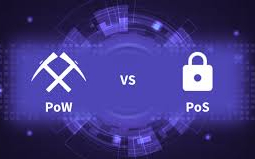
PoS (Proof of Stake) -- equity Proof mechanism, a mainstream block chain consensus algorithm, aims to make distributed nodes in the block chain reach consensus. It often appears together with PoW (Proof of Work) -- workload Proof mechanism, both of which are considered as one of the mainstream algorithms in the block chain consensus algorithm.
PoW was born and applied to bitcoin in 2009, PoS was proposed in 2011, and Peercoin, the first currency using this algorithm, was born in 2012. PoS as latecomers, in reference to the design of many PoW consensus level, such as block design, miners, bifurcate, transaction authentication, etc., many improvements on consensus and chain block bottom has a lot to do, PoS have done a lot of improvement, in order to meet the mechanism based on equity certificate, is take the essence to the dregs.
As for the definition of PoS, wikipedia defines it as: an algorithm aimed at achieving a distributed consensus on the cryptocurrency blockchain network
Proof of stake (PoS) is a type of algorithm by which a cryptocurrency blockchain network aims to achieve distributed consensus.
In the record, the originator of PoS, who first proposed PoS in 2011, described PoS as follows: "I am thinking that if bitcoin is widely used, a transaction based on PoW system proof may be replaced by a certificate based on PoS system. I mean, PoS -- the equity proof mechanism, which is the weight of the number of bitcoins you can prove with your private key, instead of the weight of the computing power you bring to the bitcoin network, is the "vote" on the transaction history.
I'm wondering if as bitcoins become more widely distributed, whether a transition from a proof of work based system to a proof of stake one might happen. What I mean by proof of stake is that instead of your "vote" on the accepted transaction history being weighted by the share of computing resources you bring to the network, it's weighted by the number of bitcoins you can prove you own, using your private keys.
In his blog Casper the Friendly Finality Gadget, Vitalik Burtain, founder of eaejeon and an advocate of PoS, defines PoS as: ina PoS system, the generation of a new block in the blockchain is done through the participation of the currency holder in the system, or an influential currency holder. This is more efficient than PoW mining, requiring neither high-performance hardware nor power.
In a PoS system, a blockchain appends and agrees on new blocks through a process where anyone who holds coins inside of the system can participate, and the influence an agent has is proportional to the number of coins (or 『stake』) it holds. This is a vastly more efficient alternative to PoW『mining』 and enables blockchains to operate without mining』s high hardware and electricity costs.
Based on the above definition, we should have a general understanding of PoS: it is an algorithm that achieves consensus through the consent of the money holder in order to determine the new block, which requires no hardware or power and is more efficient than PoW.
In the PoS consensus, the concept of Stake is introduced. The holder Staking the tokens and then gets the opportunity to offer the blocks. In the PoS consensus, the miners in the blocks are selected according to the proportion of the COINS they hold through an election algorithm. The miner completes the package transaction at the specified height, generates a new block, and broadcasts the block. The block of the broadcast passes another "threshold" in the PoS consensus, the verifier verifies the transaction, and the block is confirmed after passing the verification. This completes the consensus process for a round of PoS.
There are many nodes in a distributed network, and this node is the Stake mentioned above. What the PoS consensus guarantees is that the system is safe enough not to be destroyed by outsiders and can run independently and stably. There are many problems to consider, which I will explain to you in the following chapters.
1.3. Trend of PoS consensus
Now plunged in value of the currency inside sources (2018-12-20, https://coinmarketcap.com/coins/), the application of PoS and PoS and PoS mixed consensus (includes PoS, but does not include the PoW) there were a total of 16 species, 32% of the total; There are 22 types of mixed PoW and PoW consensus (including PoW and PoS), accounting for 40% of the total, and 3 types of mixed PoW and PoS consensus, accounting for 6%.
Top 50 in the market value of the currency, many are developed from the currency era, so we see currently accounts for more than or consensus based on PoW currency, but it contains a lot of functions similar bifurcation currencies, such as the BTC bifurcation as many as five, bits of bitcoins cash, cash bit vision of bitcoins SV, bits of bitcoins Gold Gold, etc., and the bifurcation on the ETH; There's Ethereum for Ethereum and Ethereum Classic for Ethereum (and a fork could still happen). If you remove duplicate currencies, the ratio of PoS and PoW will be closer.

Figure 1 consensus classification of the Top50 currencies by market value
2017 was the first year of icos (Initial Coin offerings) and the first year of the explosion of a number of public chains. There were 876 icos in currencies, raising a total of $6.2bn.
Among the Top20 funds raised, there are 6 currencies based on PoS consensus, accounting for 30%; There is only one type based on the PoW consensus, accounting for 5%. Tezos raised the most PoS in 2017, with a total of about $230 million. The share of PoW and PoS is decreasing, which is related to the large number of projects created on the ETH platform at that time.
Generally speaking, the trend is obvious. In the next 10 years, PoW will tend to decrease while PoS will tend to increase.

Figure 2 ICO fundraising in 2017 (data from ICODATA)
In 2018, many ICO projects did not get good financing due to the fact that the overall cryptography and digital communication entered a bear market, and the public chain project track was already crowded, so the project side could not raise money, so the natural attention decreased a lot. However, there are also new PoS projects emerging, such as Turing award winner Sivio Micali's Algorand, which is based on PoS consensus. Figure 3 below shows the financing situation in 2018.

Figure 3 ICO fundraising in 2018 (data from ICODATA)
Click to view the original article
Welcome to join the official BlockBeats community:
Telegram Subscription Group: https://t.me/theblockbeats
Telegram Discussion Group: https://t.me/BlockBeats_App
Official Twitter Account: https://twitter.com/BlockBeatsAsia
 Related Articles