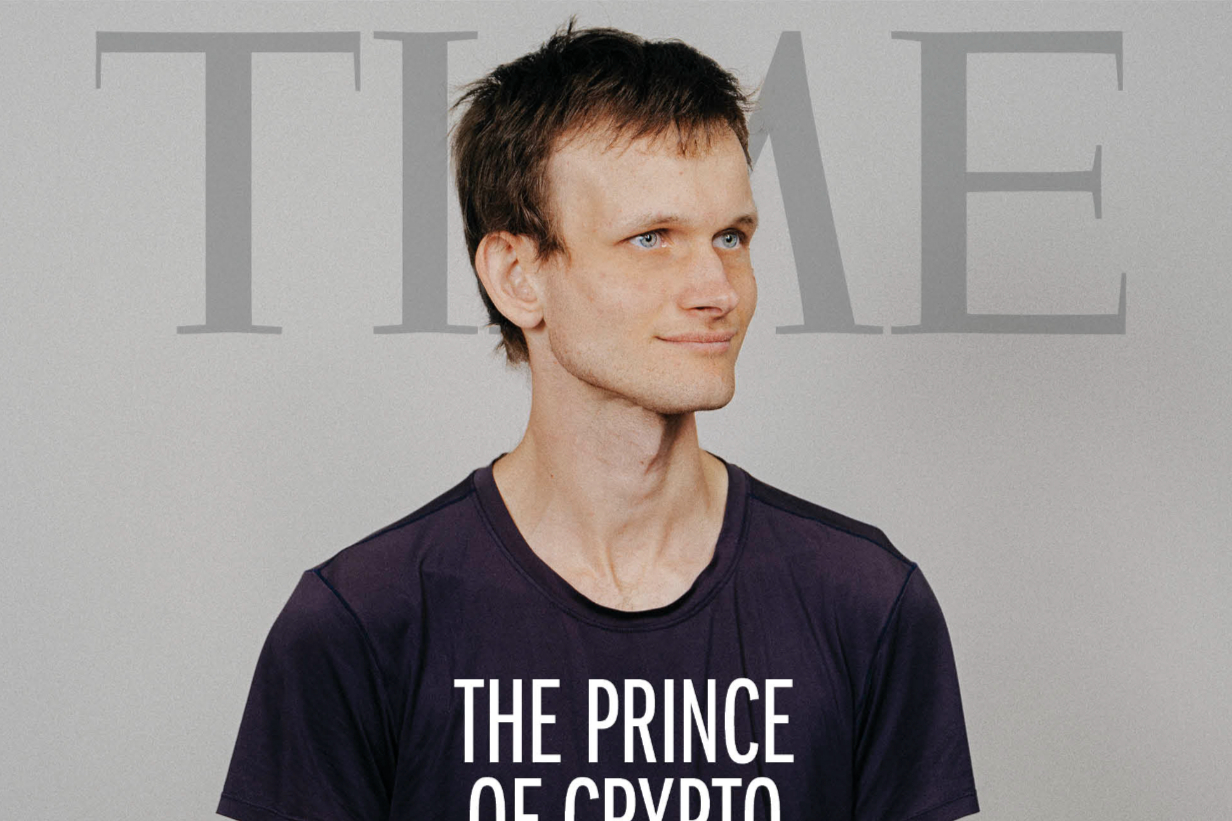
Exclusive interview with Vitalik: Community is far more important than code

Original title: "Interview with Vitalik: Community is far more important than code"
Original source: Orange Book
Interviewee: Vitalik Buterin
Interview & writing: Li Hua, Retric@ Orange Book
This year marks the 21st anniversary of the establishment of the Apache Software Foundation. As a representative of the Internet open source community, Apache's projects support most of the Internet, and Apache Hadoop's projects almost constitute the entire big data ecosystem. The core principle of Apache is "community is more important than code."
As a representative of the blockchain open source community, how does Ethereum view the open source community and how to build an open source community? For this reason, we interviewed Vitalik Buterin.
1. The power of the open source community
Q: As the largest open source community in the blockchain field, is the community the most important for Ethereum?
Vitalik: I absolutely think that the community is the most important part of Ethereum. The code determines what a platform can do now, and the community determines what a platform can do in the future. Moreover, whether it is for blockchain or for any software ecosystem, it is very important to allow people to participate and feel friendly, and this cannot be achieved by relying on code.
Q: Compared with traditional software development methods, what are the advantages of the open source community?
Vitalik: The workload of developing projects like Ethereum is too large, and it is difficult for traditional software development companies to complete it. The work to be faced includes not only the development of blockchain clients, application layer software, etc., but also training, documentation, developer experience, etc. The community can work together to complete these tasks, but a single company alone is difficult to do.
In addition, for those very smart and talented people, money is only one factor that attracts them. They will also be attracted to a healthy and exciting environment. They will feel motivated because they feel that they are doing something meaningful for the world, which is something that money cannot buy. If you try to replace these things with money, you will quickly spend a lot of money without necessarily getting the expected results.
Q: Do you think open source culture exists in other fields? Fields other than software and code?
Vitalik: I think there are similar things in other fields. For example, many people working in city government often go to each other to chat and share their ideas. Many intellectual communities, such as mathematics and humanities, also operate in a similar way. I think humans are naturally fond of cooperation, but sometimes, the incentives generated by competition between countries and companies hinder this cooperation.
2. Ethereum Open Source Community
Q: When did you first consciously feel that Ethereum had a "community"? What was the Ethereum community like at that time? Can you briefly describe it?
Vitalik: It should not be felt at a certain moment, but a gradual process. For example, in the past few years, I have been to a new city and a new place every month, and every time I have heard or seen some new Ethereum applications. In 2015, if someone built something on Ethereum, I would know it almost immediately. But now, I feel like there are more and more projects and more and more things I don’t know. Sometimes I even feel that I am like a foreign tourist in this community that I started. The Ethereum community is so big now. From the initial community to today, it is really an amazing growth.
Q: According to a report, 18% of developers in the blockchain field belong to the Ethereum community, which is 4 times the number of the second place. What do you think is the most important reason why developers are willing to "work" in Ethereum?
Vitalik: I think people see the Ethereum community as a place where a lot of the most interesting work is happening, which can be in the field of cryptography, economic mechanism design, or blockchain protocol development. And people will find that the Ethereum community is promoting social development and technological progress, and it is not just focused on the price of the currency.
Of course, Ethereum is not the only crypto community that focuses on these aspects. For example, Zcash is also a very powerful community. They have done important pioneering work in the fields of zero-knowledge proof, protocol management, and developer incentives, but the Ethereum community is the largest one.
Q: What important things did Ethereum do right to have such a strong community and open source ecosystem? Many public chains are also building communities, but the progress does not seem to be very good.
Vitalik: I don't think you can force an "ecosystem". The ecosystem needs to grow on its own, and there must be ideas and values that can be shared to attract people to join the community. I think the reason why most projects fail is that they think that having money is enough, and economic incentives can create a community. In addition, projects with unique ideas (such as Tezos, I personally don't agree with the on-chain governance method, but at least they are doing things in a new and unique way) tend to be more successful.
Q: Can Ethereum developers be "stolen"?
Vitalik: Many people have tried to steal! For example, Tron has provided financial incentives to Ethereum developers on many occasions to persuade them to move to Tron. There are also many blockchain project teams that try to attend the Ethereum conference and introduce themselves as friends of Ethereum, but actually want to chat with developers and persuade them to move to their own platforms. Of course, this strategy usually does not work.
Q: What are the main developments in the Ethereum open source community now? Are they all financially supported by the Ethereum Foundation?
Vitalik: Currently, the most active development activities on Ethereum are taking place in the following areas:
1. Zero-knowledge proof technology, including privacy protection in transactions, privacy protection in voting, and improvements to the protocol itself (such as the PLONK protocol and the STARKs protocol).
2. Layer 2 scalability, especially work on ZK Rollup and Optimistic Rollup.
3. Wallet design and other projects to improve user experience.
4. Ethereum 2.0 client team.
5. Ethereum 1's short-term expansion and new clients (such as Nethermind).
Most of these projects have received support from the Ethereum Foundation to varying degrees, and they will also seek financial support through other channels, such as from companies similar to Consensys or other fund projects, or invest in starting their own companies.
3. Building an open source community
1. "Reputation incentives" and "economic incentives"
Q: What do you think of reputation incentives and economic incentives? Cryptocurrency introduces a means of economic incentives. What changes do you think it has brought to open source development?
Vitalik: I'm currently reading some books about the new internet economy from the first decade of this century, including The Wealth of Networks by Yochai Benkle and Swarmwise by Rick Falkvinge. One thing that struck me was that 15 years ago, intrinsic motivation was considered an important foundation of motivation theory, which is that people do things for the pursuit of reputation, fun, and meaning.
In this sense, there should be a lot of things like Wikipedia in the world, but this is not the case. This model sometimes succeeds and sometimes fails. For some types of projects, people will happily do it out of intrinsic motivation, but for other projects, this approach alone is not enough.
Cryptocurrency provides a new model that brings the possibility of economic incentives to open source software development, which I think is an important reason why Ethereum and many other projects can proceed. But in 2017, the "boom" happened too quickly, and economic incentives quickly became very large and dominant, which led to the emergence of some projects that were purely for making money, and their goal was not to make the world a better place.
Therefore, I think that a single intrinsic incentive or a single economic incentive is unsustainable. To have a healthy project and community, you need a combination of the two.
The biggest challenge facing economic incentives is how to provide funding for projects. Most funding allocations are one-time (including Ethereum pre-mining), but this method cannot guarantee continuous funding. The Zcash community is experimenting with community voting to decide which projects get development rewards, a potentially important way to provide ongoing funding for projects; quadratic funding, which Glen and I are exploring, is also a potential solution to this problem.
If a project is nominally decentralized but the funding is centralized, then even if it pretends to be decentralized, people know who has the real authority because that authority determines who gets paid next month. In fact, it is important to decentralize this authority, whether in a highly democratic way like quadratic funding or, at the very least, to have multiple large funding institutions that projects can seek support from.
Q: Economic incentives need to constantly explore better ways, so does reputation incentives need to think about mechanism design?
Vitalik: I absolutely think that social incentive mechanisms need to be improved. Social mechanisms, especially those on the Internet, tend to over-reward those things that are loud, obvious, and easy to understand, while those quiet and hard work do not get enough rewards.
I think we can find ways to solve this kind of problem, but we need to carefully examine the platforms where these behaviors occur and think about how the incentive mechanisms of the platforms work.
2. "Management" and "Autonomy"
Q: Starting this year, the Ethereum Foundation no longer distinguishes between external and internal developers, and the way of resource allocation has changed from "salary system" to "project system". Is this to give projects more autonomy?
Vitalik: This approach allows each team to have more meaningful autonomy, and they can choose their own way of operating. Ethereum is a global project, and its teams are distributed all over the world. It would be difficult to manage these teams directly, and given that these teams perform almost all independent tasks, such management is not necessary.
But this approach does not completely eliminate management. The Ethereum Foundation still decides which teams to fund, and these teams also need to adjust their work to meet the priorities of the Ethereum Foundation.
Q: Is the Ethereum Developer Conference an effective tool for balancing management and autonomy?
Vitalik: The members of the Ethereum community are geographically dispersed and far away from each other, so conferences are definitely an effective tool that helps the community unite. But I think we should have more frequent, local events or conferences. It is not enough to focus on one conference like now.
Q: Some people think that the Ethereum Foundation has not evolved as fast as the Ethereum community. What do you think?
Vitalik: The Ethereum community is certainly evolving faster than the Foundation. To some extent, this is a situation we hope to see. The center is often blinder than the periphery. In this case, to do something well, you have to be willing to believe in the wisdom and goodwill of the community itself.
3. "Community" and "Leader"
Q: As the leader of the Ethereum open source community, how do you define or understand this role?
Vitalik: I think my role has changed over time. At the beginning, I was a core researcher and core developer in the community. About two years ago, I was just a core researcher. Most of the development work was done by the community independently, and now, more and more research work is happening spontaneously.
I do think about my role in the community, and I think it will evolve over time into something higher level and more abstract, which involves advocacy work, thinking philosophically, and doing deep research in areas where I can contribute the most.
Q: What does it mean to think from a philosophical level?
Vitalik: The philosophical level means to stand at a certain height to see what is important to the Ethereum ecosystem, so as to provide a reference for the development of the Ethereum platform and ecosystem: what people want to do with Ethereum, how can Ethereum meet this need, and what are the key challenges.
4. "Donation" and "Investment"
Q: Does the foundation need to have the ability to raise funds continuously? Vitalik: The foundation has enough funds to operate for 5 years, so there is no need to worry about such issues in the short term. If someone wants to donate money, I think the better way is to donate directly to the Ethereum 2.0 development team, such as Prysmatic, Status, or MolochDao or Gitcoin Grants (Editor's note: MolochDao and Gitcoin Grants are both attempts at new funding mechanisms). In the long term, I will continue to explore ways to organize funds through mechanisms built into the protocol. This approach means that the protocol itself has a governance mechanism that defines who has contributed to the ecosystem and allocates part of the transaction fees or newly issued tokens to these contributing participants. But its implementation is not that simple. We must avoid cartels using this mechanism to allocate funds to themselves, as well as unnecessary chain splits caused by disagreements over fund allocation.
The protocol's built-in mechanism also includes another way, that is, the developer of the smart contract can earn benefits every time the contract is called.
Q: You mentioned allocating part of the transaction fees or newly issued tokens to developers. Is this distribution method reasonable?
Vitalik: This approach will face some challenges. People are very wary of the basic protocol becoming non-neutral because this may bring potential risks of "political" dominance. We expect to conduct some small-scale experiments in the internal ecosystem of Ethereum and external ecosystems such as Zcash to see how the situation will be.
Q: Are new financing methods like MolochDao and Gitcoin Grants considered investments or donations?
Vitalik: I think it's both.
5. Public Goods
Q: What topics do you think are important that we didn't talk about?
Vitalik: I mentioned this in the previous question: I increasingly think that the crypto ecosystem needs to take seriously the issue of funding public goods. This public good includes protocol development, research work, market work, training and documentation work, application software and application development, and many other works included in the blockchain ecosystem.
The early cypherpunk thinking that led to the birth of Bitcoin was influenced by Austrian economics and libertarianism, which has many good points, but a big problem is that it does not give due importance to public goods. People either assume that companies can provide sufficient funds, or assume that everyone can get sufficient motivation due to social incentives, and think that this is enough.
But in reality, we need to find more systematic solutions. The public goods problem is very important, especially in today's information age. We need to put a lot of effort into finding ways to fund public goods that are decentralized and respect the values behind the blockchain platform, but at the same time they must be effective and provide the public goods that everyone needs.
Q: Have you found an effective way?
Vitalik: I think we need time to try some different solutions, see how they work and think about how to improve them. Quadratic funding is one of these solutions. Original link: https://mp.weixin.qq.com/s/w0-Iw-M9IbjdKdOhwXncxA
Welcome to join the official BlockBeats community:
Telegram Subscription Group: https://t.me/theblockbeats
Telegram Discussion Group: https://t.me/BlockBeats_App
Official Twitter Account: https://twitter.com/BlockBeatsAsia
 Related Articles