Time x Vitalik: Hope that encryption can finally really affect the real world
Original title: "The Man Behind Ethereum Is Worried About Crypto's Future"
Original source: "TIME"
Original author: Andrew R.Chow ;
Original compilation: Nian Qing, Lin Qi, Chain Catcher
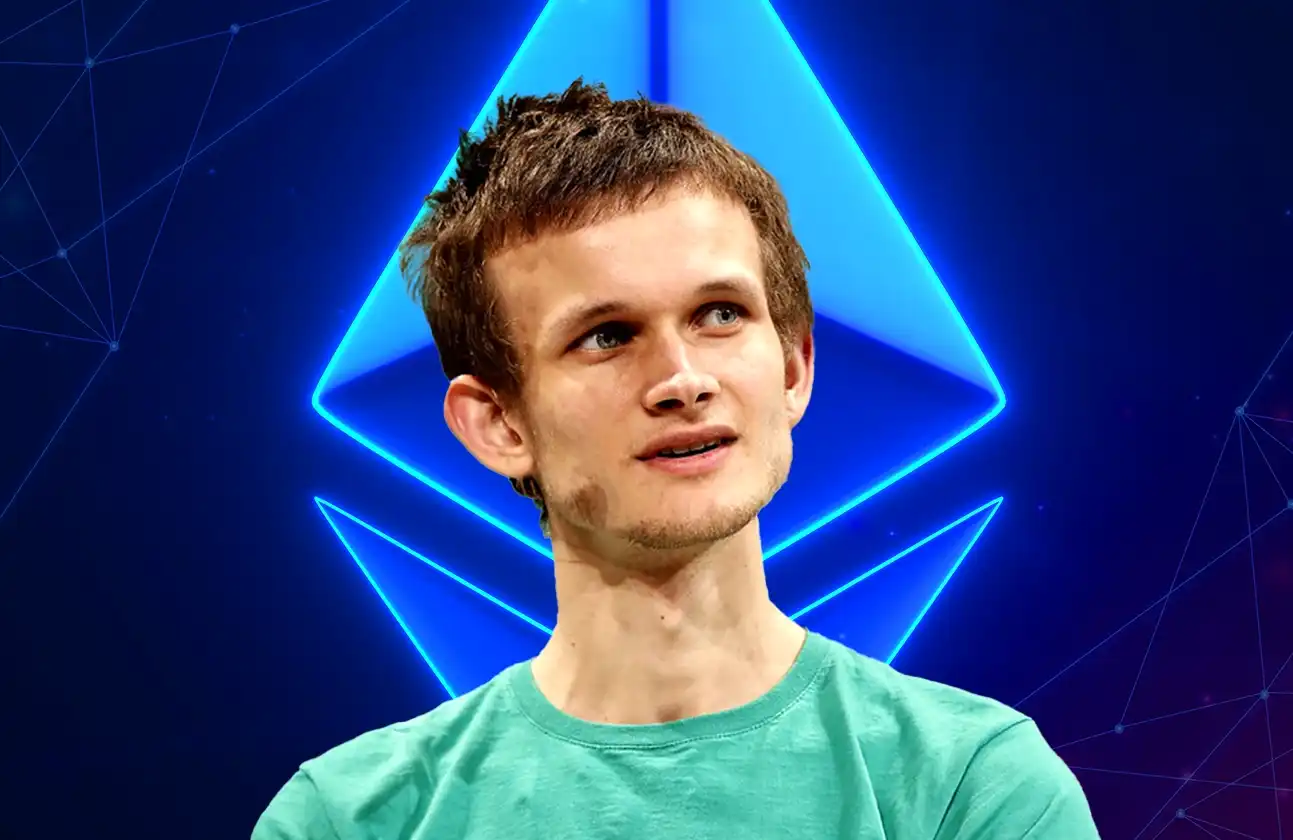
After being shortlisted for "Time" magazine's annual most influential 100 People, the founder of Ethereum, Vitalik, appeared on the cover of Time magazine today, further highlighting the influence of Ethereum and even the encryption industry.

At the same time, "Time" magazine published an interview with Vitalik, in which It involves Vitalik's early growth process, personal thoughts, and the inside story of the early development of Ethereum.
The following is the full text translation:
After a few minutes, electronic music will start beating and plush toys will be thrown by people In the air, the ladies will also spin colorful hula hoops, and a mechanical bull will be activated, and one by one excited riders will be violently bumped on the bull's back. This is the closing night of ETHDenver, a week-long cryptocurrency conference on Ethereum. For days, people lined up around the block. Right now, on this Sunday night in February, the excited energy is at its peak, dizzying.
But as the crowd poured into the evening, a lean man who looked like an "elf" was rushing out to meet the surprised selfie-takers Rushing shoulders with venture capitalists. There were shouts and pleas for him to stay, some even chased him into the street on foot and on motorcycles. However, the man outran all of them and disappeared alone in the secluded space of the hotel lobby.
The most influential person in the crypto space, Vitalik Buterin, did not come to Denver to party. He doesn't drink and doesn't like crowds much. Of course, it’s not that the 28-year-old ethereum founder doesn’t have much to celebrate. Nine years ago, Vitalik dreamed of using Ethereum as a way to use the underlying blockchain technology of Bitcoin to explore more functions than currencies. Since then, it has become the foundational layer of what advocates call a new, open-source, decentralized internet.
Ethereum's native currency, ETH, has become the second-largest cryptocurrency after Bitcoin, powering a trillion-dollar ecosystem, in Money flow rivals Visa. Ethereum brings thousands of unbanked users around the world into the financial system, allows capital to flow unimpeded across borders, and provides entrepreneurs with the infrastructure to develop everything from payment systems to prediction markets to digital exchanges. New products from conferences to medical research centers.
Although the total market value of cryptocurrencies is soaring, Vitalik clearly understands that the world he created is moving forward with a mixture of pride and fear . Ethereum has made a small number of white people incredibly rich, pumped pollutants into the air, and is a vehicle for tax evasion, money laundering, and mind-boggling scams. “Encryption itself has a lot of dystopian potential if not implemented properly,” the Russian-born Canadian explained in an interview with 80 Minutes in his hotel room the morning after the party.
Vitalik worries about the dangers of over-eager investors, soaring transaction fees and brazen displays of wealth that have dominated public perception of cryptocurrencies. “The danger is that you have these $3 million monkeys and it becomes another gamble,” he said, referring to the Boring Ape Yacht Club, an ultra-popular NFT collectible of garish primates Cartoons, digital-age status symbols that have become millionaires including Jimmy Fallon and Paris Hilton, have traded for more than $1 million. "There must be a lot of people who are just buying yachts and Lambos."
Vitalik prefers Ethereum to be a launching platform for various social and political experiments. For example, fairer voting systems, urban planning, universal basic income, public works programs. Most of all, he hopes the platform will serve as a check on authoritarian authorities and upend Silicon Valley's shackles on our digital lives. But he acknowledged that there is a risk that his vision of ethereum's transformative power will be overtaken by greed. So Vitalik reluctantly began to take on a larger public role in shaping the future of crypto.
"If we don't have a voice, the only things that will be built are the ones that are immediately profitable," he said, his voice following his hand Undulating with nowhere to fit between a lumpy gray sofa cushion. "And these are often a far cry from what is really good for the world."
Ironically, despite Vitalik's reputation, he may not have the power to stop Ethereum Off track. That's because he designed Ethereum as a decentralized platform that not only carries his own vision, but also responds to the wishes of its builders, investors, and growing community. Vitalik is not the official leader of Ethereum, and he believes that no one person can have unilateral power over the future of Ethereum.

This leaves Vitalik dependent on limited soft power tools: writing blog posts, Take interviews, conduct research, and, yes, speak at conferences where many attendees just want to immerse themselves in their newfound wealth codes. “I’ve been yelling, and sometimes the yelling feels like howling in the wind,” he said, his eyes scanning the room. Whether his approach works (and how much influence Vitalik has over his own ideas) could be the future of Ethereum being the basis for a new era of digital life, versus the future of Ethereum being just another instrument of financial speculation, credit default swaps, and utopian overtones difference between.
After a three-day hiatus from music at the ETHDenver venue, Vitalik turned his attention to the world, back to the region of his birth. Cryptocurrencies almost immediately became a tool of Ukrainian resistance in the war waged by Russian President Vladimir Putin. In the first three weeks of the invasion, Ukrainian official and unofficial organizations raised more than $100 million in cryptocurrency. Cryptocurrencies have also provided a lifeline for some unbanked fleeing Ukraine. But at the same time, regulators are concerned that Ethereum will be used by Russian oligarchs to evade sanctions.
Vitalik has also moved into action, directing hundreds of thousands of dollars in grants to relief efforts and publicly attacking Putin's decision to invade. “The silver lining of the last three weeks is that it has reminded a lot of people in the crypto space that the ultimate goal of crypto is not to play games with million-dollar monkey photos, but to do things that actually impact the real world,” Vitalik wrote in an email to TIME on March 14.
His outspoken advocacy marks a turnaround for a leader who has been slow to find his political voice. Vitalik said: "One of the decisions I made in 2022 was to try to be more risky and less neutral." "I'd rather Ethereum offend some people than it would become something meaningless."
This battle is personal for Vitalik, who is of Russian and Ukrainian heritage. He was born outside Moscow in 1994, a few years after the collapse of the Soviet Union, to Dmitry Buterin and Natalia Ameline, both computer scientists. It was a time when the monetary and social systems were collapsing, and his mother's parents lost their life savings to inflation. “Growing up in the Soviet Union, I didn’t realize that most of the good stuff I was told in school was propaganda,” explains father Dmitry. "So I want Vitalik to question tradition and belief, and he grows into a very independent thinker."
The family originally lived in a university with shared bathrooms in the dormitory. Without disposable diapers, his parents washed him by hand. Vitalik grew up in a turbulent but dynamic family environment. According to his father Dmitry, Vitalik learned to read at bedtime at an early age, but he was slow to speak a complete sentence compared to his peers. "Because he was thinking so fast," Dmitry recalls, "he actually had a hard time expressing himself verbally for a long time."
On the contrary , Vitalik was fascinated by the clarity of the numbers. At age 4, he inherited his parents' old IBM computer and started playing with Excel spreadsheets. At the age of 7, he could recite pi with more than a hundred digits, and would call out mathematical equations to pass the time. At 12, he could code in Microsoft Office Suite. In 2000, Putin was elected for the first time, and his family immigrated to Toronto, Canada, so Vitalik's precocity became more prominent and intensified among his peers.
His father described Vitalik's Canadian upbringing as "lucky and naive," and Vitalik himself described himself as "lonely and detached."

In 2011, Dmitry introduced Vitalik to Bitcoin, it was in 2008 created after the financial crisis. After seeing the financial systems of Russia and the United States collapse, Dmitry was intrigued by the idea of an alternative source of global funding that was not controlled by the authorities. Vitalik soon began writing articles exploring the new technology for Bitcoin Weekly magazine, for which he earned 5 bitcoins (about $4 then, worth about $200,000 today).
Even in his early teens, Vitalik proved to be an incisive writer, able to express in clear prose about cryptocurrencies and their underlying technologies. Complex thoughts. At 18, he co-founded Bitcoin Magazine and became its lead writer, gaining a following in Toronto and abroad. “A lot of people see him as a typical tech engineer,” said Nathan Schneider, a media studies professor at the University of Colorado Boulder who first interviewed Vitalik in 2014. “But at the heart of his practice was more observation and writing—which helped him see a cohesive vision that no one else had seen.”
With Vitalik Learning more about the blockchain technology on which bitcoin is built, he came to believe that using it purely for currency was a waste. He believes that blockchain can be an effective way to protect assets of all kinds: web applications, organizations, financial derivatives, non-predatory lending schemes, and even wills. Each of these can be operated through "smart contracts," codes that can be programmed to conduct transactions without intermediaries. For example, a decentralized version of the ride-sharing industry could be built that sends money directly from riders to drivers without Uber getting a cut of the proceeds.
In 2013, Vitalik dropped out of college and wrote a 36-page white paper outlining his vision for Ethereum: a new open-source blockchain , on which programmers can build any type of application they want. Vitalik sent it to friends in the bitcoin community and they spread it around. Soon, a handful of programmers and businessmen around the world approached Vitalik, hoping to help him make it a reality. Within months, eight of what would become known as ethereum’s founders were sharing a three-story Airbnb in Switzerland, writing code and attracting investors.
While some of the other founders mix work and entertainment—watching Game of Thrones, convincing friends to bring beer in exchange for Ether IOUs—Vitalik spends most of his time All alone, writing code on his laptop. Over time, it became clear that the group had very different plans for emerging technologies. Vitalik wanted a decentralized open platform on which anyone could build anything. Others want to use the technology to start businesses.
One idea is to build a cryptocurrency equivalent to Google, in which ethereum would use customer data to sell targeted ads. The men also quarreled over power and titles. One co-founder, Charles Hoskinson, named himself CEO — Vitalik wasn’t interested, joking that his title was C-3PO, after the droid in Star Wars.
The ensuing conflict left Vitalik with culture shock. In a matter of months, he has gone from a reclusive life of writing code and technical articles to a decision maker battling a bloated ego and power struggles. His vision for Ethereum is up in the air. “The biggest divide is definitely that a lot of these people care about making money. For me, that’s not my goal at all,” Vitalik said.
His net worth is at least $800 million, according to public records on the blockchain, the accuracy of which was confirmed by a spokesperson. “Even at the beginning, I lowered the percentage of ETH distribution that myself and other high-level founders would receive in order to be more equal. It really upset them.”
< /p>
Vitalik said other founders tried to use his naivety to push their own ideas about how ethereum should work. “People used my fear of regulators against me,” he recalls, “saying we should have a for-profit entity because it’s much simpler legally than being a nonprofit.” As tensions mounted, , the group begged Vitalik for a decision. In June 2014, he asked Hoskinson and Amir Chetrit, the two co-founders who pushed ethereum into a business, to leave the organization. He then initiated the creation of the Ethereum Foundation (EF), a non-profit organization that seeks to secure Ethereum's infrastructure and fund research and development projects.
Over the next few years, all the other founders left one by one to pursue their own projects, either with Ethereum or as direct competitor. Some of them remain critical of Vitalik's approach. “In the dichotomy between centralization and anarchy, ethereum seems to be heading toward anarchy,” said Hoskinson, who now leads his own blockchain, Cardano. "We think there's a middle ground in creating some sort of blockchain-based governance system."
As founders split, Vitalik becomes Ethereum's philosophy leader. He holds a seat on the Ethereum Foundation Board of Directors and has the clout to influence industry trends and move the market through public statements. He is even called "V God" in China. But he didn't quite step into a power vacuum.
“He’s not good at commanding people around him,” said Aya Miyaguchi, executive director of the Ethereum Foundation. Danny Rya, principal researcher at the Ethereum Foundation, said: "From a social navigation perspective, he is immature. He probably still hates conflict." The curse of Ethereum's first few years".
It's not hard to see why. When you meet Vitalik, he still doesn't exhibit the stereotypical leadership qualities. He choked, stuttered, walked stiffly, trying to maintain eye contact. He spends little time on his clothes, mostly wearing Uniqlo T-shirts or clothes given to him by friends. His disheveled appearance made him an easy target on social media: He recently shared insults from online hecklers who said he looked like a "Bond villain" or an "alien madman."
However, nearly everyone who has spoken to Vitalik sufficiently has starry eyes. Vitalik is a lot of fun, almost entirely without pretentiousness or ego. He's an unabashed geek, and his eyes light up when he sees one of his favorite concepts, whether it's quadratic voting or a futarchy governance system.
Just as Ethereum was designed to be a universal machine, Vitalik is a universal thinker, proficient in everything from sociological theory to advanced calculus to the history of land taxes. Subject. (He's currently using Duolingo to learn his fifth and sixth languages.) He doesn't condescend to people, and he avoids security details. “The emotional part of me says that once you start down this path, specialization is another word for losing your soul,” he said.
Reddit co-founder and head of cryptocurrency investing Alexis Ohanian says that being around Vitalik gave him "a unique experience that is not unlike first encountering the World Wide Web." It’s a similar vibe to Tim Berners-Lee, the inventor of LEGO. He’s very thoughtful and humble,” says Ohanian, “and he’s giving the world some of the most powerful LEGO bricks ever built.”
< /p>
For years, Vitalik has grappled with the question of how much power can be wielded in Ethereum's decentralized ecosystem. The first major test came in 2016, when a newly created ethereum-based fundraiser called The DAO was hacked, taking away $60 million, or more than 4% of all ETH in circulation at the time.
The hack tested the values of the crypto community: if they really believed that no central authority should override the rules governing smart contracts, thousands of of investors will have to absorb losses, which in turn will encourage more hackers. On the other hand, if Vitalik chooses to use a tactic called a hard fork to reverse the hack, he will be exercising the same centralization rights as the financial system he is trying to replace.
Vitalik takes a middle ground. He consulted with other ethereum leaders, wrote blog posts advocating for the hard fork, and saw the community vote overwhelmingly for the option through forums and petitions. When ethereum developers create a fork, users and miners can choose to stick with the hacked version of the blockchain. But they overwhelmingly chose the forked version, and Ethereum quickly recovered its value.
For Vitalik, the DAO attack exemplifies the promise of a decentralized approach to governance. "Leadership has to rely more on soft power than hard power, so leaders have to really consider how the community feels and respect them," he said. "Leaders are not fixed, so if leaders stop working, the world will forget them. In turn, new leaders will be easily popular."
Numerous leaders have risen in Ethereum over the past few years, building various products, tokens, and subcultures. 2017 saw an ICO boom, with venture capitalists raising billions of dollars for blockchain projects. 2020 has a DeFi summer, with new trading mechanisms and derivatives structures moving funds around the world at super-fast speeds. Last year also saw an explosion of NFTs: tradable digital goods such as avatars, art collectibles, and sports cards that have skyrocketed in value.
Skeptics scoff at the utility of NFTs, where a multi-billion dollar economy is built on perceived digital ownership of simple images that can be easily copied and pasted . But they have quickly become one of the most used components in the Ethereum ecosystem. In January, NFT trading platform OpenSea hit a record monthly sales of $5 billion.
Vitalik did not predict the rise of NFTs, but observed the phenomenon with interest and anxiety. On the one hand, they have helped boost the price of ETH, which has grown more than tenfold in value over the past two years. (Disclosure: I bought less than $1,300 worth of ETH in 2021.) But its transaction volume has overwhelmed the Ethereum network, causing congestion and gas fees to skyrocket. For example, bidders will spend hundreds of dollars in additional fees to ensure the speed of confirmation in order to obtain rare NFTs.
These fees undercut some of Vitalik's favorite projects on the blockchain. Take Proof of Humanity, which pays out a universal basic income (currently about $40 a month) to anyone who signs up. The actual situation varies from week to week, and the network's congestion charges will take money out of your wallet to pay for basic living needs, which can be prohibitive. “The way the fees are now,” Vitalik said, “it’s really getting to the point where the derivatives and gambling stuff starts pricing some cool stuff.”
Inequality has spilled over into the crypto space in other ways, including severe gender imbalances and a lack of racial diversity. “It’s not something I put a lot of energy into intellectually,” Vitalik acknowledges gender equality. “The ecosystem there really needs to improve.” He pooh-poohed the dominance of token voting, and Vitalik sees the DAO’s voting process as just a new version of plutocracy, where wealthy venture capitalists can make their own decisions with little resistance. profitable decision. "It's become the de facto standard, which is the dystopia I've seen in the last few years," he said.
These issues have sparked a backlash within and outside the blockchain community. As cryptocurrencies moved toward the mainstream, their esoteric jargon, idiosyncratic cultural and financial excesses were widely scorned. Meanwhile, frustrated users are turning to newer blockchains like Solana and BNB Chain, driven by the prospect of lower transaction fees, alternative build tools, or different philosophical values.
Vitalik understands why people are staying away from Ethereum. Unlike almost any other leader in the trillion-dollar industry, he doesn't see a problem, especially given the fact that Ethereum's current problems stem from the fact that it has too many users. (Losing a huge fortune doesn’t worry him too much: Last year, he dumped $6 billion worth of Shiba Inu tokens that were given to him, explaining that he wanted to donate some to charity to help keep the meme code alive. the value of the coin, but relinquishes his role as a "center of power".)
Meanwhile, a representative confirmed that he and his holdings are worth nearly 1 billion The Ethereum Foundation, which reserves USD ETH, is taking a number of approaches to improve the ecosystem. Last year, they handed out $27 million to ethereum-based projects, up from $7.7 million in 2019, with recipients including smart contract developers and educational sessions at Lagos.
The Ethereum Foundation research team is also working on two important technical updates. The first, dubbed "merge," will switch ethereum from proof-of-work (a form of blockchain validation) to proof-of-stake, which the Ethereum Foundation says will reduce ethereum's energy usage by 99 percent above, and make the network more secure. Vitalik has been working on a proof-of-stake mechanism since Ethereum’s inception, but delays have turned implementation into waiting for Godot. At ETHDenver, Danny Ryan, a researcher at the Ethereum Foundation, announced that the merger will happen within the next six months, barring a "crazy catastrophic event." On the same day, Vitalik encouraged companies concerned about the environmental impact to hold off on using Ethereum until the merger is complete, even if it is “delayed until 2025.”
In January, messaging app Signal co-founder Moxie Marlinspike wrote a widely read commentary arguing that despite collectivist slogans, so-called web3 Already gathering around centralized platforms. As he often does when faced with legitimate criticism, Vitalik published a thoughtful, detailed post on Reddit. “The world of properly verified decentralized blockchains is coming, and it’s closer here than many imagine,” he wrote. "I don't see a technical reason why the future needs to look like today's status quo."
Vitalik realizes that the utopian promise of cryptocurrencies is too much for many people. It sounds outdated, and calls the race to implement sharding in the face of competition a "ticking time bomb." “If we don’t have fast enough shards, then people might start migrating to more centralized solutions,” he said. "If after all of these things it's still centralized, then yes, there's a stronger argument that there's a big problem."
With Solving technical problems, Vitalik turned his attention to the larger socio-political problems that he believes blockchain may solve. On his blog and on Twitter, you'll find papers on housing; on voting systems; on the best way to distribute public goods; urban construction and longevity research. While Vitalik has mostly lived in Singapore during the pandemic, he has increasingly become a digital nomad, writing articles on the road.
Those familiar with Vitalik have noticed a philosophical shift over the years. “He went through a journey from thinking that was more sympathetic to unofficial capitalism to thinking that was Georgian,” said one of his close collaborators, the economist Glenn Weil, referring to a belief that commons values should be equal. theory for all members of society. A recent post by Vitalik called for the creation of a new type of NFT that is not based on monetary value, but on engagement and identity. For example, the distribution of votes in an organization might depend on an individual's commitment to the group rather than the amount of tokens they own. “NFTs can represent more of who you are than just what you can afford,” he wrote.
While Vitalik's blog is one of his main vehicles for public persuasion, his posts are not intended to be decrees, but rather intellectual explorations that spark debate. Vitalik often dissects the flaws in obscure ideas he once wrote with gusto, such as the Harberger tax. His blog is an example of how leaders can approach complex ideas with transparency and rigor, exposing the messy process of intellectual growth for all to perhaps learn from.
Some of Vitalik's more radical ideas may raise alarm bells. In January, he caused a minor outcry on Twitter for advocating artificial wombs, which he believes could narrow the pay gap between men and women. He predicted that someone born today would have a good chance of living to 3,000 years old, and took anti-diabetic drugs in hopes of slowing his body's aging, although studies on the drug's efficacy were mixed.
In March, President Biden signed an executive order seeking a federal plan to regulate digital assets as official agencies prepare to foray into crypto, Vitalik increasingly sought after by politicians. At ETHDenver, he spoke privately with Colorado Gov. Jared Polis, a pro-cryptocurrency Democrat. Vitalik is anxious about crypto’s political leanings in the U.S., where Republicans are generally more eager to embrace it. “There are definitely signs that crypto seems to be about to become a right-leaning thing,” Vitalik said. "If that happened, we would be sacrificing a lot of the potential it has to offer."
For Vitalik, the worst-case scenario for crypto's future is blockchain Technology is ultimately concentrated in the hands of managers. He was unhappy with El Salvador's introduction of bitcoin as legal tender, which is fraught with the dangers of identity theft and volatility. Officials may use the technology to suppress dissent, which is one reason Vitalik insists that cryptocurrencies remain decentralized. He sees the technology as the most powerful equalizer of surveillance technology deployed by officials and powerful corporations.
Vitalik argues that if Mark Zuckerberg shouldn't have the power to make era-changing decisions or control user data for profit, then neither should he Send some people to other blockchains, or allow others to use his platform in nasty ways. “I want to have an ecosystem with a lot of good lunatics and bad lunatics,” Vitalik said. "Bad madness is when tons of money is being drained and all it does is fund the hacking industry. Good madness is when tech jobs, R&D, and public goods come out on the other end. So there's this fight .We have to be conscious and make sure more of the right things happen.”
Original link
Welcome to join the official BlockBeats community:
Telegram Subscription Group: https://t.me/theblockbeats
Telegram Discussion Group: https://t.me/BlockBeats_App
Official Twitter Account: https://twitter.com/BlockBeatsAsia

 Related Articles