DeFi 2019 data observation: improved efficiency in the lending market and differentiated development in DEX
TokenGazer | DeFi 2019 data observation: improved efficiency of lending market, differentiated development of DEX
Source: TokenGazer
DeFi's annual report was released on TokenGazer's website on January 6, 2020. For more market news and TokenGazer's past project ratings, in-depth research, cryptocurrency monthly reports, strategy analysis, and exchange data, go to tokengazer.com.
An overview of the
If the ethereum ecosystem of 2019 needs to be described by a keyword, DeFi should not be a big surprise. According to loanscan.io, total defi-related mortgage lending on ethereum increased by 253 percent in 2019 over 2018. Some see DeFi as the best prospect and future for the digital economy, while others see it as still fraught with risks and unacceptable to regulators for the foreseeable future. We use data analysis to try to figure out what's going on in DeFi's world in 2019, what patterns of behavior and business logic exist on DeFi's platform, and how DeFi will evolve in the foreseeable future within the existing technical architecture, regulatory framework, and legal framework.
What is DeFi
DeFi itself is not strictly defined. In 2018, it was proposed as a collection of decentralized finance concepts, under which all "decentralized" trading and lending platforms and so on fall under the category of DeFi. The core of DeFi's philosophy is to leverage the transparent and verifiable characteristics of a decentralized platform to implement a variety of traditional financial infrastructures. Over the past year or two, several DeFi projects have gained wide acceptance:
·MakerDao -- MakerDao is a stable currency and derivative financial system based on ethereum smart contract infrastructure and issued with digital assets as collateral;
·Compound -- an open source lending market that USES algorithms to determine lending rates and allows users to borrow from digital assets in the mortgage chain;
·dYdX -- a decentralized trading platform, also based on the ethereum open source protocol, for leveraged trading;
·Uniswap -- a decentralized market with resource pools to support liquidity, with all transactions completed on the ethereum chain;
·Kyber/0x/IDEX -- both are decentralized trading markets based on ethereum, which have certain differences in order set management, matching and transaction technical architecture;
·Synthetix -- a synthetic asset platform supported by cryptocurrency, which opens the channel for the purchase of derivatives such as fiat currency, commodities, stocks and indexes.
Mortgage lending
As of Dec. 29, 2019, outstanding loans on Maker SCD, Compound v2 and dYdX totaled $73.27 million, according to loanscan.io. In addition, there is also a large amount of liquidity in the pool of decentralized lending platforms, which cannot be ignored by the market. Interest rates may vary between platforms due to differences in supply, demand and mortgage rates. Here are some examples of practical applications due to different interest rates.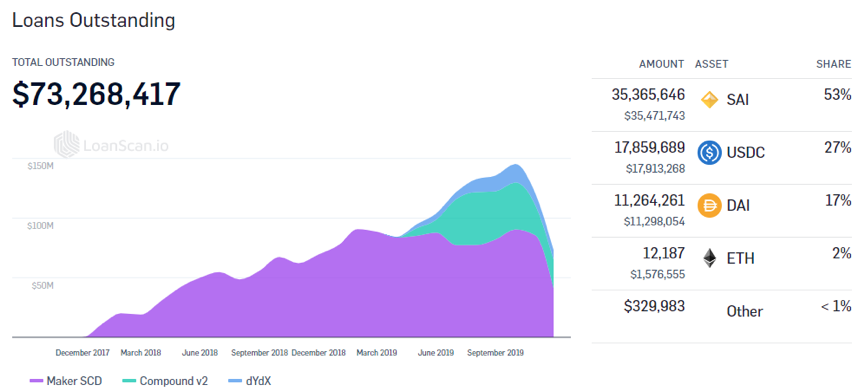
DeFi carry trade with CeFi
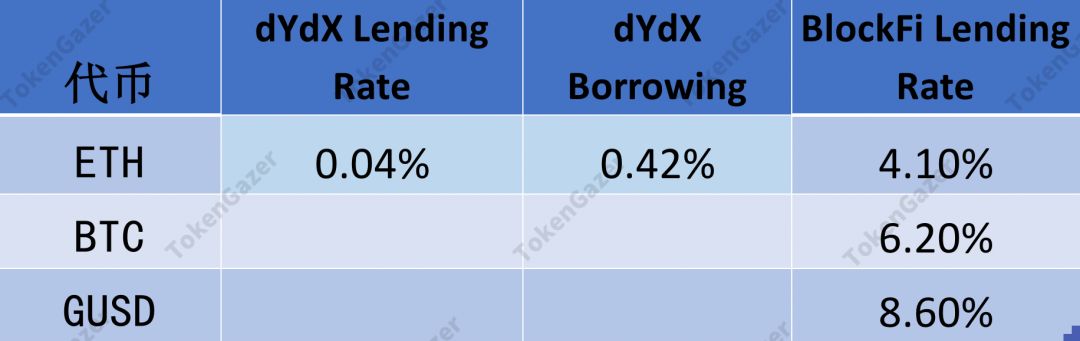
As mentioned above, lending rates on centralized platforms are usually higher than those on decentralized platforms. One option is to borrow a token from a decentralized platform and lend it out on a centralized platform. When a user wants to lend tokens on a centralized platform, the first consideration is safety and the second is yield. BlockFi, a us licensee, lends money to BlockFi, which in turn lends tokens to trusted institutions and their partners, a process that also requires over-collateralisation. Binance Research has also reported interest rate differences between BlockFi and decentralised platforms. As shown in the figure below, ethereum's lending rates on the decentralized platform are very low, but deposits at BlockFi yield an annualized 4.1%. Therefore, the method of borrowing ethereum in dYdX and depositing it into BlockFi is feasible and can earn 3.68% interest margin.
Carry trades between defis
For the same token, the lending rate may not be the same between different decentralized platforms, as shown in the figure below. At present, DAI can be borrowed from dYdX at 2.39 per cent interest and borrowed at Compound 3.97 per cent to earn an annualised spread of 1.58 per cent. But lending and borrowing rates change in real time, and the rate for lending DAI on dYdX is already lower than the stability rate for generating DAI and SAI on MakerDAO, which may not last. The earned short-term spread does not necessarily cover the fees of the transfer process, which involves transferring a token to dYdX to lend DAI, transferring DAI to a Compound loan, then redeemingdai to dYdX to redeem the token, and then transferring the token back to the original account.
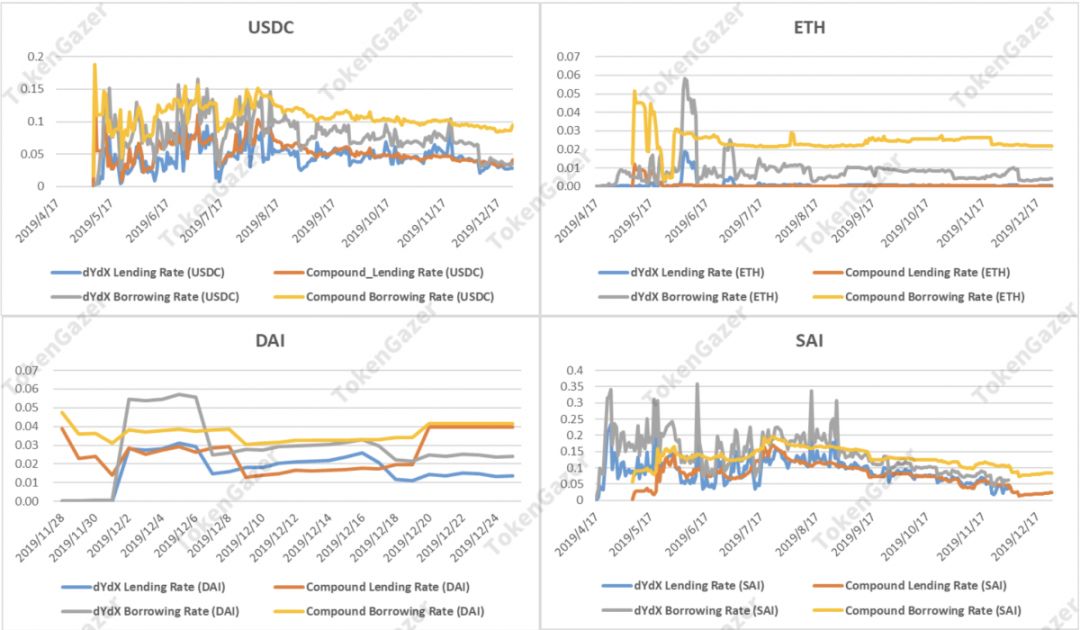
The lending rates for different tokens are also different, so you can choose to mortgage the assets with low interest rates. For ETH holders, for example, if they lend out an ETH on dYdX and Compound at an annualized interest rate of 0.42% or 0.12%, there is little benefit, excluding fees. In this case, borrowing a stable currency in a dYdX and lending it out or swapping it for another currency with a higher interest rate would increase the yield, but the interest rate for each token could change at any time during that time.
For ethereum holders, a more common and larger practice was to use ETH as collateral in Maker to generate a stability coin SAI, which was then lent out directly or exchanged for other stability COINS with higher interest rates. From December 17 to August 26, 18, and from December 17, 18, solstice, February 8, 19, the annual rate of stabilization fee in Maker was only 0.5%. But the current stabilization rate for mortgaging DAI/SAI in Maker exceeds the interest rate for borrowing DAI directly from dYdX.
In September, Binance Research published an article analyzing the DeFi carry trade strategy in ethereum's ecosystem. Among them, the carry trade strategies among DeFi are summarized as follows:
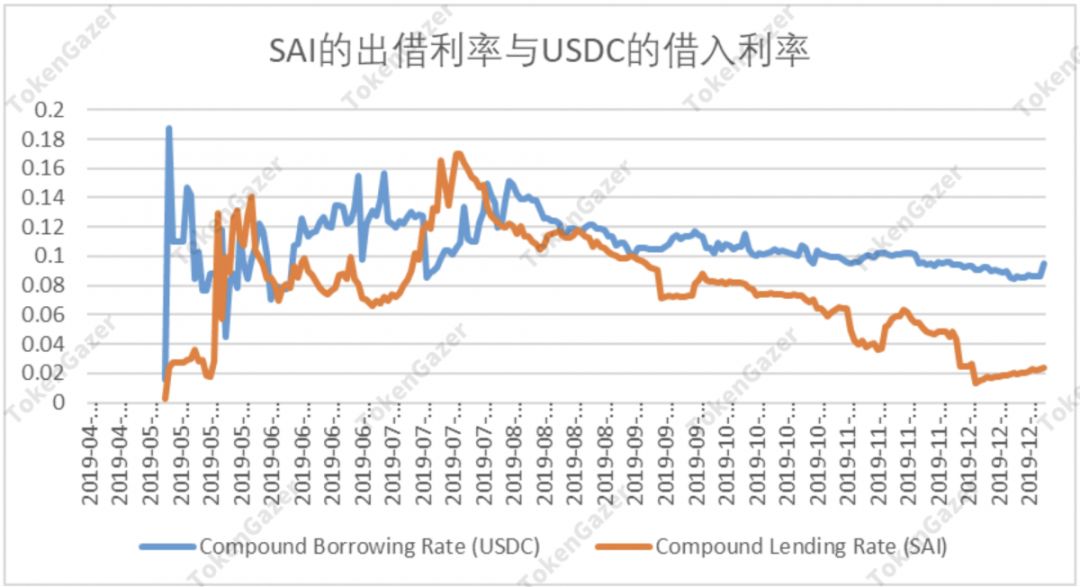
Compound SAI lending rate is higher than USDC, USDC can be replaced by SAI to lend again, the Compound SAI lending rate is higher than USDC arbitrage. But USDC's Compound lending rate is now higher than SAI's, and that could change again, as the chart below shows.
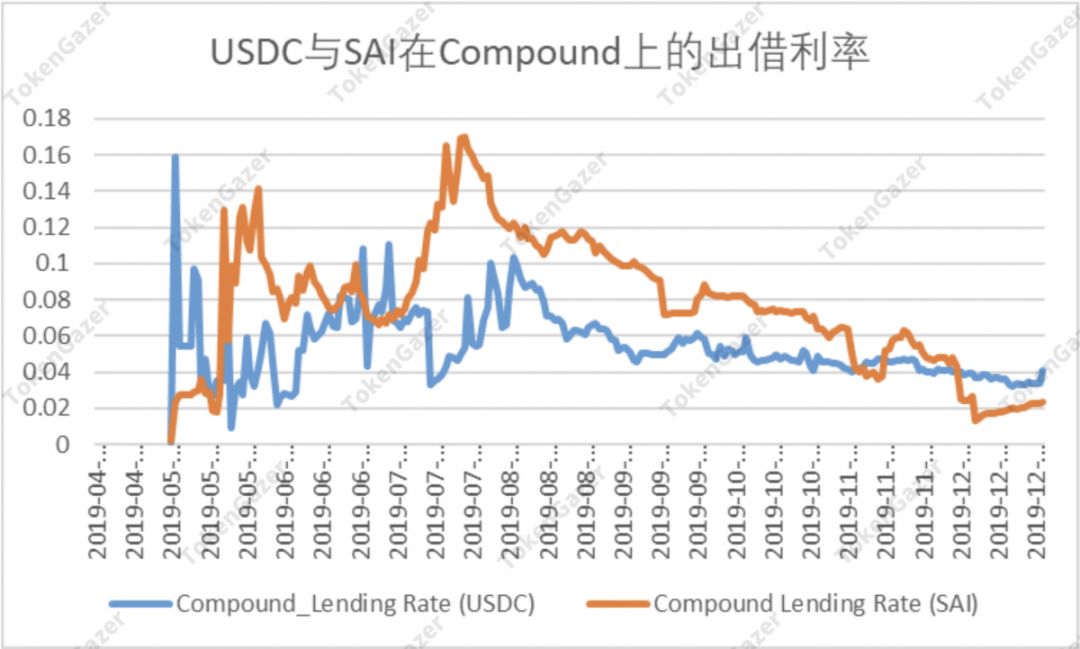
The interest rate for lending ETH directly is very low, and the interest rate for borrowing USDC in Compound is lower than that for lending SAI, as shown in the figure below. ETH holders can borrow USDC, replace it with SAI and lend. But the rate at which usdcs are borrowed on Compound is already far higher than that at which SAI is borrowed. Therefore, this strategy is no longer applicable.
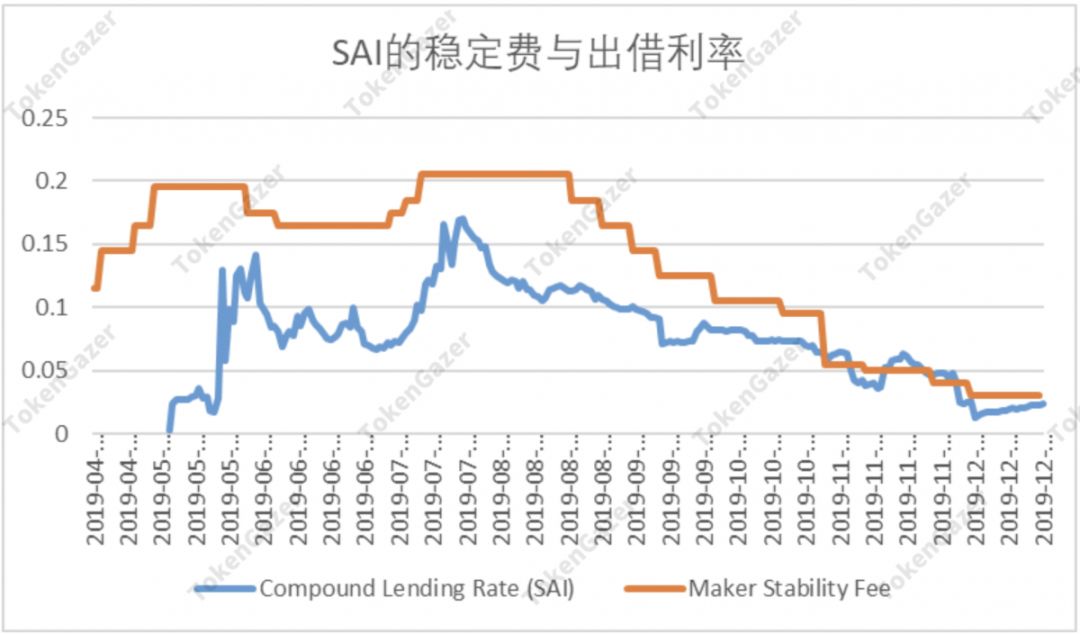
The SAI is generated by ETH as collateral on Maker, and the SAI is lent at Compound interest rates higher than the stability fee. With the increase of the stabilization fee, this clause has already expired.
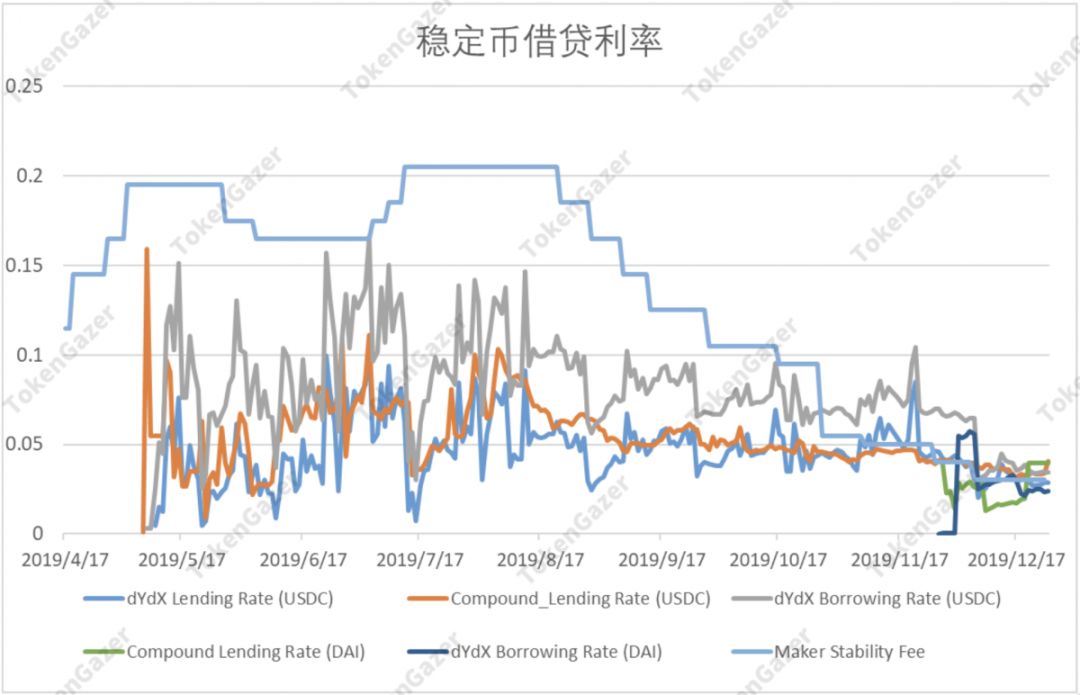
The central idea of carry trades is to borrow a stable currency from a platform with low interest rates and lend it out at a higher rate. We put together the lending and borrowing rates for all stable currencies, removing the highest borrowing rate and the lowest lending rate, where there is no room for arbitrage. The chart is as follows. As you can see, the lowest borrowing rate is DAI on dYdX, with an annualized interest rate of 2.39%. The highest lending rate was at Compound USDC, at 4.07%. Borrowing DAI from dYdX, converting it to USDC and turning it into Compound lending can earn a spread of up to 1.72 per cent. As can also be seen from the chart below, lending rates for stable currencies have been on a downward trend this year, in line with the legal interest rates of major central Banks around the world. Interest rates on stable currencies gradually converged, opportunities for carry trades between stable currencies in decentralized platforms decreased or even disappeared, and the market became more efficient.
The above analysis does not discuss all the opportunity costs of holding the original token, such as the direct lending of the original token can also obtain some of the benefits. If this is taken into account, there are fewer opportunities for carry trades. Future opportunities are likely to focus more on ethereum, as the interest rate for lending ethereum directly to a decentralized platform is negligible. In addition, central institutions lend at higher rates than decentralized institutions, but this also sacrifices some security.
Decentralized exchange DEX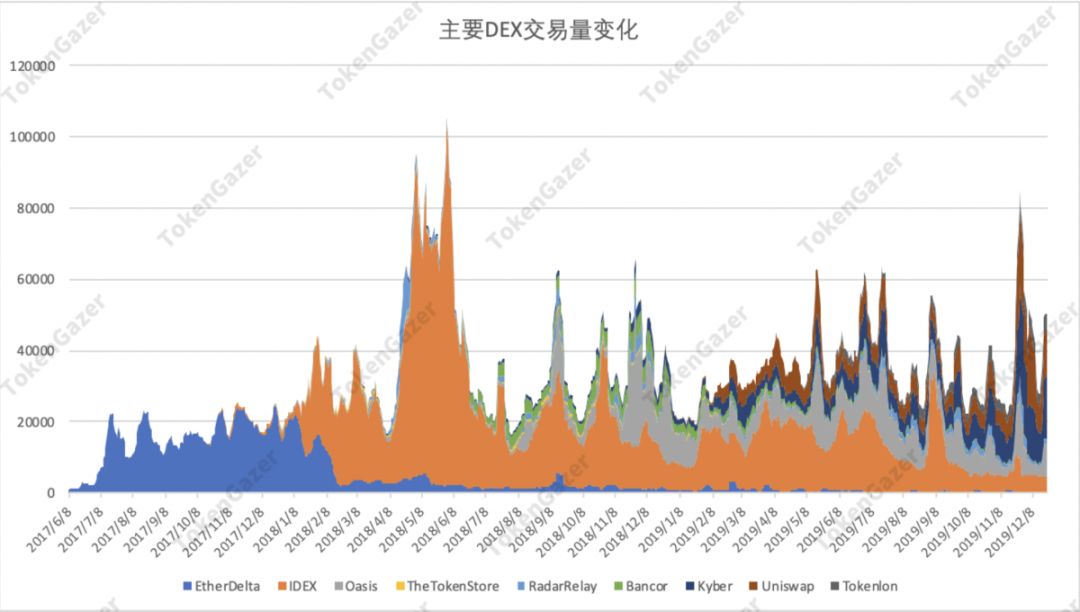
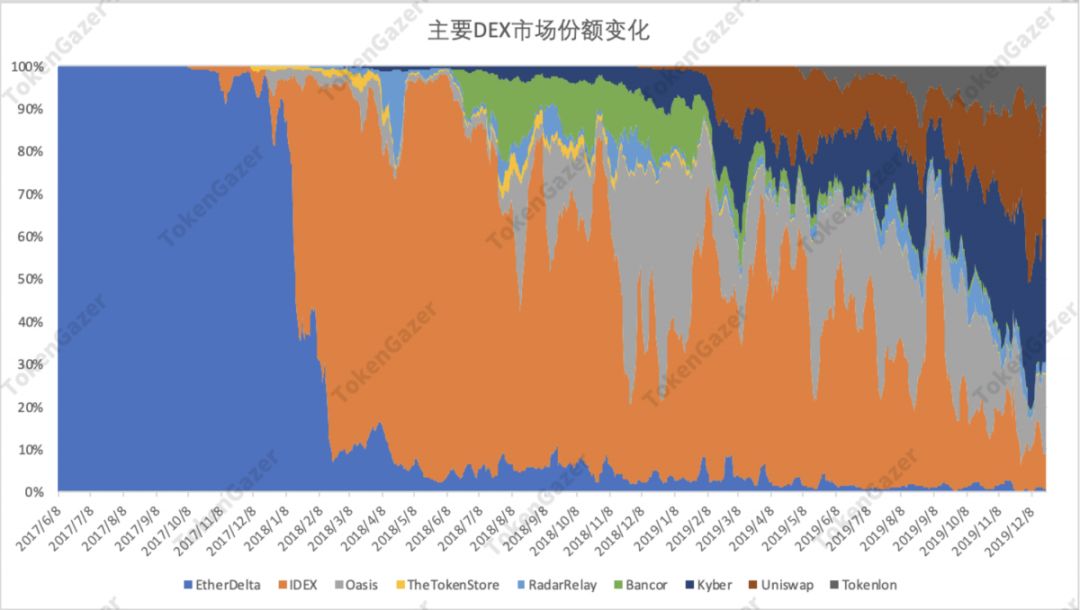
We took nine major DEX samples and looked at them. The chart above shows the changes in trading volume (measured by ETH) since their release. We saw EtherDelta dominate at first because it was released before the other DEX, but then IDEX took more market share. We can see EtherDelta's market share has fallen off a cliff and trading volumes are very low at the moment.
DEX's trading volume in 2019 is shown in the chart below. IDEX's trading volume and market share have both declined, and Uniswap, Kyber and Tokenlon have had better growth. In addition, Oasis and RadarRelay occupy more market share.
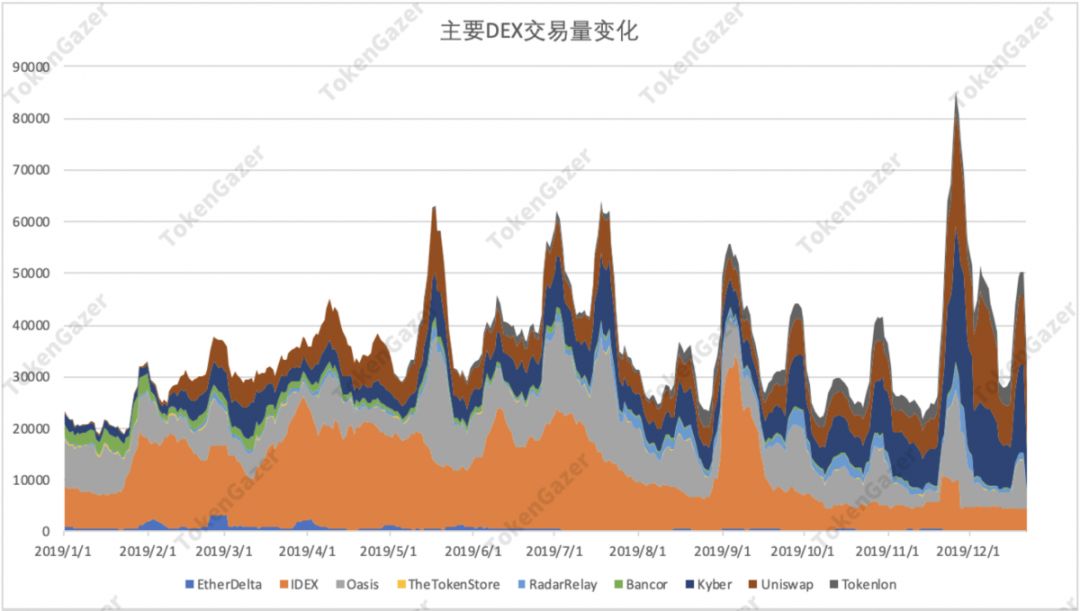
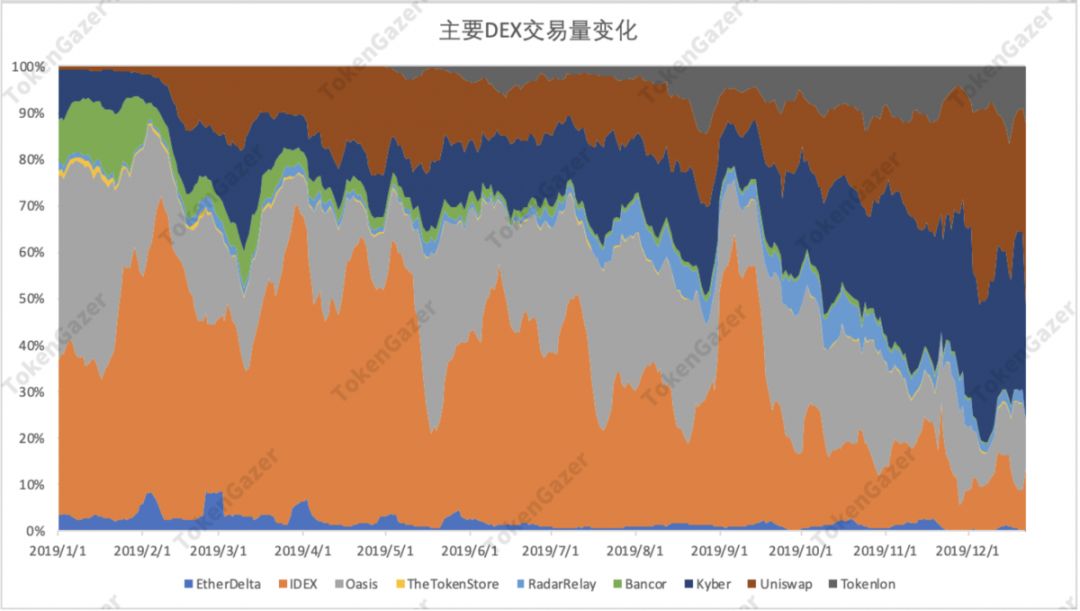
Next, we mainly analyze the dominant Uniswap, Kyber, IDEX, Oasis, Tokenlon and RadarRelay in DEX to explore the development status of DEX in 2019 and the future development trend.
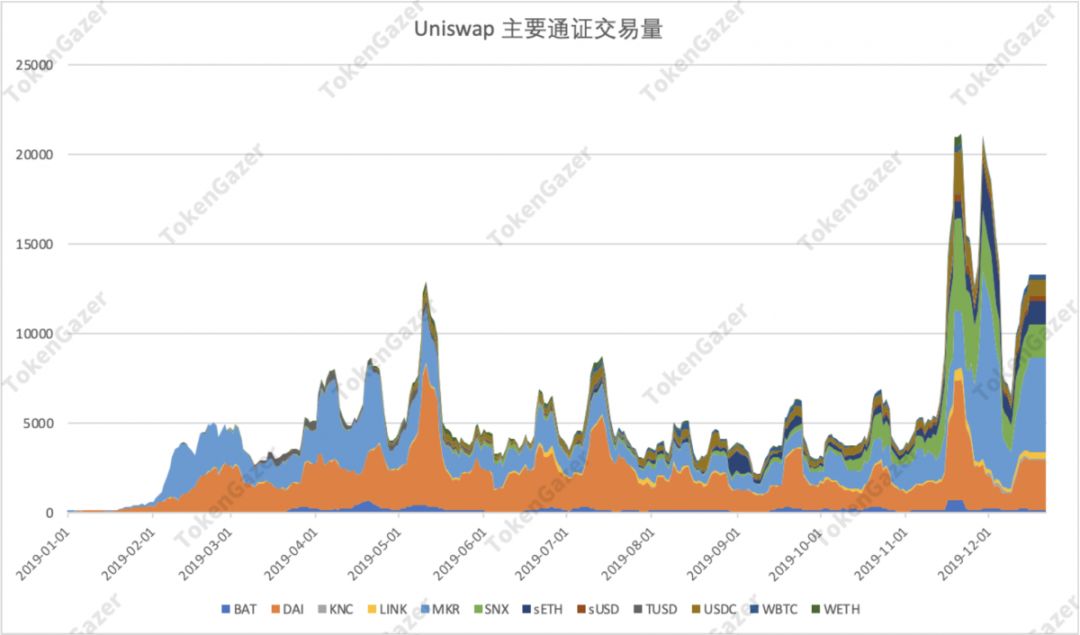
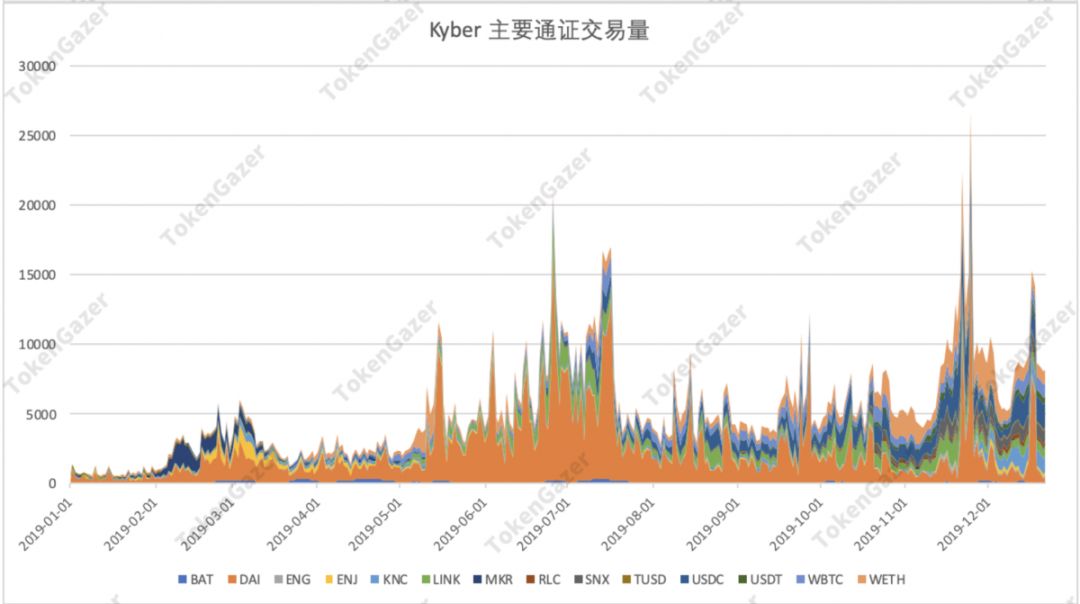
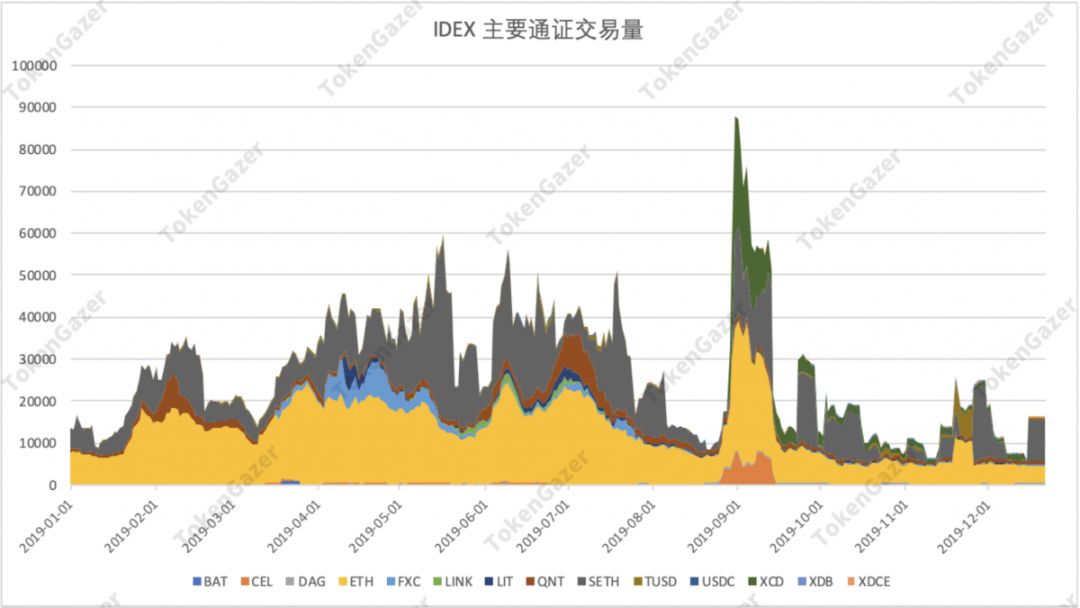
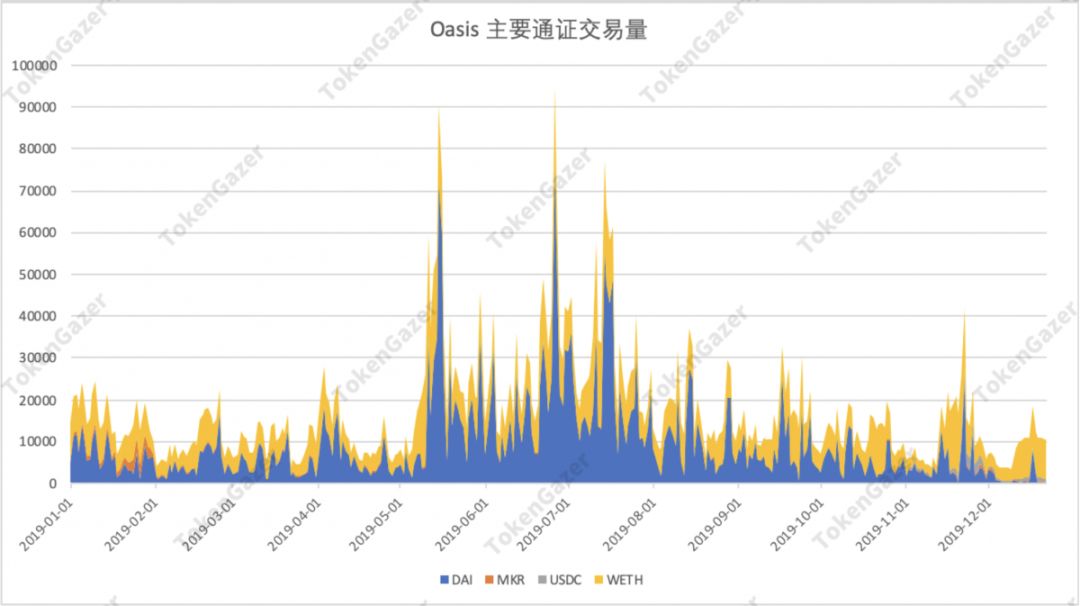
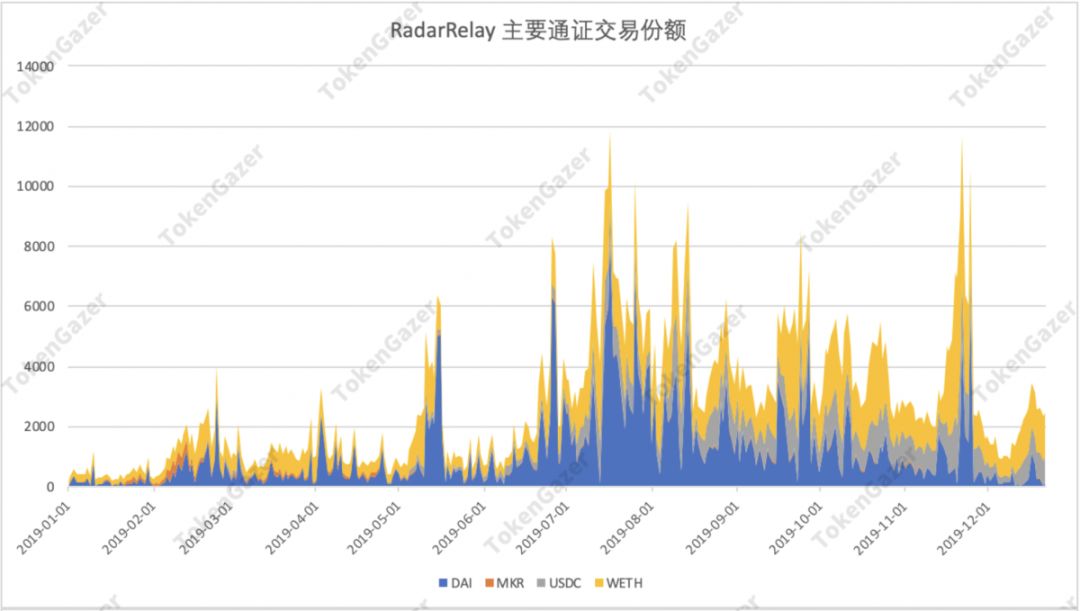
The chart above shows the major Uniswap, Kyber, IDEX, Oasis, and RadarRelay deals in 2019. In terms of the total annual trading volume, Uniswap and Kyber are in the forefront, followed by IDEX, Oasis, and the trading volume of Tokenlon and RadarRelay is relatively small. However, Tokenlon started operation in April, so the trading volume is only 8 months. From the perspective of time, we can see that the trading volume of each exchange increased from April to July, and then decreased to some extent, which is consistent with the trend of the encryption market.
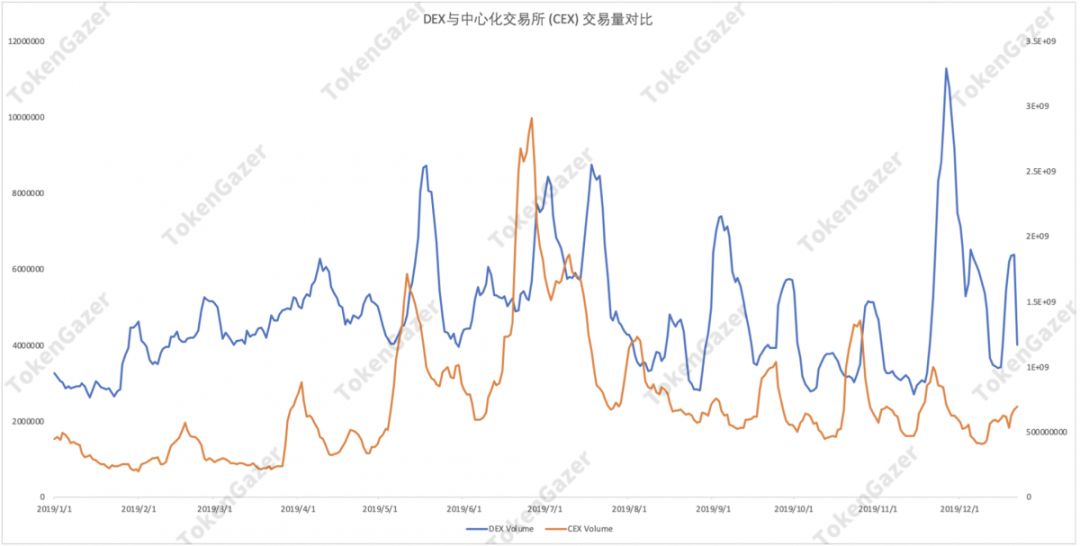
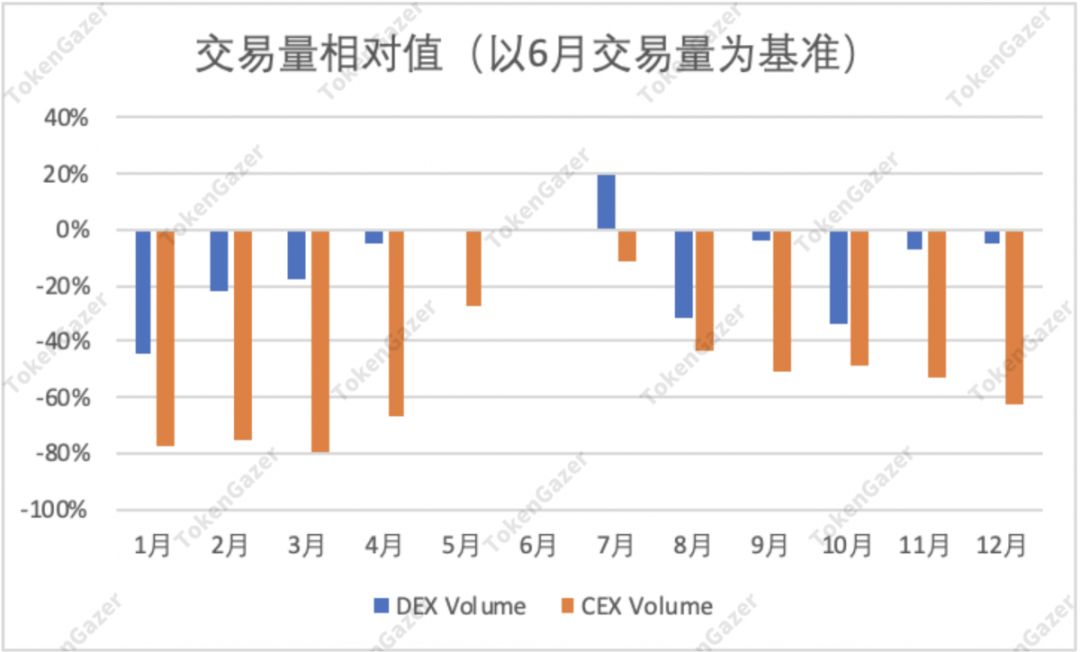
Trading volumes on mainstream central exchanges have been declining since the peak in June. However, comparing the trading volume of the DEX above, we can see that the trading volume of decentralized exchanges has not decreased as much as that of centralized exchanges. When we look at the relative changes in trading volumes between the central and decentralized exchanges based on their June trading volumes, we can see that trading volumes on the mainstream central exchanges have fallen by more than 60% since June, while trading volumes on the decentralized exchanges have barely fallen at all.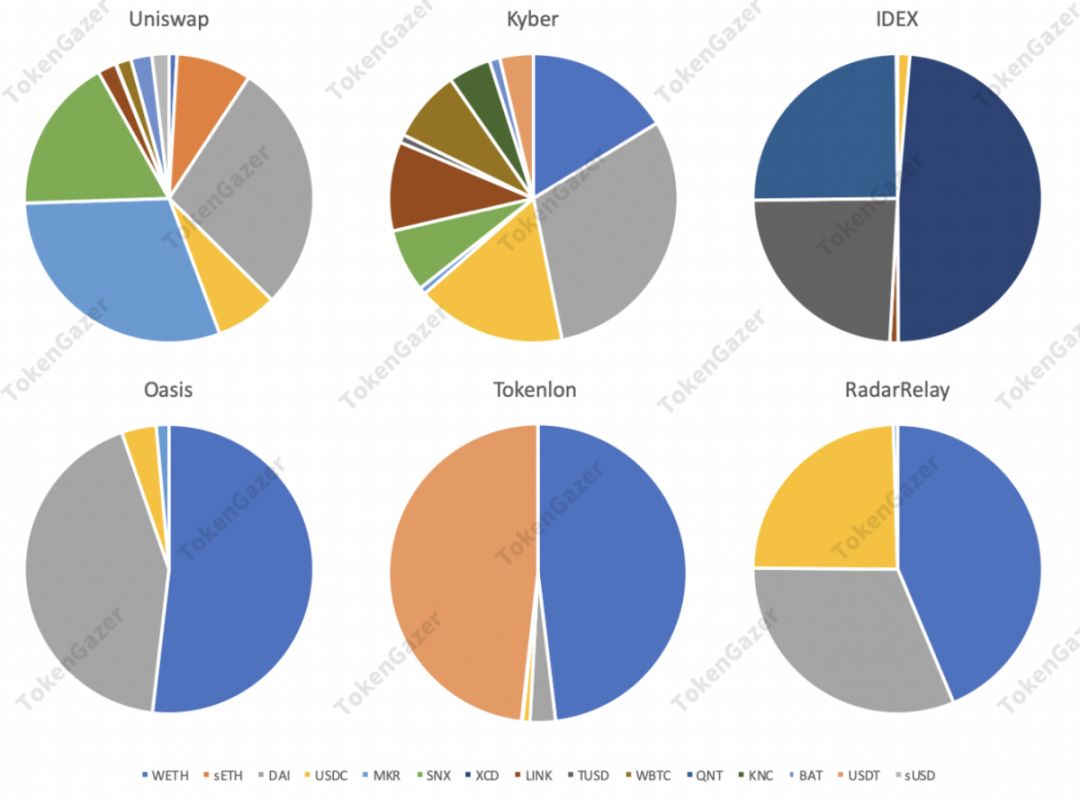
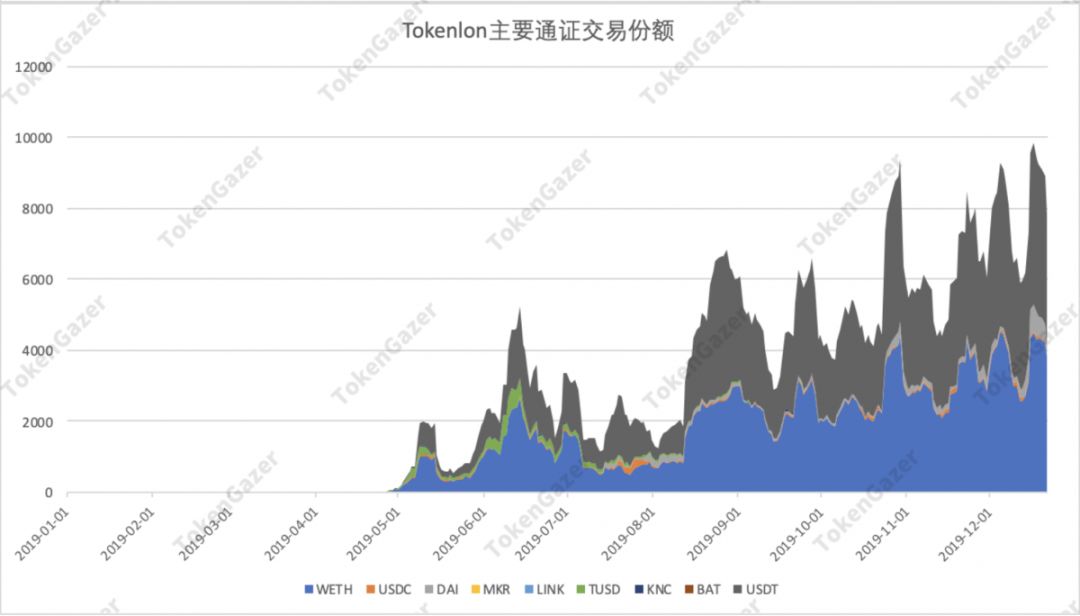
In addition to the changes in the time dimension, we also observed differences in the major trading pass-through on the DEX. The figure above shows the trading shares of major trading shares of each DEX in their respective markets in the past three months. There are few trading shares supported by Oasis, while IDEX, Tokenlon and RadarRelay have small trading volumes and poor liquidity, except for major currency trading volumes. In contrast, Uniswap and Kyber, as exchanges with large trading volume, have more pass-through certificates and relatively good liquidity in their exchanges. In order to more intuitively analyze the liquidity source of each certificate in DEX and observe the difference of each DEX in the trading volume of each certificate, we draw the following figure.
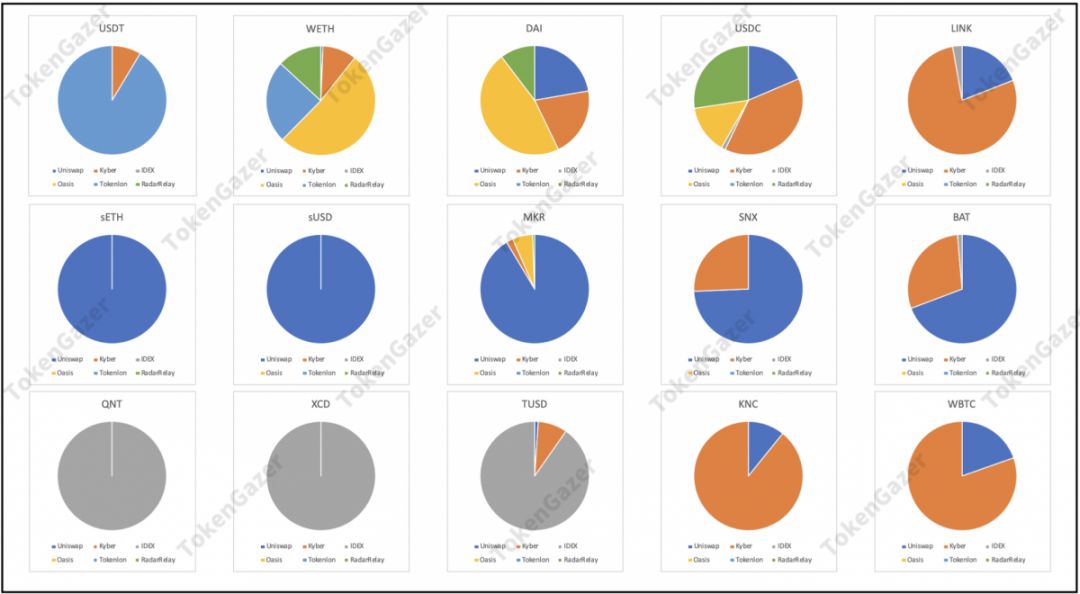
As you can see, there are four types of pass-through that have only a single source of liquidity: sETH, sUSD, QNT, and XCD. The liquidity sources of QNT and XCD are IDEX only, sETH and sUSD are synthetic assets of Synthetix, the synthetic asset project, and their liquidity mainly comes from Uniswap. In addition, as the stable currency with the largest market value, USDT only has good liquidity in Tokenlon and Kyber, which has its own reasons, which we will explain in detail in the chapter of stable currency. We can see that the trading volume of USDT in Tokenlon is much higher than that of Kyber, which is the stable currency of its main transaction, while the stable currency of Kyber is USDC. Considering that the main users of Tokenlon are Chinese users, while the main users of Kyber are overseas users, this data reflects the differences between the transactions of Chinese and foreign users.
By comparison, we can conclude that Uniswap provides the most liquidity for DeFi in several DEX, and is the engine of defi-related liquidity. Kyber mainly provides liquidity for BAT, LINK, USDC and other pass-through certificates that gain more applications. Tokenlon is the most liquid exchange in USDT. In 2020, with the development of DeFi, Uniswap's market share is likely to grow further, and the continued USDT inflow into ethereum could power Tokenlon.
Synthesis of assets
Some say cryptocurrencies are the best performing asset class in 2019. SNX of Synthetix is certainly one of the best performers among cryptocurrencies. SNX rose 2,872 percent in 2019 through Dec. 29, according to CoinMarketCap. And in the year after the rules were changed in March, SNX's inflation rate was 75%.
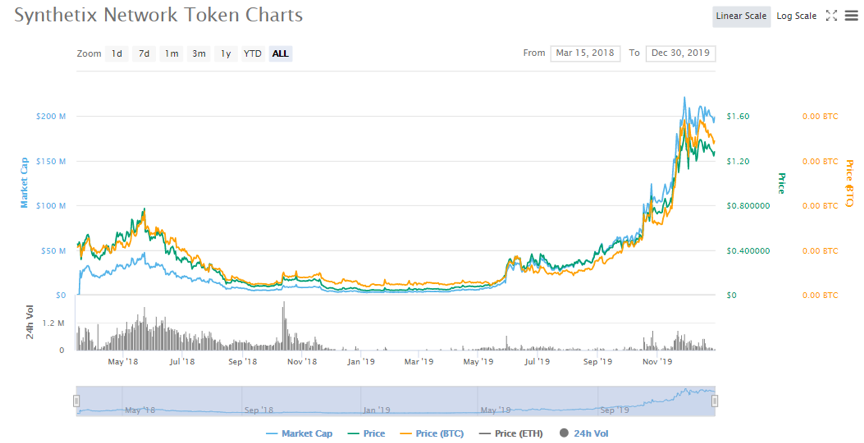
Since this year, SNX's mortgage volume has been on the rise. On the one hand, SNX has high inflation and rising supply; On the other hand, the good performance of SNX price also attracts users to pledge their tokens to get extra inflation and transaction fees. Currently, 85.18% of SNX's supply is used for lock-up collateral.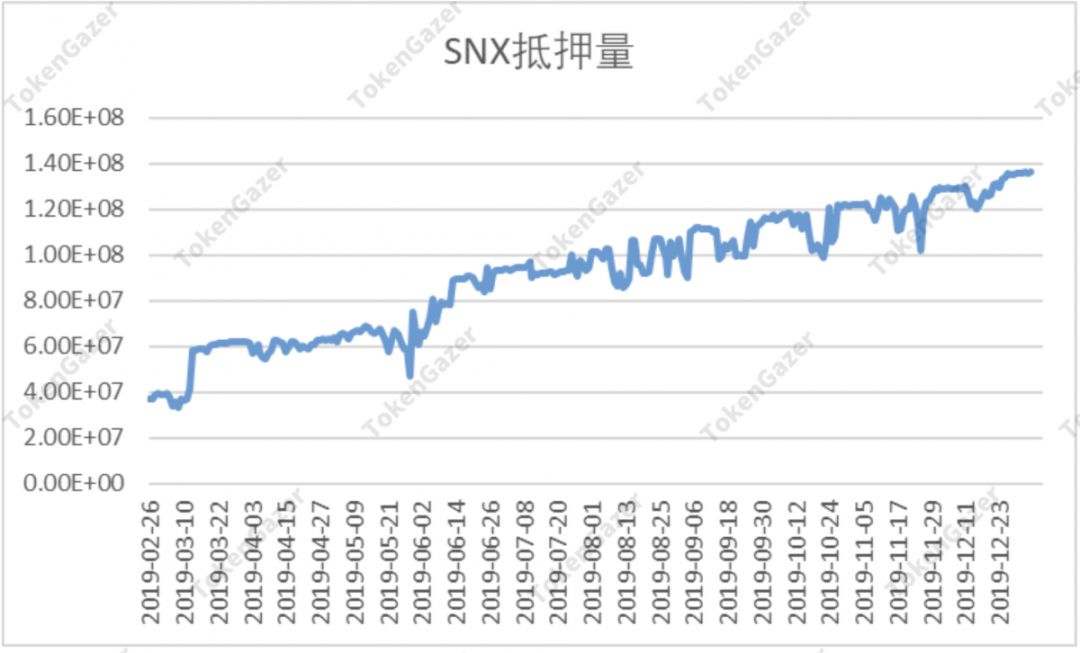
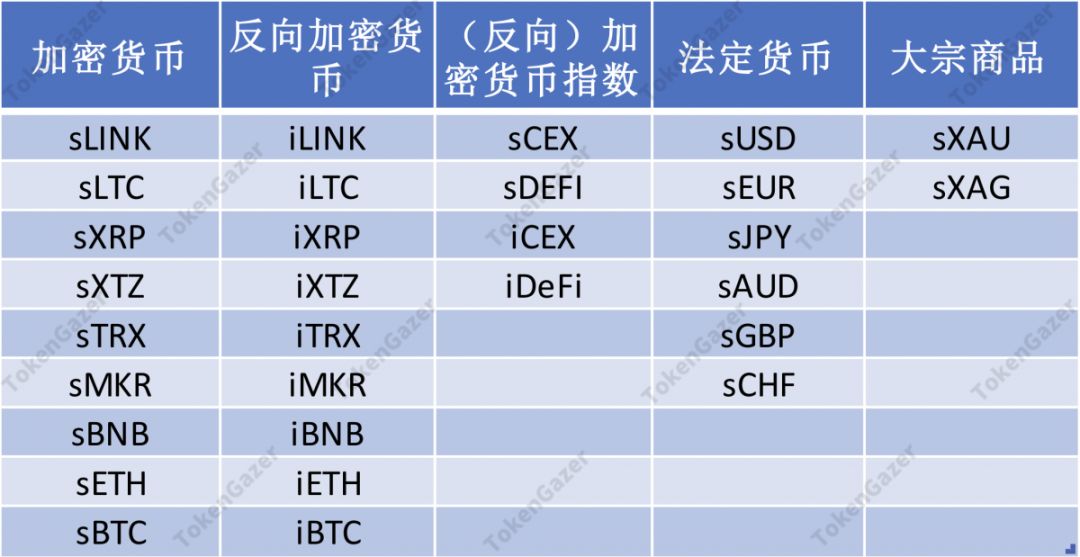
Synthetix's success lies in innovation, creating a market for traditional derivatives that indirectly opens up the way to buy traditional financial products with virtual currencies. By mortgaging SNX, a variety of synthetic assets can be generated, collectively known as Synths, and the process of creating Synths also generates "debt". The composite assets contain categories as shown in the figure below, where any two Synths can be directly interchanged in synthetix.exchange. Since the mortgagors do not trade directly on the Synthetix exchange, each trader trades against the exchange itself, so the amount of debt in the exchange changes with the price of each synthetic asset. The price of the synthetic asset is provided by the predictor, and everyone shares the debt in the system in proportion to the mortgage. So everyone's debt is variable, and as long as their synthetic assets perform better than average, they benefit; If not, more debt needs to be paid. For example, a holder of a cryptocurrency that is bullish on gold could use SNX as collateral to generate an sXAU, and if the price of gold performs better than the average synthetic asset over that period, the investor would get an above-average return.
Because Synthetix needs a mortgage rate of 750% (note: in the traditional financial field, the pledge rate = guarantee principal balance of collateral ÷ collateral value ×100%, so the mortgage rate in the traditional financial field should be less than 100%; However, the mortgage rate given in the official data of Synthetix project = bet valuation ÷ bet guaranteed principal balance ×100%, contrary to the traditional financial field, where the official data of the project shall be taken as the standard), resulting in the limited scale of Synths, the synthetic asset. While Synthetix intends to double ETH mortgages on top of future SNX mortgages, this introduces other risks. And compared to other projects, the mortgage rate is still too high. The price of Synths is determined by the quotation of the predictor. It is expected that Synthetix and Chainlink can provide more accurate quotation, so as to reduce the risk, increase the mortgage rate of SNX and increase the scale of synthetic assets.
At present, sUSD and sETH account for the majority of the synthetic assets generated by mortgage SNX, which together account for 87% of the synthetic assets. Synths also includes a variety of other cryptocurrencies and their reverse tokens, and while Synthetix says it will also introduce synthetic assets such as apple stock, the proportion of synthetic assets that can actually be differentiated from other projects represents a very low level of traditional finance.
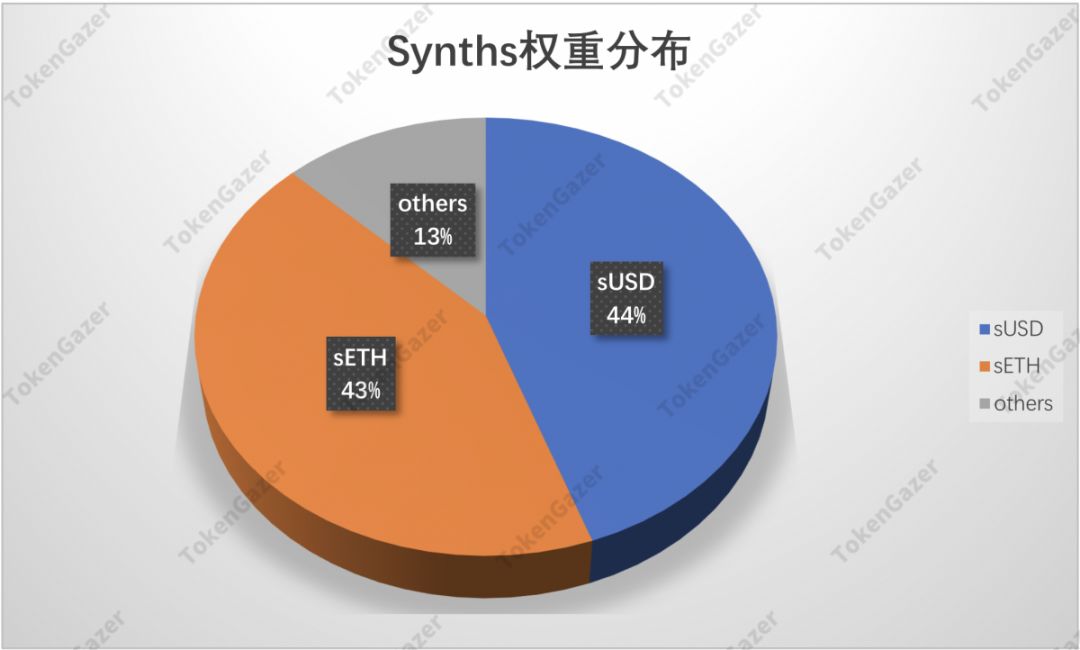
According to Synthetix's website, the average mortgage rate on the mortgage portion is 715.82%, and 43% of the synthetic assets generated by the mortgage are sETH. At the market value/price of sETH, there are currently 81270 sETH in circulation. SETH /ETH is the most liquid pair in Uniswap, comprising 41197 sETH and 40781 ETH, accounting for 50.2% of the total sETH pool. A large pool of assets in Uniswap provides Synths with access to the outside world, but it also reduces the utilization of synthetic assets.
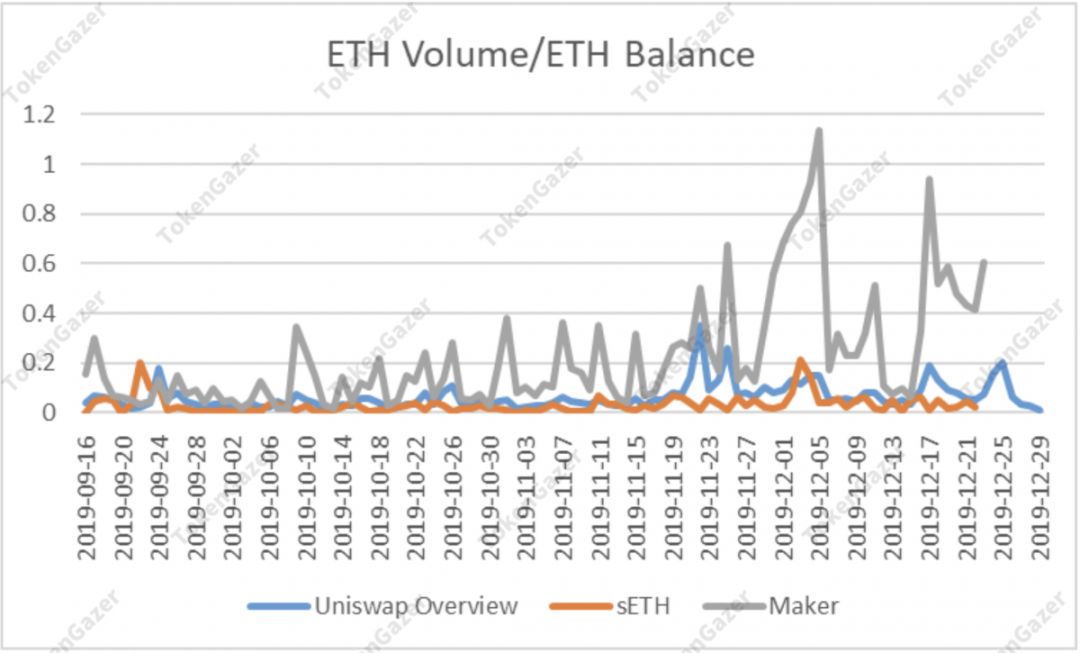
Typically, the ERC20 and ETH are deposited into the Uniswap pool to earn transaction fees. The poundage ratio for each token in Uniswap is the same, so the poundage yield on a deposit is proportional to the turnover rate (volume/pool balance). Each transaction pair in Uniswap contains an ERC20 token and ethereum, and both are equivalent, and the PDC for each token in the pool is proportional to the volume/ethereum balance. SETH /ETH is the most liquid pair in Uniswap, while MKR/ETH is the most traded pair. As can be seen from the figure below, the fee income of depositing MKR in Uniswap's capital pool is much higher than the market average, while the income of depositing sETH is lower than the average. Calculate the average Volume/Balance between December 1 and December 22, and the commissions earned for storing MKR of the same value are about 10 times that of sETH. Therefore, it can be inferred that the large amount of sETH and ETH deposited in Uniswap is not for the purpose of obtaining fees, but is only a by-product of providing Synthetix synthetic asset liquidity, which is not effectively utilized.
Since sETH and sUSD account for 87% of Synths, their respective percentages are about the same. In a system where mortgage assets are concentrated, it is easier to hedge collateral liabilities. When generating synthetic assets, sETH and sUSD split evenly to essentially hedge against rising debt.
For now, while Synthetix offers access to traditional financial derivatives backed by cryptocurrencies, the actual synthetic assets generated are still concentrated in sUSD and sETH, not significantly different from other projects. Moreover, the mortgage rate is high and the actual utilization rate of assets is low. The main purpose of investors to mortgage SNX is still to obtain the SNX tokens for inflation. Synthetix has had a successful start. To be able to further development, on the one hand can reduce the mortgage rate, improve the size of synthetic assets; On the other hand, users can be encouraged to choose more types of synthetic assets, especially their unique financial derivatives, increasing the diversity of synthetic assets and opening the gap with other projects.
Stable currency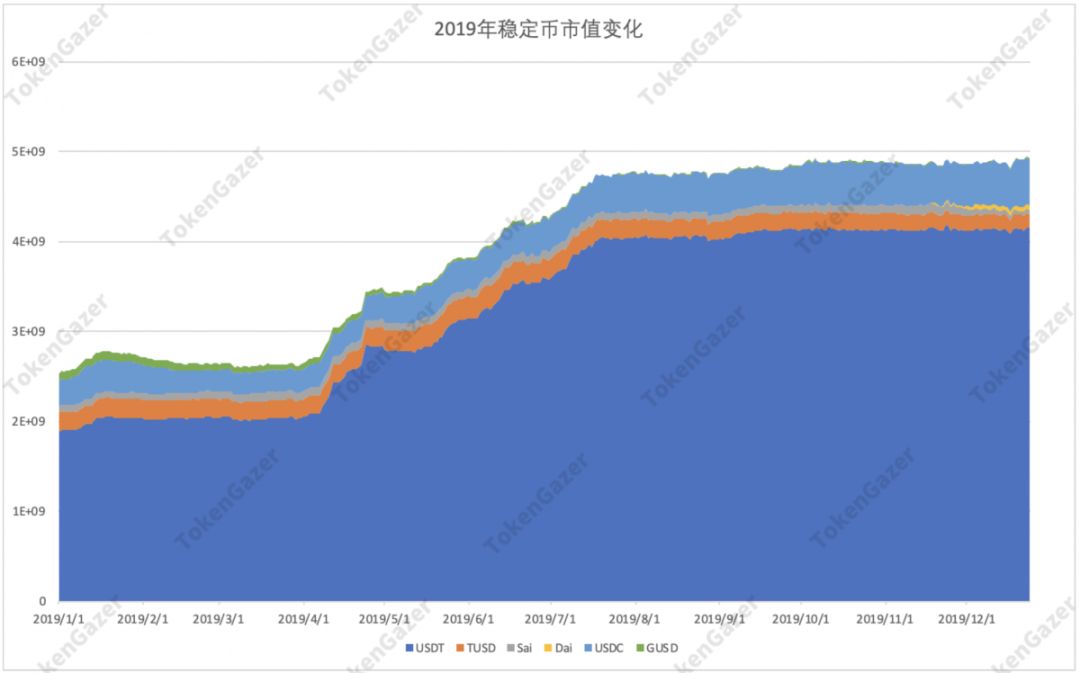
In 2019, the stable currency began to show significant growth in April and continued to grow to the end of July, with its market value rising from $2.6 billion to $4.7 billion. There was a long downward trend in cryptocurrency assets in the second half of the year, a trend that failed to continue as market enthusiasm waned, although the value of the stable currency did not fall, slowly rising to $4.9bn by the end of the year.
In the stable currency, USDT accounts for the main share, and the rise of the market value of the stable currency is mainly led by it. In addition to USDT, we can better observe the development of other stable currencies:
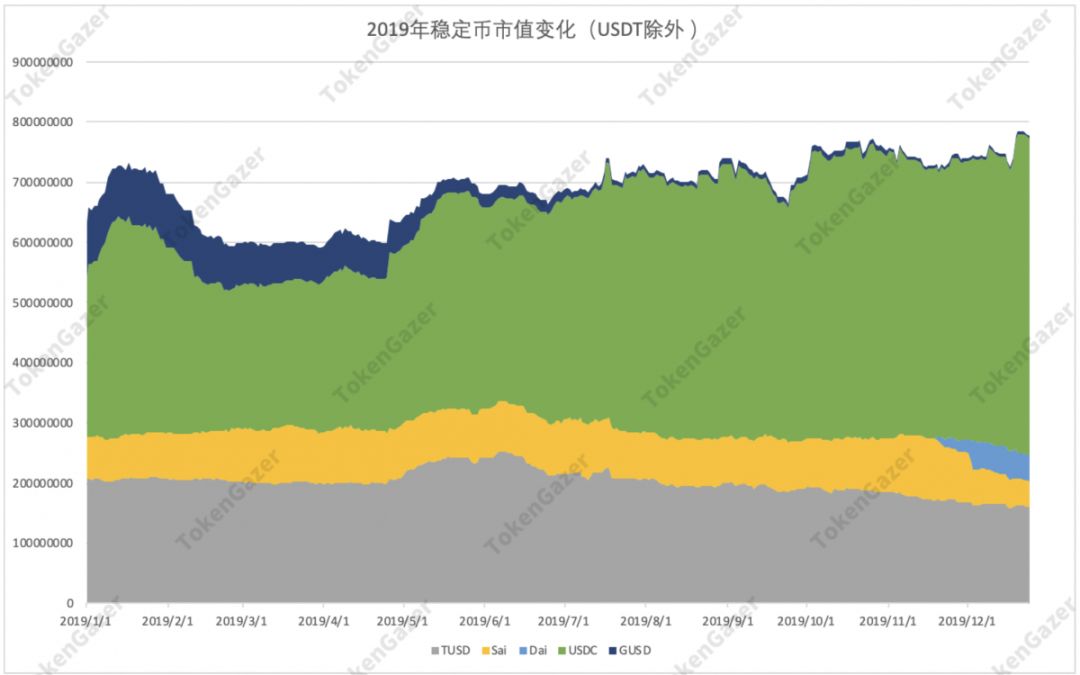
Since may, USDC has been showing steady growth, and its market share has also improved. The flow of GUSD continued to decline, from about $90 million at the beginning of the year to about $4 million. The flux of TUSD and DAI remains stable as a whole.
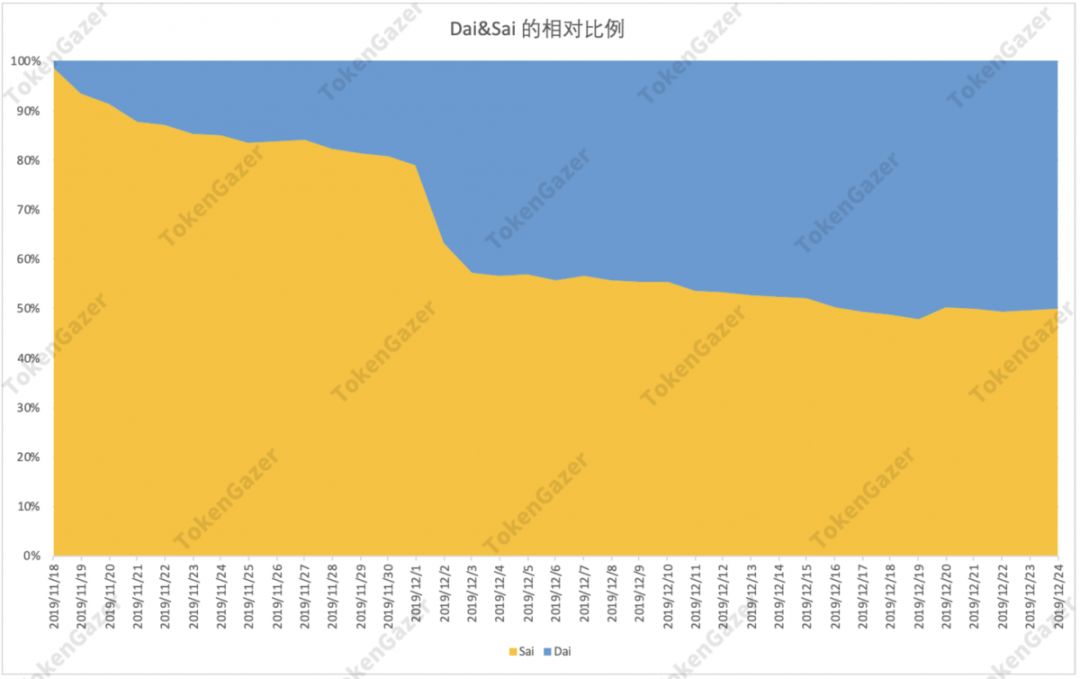
DAI is the stable currency generated by the user through MakerDAO's agreement to mortgage ETH or BAT, which was upgraded in November. The upgraded stable currency is still named DAI, while the original stable currency DAI is renamed SAI. The figure above shows the SAI upgrade to DAI since the upgrade, and you can see that more than half of the SAI has been upgraded to DAI since the upgrade more than a month ago.
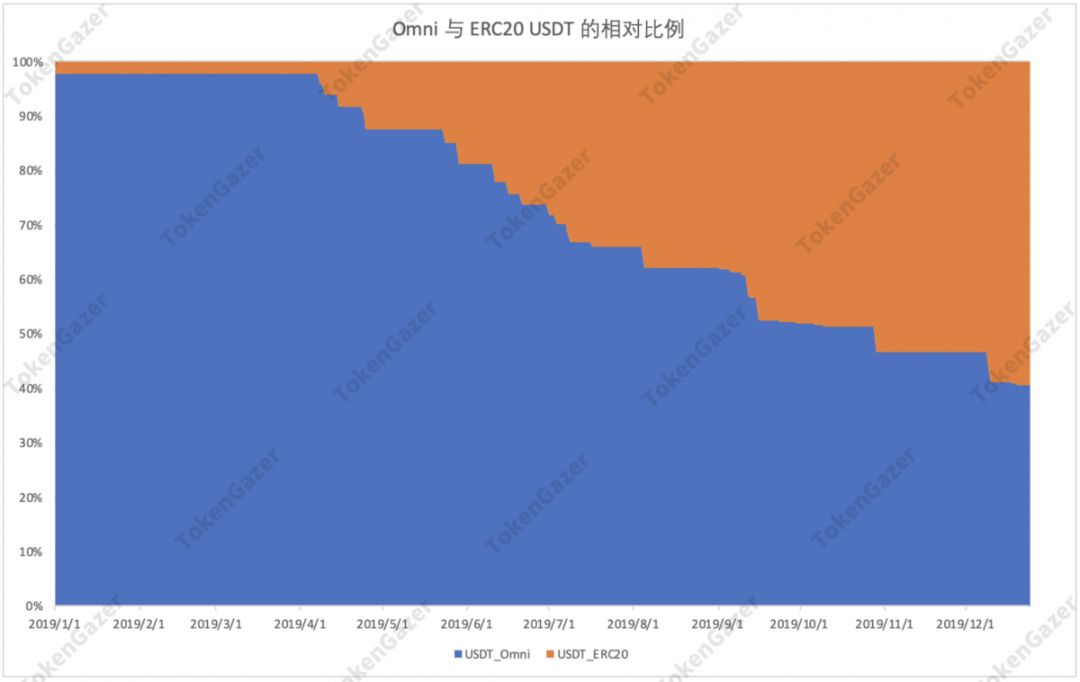
Another important change in stable COINS is the significant increase in the number of versions of the ERC20 USDT released on ethereum, which has exceeded the USDT released on bitcoin under the Omni protocol. In addition, the daily transfer amount and chain activity of ERC20 version USDT have greatly exceeded that of Omni protocol based USDT, and the gap continues to expand. But ERC20 version of USDT not fully follow ERC20 standards, contract transferFrom there is no return value, this leads to confirm the trading result can not get real-time, developers need to define interfaces for USDT separate template, for developers, not friendly and limit its development in the DeFi - as we have shown in DEX part, USDT in decentralized exchange volume compared to other stable currency is not much, And of the major decentralized exchanges, only Tokenlon and Kyber support USDT trading.
Currently, we are seeing DAI supplier MakerDAO stimulate DAI supply through lower interest rates. According to past data, MakerDAO's interest rate adjustment mechanism has a relatively effective adjustment on DAI supply, so we are expected to see an increase in DAI circulation in 2020. In addition, as mentioned above, the flux of USDC is also on the rise. As the main stable currency in the DeFi ecosystem, the increase in market value of DAI and USDC will promote the further development of the DeFi ecosystem.
Across the chain assets
As the asset with the largest market value and the best liquidity among cryptocurrencies, bitcoin has made some attempts to capture the liquidity of other chains, such as WBTC, imBTC on ethereum and RBTC on RSK.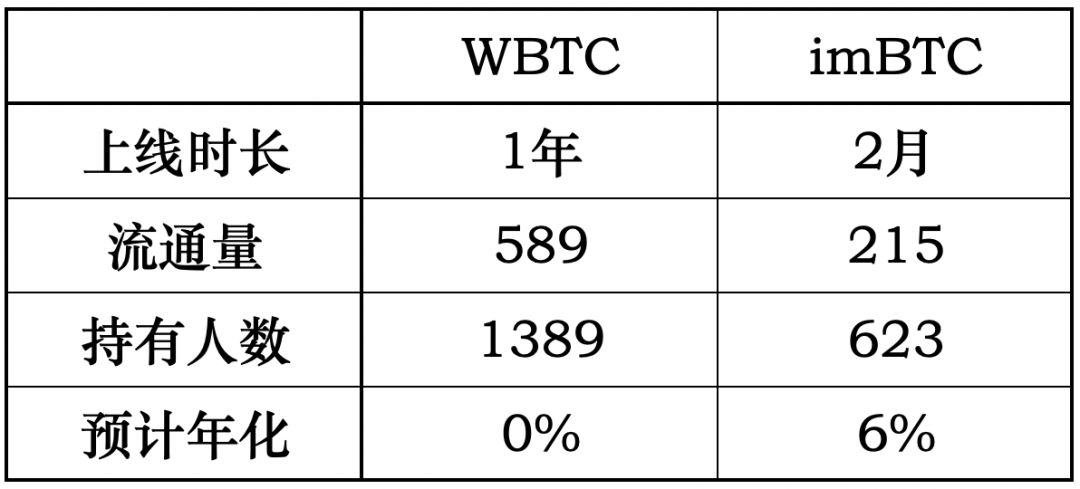
The above table shows the current flux and number of holders of the main BTC cross-chain assets WBTC and imBTC in DeFi ecology. It can be seen from the comparison that, although the on-line several are shorter, the circulation quantity of imBTC has exceeded one third of that of WBTC. The user base of imBTC issuer imToken and the annualized interest rate of imBTC have contributed to its growth, and we expect that imBTC will continue to experience rapid growth in 2020.
WBTC and imBTC enable BTC to circulate in ethereum network in the form of ERC20 and participate in the activities of dapps in the ecosystem. The DeFi ecosystem is still mainly based on ETH as the underlying asset, and the introduction of cross-chain BTC is expected to greatly increase the DeFi scale in the future.
Margin trading
Compared with centralized exchanges, decentralized exchanges are more secure, transparent, KYC free, better privacy and anti-censorship. Although the business of decentralized exchanges is still mainly focused on cryptocurrency trading, volume is far less than that of centralized exchanges. But the advantages of a decentralized exchange also make it an important part of ethereum's ecosystem, and one of the main directions for the future. Decentralized exchanges are also actively absorbing the advantages of centralized exchanges, which have been greatly improved in terms of practicality and ease of use.
Decentralized exchange dYdX adds margin trading to its trading function. Without a centralised intermediary, borrowers' costs have fallen. Compared with the margin trading interest of dYdX and the central exchange coinage, it only takes an annual interest rate of 0.42% to borrow ETH in dYdX, while the annual interest rate of coinage is 3.65%. DYdX borrows USDC at an annual rate of 3.44 per cent, while the security is 7.30 per cent. For the same token, the borrowing rate of margin trading in decentralized exchange is significantly lower than that in centralized exchange.
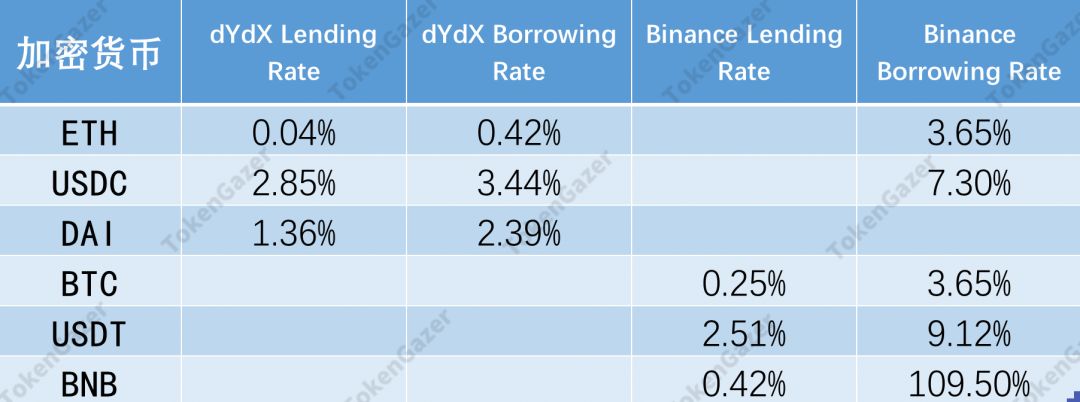
The decentralized exchange relies on the underlying chain and supports only a limited number of assets. DYdX only supports ETH, USDC and DAI. Coinage supports a wider variety of tokens, but lending rates and margin trading borrowing rates vary widely. For example, the demand rate for BTC loans on safe is 0.25%, while the borrowing rate is 3.65%, 14.6 times the lending rate. With airbnb, the borrowing rate is 260 times the lending rate. Since the de-centralised exchange dYdX has no centralised intermediary, interest rates adjust in real time and the gap between lending and borrowing rates is smaller.
In terms of ease of use, decentralized exchanges are also actively improving. Typically, margin trading on a decentralized exchange requires several steps: borrowing tokens on a platform; Transfer tokens to an exchange; Place orders at the exchange. DYdX simplifies all intermediate steps, and can achieve the same convenience as a centralized exchange by using smart contracts to automatically borrow money and transfer to other decentralized exchanges when the margin is sufficient.
conclusion
In the pledged lending and margin trading markets, we observed that there were many arbitrage opportunities in the first half of the year, but with the convergence of lending rates and the reduction of interest rate differentials, the opportunities for carry trading on various platforms gradually decreased or even disappeared, which means that the decentralized market is becoming more efficient.
At the same time, we observe that MakerDAO, as the largest application of decentralized lending, affects the interest rate of the whole mortgage lending market. That is because DAI remains the main asset in the mortgage market. The second largest asset, USDC, is still independent, although its lending rate is also affected due to its similar functions. This suggests that the two are not being used in exactly the same way, with USDC's lending likely to be used more for leveraged trading on centralised exchanges.
In the DEX observation, it is worth noting that Uniswap is playing an increasingly important role as an important component of DeFi. Among all the DEX, Uniswap provides the most liquidity for DeFi and is the engine of defi-related pass-through liquidity. The liquidity of Synthetix synthetic assets is almost entirely provided by Uniswap. Kyber mainly provides liquidity for BAT, LINK, USDC and other pass-through certificates that gain more applications. Tokenlon is the most liquid exchange in USDT.
Synthetix, the star project of DeFi in 2019, has seen rapid growth in both market value and business scale and is widely watched. We believe that while there are still significant potential risks behind Synthetix's innovation, the high growth and high returns it brings will spur more innovators to explore this area.
Looking forward to
The growth in the size of the lending market. In today's decentralised lending, there is no credible credit score, only excess collateral and limited borrowing. The introduction of an identity/reputation system would make it possible to reduce collateral requirements. In addition, the assets supported are limited due to the differences in the underlying chains. If efficient and secure ways can be found to introduce bitcoin as collateral, the lending market could grow exponentially.
Innovation is very important for the traditional financial field, which also applies to decentralized finance. Local innovation may bring great opportunities. SNX prices have risen sharply this year after Synthetix's innovations in financial products made it possible to buy derivatives in cryptocurrencies. This could spur innovation in other projects. For example, some decentralized exchanges are actively introducing futures and options trading. Develop new markets while being long and big.
There is regulatory uncertainty. DeFi is still in a gray area in many cases and does not comply with anti-money laundering and KYC rules, the tax regime in the system is not perfect, and contracts built on smart contracts pose systemic risks.
The development of DeFi projects on other chains will be more difficult. The development of DeFi depends on the ecological integrity of the chain, which ethereum has done best, as shown by the development of the DEX project. DEX is the place where assets are exchanged on the chain, representing the prosperity of the economy on the chain.
The development of DeFi in 2020 will continue to focus on header projects such as MakerDao. The SAI accounts for more than half of ethereum's lending.
Source:mp.weixin.qq.com
Welcome to join the official BlockBeats community:
Telegram Subscription Group: https://t.me/theblockbeats
Telegram Discussion Group: https://t.me/BlockBeats_App
Official Twitter Account: https://twitter.com/BlockBeatsAsia
 Related Articles