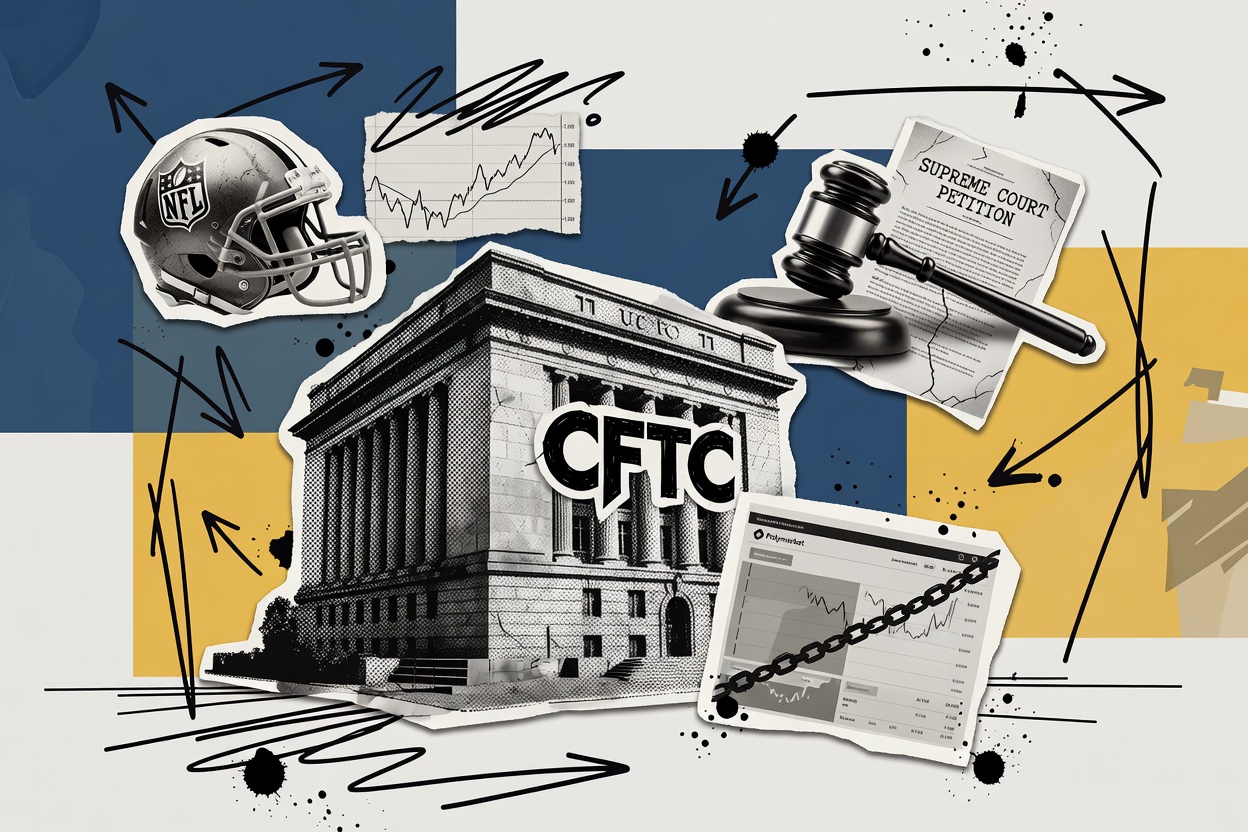
CFTC approves US stock perps for the first time, sued on the very day of the announcement.

TL;DR
· On November 3, the CFTC Chairman announced that single-stock perpetual futures can trade on CFTC-registered exchanges for the first time. On the same day, the Capital Markets Alliance, backed by Cboe and Citadel Securities, sued the CFTC, seeking to revoke the approval and apply for an injunction.
· These contracts have no expiration date and were listed via Regulation 40.3's "effective if no objection within 45 days" process. The plaintiffs argue they are security-based swaps that should fall under SEC jurisdiction, and that the CFTC overstepped its authority and violated procedures.
· Related tickers: COIN, CBOE, CME, HOOD.
On November 3, the Chairman of the U.S. Commodity Futures Trading Commission (CFTC) announced in a statement that single-stock perpetual futures can trade on CFTC-registered exchanges for the first time. On the same day, the Capital Markets Alliance (CMA), backed by Cboe, Citadel Securities, and Healthy Markets, sued the CFTC and its Chairman in the Federal District Court for the Southern District of New York, seeking to revoke the approval and apply for an injunction.
Single-stock perpetuals can be understood as leveraged single-stock contracts that never expire. Bet on Apple or Nvidia's stock price with no delivery date, relying on periodic payments between longs and shorts (funding rates) to pull the contract price back to spot. The crypto market has run this structure for years, and now it's being ported to U.S. equities.
The approval method became the focus of the dispute. The CFTC did not issue a reasoned approval order; the application submitted on September 18 took effect under Regulation 40.3's no-objection procedure after no opposition during the 45-day review period. The review period expired on November 2, the Chairman issued a statement the next day, and the lawsuit landed the same day.
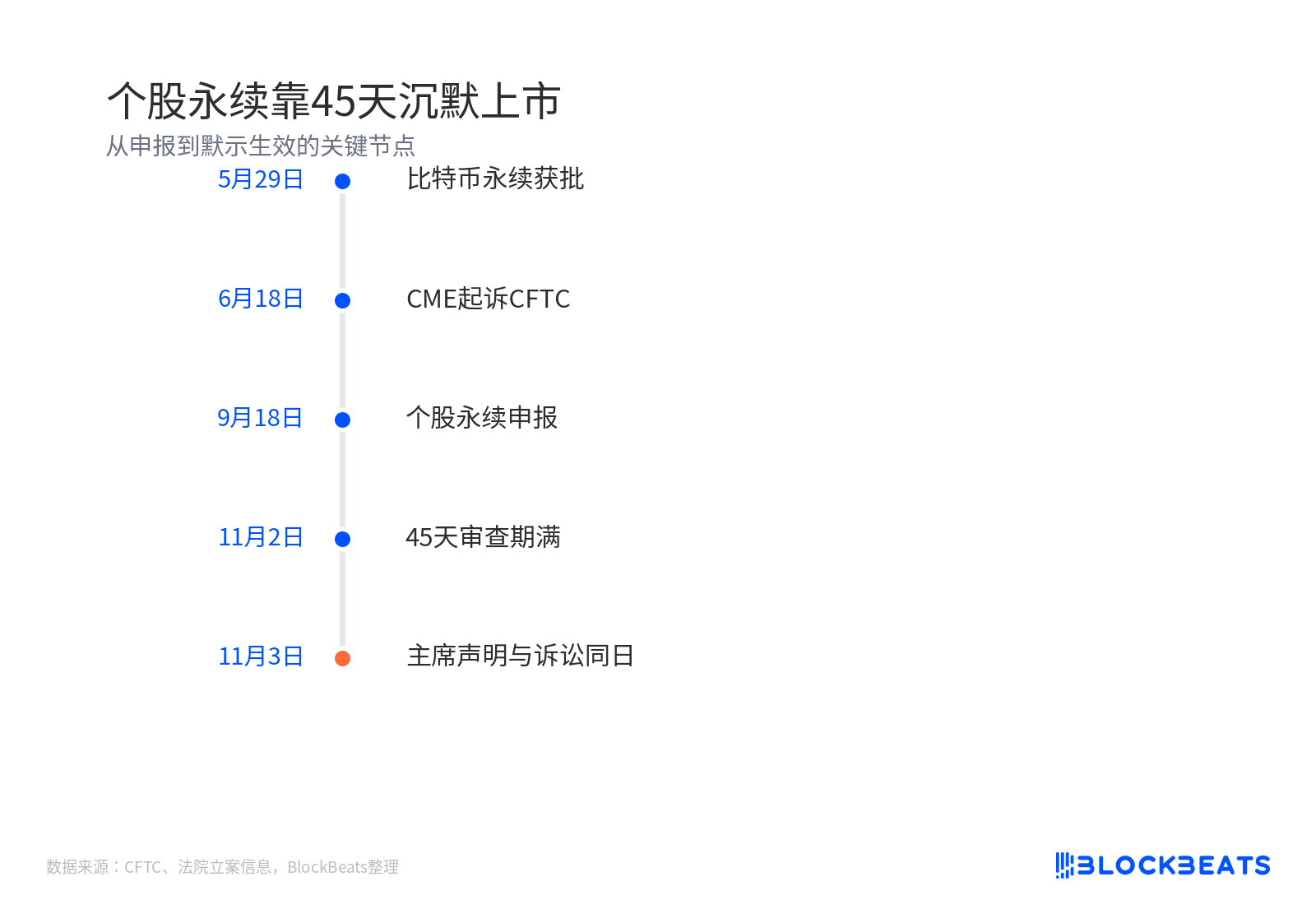
Single-stock perpetuals listed via 45 days of silence
Contracts that never expire, listed via a procedural rule
Single-stock perpetuals apply the crypto perpetual structure to individual stocks, then use a procedural rule to classify them under the category of security futures.
This structure was first approved as futures on Bitcoin. On May 29, 2026, the CFTC cleared Kalshi's Bitcoin perpetual contracts. On June 18, CME sued in the Federal District Court for the District of Columbia, arguing that perpetuals have no expiration date and are essentially swaps rather than futures. The case remained undecided as of November.
On September 18, several designated contract markets (DCMs), including KalshiEX, Coinbase Derivatives, and Bitnomial, submitted the same structure for single stocks, covering major U.S. equities and ETFs. Under Regulation 40.3, if the Commission does not object within 45 days, the products automatically become tradable.
In its statement, the CFTC characterized these contracts as security futures products, subject to the Commodity Exchange Act, federal securities laws, and the joint regulatory framework of the two agencies. Trading venues must be DCMs and must notify the U.S. Securities and Exchange Commission (SEC) to register as security futures exchanges. The Chairman called this arrangement a regulatory coordination progress following the memorandum of understanding signed by the two agencies in March this year.
Cleared on the same day, sued as defendant: the dispute is over classification and procedure
The plaintiffs are not asking for such products to disappear entirely. They argue that the CFTC misclassified them and skipped procedures.
Under the CFTC's classification, security futures are contracts for the purchase or sale of a single security for future delivery, jointly regulated by both agencies. The CMA argues that perpetuals have no expiration date and no future delivery obligation; they are essentially indefinite stock price bets and constitute security-based swaps, which should fall under exclusive SEC jurisdiction, with retail sales also subject to Dodd-Frank restrictions.
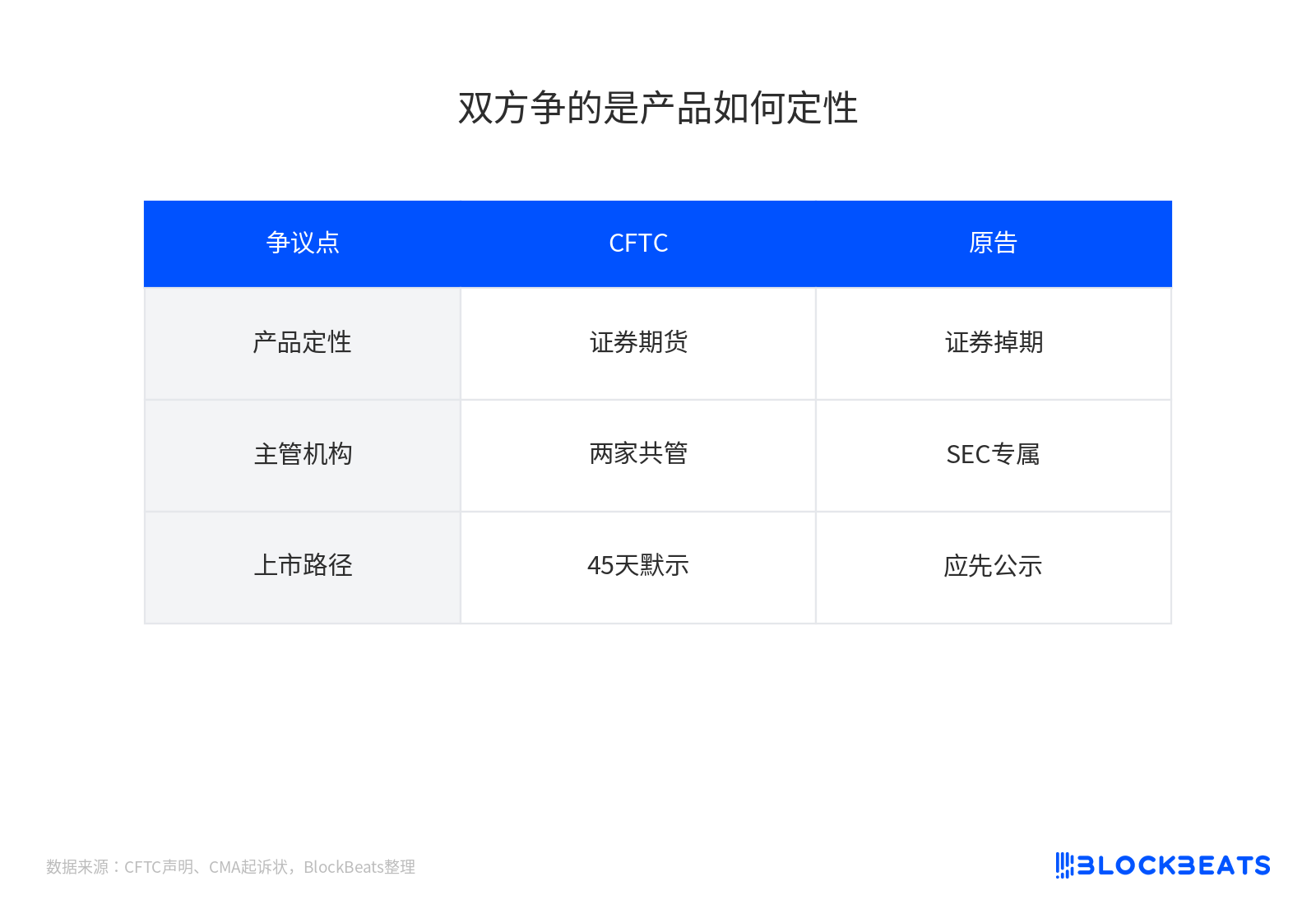
The dispute is over how the product is characterized
The procedural allegations are more specific. The complaint states that after the review period expires on November 2, the contracts take effect by default, which amounts to the CFTC overturning a long-standing position without reasoning, neither responding to the existing view that "perpetuals equal swaps" nor assessing the impact on the spot market.
Cboe proactively rejected the "pure commercial competition" explanation. According to its account, Cboe could also list similar products on its own CFTC platform; the disagreement lies in investor protection, not in who is stealing business. Citadel Securities' involvement brings the market maker's position to the fore: if single-stock perpetuals grow large, they will divert flow from listed options and single-stock futures.
SIFMA's intervention came earlier and was more procedure-oriented. On November 2, this industry association representing broker-dealers, investment banks, and asset managers wrote to the SEC and CFTC, requesting public notice and comment through a stay or Section 19(b) vacatur and refiling before launch. Its Chairman Kenneth Bentsen's rationale is that perpetuals differ from traditional single-stock futures and require prior assessment of their impact on spot liquidity, price discovery, and cross-market manipulation.
In a public response, the CFTC called the lawsuit "troubling" interference, arguing that markets should be governed by law rather than litigation campaigns.
Lawsuit Must First Clear Standing Threshold; Product Definition Comes Later
Being able to trade now does not mean being able to trade indefinitely. The first hurdle determining the direction is whether the lawsuit can proceed to substantive review; the debate over product definition comes after that.
In the May Bitcoin perpetuals case, the CFTC has already requested that the court dismiss on grounds of "lack of plaintiff standing." The CMA is a newly formed coalition, and whether Cboe, Citadel Securities, and Healthy Markets can prove they have suffered actual harm, and whether the "45-day silence" counts as a reviewable final agency action, will determine whether the Southern District of New York court first addresses the definition or first blocks the case at the door.
The injunction is likewise only in application status. Plaintiffs have submitted a request to suspend trading, and the court has not yet issued any result on scheduling or ruling.
The SEC's position has also been downgraded in parallel. It has been included in the notice registration and dual-framework approach, but has so far made no independent statement on this product. The repeal path under Section 19(b) theoretically exists, but the trigger conditions and success rate are both unclear, and reading the SEC's silence as consent would be a misjudgment.
Product Can Launch, but Trading Volume and Injunction Remain Unanswered
Trading data may give a signal faster than legal definitions. According to media reports, Kalshi launched approximately 50 to 58 U.S. equity and ETF perpetuals on the same day. Coinbase Derivatives filed for a minimum margin of approximately 15%, equivalent to roughly 6.6x leverage, lower than the 20x common for offshore single-stock perpetuals and higher than 2x leveraged ETFs.
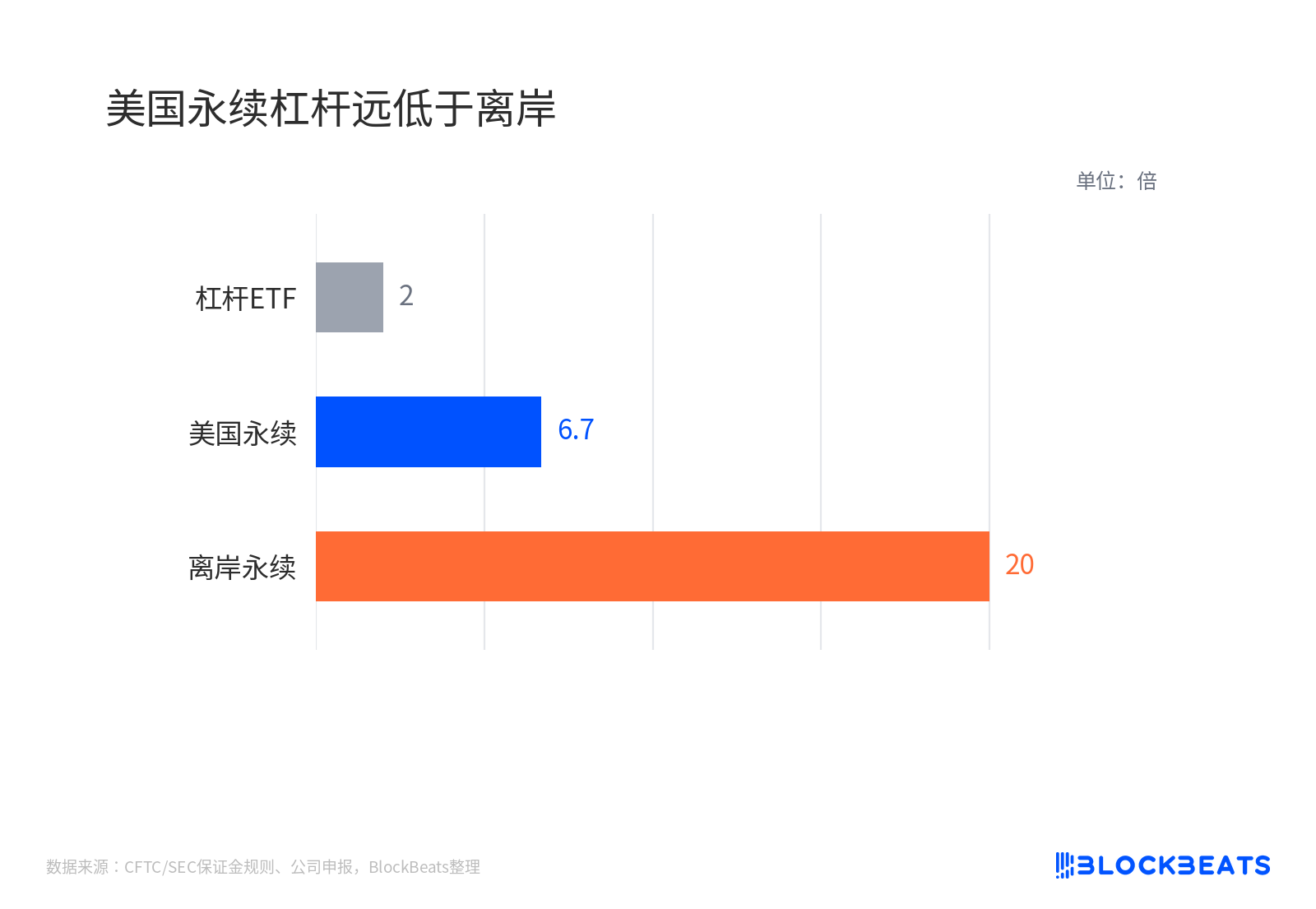
U.S. perpetual leverage far below offshore
These figures only show that the product is already on the shelf. The CFTC's statement did not name any exchange, nor did it confirm trading volume, and there is still a cold start between launch and actual volume.
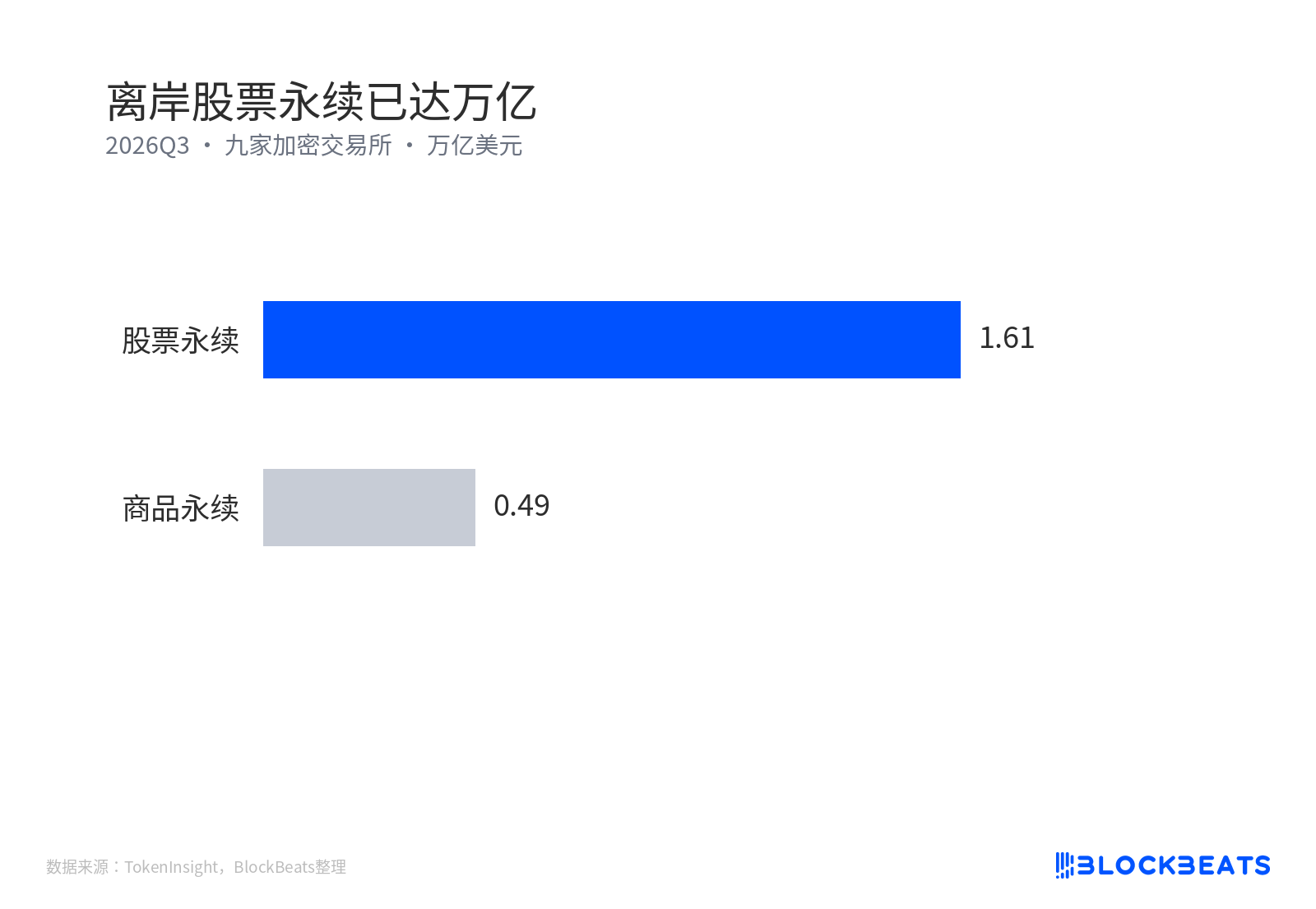
Offshore equity perpetuals have reached $1 trillion
Liquidity is the softest constraint. The plaintiffs themselves include top market makers, and whether quote depth can be established in the short term remains a question mark; trading during the cold-start phase is often far below what the product design envisions.
The tougher constraint is timing. If the court schedules an injunction hearing before the deal grows large enough, the product may not even get a chance to prove itself. For Cboe and Citadel, the complaint itself does not determine the outcome; whether the court is willing to grant an injunction before a trial on the merits is what determines whether this batch of contracts first builds liquidity or first goes dormant.
Welcome to join the official BlockBeats community:
Telegram Subscription Group: https://t.me/theblockbeats
Telegram Discussion Group: https://t.me/BlockBeats_App
Official Twitter Account: https://twitter.com/BlockBeatsAsia
 Related Articles