Wall Street Starts Selling AI Insurance | Rewire Morning News

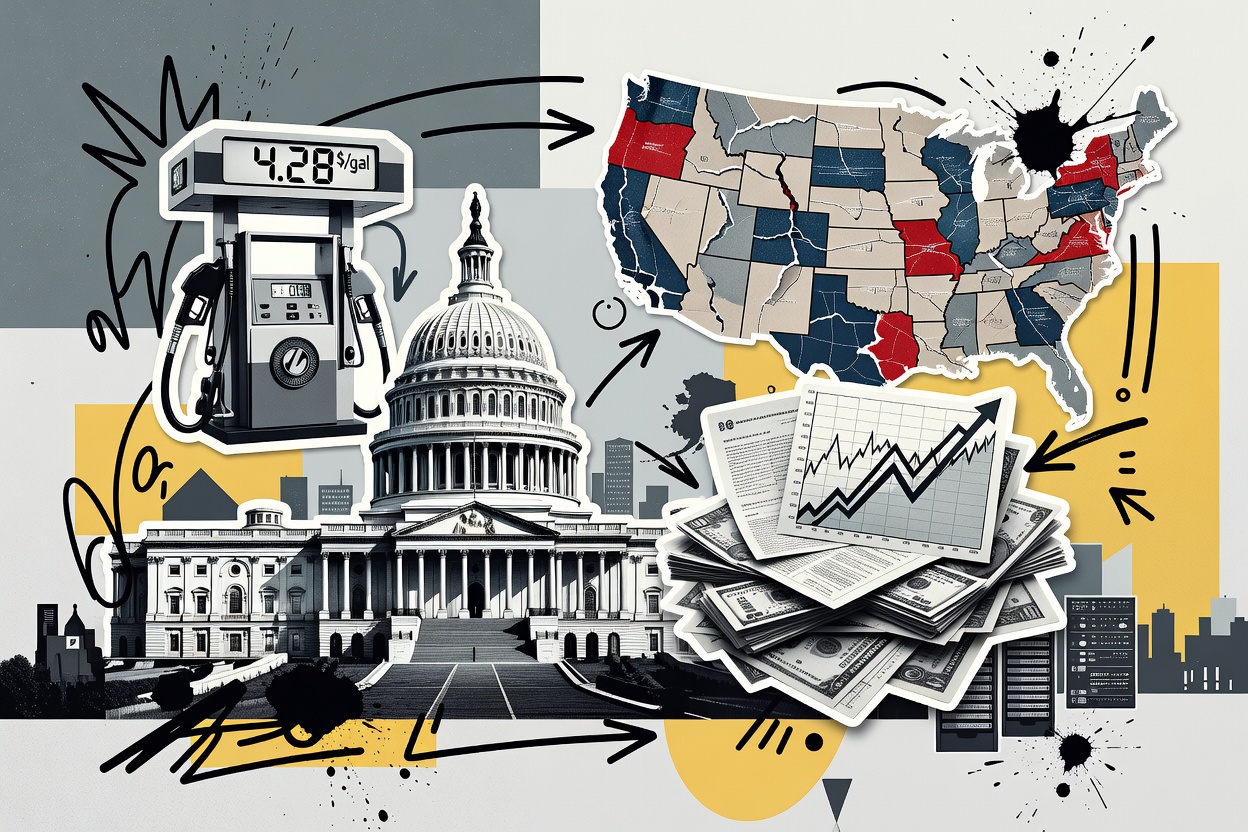
Earnings reports are putting AI compute returns on the table, and platforms are also fortifying consumer entry points. Financing costs, model access, and cash flow realization will determine whether expansion can continue.
1 | Alphabet cloud revenue doubles, Microsoft Azure grows 48%, Oracle sets cash flow target
Alphabet's third-quarter revenue rose 25% year-over-year to $127.6 billion, with Google Cloud growing 103% to $30.7 billion, but net income fell from $34.98 billion to $26.17 billion, including investment losses, and the company also expects capital expenditures to increase significantly in 2027. Microsoft's revenue for the same period was $92.3 billion, with Microsoft Cloud growing 30% and Azure growing 48%. Oracle said capital expenditures will peak in FY27 to FY28 and decline in FY29, expects free cash flow to turn positive in the second half of FY28, and capped new financing through FY30 at $20 billion. AI investment has boosted cloud revenue, but the return on that investment still needs to be tested by cash flow. The market is beginning to compare who can convert compute into sustained cash flow and who still needs to rely on external financing. What Oracle provided is company guidance, and execution remains to be seen.
(Sources: Associated Press / Microsoft Investor Relations / Oracle Investor Relations)
2 | Fed holds rates steady, two officials favor a hike
The Federal Reserve kept the federal funds rate target range at 3.75% to 4%, with the decision passing 10 to 2. Lisa Cook and Cleveland Fed President Beth Hammack both favored a 25-basis-point rate hike. The Fed statement also said economic activity is expanding at a strong pace, capital investment is solid, and inflation remains elevated. The voting structure shows officials have not formed a consensus judgment on the next step toward easing. The rate level itself has not changed, but as long as inflation pressure persists, corporate financing and data center construction cannot treat rate cuts as a certain cost buffer. The two dissenting votes do not mean policy has already turned, and subsequent inflation and employment data remain the basis for decisions. The Fed also said it will continue to wait for more information before judging the appropriate policy stance.
(Source: Federal Reserve Decision / Reuters)
3 | Barclays Evaluates Insurance Protection for Over $10 Billion in AI Infrastructure Loans
Bloomberg reports that Barclays is evaluating default protection from insurers for over $10 billion in AI infrastructure loans, aiming to free up more lending capacity as demand for computing power financing rises. The discussions remain exploratory, with scale and timing not yet finalized. Axios observes that bond investors are beginning to reprice by borrower and project. Yields on CoreWeave-related unsecured debt briefly rose to about 16%, and bonds for data centers contracted with Oracle also fluctuated with its credit risk. Transferring default risk to insurers can free up bank lending capacity but does not eliminate tenant default or contract dependency. The AI financing market is shifting from buying into a theme to examining, deal by deal, who bears the ultimate cash flow pressure.
4 | Google Releases Gemini 4 Carbon, First Opening It to Cyber Defenders
Google has released Gemini 4 Carbon, saying it ranks first on Artificial Analysis v5.0 and scored 88.2%, 54.8%, and 71.0% on vulnerability discovery, exploit validation, and patching benchmarks, respectively. These are test results disclosed by Google, and exploit validation capability is also dual-use. Carbon is currently being opened first to a subset of cyber defenders, then gradually expanded to trusted partners through the Fairwind program, before planned rollout to developers, enterprises, and consumers. Google says it is participating in the U.S. government's voluntary pre-release testing and will continue adjusting safeguards. Model capability improvement is no longer defined only by public APIs and user scale; who can access it first, and whether a model can validate defensive value under controlled conditions, have also become part of the competition.
(Source: Google Official Blog / Reuters)
5 | Amazon Expands Off-Site Products to 250 Million Items, Google Opens Gemini App Access
According to The Information, Amazon's Shop Direct has indexed over 250 million competing products, up from about 100 million in March, with some items also available for proxy purchase within Amazon through Buy For Me. Google, meanwhile, has opened its Connected Apps Platform, allowing U.S. developers to integrate apps into Gemini or Search and view traffic, latency, and error rates. Both companies are expanding channels for external products and services to enter their AI interfaces, competing for the entry point consumers use to discover, compare, and purchase. Merchants can still fulfill orders through their own channels, but user attention and transaction paths may increasingly be controlled by platform interfaces. Whether agentic shopping can reduce the number of times users open traditional apps remains to be verified; the currently visible action is platforms proactively expanding supply and access.
(Source: The Information / TechCrunch)
Also Worth Knowing ↓
Anthropic launches enterprise usage analytics tool to track AI spending flows. Managers can view model usage, costs, and workflow performance by team, and set budgets. By default, the tool does not use customer data for training. (Source: TechCrunch)
NVIDIA releases Nemotron 3.5 speech-to-text model, supporting 40 languages. The model can process recordings up to about one hour long and distinguish between speakers; it is currently aimed at recording transcription and does not support real-time audio. (Source: NVIDIA Research / TechCrunch)
Households in England in council tax bands A to D will receive a £100 energy grant. The UK government says up to about 20 million households are eligible, with payments starting in January 2027. Scotland, Wales, and Northern Ireland will arrange similar support through their local governments. (Source: UK Government / Fortune)
The chairman of the U.S. Commodity Futures Trading Commission raises questions about liability and identity verification for agentic trading. Rostin Behnam discussed whether developers need to register, who is responsible when agents go out of control, and how regulators can confirm on whose behalf an agent initiates a trade. This is a regulatory discussion; no new rules have been formed yet. (Source: U.S. Commodity Futures Trading Commission / CoinDesk)
Ripple said its product annualized revenue run rate is expected to approach $900 million. The company also said the number of customers and partners using multiple Ripple products has tripled this year. This figure is the company's expectation for the year-end run rate and does not represent full-year revenue already achieved. (Source: Ripple announcement / The Block)
Welcome to join the official BlockBeats community:
Telegram Subscription Group: https://t.me/theblockbeats
Telegram Discussion Group: https://t.me/BlockBeats_App
Official Twitter Account: https://twitter.com/BlockBeatsAsia
 Related Articles