Who led the investment in ByteDance's poisoned intern, Tian Keyu?
Original title: "Who Led the Investment in ByteDance's Poisoning Intern Tian Keyu"
Original author: Dongcha Beating
Tian Keyu, who was fired two years ago for maliciously tampering with code and disrupting model training tasks during his internship at ByteDance, and was subsequently sued by ByteDance for RMB 8 million, has returned to the table with a world model lab. The team has only about 10 people, no public company name, no product demo, and the full model is expected to be released only in 2027, but it has already raised nearly $30 million, with a post-money valuation of $200 million.
We have already written about what Tian Keyu did at ByteDance back then, what evidence was presented in that 10,000-word statement posted on GitHub and testified to by five former colleagues under their real names, and the poison oath he swore in front of a microphone, so we will not repeat it here.
What interests me is the investor who assembled this setup for Tian Keyu, Meng Xing, a partner at FiveYuan Capital.
He incubated this project within FiveYuan, led the investment, and brought Tian Keyu before FiveYuan founding partner Liu Qin. Tian Keyu later recalled that Liu Qin said he had "a certain drive" in him, and upon hearing that, he burst into tears on the spot.
Just a few months before deciding to bet on Tian Keyu, Meng Xing, who had just transitioned from COO of Didi Autonomous Driving to join FiveYuan Capital, reviewed his early entrepreneurial infighting on the podcast "Crossroads" and left behind one line:
"If I were to start a business again now, I would definitely put value alignment as the highest priority."
A partner at a top-tier USD fund who says he would put "value alignment" as the highest priority personally led the investment in and incubated the young man at the center of the biggest professional integrity controversy in China's AI industry over the past two years.
At first, I thought this was just another unconditional surrender by the primary market to the title of first author of a NeurIPS Best Paper under world model FOMO sentiment.
It was not until I turned through Meng Xing's resume over the past fifteen years page by page, from Orbeus in Boston and Chicago, to the overlapping tenure at Caesars Entertainment, to his breakup with Beijing Zhitu Technology after only one year, and then to his several exits from Shunwei Capital and Didi Autonomous Driving, that I realized this was hardly cognitive dissonance at all.
A story told three hundred times
Before becoming an executive director at Shunwei Capital, COO of Didi Autonomous Driving, and a partner at FiveYuan Capital, Meng Xing's most core credit badge in the venture capital circle was the two labels that repeatedly appeared in various introductions.
He "once founded and served as CEO of two star startups in the AI field," and both companies "were acquired."
Let's break down the first one: Orbeus.
The story begins in Boston in early 2012. At that time, Wang Meng, a PhD student in the Department of Electrical and Computer Engineering at Boston University who had just finished an internship at YouTube and Google Research, and Liu Tianqiang, a master's student in computer science at the same school, came up with an idea during a dinner gathering: video websites still relied heavily on text tags to understand content, and computer vision was an opportunity.
To save money on hardware, Wang Meng went to Boston University's scrap pile and personally picked up discarded GPUs and CPUs to assemble servers. Liu Tianqiang often went to Wang Meng's home for hackathons, and three weeks later they built a web prototype that could analyze a person's expression, age, and the text in an image after uploading a photo.
But turning a technical prototype into a company required a CEO who understood the language of capital, could raise funds, and could turn code into business. The two engineering students who wrote code went to the neighboring MIT Sloan School of Management and brought in Meng Xing, who was studying for an MBA.
At the time, Meng Xing was 26 years old. He studied applied mathematics and economics as an undergraduate at UC Berkeley, and after graduation worked for three years in the TMT group of JPMorgan's Asia investment banking division in Hong Kong, China, participating in the U.S. IPOs of Ambow Education and Sky-mobi. He was extremely familiar with Wall Street's narrative rules and knew what stories investors liked to hear.
After Meng Xing joined the team, he led the team in sweeping startup competitions across the U.S. East Coast in the style of exam prep, reaching the semifinals of the MIT $100K Entrepreneurship Competition, winning first place in the Harvard University Annual Entrepreneurship Competition Pitch Contest, winning the $20,000 unconditional prize at the ZhenFund Ivy League Tour Harvard finals, and successively making the final lists of four incubators: Techstars, Y Combinator, Excelerate Labs, and DreamIt.
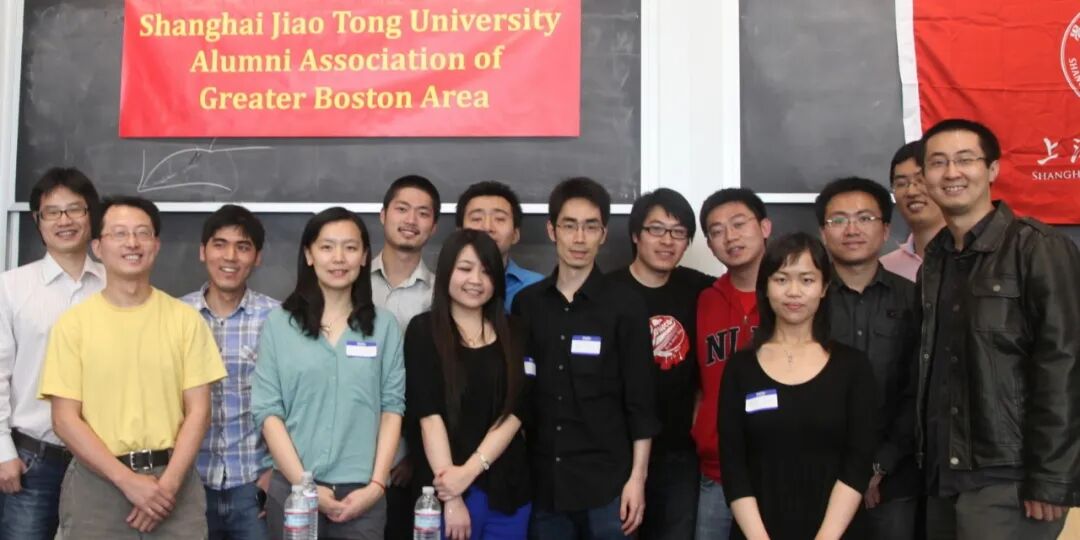
Group photo at the 2012 Siyuan Forum, with all three co-founders of Orbeus present
Image source: Boston Bilingual Media
In mid-May 2012, shortly before reporting to the Chicago incubator, the Shanghai Jiao Tong University Boston Alumni Association held the second "Siyuan Forum" in a lecture room at MIT. The local Chinese-language media outlet Boston Juzi published an on-site report on May 23, and the accompanying group photo included Meng Xing, Wang Meng, and Liu Tianqiang, who spoke on stage about the founding process of Orbeus.
At that sharing session, when discussing career planning, Meng Xing said that when considering whether to join a certain company, "you might as well consider whether you can use that job to prove your value within a year or a few years; you don't necessarily have to think about what the company will be like in the next ten years."
His tenure as CEO of Orbeus lasted exactly one year.
The highlight of that year was in Chicago. In the summer of 2012, Orbeus entered the Chicago incubator Excelerate Labs for a three-month incubation period. The Demo Day on August 29 was held at the Chicago music venue House of Blues, which Meng Xing later described in a sharing session as "Chicago's largest opera house," with four to five hundred investors in the audience and only 10 minutes allotted to him.
To prepare for those 10 minutes, Meng Xing practiced for an entire month, reciting the full presentation three times a day. He later said that over the course of that month, he told the story about 300 times. How to pause at every sentence, how to switch every PPT slide, and even where to place the jokes—he repeatedly designed all of it with the incubator mentors.
The pitch was a great success, and Fast Company and Built In successively conducted exclusive interviews with this young Orbeus CEO. Years later, Meng Xing summed up a rule from this experience: "The core of entrepreneurship is persuading everyone."
The trouble was that the investors in the audience were persuaded, but the business on stage never took off.
In 2016, Meng Xing, who had already joined Shunwei Capital, candidly reviewed Orbeus's early business predicament in two speeches at Sina New Startup Course and Penguin Intelligence: "For us as entrepreneurs, our consideration of strategy at the time was almost zero."
They imitated Face.com, which had just been acquired by Facebook and had its API shut down, and launched an image recognition API for third-party developers. Thousands of developers quickly signed up, but Meng Xing found that this "2D (To Developer)" model simply could not generate revenue, and the vast majority of those calling the API were early-stage startups without money.
The team had no choice but to pivot to taking on work for large enterprises. Samsung, Huawei, Panasonic, and AMD were interested in the technology, but this turned into an extremely heavy outsourcing business: sales contacted clients, engineers customized demos specifically, and then they waited for large companies' lengthy internal approval and compliance processes. A single project could take a year.
Engineers were responsible for writing the algorithms, and the CEO was responsible for turning technology into business. This was the basis on which Wang Meng and Liu Tianqiang had invited Meng Xing to serve as CEO. In the end, the business model got stuck halfway, and the company did not make much money.
Just at this moment, Meng Xing left.
A One-Year CEO
How long exactly did Meng Xing stay at Orbeus?
Crunchbase's public records show that Meng Xing served as co-founder and CEO of Orbeus from February 2012 to February 2013; the same records indicate that he began his role as head of Asia-Pacific for Caesars Interactive Entertainment, the American gaming and entertainment giant, in September 2012.
Two full-time jobs, overlapping on the calendar by five months.
Reports on the Orbeus side also noted his departure.
In a January 2013 report by PingWest, Meng Xing was still CEO of Orbeus. By June, TechCrunch reported that Orbeus had launched a recognition interface for Google Glass, listing only Wang Meng and Liu Tianqiang as founders, with Ning Xu, who joined later, as CEO.
In January 2014, on the eve of CES, Computer News reporter Wang Xing visited Orbeus in Mountain View, Silicon Valley. The report was published in the third issue of Computer News in 2014. It stated: "Prior to this, the company had gone through several changes, such as founding team member and former CEO Meng Xing choosing to return to China and venture into the gaming sector... Li Yi, the company's current CEO, said Orbeus's vision is to become the brain of the image recognition field."
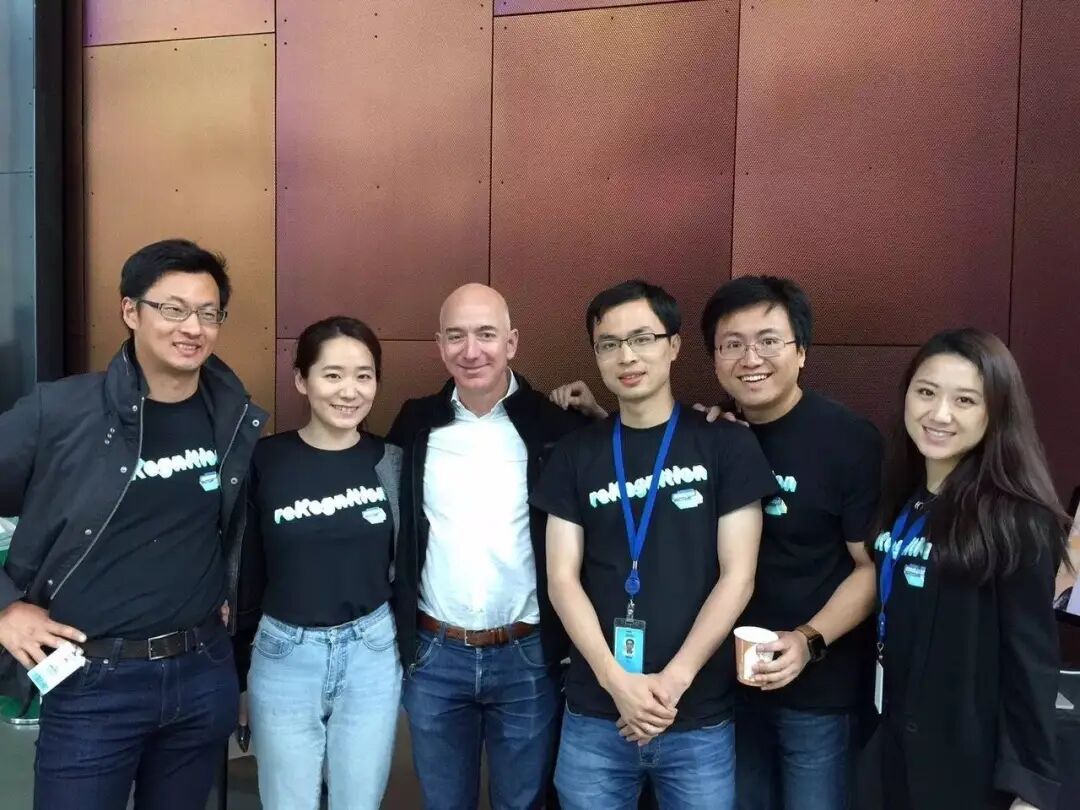
Some Orbeus team members posing with Bezos
Image source: AI Era
Counting the time, he joined in the spring of 2012, pitched 300 times at a Chicago incubator in the summer, began his role at Caesars in September, stepped down as Orbeus CEO in February 2013, and returned to China to work on casino games.
On May 8, 2013, the Hainan Provincial Department of Culture, Radio, Television, Publication and Sports and Caesars Group held a press conference in Beijing, announcing that the World Series of Poker would provide technical support for that year's Hainan International Poker Tournament. In a report by Philanthropy Times republished by Sina Sports, Meng Xing's title was "General Manager of Caesars Asia-Pacific." He said that in addition to bringing the World Series of Poker to China, "I also look forward to further cooperation with Hainan Province in the development of new lottery game types in the future."
During his time at Zhitu, his personal profile on Tourejie listed this experience with the tag "Youngest Fortune 500 Asia-Pacific Head."
On one side was a Silicon Valley startup mired in commercialization struggles, still painstakingly pushing a $1.1 million seed round; on the other side was a multinational giant with mature cash flow and a global gambling brand. Meng Xing did not hesitate to choose the latter.
He turned and left, while the engineers who stayed endured more than two of the hardest years in that villa in Mountain View.
According to reports at the time by Computer News and 36Kr, Orbeus's five full-time employees all lived in a villa in Mountain View, eating, living, and working together, while another five part-time employees lived nearby and came over to work in their spare time. The 36Kr report said the team came close to disbanding several times, even the most basic work visas were hard to obtain, and the technical members basically did not go to sleep until four or five in the morning, then got up at ten the next day and kept working.
In 2013, when the team spoke with 36Kr about their experience at Excelerate Labs, they said, "In many places, the CEO may be the core of the team, but at Orbeus, the engineers and the technology itself play the role of the team's soul."
After this founding CEO, who excelled at business, left, the remaining team learned the business lesson all over again from scratch.
Xu Ning, Li Yi, and CTO Wang Meng, who took over the company, later performed an operation that determined the company's life or death. Recalling this in an April 2017 interview with Xinzhiyuan, Li Yi and Wang Meng said that doing offline customization for Panasonic and AMD required more effort than a small team could afford, so they hired a very experienced white business manager and stopped all the orders that could make money.
They cut all custom outsourcing and changed all services to an online API, with developers receiving a certain free quota and being billed monthly after exceeding it. In the first year of the transition, the company reached $1 million in revenue without much advertising, and its customers included high-volume companies such as Coursera and Match.com. By the third year, Orbeus already had $2 million in stable revenue.
Starting at the end of 2014, companies including Apple and Yahoo successively sent acquisition offers. And Amazon, which had originally been an Orbeus API customer, "liked it more and more while using it and wanted to invest, and then as it invested, it bought it."
In the autumn of 2015, Amazon acquired the company, and its core members moved to Seattle, becoming the Amazon Rekognition team that later supported the visual foundation of AWS. In the group photo of the founding members with Amazon CEO Bezos published in the media, standing beside Bezos were Wang Meng, Li Yi, Xia Wei, Wu Weixin, and Wu Yuxin.
Naturally, Meng Xing was not in the photo. By the time Amazon acquired Orbeus, he had already left the company for more than two and a half years.
However, when Meng Xing joined Shunwei Capital in March 2016 and transformed into a tech investor, this history underwent a subtle folding.
In June 2016, Meng Xing took the stage at Sina's New Startup Course. He first spoke about Orbeus, saying it was "two months earlier than Face++... in the end, this company's outcome was pretty good. Last September, Amazon completed the acquisition of the company. Now this company supports Amazon's personal album management, as well as all of Amazon's visual content business." Immediately after, he said: "After I left this company, I joined the world's largest gaming company called Caesars."
Some résumés don't require fabricating any lies. All it takes is omitting that two-and-a-half-year gap of absence in the narrative, and the medals others earned by sleeping on air mattresses and grinding through cancelled custom orders can be seamlessly pinned onto one's own suit lapel.
Vomiting in the Toilet
If the Orbeus story is about leaving after just over half a year and sharing in the halo of Amazon's acquisition three years later, then the truth behind the second "successful M&A exit" on Meng Xing's résumé — Zhitu Technology — is far more brutal.
Business registration records show that Beijing Zhitu Technology Co., Ltd. was registered on September 30, 2014, at No. 2 Courtyard, Cuiwei Road, Haidian District, Beijing, with registered capital of 2 million RMB.
After leaving Caesars Entertainment, Meng Xing became CEO of Zhitu Technology. Having learned the lesson from Orbeus that selling APIs couldn't bring in money, this time he decided to do "native in-image advertising," using computer vision to identify celebrity faces, clothing, or cars in images on portal websites and Weibo, and automatically matching ad placements within the images.
To build this team, Meng Xing followed the "complementary expertise" principle he had championed at the MIT Siyuan Forum years earlier, and brought in two co-founders.
One was CTO Hou Xiaodi, who held a bachelor's degree in computer science from Shanghai Jiao Tong University and a PhD in Computation and Neural Systems from Caltech, a renowned scholar in the field of visual attention mechanisms, who was then in the United States leading the algorithm team. The other was co-founder and VP Chen Mo, who had founded three consecutive startups over the previous decade, including an advertising company, a used-car website, and a browser game company called Shenlan Brothers. Liu Yunli from Sina's investment department had invested 5 million in Shenlan Brothers, and in the summer of 2015, Shenlan Brothers was sold in its entirety for 15 million RMB to Pocket Technology, a New Third Board company. Sina made money from this investment. Chen Mo and Liu Yunli were friends who drank together every week.
With this star-studded lineup, Zhitu Technology was selected for the sixth batch of the Microsoft Ventures Accelerator and secured $10 million in Series A funding from the Sina Weibo Fund in January 2015. The investment was introduced by Chen Mo, and Sina was a longstanding shareholder in his previous company.
However, the honeymoon period did not even last half a year.
In-image advertising looked extremely sexy on demo PPTs, but once it was integrated into a real internet advertising delivery system, click-through rates, advertiser budgets, and scalable monetization immediately hit a wall. When commercialization was once again blocked, a fierce internal conflict erupted between CEO Meng Xing, who was in charge of business and financing, and Hou Xiaodi, who was in charge of technology, and Chen Mo, who was in charge of operations.
On June 17, 2015, less than nine months after Zhitu Technology was founded, Meng Xing spoke at a roundtable forum co-hosted by the Microsoft Ventures Accelerator and LinkedIn China, telling entrepreneurs in the audience how to choose co-founders.
According to a June 22 report that year by China Youth Daily, Meng Xing said on stage that his two co-founders were "a technical expert based in the United States and an industry insider with extensive connections in China's advertising sector." He shared three points, and the last one was, "Alignment of values will play a key role when the team faces investment or acquisition."
Soon afterward, a question appeared directly on Zhihu: "Why did Zhitu Technology and Meng Xing part ways?"
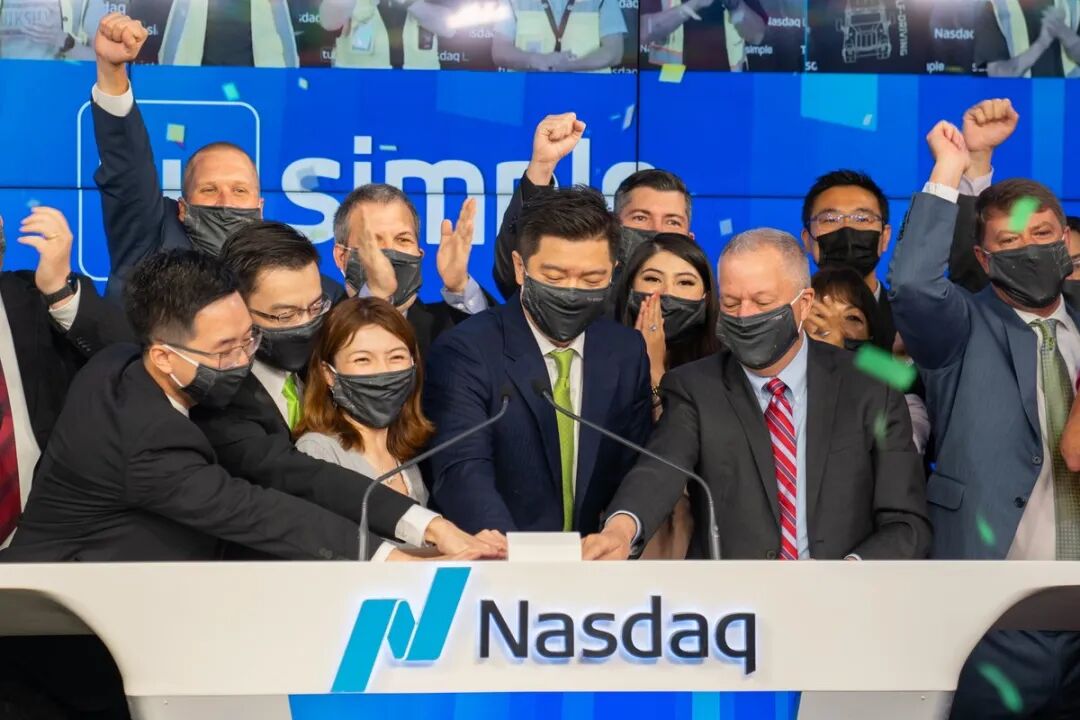
The TuSimple team rings the opening bell at its 2021 Nasdaq listing
Image source: TuSimple official X
In May 2021, the day after TuSimple went public, Chen Mo gave an exclusive interview to LatePost and explained how Zhitu became TuSimple. According to him, Zhitu's Series A money was spent, and for Series B they still went to Sina. Liu Yunli had someone look at the technical team in the United States, and "he said either you take this thing and build another company, and I'll just invest in you."
When Leiphone's New Smart Driving wrote about this history in 2024, it noted that on Zhitu's commercialization direction, Liu Yunli and CEO Meng Xing disagreed, and Chen Mo also had different ideas for the company. Under the arrangements of Liu Yunli and Chen Mo, Zhitu was restructured, and the HR, finance, marketing, and other departments under the CEO were sidelined.
At Zhitu Technology, the business model once again failed to work. In September 2015, CTO Hou Xiaodi and VP Chen Mo exited Zhitu, and the original R&D and sales teams formed a new company, TuSimple Interconnect, which later became TuSimple. The Sina Weibo Fund's shares in Zhitu were also transferred to TuSimple Interconnect.
Meanwhile, CEO Meng Xing, who was left behind at Zhitu after his partners led a team departure, faced the most embarrassing two months of his career.
In the October 2024 podcast "Crossroads," Meng Xing recounted the days before the sale that nearly broke him.
"The acquisition of the first company went well, but the sale of the second company was very unpleasant... At that time, there were major disagreements between the founders over values and philosophies, and ultimately we had to passively choose to sell."
He said that in the last two months before the sale, due to internal conflicts that could lead to investors withdrawing their funds, he was calculating every day how many months of salaries the money in the accounts could cover. Because many employees had been recruited personally by him, immense anxiety and fear caused him to develop severe neurotic vomiting, "often suddenly having to run to the bathroom to throw up."
According to records from Leiphone's New Smart Driving, on September 17, 2015, just 13 days short of the one-year anniversary of Zhitu Technology's registration and establishment, Meng Xing stepped down as manager and executive director and was no longer a shareholder.
A breakup and liquidation caused by blocked commercialization, complete falling-out among partners, the core technical team and shareholder stakes being transferred out to TuSimple, the CEO being so stressed that he often ran to the bathroom to vomit, and finally the company being taken over by Sina Weibo, was later lightly condensed by Meng Xing on a speaking stage after he joined Shunwei Capital a few months later into that standard line:
"The second company was in Beijing, called Zhitu Technology... This company was sold last year to a Chinese internet company listed in the United States."
Later, when TuSimple listed on Nasdaq in 2021 and became "the world's first autonomous driving stock," the text introducing Meng Xing gained another parenthetical layer. The introduction to a podcast episode in August this year said, "In 2014, that is, his second startup, he and Hou Xiaodi founded Zhitu Technology (the predecessor of TuSimple)."
A company he left midway was counted as his M&A exit, and the company later built by the partner who broke away was also attached to his name.
In the 2024 "Crossroads" podcast, host Koji said, "How a person understands himself, how he interprets history—this narrative can be decided by oneself." Meng Xing then went on to tell his own narrative of success, saying that for him the key was "whether you are the first to do something."
Five months, Andi Technology
Once you understand Meng Xing's narrative grammar—always pulling out before the deep water, always telling an exit as an upgrade—then looking at each of his turns after 2016, the faint trail becomes obvious at a glance.
Looking back at Meng Xing's resume over the past two decades, there is an extremely consistent pattern: his stay in any position has almost never crossed a true hard-labor cycle.
He worked at JPMorgan Chase for three years, and just after being promoted from Analyst to Associate, he left to pursue an MBA; he served as CEO of Orbeus for one year, and in the second month after graduating from the incubator, he began his tenure at Caissa; he worked at Caissa for one year and nine months, then returned to Beijing to work on Zhitu; after a full year at Zhitu, the team disbanded and he exited.
In March 2016, Meng Xing joined Shunwei Capital.
To be fair, his sense for catching early technology trends was indeed sharp. Taking advantage of the window when mainstream VCs were still stuck on mobile internet and O2O and could not understand scientist-founded startups, during his three years and four months at Shunwei, he invested in Momenta, XPeng Motors, CloudWalk Technology, Idriverplus, iSpace, Benewake, and Nreal, rising all the way from vice president to executive director and head of the technology group.
Then, the old problem struck again.
In an August podcast on "elsewhere," he recalled that two or three years after investing in Momenta, he once passed through Suzhou North Station on a high-speed train and saw Momenta's huge logo hanging on a nearby building through the window. In that instant, he felt both excited and disappointed, suddenly realizing that his growth speed as an investor simply could not keep up with Momenta CEO Cao Xudong.
So, without waiting for this batch of hard-tech projects at Shunwei to enter the harvest period, he left Shunwei in July 2019 and joined Didi, which was then spinning off its autonomous driving business, to serve as COO of Didi Autonomous Driving, reporting to Didi CTO and Autonomous Driving CEO Zhang Bo.
During his five years at Didi Autonomous Driving, Meng Xing once again brought his strengths in storytelling, raising big money, and assembling giant-player syndicates to the extreme.
Although 2019 was the cold winter of the first global autonomous driving bubble burst, Meng Xing still helped Didi Autonomous Driving secure in May 2020 a Series A financing of more than $500 million led by SoftBank Vision Fund 2, setting the record at the time for the largest single financing in domestic autonomous driving; in the first half of 2021, it raised two more rounds in succession, with IDG Capital leading $300 million in January, and GAC Group leading a new round in May, valuing it at more than $4 billion, with cumulative financing exceeding $1.1 billion in less than two years.
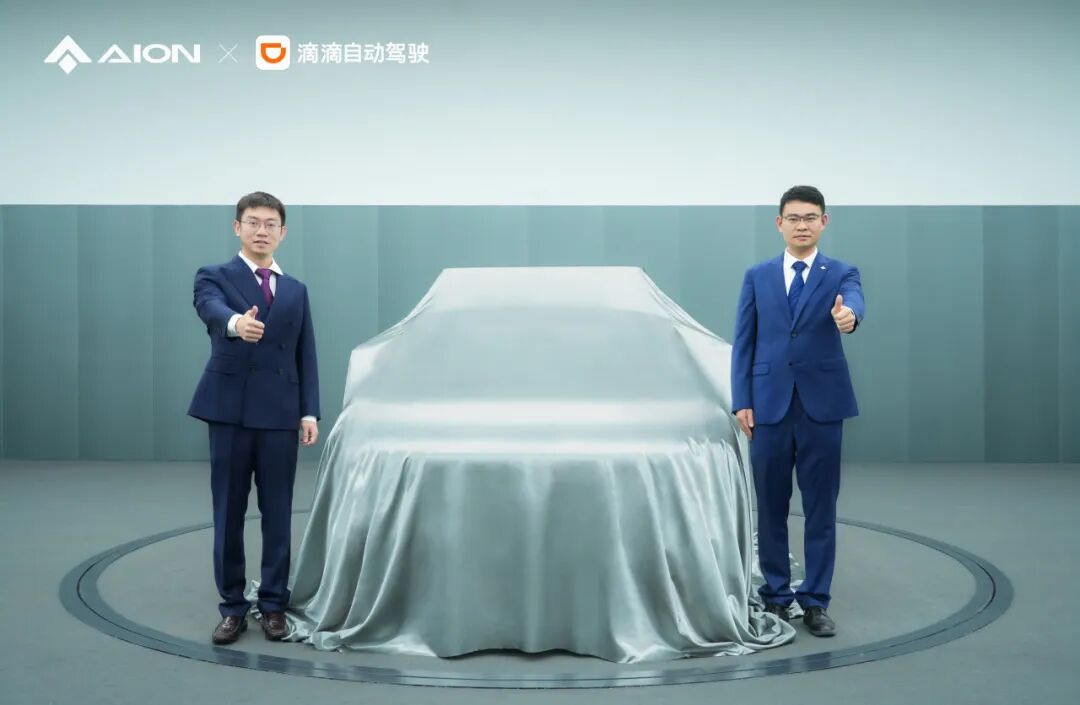
GAC Aion and Didi Autonomous Driving jointly review the styling of the Robotaxi model for their joint venture project
Image source: Phoenix Technology
But no matter how compelling the financing narrative, autonomous driving must ultimately come back down to earth.
According to TMTPost's 2023 in-depth investigation "Didi Autonomous Driving: Good Cards, Rough Ride, Hard to Win," the core narrative of Didi Autonomous Driving's external fundraising—"the ride-hailing Jushi recording device provides 100 billion kilometers of real road data annually"—became a massive burden in engineering implementation. Jushi is merely a 1080p exterior camera plus a six-axis attitude sensor. Based on compression ratio estimates, TMTPost calculated that Didi must process approximately 4,000 TB of road data daily, with cleaning and annotation costs being astronomical. Moreover, these front-facing images could only serve the visual perception component of an L4 platform equipped with 50 sensors.
Meanwhile, the two technical masterminds of the early China-U.S. R&D team, Jia Zhaoyin and Zheng Jianqiang, both departed or stepped back from front-line roles in September 2019—half a year after Junqing Wei, Aptiv's Global Engineering Vice President, parachuted in as CTO. The team swelled from fewer than 200 people to nearly 1,000.
With Robotaxi commercialization nowhere in sight, how do you answer to investors?
In October 2023, Didi Autonomous Driving spun off its heavy-truck platooning business—which was more likely to generate cash flow in bulk trunk-line logistics—into an independent company called KargoBot, securing over RMB 450 million in investment from Ordos state-owned capital and others. Junqing Wei, formerly CTO and then head of innovation business, became KargoBot's CEO, while Meng Xing took on the role of Chairman concurrently.
On the main Robotaxi battlefield, the real hard battle began in the spring of 2024.
On April 7, 2024, Didi Autonomous Driving and GAC Aion made a high-profile announcement of a 50:50 joint venture called Guangzhou Andi Technology Co., Ltd., with GAC Aion Vice President Zhang Xiong as Chairman and Meng Xing as General Manager. The two parties planned to mass-produce their first commercial L4 autonomous crossover SUV in 2025.
Everyone assumed that this COO, now serving as General Manager of the joint venture, would finally personally lead a hard-fought battle from engineering mass production to commercial delivery.
Yet just five months after the joint venture's announcement, before the 2025 mass-production delivery test arrived, Meng Xing left Didi in September 2024 and moved to 5Y Capital.
In an October 2024 interview with "Crossroads," Meng Xing offered a self-assessment.
He admitted, "My ability to judge and control things is far stronger than my ability to judge and manage people." After managing a team of nearly 1,000 at Didi, the gap between these two capabilities remained large, "so I'm probably better suited to playing a role in a company's early stages."
In the minutes of a sharing session at Zhejiang University in September 2026, there was a section about autonomous driving. Around 2020, the industry referenced Waymo's move to remove safety drivers, and from that inferred a threshold of about 20,000 kilometers without critical disengagement. Once disengagement mileage became high enough, the focus shifted to cost reduction.
As for why he always pulls out before each period of convergence and grind, the answer was revealed in the August episode of the podcast "elsewhere" titled "I'm Very Afraid of Being Like Others." In the edited video transcript of that episode, the word "experience" appeared as many as 32 times, and "different" appeared 16 times.
Meng Xing talked about how in 2011, at age 25 while doing his MBA at MIT, he went to participate in the North America special of Jiangsu TV's "If You Are the One" and had all the lights turned off. To this day, some people on Baidu Tieba still call him "a top-tier man who loves extreme sports." He said that at the time, things were moving too slowly with the woman who is now his wife, and he wanted to use this exaggerated method to speed up the progress. He also recounted with relish that the recording set was so empty that if you did not walk up to deliver a gift, you could not see the female contestants' faces clearly. "It felt very experiential."
He also talked about his childhood, which he had also discussed in 2024 on "Crossroads." At three and a half, he went to the United States with his parents, experienced a change in his parents' relationship, and lived for a long time in someone else's garage with no heating in winter and no toys, able to wear only the host family's leftover clothes. At six, he returned to China to attend primary school and skipped two grades, always two years younger than his classmates; for the middle school physical exam standing long jump, he could only practice with the girls. At 14, he went to the United States again for high school and ate alone in a corner every day. When working in investment banking in Hong Kong, walking home at night past old tong lau buildings and seeing elderly people eating shirtless, he would feel a deep fear that one day he too might live like that.
This sense of drifting made him find a survival strategy for himself very early on. According to elsewhere's retelling, he realized very young that he was not the hardest-working person in the world, nor the most diligent, and only by being "incomparable" could he possibly become comparable.
On the podcast, he read aloud in clear and measured tones an English quote from Leonardo da Vinci:
Life is pretty simple: You do some stuff. Most fails. Some works. You do more of what works. If it works big, others quickly copy it. Then you do something else. The trick is the doing something else.
"The trick is the doing something else."
This sentence can be considered a summary of Meng Xing's career over the past fifteen years.
At Orbeus, he told the same story 300 times. When API revenue stalled and custom orders turned into grunt work, he went to Caesars Entertainment to "do something else"; at Zhitu Technology, he assembled a star team and secured a Series A from Sina. When commercialization hit a wall and partners fell out and left for TuSimple, he threw up in the bathroom, handed the company over to Sina for absorption, and went to Shunwei Capital to "do something else"; at Didi Autonomous Driving, after raising over $1.1 billion and just five months after signing the military order as general manager of the GAC joint venture, with the 2025 mass production test looming, he returned to USD VC to "do something else" again.
He calls this only liking "from 0 to 1."
But in the real business world, how can there be so many "from 0 to 1" that only enjoy the spotlight and do not bear the boring delivery?
A person certainly has the freedom to pursue 32 "experiences." But beautifying every retreat when encountering a hard bone as "actively seeking new breakthroughs," and counting the acquisition fruits that stayers spent years catching up and enduring as one's own "successful exit," is really somewhat unjustifiable.
The Prodigy Catcher and His Mirror Image
Now, let us return to that card table in early 2025 and see why Meng Xing, nearly 40, took a fancy to Tian Keyu, in his 20s, at first glance.
When Meng Xing joined 5Y Capital in September 2024, friends joked in the group chat that he was "joining the Nationalist army in '49." That was long past the era of 2016 when inviting national hard-tech investors to his home for dinner could "fit at one table." Laboratories at Tsinghua and Peking University had been turned upside down by various funds, and playing by the usual rules could not possibly give Meng Xing that "incomparable" uniqueness again.
So, Meng Xing focused his energy on an internal mechanism at 5Y for incubating young founders. It is now called Roll-out Lab, originally named 3 Sigma, meaning the very few people beyond three standard deviations of the normal distribution. 5Y held the 3 Sigma startup camp in 2021, three years before Meng Xing joined.
elsewhere gave him a label with a question mark, "The person who has invested in the most prodigies?", and also wrote that he himself might not acknowledge this description.
Look at the three representative works he brought out from 3 Sigma.
The first is Odin (Zhang Haotian), founder of Hangzhou AI for Science startup Valhalla Technology, 26 years old, whose daily look is a muscular man in a black long dress with a purple tight short-sleeve shirt. He spent part of his childhood at Mount Wutai and after graduating from Zhejiang University, he became a monk twice. In his junior year, he was squeezed out in the weighted algorithm ranking for graduate school recommendation and publicly exposed the matter on Zhejiang University's internal network. When teachers and leaders came to persuade him, he asked, "If I were the leader's son, would you treat me like this?" He later entered Nobel laureate David Baker's lab, but grew tired of factional politics, drank an entire case of red wine in a week, and after staying for just over a year, dropped out and returned to China to start a business.
The second is Leo, founder of AI Christian prayer ring Amen Ring (Confidein), 24 years old, a growth hacker who dropped out of a U.S. university at 18. During the 2025 Los Angeles wildfires, he built a "Pray for LA" website, donating 7 cents on behalf of each person for every real email verified, donating $200,000 and collecting over 2 million email addresses. He then used simple NFC rings costing less than shipping to secure nearly 200,000 orders in three weeks, and in May of this year merged with London faith app Glorify.
The third is Tian Keyu.
If Odin, who wore long dresses and became a monk, was merely rebellious in personality, and Leo, who harvested 2 million believer email addresses off the Los Angeles wildfires, merely pushed growth hacking to the edge of religious sentiment, then with Tian Keyu, Meng Xing's obsession with "eccentrics" finally crossed the guardrail of professional ethics.
Whenever outsiders ask Meng Xing whether he is easily drawn to story and drama, he always seriously denies it, claiming what truly attracts him is the matter itself and the founder's actions at critical moments.
But in Tian Keyu's case, this explanation does not hold up.
An intern who, over a period of five months, injected random Gaussian noise into the T5 weights shared by colleagues in the same group and restored the norm to disguise it, used sudo to tamper with the cluster's PyTorch underlying source code and restored file modification times, sat in on Feishu troubleshooting meetings with engineers from three locations working 24-hour shifts while listening to progress and simultaneously upgrading attack scripts in a targeted manner, and even in his own thousand-GPU VAR project hardcoded an open-source PixArt model with a "City" prefix to pass off as training results—his actions at critical moments have been nailed down tight by more than 20 script source codes posted by five named colleagues and a first-instance judgment from the Haidian Court ordering 500,000 yuan in damages.
For an AI foundation model lab, this is the most lethal organizational poison.
Training a large model requires a dozen or so researchers sharing a compute cluster and a shared underlying codebase, trusting each other with their backs during months-long pretraining. Once this baseline of trust is breached, any technical genius becomes a liability to the organization.
Meng Xing, who experienced the falling-out among partners at Zhitu Technology and once vomited in a bathroom when his team fell apart, surely understands the trust cost of technical teams, doesn't he?
Of course he does.
Other funds passed after a barrage of follow-up questions, but he became Tian Keyu's first investor in early 2025. By October 2026, this lab had raised nearly $30 million at a post-money valuation of $200 million. There may be only two reasons.
On the table, it is simply FOMO over the world-model narrative. Research integrity and moral debt, in the eyes of an early-stage catcher chasing hundredfold paper returns, are merely tail risks that can be packaged and tossed to the next round of bag-holding funds.
And beneath the table, what Meng Xing saw in Tian Keyu was probably himself in his twenties.
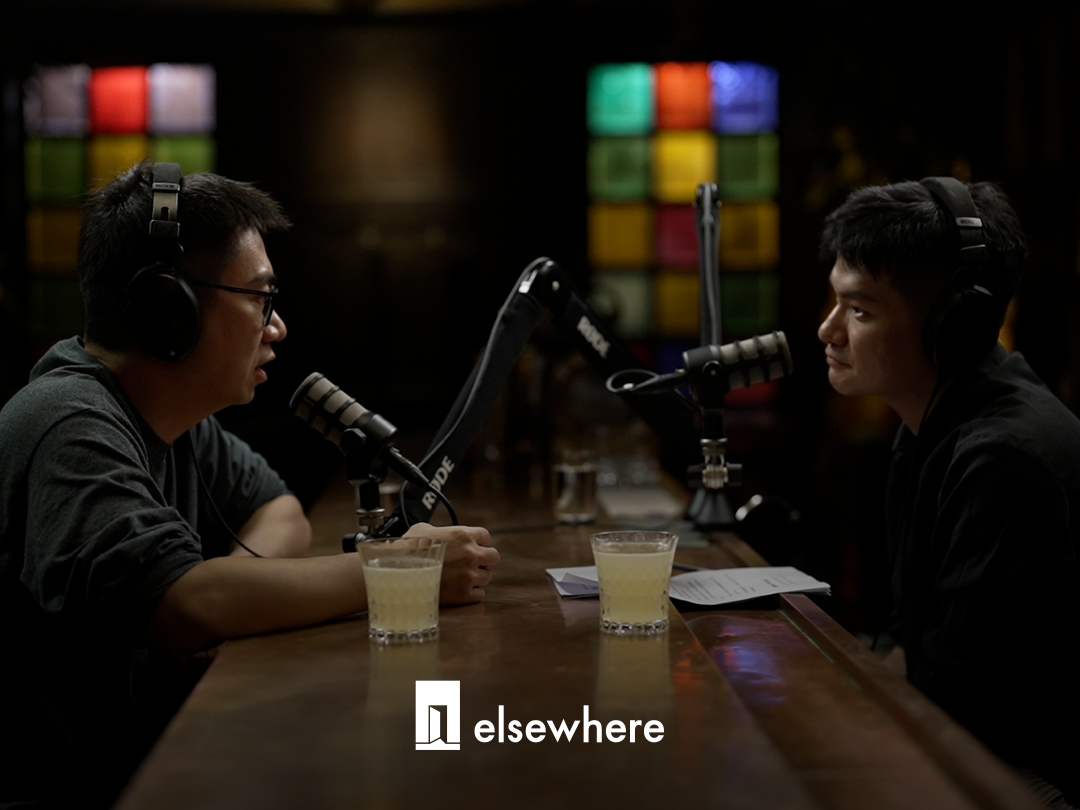
Five Elements Capital partner Meng Xing (left) discusses young entrepreneurs and investment judgment in an interview
Image source: elsewhere
Tian Keyu ranked first among 800 people at Beihang University in his freshman data structures assignment, proud of using a large number of tricks and hacks to take shortcuts; Meng Xing returned to China at age 6 and skipped two grades, knowing well that he could not outwork others, and spent his whole life seeking "incomparable" leverage.
More importantly, they both mastered the same craft: as long as the story is self-consistent enough, the mess in reality can be reframed as a medal.
Tian Keyu could, over two years, iterate his own story from "others exploited a loophole and framed me" into "five times in ten days, a simple justice of standing up for weaker colleagues," and even calmly stack the huge black-and-red traffic of "ByteDance poisoning intern" with a best paper award as a double buff for his startup fundraising.
And what Meng Xing has done most skillfully over the past fifteen years is precisely to tell the story of Orbeus, where he was CEO for only one year, as a legendary acquisition by Amazon, to tell the story of Zhitu Technology, which split and liquidated after one year, as a second successful M&A exit, and to tell each withdrawal before the deep waters of engineering as "my love for experience and for zero to one."
When an investor skilled at narrating his own resume meets a young genius who treats a fraud scandal as a fundraising buff, that vow to "put value alignment at the highest priority" has, in a sense, actually been fulfilled.
When Meng Xing was CEO himself, he couldn't figure out the business model or manage the team well. In the end, the ones who stayed to clean up his mess were Wang Meng, Liu Tianqiang, Xu Ning, and Li Yi, who burned the midnight oil until 4 or 5 a.m. in a Mountain View villa, scrapping custom orders to rebuild the cloud platform; Sina Weibo, which took over the wreckage of Zhitu; and himself, vomiting in the office bathroom.
Today, 40-year-old Meng Xing sits in the partner's seat at 5Y Capital, holding the power to decide who deserves to be followed.
Tian Keyu plans to expand the new lab to around 20 people by the end of this year. Those young researchers who are about to give up big-tech jobs and walk into this lab—trusting in the golden signboard of 5Y Capital and the endorsement of Meng Xing, a "serial successful-exit entrepreneur"—hold few cards in their hands.
If one day, in this lab where Tian Keyu decides who gets allocated compute and whose tasks get halted, another bizarre loss spike appears—even just once—can those young engineers still confidently hand over their code? If the team once again collapses into a mess of broken trust, who will backstop their careers?
In all likelihood, it won't be Meng Xing.
After all, at the end of that August podcast episode, Liu Jing asked Meng Xing how long he planned to stay at 5Y Capital this time. He said he wouldn't set a preset deadline for this chapter—what truly determines how long it lasts is whether he can keep finding new breakthroughs.
Liu Jing then asked whether people ever grow tired of the experience, and he said, "As long as a person is alive, there is no end."
If the company really makes it, his résumé will gain a stroke of genius: "Defied all objections to capture a world-model unicorn." If the company doesn't do so well, it'll just be an episode in his life's "zero-to-one experience."
He can dust himself off anytime, turn around gracefully, and go "do something else."
Original link
Welcome to join the official BlockBeats community:
Telegram Subscription Group: https://t.me/theblockbeats
Telegram Discussion Group: https://t.me/BlockBeats_App
Official Twitter Account: https://twitter.com/BlockBeatsAsia