Latest FOMC minutes released, examining how interest rate hikes should proceed in the final three months of the year.

TL;DR
· The September meeting minutes show the Fed raised rates by 25 basis points with 12 votes in favor and 0 against, lifting the federal funds rate to 3.75%–4.00%, the first hike since July 2023.
· The dominant rationale in the minutes was "insurance from a risk-management perspective," with no self-affirmation of "raising rates to preserve credibility." Most members deemed one more hike appropriate before year-end, but insisted on a meeting-by-meeting approach, with New York Fed President Williams saying after the meeting that there was no need to rush.
· Related instruments: federal funds futures, 10-year Treasury yields, the dollar index.
Ian Lyngen, head of U.S. rates strategy at BMO, set a test for these minutes ahead of the September FOMC meeting: was the September hike a one-off move by new Chair Warsh to repair policy credibility, or the starting point of a new tightening cycle?
The minutes released on October 7 gave a mixed answer. The meeting raised rates by 25 basis points with 12 votes in favor and 0 against, lifting the federal funds rate to 3.75%–4.00%. The minutes contained no self-affirmation such as "the hike was to preserve credibility," with the dominant rationale written as "prudence from a risk-management perspective."
Market prices also read this ambiguity. After the minutes were released, the probability of an October hike implied by federal funds futures fell below 20%, and was about 70% for December. The 10-year Treasury yield was around 5.28%, U.S. stocks pulled back slightly from record highs, and the dollar remained near a one-and-a-half-year high.
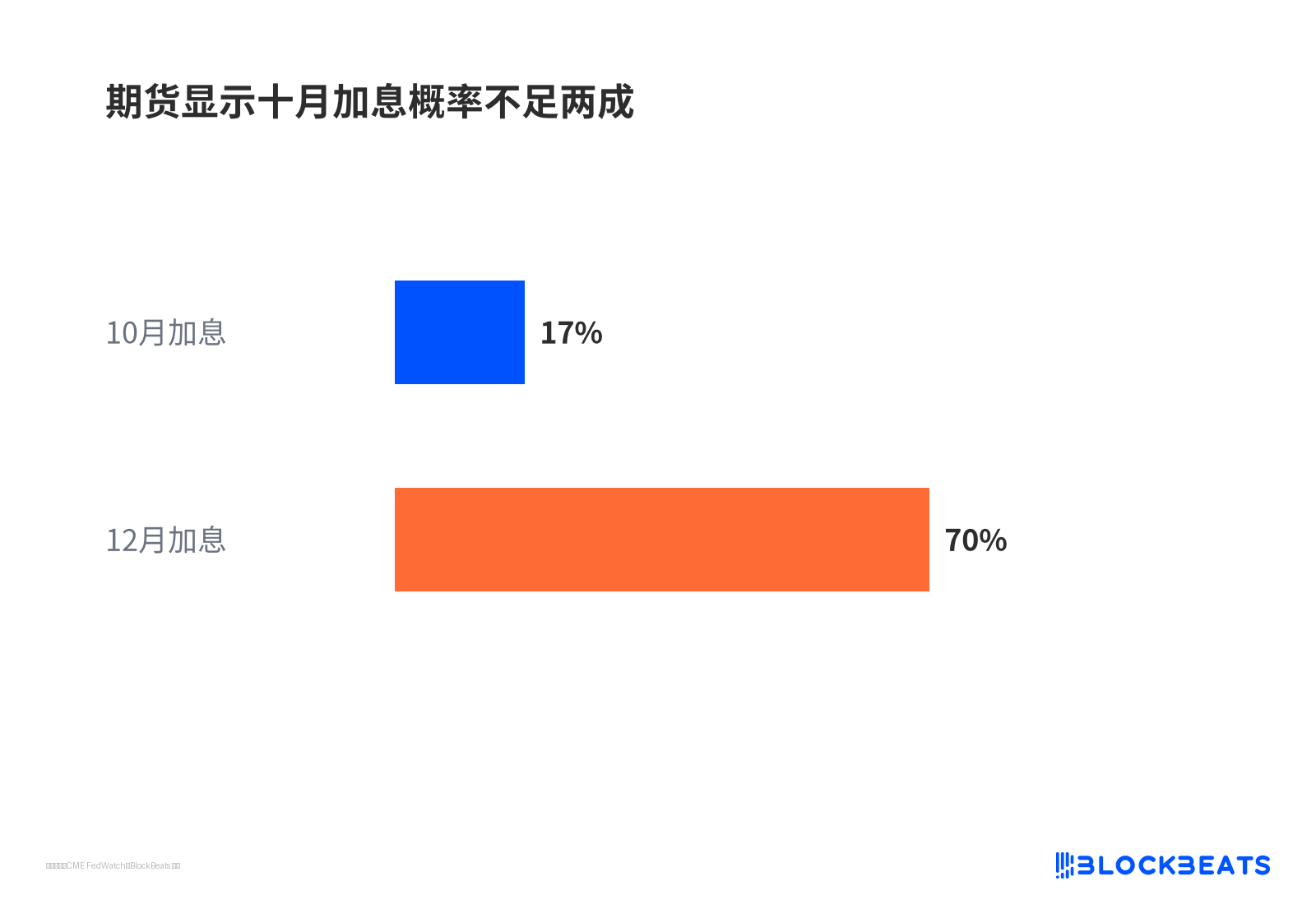
Futures show less than a 20% probability of an October hike
What the "credibility hike" question is really asking
The so-called "credibility hike" refers to a central bank worrying that the market believes it lacks the courage to bring inflation back to 2%, so it hikes first, using action rather than rhetoric to anchor expectations. It is not a hike forced by data, but one to shore up credibility first.
The reason this framework gained traction before the meeting is that the September environment was not typical. Inflation had been above target for several consecutive years, energy prices and AI-related capital spending were pushing up costs, and the job market was near full employment or even slightly strengthening, but no single data point had reached the level that made a hike imperative this week.
Lyngen's inference was that if the minutes discussed credibility heavily, it would suggest the hike was a one-off move to shore up credibility and the subsequent path would be more gradual. If they discussed actual constraints heavily, that would mark the start of a cycle.
The minutes gave the third answer. It did not directly address the credibility question, but instead framed the rationale for a rate hike entirely within "insurance."
Two Reasons for a Rate Hike: Buying Insurance, or the Main Path Shifting Up
The internal disagreement in the minutes was not about whether anyone opposed a rate hike, but about what the basis for a rate hike was.
One camp believed that a higher rate path was "prudent from a risk-management perspective," providing insurance against demand being stronger than expected or supply shocks re-emerging. The other camp, based on the main forecasting model, believed that the baseline path itself required a higher level of interest rates. The two are completely different in nature: the former is buying insurance, while the latter means the main forecast already points to tighter policy.
Evidence supporting the latter judgment is also in the minutes. The statement deleted the previous phrase "partly reflecting supply shocks" and replaced it with a firmer commitment that the Committee will deliver price stability. Several participants also believed that the current policy rate was not restrictive or only slightly restrictive, and a few raised their estimates of the neutral rate.
What the minority worried about was not the tail risk of inflation expectations becoming unanchored, but that policy itself had not yet truly stepped on the brakes.
Most Want One More Hike, but Refuse to Write October as Automatic
The key wording in the minutes on the path was that most participants believed one more hike before year-end would likely be appropriate, while emphasizing that each meeting should remain open and depend on new information. The next meeting is on October 27-28.
The projection materials also pointed in the same direction. The median of members' economic projections showed the policy rate at about 4.1% by year-end, still 4.1% in 2027, and 16 of the 18 participants submitting projections expected at least one more hike.
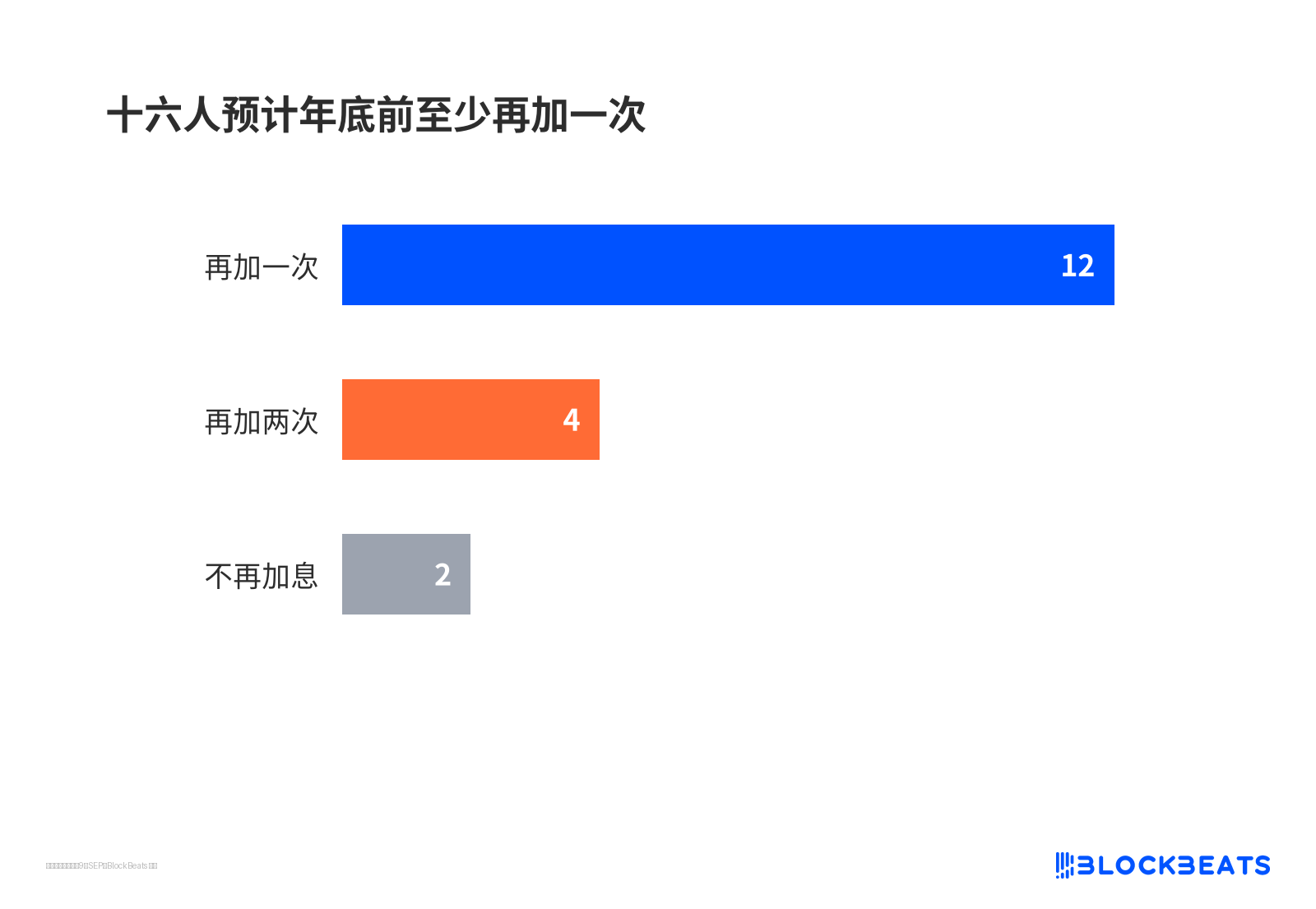
Sixteen people expect at least one more hike before year-end
But the length of these projections does not support the claim of a new tightening cycle. There is only one stretch of hikes, followed by a long period of standing pat.
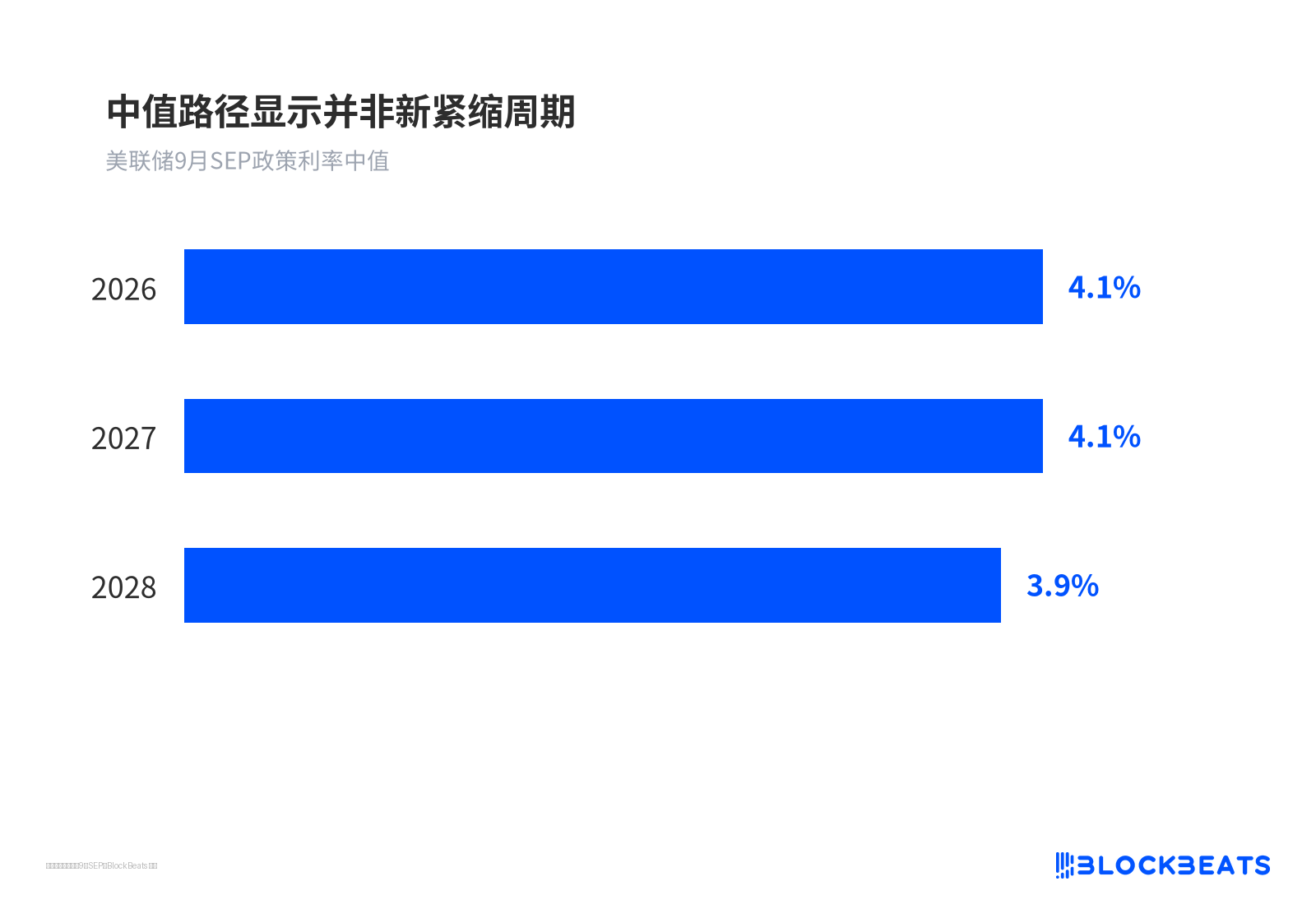
The median path shows this is not a new tightening cycle
The staff's inflation forecast was also on the slow side, holding that it would not return to 2% until 2029.
Post-meeting remarks further calibrated the pace. Williams said on September 29 that the September action had already bought time to wait, that there was no need to act hastily, and that another hike was possible later in the year. The more hawkish Logan believed the target range still needed to be raised by at least 50 basis points, though he also acknowledged that rising term premiums could reduce the need for a hike.
Post-Meeting Data Has Already Outpaced the Minutes
It should be noted that the minutes are a recap of the September 15-16 meeting, and all judgments therein were based on information available at that time. At the time, staff assessments of inflation were on the high side, and data released after the meeting came in milder than that baseline, with employment also weaker than the narrative during the meeting. This is precisely the direct cause of the rapid collapse in October rate-hike pricing.
What determines the path ahead are three variables that have yet to materialize. Whether the price increases driven by energy prices and AI capital expenditure will spill over into core inflation, whether the discussion of upward revisions to the neutral rate will expand from a few individuals to the mainstream, and to what extent rising long-end yields can substitute for policy rate hikes. The minutes show that committee members held divergent views on this last point.
If all these factors move in a moderating direction, the risk-management line in the minutes is merely a form of insurance. If any one of them reverses, the minority view that policy is not yet restrictive enough will be brought back to the table.
Welcome to join the official BlockBeats community:
Telegram Subscription Group: https://t.me/theblockbeats
Telegram Discussion Group: https://t.me/BlockBeats_App
Official Twitter Account: https://twitter.com/BlockBeatsAsia