Rate hikes are already priced in; what else should we focus on at this FOMC meeting?

TL;DR
· Trump-nominated Fed Chair Warsh will chair his first FOMC meeting, with market pricing showing about an 87% probability of a 25 basis point rate hike in September.
· August core CPI rose 0.3% month-over-month, Brent oil approached $107, and Goldman Sachs, JPMorgan, and Reuters surveys simultaneously shifted toward expecting a rate hike, putting Warsh's independence to the test.
· Related assets: Bitcoin, Ethereum, S&P 500, 10-year U.S. Treasury, U.S. Dollar Index.
Trump-nominated Fed Chair Warsh will chair his first FOMC meeting from September 15 to 16, and the market is nearly unanimous in judging a 25 basis point rate hike, pushing the federal funds rate to a range of 3.75% to 4.00%.
Warsh was sworn in in May this year and has long been known as a hawk. In August at the Jackson Hole Global Central Bank Annual Symposium, he pushed responsibility for persistently elevated inflation back onto the Fed itself, stressing that it would not let go until there is clear and sufficient evidence of declining inflation.
This directly collides with the nominee's public stance. Trump has repeatedly said the United States should enjoy the world's lowest interest rates and that the Fed should serve economic growth, not focus only on inflation. White House economic adviser Hassett relayed that the president is "unhappy" about a rate hike "but respects the Fed's independence."
The market's tool for quantifying this conflict is the CME FedWatch Tool. Traders use real money to bet on whether the next meeting will bring a rate hike, a rate cut, or no change, converting it in real time into probabilities, like a poll voted on with money. At present, that number is about 87%.
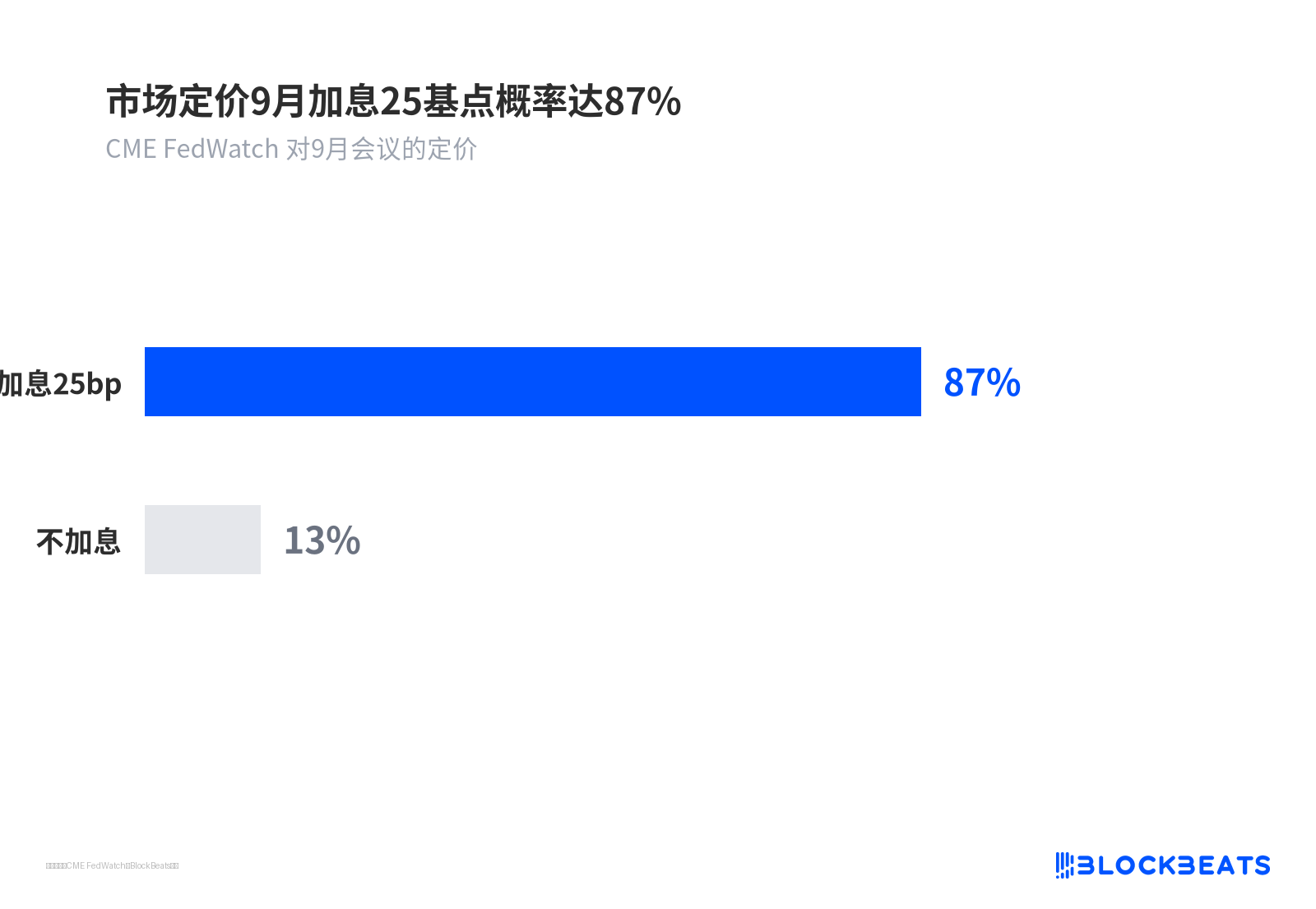
Market pricing shows an 87% probability of a 25 basis point rate hike in September
Inflation and oil prices push rate hike probability to nearly 90%
Inflation has remained above the 2% target for about 65 months. This round of rate hike expectations is not the result of White House pressure; inflation data and oil prices first pushed the market to that point.
August core CPI (the inflation reading excluding food and energy, the two most volatile items) rose 0.3% month-over-month, above expectations, while the energy subindex rose 16.3% year-over-year. With the escalation of Middle East conflicts and disruption to shipping lanes in the Strait of Hormuz, Brent crude approached $107, and the increase passed directly into overall prices. The core reading was also stronger, indicating that pressure is spreading from gas stations to a broader range of goods and services.
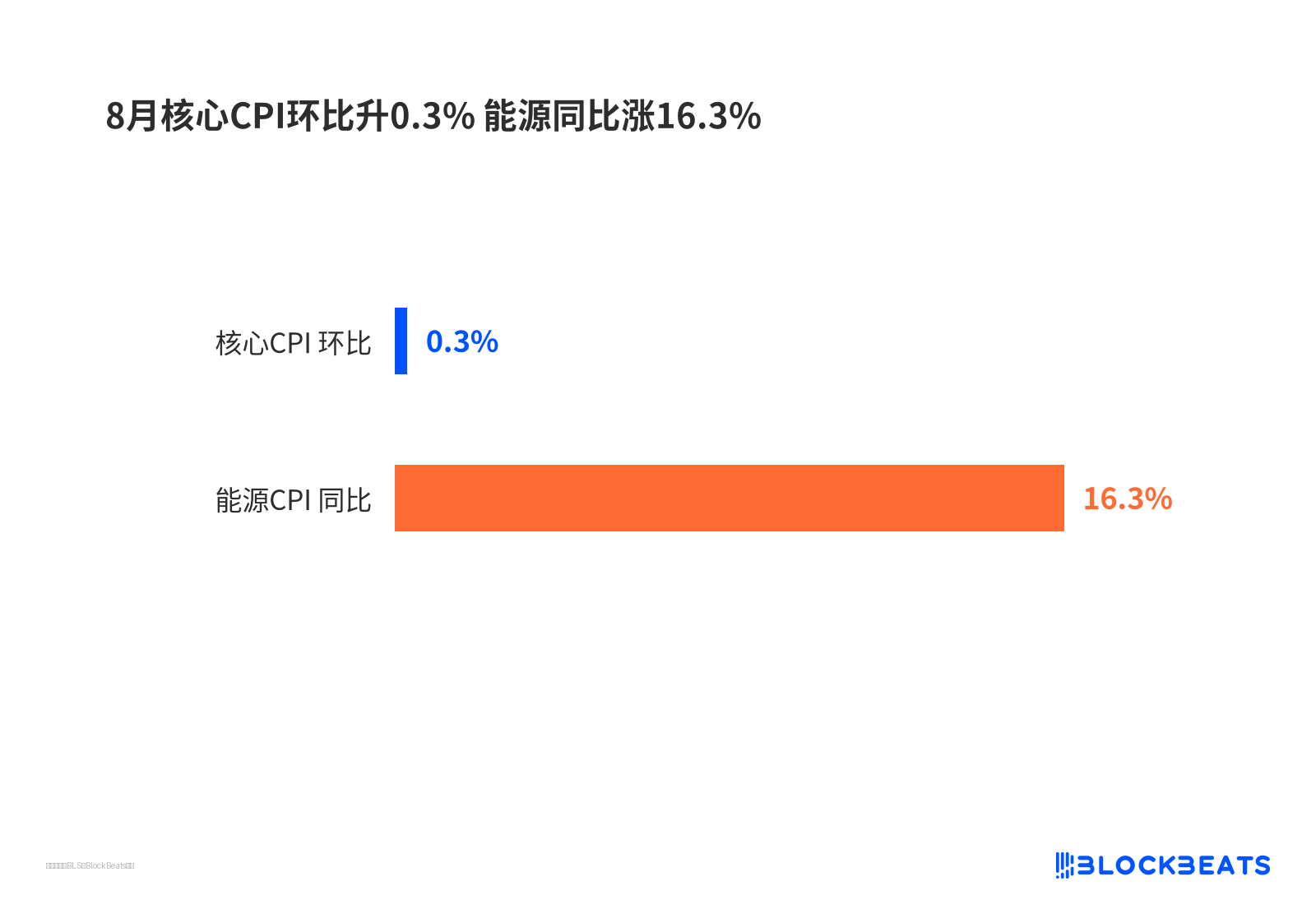
August core CPI rose 0.3% month-on-month; energy surged 16.3% year-on-year
The bond market reacted first. The 10-year U.S. Treasury yield broke above 5%, and futures market pricing for a September rate hike jumped from about 70% before the CPI release to around 87%.
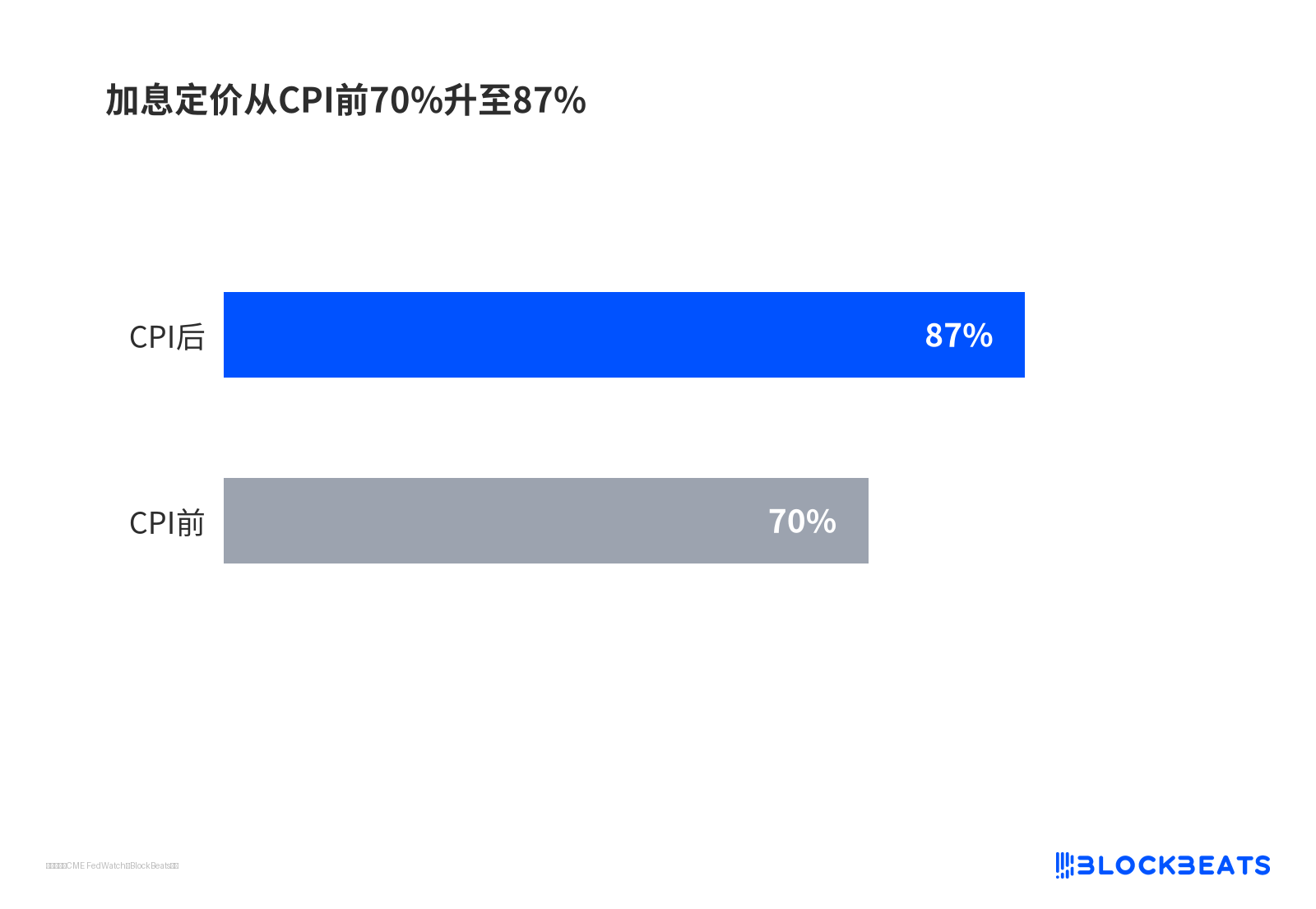
Rate hike pricing rose from 70% before CPI to 87%
In a Reuters survey of 101 economists, 86 expected a 25-basis-point hike this time, with some respondents anticipating at least one more hike before the first quarter of next year. Goldman Sachs and JPMorgan also shifted their forecasts from holding steady to a hike after the data was released. It is rare for the market, investment banks, and surveys to shift simultaneously over the past two years.
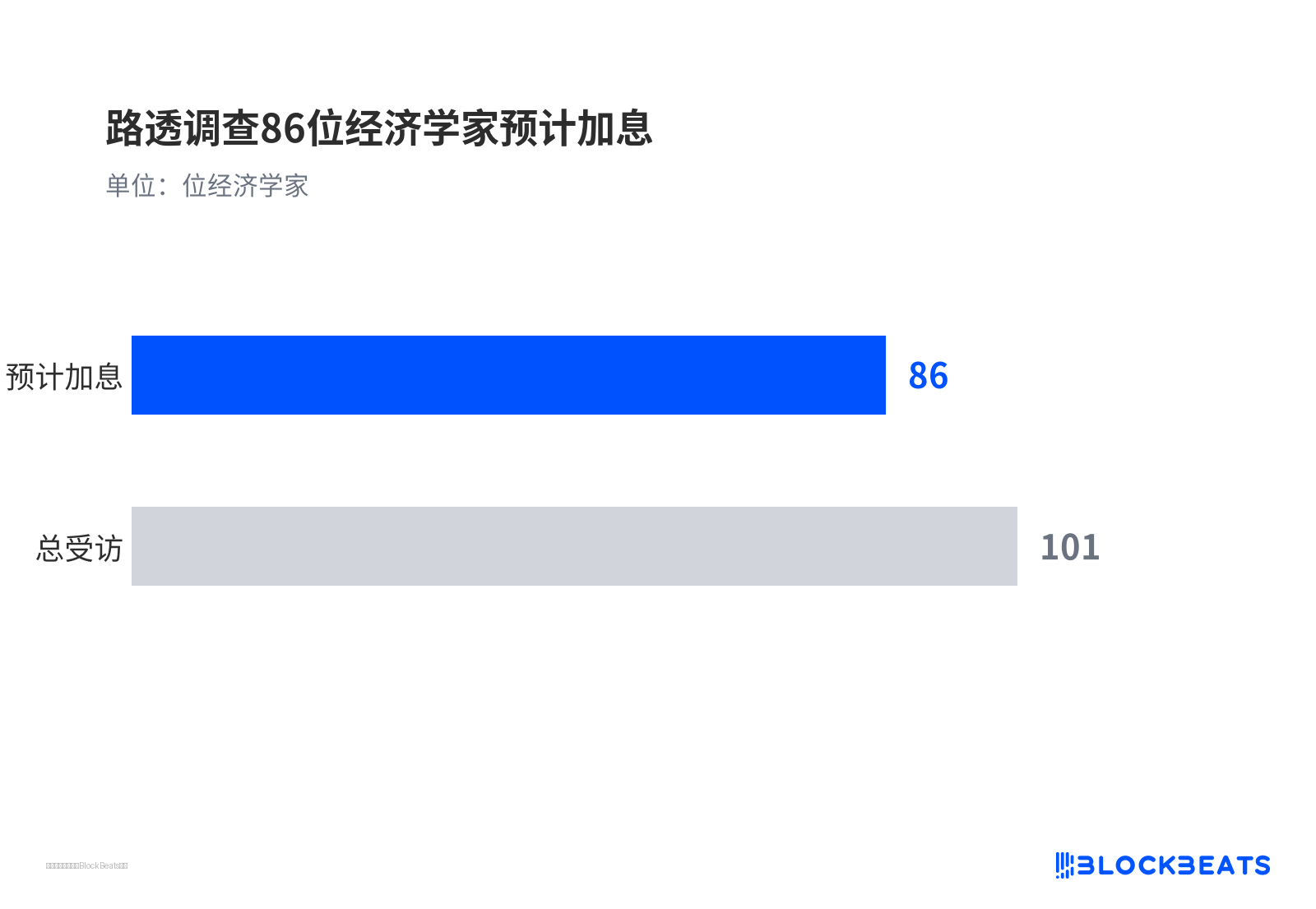
Reuters survey: 86 economists expect a rate hike
Hawkish record collides with the White House's lowest-rate push
The highlight of this meeting is not just whether rates will be raised, but also how Warsh answers a sharper question: does he follow the data or the White House on rate decisions?
Warsh served as a Federal Reserve governor from 2006 to 2011, was nominated by Trump in January 2026, and was confirmed by the Senate in May by a vote of 54 to 45. When he took office, Trump's instruction was to "do your own thing," and now the market is testing how much that statement is worth.
The mechanism of the conflict lies here. Trump needs low rates to support growth and the midterm elections, while Warsh needs evidence of falling inflation to make good on his stance of taking responsibility for high inflation. If he follows the 87% market pricing and hikes at his first meeting, it would amount to showing through action that the nomination came with no policy strings attached. If he stands pat, the market will immediately question the credibility of his hawkish rhetoric.
The Fed's rate decisions are not legally subject to direct presidential command; all the president can do is speak publicly and make personnel nominations. Some Democratic senators previously questioned whether Warsh might become a puppet of the White House, and that label gives his stance at the first meeting an extra layer of credibility implications.
After a rate hike, the most expensive assets come under pressure first
A rate hike landing does not mean risk assets will immediately fall, but rising discount rates will first compress the most expensive valuations.
For the crypto market, higher real rates simultaneously squeeze liquidity and risk appetite, and Bitcoin and Ethereum's sensitivity to rate expectations is especially pronounced in this cycle.
The situation for US equities is more complex. Strategists at Goldman Sachs, Morgan Stanley and others believe corporate earnings can still support the index, but yields standing above 5% itself constitutes valuation pressure, and institutions are split between earnings being able to hold up and rates being too high. These remain assumptions, not facts that have already occurred.
The dot plot and the White House's tone determine terminal rate pricing
The first verifiable reading after the meeting ends is the dot plot, namely each member's anonymous projection for the future rate path. If it hints at more hikes in 2027, market pricing for the terminal rate will be revised upward again. If it points to only this one hike, it shows the committee is still watching. Pre-meeting discussion about how deep the internal split is remains speculation for now.
The White House's tone is another variable. If the phrasing of "unhappy but respecting independence" continues, it shows pressure is still at the level of public statements, and the market can treat it as noise.
The immediate feedback in asset prices then determines whether this 87% has been fully priced in. After the rate hike lands, if Bitcoin and the S&P 500 post limited declines, it shows expectations were already priced in ahead of time. If there is violent volatility, it instead shows there are still positions that have not completed repositioning, and pricing still has room to swing back.
Welcome to join the official BlockBeats community:
Telegram Subscription Group: https://t.me/theblockbeats
Telegram Discussion Group: https://t.me/BlockBeats_App
Official Twitter Account: https://twitter.com/BlockBeatsAsia