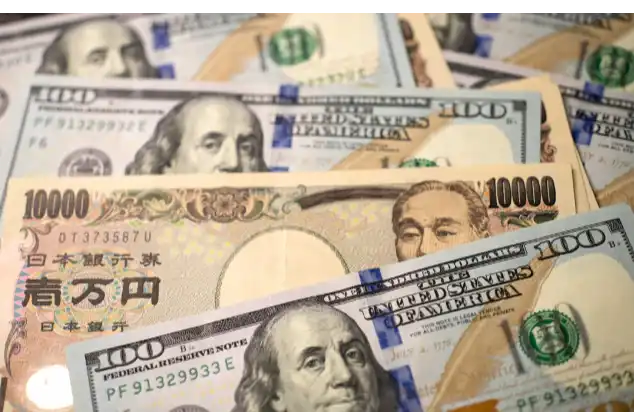
Japan sells U.S. Treasuries at record pace to intervene in currency markets, foreign exchange reserves fall below $1 trillion
Original Title: "Japan Suspected of Selling U.S. Treasuries to Fund Record Yen Intervention, Foreign Reserves Dip Below $1 Trillion"
Original Author: Zhao Ying, Wall Street Journal
Japan is suspected of selling foreign securities, including U.S. Treasuries, to finance its record-breaking yen intervention, reigniting market concerns over U.S. debt supply pressure.
According to foreign exchange reserve data released by Japan's Ministry of Finance on Monday, foreign securities holdings fell by $87.8 billion at the end of August from the previous month, a decline closely matching the scale of intervention that month. The ministry had previously confirmed that authorities deployed approximately ¥15.4 trillion (about $98.6 billion) for currency intervention in the month through August 26, setting a monthly record, with some operations conducted jointly with the United States. As a result, Japan's total foreign reserves dropped by $94.6 billion to $995 billion, falling below the $1 trillion threshold.
The unprecedented scale of the intervention, along with the potential impact of its financing method on the U.S. Treasury market, has drawn significant market attention. Treasury Secretary Bessent recently announced that the government will double its long-dated bond buyback program over the two months through November 4, a move widely interpreted as an effort to cap rising long-end yields, signaling Washington's growing focus on U.S. Treasury market stability.
Sharp Drop in Foreign Securities Holdings Points to U.S. Treasury Sales
Ministry of Finance data shows that Japan's foreign securities holdings fell by $87.8 billion at the end of August, close to the month's intervention spending. Although the data does not disclose the specific composition or maturity profile of the securities, market participants broadly estimate that roughly 70% of Japan's foreign reserves are invested in U.S. Treasuries.
From a market price perspective, the 10-year U.S. Treasury price at the end of August was only slightly lower than at the end of July, implying that valuation changes contributed minimally to the reduction in foreign securities holdings, further supporting the view that Japan actively sold U.S. Treasuries.
Record Intervention Scale, Joint U.S.-Japan Action
Ministry of Finance data shows that in the month through August 26, Japanese authorities deployed approximately ¥15.4 trillion for currency intervention, setting a monthly record, with some operations conducted jointly with the United States. This marks the largest single-month yen intervention to date.
The intervention occurred against a backdrop of significant pressure on the yen, forcing authorities to enter the market on a large scale to support the domestic currency. The joint format of the intervention also indicates deepened coordination between Japan and the U.S. on currency matters.
As Japan again sells U.S. Treasuries to fund intervention, U.S. officials are paying increasing attention to the stability of the Treasury market, especially with midterm elections approaching. Treasury Secretary Bessent recently announced that the government will double its long-term bond buyback scale over the two months through November 4, a move widely seen as aimed at suppressing long-end yields.
Japan's latest move indicates that even as Washington grows increasingly sensitive to Treasury market stability, Tokyo remains willing to resort to selling U.S. debt when necessary.
Reserves dip below $1 trillion, but intervention room remains ample
Although Japan's foreign exchange reserves have fallen below the $1 trillion threshold to $995 billion, authorities believe the remaining reserve scale is still sufficient to support potential future intervention actions. Beyond foreign securities, foreign currency deposits—another potential funding source for intervention—also declined by $6.9 billion at the end of August.
Notably, Japan's Finance Minister Satsuki Katayama stated after the joint U.S.-Japan intervention that future actions could also tap the Federal Reserve's Foreign and International Monetary Authorities (FIMA) Repo Facility. This tool allows Japan to access up to $60 billion in daily liquidity without selling U.S. Treasuries, thereby effectively limiting the impact on Treasury yields and further expanding the potential intervention space.
Welcome to join the official BlockBeats community:
Telegram Subscription Group: https://t.me/theblockbeats
Telegram Discussion Group: https://t.me/BlockBeats_App
Official Twitter Account: https://twitter.com/BlockBeatsAsia

 Related Articles