Wash's Latest Speech: The Era We Live In (Full Text)
Original Source: Caixin
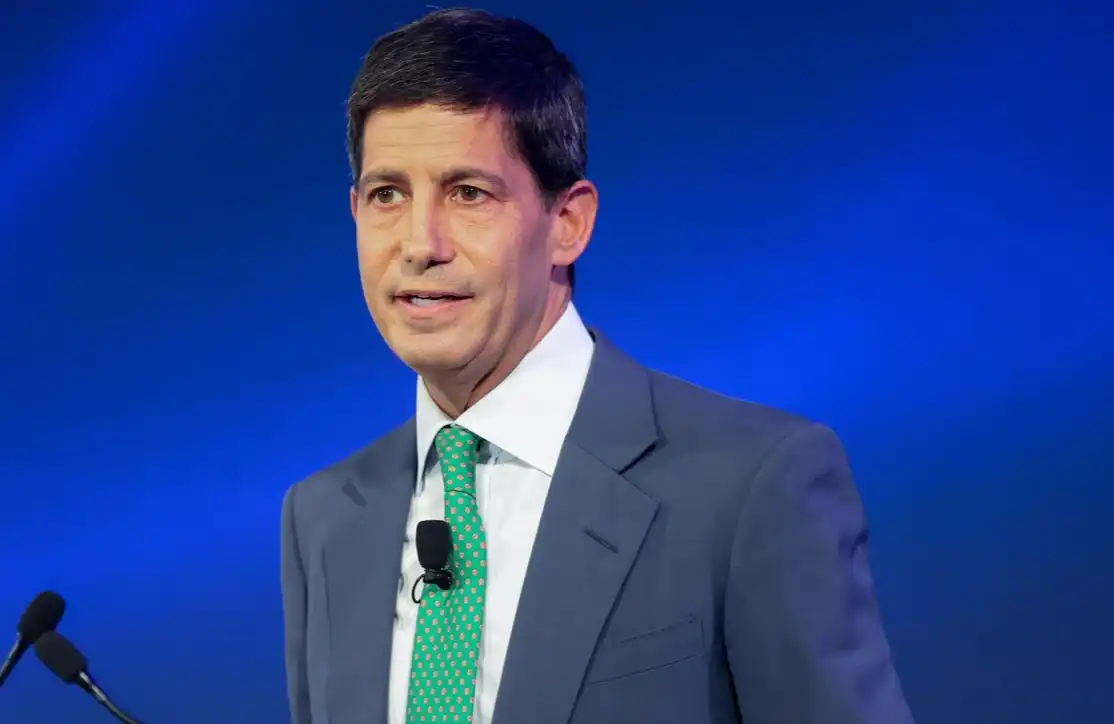
At 10 p.m. Beijing time on Friday, Federal Reserve Chair Kevin Wash appeared at the Jackson Hole Symposium, delivering a speech titled "In Our Time."
Overall, Wash's speech at Jackson Hole this time sent a rather clear dovish-leaning hawkish signal. He believes that the U.S. economy and labor market still show resilience, the current financial environment can hardly be described as significantly restrictive, and inflation remains significantly above the Fed's 2% target. Therefore, the price issue should continue to be the top focus of monetary policy.
The Fed Chair emphasized in his speech: "My standard is: we must have confidence that potential inflation is clearly and rapidly moving toward our target. Otherwise, we still have work to do."
Wash also stated that, despite the better-than-expected summer CPI and PCE price data, "they did not make me believe that there has been a meaningful improvement in the potential inflation trend."
In response to external criticism of his "resistance to providing forward guidance," Wash took this opportunity to offer an unprecedented in-depth explanation.
Wash believes that forward guidance is necessary in times of crisis, but should be significantly weakened in normal times. He thinks that prematurely hinting or even quasi-committing to the future interest rate path to the market, while seemingly enhancing transparency, could actually create new misguidance: on the one hand, it constrains the Fed's flexibility to make decisions based on economic changes in the future, and on the other hand, it may lead the market to excessively focus on "guessing the Fed" trades rather than independently assessing economic fundamentals.
He particularly warned of the "hall of mirrors problem" that could arise from this—the market prices based on Fed guidance, and the Fed in turn refers to market prices to make judgments, ultimately causing both parties to overlook new economic changes.
Therefore, Wash is neither in favor of normalizing forward guidance nor willing to provide a mechanical policy "reaction function"; instead, he prefers to reduce pre-commitments, allow the market to form its own judgment, and have the Fed maintain sufficient flexibility based on real-time data, trends, and more robust policy rules to make decisions whenever necessary.
As of 10:45 p.m. Beijing time, after Wash's speech, CME's "Fed Watch" tool showed a probability of nearly 60% for a Fed rate hike in September, up from yesterday's 35%. Spot gold took a short dive of $50, with the latest price dropping to around $4550 per ounce.
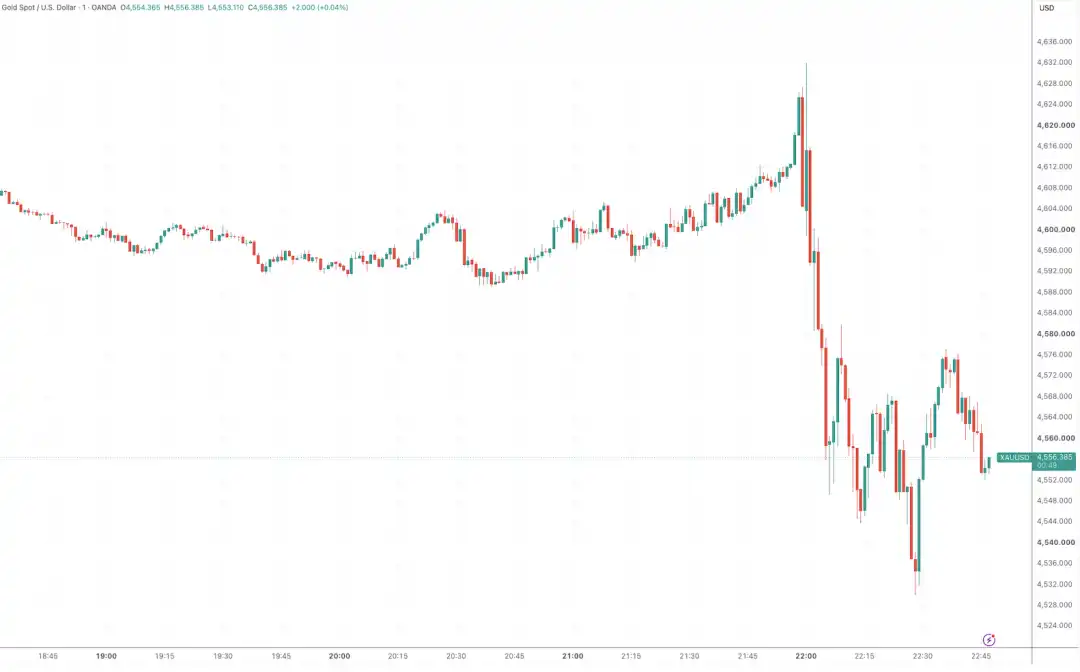
(Source: TradingView)
The following is the full translation of Wash's speech (the speech text is sourced from the Federal Reserve website and translated with the assistance of artificial intelligence):
Thank you. I am delighted to be here again and pleased to see so many familiar faces. I have been looking forward to this weekend—where else could be more appropriate to commemorate my 100th day as the Chair of the Federal Reserve?
For the warm and gracious hospitality here, everyone in attendance should thank Kansas City Fed President Jeff Schmidt and his colleagues. Jeff, I express my gratitude to all of you.
Jeff and other conference organizers have arranged some leisure activities for later today. I suggest that everyone be very cautious in making choices.
As I learned many years ago, around the trails of Jackson Hole, you can experience two completely different types of hiking. I can summarize my experience of hiking with former Fed Vice Chair Don Cohen years ago with two words: I survived. The marathon-style "death march," supported by iron willpower, showed me a side of Don that I was entirely unprepared to face.
There is another type of hiking—I would associate it with my former colleague, former Fed Chair Ben Bernanke. Walking with Ben is much more leisurely, just a casual stroll on the winding paths of the Rockefeller Preserve.
So, before you set off, check your physical condition first, and ask yourself, "Is today a Cohen day or a Bernanke day?"
The best part of this gathering is that it can help all of us clear our minds and think more clearly about the world and era we are in. For me, this is the right place, and all of you present are the right audience, enabling us to truly delve into those most important ideas.
"Innovation" is the theme of this meeting. I believe that the public and the market, with their collective wisdom, have recognized that the Fed's innovation in its policy implementation will help us achieve full employment while maintaining price stability.
Next, I will briefly introduce the content of this morning's speech. You can call it an outline... or you can call it a hiking trail map... but never call it "forward guidance."
First, I will talk about several long-term issues that the Fed is currently studying, including the latest universal technology—Artificial Intelligence (AI)—and where it may lead the economy.
Next, I will discuss the forward guidance of this policy approach and the interaction between central banks and the financial markets.
Following that, I will introduce some core principles that I believe should guide monetary policy implementation.
Finally, I will speak to my assessment of the current economic situation.
Preparing for the Policy Environment of the Future
Set against the backdrop of the unchanging views of the Teton Range, what we are examining here is anything but an unchanging economic landscape.
Not too long ago—on the eve of the 2008 crisis and in the decade that followed—economists and policymakers were still discussing "secular stagnation" and "global savings gluts." A widely accepted view at the time was that due to a lack of sufficiently attractive investment opportunities, excess capital would remain sidelined for an extended, perhaps indefinite, period. All the good ideas had already been invented. Therefore, economic growth would be subdued and sluggish.
However, truly, times have changed. We have reached a historical inflection point.
Take the most glaring example: artificial intelligence—this term, with an 80-year history, now used to refer to the latest technological wave—its pace of advancement has even surpassed the predictions of the most fervent advocates from just a few years ago.
The potential for significantly higher economic growth is on the rise. Capital of expanding scale is flowing into various AI-related infrastructures. Some kind of "super Moore's Law" seems to be unfolding. At the same time, the laws of scale are also changing the ways and speed of innovation.
Capital combined with labor has created large language models at the core of AI. Users purchase tokens to gain access to these models. Reportedly, the annualized token sales of just two leading AI labs have exceeded $100 billion, representing a growth of over 500% from a year ago.
The Federal Reserve is closely monitoring all of this. We recognize that AI is a new variable—even a new factor of production—that will impact the economy and the implementation of monetary policy. This has also opened up several significant avenues of research:
Will the application of AI drive a significant and sustained increase in overall economic productivity? If so, when will this happen?
Will the use of tokens complement or compete with labor? Will the next generation of AI models require higher capital intensity, or will the models themselves ultimately help us design solutions with lighter capital inputs?
Other unresolved questions include what the ultimate market structure will look like. It is currently unclear where capital returns will ultimately accrue, and how long this process will take. In the early stages, how much of the economic surplus will flow to the owners of scarce assets—AI labs, chip manufacturers, energy producers, and cloud service providers? Over time, how much value will eventually flow to enterprises and consumers? What does this shift mean for workers? And what broad effects will it have on the Fed's employment-focused mandate?
Likewise, we currently do not know what the equilibrium price of tokens will be. Will there be different types and qualities of tokens in the future, such that people are willing to pay increasingly higher prices for access to cutting-edge, state-of-the-art models? Will the token price of older generation models eventually fall to their marginal cost level?
We will delve into these questions with a "Productivity and Employment Working Group." I recently had initial discussions with this working group and the heads of four other working groups, and their progress is encouraging.
However, it should be clear that the recommendations of these working groups will not be submitted until the future and will not affect the decisions we make in the current policy environment. But I believe that engaging in this kind of thinking today for future policy challenges will better prepare us in the long run.
Forward Guidance and Its Alternatives
While these working groups are underway, I have not been idle. I have already begun driving innovation at the Fed to truly align it with its responsibilities. For example, I have started to change the form and function of the so-called Fed Chair "forward guidance." Some of you may know that I have long been uncomfortable with prematurely announcing future policy decisions. I prefer to take a different path... I will explain why next.
Communicating transparently about future policy decisions is not inherently virtuous. Communication must serve the Fed's most important responsibility: getting monetary policy right.
During the global financial crisis, my colleagues and I institutionalized forward guidance as a common practice. At that time, it was essential, and we enthusiastically rolled it out. But like other legacies of past crises, I believe this practice has been around for too long.
In normal times, the role of forward guidance should be restricted and should have clear boundaries. Otherwise, it may create confusion in the name of clarity. Overdisclosing policy discussions and making too many promises about future policy decisions could mislead markets, businesses, and households. And I believe that when policymakers make near-commitments to interest rates throughout the economic cycle, we actually limit our freedom to make the right choices when we truly need to make decisions.
To get the policy right, we must also navigate the relationship between the financial markets and the central bank correctly. The Fed needs to receive clear market signals, and these signals should ideally be unfiltered... encompassing the market's internal structure... the levels and changes in asset prices across industries... the price and trading volume of U.S. Treasuries... the foreign exchange value of the dollar... the cost and availability of credit... and the prices of widely traded commodities.
These indicators, among others, should help the Fed assess recent economic activity and inflation prospects throughout the business cycle. They should also reveal the state of the broader financial environment... as well as the risks and uncertainties in the financial cycle.
At the same time, market participants themselves should track real information across the economy. They should form their own judgments, shape their expectations for output, employment, and inflation, and always remain acutely aware of risks.
The Fed should stay humble but never naive. The Fed plays a crucial role in the economy and the markets, and our policy tools wield significant power. We determine the path of short-term interest rates. Therefore, market participants will always try to anticipate our next move. However, we should not enable a mechanism where market participants primarily base their next transaction on guessing the Fed's actions.
Economic literature has long described this distortion effect: the so-called "hall-of-mirrors problem." If the market heavily relies on the Fed's guidance, and the Fed, in turn, relies on market prices, then all of us are more likely to overlook new developments... more likely to be caught off guard by sudden shifts... and more likely to err in policy-making.
Ironically, market participants may not be the ones bearing the greatest cost of the "hall-of-mirrors problem." Those most severely affected are likely those who do not hold financial assets. If the Fed misjudges inflation and the economy, who will suffer the most severe consequences? Not those high-net-worth individuals in the financial markets. Ultimately, facing either high inflation or suddenly unstable employment due to misjudgments will be hardworking ordinary Americans.
So, if forward guidance is not suitable for normal times, should the new Fed Chair at least commit to providing a clear reaction function? Of course, he should inform us where rates would go if the data clearly indicate overheating or cooling off.
I wish our understanding of the economy were precise enough to provide a mechanized, fail-safe answer—such as relying strictly on a simple rule like the Taylor Rule. But our knowledge is far from reaching that level—at least not yet—and the most critical factors in determining appropriate monetary policy themselves evolve over time.
Using forward guidance to illustrate the Fed's reaction function is theoretically more effective than in practice, with the lab outperforming reality. I am not the only one who has noticed this. For example, forward guidance in 2021 likely delayed the Fed's subsequent policy response to high inflation.
During my tenure as Chair, my colleagues and I worked to build more reliable models and more robust rules to guide policy decisions. We will proceed from this cognitive foundation: accurately predicting the economy is still just a goal. In a world where geopolitics, global supply chains, and technology are changing at such a rapid pace, it is wise to remain humble about what we can and cannot know.
In the same spirit, for any issue that could potentially affect Fed monetary policy decisions, we should listen fully to various perspectives. If our goal is to make the best decisions, then we should not shut out alternative views on the economy.
So, how can we chart a better course for policy planning? In the following remarks, I will share some core principles that guide my thinking on the proper implementation of monetary policy... and then fulfill my promise to discuss my economic assessment.
Core Principles
Let's talk about the principles...
First, I note that in our line of work, people often mistake yesterday's news for what is happening now. The real challenge is to distinguish between the two. In other words, we must continually test reality to ensure that we do not base future-oriented policies on outdated or inaccurate data. We should also not rely on isolated data points. Trends are what matter most. The Fed is a decision-making institution. We must make choices in uncertainty, so the data we rely on must be as relevant, timely, accurate, and directly applicable to decision-making as possible.
Second, Fed actions are taken to ensure that overall demand in the economy broadly matches overall supply. However, what we can directly observe is only economic activity itself. We can never directly see what is truly happening on the supply side; we can only infer. Therefore, the assessment of the balance between current and future total supply and total demand is inherently imprecise.
Third, and this must not be misconstrued: the Fed's 2% price stability target measured by the Personal Consumption Expenditures (PCE) price index is a firm, fixed goal. Regarding another aspect of this target, we must also be equally clear: price stability is not achieved automatically, and inflation does not necessarily naturally exhibit mean-reverting characteristics. Achieving price stability is the Fed's job.
Fourth, the Federal Reserve also bears the responsibility of achieving maximum employment. Working towards the dual mandate in the medium term is not a matter of "either/or." I do not see the Federal Reserve's dual mandate as conflicting. After all, high inflation itself can severely damage economic prosperity.
Fifth, short-term interest rates are the primary policy tool for achieving the dual mandate. Unconventional policies taken to stimulate economic activity may be suitable for true crisis periods but should be used sparingly in other circumstances, or even not at all.
Sixth, money matters. This view is not currently in vogue, but I believe there is a clear connection between money and monetary policy. We should pay attention to money created by central banks as well as money from the banking and financial system. Indeed, financial innovation and other factors may alter the mechanisms linking the monetary base, money velocity, and the broader economy. However, this is by no means a reason to ignore the ultimate impact of money on the financial environment and prices.
Lastly, a more restrained and purposeful Federal Reserve in its communication will be better equipped to achieve its objectives. Whether we have fulfilled our responsibilities is also subject to accountability—the only true test of our credibility. To borrow a phrase from General Chuck Yeager: "When you come to the fork in the road, either you've got a reason or you've got a result."
Current Economic Situation
So, under these principles, how do I assess today's economy? What is really happening outside the window?
Many of you may have seen the FOMC's unanimous assessment in the July meeting minutes: the labor market is stable, economic output is robust, but inflation remains elevated. I, along with the vast majority of my colleagues, believe it is wiser to wait for more new information between the two meetings—especially considering potential new developments in the supply chain, capital flows, and geopolitics—before assessing whether an adjustment in rate policy is appropriate. At the same time, we have all expressed readiness to act as needed.
Personally, the overall performance of the U.S. economy today has left a deep impression on me, and the economy appears to have strengthened. One criterion for judging the strength of an economy is how well it withstands shocks. From this perspective, both the real economy on "Main Street" and the financial markets on "Wall Street" have demonstrated remarkable resilience.
Here are a few observations:
Business capital spending—the "seed corn" for future economic growth—is growing rapidly. Investment in equipment and intangible assets has seen a four-quarter growth rate of around 9%, the highest since 2021. In this year's capital expenditure growth, over half is likely attributable to AI-related infrastructure development.
For S&P 500 index constituent companies, profit growth has exceeded 20% over the past year. The corporate profit margin is currently quite high compared to historical levels. Overall stock market volatility is low. We are closely monitoring the market's internal structure and observing the performance of various industries.
The market has very high expectations for capital expenditure and future earnings growth of companies. I will continue to observe the changes in their growth rates themselves, known as the "second derivative." The subsequent effects of this— including its impact on asset prices, corporate confidence, consumer income, and consumer spending— are also very important.
The credit spreads for corporate bonds and leveraged loans are close to the low end of the historical range, and issuance in these markets has been quite strong this year. Looking beyond the fixed income market to the banking sector, a July survey of senior loan officers at banks indicated that banks have told us that the credit standards for commercial and industrial loans are currently at a historically loose end. This also helps explain why there has been growth in such loans this year. There are hardly any signs in the credit and loan markets of being significantly constrained by monetary policy.
Some industries— such as housing and agriculture— are indeed facing pressure. But overall, if you asked me to describe the broad financial environment as "restrictive," I would find it hard to justify.
Despite various shocks, actual consumer spending remains healthy, growing by over 2% in the past four quarters. When combined with the robust investment we are observing, Private Domestic Final Purchases (PDFP) has also seen growth. Year-to-date, the growth rate of PDFP is close to 3%. This indicator, which is typically a stronger economic signal compared to GDP, is currently showing a positive trend.
On the employment side of the Fed's dual mandate, the US is currently performing well. The labor market is quite stable. The unemployment rate is currently at 4.1%, which remains low from a historical standpoint and has seen little significant change in the past few years. The initial claims for unemployment insurance, calculated as a four-week moving average— a time-tested and fairly robust real-time indicator— are currently near the lowest levels seen in decades.
In my view, the current labor market has a relatively low rate of labor turnover, partly due to a significant realignment between employers and employees following the pandemic.
When labor supply is almost no longer growing, naturally, the monthly job additions will also be comparatively low. There are always areas of the labor market that deserve attention— for example, recent graduates. However, overall, those who want to work can generally hold onto a job or find one. They may certainly be concerned about potential disruptions to the future labor market, but so far, I believe the US labor market is in a state of full employment.
However, on the price stability side of our dual mandate, the data is even more concerning. The Federal Reserve's preferred inflation gauge—PCE Price Index for the past 12 months—is currently at 3.7%, and the annualized rate for the past six months is 4.1%. Comparable measures of the Consumer Price Index (CPI) are also elevated, and core inflation measures for both PCE and CPI are also elevated. While none of these measures is perfect, they all tell a similar story: Inflation remains above our 2% target. Therefore, the Fed's primary focus at present should be on prices.
The task for policymakers is to identify underlying trend inflation, which is the general movement in prices in the overall economy after excluding various special or one-off factors. We need to determine whether underlying inflation is rising, falling, or stagnant. We not only want to understand the direction of its movement but also the pace. Each of the broad inflation measures mentioned above has seen a significant decline from their 2022 highs. However, progress over the past two years has been quite limited.
Furthermore, while PCE and CPI data for this summer have been better than expected, these data do not lead me to believe that there has been a meaningful improvement in underlying inflation trends.
Data shows that wage growth is currently relatively modest. However, when tracking underlying inflation, wage growth has not been a reliable indicator of predicting future inflation over the long term.
In assessing underlying inflation, I believe that disaggregating the 199 individual components of the PCE Price Index is very helpful. Over the past 12 months, 54% of items in the PCE basket of goods and services have seen price increases exceeding 3%. This proportion has significantly decreased from around 77% post-pandemic but remains much higher than the pre-pandemic average of 32% over the 20 years before that.
Looking at just the most recent six months, the conclusion is similar: 49% of items in the PCE basket of goods and services have seen annualized price increases exceeding 3%. Again, this is significantly lower than the post-pandemic peak but still at a relatively high level.
The recent surge in overall commodity prices is also worth noting. The question we need to address is whether these trends currently indicate an upward inflation risk.
Additionally, whether the inflation data that has persisted for more than five years has already seeped into people's expectations is equally crucial. The good news is that, overall, medium-term inflation expectations remain steady. Inflation compensation measures in the swap market also send similar and robust signals.
Especially considering recent developments, market pricing still reflects a confidence—confidence that we can achieve price stability. This not only reflects the Fed's institutional credibility but also aligns with the finest traditions of the Fed. And I can assure you... the market is right.
From an economic history perspective, market-based inflation expectations have a characteristic: they tend to remain very resilient and robust until they lose stability. These expectations do not change easily and are currently still well anchored. However, we must stay vigilant. Ensuring that inflation expectations do not become unanchored is the Fed's job.
There is one signal that no one should ignore: 65 months of sustained, elevated inflation, for which the central bank is squarely responsible. And that is exactly where the responsibility should lie.
My standard is this: We must have confidence that underlying inflation is clearly and swiftly moving toward our target. Otherwise, we have work to do. That is our job... our mission... and our duty to fulfill.
Conclusion
Standing here today, what I promise is a discipline, not a specific policy decision.
In such a momentous time, my colleagues at the Fed and I are not the first to hold these positions. We are determined to cherish the present moment and to work to the highest standard of what each of us can achieve.
We approach our responsibilities with humility yet firm resolve. Much depends on the choices we make. Sound monetary policy can help families and businesses thrive. Implemented effectively, it can enhance and deepen the forces of U.S. economic growth... while helping to reinforce America's leadership in the world. I also know that our nation requires thoughtful and wise action.
It is a great honor to serve the Fed once again. I am deeply grateful for the encouragement and valuable advice from my colleagues... as well as the support from many of you present today. Thank you for your patient listening this morning. Thank you.
Original Article Link
Welcome to join the official BlockBeats community:
Telegram Subscription Group: https://t.me/theblockbeats
Telegram Discussion Group: https://t.me/BlockBeats_App
Official Twitter Account: https://twitter.com/BlockBeatsAsia

 Related Articles