HYPE Epic Bullish, What Other Opportunities Are There on the PerpDEX Track This Year?

A big green candle brings forth a mighty army. After a period of silence, the PerpDEX token frenzy is about to enter its second stage.
Variational
Variational is the project with the largest funding scale still running its official token program. In May of this year, it completed a Series A funding round of about $50 million, led by Dragonfly with participation from Bain Capital Crypto, Coinbase Ventures, and other institutions. The previous $10.3 million seed round was led by Bain Capital Crypto and Peak XV, with a total of approximately $60.3 million raised in two public funding rounds. Variational is taking the RFQ derivative route, while Omni is packaging this institution-facing liquidity capability into perpetual contract products that ordinary traders can use.
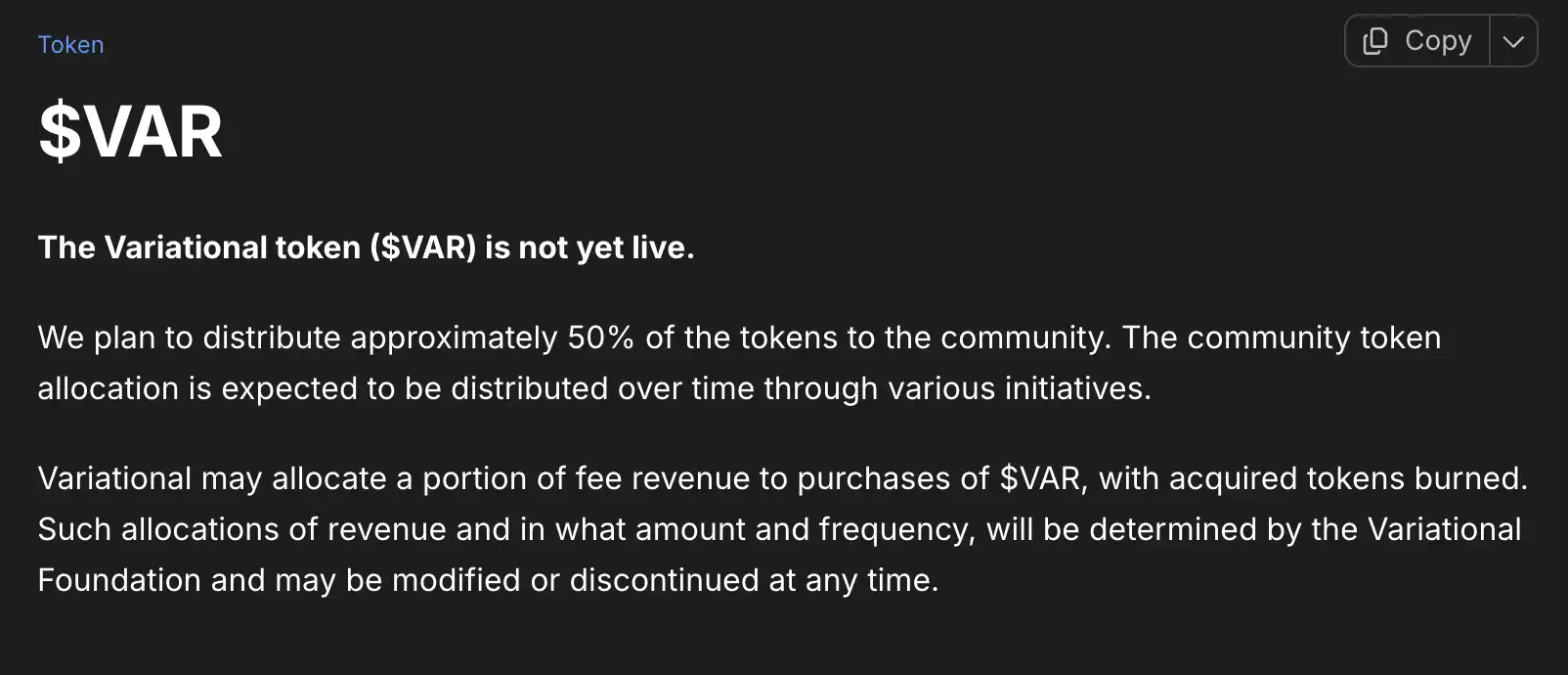
Variational's Omni token program was launched in December 2025, distributing 3 million tokens to early users first, with the team planning to allocate about 50% of the tokens to the community. Subsequently, tokens are settled weekly, with the official commitment to end token distribution no later than the end of the third quarter of this year, which can be seen as the final observation phase before the TGE. Currently, the off-exchange single token price ranges from $10 to $20.

For new users, Variational is currently the fastest project to see results, but at the present stage, the difficulty of interacting to obtain tokens is high, requiring good cost control.
Extended
Extended was developed by the former Revolut team. The project completed a $6.5 million funding round in 2024, with investors including Tioga Capital and Semantic Ventures. In July of this year, Extended completed a $12.5 million strategic funding round, led by eToro, with participation from Jump Crypto and Alber Blanc, raising a total of about $19 million in public funding.
The first quarterly token distribution of Extended began in April 2025. The current rule is to distribute 600,000 tokens per week, not exceeding a total of 70 million tokens. Tokens mainly come from three types of activities: normal trading, providing liquidity to the Vault, and inviting real users.
The most important thing to note here is the identification of invalid transactions, known as "Witch Hunting." In August, Extended reduced approximately 5.04 million suspicious points, involving wash trading, self-referral, witch addresses, and multi-account collusion. After processing, the total points are around 64.67 million, with only about 5.33 million remaining until the 70 million limit. At the current weekly emission rate of 600,000, there is relatively limited space left for new users.
RISEx
RISEx is the core perpetual contract product of the RISE Chain, currently without separate funding disclosure. After RISE Chain received a $4 million investment from Galaxy Ventures in 2025, the total funding reached $8 million, with early investors including Vitalik and Aave founder Stani.
The first season of RISE Ignite started scoring on July 20, 2026, with a weekly distribution of 200,000 RISE Points, and the event is expected to end no later than the second quarter of 2027. RISEx users can receive all the RISE points generated by this product, covering traders, liquidity providers, and developers who access the Builder Code.
The scoring method of RISEx is more complex than simply looking at the transaction volume. The system comprehensively evaluates transaction maturity, fees and slippage, negative price impact, order book and trade volume, position size and holding time. The weights are not disclosed and are adjusted weekly. Referrers can receive an additional 10% of the referred person's points.
One advantage of RISEx is that the season has just started for a little over a month, making it relatively easy to earn points, and the depth is also quite user-friendly.
Lighter & Robinhood Wallet
Lighter raised approximately $89 million in public funding, with the latest $68 million round led by Founders Fund and Ribbit Capital, with participation from Robinhood.
Lighter and Robinhood allocated 11 million LIT tokens for the community. Users who meet the regional requirements can earn double Lighter points by trading perpetual contracts via the Robinhood Wallet; when trading directly on the Lighter web platform on the Robinhood Chain, the calculation is based on a single fold, and points are exchanged for the corresponding share of LIT according to the terms of the activity.
Entropy
Entropy is the deployer of HIP-3 on Hyperliquid, focusing on RWA and pre-IPO perpetual contracts. The project has completed a $14 million seed round led by Ribbit Capital. Team members come from Citadel Securities, Optiver, Polymarket, and Millennium.
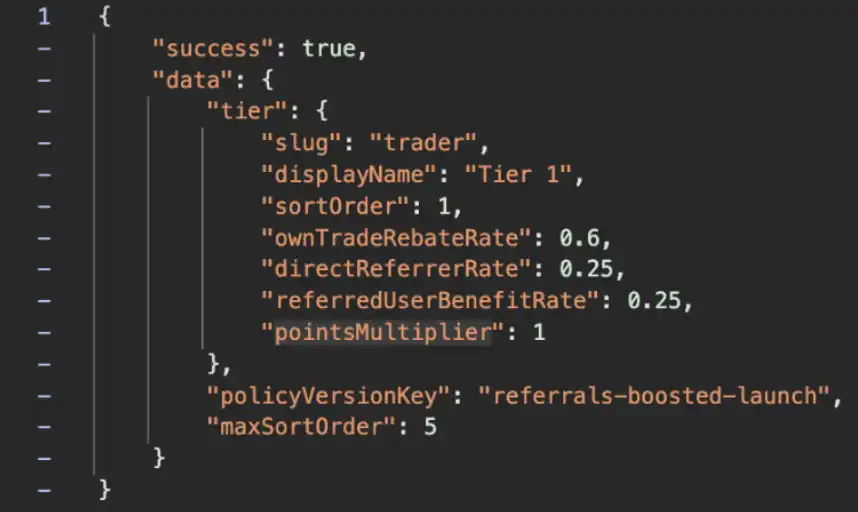
Entropy has not officially announced a point system yet, but point-related fields have already appeared in the backend of the product. The real-time interface of entropy shows the existence of a pointsMultiplier field in the user level configuration; the return value also includes the referral kickback rate and a reward policy version named referrals-boosted-launch.
During its initial launch, Entropy had only two markets, with low participation and competition intensity. The same underlying asset could be hedged between TradeXYZ and Entropy, reducing one-sided price risk while preserving early trade history.
Trader @yourQuantGuy believes that the most straightforward opportunity from Entropy at this stage comes from fee rebates. Entropy's proprietary market is in Hyperliquid Growth Mode, with a maker fee rate of only 0.008%. When using the highest Tier 4 referral code, the referrer can rebate all received kickbacks to the trader, effectively achieving near-zero fees. This provides a lower cost of experimentation for cross-platform arbitrage opportunities based on price differentials and funding rates.
Arcus
Arcus is the PerpDEX on the Robinhood Chain, developed in partnership with dYdX Labs and Robinhood. Robinhood Crypto is a strategic investor in Arcus.
Arcus currently does not have a formal point system. However, dYdX Foundation CEO Charles hinted at an Arcus token in a tweet, stating that if there were to be an Arcus token in the future, a portion would be reserved for the dYdX community.
Other Projects to Watch
Trasia
Trasia is a HIP-3 exchange led by Multicoin, focusing on Asian assets, and has currently launched its invitation program.
GTE
GTE is developing a full-chain order book trading platform covering perpetual contracts, spot trading, and an Agent API. The project has conducted a public raise of around $25 million, with the latest $15 million Series A led by Paradigm, following three previous rounds totaling approximately $10 million.
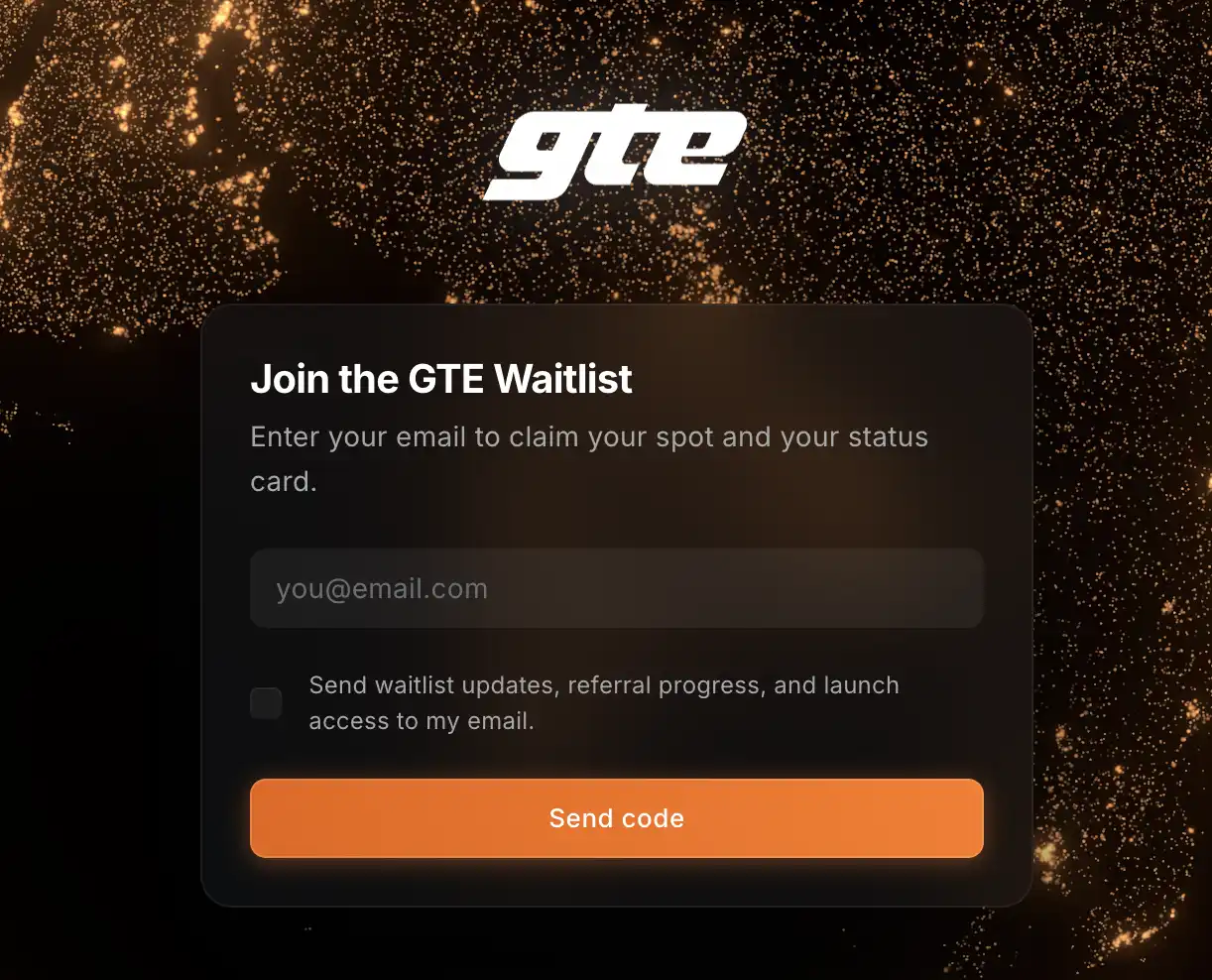
Currently, GTE is only open for a waiting list, where users can improve their spot through registration, reserving a username, following official channels, and inviting valid users.
Perpl
Perpl is a perpetual futures trading platform on Monad, having raised $9.25 million with a lead investment from Dragonfly Capital, and participation from Ergonia, Mirana, HashKey, L1D, CMS, and Breed, among other institutions.
Perpl has already launched on the Monad mainnet, currently distributing both Perpl Points and mPoints. The team is distributing 50,000 Perpl Points and 50,000 mPoints per week, and has announced that the mPoints reward cap has been unlocked to $1 million.
HelloTrade
HelloTrade was founded by former members of digital asset teams involved in BlackRock IBIT, ETHA, and BUIDL. The project completed a $4.6 million seed round in 2025, led by Dragonfly Capital with participation from Mirana Ventures. The product is currently in the Alpha stage, and users can apply for early access.
Welcome to join the official BlockBeats community:
Telegram Subscription Group: https://t.me/theblockbeats
Telegram Discussion Group: https://t.me/BlockBeats_App
Official Twitter Account: https://twitter.com/BlockBeatsAsia
 Related Articles