Inflation Isn't Getting Better, Will the Fed Hike Rates on Friday?

Early Wednesday, the US Department of Commerce released the latest inflation figures.
The July PCE Price Index saw a year-over-year inflation rate increase of 3.7%, remaining unchanged from June. This marks the 65th consecutive month it has exceeded the Fed's 2% target. Second-quarter GDP growth came in at an annualized rate of 1.5%, the same as last month's initial estimate, showing a slowdown from the first quarter's 2.1%. However, consumer spending in July showed zero growth when adjusted for inflation.
The New York Times summarized this report in one sentence: "America's stubborn inflation problem did not worsen in July, nor did it get better. The issue is, under the current atmosphere at the Fed, 'not getting better' is an answer in itself."
Why Did "Unchanged" Increase the Probability of Rate Hikes?
Because economists had initially expected a decrease. The Reuters poll projected 3.6%, but the actual figure was 3.7%. The month-on-month increase was also higher than expected, up 0.2% (expected 0.1%), compared to a 0.1% decrease in June, making it the weakest month since April 2020. Core PCE (excluding volatile food and energy) showed a year-over-year increase of 3.3%, matching June, with the month-on-month rising from 0.1% to 0.2%.
Following the data release, federal funds futures indicated the probability of a September rate hike jumped from about 36% to around 44%. Traders have already fully priced in one rate hike before the end of the year.
Omair Sharif, founder of the forecasting firm Inflation Insights, provided a succinct comment: "This is rate-hike supporting data."
Heather Long, Chief Economist at Navy Federal Credit Union, elaborated: "America still has an inflation problem. The latest data has given [Powell] time to wait and see, but he must be clearer about what he is watching closely and what conditions would prompt him to raise rates."
The US dollar saw its biggest daily gain in nearly four weeks, recovering about half of last week's decline following Treasury Secretary Benson's intervention in the bond market. The Bloomberg Dollar Spot Index surged 0.3% at one point, while the yen fell 0.2% to 109.45.
How Did Rate Hike Odds Reach This Point?
The PCE peaked at 7.2% in June 2022, with the most aggressive round of rate hikes since the 1980s pulling it back towards the 2% path. This trajectory was disrupted last year. A round of import tariffs implemented after Trump returned to the White House drove up prices on a wide range of goods.
In late February of this year, the United States and Israel took action against Iran. Prior to the outbreak of war, the PCE was at 2.9%. The conflict shut down approximately one-fifth of the global oil supply, causing energy prices to spike, and the PCE soared to a three-year high of 4.1% in May.
Six months have passed, and a resolution to the conflict remains distant. However, the intensity of the conflict has decreased, and both the oil price and the resulting wave of inflation have receded from their spring highs.
Falling to 3.7%, they then leveled off.
The trouble is, new tariff pressures are on the horizon: Last Friday, negotiations between the United States and its second-largest trading partner, Canada, broke down. New tariffs on $200 billion worth of Canadian goods have been implemented, with both sides subsequently announcing additional retaliatory measures to take effect in the coming months.
The subtlety of this report lies in the fact that both advocates of waiting and advocates of raising interest rates can find ammunition within.
Those advocating for waiting see: Inflation has not worsened; aside from individual categories such as airfare, high oil prices have hardly spread throughout the entire economy; and starting next month, the U.S. Bureau of Economic Analysis will change the calculation method for a portion of service prices (composite management services, software, and computer peripherals), a adjustment that is likely to lower the measured inflation.
Those advocating for rate hikes see: Both overall and core inflation in July surpassed the expectations of forecasting agencies; service prices excluding housing (an index some officials view as a potential gauge of price pressure) rose faster than in June; diesel prices are nearing records, affecting more than just one category of goods; the AI boom is driving up chip prices; and the trade war with Canada has just reignited.
And the most fundamental argument unrelated to the monthly data: Inflation has been above target for over five years. This camp argues that the central bank must take decisive action, or else it will lose credibility.
However, in reality, the economy is cooling. This is the most easily overlooked and most damning half of this report.
In July, real personal consumption expenditures remained flat after two months of strong growth. Nominal personal income rose by 0.4% and personal consumption expenditures by 0.2%, both exceeding expectations; but after adjusting for inflation, real growth returned to zero.
More telling is the income situation: Compared to a year ago, real incomes adjusted for inflation have only risen by 0.2%, whereas in the preceding months, they were negative.
In other words, even as the inflation rate declines, the cumulative price increases over five years have eroded incomes. This explains why in consumer confidence surveys, the majority of Americans remain pessimistic about the economy and their financial situation.
What Will Warsh Say on Friday?
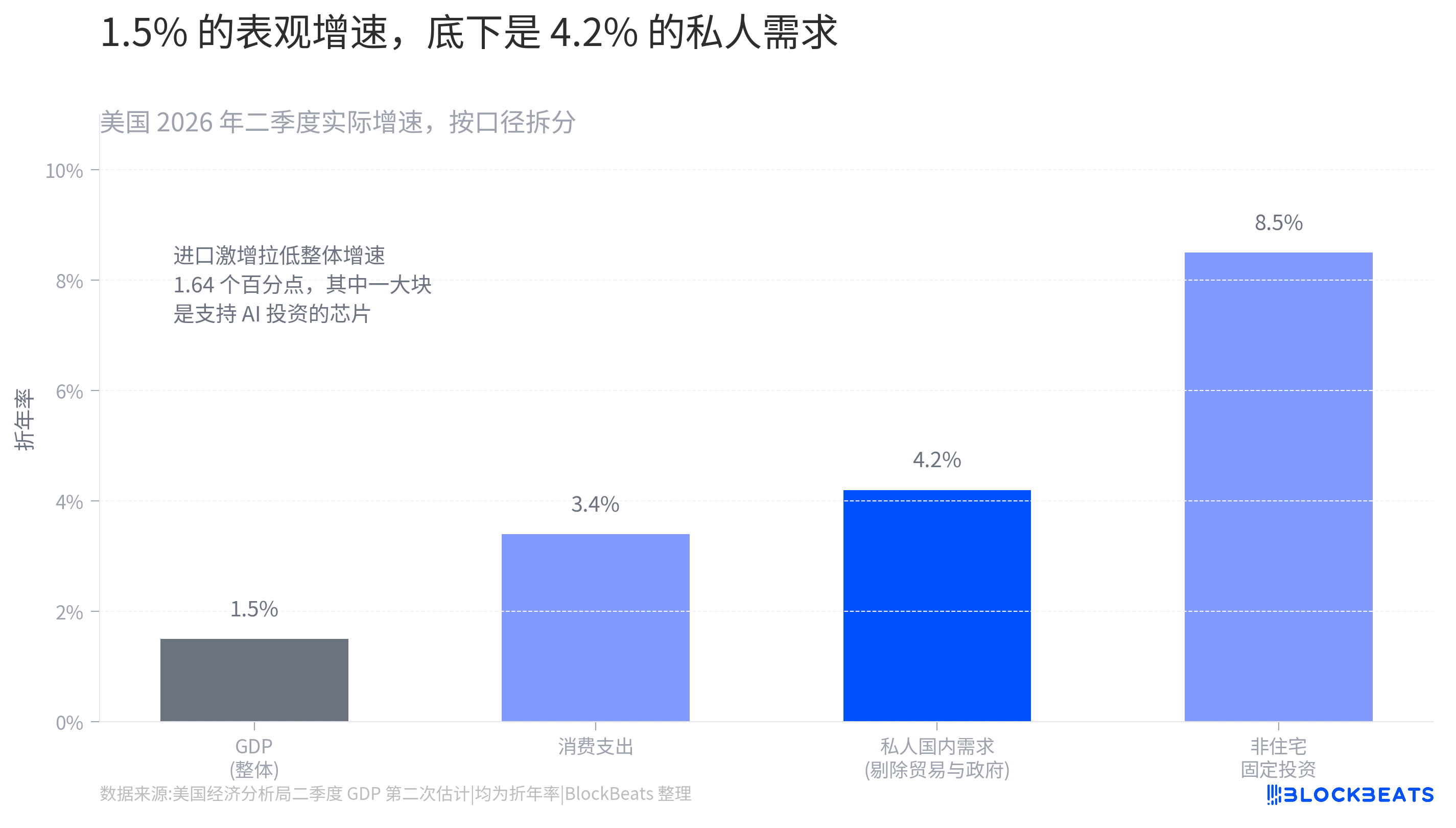
The 1.5% GDP growth in the second quarter may sound lackluster. However, the underlying details paint a very different picture.
Consumer spending, which accounts for over two-thirds of U.S. economic activity, rose at an annualized rate of 3.4%, up from the initial estimate of 3.2%; in the first quarter, this figure was only 0.5%. Nonresidential business investment excluding housing grew by 8.5%, reflecting the enthusiasm for AI investments. And a gauge that specifically measures the economy's underlying strength, final sales to private domestic purchasers excluding volatile government spending and trade, expanded by 4.2%, the strongest in over three years, revised up from the initial 3.9%; in the first quarter, it was 1.7%.
Housing investment also saw an increase, marking the first rise since the end of 2024.
So, what held down the 1.5% growth? Imports.
Imports surged at an annualized rate of 12.5% in the second quarter, with a significant portion of it being computer chips and related products that support AI investments. GDP only accounts for domestic production, so imports need to be subtracted — this item alone shaved off 1.64 percentage points. Government spending declined by 1%, with nondefense outlays seeing a sharp retreat, also acting as a drag.
This led to a peculiar scenario: chips bought to build AI actually lowered the country's growth figures.
The second-quarter GDP will undergo a third and final revision set to be released on September 30.
All these data points converge this Friday at the Jackson Hole symposium.
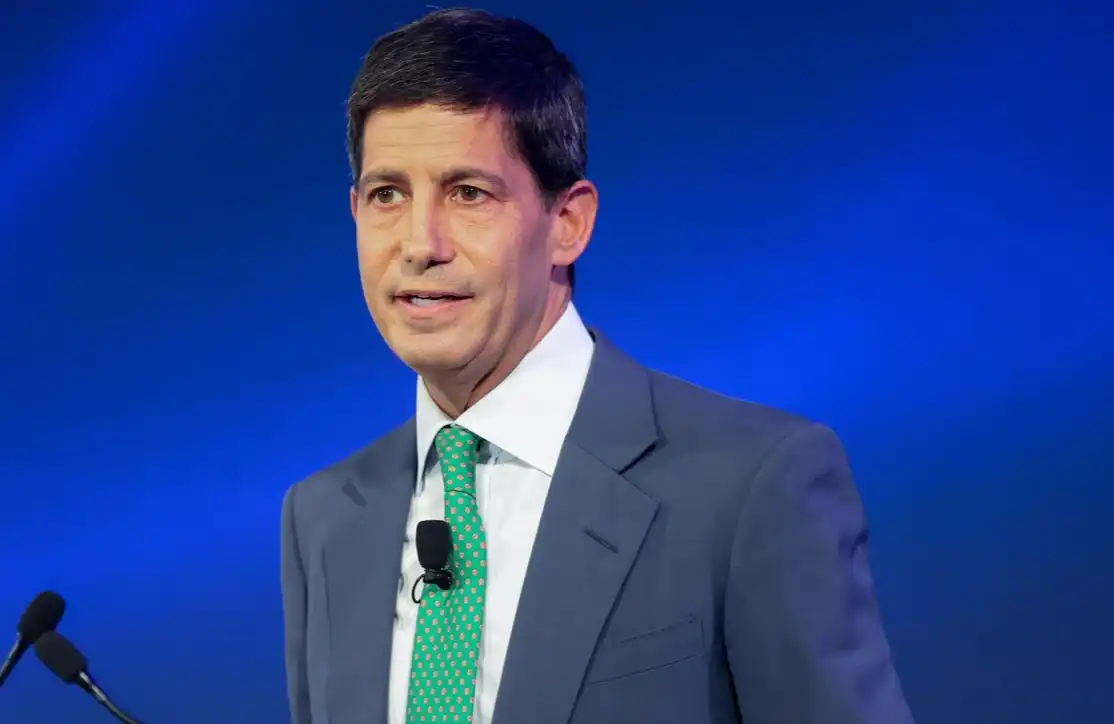
Fed Chair Kevin Warsh will deliver his first significant speech since taking office. He has pledged to end inflation above the target but has not given any indication so far, implying his belief that inflation may not recede on its own without a rate hike. Wednesday's data did not show it could.
The policy rate has been held steady between 3.5% and 3.75% since December of last year. At the July meeting, three officials dissented and called for a 25-basis-point hike.
Bank of America forex strategist Alex Cohen highlighted the uncertainty surrounding this speech: "Warsh's Jackson Hole speech has clear two-way risks, making it a lingering uncertainty."
And amidst all this is a looming timeline: just 10 weeks until the midterm elections. Gas prices remain elevated due to the Iran conflict, the President is threatening new tariffs on Canada and China, and AI infrastructure spending has driven up prices of computers, gaming consoles, and semiconductors.
Inflation is becoming a central issue in this election.
Welcome to join the official BlockBeats community:
Telegram Subscription Group: https://t.me/theblockbeats
Telegram Discussion Group: https://t.me/BlockBeats_App
Official Twitter Account: https://twitter.com/BlockBeatsAsia

 Related Articles