Hormuz Passage Plummets Again, Why Hasn't Oil Price Stayed Above $100? The passage through the Strait of Hormuz has once again plummeted, but why hasn't the oil price stabilized above $100?

TL;DR
· Part of the daily traffic-caliber through the Strait of Hormuz has dropped to a very low level, but Brent did not sustain above $100.
· The market is temporarily betting that inventory releases, transshipment, alternative exports, and buyer detours can absorb some of the impact.
· Related Assets: Brent/WTI Crude Oil, Energy ETF, Oil Tanker Companies, Chinese Independent Refineries, Diesel Supply Chain, Gold.
Since August, shipping tracking and media reports have shown that part of the daily caliber through the Strait of Hormuz has dropped to an extremely low level, with statistics showing almost no tankers passing through. However, Brent crude did not sustain above $100. After a brief spike in late July, it has spent more time around $90 recently.
This is precisely where the current energy market needs explaining. Around 20 million barrels per day of oil products pass through Hormuz around 2024, accounting for approximately 27% of global seaborne oil and about one-fifth of global LNG trade. Under the traditional pricing framework, this has been a long-standing threat, and oil prices should quickly incorporate a supply disruption premium.
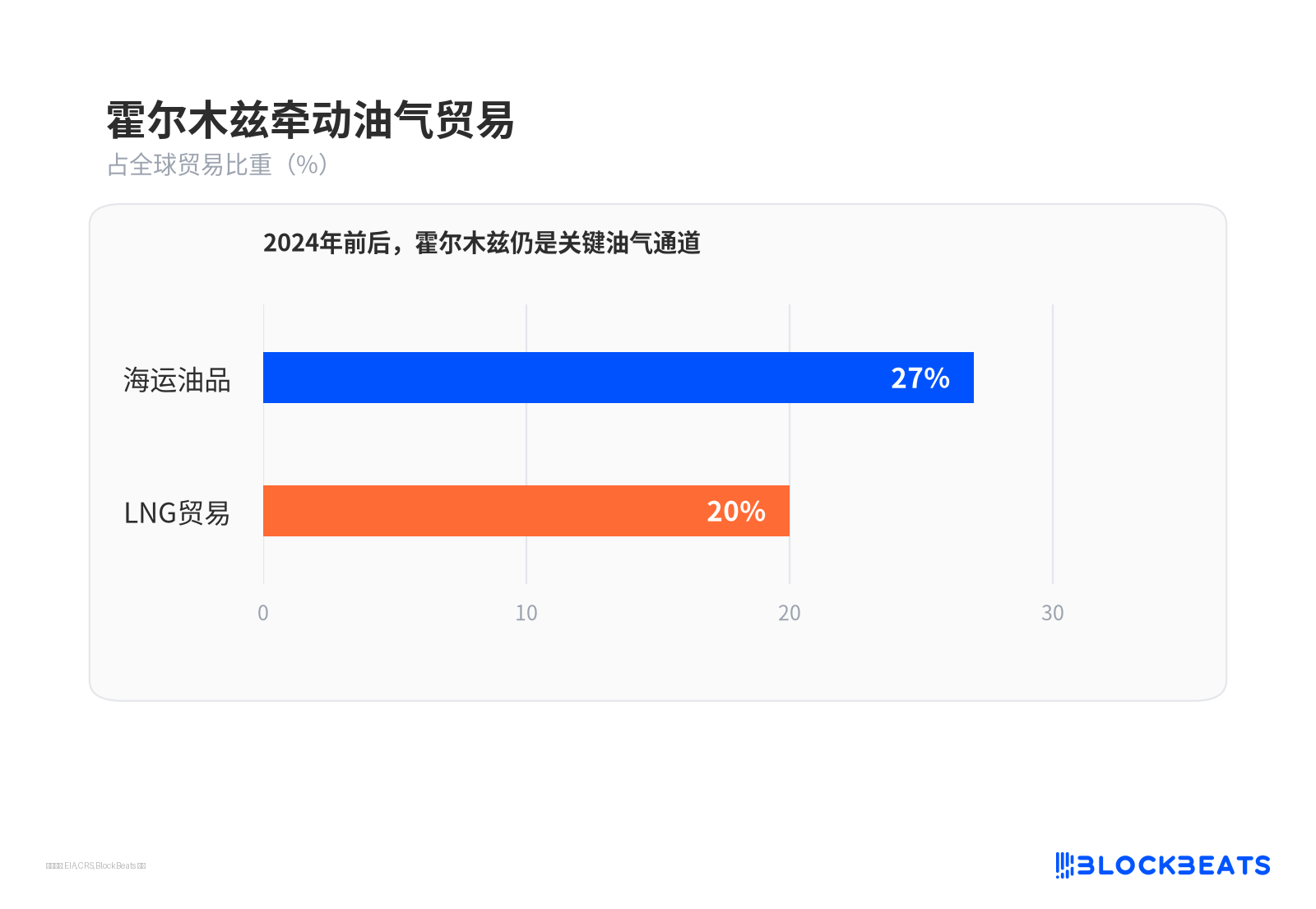
Strait of Hormuz Roils Oil and Gas Trade
The answer the market is giving now is more restrained. The risk has not disappeared, but investors currently believe that inventory releases, transshipment outside the Gulf, alternative exports, and shipping arrangements can mitigate the impact. Oil price trading is not about "Strait security" but about "expensive passage through the Strait."
The US-Iran standoff provides the political background for this reassessment. It is reported that both sides are in dispute over the conditions for implementing the June interim memorandum, with the US maintaining blockade and sanction pressure, while Iran insists on the conditions being met before resuming normal passage. The dispute spilling into the market is actually a cost allocation issue: who bears the higher insurance, financing, navigation, and sanction risks.
Oil Price Hasn't Traded Worst-Case Scenario Yet
Current prices indicate that the market is not currently pricing in the Strait of Hormuz as a long-term comprehensive supply disruption.
If investors believe that around 20 million barrels per day of seaborne oil products will permanently disappear, Brent would find it hard to stay around just $90. The fact that the price has not sustained above $100 indicates that traders are more inclined to interpret it as blocked passage, rising costs, and delivery delays, rather than supply chain breakdown.
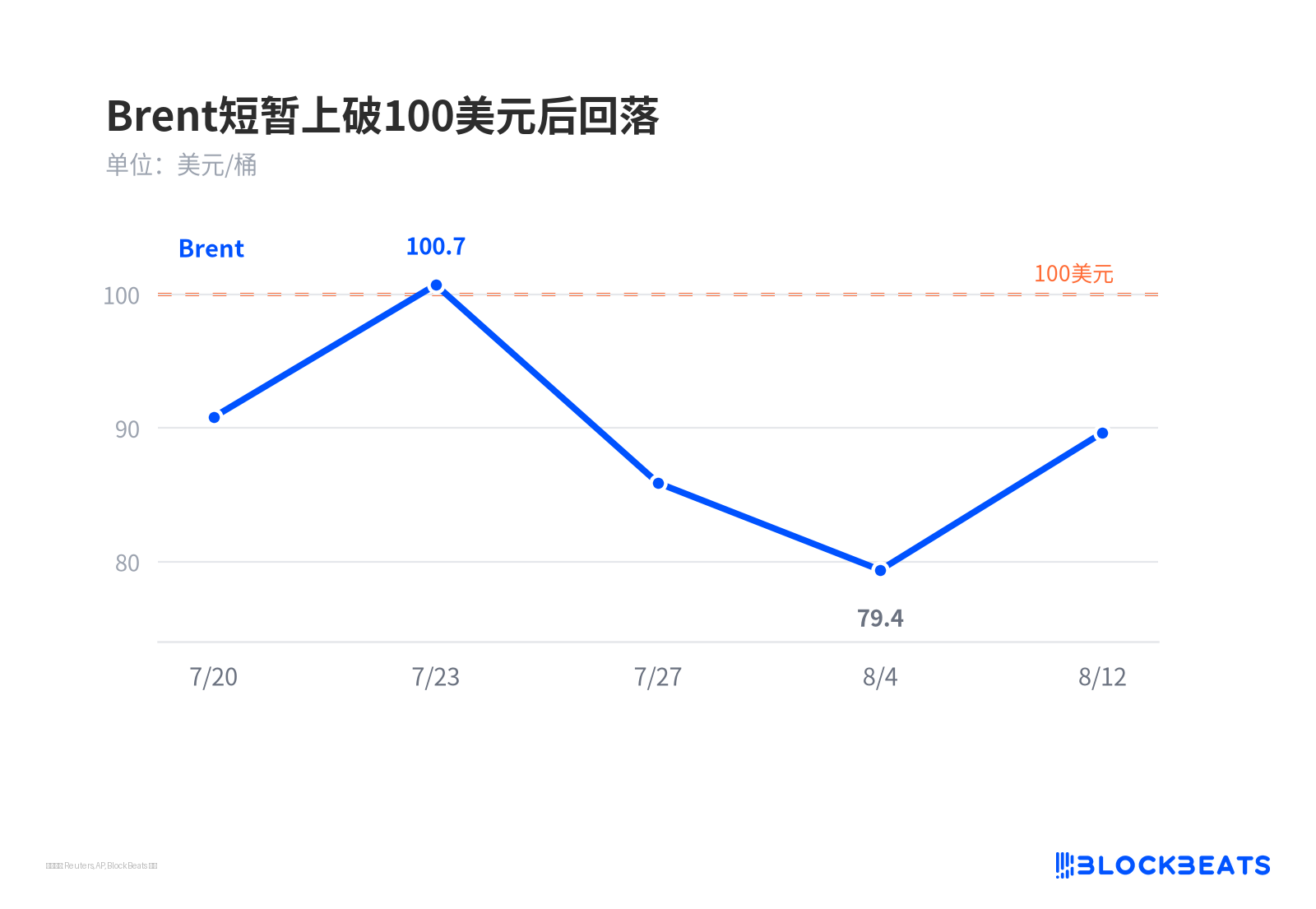
Brent Retreats after Surge
There is still statistical noise here. Part of the daily traffic volume plummeted, possibly due to vessels turning off AIS positioning, shipowners' short-term waiting, data source filtering differences, or it may indicate commercial shipowners are unwilling to enter high-risk waters. The former is closer to data distortion, while the latter would create a continuous supply shock.
Therefore, the oil price not stabilizing above $100 is not because the Strait of Hormuz is unimportant, but because the market is still awaiting stronger validation. Whether Iran can continue to expand attacks, whether the US will escalate the blockade to more direct action, and whether Asian buyers can still bypass transportation and sanction constraints will all alter this pricing.
Buffer Mechanism Breaks the Impact into Segments
The oil price did not immediately spiral out of control, and a key reason is that the impact did not hit end supply all at once but was broken down into inventory, shipping, trade, and financial segments.
The most direct buffer comes from inventory and expected substitute supply. Strategic petroleum reserves, international coordinated releases, OPEC+ idle capacity, as well as Saudi and UAE's export capability outside the strait could all weaken the impact of a single lane interruption on spot prices. They cannot be used indefinitely, but are sufficient to temporarily prevent the market from pricing in a doomsday scenario.
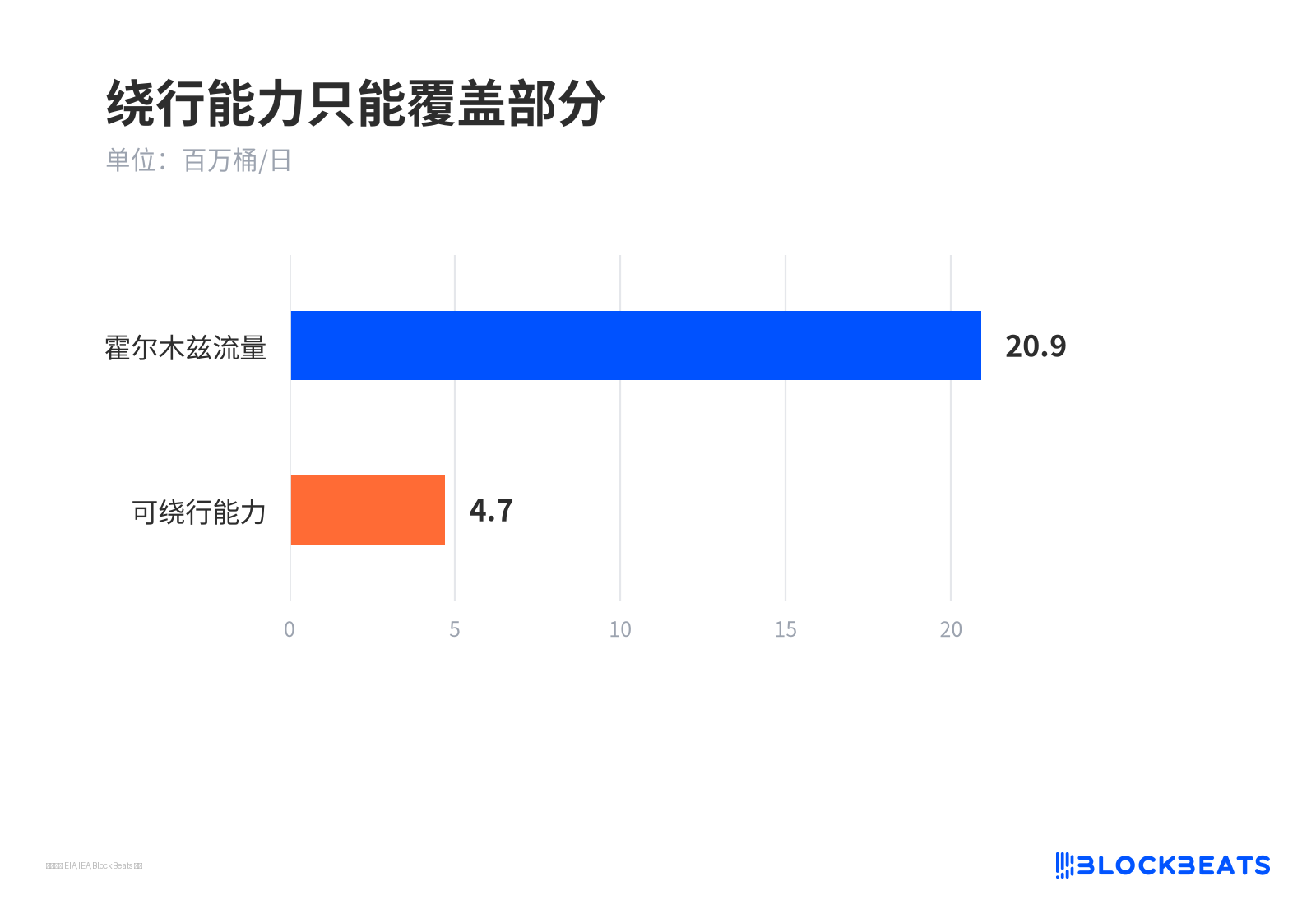
Detour Capacity Can Only Cover a Portion
The second layer of buffering comes from ship-to-ship transfers. Some goods can be transferred near Fujairah or the Arabian Gulf, then rerouted. This may raise insurance, waiting time, and operational costs, but it can keep the flow of goods relatively elastic.
The third layer of buffering comes from the choices of buyers and shipowners. Some Asian buyers and shipowners may switch to loading outside the Gulf, transshipment, or delayed port calls, and similar hedging actions may be taken in LNG transport. As a result, the decrease in traffic through the Strait of Hormuz does not necessarily mean a synchronous decline in global oil and gas availability.
This is the essence of current pricing. The physical risk persists, but it has been spread out through financial inventory, shipping engineering, and trade arrangements. The oil price is not surging because the system is still operational. The oil price is not plummeting because the system is becoming more expensive to run.
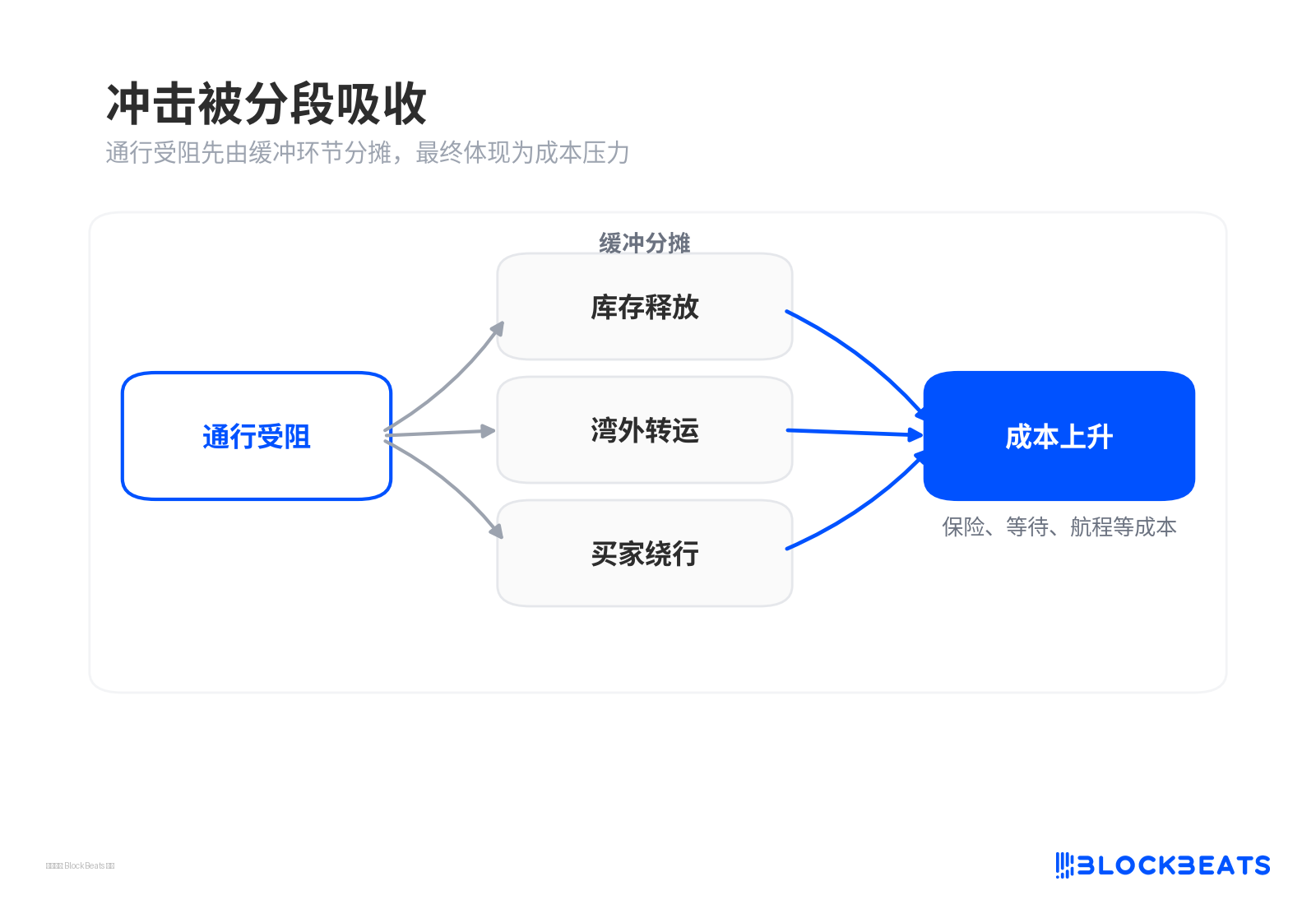
The Impact is Absorbed in Segments
Long-Term Costs Entering the Supply Chain
The more effective short-term buffers are, the clearer the investment rationale for long-term restructuring becomes.
Saudi Arabia and the UAE's promotion of offshore reserves, Fujairah transfers, and alternative export capacities, along with discussions on regional pipeline and port investments to bypass the Strait of Hormuz, all point in the same direction: the energy chain is reducing its reliance on a single chokepoint.
This type of restructuring will not immediately alter the global supply-demand balance. The new pipeline needs financing, construction, and security conditions, and strategic reserve expansion also takes time. But it will change the long-term cost structure. Port facilities, reserves, insurance, tanker scheduling, and offshore loading capacity are transitioning from contingency plans to necessary costs.
For Asian buyers, another cost comes from secondary sanctions, where the U.S. extends pressure to third-party refineries, banks, and shipping insurance. If sanctions more clearly target the transaction chain for buying Iranian oil, the cost advantage that independent Chinese refineries have relied on for discounted oil will be eroded by U.S. dollar clearance, financing, and insurance risks.
This is also why the energy market cannot solely focus on the Brent front-month contract. Diesel, freight rates, insurance costs, refinery margins, and regional price differentials may reflect the true transmission of the Hormuz risk earlier than the crude oil price.
Inventory Days and Sanction Enforcement Will Rewrite Pricing
The current low volatility is built on one assumption: that the buffer mechanism can continue to operate, and military escalation has not crossed the market's red line.
Inventories can buy time but cannot replace long-term supply. Transshipment can bypass some riskier waters but will bring higher insurance costs and longer journeys. Alternative export capacity can provide pricing buffers but is difficult to fully accommodate the main flow in the short term. As these buffer margins weaken, oil prices will reassess the probability of a supply cut-off.
The intensity of sanction enforcement will also change the price path. If the U.S. primarily sends a deterrence signal, Asian buyers may still be able to absorb the impact through trade structures and financial arrangements. If the sanctions truly target refineries, banks, and shipping insurance, Iranian export discounts may become ineffective, and costs will be transmitted from the shipping end to the refining end.
The signal from the Hormuz Strait to the market right now is not risk elimination but rather risk absorption in segments. Whether Brent can retest and sustain above $100 will depend on how long inventories, transshipment, and buyer circumventions can continue to bear the burden. The next price validation may first appear in freight rates, insurance costs, and diesel crack spreads.
Welcome to join the official BlockBeats community:
Telegram Subscription Group: https://t.me/theblockbeats
Telegram Discussion Group: https://t.me/BlockBeats_App
Official Twitter Account: https://twitter.com/BlockBeatsAsia