South Korea's debt approaches ₩2,000 trillion, Has the market overestimated the interest rate hike?

TL;DR
· The official estimate of South Korea's household credit for the second quarter will be announced on August 19, with the monthly loan increment implying a balance approaching or exceeding KRW 200 trillion.
· The Bank of Korea has already raised interest rates to 2.75% in July, with M&G believing that the market's pricing of future rate hikes and bond supply may be hawkish.
· Related assets: South Korean government bonds, South Korean Won, South Korean bank stocks, Samsung Electronics, SK Hynix.
On July 16, the Bank of Korea raised the benchmark interest rate by 25 basis points to 2.75% and included housing prices, household loan growth, and financial stability pressures in its policy considerations.
This is South Korea's first rate hike since January 2023. For investors, the concern is not just how high South Korean household debt is, but whether the central bank will be pushed back onto a tightening path by household leverage and house prices.
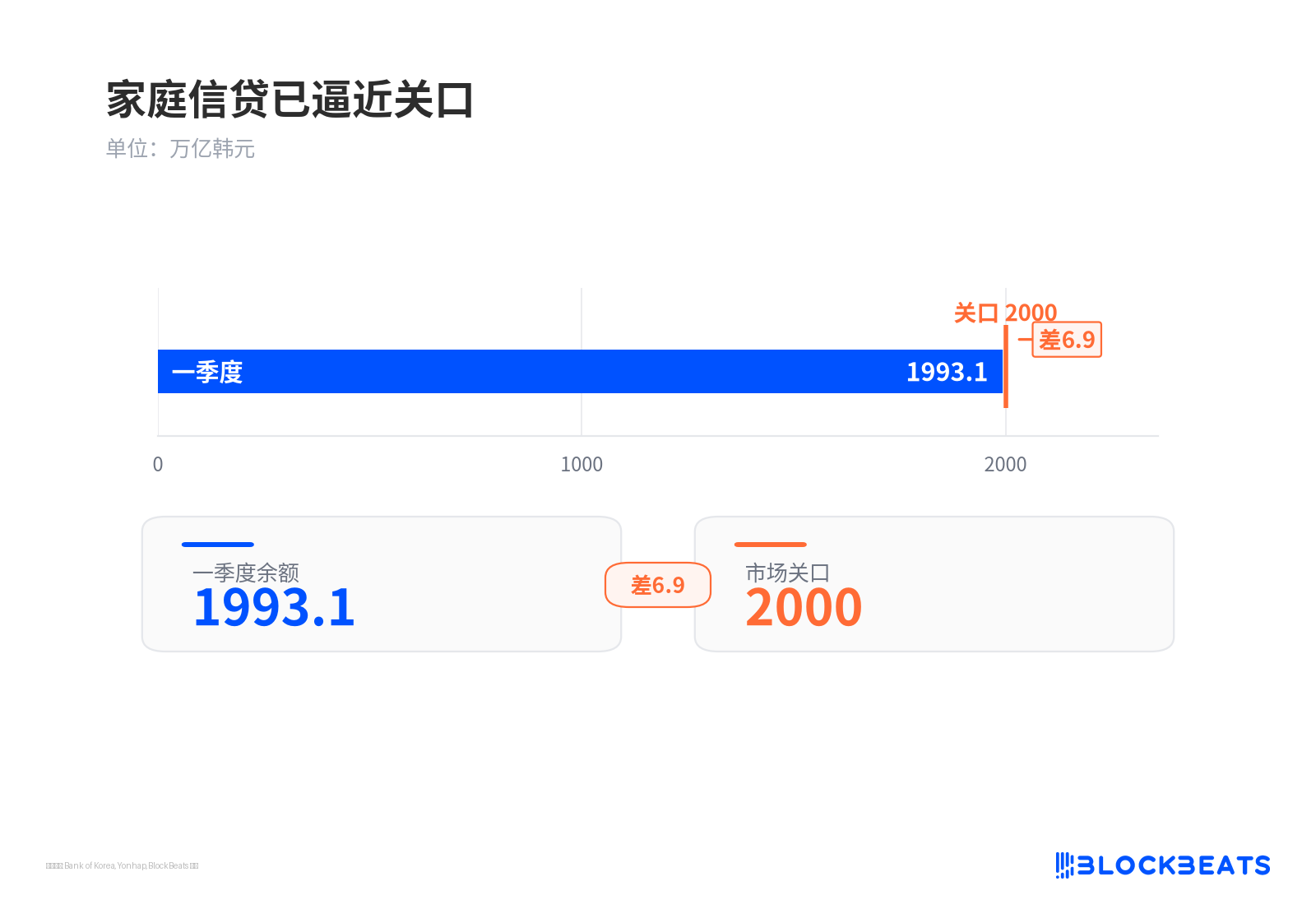
The official estimate of household credit for the second quarter will be released on August 19. With the balance already reaching KRW 199.3 trillion at the end of the first quarter, coupled with household loan growth in May and June, the market is trading ahead of a potential outcome: South Korea's household credit approaching or exceeding KRW 200 trillion.
Household Credit Nearing a Threshold
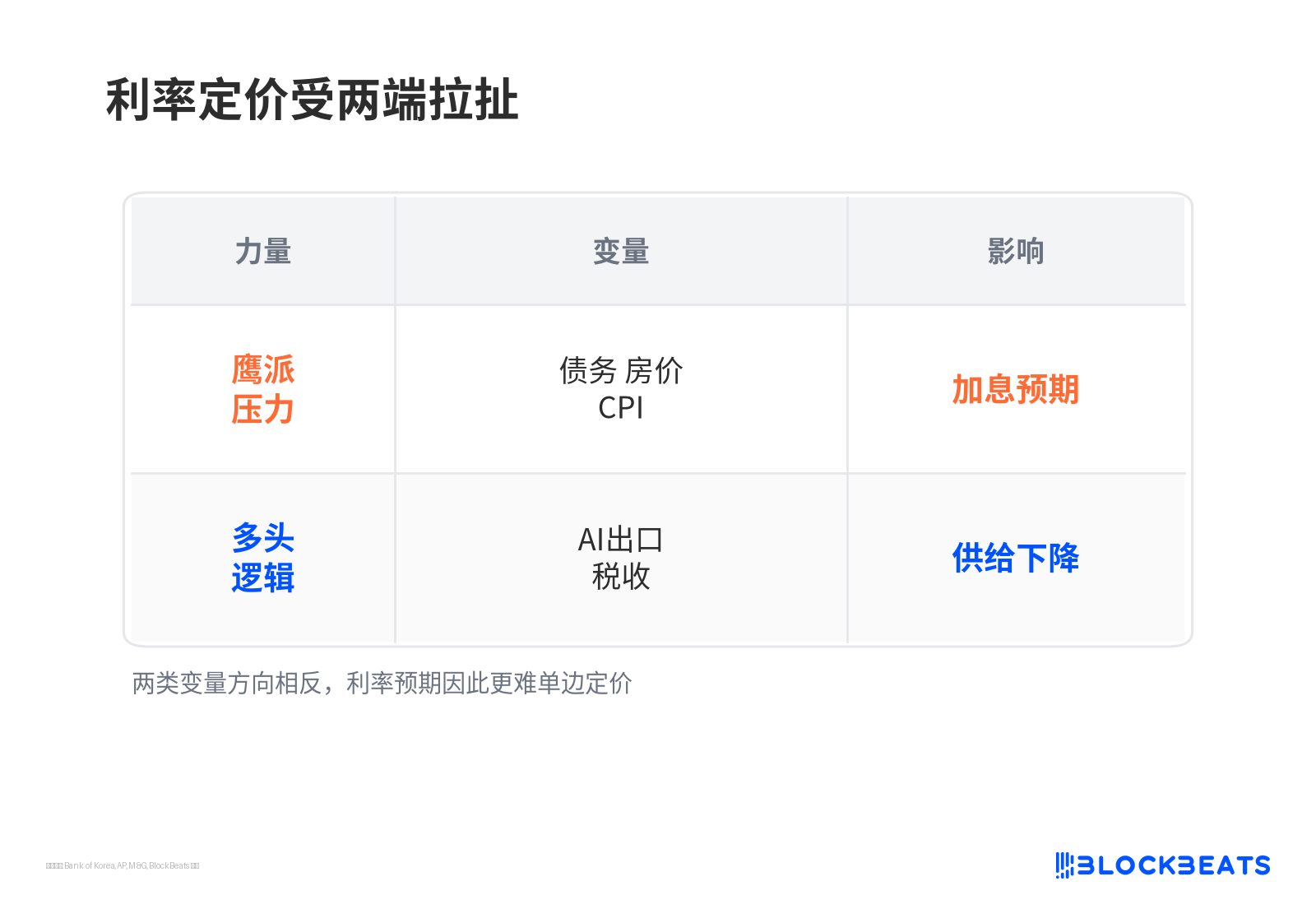
Low Guan Yi, Head of Asian Fixed Income at M&G Investments, takes a different view. According to media reports, his view can be summarized as the market's expectation of the Bank of Korea continuing its rate hikes may be too high, and the improvement in corporate profits and tax revenues from the AI chip cycle may actually reduce government bond demand.
This article is not about whether South Korea is heading towards a debt crisis but about the three forces of household leverage, inflation, and AI exports – which will dominate South Korea's interest rates and asset pricing.
Household Loans Pushing the Central Bank Back into Hawkish Territory
Household credit balance can be understood as the money borrowed by the household sector from banks, insurers, and other financial institutions, including mortgages, consumer loans, and stock financing loans. It is a stock burden, not a monthly addition.
The larger the stock, the more pronounced the interest rate hike's amplifying effect on cash flow. For high-leverage households, a 25 basis point rate hike not only alters monthly payments but also affects housing purchases, consumption, and risky asset allocation.
In its July announcement, the Bank of Korea mentioned a rise in housing prices in the capital area and an expansion of household loans. The year-on-year CPI increase in June was 3.2%, providing the central bank with a reason to raise interest rates in terms of inflation.
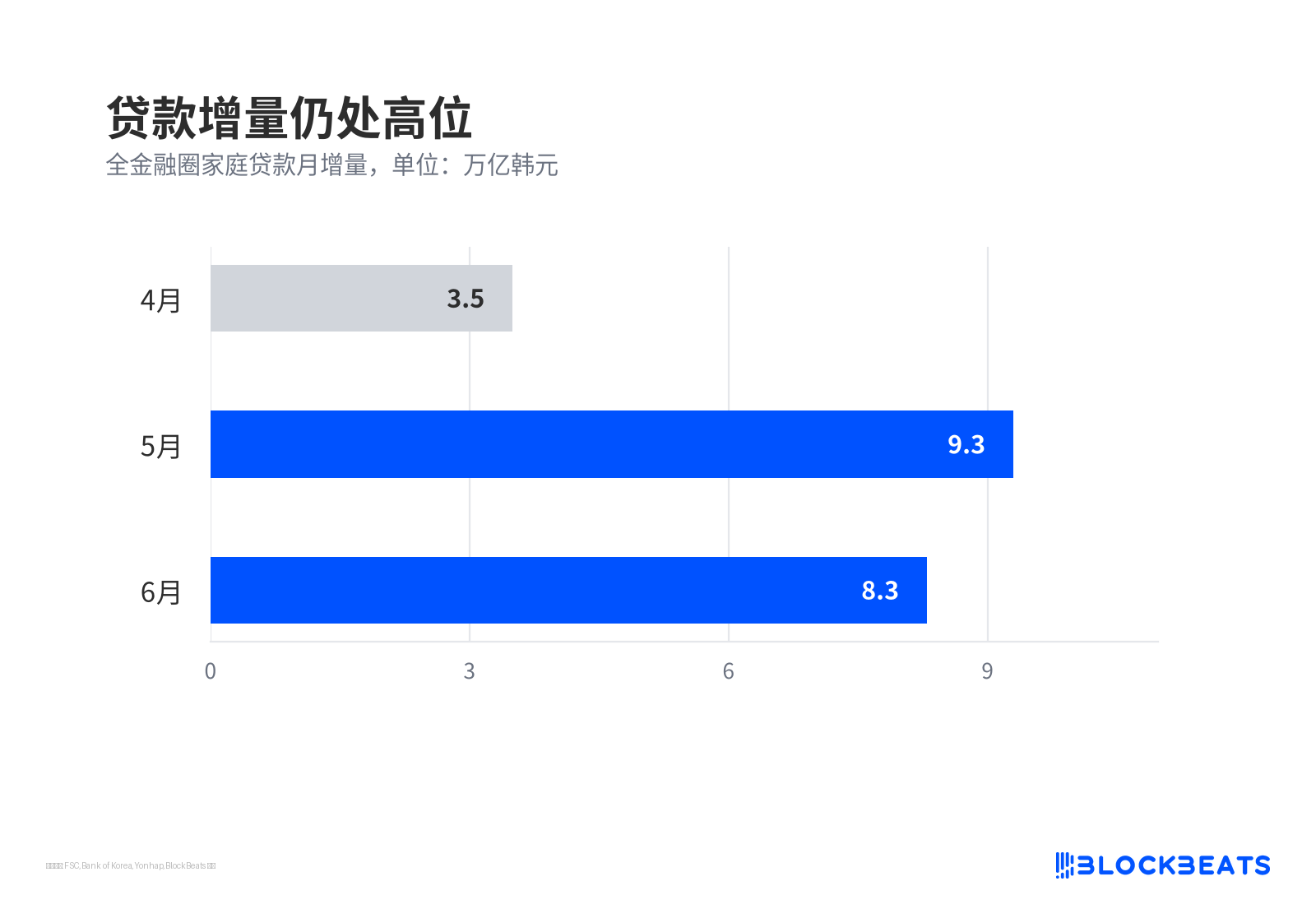
More sensitive is the loan growth. According to the data released by the Financial Services Commission of South Korea, household loans in the entire financial sector increased by 93 trillion KRW in May and 83 trillion KRW in June. The Bank of Korea's data also shows that bank household loans increased by 76 trillion KRW in June, with mortgage loan balances reaching 945 trillion KRW.
Loan Growth Still at High Levels
These numbers explain the central bank's dilemma. As long as housing credit continues to expand, the central bank will find it difficult to quickly switch to an accommodative stance, even as exports and corporate profits are improving.
M&G Bets on a Hawkish Rate Hike Expectation
M&G's contrarian logic does not deny the debt pressure but rather discusses whether pricing has already outpaced the fundamentals.
Following this line of thought, if inflation is approaching a cyclical peak, the necessity for additional interest rate hikes by the central bank will decrease. If South Korea's semiconductor exports continue to benefit from AI demand and companies like Samsung Electronics and SK Hynix see profit improvement, a higher tax base will be generated.
After fiscal revenue improves, the government's debt issuance demand may decrease. For bond investors, a decrease in supply pressure usually benefits bond prices, and South Korean government bond yields may also fall.
The appeal of this logic lies in pulling South Korea out of a simplistic high-debt narrative. The AI chip boom not only affects the stock market but may also influence bond supply through tax and fiscal pathways.
However, this is still an unverified trading hypothesis. Low Guan Yi's view is more of an optimistic scenario and should not be directly equated with market consensus. Whether AI exports can translate into fiscal improvement remains to be seen based on subsequent tax revenues and debt issuance plans.
Challenges of the Real Estate Market and Leverage Amplify Policy Difficulty
The complexity of South Korea's current pressures lies in the simultaneous increase in household leverage and asset prices. The increase in mortgage loans indicates that residents are still leveraging up in the real estate market. The rise in stock margin loans also suggests that the stock market rally is attracting leveraged funds.
A rebound in housing prices in the capital area will make the central bank more cautious. While rising housing prices can temporarily support household balance sheets, they also stimulate more borrowing demand, creating new policy pressures.
If asset prices continue to rise, households can use their wealth to cushion interest rate pressure, and bank credit risk will not be easily exposed. However, once rate hikes suppress trading activities, with both housing prices and the stock market weakening simultaneously, debt repayment pressure will more quickly spread to consumption and bank asset quality.
This is also the variable that the South Korean won and Korean bank stocks need to monitor closely. The more hawkish the central bank is, the exchange rate may receive short-term support, but it will also increase pressure on the household sector and bank assets. The earlier the central bank turns dovish, bonds may benefit, but the Korean won may face interest rate differential pressure.
The stronger the semiconductor exports, the more support there is for growth and tax revenue. The more willing the household sector is to take on leverage, the harder it is to ignore financial stability risks. South Korea is currently dealing with the tug of war between two forces.
Interest Rate Pricing Pulled by Both Ends
Bond Bulls Need to Wait for Supply and Lending to Cool Down
The initial estimate of household credit in the second quarter on August 19 will first test the 200 trillion won threshold. If the balance confirms a breakthrough, the market will interpret it as a reason for the central bank to continue emphasizing financial stability.
The focus of the next interest rate meeting may not necessarily be whether to raise rates. More importantly, it is how the central bank describes inflation, household debt, and housing prices. If the statement continues to emphasize financial stability, subsequent rate hike pricing will not easily recede quickly.
The pace of lending is a harder variable. As long as housing mortgage loans continue to grow rapidly, the threshold of household credit will continue to constrain policy space. If new loan growth cools down, the pressure on the central bank to continue raising rates will decrease.
M&G's bond bulls logic will have to wait for action from the fiscal end. If the AI semiconductor prosperity is only reflected in stock prices and export data, without a clear reduction in government bond supply, the logic for Korean government bond appreciation will weaken.
The example South Korea has provided is very clear: technology exports can improve the macroeconomic narrative but cannot immediately alleviate household leverage constraints. What investors need to assess is whether the market's pricing of the South Korean central bank's hawkish path has already exceeded what subsequent data can support.
Welcome to join the official BlockBeats community:
Telegram Subscription Group: https://t.me/theblockbeats
Telegram Discussion Group: https://t.me/BlockBeats_App
Official Twitter Account: https://twitter.com/BlockBeatsAsia