The Best Summer of the Korean Girl is Over, But the Taiwanese Girl's Isn't

I believe that around the time of the World Cup two months ago, everyone saw the post: "A Korean girl said this was the best summer of her adult life."
This sentence structure later appeared in various places. Whichever sector surged, a "best summer" emerged there.
The same sentence structure was applied to the Taiwan stock market.
In the first half of 2026, the Taiwan stock market experienced its strongest half-year in history, with a nearly 60% increase. TSMC rose by 55%, while MediaTek surged by almost 200%. By the end of June, Taiwan's total market capitalization exceeded $5.1 trillion, surpassing the stock market valuations of France, the UK, Canada, and India during the year, rising to fifth globally by market capitalization.
Therefore, this is also the "best summer of the Taiwanese girl."
However, since the South Korean team was eliminated from the World Cup after two consecutive defeats in the group stage, the Korean stock market continuously plunged to circuit-breaker levels during the same period. The Korean summer ended first.
The Korean market, driven by AI, memory, and retail leverage, experienced consecutive declines and several circuit breakers in July. The Korea Composite Stock Price Index fell from 9,384.59 points on July 19 to 5,262.77 points on July 29, marking a maximum retracement of 43.93% and a monthly decline of 37.91%.
This was the third worst monthly performance in the history of the Korean stock market, with the previous two instances being the 1997 Asian financial crisis and the 2008 global financial crisis. A clear indicator of the reversal of the bull market is the credit trading margin balance: from a record high of 38.63 trillion Korean won on June 24 to only 28.93 trillion on July 31, a reduction of nearly 10 trillion won in a month.
For more information, see the related article from BeatZ: "Bankrupted Koreans are Sending Wreaths to the Korean Government."
On the other hand, the Taiwan stock market, often discussed in comparison with the Korean market, although it also took some punches, experienced a rapid and accelerated rebound in August, currently trailing the all-time high by only 4%.
Compared to the Korean market's 30% drop from its peak, the best summer of the Taiwanese girl is far from over.
Not only is it far from over, but the enthusiasm is spreading to even younger areas.
The Wealthiest High School Student in Zhubei Started Buying TSMC Stock in 9th Grade
In June, Bayside TV visited the Securities Study Society at Soochow University to film a segment. In the classroom, a group of students was analyzing reports, reviewing risk and return, and using backtesting to validate the effectiveness of their stock selection strategy. The lecture was delivered by one of their alumni.
Member Luo Dexuan started investing in stocks since the beginning of the uptrend in the Taiwan Stock Market last July. His habit is to keep holding on to several high-weighted stocks that he is bullish on.
“The stocks discussed among students are determined by trading volume. Whenever there is a day with significantly high volume and a sharp price increase, everyone will use it as a topic of discussion and then contemplate why they didn’t take that opportunity,” Luo Dexuan said on the show.
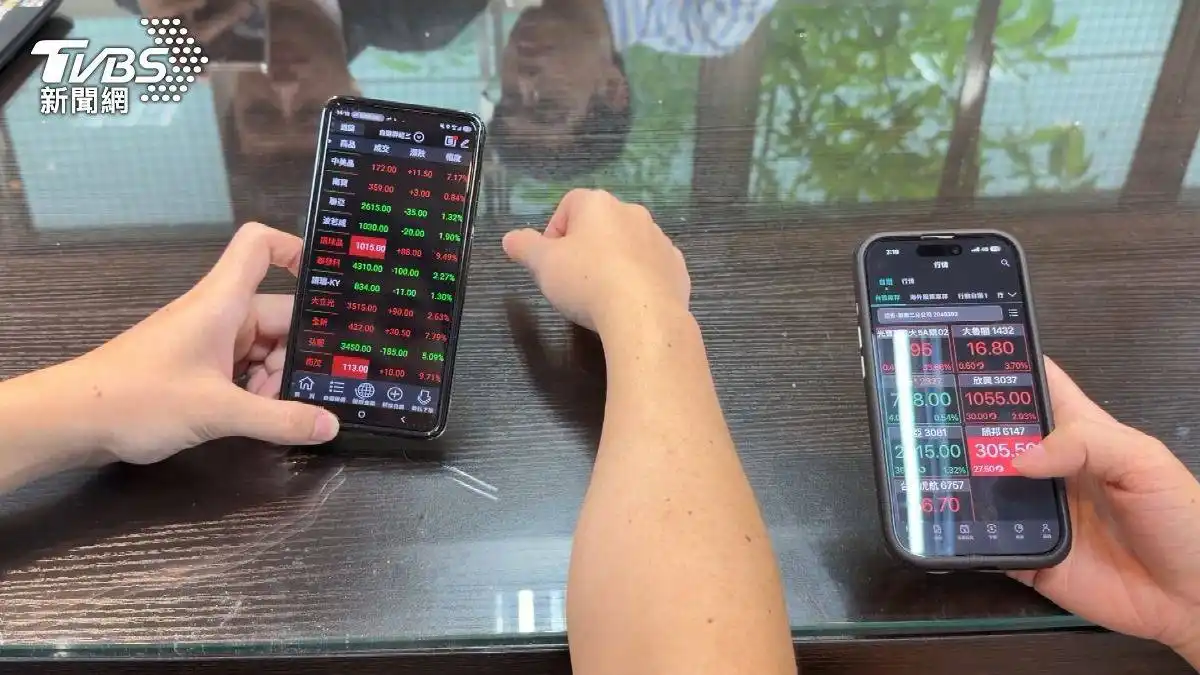
Students engaging in a lively discussion about the stock market. Image Source: TVBS
Such scenes have become increasingly common in major universities in Taiwan, where ETFs, AI concept stocks, and odd-lot trading have become the hottest topics among students.
On the other hand, member Ye Jiayou said he started investing since junior high school (grade 9). His initial purchases were stable positions like the 0050 ETF and TSMC. Later, his fellow club members alerted him that since he was watching the market every day, he shouldn’t just stick to 0050 and TSMC. So he devoted more time to active investing. Now, due to the strength of memory-related stocks, he holds a considerable position in Micron and SanDisk.
Junior high school, as referred to in Taiwan, is equivalent to ninth grade.
Being exposed to stock investment in junior high school is not uncommon in Taiwan. For example, Wan Hua Junior High School established a 'Financial Exploration Club,' and children often discuss Taiwan stocks with their parents at home.
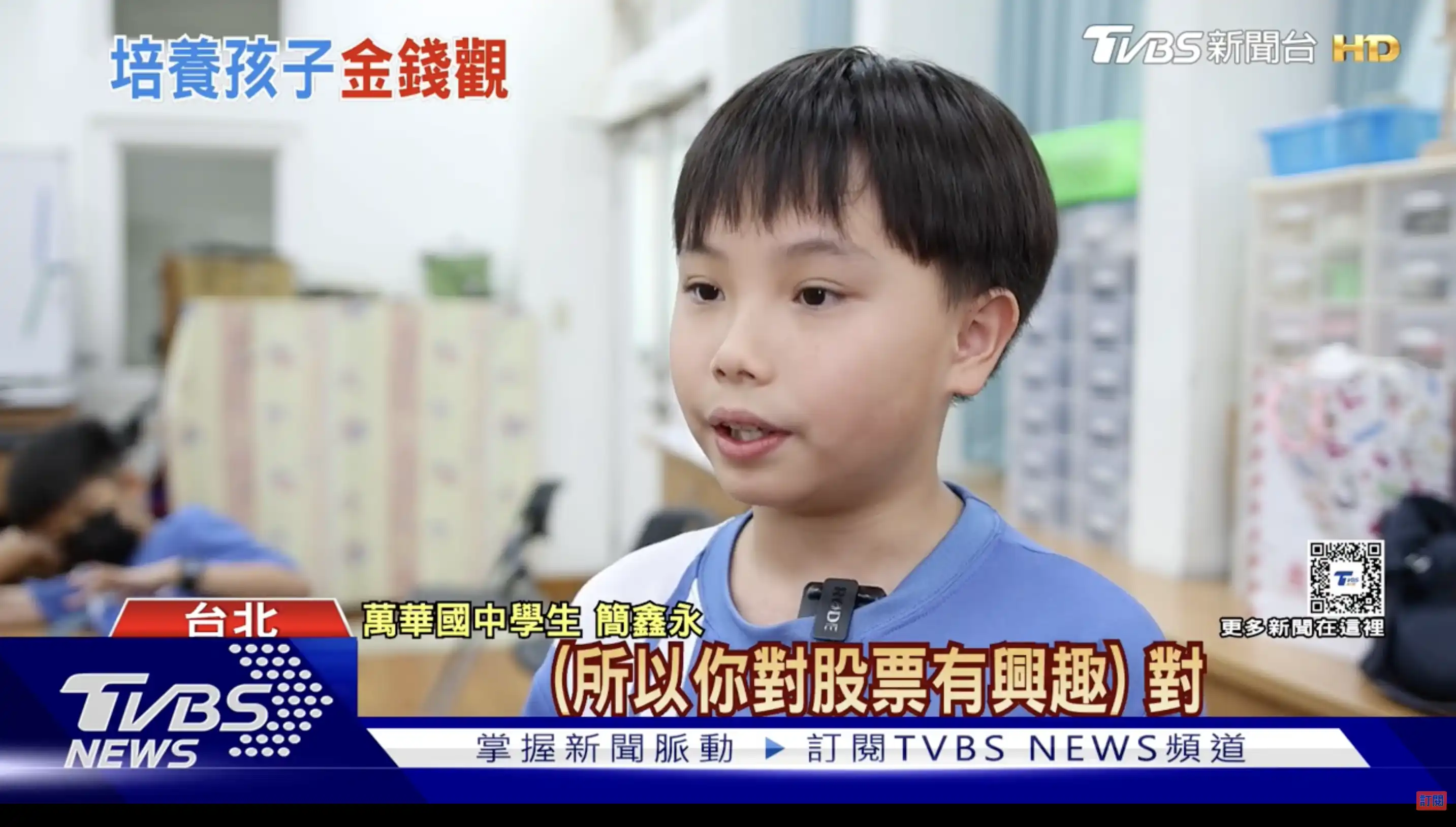
In addition, there are some noteworthy cases at Hsinchu High School.

Netizens commented that students from private high schools in Zhubei are always talking about which stocks to buy during class.
“Perhaps they are the ones with true alpha; their parents are all from the Hsinchu Science Park.” “It is said that many classmates' parents hold hundreds of TSMC shares, bought years ago and will hold for decades.” Many similar comments pointed this out below.
In an April post by the Taiwan Stock Museum's official account, this phenomenon was indirectly confirmed.
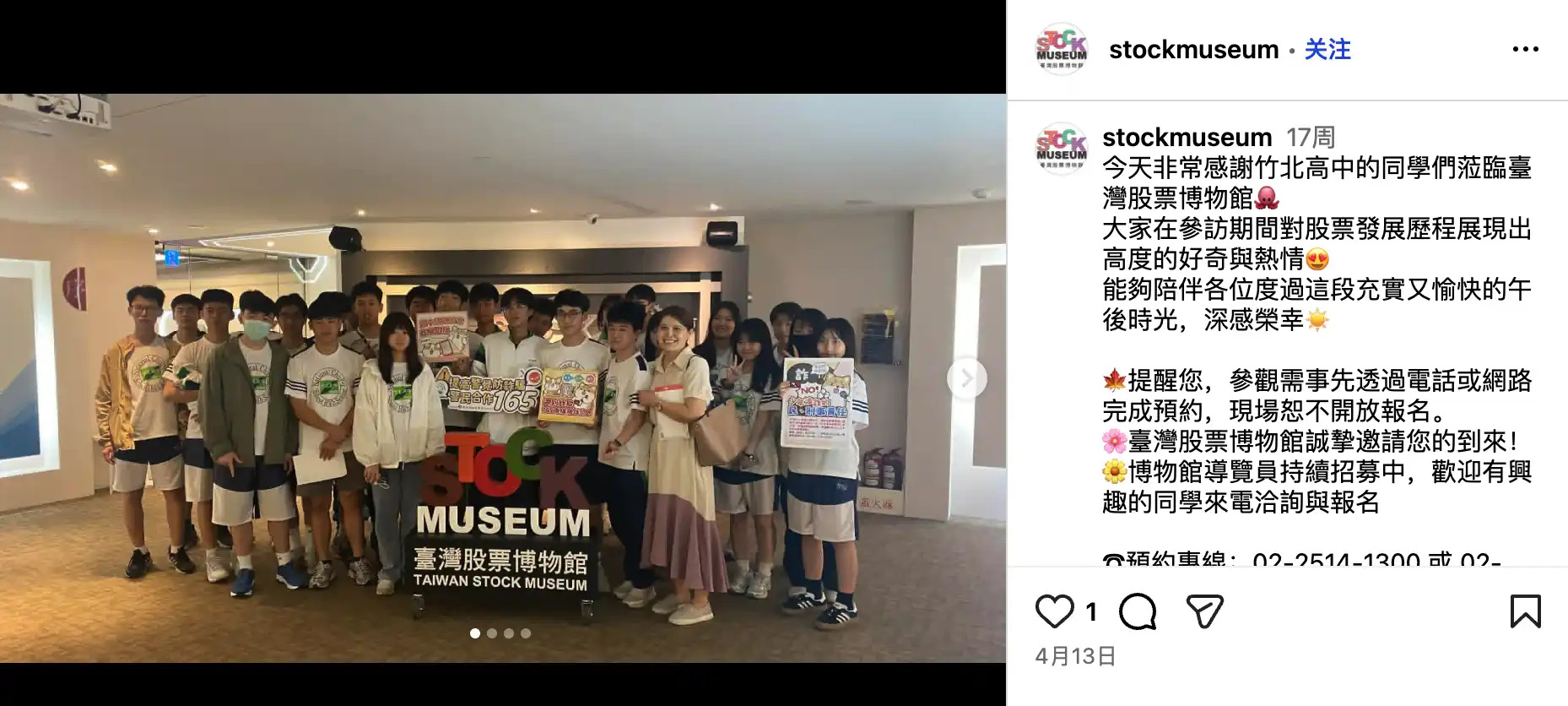
The post thanked the students from Zhubei High School for their visit, stating that during the visit, everyone showed a high level of curiosity and enthusiasm for the stock market's development. The photo shows about twenty high school students in uniforms standing in front of the Taiwan Stock Museum sign.
Where is Zhubei?
In the comprehensive income tax statistics for the fiscal year 113 released by the Ministry of Finance this year, the average comprehensive income per household in Hsinchu City is NT$1.771 million, ranking first nationwide for the seventh consecutive year; Hsinchu County is NT$1.632 million, surpassing Taipei City for the fourth consecutive year; Taipei City is NT$1.557 million, ranking third. The Eastern District of Hsinchu City's Guanxin Village has reclaimed the title of "the richest village in Taiwan" with an average of NT$4.592 million per household and a median of NT$3.434 million, also ranking first nationwide. With such a high median, it means that this is not an average skewed by a few wealthy individuals but that the entire village is wealthy.
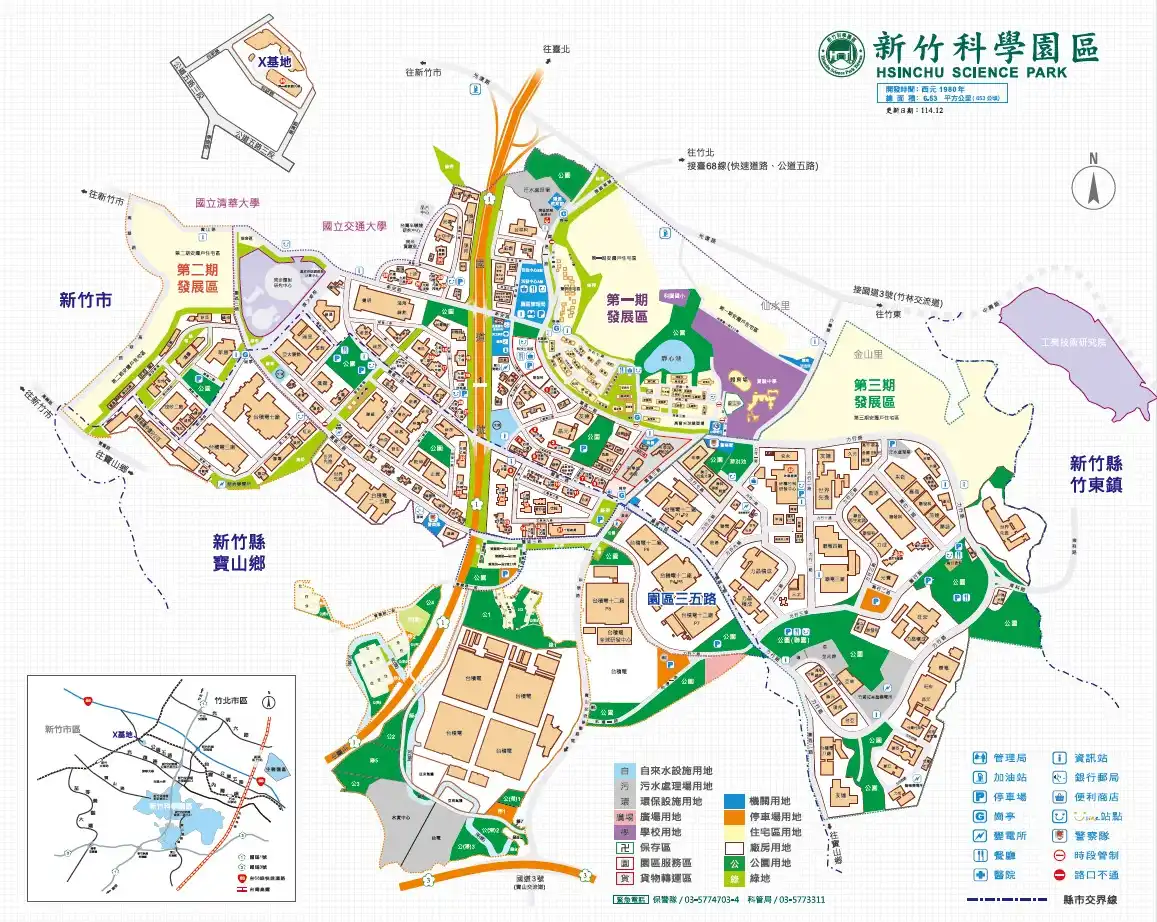
Zhubei City is located in Hsinchu County, adjacent to the Hsinchu Science Park, which is the most direct residential area related to Taiwan's semiconductor industry, with over 600 high-tech companies settled here.
In the same statistics, when looking only at dividend income, Taipei City takes the top spot, with an average of NT$385,000 per household; Hsinchu City is second with NT$228,000. Taipei's dividends come from the high-asset investment community, while Hsinchu's dividends come from tech company employees' stock options, bonus shares, and dividends.
So the expression "a few hundred shares of TSMC" may not be an exaggeration. Before Taiwan Semiconductor Manufacturing Co.'s (TSMC) employee bonus distribution reform in 2008, rewards were often distributed to employees through stock dividends. The bonus shares were calculated at face value, and early engineers entering the company could accumulate a large number of shares at a very low cost. One share consists of 1,000 units. Based on TSMC's price of NT$2,395 on August 11th, one share is worth NT$2.395 million. Therefore, the phrase "a few hundred shares" corresponds to a market value of hundreds of millions of New Taiwan Dollars.
This familiarity with stocks is not limited to discussions at Zhubei's family dinner tables. For some children, TSMC is not a distant blue-chip stock mentioned in financial news but an asset that has long existed in their parents' accounts: Some have grown up hearing their parents discuss stock dividends, while others have watched their families treat employee stock options as a "fixed deposit." When they reach junior high or university, they buy into the 0050 Index Fund or a few shares of TSMC, almost like taking the first step following their family's experience.
The topic of stocks has also long extended beyond the boundaries of the science park. Previously, The Wall Street Journal wrote a detail about Taiwan: taxi drivers, after dropping off passengers at their destination and waiting for the next ride, would glance at stock market updates on their phones.
There is a story shared by the chairman of a listed company in Taiwan: He took the high-speed rail from central Taiwan to Taipei one morning. When he arrived at the station, he couldn't find a taxi. After finally flagging one down, he couldn't help but ask the driver what was going on. The driver's response was that all his peers were watching the stock market until 1:30 p.m.
Some people have even compared it to a stable job. The Taiwanese media once reported on a 27-year-old firefighter who made about 700,000 New Taiwan Dollars through TSMC trading in two months, then resigned to become a full-time trader. He shared online that high-dividend stocks are a "waste of money," and a nine-to-five job is like a "slave mindset."
A 26-year-old unemployed youth interviewed by Bloomberg borrowed money to invest about $60,000 in Taiwanese tech stocks, even telling the reporter, "You'll make money no matter which stock you casually buy."
Such sentiments have begun to be quantified. A job search platform once estimated, using its survey data, that around 310,000 people in Taiwan are considering or choosing to "resign and day trade," with nearly 40% being beginners. This is not an official employment statistic, so it should not be interpreted as hundreds of thousands of people leaving their jobs, but it is enough to illustrate one thing: when a few days' unrealized gains on your phone look like several months' salary, "keep working" and "stay in the market" have become two comparable life choices for many.
Micro-investing has further spread this impulse to more professions and more people. High stock prices have made a full TSMC share increasingly resemble a large asset, while fractional shares, dollar-cost averaging, and ETFs have divided it into tens of shares, a few shares, or even smaller units. Thus, from the "several hundred TSMC shares" held by an engineer's family in Hsinchu, to the fractional shares in a high school student's account, to the market app opened by a taxi driver during breaks, they all eventually converge in the Taiwan stock market.
Why Did the "Best Summer" Only End in Korea?
Indeed, the Taiwan and Korea stock markets share many similarities.
Both are markets that have been individually lifted by AI and semiconductors. TSMC alone accounts for 43.79% of Taiwan's market, with the top ten weighted stocks totaling 61.01%; on the Korean side, the weights of Samsung Electronics and SK Hynix are large enough to influence the entire index.
Both are also retail-driven markets. In Taiwan in March this year, the intraday turnover accounted for 36.47% of the entire market, with an average of 192,600 accounts engaging in same-day buy-sell trades, and retail investors accounting for 53.73% of total turnover. In Korea, individual funds have poured into those two companies and the leverage products following them.
Borrowing to invest is very common in Korea and is also visible in Taiwan. Korea's peak credit trading financing balance was 38.63 trillion Korean Won, corresponding to a total market value of 7,993.4 trillion Korean Won, with a loan-to-value ratio of about 0.48%; Taiwan's peak margin balance was 813.48 billion New Taiwan Dollars, with a total market value of about 150 trillion New Taiwan Dollars, and a loan-to-value ratio of about 0.54%. The magnitudes and proportions are quite similar.
Similarly, in the AI industry, there was negative news, and around the time of Yangtze Memory Technologies Co., Ltd.'s IPO, both the Taiwan Stock Exchange and the Korea Exchange took a hit.
As for the Korea Exchange, let's not dwell on it too much. The Taiwan Stock Exchange also suffered significant losses in July. On July 17, the weighted index plummeted by 2,953.71 points in a single day, a 6.47% decrease, setting a new record for the largest single-day point drop in history. TSMC fell by NT$180 on that day, dragging the market down by over a thousand points. On July 28, the index dropped another 2,030 points; by July 29, the intraday low was seen at 39,384.85 points, representing a retreat of about 17% from the intraday historical high.
However, the difference between the two markets appeared at the end of July.
On July 31, the Taiwan Stock Exchange rebounded by 3,186 points in a single day, nearly an 8% increase. As August began, the index continued to recover rapidly; as of the close on August 12, the weighted index had returned to 45,518.07 points, only about 4% below the intraday historical high. Calculated from 28,963.60 points on the last trading day of 2025, the year-to-date increase still exceeds 57%.
At the same time, the South Korean market was still deeply mired in a significant pullback, while Taiwan had already surpassed the 45,000-point mark again.
With the same theme, the same leverage, and the same setback, why did only Korea's summer come to an end?
The first reason is that the rally in Korea ultimately revolves around Samsung Electronics and SK Hynix. Retail investors' money is trapped in these two stocks, and even the leveraged products they bought are tied to these two stocks.
On the Taiwan side, AI is also the sole theme, but it is not just one company standing on this theme. Upward, there is TSMC's semiconductor foundry; beside it, there's MediaTek's chip design, Advanced Semiconductor Engineering Inc.'s advanced packaging, and further out there are PCB, server, heat dissipation, power supply, and network equipment. Memory is just one part of it.
So on the day of Yangtze Memory Technologies Co., Ltd.'s IPO, the bullet went straight to Korea's head. Meanwhile, Taiwan's memory giants Nanya Technology, Winbond, Macronix, and Powerchip all hit the limit down, while TSMC only fell by 2.98%.
The second biggest reason is the different margin call algorithms.
Let's say we want to borrow money to speculate on stocks. We fancy a particular stock, but we only have $400,000 on hand, yet the brokerage firm can lend us $600,000, so we can buy $1 million worth of shares. However, the brokerage firm, of course, wants to guard against you running off in a loss, so they will keep an eye on a ratio: how much your current batch of stocks is worth compared to what you owe them.
When the stock price drops, this ratio goes down as well. If it falls below a certain line, the brokerage will call you to top up your account; if you don't, the brokerage will sell on your behalf. Both Taiwan and Korea have this mechanism, with Taiwan's threshold at 130% and Korea's at 140%.
After falling below the brokerage's minimum maintenance requirement, in Taiwan, once you receive a notification, you have two days to add funds. If you can't, the brokerage will sell on the third day. However, Korea acts much faster: if you're in deficit today, they will notify you to top up tomorrow, and they will sell the day after. These extra two days, during a rapid decline, mean there is a better chance for a rebound.
More importantly, how much do they sell?
Taiwan's approach is very straightforward: they sell the amount needed at the current market price. But not Korea. Korea calculates for the worst-case scenario: assuming the stock drops another 15% to 20% at the opening tomorrow, how many shares need to be sold to cover this gap? They then place an order based on this quantity.
The result is, to fill a $1 million gap, the brokerage actually places sell orders worth $4.5 million; if the stock is considered high-risk, the multiplier could be 7.2 times, meaning $7.2 million.
Once this $7.2 million is sold, the stock price will be pushed even lower. With a lower stock price, another batch of accounts will fall below the 140% threshold, and the brokerage will calculate the sell quantity based on another 20% drop, unleashing another round of amplified sell orders.
This is the mechanical principle behind the four circuit breakers in Korea in July.
As for how long the Taiwan stock market will continue to rise? We cannot conclude with certainty.
The only thing certain is, just like all summers come to an end, the summer of the Taiwan stock market will eventually come to an end as well.
Welcome to join the official BlockBeats community:
Telegram Subscription Group: https://t.me/theblockbeats
Telegram Discussion Group: https://t.me/BlockBeats_App
Official Twitter Account: https://twitter.com/BlockBeatsAsia