Tonight's US CPI, or a blow to September rate hike expectations?
Original Title: "Will Tonight's US CPI Data Crush September Rate Hike Expectations?"
Original Author: Zhang Yaqi, Wall Street News
Whether the Fed will hike rates in September may be revealed tonight.
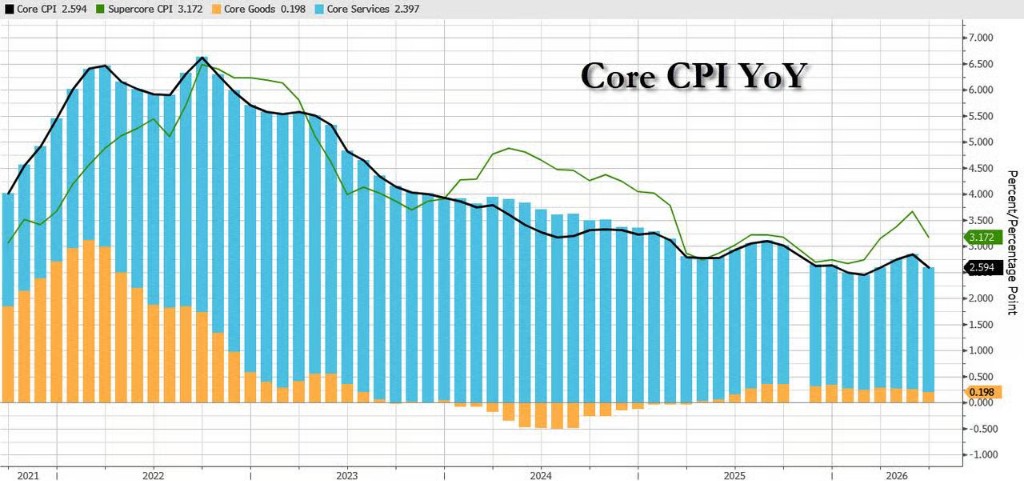
The U.S. Bureau of Labor Statistics will release July CPI data at 8:30 am ET (8:30 pm Beijing time) on Wednesday. The market generally expects a 0.1% increase in overall CPI and a 0.2% increase in core CPI on a month-over-month basis, with year-on-year rates dropping to 3.4% and 2.5%, respectively.
Following the unexpectedly weak nonfarm payroll data last week, this report will be a key litmus test for September rate hike expectations. If the data is mild, the market may further reduce the probability of a September rate hike; if the data is hotter than expected, it will put additional pressure on the already hawkish Fed.
Currently, the interest rate futures market is pricing the probability of a September rate hike at around 50%, a so-called "coin flip." The July employment report last week showed a decrease of 23,000 jobs, leading to a significant cooling of rate hike expectations, but a subsequent oil price rebound brought the probability back to equilibrium. Meanwhile, at the July Fed meeting, three board members voted in favor of a rate hike, and several non-voting members also clearly expressed a preference for policy tightening, giving the hawkish camp a significant voice internally. Tonight's CPI data will directly impact this delicate balance.
Moderate Readings Likely, But Still Above Target
Based on forecasts from institutions such as Goldman Sachs and Pantheon Macroeconomics, it is highly probable that this CPI data will fall within the expected range and is unlikely to see a large fluctuation as in the previous month's report.
Goldman Sachs expects a 0.19% month-over-month increase in core CPI for July, with a year-on-year rate of around 2.47%, both slightly below market consensus; the overall CPI is expected to rise by only 0.05% on a month-over-month basis, with a year-on-year rate of around 3.35%. The main reason for the decrease in overall inflation is the drop in energy prices (-2.0%), while food prices are expected to rise modestly by 0.2%.
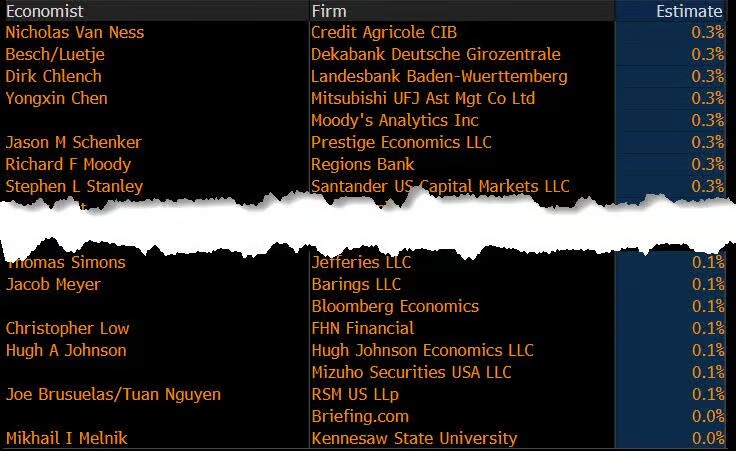
At the item level, Goldman Sachs predicts a 0.5% month-over-month increase in used car prices, a 0.1% increase in new car prices, but a 0.5% decrease in car insurance prices; in the housing subcategory, owner's equivalent rent (OER) is expected to increase by 0.23% month-over-month, rent to rise by 0.16%, continuing a recent slowing trend; travel services subcategory shows some differentiation, with airfare prices expected to rise by 2.0%, hotel prices expected to fall by 1.0%, partly due to the waning demand boost effect from the World Cup.
Pantheon Macroeconomics expects a 0.18% month-over-month increase in core commodity prices, the largest jump since September last year. This is partly driven by Apple (AAPL) raising prices by 15% to 30% on most hardware products since June 25, but the weakness in the services subcomponent is expected to counteract this — the institution predicts a 1.5% decrease in airfare prices, a 1.0% decrease in accommodation prices, a continued downward trend in car insurance, and a 2.6% decline in energy commodity prices, which will exert approximately an 11 basis point drag on the overall CPI rate.
Fed Stance: Status Quo, but Hawkish Noise Grows Louder
RSM Chief Economist Joe Brusuelas states that if July's CPI closely matches expectations, "a majority of the Committee will look past supply-side disruptions, and the FOMC will hold rates steady for the remainder of the year," providing some cushion for Fed Chair Powell — who has faced ongoing policy pressure since assuming office in May.
However, hawkish forces within the Fed are building up. Cleveland Fed President Beth Hammack, one of the three voting members supporting rate hikes at the July meeting, said on Monday that multiple rate hikes may be necessary, emphasizing that "a single 25 basis point adjustment will likely have a minimal impact on the economy." Additionally, non-voting members Schmid and Musalem also indicated they would lean towards supporting rate hikes at the July meeting. While Fed Chair Powell acknowledges that the current tightening of financial conditions is partly substituting for some Fed work and that the July jobs data and its downward revision have indeed tempered recent tightening expectations, he has not explicitly ruled out further rate hikes.
Bank of America, on the other hand, maintains its forecast of three rate hikes in the coming months. The bank's economists noted in a client report that the July jobs report "did not alter the broader labor market picture," and the Fed's policy response function remains "highly skewed towards inflation data." The bank cautioned that if the average core CPI rate over the next two months reaches 0.25%, "the Fed is almost certain to start hiking rates in September"; if it averages below 0.2%, the rate hike will be postponed; if it falls between the two, September is "still a coin toss."
Stocks and Bonds Under Pressure, Stock Sentiment Index Flashes Red
JPMorgan's Market Insights team provided a scenario analysis of this CPI data:
· If the core CPI rate exceeds 0.30%, the S&P 500 is expected to drop by 1.5% to 2.5%, with a 5% probability;
· If the CPI falls within the range of 0.25% to 0.30%, the index is expected to decrease by 0.5% to 1.25%, with a 25% probability;
· If the CPI falls within the range of 0.20% to 0.25% (the most probable scenario at around 40%), the index is expected to rise by 0.25% to 0.75%;
· If the CPI is below 0.20%, the increase is expected to expand to 0.5% to 2%. Overall, the bond market's response to higher-than-expected inflation will be more severe than that of the stock market.
It is worth noting that the implied volatility on options priced for August 12 is around 0.9%, slightly lower than the recent average level of about 1.1%, indicating that the market does not expect extreme outcomes from tonight's data.
A team led by Wells Fargo analyst Ohsung Kwon issued a warning to investors, recommending hedging positions ahead of the CPI release. The bank's sentiment indicator currently reads 1.4, signaling the strongest "sell" signal zone since January 2018. "We believe the cost of hedging is relatively low and we lean towards hedging the risk of hotter data," the analyst wrote. "If the CPI exceeds expectations, the market narrative will quickly shift to stagflation concerns, especially against the backdrop of last week's weak employment data." However, Wells Fargo also pointed out that second-quarter corporate earnings grew 30% year-on-year, surpassing the market's expectations by 8%, marking the strongest growth rate in over four years, which still provides some support to the stock market.
Longer-term Risks: AI Inflation and Market Structure Signals
While the short-term inflation outlook remains relatively benign, Societe Generale analyst Andrew Lapthorne pointed out that the stock market's structure is sending warning signals. The bank has constructed a stock market inflation proxy index based on stocks from developed markets most relevant to inflation, which has outperformed the MSCI World Index by 71% over the past 12 months. Lapthorne stated:
"The market no longer anticipates the contradictory combination of 'strong earnings growth + rate cuts,' but instead believes that such strong earnings growth typically comes with rate hike demands."
At the same time, commodities linked to the AI industry are facing upward pressure. It is reported that soaring memory prices could push core PCE up by 0.5 percentage points. Goldman Sachs expects a significant 0.26% increase in the July core PCE rate, partly reflecting the impact of second-quarter stock price gains filtering through to portfolio management service costs with a lag. Methodological adjustments to this project categorization are set to be implemented at the end of September, which may result in data revisions downward; however, a subsequent revision in December could reintroduce strong correlations.
Subsequent Data Abounds, September Decision Still Pending
Even if the CPI results tonight are clear, the direction of a rate hike in September is still up in the air. Ahead of the September 16 FOMC meeting, the Fed will also receive the August nonfarm payroll, August CPI, and August PPI data, while the August PCE data will only be released after the meeting. This means that there is still plenty of room for policy expectations to shift in the coming weeks.
Overall, the most likely scenario is that the data meets expectations, which is neither enough to reignite the flames of a September rate hike nor sufficient to completely dispel market tightening expectations. The ultimate decision between hawks and doves still lies in the hands of subsequent data and Powell.
Original Article Link
Welcome to join the official BlockBeats community:
Telegram Subscription Group: https://t.me/theblockbeats
Telegram Discussion Group: https://t.me/BlockBeats_App
Official Twitter Account: https://twitter.com/BlockBeatsAsia

 Related Articles