The Wealth Feast of Yushu's IPO, Doomed to Enrich Only a Few
Original Title: "The Wealth Feast of Ubet's IPO, Doomed to Enrich Only a Few"
In the winter of 2017, due to the high-speed rail's restriction on carrying large-capacity lithium batteries, Wang Xingxing, holding a robotic dog, took a train from Hangzhou to Beijing for over ten hours to pitch at Sequoia China. At that time, his company was almost unable to pay salaries.
9 years later, Ubet Technology is about to become the "first stock of humanoid robots" on the Chinese A-share market. The latest news is that on August 6, Ubet Technology announced an issue price of 150.80 yuan/share, online roadshow on the 7th, and online subscription will start on the 10th.
Many people expect its market value to exceed 100 billion yuan. Several second-tier industry insiders expressed the same view to Tencent Technology: despite the recent stock market volatility, Ubet's new shares will still be very scarce because everyone believes that this policy-supported industry's leader is bound to rise.
According to the prospectus, the company will publicly issue 40.4464 million new shares, accounting for 10% of the total post-issue share capital. The issue price was finally set at 150.80 yuan/share on August 6, with actual fundraising of about 6.1 billion yuan, corresponding to a post-issue valuation of about 61 billion yuan. Only 6.471 million shares were initially issued online. Calculated at 500 shares per lot, there are only 12,942 winning numbers available in the entire market, less than 13,000. This means that for every ten thousand valid subscription applications, there are only about 2 winning slots.
According to incomplete statistics, in the past two years, over 300 startups have emerged in China's embodied AI industry. By August this year, at least five companies have been valued at over 20 billion yuan, and nearly 50 companies are preparing for a Hong Kong or A-share IPO. For these companies, Ubet's stock price will serve as an A-share valuation benchmark and a reference for Hong Kong stock valuations.
This is a critical moment—however, in this capital feast driven by the concept of embodied AI, a gap is emerging between the wealth creation in the primary market and the reality in the secondary market.
The Person Who Will Make the Most Money from Ubet
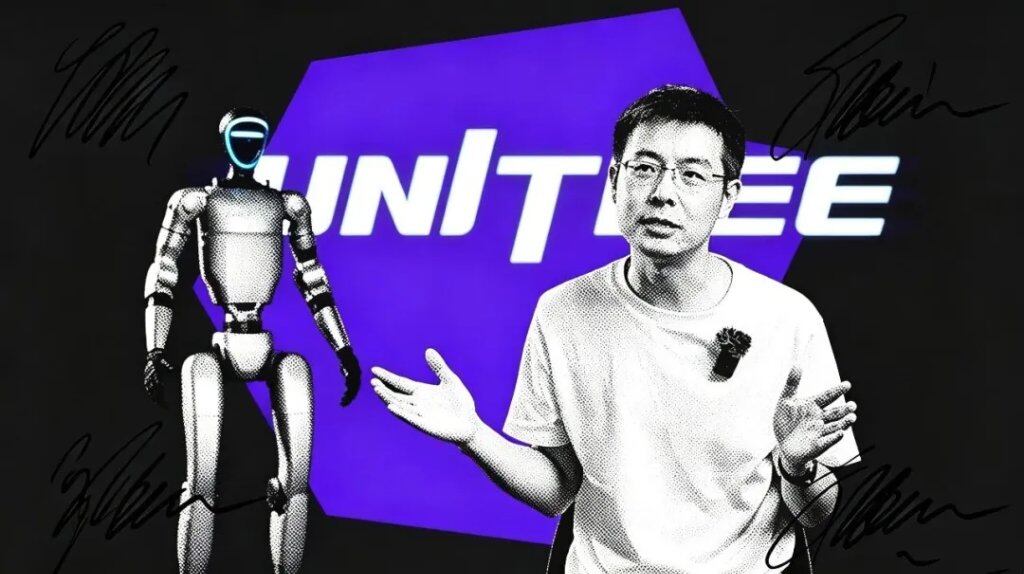
Wang Xingxing does not fit the typical image of a hardcore tech entrepreneur—this became the origin of Ubet's early backers' "counter-consensus."
He graduated from Shanghai University with an average background. During the early financing stages, he encountered numerous rejections. In the golden decade of Internet model innovation, VCs had a template for identifying talent: graduates from prestigious universities, executives from major companies, overseas returnees, or serial entrepreneurs. To some extent, these criteria ensured the bottom line of entrepreneurial projects and, to some degree, filtered out entrepreneurs like Wang Xingxing.
Heart Capital partner Tian Jiangchuan has openly reflected on this experience. At the end of 2017, Tian Jiangchuan met Wang Xingxing for the first time at a coffee shop in Hangzhou. At that time, USC's product had already demonstrated an extreme cost reduction strategy and a differentiated technological path, but Tian Jiangchuan ultimately decided not to invest. "Looking back, the main problem was my 'elitist arrogance': Xingxing graduated from Shanghai University, while I believed that the robotics industry required a top-tier academic background," Tian Jiangchuan later admitted. It wasn't until 2020 that Heart Capital reinvested in USC at a price more than four times higher.
A seasoned investor who has been following the domestic robotics track for over a decade told Tencent Technology that when USC was founded, the quadruped robot track did not receive much attention in China, and very few early institutions had contact with it.
Time has rewarded the earliest "non-consensus" participant. In 2016, Yin Fangming, who had previously worked at MediaTek, Sogou, and Qihoo 360, made a 2 million RMB angel investment and acquired 15% of USC Technology at a post-investment valuation of only 13.33 million RMB. Today, this investment is held indirectly through the equity platform Tianjin Junwan Hongyi by Yin Fangming. Tianjin Junwan Hongyi holds a total of 3.0699% of USC, ranking as the tenth largest shareholder. Through this structure, Yin Fangming indirectly holds approximately 0.46% of USC. Based on an initial valuation of 42 billion RMB, Yin Fangming's indirectly held shares are valued at around 200 million RMB, with an overall return rate of approximately 100 times. By 2025, he had cashed out 58 million RMB early by transferring some of the old shares.
In terms of return multiples, the institution that earned the most is Variance Capital. This early-stage fund made a 2.09 million RMB investment in USC's angel round in 2018 and has since achieved a return multiple of 174.62 times. Including partial exits, the total return is approximately 364 million RMB.
Sequoia China's return multiple is also impressive. The roadshow that Wang Xingxing conducted on that train prompted Sequoia's seed fund to immediately issue a term sheet. The 15 million RMB investment corresponds to a post-investment valuation of only 150 million RMB. After multiple rounds of follow-on investments, Sequoia China has invested approximately 102 million RMB in total and currently holds 7.11% of USC. Based on a valuation of 42 billion RMB, the corresponding book value is around 2.98 billion RMB, exceeding 2.5 billion RMB.
Meituan, on the other hand, is the institution that has earned the highest absolute return. Through entities such as Hanhai Information and Chengdu Longzhu, Meituan collectively holds 9.65% of USC Technology, becoming the largest external institutional shareholder. Based on the issuance valuation, Meituan's shareholding corresponds to a market value of around 4.05 billion RMB. Considering its cumulative investment of approximately 400 million RMB in rounds such as the 2024 Series B, Meituan's book return exceeds 3.6 billion RMB.
Meituan Longzhu Partner Wang Xinyu met Wang Xing in the first week of work in 2016, but did not invest in him until 2024. At the end of 2023, Wang Xinyu went to the United States to research robot labs at top universities such as Harvard, MIT, and Stanford, and found that these institutions representing the most cutting-edge research forces globally were all using Yushu's robotic dog for secondary development. "If the world's best doctoral students are using Yushu's robots for cutting-edge research, can its AI capabilities be ignored?" Wang Xinyu said in a media interview.
Other early or mid-term investors have also reaped generous rewards. Weiweixun Venture Capital entered in the Series B round in 2022 at a valuation of about 1.12 billion yuan, currently holding a total of 5.45%, corresponding to a market value of about 2.29 billion yuan, with a book return multiple of about 45 times; Shunwei Capital entered for the first time in January 2021 at a valuation of 380 million yuan, currently holding 3.98%, corresponding to a market value of about 1.67 billion yuan, with a book return multiple of about 26 times; CITIC Group entered in the B2 round in 2024, currently holding 4.49%, corresponding to a market value of about 1.88 billion yuan; Deep Creation Investment has accumulated investments of over 90 million yuan, currently holding about 2.55%, corresponding to a market value of about 1.07 billion yuan, with book returns around 10 times. Shanghai Yuyi, as an employee stock ownership platform, holds 10.94% of the shares, corresponding to a market value of about 4.59 billion yuan, with 14 core employees holding approximately 5.92 million shares, with an average book value of nearly 48.9 million yuan per person.
In June 2025, Yushu Technology confirmed the completion of Series C financing, led by Mobi's fund, Tencent, Jinqiu, Alibaba, Ant Group, and Geely Capital, with a post-investment valuation of 12.7 billion yuan. Calculated based on the 2016 angel round valuation, its valuation has skyrocketed nearly 1000 times in 9 years. Prior to the IPO, the top ten shareholders collectively held a 71.50% stake.
For early investors, a valuation of 61 billion is enough to allow them to retire.
First-tier Hopes for Yushu's Surge
For the primary market, Yushu's listing is crucial. Currently, the valuations of the top few unlisted embodied intelligence companies have reached 20 to 30 billion yuan. Without Yushu's surge in the secondary market as a "benchmark," subsequent high-valuation projects will be affected.
A CEO of a robot company valued at over 10 billion told Tencent Technology that just as NIO's stock price continued to fall after its listing, causing XPeng's subsequent financing to be blocked, "although each company seems different, investors think you are all robots." They are all looking forward to the first company in the industry to go public and see a surge in stock price.
Several executives from robot companies have told Tencent Technology that humanoid robots are eager to go public, primarily to raise funds through primary and secondary offerings. They are often pressured by their investors as well. "On the surface, these institutions have not reached the exit phase yet, but once one company goes public, subsequent companies will face tremendous pressure from shareholders," the CEO of a humanoid intelligent component company preparing for an IPO told Tencent Technology.
Some views liken the current state of humanoid intelligence to the new energy sector of 2021, with expectations that over 80% of companies will be eliminated in the future. Concerns about the uncertainty of the capital market's future and the industry's slow implementation speed have led to widespread anxiety in the industry.
Capital is willing to pay a price-to-earnings ratio of 219.23 times for Yushu—far exceeding the industry's average P/E ratio of 38.56—betting on a future where humanoid robots can fully replace human labor. However, Yushu's current profits mainly come from robotic dogs. Yushu admits in its prospectus, "The company has not yet scaled the self-developed general-purpose humanoid large model for robotic products. If brain technology does not make significant progress, there is uncertainty in the large-scale application of general robots."
In other words, the "brain" is what capital is paying for in its valuation, but Yushu can currently only make money by selling the "little brain."
Yushu is attempting to fill this crucial gap. Out of the planned fundraising of 6.099 billion yuan, a special allocation is designated for the intelligent robot model research and development project. This is a necessary step in transitioning from its "hardware manufacturer" to a "full-stack physical AI platform" and is crucial to sustaining its valuation.
No Consensus at the Secondary Level, but Actions Are Genuine
If there is consensus at the primary level, its influence at the secondary level lacks continuity.
In the current A-share environment, liquidity is relatively tight, with a significant outflow of funds into old-fashioned value stocks and sectors such as semiconductors. What seems attractive to primary market investors as "Physical AI" may only be seen as a hardware company under pressure from high valuations by some secondary market funds. A public fund manager told Tencent Technology that the disparity between these two logics is one of the sources of uncertainty Yushu faces after going public.
Yushu had a very small free float on its first day of trading, amplifying this emotional game. Yushu Technology's total initial public offering was 40.4464 million shares, with an initial issuance of only 6.471 million shares to online investors, accounting for 16% of the total offering. The remaining 84% of the shares were allocated to institutional investors through strategic placements (8.0893 million shares, 20%, locked up for 12 to 24 months) and offline placements (25.8861 million shares, 64%). Out of the total post-IPO share capital of 404.4643 million shares, only about 29.77 million shares were freely tradable on the first day, accounting for approximately 7.36% of the total share capital. Over 90% of the shares were in a lock-up period on the first day of trading. Under restricted supply conditions, once market sentiment rises, share price elasticity will be significantly magnified.
The aforementioned institutional investor told Tencent Technology that the secondary market's hype around TreeTech has always shown a typical "event-driven, pump-and-dump" pattern. He believes that this kind of fleeting attention cannot be sustained for long, often retracing back to where it started.
Take the example of the 2026 Spring Festival. Funds speculated ahead of the festival on the expectation of humanoid robots appearing on the CCTV Spring Festival Gala, triggering a round of hype. On the night of Chinese New Year's Eve on February 16, companies like TreeTech showcased their humanoid robots. The positive news quickly turned into profit-taking, with the Hong Kong stock market's Year of the Horse's first trading day on February 20 seeing stocks such as Transcender and OptiSelect surge significantly before swiftly dropping back down. Just a few trading days later on February 24, the A-share robot concept sector experienced a heavy blow, with Wuzhou New Spring plunging by over 9% intraday, closing down by 6.9%. Core component companies like Green Harmony and Wide Money Stream led the sector's decline in stock prices.
TreeTech's sprint to the Sci-Tech Innovation Board also saw extreme fluctuations. From the acceptance on March 20 to the registration approval landing on July 2 in just 104 days, it set a record for the fastest review on the board. On July 2, the CSRC approved TreeTech's IPO registration, leading to a surge in the A-share robot concept across the board, with over 50 stocks hitting the limit up or rising by more than 10%. However, just three weeks before TreeTech's IPO registration took effect and during the World Artificial Intelligence Conference in July, the CSI Robot Index fell by 12.77% in a single week, and the Sci-Tech Innovation 50 Index experienced a 10.5% three-day cumulative decline. When expectations were cashed in early, the market lost incremental funds, leading to a brutal sell-off in stock prices under high crowding.
Throughout July, the A-share market saw a market cap evaporation of over 12 trillion yuan, with the Shanghai Composite Index cumulatively falling by 6.4%, the Shenzhen Component Index plummeting by 16.21%, the Growth Enterprise Index falling by 23%, and the Sci-Tech Innovation 50 Index crashing by 25.90%, marking the largest single-month decline in history. AI concept stocks had their most brutal month, with the two innovation indices plummeting by 23% and 25.90% respectively, and the semiconductor index dropping by over 33%.
In other words, TreeTech's valuation anchor is not actually dependent on TreeTech itself.
Several analysts focusing on the robotics sector pointed out that the driving force behind the entire humanoid robot industry is still Tesla. The reason is analogous to the electric vehicle industry: the real penetration of pure electric vehicles into people's lives only began after the scale of Tesla's Model 3, triggering a shift in domestic awareness of pure electric cars and the rise of other brands. Even the Tesla chain, considered a benchmark, faces great uncertainty.
The release of Tesla's Optimus Gen-3 is expected to be delayed until the first quarter of 2026, with key upgrades focused on hand dexterity and body structure. This ongoing design flux implies that the supply chain, meticulously dissected and repeatedly hyped by the market before, is at risk of a reset at any time. "From the release of the first-generation Prime to now, except for suppliers like Three Flowers and Topop, the design materials for each joint, corresponding suppliers, and value have changed several times. The design we see today may have nothing to do with the actual design when humanoid robots truly start to popularize in the future," said an analyst.
In this context, the aforementioned public offering insiders believe that the key to the entire humanoid robot sector still depends on whether Tesla can meet expectations. "If Tesla fails to meet this expectation, Tesla's stock price itself will fall, remaining sluggish, and the industry's progress will continuously lag behind expectations, making it difficult for Ubtech to break out into an independent uptrend."
Nevertheless, he said that everyone around him who is eyeing Ubtech's IPO hasn't backed out.
Original Article Link
Welcome to join the official BlockBeats community:
Telegram Subscription Group: https://t.me/theblockbeats
Telegram Discussion Group: https://t.me/BlockBeats_App
Official Twitter Account: https://twitter.com/BlockBeatsAsia