Hassabis Steps Down, Jeff Dean Leaves to Start a New Venture, Google's Morale Wavers
Original Title: "Hassabis Steps Down, Jeff Dean Leaves to Start a Business, Google's Morale Wanes"
On August 5, Google DeepMind CEO Demis Hassabis stepped down from his daily management duties, taking on the role of DeepMind's chairman and assuming the position of Chief Scientist at Alphabet. He will still oversee long-term AI research and continue to lead the new drug development company, Isomorphic Labs. Although his titles have become more prestigious, it is actually a case of a promotion in name only, as he now holds less actual managerial power.
Gemini's research and delivery will be led by DeepMind's former Chief Technology Officer, Koray Kavukcuoglu, reporting directly to Sundar Pichai. Hassabis remains a symbol of Google AI, contributing to the direction of AGI, but is no longer in charge of DeepMind's day-to-day operations. With this adjustment, the management chain between DeepMind and Alphabet's headquarters has been further shortened, allowing Pichai to have more direct oversight of Gemini's development progress.
On the same day, Jeff Dean announced his departure from Google.
He took Sanjay Ghemawat, Oriol Vinyals, and Quoc Le with him to establish a company called Discovery Loop, aiming to use AI to automate the entire scientific research process of posing questions, designing experiments, conducting experiments, and evaluating results. Google participated in the initial investment, will be its cloud services provider, and will provide computing power in the first year.
Google did not try to retain this team but chose to continue the relationship in terms of capital, cloud services, and scientific research collaboration. For a group of top researchers who had already decided to start their own venture, this can be considered a respectable way of handling the situation.
The market reacted swiftly. Alphabet's stock price fell over 5% intraday, closing with a drop of nearly 4%. Considering the size of the company, a 3.8% decrease corresponds to approximately $175 billion in market value. At its lowest point during trading hours, the evaporation reached nearly $260 billion.
Over the past six weeks, this has been Alphabet's fourth market punishment related to AI.
Jeff Dean and Hassabis, Two Traditions of Google AI
Jeff Dean is not easily categorized as a typical tech executive.
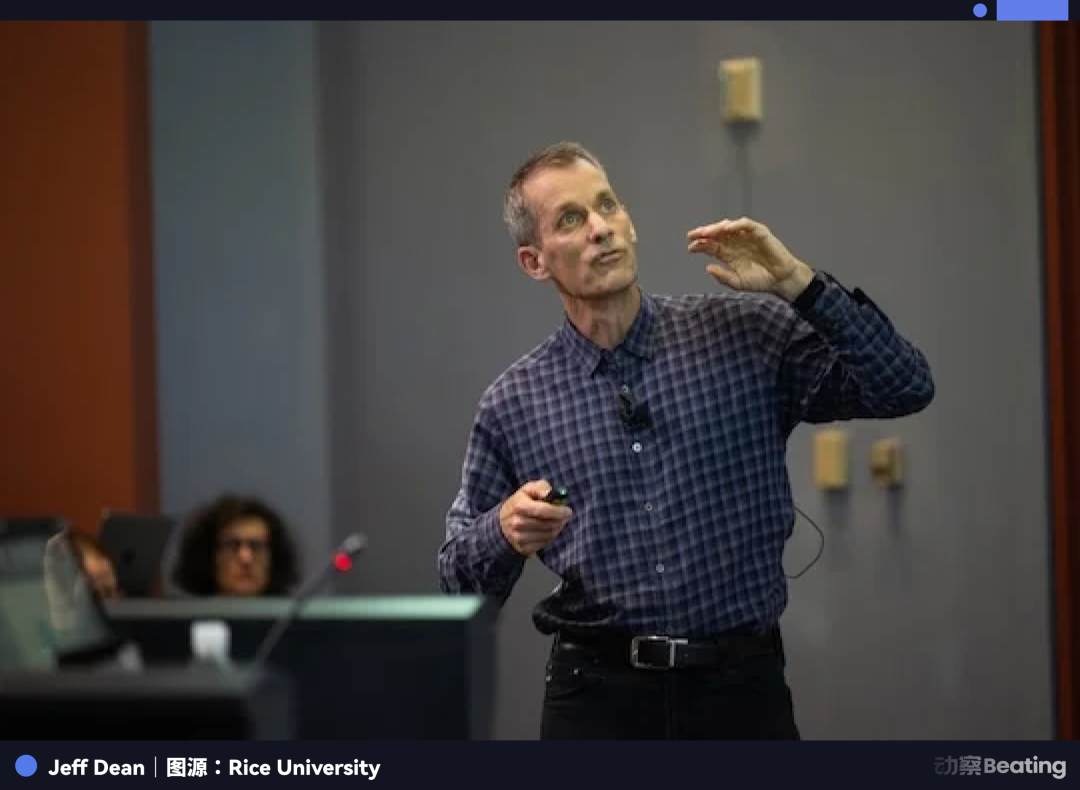
When he joined Google in 1999, he was the company's 30th employee. Over the next nearly thirty years, he was present for almost all of Google's most significant technical transformations.
During the early days, as the search and ad systems needed to handle rapidly expanding data, he and Ghemawat wrote MapReduce and Bigtable. These systems later became the foundation of large-scale distributed computing, with an impact far beyond Google. He was also involved in the creation of Google Brain, TensorFlow, and TPUs. In the Gemini era, he became the technical co-lead of models.
Today, Google's ability to train large models, run them on custom chips, and integrate them into search, cloud, and various consumer products can all be traced back to the infrastructure he helped build.
Hassabis represents another kind of capability.
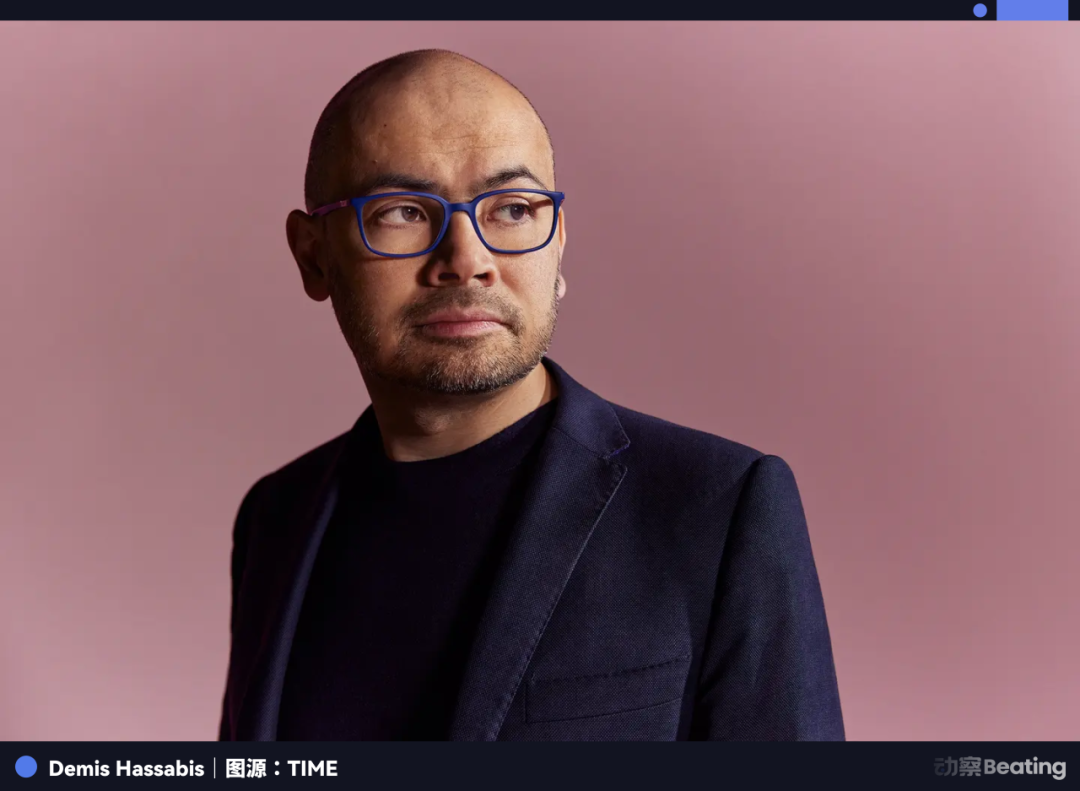
In 2010, he founded DeepMind in London. In 2014, Google completed the acquisition. Two years later, AlphaGo defeated Lee Sedol, putting artificial intelligence directly into the global public eye for the first time. In 2024, he and John Jumper were awarded the Nobel Prize in Chemistry for AlphaFold.
In 2023, Google Brain merged with DeepMind, and Hassabis took over the integrated Google DeepMind. He is both the leader of the Gemini project and a key figure in Google's storytelling about the future of AI.
Dean and Hassabis represent the engineering and scientific traditions of Google AI. Now, with Dean leaving the company, Hassabis has taken a back seat.
Four Plunges in Six Weeks
This adjustment triggered such a strong market reaction because it came after a series of setbacks for Google AI.
In June, Noam Shazeer, one of the authors of the Transformer paper and the technical co-lead of Gemini, left Google to join OpenAI. In 2024, just after Google had brought him back to the company from Character.AI through a special deal of about $2.7 billion and placed him in the core Gemini team, Shazeer left again two years later.
Subsequently, AlphaFold lead and 2024 Nobel Prize in Chemistry laureate John Jumper joined Anthropic.
Within two days, Google lost two prominent researchers. On June 22, Alphabet's stock price plunged over 7% intraday, causing a market capitalization loss of over $200 billion.
On July 16, news of the delayed release of Gemini 3.5 Pro emerged. This flagship model, initially scheduled for launch in June, faced a delay of several months due to factors such as code capabilities not meeting expectations. Following the announcement, Alphabet's stock price experienced another intraday drop of over 3%.
In late July, the focus shifted to financial reports.
Alphabet's capital expenditure for the second quarter reached $449 billion, doubling year-over-year, with the full-year capital expenditure guidance revised to $1.95 trillion to $2.05 trillion. Meanwhile, the company's free cash flow for the period turned negative at $5.9 billion, marking the first-ever quarterly negative free cash flow in Alphabet's history. On the first trading day after the financial report release, the stock price saw a drop of over 7% intraday.
Google's increasing resource allocation has not translated into a corresponding leadership advantage for its models. Furthermore, flagship products have not been delivered on time, and key figures responsible for research and engineering have left successively.
Following Jumper's departure, reports quoting DeepMind employees suggested that Google has struggled to find clearly industry-leading models in areas such as text, images, video, voice, and vision.
Google has never lacked resources; one could even argue that it possesses the most comprehensive set of resources in the entire AI industry.
It has internally-developed TPUs, global-scale data centers, data accumulated from Search and YouTube, and distribution channels provided by Android, Chrome, Workspace, and cloud services. Sundar Pichai also listed a series of achievements in an internal memo, stating that Gemini app monthly active users reached 950 million, Gemma downloads exceeded 900 million, and Gemini Robotics continued to make progress.
These assets are sufficient to prove that Google remains formidable but are unable to replace the next-generation flagship model itself. The market is willing to pay for long-term investments, given that this expenditure ultimately results in leadership. After consecutive instances of model delays and key personnel exits, investors are beginning to question whether Google's deficiency lies in time or in its ability to unify its vast resources.
DeepMind Bids Farewell to Founder Management
Koray Kavukcuoglu, who has been with DeepMind for 13 years, taking over from Hassabis to oversee daily operations, learned from Lecun, contributed to projects such as DQN, WaveNet, and multiple generations of Gemini, and previously served as CTO of Google DeepMind.
Koray is familiar with DeepMind and has long been responsible for bridging research, infrastructure, and product. His assumption of control over Gemini indicates Google's increased focus on model delivery, product integration, and commercialization.
This adjustment has also reshaped DeepMind's position within Google.
Throughout Hassabis's tenure, DeepMind has always maintained a distinct founder-led approach. Founded in London, it has retained a relatively independent research tradition since being acquired by Google. Following the merger of Google Brain and DeepMind, Hassabis became the CEO of the integrated team, allowing DeepMind's culture to take a leading role in the new organization.
Today, with Hassabis stepping back from day-to-day management, Koray reports directly to Pichai, strengthening DeepMind's ties with Alphabet's headquarters. For Google, this is a move to tighten control. Pichai needs clearer oversight of Gemini's development pace and someone to take direct responsibility for model delays, resource allocation, and product implementation.
For DeepMind, this also marks the end of an era.
Hassabis remains at Google, retaining his lofty titles and continuing to engage in long-term research. However, the DeepMind that was directly led by its founders and shaped by scientific ideals is gradually evolving into a more standardized AI research department within Alphabet.
Google Is Learning How to Bid Farewell to Talent
Jeff Dean's departure showcased another way Google handles talent outflow.
Google participated in the founding investment of Discovery Loop, continued to provide cloud services and computing power, and maintained research collaboration with the new company. Although Dean and his team have left the organization, they remain within Google's capital and technological ecosystem.
This arrangement benefits both parties.
Discovery Loop has gained access to valuable compute power, infrastructure, and early funding without having to build a research platform from scratch. Google, on the other hand, retains its investment returns, cloud orders, and potential future collaborations, while also avoiding the direct migration of a team of core talents who have worked on a project for over two decades to a competitor.
From a corporate governance perspective, this is almost an ideal exit strategy.
However, it still fails to answer one question: why did a team so familiar with Google, involved in building Google, and able to leverage Google's resources ultimately believe that they could further their research more effectively after leaving?
They did not abandon their previous research direction, nor were they forced out due to internal competition failures. They simply relocated the work they were doing internally at Google to a new company where they could have full control.
When discussing the reasons for leaving, they mentioned that in a large organization, there is always too much inertia to overcome in order to drive radical change. They wanted to create something different.
In the past, Google attracted top researchers by ensuring that staying with the company would provide them with enough resources to complete work that could not be done elsewhere.
Now, a group of individuals who are most knowledgeable about Google's resources are making the opposite judgment. They still believe the research is worth investing in, and they still believe AI will transform science, but they no longer believe that the organization of a large corporation is best suited to accomplish it.
Outside the Lab, New Companies Begin to Grow
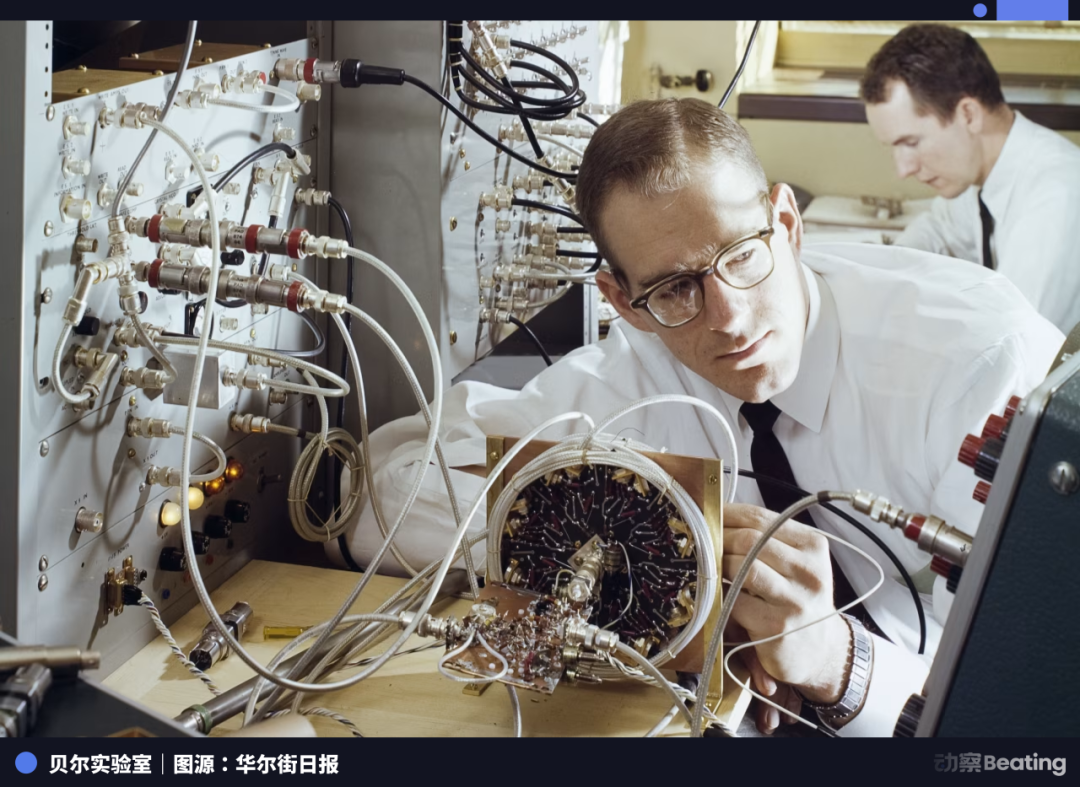
Google DeepMind evokes memories of Bell Labs.
Bell Labs, relying on AT&T's stable long-term profits, brought together some of the finest scientists and engineers of the 20th century, leading to the invention of the transistor, laser, information theory, and Unix. Its greatness did not remain intact within the organization itself but spread continuously through the departing individuals.
William Shockley, co-inventor of the transistor, left Bell Labs and founded Shockley Semiconductor in California. In 1957, eight engineers collectively left and formed Fairchild Semiconductor. The founding teams of Intel and AMD later spun off from the Fairchild ecosystem. Much of the industrial network later known as Silicon Valley emerged largely along this talent flow path.
Google DeepMind has not yet reached the end of Bell Labs' story. Gemini has a large user base, Google Cloud continues to grow, and the similarity lies in a top-tier lab nourished by a mature business system evolving its own people to establish new labs and companies outside.
At the peak of a lab’s glory, people see how many geniuses it has attracted. Moving to the next stage, people will see what has been built after these geniuses left.
It is both an achievement and a loss. For the entire tech industry, both can coexist, but for Google, balancing the two is not as easy.
Google invested in Discovery Loop, which can share in the future gains of the company, and providing cloud services can turn computing power expenses back into revenue. However, a company can invest in external outcomes but cannot use that to replace the internal loss of creativity.
Dean worked at Google for 27 years. He said he only started seriously considering entrepreneurship about five weeks ago.
Someone who has been with the company for nearly thirty years decided to leave in five weeks. Within Discovery Loop, the familiar partners remain: Ghemawat is in charge of systems, Vinyals is in charge of research, and Quoc Le continues to work on automated machine learning. There hasn't been much change in personnel division of labor or sudden shifts in research direction; they just moved out of Google's campus.
In his farewell letter, Hassabis said AGI is already within reach. The new company founded by Dean is also betting that AI will transform scientific research.
They probably still believe in the same future, just starting on separate journeys.
Original Article Link
Welcome to join the official BlockBeats community:
Telegram Subscription Group: https://t.me/theblockbeats
Telegram Discussion Group: https://t.me/BlockBeats_App
Official Twitter Account: https://twitter.com/BlockBeatsAsia

 Related Articles