Leon Liang's Youthful Years: $80,000 Principal, a Fiat Car, and a Solo Long March

Original Title: "Liáng Wénfēng's Youth: $80,000 Initial Capital, a Fiat, and a One-Man Long March"
Original Author: InsightBeating
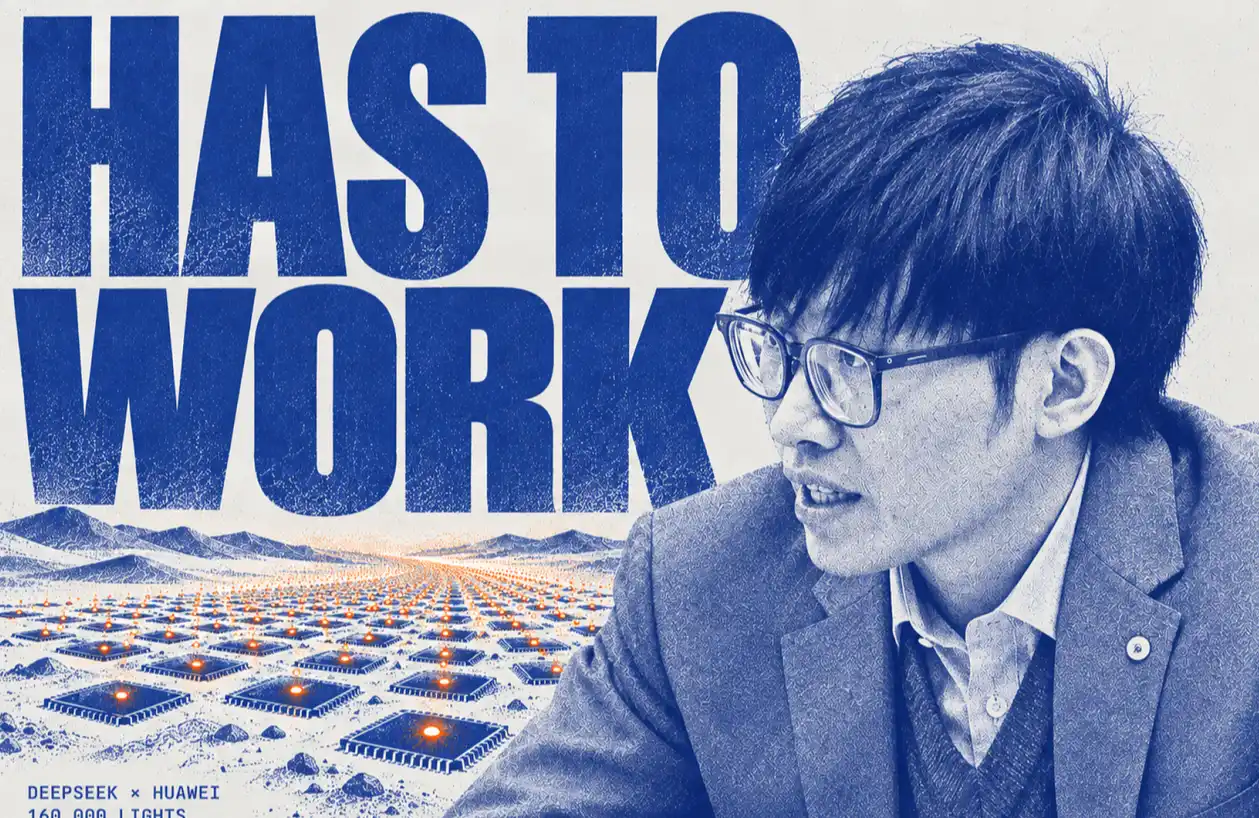
January 27, 2025, Monday. Liáng Wénfēng was playing soccer with some junior high school classmates on a field in Wúchuān.
Seven days ago, DeepSeek-R1 was released. Seven days later, news crossed the Pacific and sent shockwaves through the U.S. capital markets. NVIDIA's stock price plummeted over 16% in a single day, wiping out nearly $600 billion in market value. American media dug up old Cold War-era terms, dubbing this day the new "Sputnik Moment."
DeepSeek had already topped the free app charts in both China and the U.S. Silicon Valley residents overnight learned to pronounce a foreign Chinese name, and interview requests flooded in from around the world to Hángzhōu, with reporters everywhere trying to find out where Liáng Wénfēng had gone.
No one found him.
That afternoon, he was wearing his soccer jersey, running back and forth on a field in a county-level city in Western Guǎngdōng. The ball fell to his feet, he controlled it, turned, and passed it again. The world outside the field was in turmoil, but the game on the field continued.
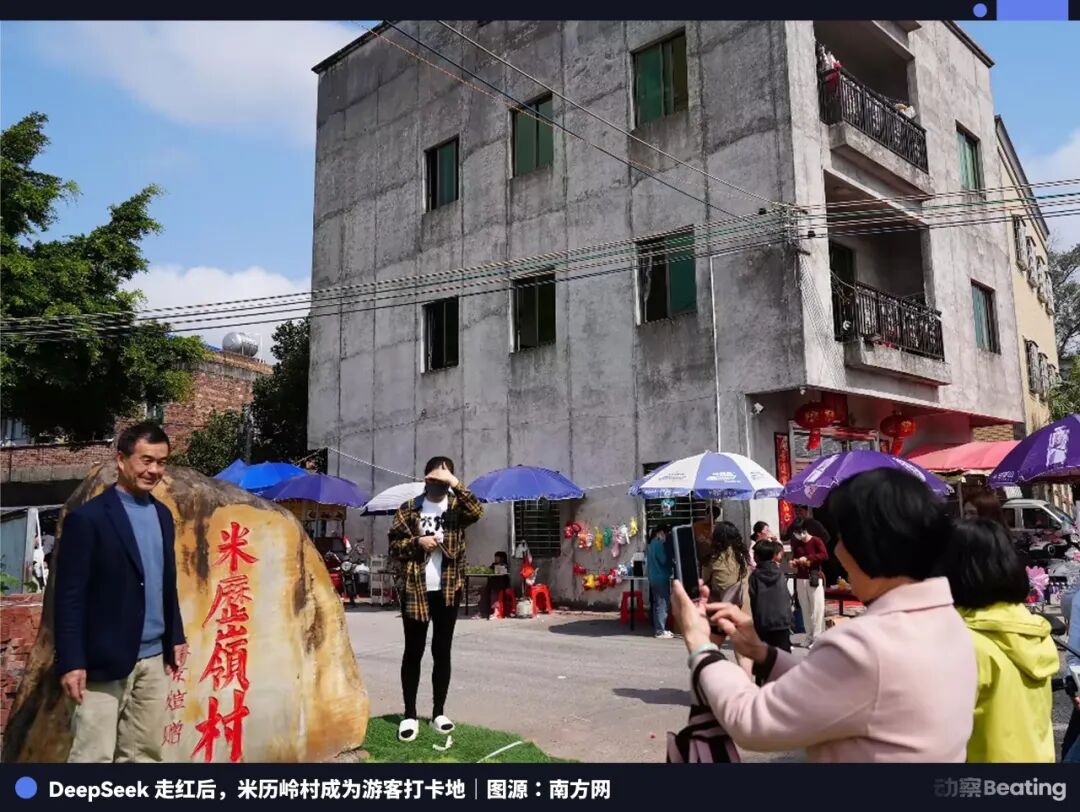
The next day was Chinese New Year's Eve. Liáng Wénfēng returned to Mǐlìlǐng Village, where a banner was already hung at the entrance, with red background and white characters saying, "Warmly welcome Wénfēng, the pride and hope of our hometown."
Tourists came one after another, standing under the banner to take photos. Some bent down, picked up a handful of soil from the roadside, carefully held onto it, as if wanting to take some good luck from this village. Liáng Wénfēng's high school classmate Mr. Chén told reporters that he promised to come back to Wúchuān for the New Year, but after coming back, he would find a place to hide.
The Children of Mǐlìlǐng Village
In 1985, Liáng Wénfēng was born in Mǐlìlǐng Village, Tánbā Town, Wúchuān City.
Wúchuān is located in Western Guǎngdōng, surrounded by rivers on three sides and facing the sea to the south. Jiàn River comes down from the north, suddenly turns a bend here, and then flows south into the sea. In the past, commercial ships traveling on the water route often docked in the river bay, with warehouses lining the shore, creating a bustling scene. Because of this, the county town was given a somewhat majestic name, "Little Fóshān."
Wúchuān also believed in education. The hometown of the Qing Dynasty Zhuàngyuán, Lín Zhàotáng, Xiájiē Village, is not far from Mǐlìlǐng Village. The county annals record that a zhuàngyuán, twenty jìnrén, and one hundred and sixty-five jǔrén came from here. Over the centuries, generation after generation of young people set out from here, following the same narrow road to the county town, provincial capital, and the capital. Fame had long become a thing of the past, but the idea that studying could change one's destiny had always remained in this land.
The village of Mileling also has its own story. When the elderly in the village talk about their ancestors, they will mention the anti-Japanese general Liang Huasheng, as well as Liang Taixi who graduated from Sun Yat-sen University in 1936. According to the village's records, after liberation, nearly a hundred students have been admitted to top universities in the country from here.
However, Liang Wenfeng grew up in the 1990s. That was the golden age of Guangdong, factories were hiring, businesses were thriving, and the coastal cities were changing rapidly. A young person who was willing to endure hardship and take risks might not necessarily need to spend many years in a classroom; they also had the opportunity to earn money that was unimaginable before. In comparison, studying was too slow, requiring one to endure year after year, and in the end, it was uncertain what one could achieve.
Many parents in the village believed that studying was useless. Some even went to Liang's house specifically to persuade his father not to let his child continue studying. At that time, the centuries-old fame and imagination of Mileling Village were being overshadowed by the fresh and vibrant wealth stories of Guangdong.
Many years later, Liang Wenfeng mentioned this past in an interview:
"I grew up in a fifth-tier city in Guangdong in the 1980s. My father was an elementary school teacher. In the 1990s, there were many money-making opportunities in Guangdong. At that time, many parents came to my house, basically because they thought studying was useless. But looking back now, the mindset has changed. Because money is not easy to earn anymore, even the opportunity to drive a taxi may be gone. A generation's time has changed."
"A generation's time has changed."
This statement refers to the 1990s and also to the year 2024. When he said this, he was engaged in another slow and equally difficult-to-explain endeavor.
Liang Wenfeng's father taught at Meile Village Elementary School and later became the deputy head of education, while his mother was also a teacher at Bianling Elementary School. This family had little to do with scientific research, but the attic was always filled with books. Local media reported that there were up to a thousand books at one point.
His father set two rules for the family. At the dinner table, they would not discuss studies but only talk about family life; after dinner, each family member would find a book to read. Liang Wenfeng's academic performance was rarely asked about. A phrase his father often said was that solving problems was more important than scores.
The most valuable appliance in Liang's house was a Leap brand radio. It had a black case, metal knobs, and an antenna that could be extended section by section. When you turned the switch, the first thing that came out of the speaker was the crackling of electricity. After tuning to the right frequency, voices from far away slowly emerged from the noise.
When Liang Wenfeng was in the fourth grade, he disassembled this radio. He unscrewed the screws, opened the case, and all the tangled wires and components inside were exposed on the table. He disassembled and reassembled it, reportedly repeating this process thirty-seven times.
His father never taught him about circuits, nor did he stop him. He just handed him a screwdriver and said, "Remember to put it back together after you're done."
Later, when the family got a TV, Liang Wenfeng started taking it apart. One time, he broke the TV while disassembling it. His father didn't scold him or confiscate his tools. He just looked at the TV that would never turn on again and asked him, "How can you ensure that you won't break my TV next time?"
His kindergarten was in Meiling Primary School, and his elementary school was in Mece Primary School. His elementary school teacher, Mr. Li, remembered that he rarely daydreamed in class. He was particularly focused when faced with difficult problems and was good at summarizing problem-solving methods. In sixth grade, he won the national silver medal in math and also entered Wuchuan No. 1 Middle School that year.
During his three years in junior high school, his overall grades were always around the top 100 in the grade, not outstanding, but he often excelled in math competitions. In the 1999 high school entrance exam, he scored 819, just over 20 points above the admission line for Wuchuan No. 1 Middle School.
In his freshman year of high school, he jumped into the top ten from being around the 100th in the grade. His senior high school teacher and math teacher, Mr. Yang Yahong, said that this child was modest. He never needed the teacher to worry about his homework, was particularly interested in the math group, participated in the provincial math competition every year, and always won at least third prize. His junior high school teacher, Ms. Rong, also said that he had self-studied high school-level math in junior high school, started studying university-level math, was quiet but not a bookworm, as if he didn't need to spend a lot of time to excel in each subject. During those junior high school years, he became obsessed with computers, disassembling and repairing them, and even helped the school fix computers.
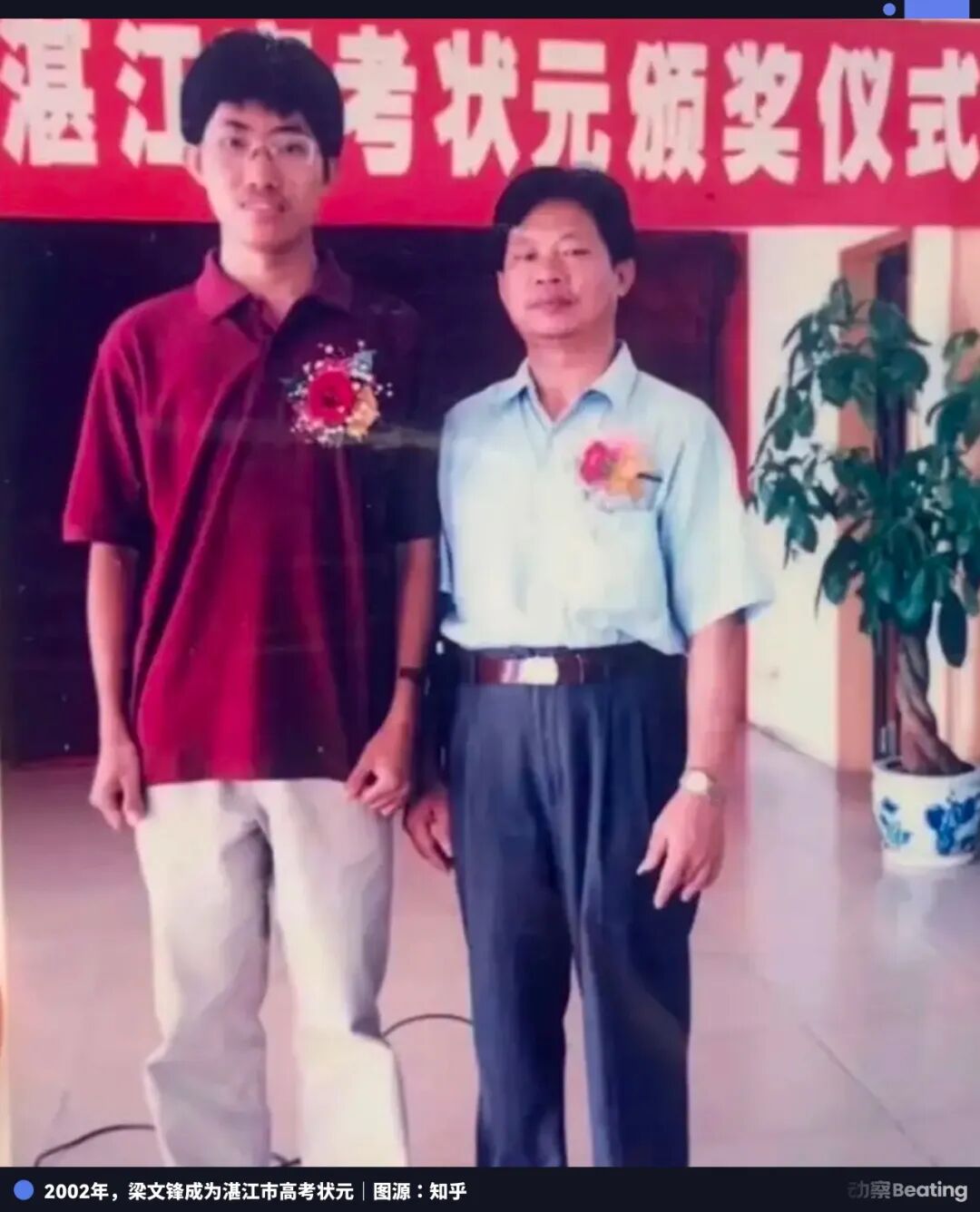
In the summer of 2002, the college entrance exam results were announced. Liang Wenfeng scored 806 out of 900, becoming that year's Zhanjiang City college entrance exam top scorer.
When filling out his college application, he only chose Zhejiang University, citing the excellent Information and Electronic Engineering program here.
When Mr. Yang Yahong asked him if he was sure, he said he was.
Later reports mentioned that with his score, he could have gone to Tsinghua University.
The One Who Skips Classes
In the fall of 2002, Liang Wenfeng went to Hangzhou to study Information and Electronic Engineering at Zhejiang University.
He rarely attended classes. Many years later, a classmate from the same year but different class came out on Zhihu to reminisce, saying that Liang Wenfeng mostly self-studied as he felt the teachers were too slow and wasted time. In his sophomore year, while his classmates were rushing to finish assignments, he had already designed circuit boards, written microcontroller programs, created interfaces, and developed software similar to a mini player.
He even modified an ordinary acoustic guitar into an electric guitar whose sound could be adjusted when connected to a computer. After completing it, he didn't think it was anything special. He just found the guitar's intonation not accurate enough and said it would be even better if it could automatically tune itself.
During the summer vacation of his junior year, he teamed up with two classmates to participate in the National Undergraduate Electronic Design Contest. None of the three had outstanding academic records. During the training camp at Zhejiang University, many of the design tasks were almost single-handedly completed by Liang Wenfeng. In the end, they won first place in Zhejiang Province and a national first prize.
The awards were not announced until October, causing them to miss the deadline for that year's graduate school recommendation. As a result, Liang Wenfeng was delayed by a year in pursuing his master's degree. During that gap year, he continued to work on an electronic sensing system related to marine navigation, with hardware, software, and algorithms still being solely managed by him. A fellow undergraduate later commented that any of the electronic systems he had worked on in college could easily pass as a master's thesis in the Electronic Department.
He also went on a budget cycling trip. During his university years, he rode a bicycle across several provinces in East China, traveling during the day and sleeping outdoors at night, spending very little money throughout the whole journey. This story was shared by his electronic design team member on Zhejiang University's internal forum, with the post's title misspelling "Liang Wenfeng" as "Liang Wenfeng."
In 2007, he began his Master's studies in Information and Communication Engineering at Zhejiang University, specializing in computer vision under the guidance of Professor Xiang Zhiyu. Professor Xiang completed his Bachelor's, Master's, and Ph.D. degrees at Zhejiang University, then conducted postdoctoral research at the University of Aveiro in Portugal and The Ohio State University in the United States, returning to China to focus on the field of computer vision.
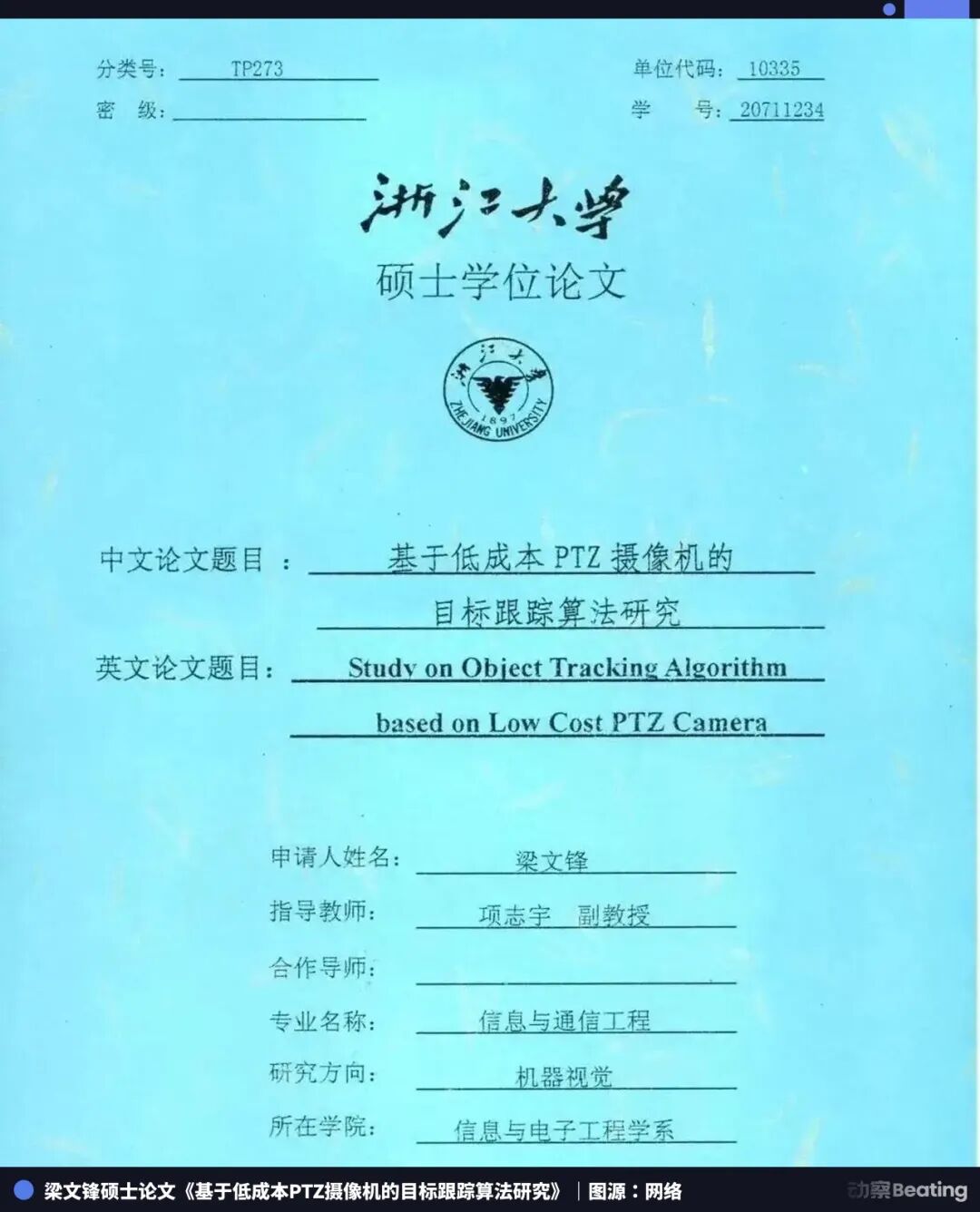
Liang Wenfeng's thesis was titled "Research on Target Tracking Algorithm Based on Low-Cost PTZ Camera," submitted in May 2010.
The problem he aimed to solve was to enable a reasonably priced, rotatable camera to continuously track a moving target in an environment with changing light, occlusion, and background. With limited equipment and a complex environment, in the acknowledgments of his thesis, he mentioned that Professor Xiang introduced him to the field of computer vision, prepared a learning plan for him, and often provided line-by-line guidance in coding.
In 2011, this paper was revised and published in the "Journal of Zhejiang University (Engineering Science Edition)." The author's brief bio at the end consisted of only one line:
Liang Wenfeng, born in 1985, from Zhanjiang, Guangdong, Master's student, engaged in machine vision research.
At this point, the records end, neat and clean, resembling a typical good student.
Years later, looking back at that paper, he encountered a recurring problem he needed to address: How to identify the truly important target and persevere under limited conditions.
$80,000 Principal
In 2008, during the financial crisis, the A-share market plummeted from a high of 6124 points to 1664 points. The trading hall was filled with a sea of red, with many people's account balances dwindling close to zero.
During his second year of graduate school, Liang Wenfeng saw something amidst the chaos. He believed that within this turbulent market, there might be a breakthrough. He gathered like-minded classmates to research using machine learning in trading.
According to later media reports, around 2008, in a lab on the Yuquan campus of Zhejiang University, several students researching machine vision began pondering a "stock trading cheat software." Their initial idea was not grandiose; they just wanted to recover the money they had previously lost. Initially, the program they wrote did not perform well in the stock market. It was only after repeated revisions and optimization of the strategy that they began to make money. That thing they referred to as a "cheat" had a more formal name in the financial industry—quantitative trading.
At that time, market data was not as readily available as it is now. They had to extract numbers from market software screens, write their own programs, and somehow integrate them into trading software. Liang's expertise in cameras was used to watch the market. He also collected data from various sources, obtained data from financial institutions through connections, then modeled, tuned parameters, and tirelessly wrote code, often staying up late into the night.
Liang Wenfeng initially had only 80,000 RMB as his starting capital. In today's terms, 80,000 RMB is not enough to buy a top-of-the-line graphics card. But in 2008, it was all Liang Wenfeng had. He did not explain this high-stakes gamble to anyone. At an age when others were busy polishing their resumes and looking for internships, he was busy in front of the screen every day. He rarely explained to anyone what he was actually doing. At that time, quantitative trading had not yet become a respectable profession in China.
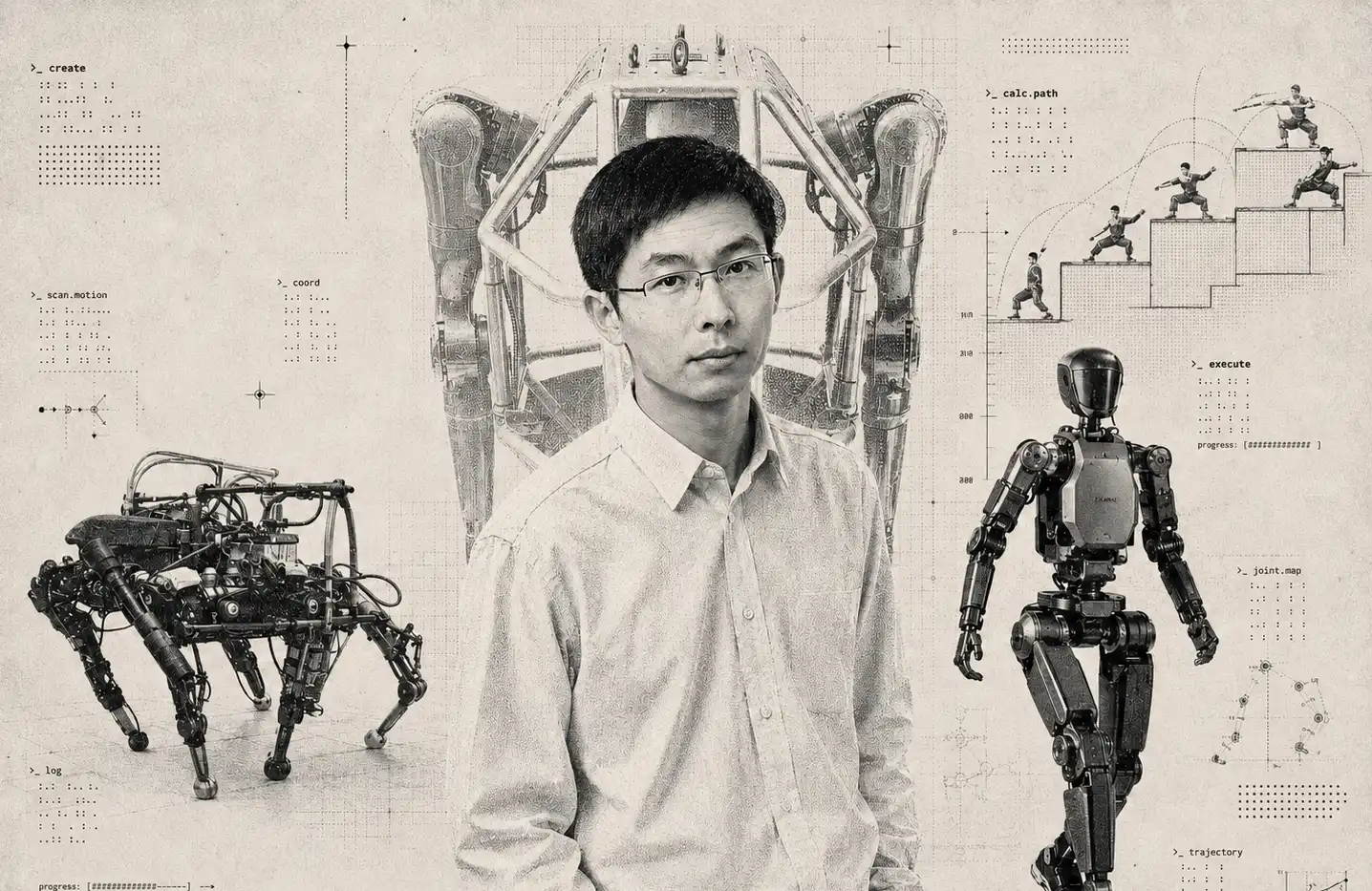
In 2009, he interned at Shanghai AIQI Information Technology. The company was founded by Zhejiang University alumnus Zhou Chao'en. He was appointed as the manager of the new technology department before graduating, with a monthly salary of 10,000 RMB, responsible for AI video image technology. When he left, Zhou Chao'en gave him advice to find a high-gross-profit business. Liang Wenfeng remembered this advice for many years. In 2023, when the two met again, he brought it up proactively.
However, AIQI Information Technology was just a side story in his life. In 2009, while earning a high salary, he was also preparing for quantitative trading. In his own life plan, that was the main story.
In June 2010, three classmates in the lab graduated with master's degrees. One joined a large company, one chose entrepreneurship, and the other went to Chengdu, continuing to work on things that others could not understand.
Liang Wenfeng was the one who went to Chengdu.
A Chengdu Rental Room and a Fiat Heading to Tibet
Liang Wenfeng's rental room in Chengdu was less than ten square meters, dim and humid, with only a dilapidated desk and a single bed inside. When hungry, he ate instant noodles; when tired, he rested on the table. The room was too small to fit anything other than a bed and a desk, but this tiny room held his entire future.
A graduate from a prestigious university, he chose not to join a top-tier company or enter the established system, instead spending his days facing a screen. In the context of 2010, this was the epitome of what not to do. No one knew what he was doing in front of the screen. Reports in the shadows mentioned that after graduation, he "hid in a cheap rental apartment in Chengdu, continuously experiencing failures in various scenarios."
On April 16, 2010, the CSI 300 Stock Index Futures was listed, with the main contract opening at 3450 points. For the first time, the Chinese capital market had matured short-selling and hedging tools, finally opening a door for quantitative trading.
And it was through this door that Liang Wenfeng walked.
According to later reports, during those two years, he spent most of his time in a rental apartment in Chengdu, repeatedly testing his ideas. The prices may seem chaotic, but there might be a pattern behind them. With enough data and an accurate model, perhaps a repeatable explanation could be found within those fluctuations.
This was also the belief passed down by Simmons. Originally a mathematician, Simmons later founded Renaissance Technologies, using mathematical models and computer programs for trading. Its flagship Medallion Fund thus became one of the most famous funds in the history of quantitative investment. He believed that although market prices seemed chaotic, there were still identifiable and calculable patterns behind them. There must be a way to model prices; the challenge lies in whether that method can be discovered.
During the same period, Liang Wenfeng was surrounded by a group of equally restless young people. Some holed up in Shenzhen's urban villages, researching seemingly unreliable aircraft, and had invited him to join. Liang Wenfeng did not go. Later, that group created DJI.
In 2011, he did not know his and his friends' future. In that year, he only had one model that hadn't been fully optimized, a rented small room, and a car.
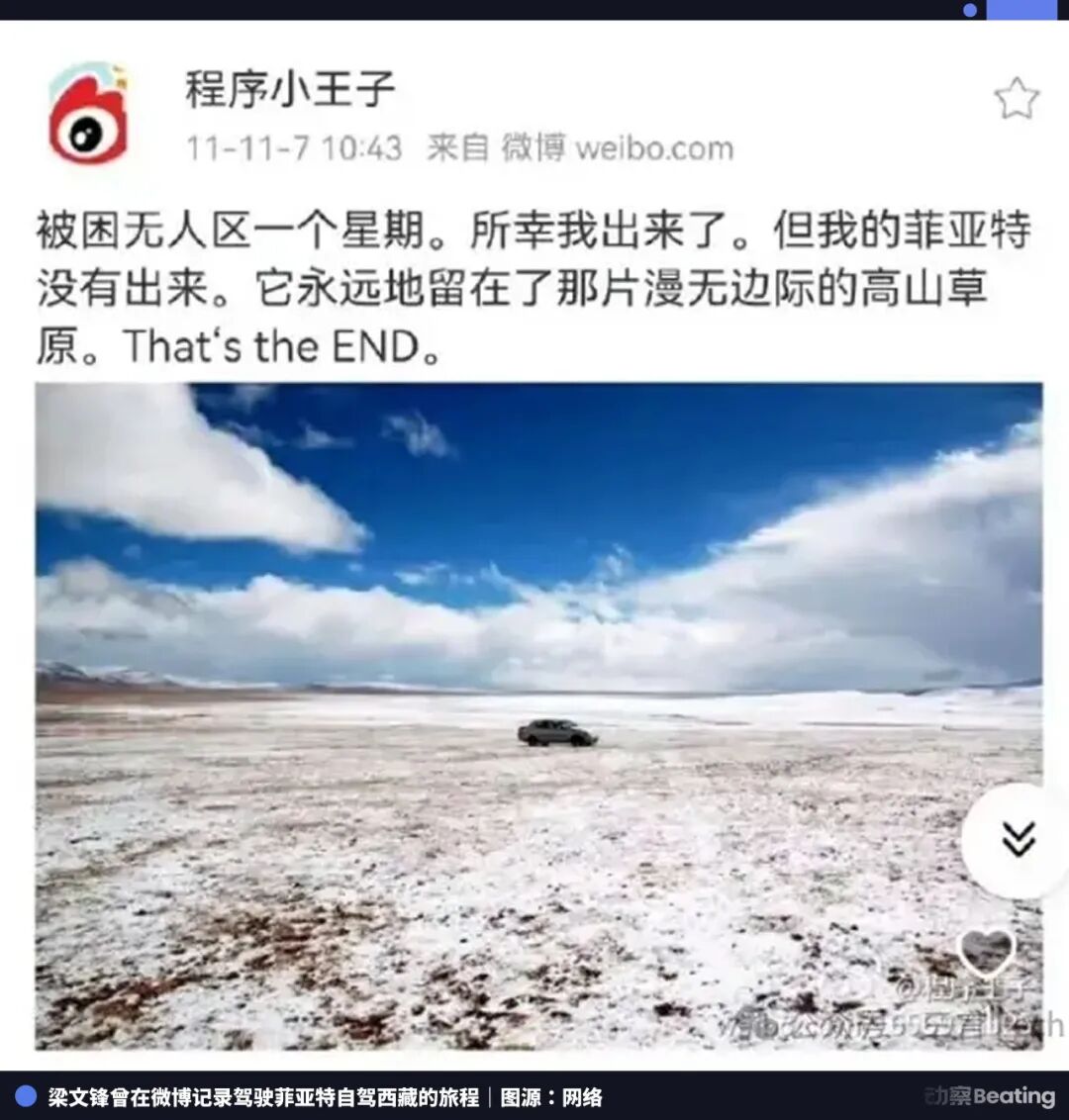
In October of that year, Liang Wenfeng was 26 years old. That year, Weibo had just become popular, where people shared their lives and their loneliness. It was in that autumn that he drove a Fiat to Tibet.
It wasn't exactly a vehicle suited for an expedition. The Fiat was an old Italian car that used to be inexpensive in China, with one could buy for fifty to sixty thousand yuan, a common sight on the streets. The brand later exited the Chinese market, and those cars gradually disappeared from the roads.
Liang Wenfeng called it his "steed."
By the time he set off, the car was nearly falling apart.
Throughout the journey, he was posting on Weibo. If one laid out all those Weibo posts, it would be pages of a diary.
“October 19, Lhasa. Back to Lhasa. Touched~”
Returning to Lhasa is also the name of Zheng Jun's old song. Those who have driven to Tibet before probably have had this melody circling in their minds.
“October 24, Yamdrok Lake. Ancient road, western wind, slender horse, sun setting in the west.”
Yamdrok Lake is located at an altitude of 4,441 meters, with a lake area of over 600 square kilometers and a lakeshore of over 200 kilometers. He photographed the lake, the snow-capped mountains, and that Fiat.
“October 25. A panoramic view of the mountains, making everything else seem small.”
“October 26, Yarlung Tsangpo River. Riding alone through the world.”
“October 27, Himalayas. The Fiat came for a visit. Tibet, the Himalayas, on the other side of the snowy mountains is India.”
“October 28, by the lake. The lake is actually several kilometers wide, and the snow-capped mountains are tens of kilometers away.”
Li...
The Final Question: To Go or To Stay
After the trip to Tibet, Liang Wenfeng stopped updating his Weibo, but did not completely disappear from the timeline of those Zhejiang University friends.
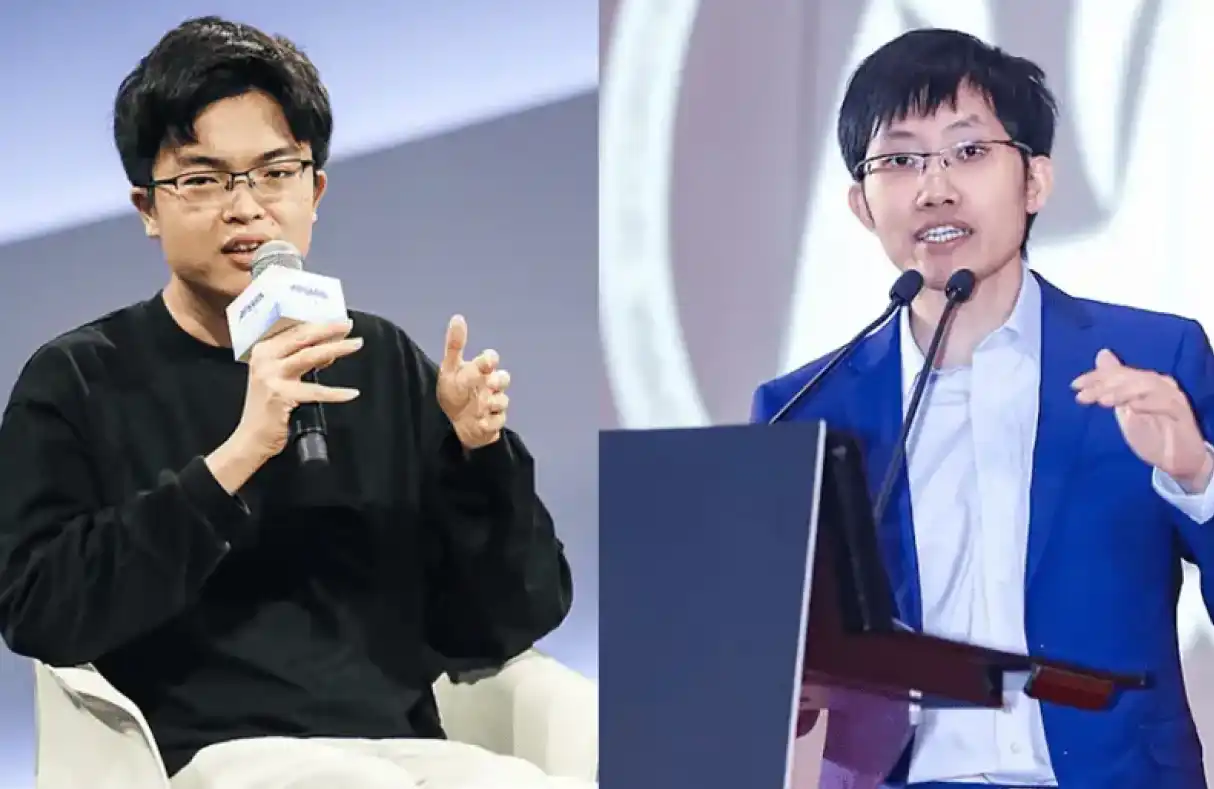
Over the years, they would still challenge each other in the comments, discussing math, games, and inquiring about each other's final decisions on where to go. Xu Jin and Zheng Dawei were the two most mentioned names. Several years later, they would co-found Jacobian with Liang Wenfeng, becoming the core team of the Matrix Cipher. But in their 2012 Weibo posts, they were just a few young people standing at the crossroads of life.
On August 23, 2012, Zheng Dawei posted a question on Weibo: An ant can only crawl along the edges of a cube, starting from one vertex and moving to the vertex opposite to it. At each vertex, it randomly chooses the next edge to follow. Calculate the mathematical expectation of the final distance traveled.
Zheng Dawei tagged Liang Wenfeng and Xu Jin. Liang Wenfeng replied, "It seems like neither Xu Jin nor I have solved this question, but it definitely has to be greater than 4."
Later, many people recalculated this question and found the answer to be 10. At that time, he did not provide a proof, only judged that the answer must be greater than 4. The direction was correct.
Underneath this question, he asked Zheng Dawei:
"The final question: To go or to stay?"
This sentence had no context or further explanation. Looking back, at that time, it may have just been a casual inquiry between friends. Years later, it seemed like an early invitation, an unsolved math problem, a group of young people still choosing their paths, and a team that had not yet been named.
Zheng Dawei later joined the Matrix Cipher and became a core member of DeepSeek. Xu Jin also entered Liang Wenfeng's subsequent entrepreneurial story.
Zheng Dawei left over four thousand Weibo posts. Reading them one by one, you can see a young man's transition from student life to society, as well as how that generation of tech youth once discussed their lives.
He mentioned having been recommended four times, saving four years, not wasting time on exams. He depicted life as a triangle, with the corners representing passion, effort, and play. He wanted to create "products that move people" and hoped to drive new technology so that his parents could one day enjoy the changes brought by technology.
Amid these ideals were plenty of younger, more rough and crude things. He played Dota, wrote, "I'd rather lose one teammate than have a pig-like one," and also reposted a widely circulated phrase among programmers, which roughly translates to, "The smartest minds of our generation are figuring out how to make people click on more ads."
Sublimity and humor appeared side by side on the same timeline. People at that time did not think there was any contradiction. They discussed mathematics and games; they wanted to change the world, but would also get angry at a lousy game teammate. Weibo had not yet become a carefully curated personal showcase; words spoken by a person often just remained there in a mess.
Xu Jin's Weibo had been almost completely deleted. In the remaining posts, someone asked about being directly admitted to a university, and he answered very directly: "Because I don't have to study in the third year of high school."
His resume was then dug out by people: Zhejiang University's Chu Kochen Honors College mixed class, doctoral research on robot navigation, and participation in the "Yutu" lunar rover's visual navigation project. The person who thought studying in the third year of high school was a waste of time later actually sent a machine to a place where there was no road.
This youth story does not only belong to Liang Wenfeng. Some of the people who later formed Magic Square and joined DeepSeek had already met in the same loose network at that time. Their fascination with technology, impatience with inefficient rules, and almost harsh appreciation of intelligent companions came before the company.
Magic Square did not have a name yet; its original character had already taken shape during the Weibo era.
In 2013, Liang Wenfeng returned to Hangzhou from Chengdu. He, Xu Jin, and Zheng Dawei decided to continue their "plug-in stock trading" and start a business together, for the reason that "you can earn more money than working a regular job."
On September 10, 2013, Hangzhou Yarkby Investment Management Co., Ltd. was registered with a registered capital of 100,000 yuan. Liang Wenfeng held 50.5% of the shares, while Xu Jin, Yao Fengfeng, and Zheng Dawei each held 16.5%. The company name was derived from the German mathematician Carl Friedrich Gauss.
Two years later, the market opened another door for them.
In April 2015, the CSI 500 Stock Index Futures were listed, providing quantitative traders with a new hedging tool. Two months later, Hangzhou Magic Square Technology was established. The name was inspired by the ancient Chinese Luo Shu magic square, a matrix where the sum is the same horizontally, vertically, and diagonally. That same year, they moved into the Huijin International Building on Hangzhou's North Ring Road, then one of the few newly built high-end office buildings in Hangzhou, with expensive rent, mostly occupied by private equity firms.
In December 2015, a job posting appeared on Shuimu Community. The post did not directly mention Liang Wenfeng's name but narrated the story of an "Mr. L" in the third person:
In 2008, Mr. L started his independent quantitative trading journey with 80,000 yuan. In 2015, after experiencing a seven-year cycle of bear markets and bull markets, Mr. L, with a compound annual return exceeding 100%, joined the ranks of millionaires.
The announcement also stated that China's quantitative trading is about to bid farewell to the era of solo cowboys and move towards the era of geek aggregation in private equity funds. Mr. L's dream is to one day sit at the same table with the Renaissance Technology founded by Simmons.
A person who rarely talks about himself, for the first time, narrated his past to a stranger, but hid himself behind a single letter. He described himself in the third person, his tone as calm as if he were organizing another person's resume.
Eighty thousand yuan, seven years, billions.
This is his most complete graduation certificate of his youth, as well as the first confession to the world.
The Tibetan Weibo diary is written for himself, and the recruitment notice on the Water and Wood Community is written for future companions. Between these two pieces of text, there are four years apart, as well as a Fiat that never left the Ali Wilderness.
Firefly
On October 21, 2016, Fantasia's first stock position generated by a deep learning model officially went online for live trading. It was also from this day onwards that GPUs entered Fantasia's trading system.
Eight years ago, Liang Wenfeng had to capture data from the screen of a market software, find the interface himself, and modify the rules one by one. Now, what stocks to buy, what to sell, and how much position to take are beginning to be calculated by the model. People step back to a further place, responsible for preparing data, designing the system, and then waiting for the machine to provide answers.
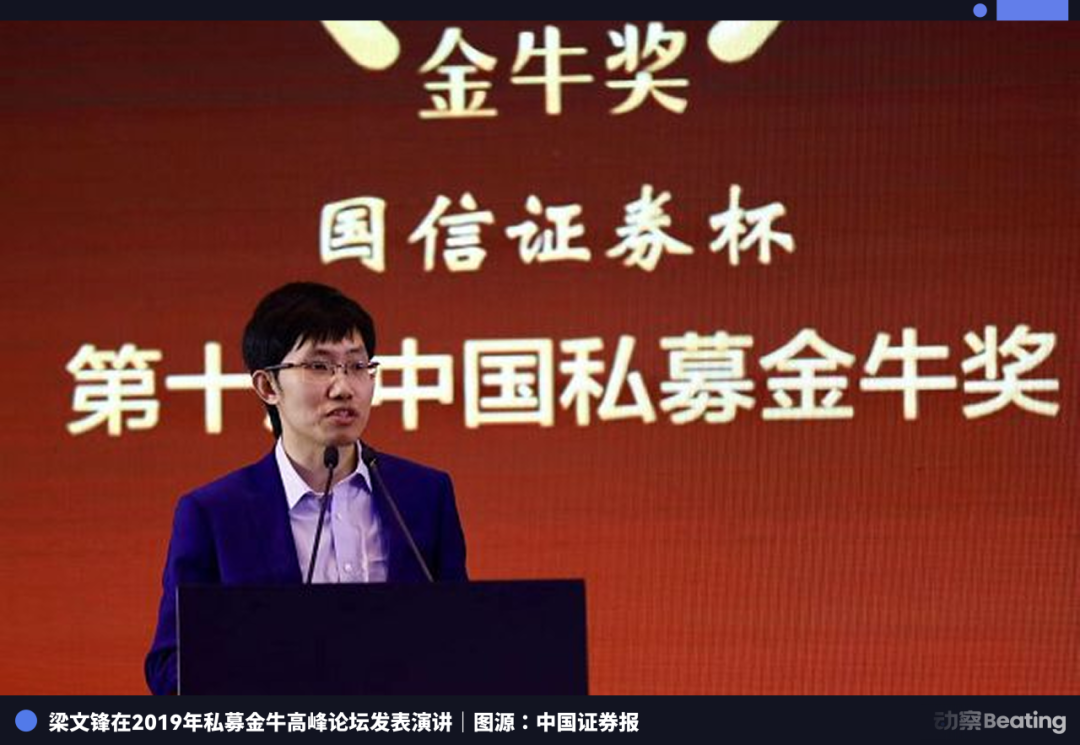
In 2019, Liang Wenfeng explained the difference between the two at the Golden Bull Award ceremony. When a person makes investment decisions, they rely on experience and gut feeling, closer to an art form; when a program makes decisions, it faces a problem that can be solved, and there should be a better answer behind it.
From 2008 to 2016, he spent eight years trying to remove himself from every specific judgment. The model doesn't need excitement, doesn't panic, and certainly doesn't change its mind due to losses from the day before. It only takes in data, calculates probabilities, and then executes.
Quantitative practitioners often start by trusting their own judgments but end up needing to establish a system that no longer requires their judgment. Liang Wenfeng, having reached this point, can now manage larger funds and continue to refine this machine more precisely.
But he didn't stop at fund size.
For the system to continue getting smarter, it needs more data, more complex models, and increasingly more computing power. Fantasia's GPU count thus increased along a steep curve. Liang Wenfeng later recalled that there was only one card at the beginning, increasing to a hundred by 2015, reaching a thousand in 2019, and then moving towards ten thousand.
In 2019, Matrix Port invested nearly 200 million yuan to build "Firefly No. 1." This computing cluster has about 1,100 GPUs, covering an area close to a basketball court. Two years later, "Firefly No. 2" was completed, with an investment of 1 billion yuan, housing around 10,000 NVIDIA A100s. The area of just one data center is close to ten basketball courts.
After making money from quantitative hedge funds, they usually scale up, recruit traders, or seek more strategies. Liang Wenfeng converted a large part of the profits into graphics cards, racks, and continuously roaring computing equipment. At that time, China's large-scale model industry had not yet taken off, and not many people knew what such enormous computing power could eventually be used for.
Someone asked him why he needed to buy so many graphics cards.
Liang Wenfeng replied, "An exciting thing may not only be measured by funds. It's like buying a piano at home—first, you can afford it, and second, there are indeed people who want to play it."
In 2018, a financial media outlet visited Matrix Port. Liang Wenfeng, holding a thermos cup, wearing a dark blue thermal work shirt, looking slim, and slightly restrained, appeared like an engineer from the 1990s.
The interview was scheduled for half an hour but ended up lasting over two hours. Whenever asked about technology, he almost always had an answer. When encountering something hard to describe accurately, he would pause to think for a while, smiling shyly.
The reporter asked how Matrix Port evaluates its employees.
Liang Wenfeng said, "The company doesn't have specific evaluation criteria. If a person has not made contributions for a long time, the first thing to reflect on is whether the company has placed him in the right position."
The reporter then asked, "What kind of company does Matrix Port ultimately want to become?"
He thought for a moment and said, "I hope that one day, we can operate without performance rewards and management fees." After a brief pause, he added, "What I really want to do is create an open-source strategy platform that even ordinary investors can use."
At that time, Matrix Port was still a quantitative hedge fund. When words like open-source and inclusive were spoken by him, it seemed somewhat distant from business. However, Liang Wenfeng never seemed quite satisfied with just turning technology into the advantage of a few. Making money, his next thought was how to dissect that set of capabilities and make it accessible to more people.
Many of the things he later did at DeepSeek had already taken shape in this interview. Next to the thermos cup in 2018, the reserved engineer had already voiced these ideas.
In August 2021, Matrix Port's AUM exceeded one trillion yuan, making it one of the "Quant Four Heavenly Kings" along with Nine Kung, Minghui, and Lingjun.
Four months later, the retracement came.
On December 28, 2021, Fantasia issued a public statement, acknowledging the company's largest performance retracement ever and expressing deep remorse for it. Subsequently, Fantasia closed its fundraising channel and proactively reduced its management scale. The rapid expansion of the past few years in the digital field began to recede, and the once high-speed money machine showed signs of stalling for the first time.
Legends are not always upward.
During Fantasia's years of downsizing, as funds ebbed, external applause gradually diminished. At the same time, those purchased graphics cards, established data centers, and assembled young engineers began to be used for another unproven matter.
During Fantasia's contraction years happened to be the years when DeepSeek was conceived. This point was not noticed by anyone at the time, including himself.
Epilogue
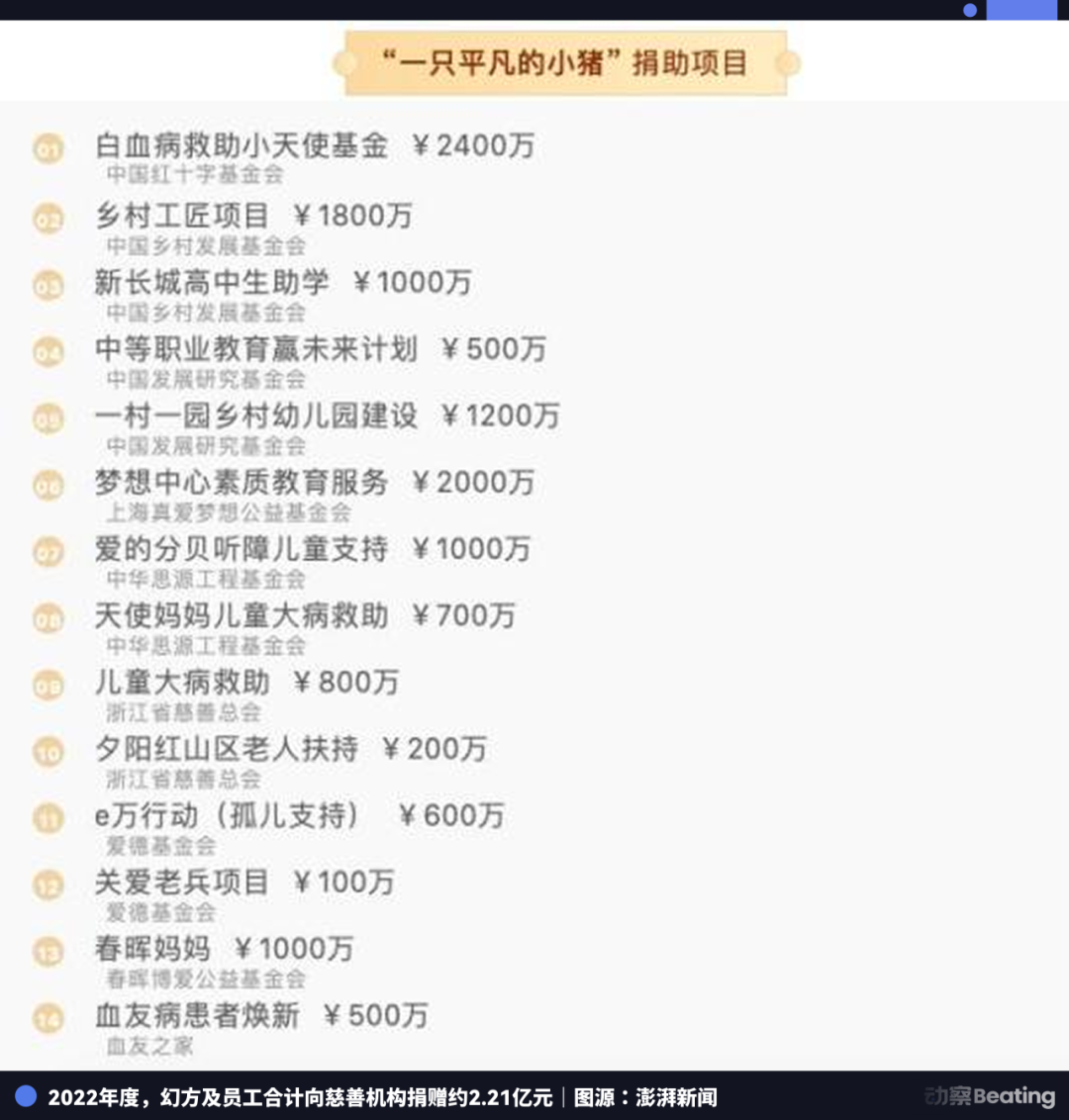
In January 2023, Fantasia announced its donations for the year 2022. The company donated 220 million yuan, with one employee, who signed as "An Ordinary Little Pig," personally donating 138 million yuan. Speculations abound outside, believing that the little pig is Liang Wenfeng.
Three months later, Fantasia announced its entry into the field of large models. The poster quoted words Threaver wrote to a young director:
“Be sure to embrace ambition like crazy, and also be wildly sincere.”
At that time, the domestic large model startups were already crowded with internet giants, celebrity entrepreneurs, and capital. Fantasia suddenly turned in from the side of the quantitative market, which seemed somewhat untimely. It had no cloud business, no search entry, and no massive user system. The only things it was really sure of were computing power, engineers, and money earned from the quantitative market.
In July 2023, Hangzhou DeepSeek AI Basic Technology Research Co., Ltd. was established. The team consisted of about 140 people, many of whom were recent graduates from Tsinghua and Peking University, with an average age of less than thirty.
Someone asked Liang Wenfeng why he didn't compete for those who were already famous and experienced.
He said, the criteria for selecting people have always been passion and curiosity. The world's top fifty talents might not currently be in China, but China can cultivate such people on its own.
In May 2024, DeepSeek-V2 was released, with an input of 1 yuan per million tokens and an output of 2 yuan, pushing the domestic large model price war into a new phase. Liang Wenfeng later described that they did not intend to be a disrupting force in the market, but inadvertently became one.
But the low price is just a result.
An acquaintance once asked him why he always had to choose the most difficult path. For the past few decades, the most familiar route for Chinese tech companies has been to wait for the U.S. to conduct foundational innovation, bring the technology back, create products, expand into markets, and scale. This path was fast and indeed made money.
Liáng Wénfēng said that as the economy develops, China must gradually transition from being a technology beneficiary to a contributor and can't always rely on others' achievements.
In the past thirty years of the IT revolution, China has hardly participated in core technological innovation. Faster chips, better software, updated architectures, will always arrive here eighteen months later. Moore's Law is like a monsoon that arrives on time; people are used to standing on the shore waiting and gradually forget where the wind comes from.
Liáng Wénfēng doesn't want to wait anymore.
Now, it's China's turn to contribute to the world.
On December 26 of the same year, DeepSeek-V3 was released. The official disclosure stated that the final training phase used 2048 Nvidia H800s, with a calculated cost of approximately $5.576 million.
Low cost was his motto. Starting with 80,000 RMB in capital, a moderately priced PTZ camera, a Fiat costing fifty to sixty thousand RMB, and then a training bill of five million five hundred seventy-six thousand dollars. He always seemed to find a way in limited conditions. When resources are scarce, can the method be more precise? When the equipment is not expensive enough, can the system be smarter?
On January 20, 2025, DeepSeek-R1 was released, and its inference ability entered the ranks of top global models, released under the MIT license. On the same day, Premier of the State Council Li Keqiang hosted a symposium with representatives from various fields such as experts, entrepreneurs, and education, science, culture, health, and sports. Liáng Wénfēng was present and spoke about the development of domestic large-scale models.
Seven days later, DeepSeek caused Nvidia to lose nearly $600 billion in market value in a single day. That Chinese New Year, he returned to Wu Chuan as usual. On the morning of the first day of the lunar new year, he left the village.
On February 17, 2025, a private enterprise symposium was held, and Liáng Wénfēng sat in the front row. According to media reports, he did not speak at that meeting. After that, he rarely made public appearances for quite some time. While the world continued to discuss DeepSeek, he once again faded into the background.
It is rumored that Liáng Wénfēng's WeChat signature is "Divide the world into mathematics." This cannot be confirmed, but it sounds like him. Starting from tearing down that Flying Leap radio, he has been doing the same thing all his life: opening the shell, identifying the internal structure, and finding the operational rules.
At the age of 44, Simmons founded Renaissance Technologies. By the time Liang Wenfeng turned 40, he had spent sixteen years in the quantitative market. Both believed that behind the chaotic prices, there was a calculable order. However, as time went on, what Liang Wenfeng tried to model was no longer just the price.
On November 7, 2011, he wrote on Weibo that the Fiat would forever stay on Alibaba's boundless alpine meadow. That was his last diary for the internet. After that, he rarely talked about his life.
In Liang Wenfeng's last Weibo post for the internet, the Fiat was forever parked on Alibaba's alpine meadow.
In the years that followed, the wind blew across the wilderness, and the grass fell season after season. People did not know where the car had gone. For those who had read that Weibo post, it seemed to have always stayed there, with its metal slowly rusting, eventually becoming part of a no-man's-land.
People walked away from there. Those who walked away no longer needed to look back.
Original Article Link
Welcome to join the official BlockBeats community:
Telegram Subscription Group: https://t.me/theblockbeats
Telegram Discussion Group: https://t.me/BlockBeats_App
Official Twitter Account: https://twitter.com/BlockBeatsAsia

 Related Articles