Abraxas Capital, the Institution That Makes On-Chain Analysts' Scalp Tingle | Meet the Hyperliquid Trader

Abraxas Capital is a familiar yet unfamiliar name.
Familiar because it is often mentioned in reports about on-chain detection accounts. Whether it's a large ETH withdrawal, a fund redemption causing a liquidity crunch, these actions easily catch attention.
Unfamiliar because the firm operates almost invisibly. It has no verifiable public-facing presence, no Twitter warriors among its staff. Most people know them by the labels next to their addresses on on-chain data platforms.
From TradFi to Crypto
Abraxas's origin is in traditional finance. Co-founders Fabio Frontini and Luca Celati both worked at Dresdner Kleinwort Wasserstein bank. In 2002, they founded Abraxas Capital Management in London, initially focusing on global macro trading. In 2017, the company shifted its focus to digital assets.

Fabio Frontini
In 2018, Abraxas launched their first product, the Elysium Global Arbitrage Fund, arbitraging Bitcoin between the Western and Asian markets, later transitioning to stablecoin arbitrage. In February 2019, Frontini met with Giancarlo Devasini, then CFO of Tether, and visited Tether's banking partner Deltec Bank in the Bahamas. Subsequently, Elysium started testing USDT liquidity with small trades, gradually scaling up.
Shortly after, Abraxas's Heka Funds became one of Tether's largest institutional clients. By 2021, over $1.5 billion USDT had flowed through Heka's address paths, accounting for about 1.5% of Tether's historical issuance; with at least $1.05 billion going to Bitfinex, $144 million to Binance, and $132 million to Huobi. By 2023, Elysium was trading over $1 billion USDT annually with transaction fees close to zero.
The Elysium Fund Series' assets under management surpassed $500 million in 2022, exceeded $1 billion in 2023, and reached over $4 billion in 2025. Among the current four fund products, the Elysium Global Arbitrage Fund has a size of $1.5 billion, the Alpha Bitcoin Fund is at $1.9 billion, the Alpha Ethereum Fund is at $7 million, and the Alpha Gold Fund is at $423 million.
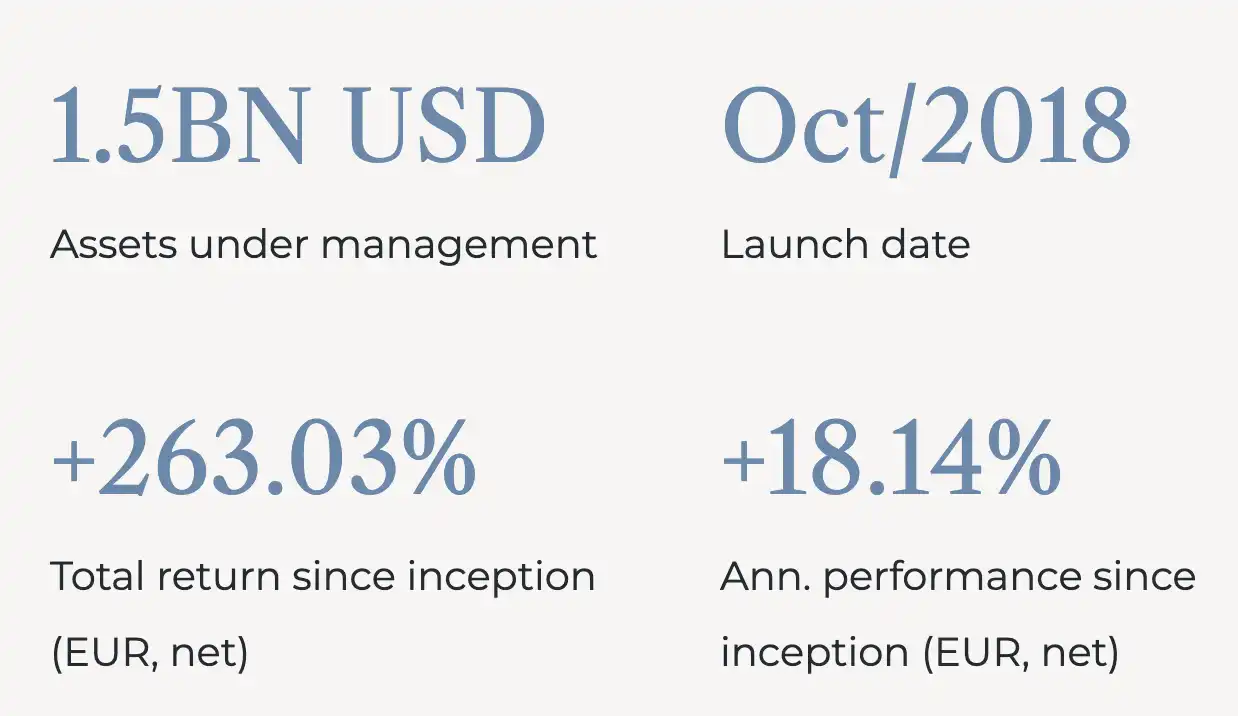
Official Website Description of the Elysium Global Arbitrage Fund
The 2025 USD share class performance after fees is also provided for reference. The Elysium Global Arbitrage Fund yielded 12.41%; the Alpha Bitcoin Fund yielded -2.55%, with BTC falling by 8.28% during the same period; the Alpha Ethereum Fund yielded -5.21%, with ETH dropping by 13.95% in the same period; the Alpha Gold Fund, established in October 2025, delivered a return of 14.63% in the last three months of the year, while gold rose by 11.50% in the same period.
As of July 23, 2026, a total of approximately $1.142 billion in assets is held across Abraxas Capital's 43 identifiable addresses. This includes $548.6 million in Bitcoin, $440.5 million in Ethereum, and around $69.34 million in HyperCore; additionally, there are 26 Hyperliquid contract positions totaling approximately $70.37 million and around $12.82 million in Hyperliquid collateral assets.
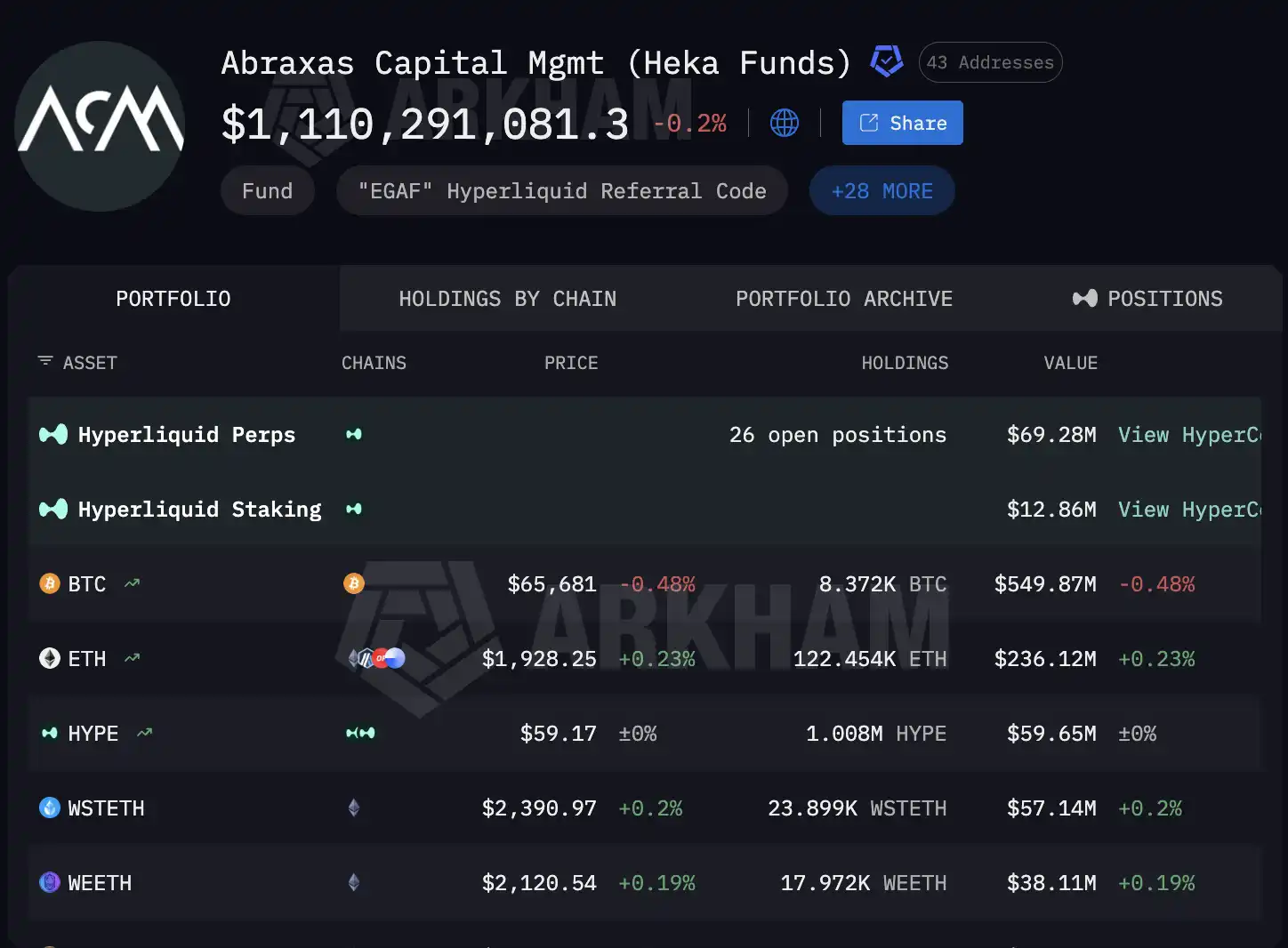
These 43 addresses have expanded Abraxas's on-chain footprint to a significantly larger scale than a single trading account. The Hyperliquid address most frequently mentioned in on-chain investigation reports is just part of the institution's public footprint.
Tether BFF
In arbitration materials published in July 2026 involving Circle and Heka Funds, the capital relationship between Abraxas and Tether was revealed for the first time. On April 28, 2023, Tether's cumulative position in Elysium was approximately $500.2 million; a month later, it increased to about $504.6 million. By the arbitration phase, Tether's investment reached $800 million, accounting for around 75% of Elysium's total assets. Tether also waived Heka's USDT minting fees. Founder Frontini testified that in February 2024, Tether once again invested $500 million in Elysium.
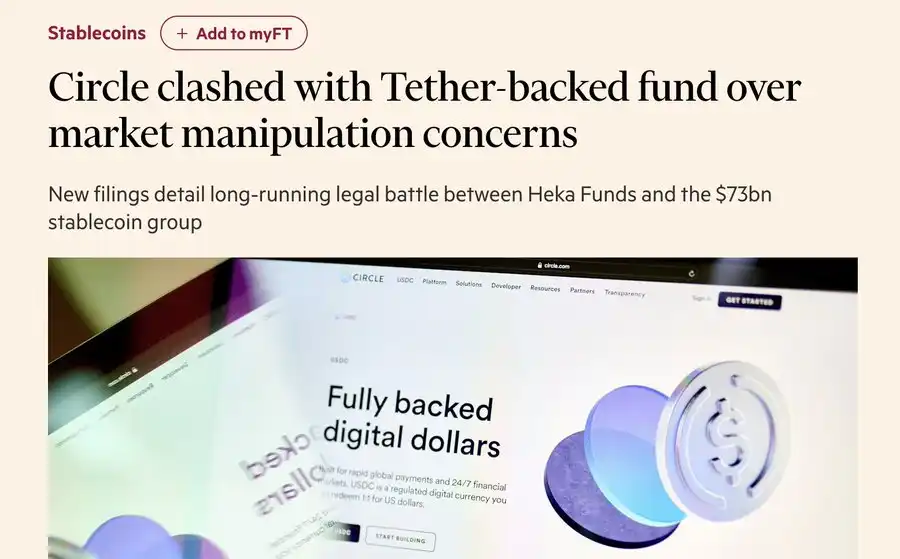
When USDC decoupled in March 2023, Abraxas Capital bought discounted USDC on the secondary market and redeemed it to Circle at $1, redeeming over $587 million within two weeks. Circle later suspected that these transactions were helping their competitor Tether expand market share and banned Abraxas Capital's account in December of that year. Abraxas Capital denied market manipulation, and the arbitrator confirmed that Circle had the contractual right to restrict the account and did not rule that Abraxas Capital had engaged in market manipulation.
The on-chain fund flow extended this relationship beyond arbitration. In August 2025, a $250 million USDT transaction flowed from Tether to an Abraxas-associated account, with some funds used to repay Aave debt, with around $79 million briefly returning to Aave. From April 9 to 24, 2026, approximately $4.3 billion in newly minted USDT was routed back into Abraxas's fund network based on the associated address path.
Capital, fees, and on-chain channels intertwined, and the relationship between Abraxas and Tether has far surpassed that of a stablecoin issuer and a regular client. Public documents do not indicate whether Tether holds equity in the Abraxas management company, but its weight in Elysium assets has reached three-quarters, making Abraxas a key institutional gateway for Tether's funds into exchanges, lending protocols, and arbitrage markets.
A Lucrative Hedge Wallet
We analyzed Abraxas Capital's most prominent address on Hyperliquid. Its 54 actionable trades resulted in a total profit of approximately $78.11 million, with 35 wins and 19 losses, achieving a win rate of 64.81%.
The median of this account's single trade size is only about $520,000, but the mean is around $8.45 million. The mean is 16 times the median, indicating that a few large positions dominate the results. 31 short trades contributed approximately $77.74 million in profit.
These 54 records are only a part of the institutional hedging system, yet they are enough to demonstrate the position-carrying capacity of institutional-grade accounts on a public order book.
Both the largest loss and the largest gain for this account came from XPL.
On September 23, 2025, an account established a short position of approximately $197.8 million in XPL at an average price of $0.7504 per token. At that time, XPL had not yet been officially launched. Two days later, Plasma went live, and XPL's fully diluted valuation briefly exceeded $8 billion. The account closed its position at an average price of $1.2255 per token after 4 days, resulting in a loss of approximately $12.53 million.
Following the first trade, the account almost immediately re-entered a short position at an average price of $1.0491. The new position reached approximately $1.517 billion, nearly eight times larger than the previous one. After XPL peaked on September 28 and retraced, the account eventually exited on October 17 at an average price of $0.692, realizing a profit of around $52.21 million.
Currently, the address holds approximately $97.82 million in ETH shorts, $51 million in HYPE shorts, $60 million in BTC shorts, $15.41 million in SOL shorts, and $2.35 million in FARTCOIN shorts. The FARTCOIN position accounts for about 11.07% of the total outstanding contracts in the market, SOL accounts for 4.33%, ETH for 4.16%, HYPE for 3.89%, and BTC for 2.13%.
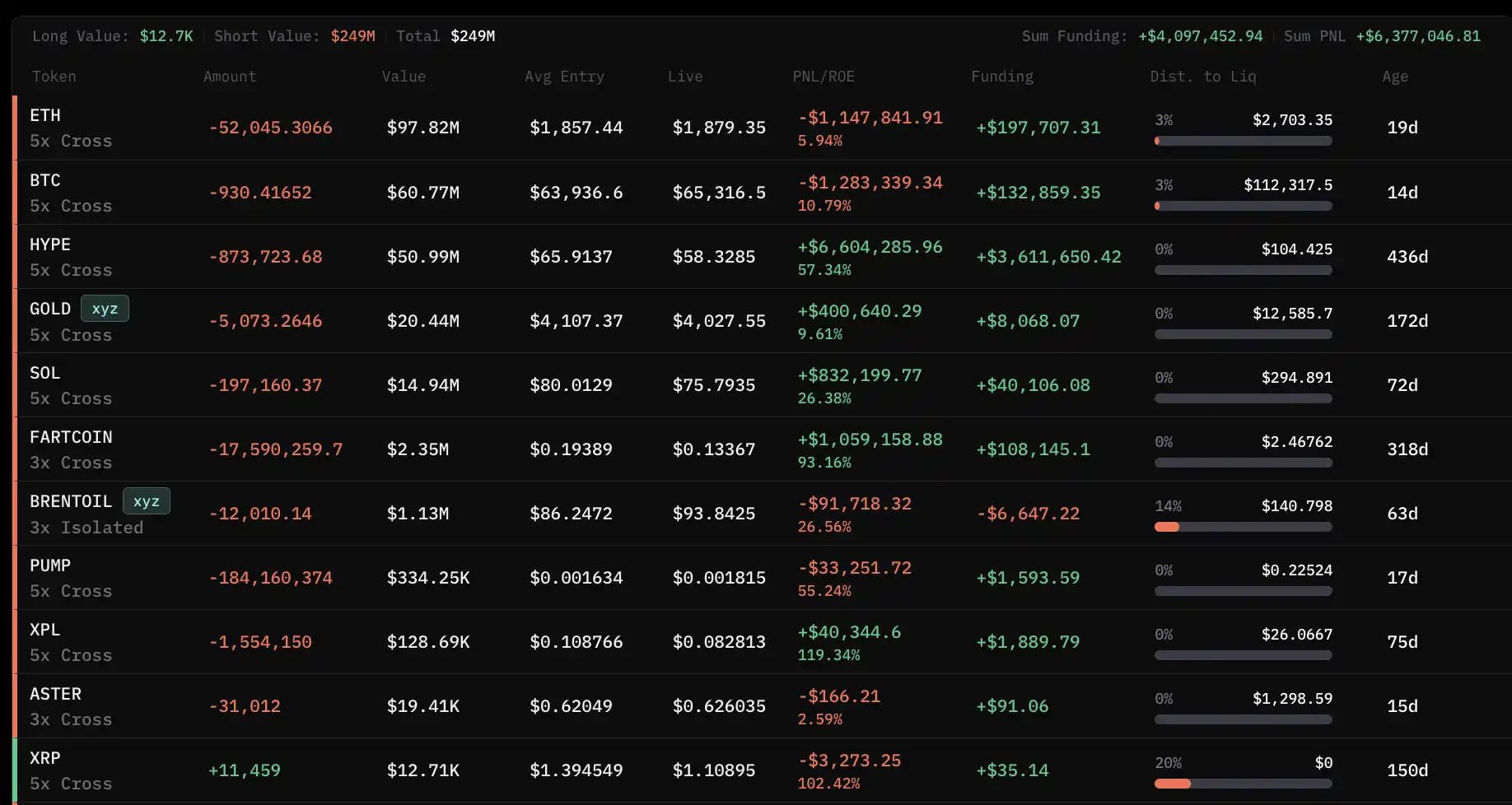
An address occupying several percentage points across multiple perpetual markets, both in opening and closing positions, has become a variable that the order book needs to digest. However, when zooming out, this is just one of 43 tagged addresses.
On-Chain Whale
In May 2025, Abraxas completed a large-scale ETH move. By May 20, two related addresses had assets worth over $1.15 billion identified. Between May 13 and 20, the two addresses withdrew nearly 270,000 ETH from exchanges, amounting to over $690 million.
Over 174,000 ETH subsequently entered Aave, Ether.fi, and Compound, valued at around $440 million at the time, with an Aave V3 position nearing $480 million. The ETH moved in just that week far exceeded the entirety of the above Hyperliquid address's nominal positions.
From April 25, 2019, to July 22, 2026, Abraxas deposited approximately $121.7 billion into centralized exchanges and withdrew about $105.54 billion, totaling a flow of over $227.2 billion.
An exchange in-flows and out-flows of over $227.2 billion have laid bare Abraxas's funding liquidity.
Even when broken down to a single address, the fund flow remains substantial. In 2024, the address 0xed0c…4312 held over $2.16 billion in assets, generating over $60 billion in transaction volume through protocols such as Aave, 1inch, Spark, and Compound, and transferring over $800 million to other Abraxas addresses within five months.
Within the past 90 days, this address has been involved in approximately $3.75 billion worth of ETH-related fund flows, with around $2.06 billion flowing through Aave, Compound, and Spark. It has deposited approximately $4.61 billion worth of ETH and BTC derivative assets into Aave V3, borrowed around $3.01 billion USDT, and carried out transactions worth billions of dollars in a circular manner between lending protocols and exchanges, constituting its daily operations.
The Most Expensive Advertisement
In September 2024, Abraxas redeemed $100 million USDe in approximately 20 minutes, briefly depleting Ethena's protocol withdrawal buffer funds. Twenty-five minutes later, the buffer funds were restored to $30 million. A firm's fund management inadvertently became a stress test for a top DeFi protocol.
A similar scale can be observed in the lending market. In July 2025, Abraxas briefly held around 36% of the USDe deposits on Aave. One Abraxas address had cycled nearly $1 billion sUSDe, another address held approximately $547 million in collateral on SparkLend, and yet another address had deposited around 66.68 million sUSDe in a single transaction into Aave.
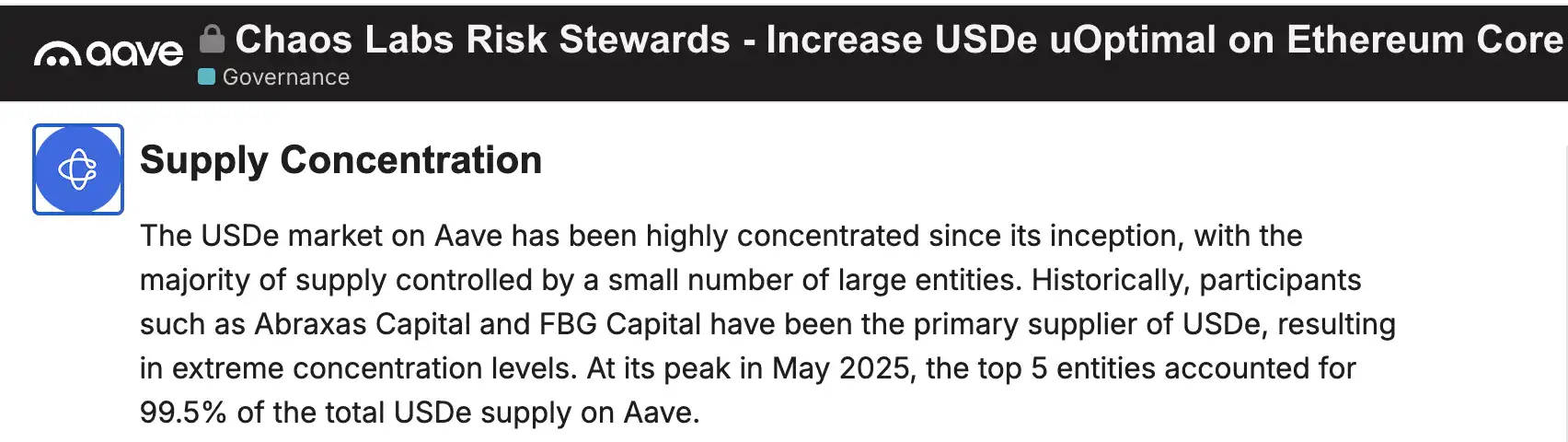
Chaos Labs reminded the Aave Governance Forum that the market for Aave's USDe is primarily controlled by whales such as Abraxas Capital.
The ETH fund management continued into 2026. From July 13 to 17, Abraxas withdrew a total of 45,996 ETH from Binance, Bybit, and Bitfinex, valued at approximately $84.39 million at the time. During the same period, around 82,300 ETH was deposited into Spark and Aave, with approximately 54,500 ETH going to Spark and 27,845 ETH going to Aave.
Meanwhile, the Hyperliquid address analyzed in this article continues to increase its ETH short position. On July 24, the short position reached approximately 50,245 ETH, with a nominal value of about $97.82 million and an unrealized loss of around $1.14 million. Tens of thousands of ETH were deposited into lending protocols, and nearly a billion dollars in short positions were used to hedge against price fluctuations on Hyperliquid. Abraxas has the ability to mobilize tens of thousands of ETH in spot transactions and establish near-billion-dollar public hedging positions.
Apart from ETH, Abraxas's holdings of tokenized gold are also dominant. Abraxas holds approximately 86,947 XAUT across wallets, representing 12.3% of the supply and valued at around $400 million. At one point in June 2025, an Abraxas address contributed 99.26% of the liquidity to the Uniswap V3 XAUT/WBTC pool.
The mystery surrounding Abraxas has not dissipated. We still do not know why it establishes each position, nor can we deduce the entire fund's strategy and performance from on-chain labels.
But evidently, they do not need to engage in social media. The scale of capital movement itself is the most expensive advertisement.
Welcome to join the official BlockBeats community:
Telegram Subscription Group: https://t.me/theblockbeats
Telegram Discussion Group: https://t.me/BlockBeats_App
Official Twitter Account: https://twitter.com/BlockBeatsAsia