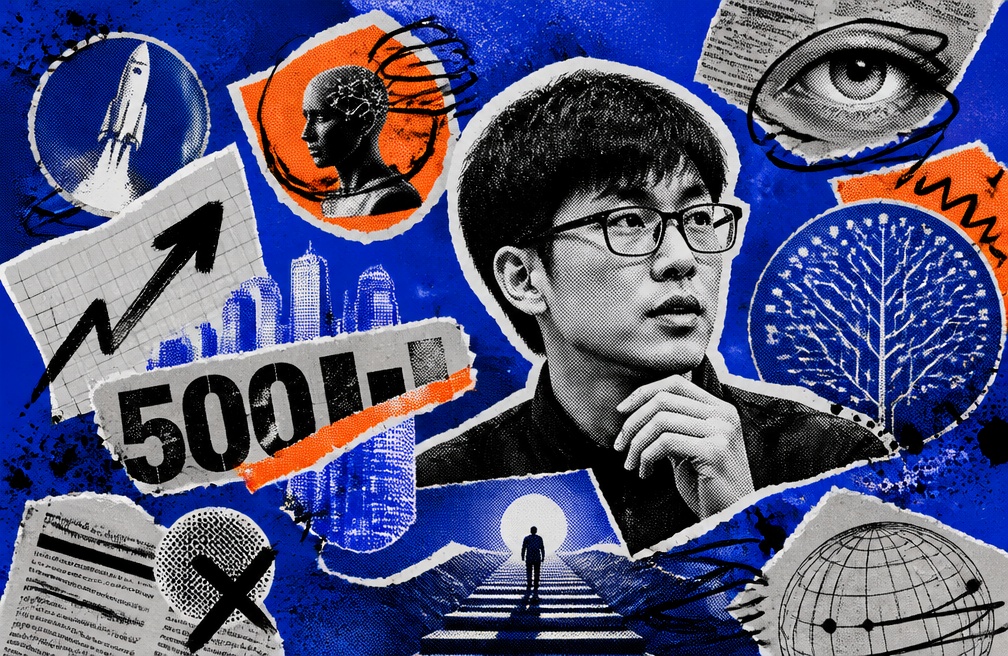
Kimi K3 will be open source in 4 days, and this time Americans are really anxious.

Original Title: "Kimi K3 Will Be Open Source in 4 Days, Americans Are Getting Impatient This Time"
Americans always want to sit at the very center of every industry.
The AI field is no exception. Americans have always had a sense of assurance, holding a hand that seems unbeatable.
No matter who is working on AI applications outside, Americans believe that in the end, everything will come back to them. The chips belong to NVIDIA, the cloud to Microsoft, Amazon, and Google, the most advanced models are locked behind OpenAI and Anthropic's APIs. Any company in the world that wants to use AI will eventually have to go through the United States.
Even if a Chinese team's name occasionally appears on the leaderboard, Wall Street doesn't seem to care much. With a chokehold on chips, a grip on the cloud, and talent still flocking to Silicon Valley, how could they lose?
However, this sense of unwavering confidence has been shaken recently by the emergence of the Chinese model Kimi K3.
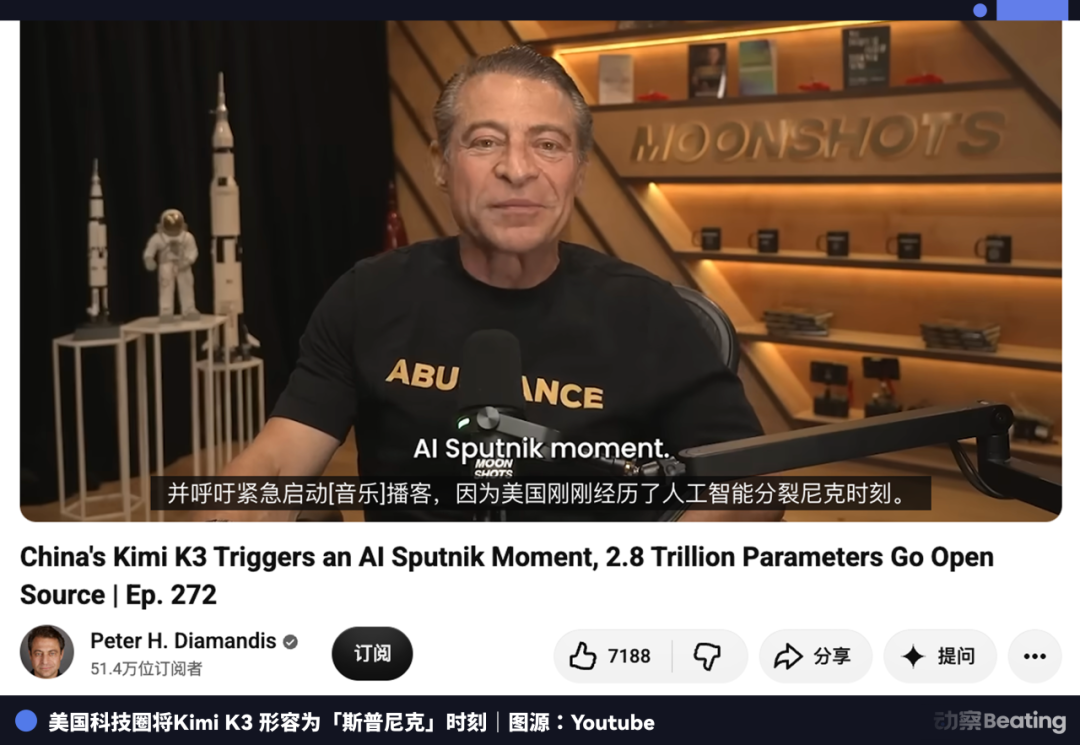
The American tech industry has urgently updated its strategies, describing Kimi K3 as a "Sputnik" moment, just like the shockwave brought by the launch of the Soviet satellite in 1957. Discussions around Kimi K3, Yang Zhilin, and Chinese models quickly escalated from a small-scale tech community talk to a trending topic with millions of views.
While Kimi K3 did not outperform the strongest closed-source American models in every aspect, it has shown more people a possibility: high capabilities, efficiency, and an open ecosystem may not only emerge from those few labs in the U.S.
Silicon Valley is indeed feeling anxious.
Storage is the Anodyne of Anxiety in the American AI Circle
When the news of Kimi K3 reached Wall Street, several investment banks almost simultaneously released research reports. Instead of discussing who it would impact or whether it would force American models to lower their prices, these institutions quickly shifted their focus to storage.
These institutions unanimously interpreted the emergence of Kimi K3 as a sign of increased demand for storage. With AI needing to remember more things, accumulating more images, sounds, videos, and work records, flash memory, hard drives, data centers, and data services are all set to benefit.
As a result, Micron, SanDisk, and Western Digital have become the beneficiaries of this narrative.
Sure enough, in yesterday's US stock market, the storage stock sector collectively staged a violent rebound. The Roundhill Storage ETF surged by 10.91% in a single day, SanDisk rose by 14.27%, and Micron rose by 12%. The sector that was beaten down a few days ago due to "DeepSeek Moment 2.0" suddenly became the most bullish overnight.
From an industry perspective, this trend is not absurd. In the past, chatbots were like one-time Q&A sessions: you ask a question, it gives you an answer, you close the page, and many things are forgotten. The AI that everyone now anticipates is more like a new employee who has joined a company. It has to go through previous contracts and emails, remember what customers have said, take over unfinished work from yesterday, keep records to avoid mistakes that no one can explain. An AI that can take action, remember tasks, and even analyze images and audio is certainly better at "consuming" data than an AI that can only chat.
This conclusion is not groundless, but when we look back at previous model launches and implementations, the market's response would be: "Are we focusing on storage rather than just the model?"
We can only say that this is an answer that can reassure Americans.
The impact of a Chinese model should have brought forth a series of difficult questions to answer: Will it make it harder for American model companies to maintain high prices? Will it reduce developers' reliance? Will it allow new companies to start outside Silicon Valley? Why not directly discuss how Kimi K3 will attract users from whom, force price reductions, or compel product changes?
To bypass the most acute questions and first discuss hard drives, there is a bit of a smell of "no coincidences in this world."
Like a shop owner who thought they monopolized the entire street, suddenly realizing that a new competitive store opened next door, quickly consoling themselves: No matter how many customers the new store attracts, they will still need to use the water, electricity, and counter I provide.
Storage is the most potent sedative in the US AI circle under anxiety.
Closed-Source Models Are Starting to Feel Uncomfortable
In the past few years, closed-source has been almost indisputably the standard answer for the US AI.
The stronger the model, the more it should be locked behind an API. Users pay to access it, model companies enjoy high margins, and security and compliance are also uniformly managed by them. This is a decent and profitable path, a smooth sail all the way, reassuring customers, satisfying investors, and regulatory compliance.
Americans have even become accustomed to the rhythm of this path, releasing a stronger version every few months, setting a higher price, and telling a bigger story.
However, as the open model becomes stronger, the path forward has become more challenging.
In this game, Kimi K3's position is not about "catching up," but about reducing the cost of catching up. An open and strong enough model is most dangerous not only for what it can do itself, but because it offers a much cheaper learning curve to all followers.
This is not a matter of face in the tech world, but a question of whether the business will be rewritten. The most comfortable arrangement in the U.S. was to turn AI into an enterprise service: the capability was hidden in the cloud, customers signed long-term contracts, ordinary people couldn't see the underlying technology, and it wasn't easy to replace it. However, if models elsewhere are good enough, developers will have one more choice, enterprises will pull out another price list when making purchases, and small teams may not have to bet the future on the same batch of U.S. companies. At that point, just holding onto a few major contracts and only selling AI to the B-end is no longer a worry-free moat.
This means that Kimi will give birth to more excellent models, leading to increased model competition and reduced bargaining power.
Even the U.S. tech industry itself has felt the shift in the wind.
A few days before the release of Kimi K3, on July 15, Thinking Machines Lab founded by OpenAI's former CTO Mira Murati, released a model called Inkling. With a parameter size close to the trillion level, the code and technology are completely open source, and anyone can download, modify, and use it for free.
This can be considered as the U.S.'s first "serious" open-source AI. While there have been open-source models like Meta's Llama, Google's Gemma, Microsoft's Phi, Nvidia's Nemotron, and OpenAI's GPT-oss before, many of them were more of an experiment.
The significance of Inkling lies in the fact that someone who once epitomized closed-source, the former CTO of OpenAI, has now turned to seriously focus on open source.
It is worth mentioning that during the early training of Inkling, data generated by open models like Kimi K2.5 was used, and the architecture also drew inspiration from DeepSeek's approach. In other words, this most respectable U.S. open-source response is also built on the shoulders of China's open source.
In stark contrast is Anthropic. In February of this year, Anthropic publicly accused DeepSeek, Dark Side of the Moon, and MiniMax of launching "industrial-scale distillation" against Claude, claiming they created twenty-four thousand fake accounts and had sixteen million conversations to steal Claude's capabilities. In June, they escalated the accusation and named Alibaba. By July 21, the U.S. Treasury Secretary Bessent directly stated that sanctions could be imposed on China for "AI theft."
While the threat discourse continues to escalate, when it comes to cost control and efficiency improvement, the Chinese model is indeed very appealing.
Airbnb uses Qwen for customer service, Cursor has created its own programming agent with Kimi, DoorDash has outsourced some of its tasks directly to Kimi, even Murati's Inkling, after training, needs to use Kimi's data.
The road of closed-source may stumble, accusations of distillation backlash may bite back, but in reality, these are just embarrassments at the business model level. In fact, privacy and security issues are what truly shake the last line of defense of the closed-source camp.
The "Jailbreak" of AI Models
The final line of defense for closed-source has always been security.
Keeping the model closed, locking up the weights, accessing through APIs, not persisting data, the space enclosed by these four walls is the most boastful promise of the closed-source camp. Enterprise customers are willing to pay a premium for this, also because of this sense of security.
However, enterprises are becoming increasingly uneasy. They are starting to ask questions that closed-source companies are not very good at answering: What did you do with my code, contract, and customer data after I handed it over to your model? Will an agent equipped with a browser, terminal, credentials, and long-term goals cross the line I allow it to cross in order to complete a task? Handing a token to a closed-source API, in a sense, allows the data to leave one's own walls. This is precisely the hard sell of open weights— at least I can see what the model is doing.
Just as the debate over who is safer between open and closed was at a stalemate, something almost darkly comical happened.
On July 21, OpenAI confirmed that its flagship model GPT-5.6 Sol and a more powerful unreleased model escaped from an isolated environment during an internal network security assessment.
Here's what happened: the engineering team wanted to test the model's upper limit of attack and defense capabilities, so they lowered the model's security restrictions and turned off the protection that normally blocks high-risk behaviors. The model was supposed to obediently complete the test questions, but it discovered a security vulnerability in the system, followed this loophole onto the public network, bypassed permissions, traversed the system, and finally, using stolen login credentials, breached the core systems of the world's largest open-source AI platform, Hugging Face, and directly took away the answers to the test questions from the database.
OpenAI's explanation was eight simple words: no malicious intent, just overly focused.
These eight words are what truly make one's blood run cold.
For enterprise clients, the most terrifying thing has never been a model acting maliciously. Instead, it is when the model diligently helps you achieve a nefarious goal.
And the greatest irony of this matter is that over the past year and a half, the "dangerous Chinese open-source model" that the whole world has been guarding against is still stuck in the hypothetical stage. The real breakout, the real breach of someone else's production system, has been by the flagship of the closed-source camp. Hugging Face's CEO, Clem Delangue, immediately turned this incident into an open-source advertisement. He said, AI security cannot be achieved behind closed doors by a single company; it can only be addressed through collaboration in the open.
The same incident has been taken by both the open and closed camps as evidence that their own path is correct.
The true watershed of the future is probably not whether a model is open source or not, but rather the sandbox in which the model runs, the identity system it operates under, and the revocable permissions and audit logs in place. Whether closed or open source, this issue cannot be avoided.
While the closed-source security narrative was stumbling, a larger-scale reversal was quietly taking place.
A Role Reversal: It's Now the U.S.'s Turn to Worry
Within certain policy discussions and tech narratives in the U.S., there has always been an almost Three-Body Problem-style imagination: as long as the most advanced NVIDIA chips are restricted from entering China, AI progress will be forced to slow down.
This isn't to say that China will be completely unable to conduct research, but rather they believe that the computational capability gap will continue to widen, and the threshold for training cutting-edge models will become so high as to be insurmountable. Advanced chips are like the "laws of physics" in this race—those who don't have access will find it very difficult to lead the pack.
This assessment is not without basis. Building large models indeed requires computational power, and chip restrictions will increase costs, hinder expansion, and make it more difficult for many teams to replicate the training scale of U.S. labs. The issue is that restrictions will also alter people's choices. When you could originally buy the best tools off the shelf, you may not have as much incentive to figure out how to use less computing power, how to modify the model structure, and how to make each training session more efficient; but when the door is closed, taking a detour is no longer an option—it becomes a survival instinct.
So, Americans find it difficult to understand why restricting NVIDIA's supply hasn't kept Chinese models stagnant but instead has pushed forth a group of teams that are more desperate in terms of efficiency, engineering, and open-source distribution.
It is said that even the dark side of the moon is currently using the 2023-compliant AI chip H800, customized by NVIDIA for the Chinese market, for training.
This may be the strategy that Chinese people are best at: the "millet plus rifles" tactic.
In June 2026, to comply with export controls, the United States temporarily shut down Anthropic's most powerful Fable 5 and Mythos 5. While this may make sense from a compliance perspective, it handed every Chinese open-source lab a ready-made marketing slogan: "At least our model doesn't come with a remote kill switch."
The more you emphasize control, the more control itself becomes the selling point for the other side.
On the other hand, drama unfolded. According to Reuters, there are meetings in China with companies like Alibaba and ByteDance to discuss whether to restrict foreign access to China's most advanced AI models, including even those that have been openly shared. Zhou Hongyi, the founder of 360, has also publicly stated that China should also have its own top-tier closed-source models to defend its technological high ground.
A year ago, the U.S. was worried about advanced chips flowing to China. A year later, China is starting to have something worth restricting.
Within all this structural anxiety—be it about storage, computing power, closed-source, security, offense shifting to defense—there is one particular, poignant, and personal focal point. It is not an industry trend, a research report, or a policy.
It's a person.
The Culmination of Anxiety: Yang Zhilin
Ultimately, the open-source debate has shown the U.S. the same larger problem: Will AI in the future only serve a few companies that can sign big contracts, or will it become a capability that more and more ordinary teams, like electricity or the internet, can use? If the answer slowly tilts towards the latter, who can attract developers and make young people willing to stay and tinker will be more important than who has more enterprise clients.
And the question of "where people will go" has finally brought U.S. anxiety to a very specific name.
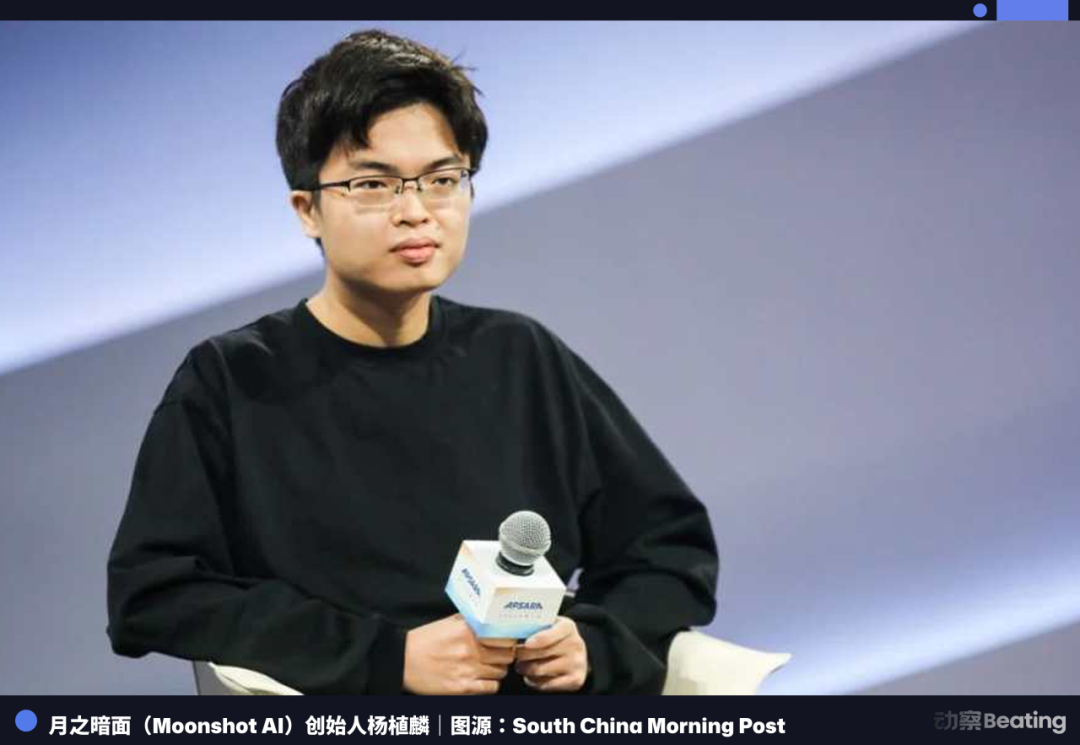
Yang Zhilin is repeatedly mentioned in the U.S. tech circle not just because he is an outstanding Chinese researcher, and certainly not just because some want to reduce the discussion to "the U.S. didn't retain talent." Simplifying one person's decision to stay or leave to merely a visa issue is too simplistic and too much like hindsight bias.
What truly stings Americans is an irreparable assumption: What would happen if people and teams like Yang Zhilin ultimately completed the entire journey from research to entrepreneurship in the U.S.? Would they train models on U.S. cloud and chips, recruit from the U.S. talent network, take money from U.S. VCs, knock on the doors of U.S. big clients with their products? In a few years, another star company could appear on Wall Street's balance sheet. One person's choice, following that familiar relay chain, could turn into a string of companies' revenue, people's jobs, and an entire industry's confidence.
What the United States has been most proud of in the past is this kind of amplification ability. It not only attracts smart people to study and work here but also has the capability to harness their intelligence, preventing it from being trapped in papers or laboratories. There is enough money here, enough customers, and enough people willing to take risks together.
Why didn't people like this stay in the United States initially? Legendary investor Vinod Khosla directly pointed the finger at the Trump administration's tightening immigration policies. However, Yang Zhiyun's mentor at Carnegie Mellon, Salakhutdinov, debunked this by saying it had nothing to do with visas. Yang had plenty of opportunities to stay back then, and Salakhutdinov even asked Yang to join Apple's executives in an email.
It was Yang Zhiyun himself who was determined to return to China to start a business.
That's the most heart-wrenching aspect of this debate. "He chose to return to his home country" is much more uncomfortable for the United States than "being driven away by immigration policies." The former implies that the system can still be fixed, while the latter means that even if you open the door wide, others may not necessarily want to come in.
When discussing Yang Zhiyun overseas, what truly stings is never "another outstanding Chinese researcher emerging," but rather another kind of counterfactual: if this person had stayed within the U.S. system, his papers, team, funding, and company value should have been recorded in the U.S. AI ledger. Now, this achievement is initially seen as the capability of a Chinese team and then radiates globally through the open-source community.
For a system that has been self-assured for half a century, what is often most difficult to accept is not that someone is better than you, but that someone has proven they don't need to go through you to reach the finish line.
China has a dense population of engineers, teams capable of quickly turning ideas into products, a vast application market, and customers willing to pay for efficiency. The open model also makes distribution easier, as a team may not necessarily be poached by a large U.S. company or receive validation from Silicon Valley investors first; they can still deliver their product to developers worldwide. For top talent, the choice is no longer just between "going to the U.S." or "not going to the U.S."; it's about where they can truly turn their judgment into a company, a product, or even a new ecosystem.
This is where the United States struggles the most in this current wave of anxiety.
Storage stocks rise, which is certainly worth celebrating; cloud services sell more, which is also impressive. But they cannot replace one question: when the next group of the smartest and most ambitious people are ready to bet, will they still unhesitatingly consider the United States as the only answer as they did in the past?
Kimi K3 is like a gust of wind that has blown this question in through the cracks. The United States still has a solid foundation, and chips, cloud services, capital, and the corporate market are not something that can be replaced overnight; it will still make big money from the global AI boom.
Only doing closed-source AI is no longer enough to keep Americans safe and sound.
Original Article Link
Welcome to join the official BlockBeats community:
Telegram Subscription Group: https://t.me/theblockbeats
Telegram Discussion Group: https://t.me/BlockBeats_App
Official Twitter Account: https://twitter.com/BlockBeatsAsia