US-Iran Tensions Persist, Alibaba Dominates | TradeXYZ Weekend Market Observations

It was yet another tumultuous weekend. Kuwait reported that Iran had attacked its second power and desalination plant within two days; Kuwait Petroleum Corporation then stated that repeated attacks on key oil facilities had resulted in casualties and property damage. Israel's Channel 13 also reported that the U.S. is preparing to deploy around 100 refueling aircraft to the region to expand the scope of action against Iran. Subsequently, there were reports of an explosion in the Port of Abbas.
The market immediately priced in the potential supply risks into oil prices, but did not reflect the same level of concern in the stock indices. The war premium returned to crude oil, while risk assets had not fully entered a sell-off.
Crude Oil / U.S. Stock Indices
The U.S.-Iran military confrontation has entered its ninth consecutive night. The U.S. continued its strikes on Qeshm Island and multiple locations in southern Iran, while Iran expanded its retaliatory attacks to U.S. military targets in Kuwait, Bahrain, and Jordan. After an attack on a U.S. military base in Jordan, at least two American soldiers were killed, and one went missing; the U.S. then expanded its airstrikes and increased the deployment of aircraft and tankers to the Middle East. The conflict escalated from military targets to civil and energy facilities, with Kuwait's power, desalination, and oil facilities being repeatedly attacked, and reports of explosions in the Port of Abbas and multiple locations in southern Iran, signifying a widening of the conflict geographically and in terms of targets.
The focal points of the ongoing confrontation remain the Strait of Hormuz and the bargaining chips for the next round of negotiations. The U.S. resumed its naval blockade of Iranian ports, diverted merchant ships, and continued to degrade Iran's missile and drone capabilities along the coast; Iran, on the other hand, insisted on its interpretation of the Memorandum of Understanding, which does not allow the U.S. to establish an independent air corridor, and sought to raise Washington's escalating costs by attacking regional U.S. military bases and key facilities. The Trump administration continues to carry out airstrikes, increase tanker deployments, tighten oil sanctions, while also maintaining rhetoric for a diplomatic resolution.
The temporary agreement has lost its effectiveness, and military actions themselves are now becoming tools for both sides to reshape the negotiation terms.
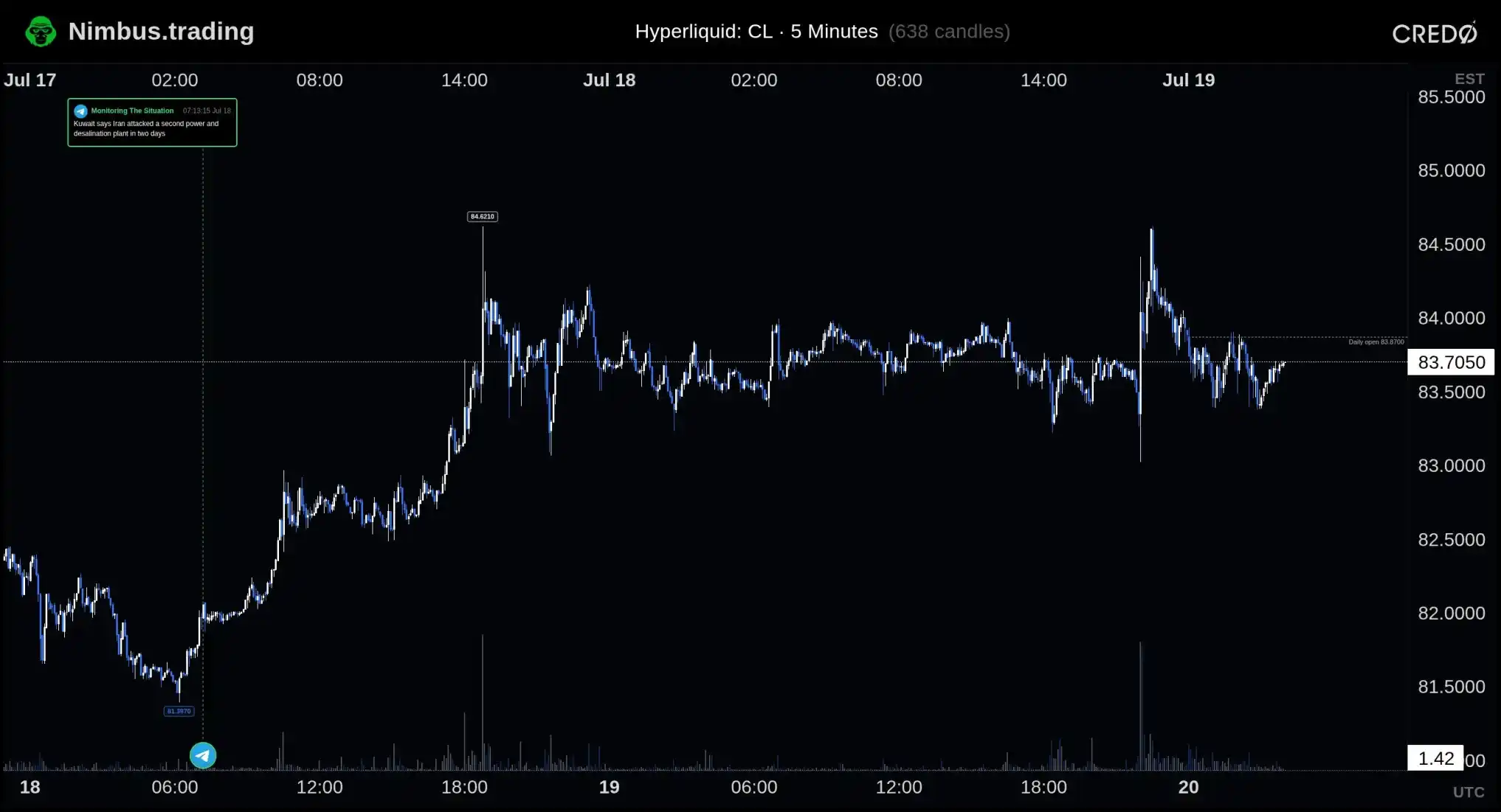
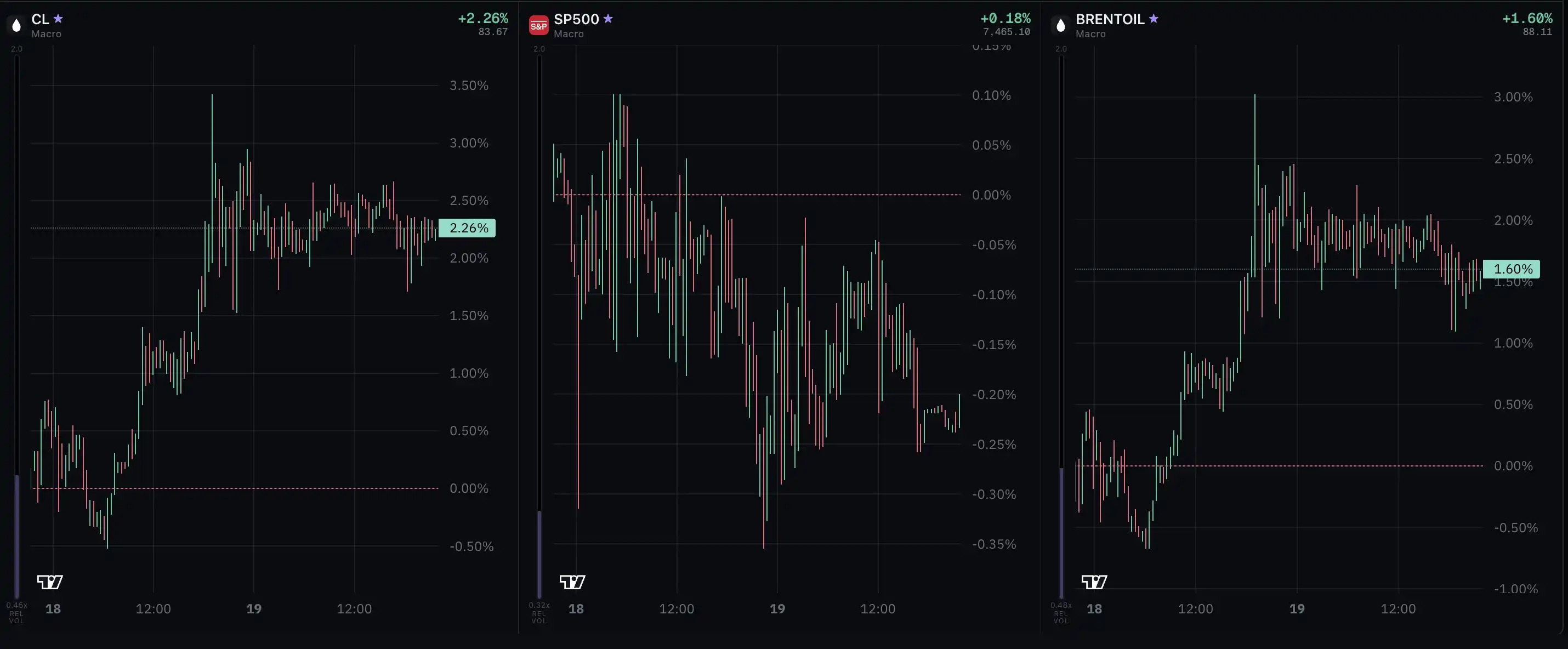
In the evening of July 18, following the news of the second attack on Kuwait's power and desalination plant, oil prices on TradeXYZ rapidly surged from the $81.4 level. After Kuwait Petroleum Corporation confirmed repeated attacks on key oil facilities, the prices continued to hold at elevated levels.
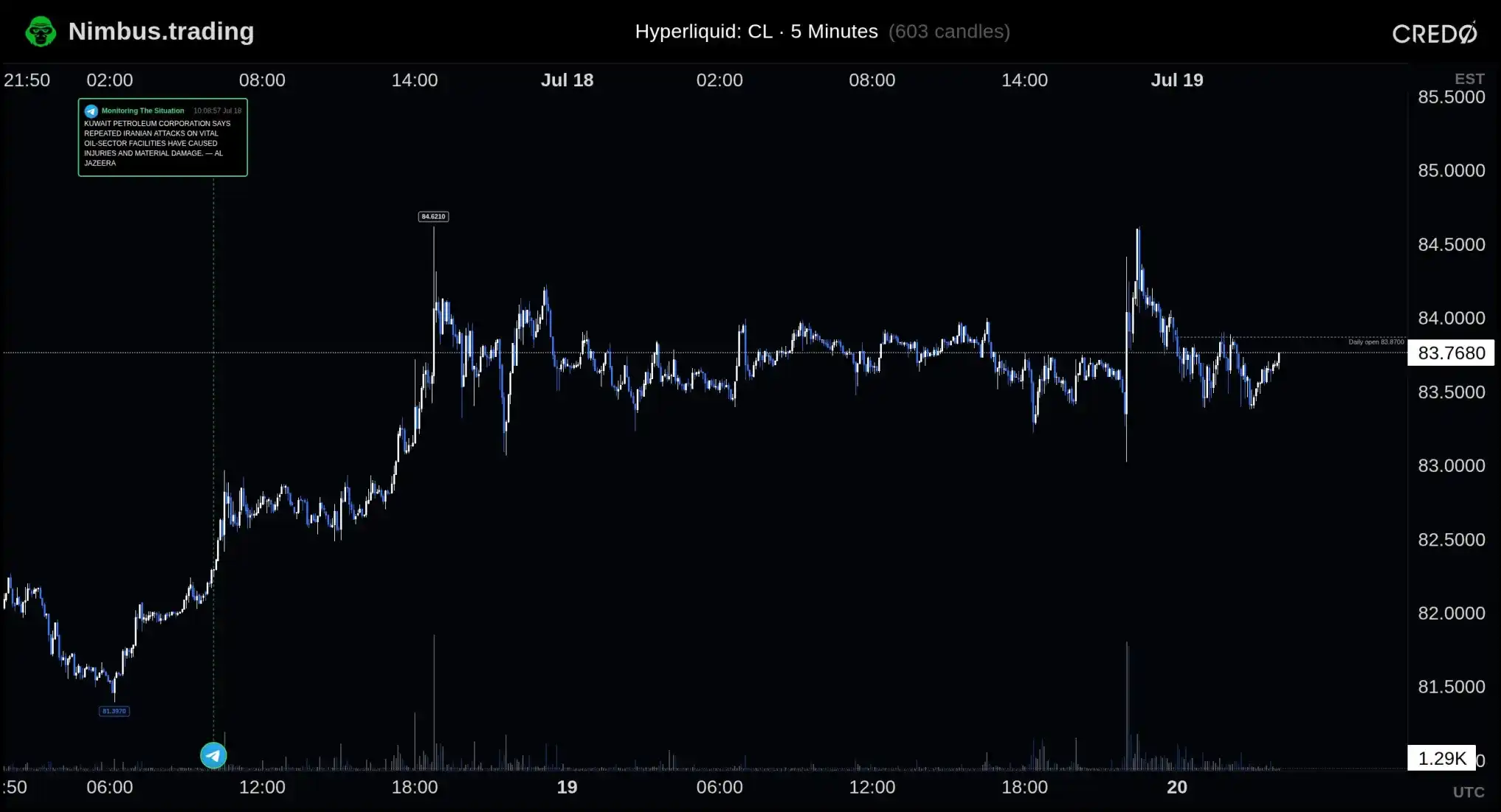
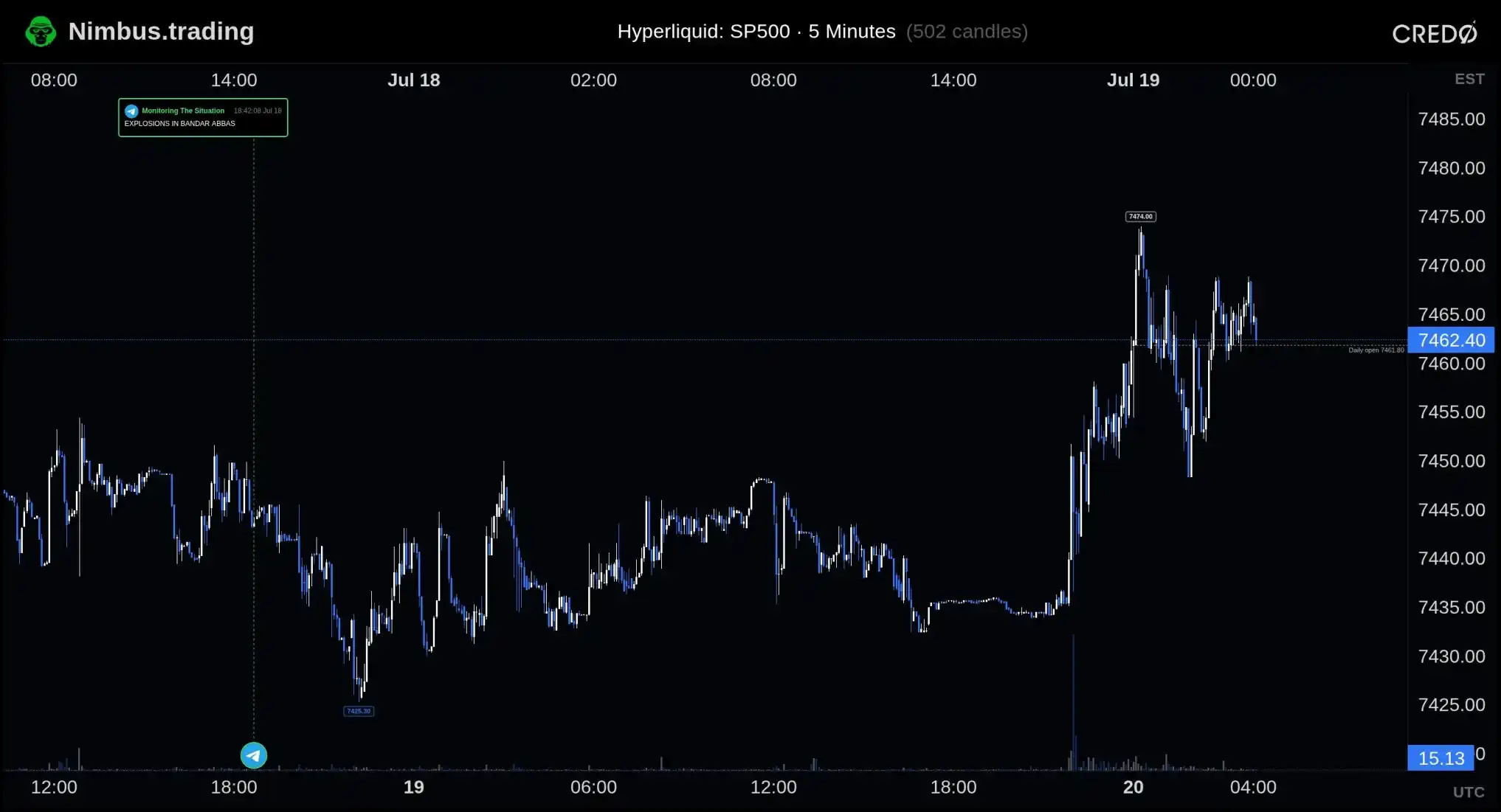
Following the explosion in the Port of Abbas, CL surged again, reaching a peak of $84.62. The S&P 500 had a much milder response to the war-related news. The index briefly fell to around 7425 points over the weekend, then rebounded and reached 7474 points.
Precious Metals
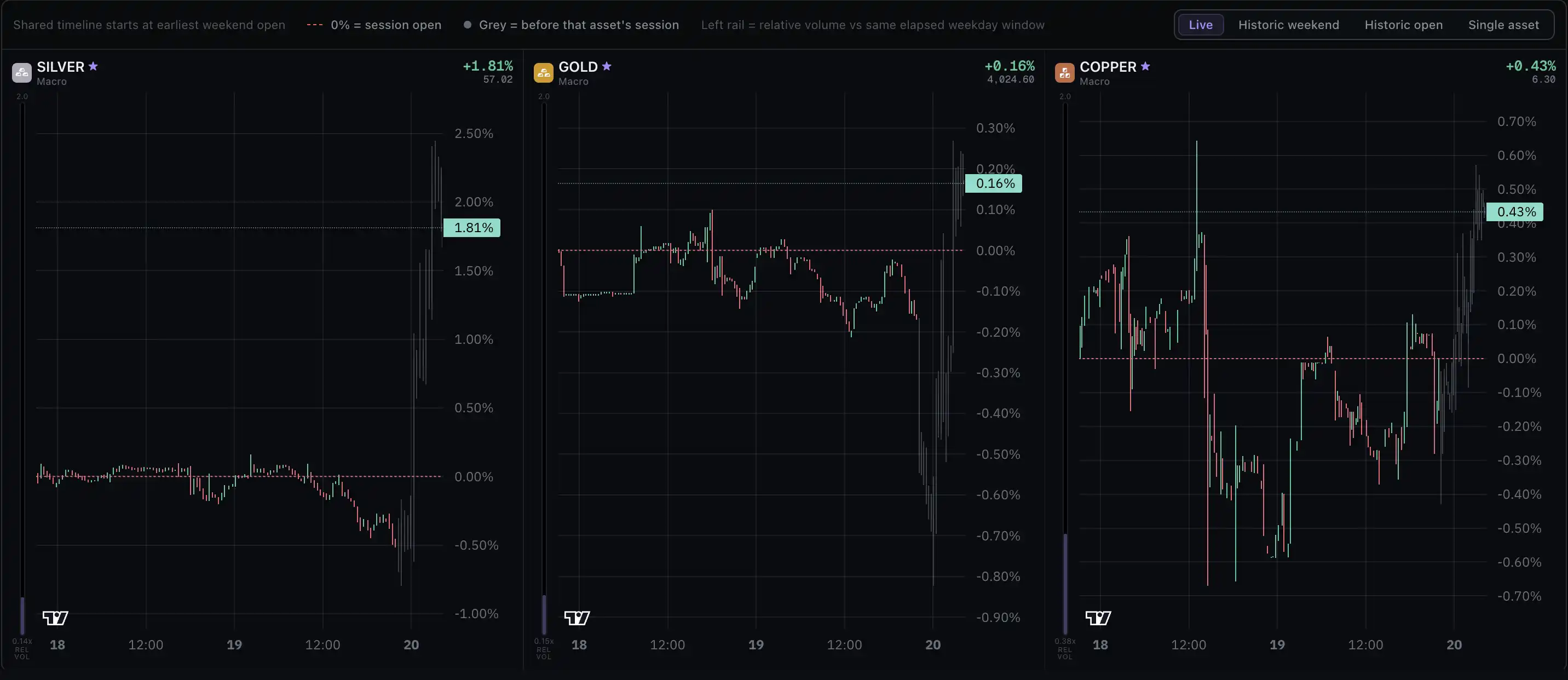
The precious metals underwent a directional switch around the futures market opening.
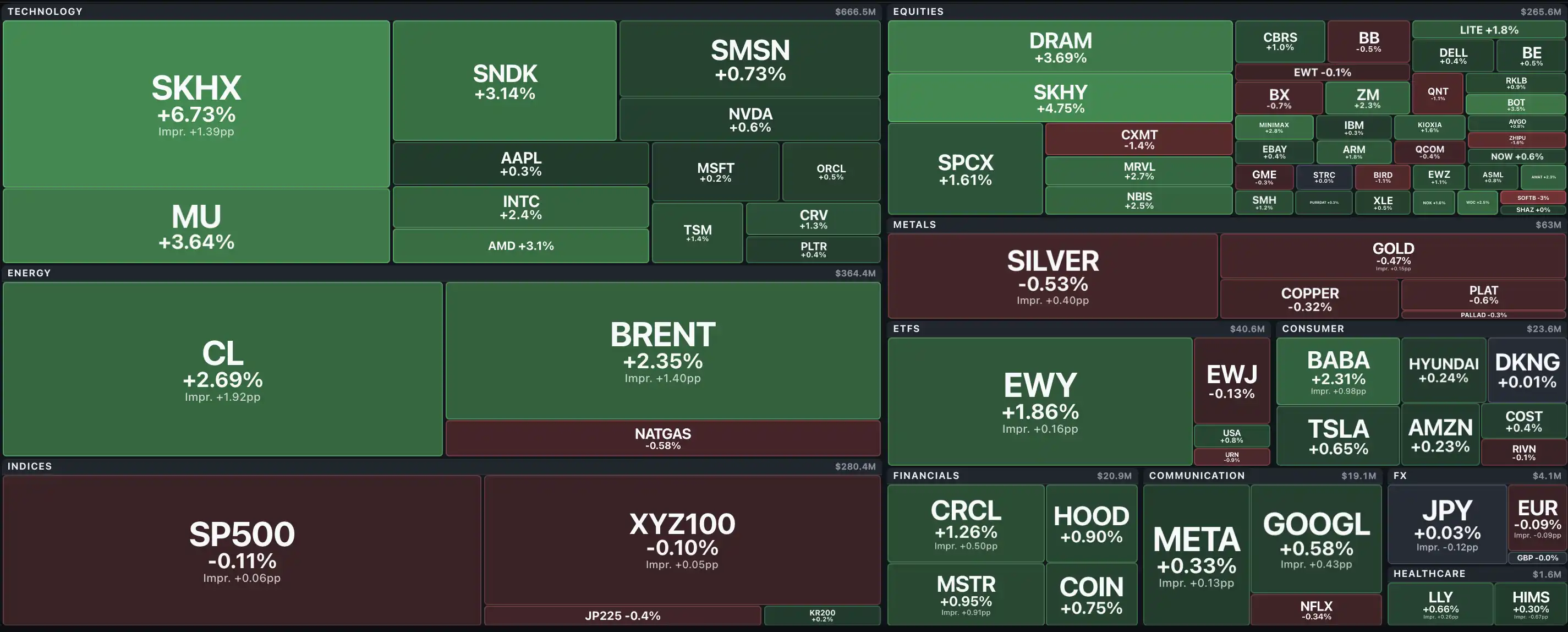
During the weekend period, gold on TradeXYZ fell by 0.47%, silver fell by 0.53%. After the futures market opened, gold experienced a flash crash, followed by an immediate rebound recovering about 0.8% of the decline, turning into a 0.16% increase; silver rose by 1.81%, and copper also rebounded by 0.43%. This correction, unlike the unilateral rise in crude oil, is more like a repricing after the return of traditional futures liquidity.
Gold's medium-term support still comes from central bank buying. Goldman Sachs estimates that global central bank purchases of gold reached 81 tons in May, averaging 67 tons per month over the past three months, far above the average of 17 tons per month before 2022. The bank expects central bank reserve diversification to continue for many years, with monthly gold purchases in the coming two years averaging about 50 tons and 40 tons, respectively.
The relatively tight Fed expectations continue to suppress gold, but central bank demand provides an additional layer of support below the price. The weekend market only shows the gold price recovering after the opening, while Goldman's data provides a longer-term bottom logic and cannot directly explain every short-term fluctuation.
Stocks
The stock index is approaching a consolidation phase, with significant strength and weakness differences within individual sectors.
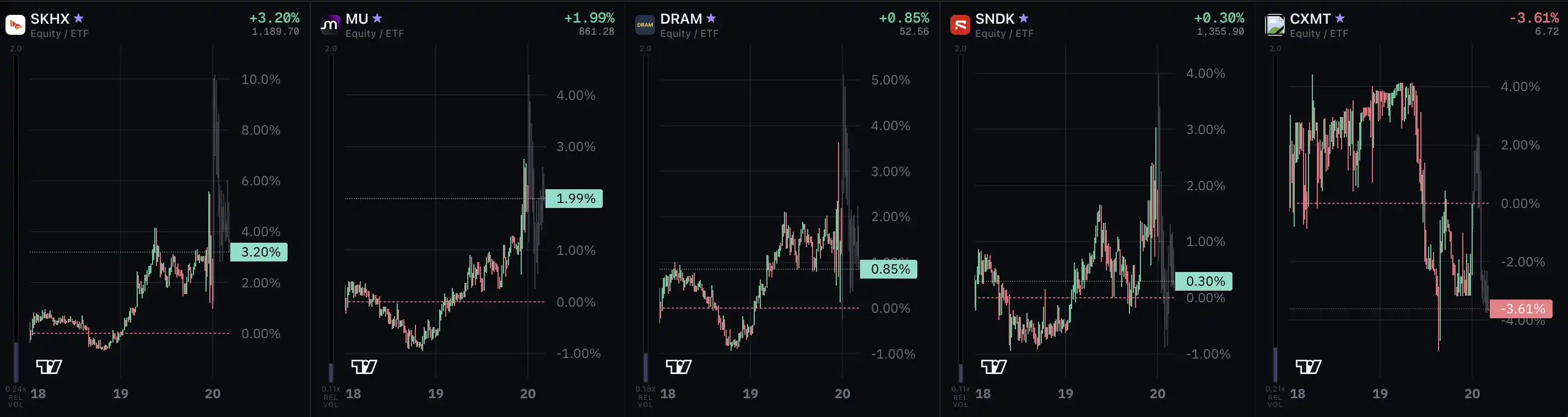
The storage sector showed strength over the weekend. SK Hynix rose by 3.20%, Micron by 1.99%, DRAM by 0.85%, and SanDisk by 0.30%. However, YMTC went against the trend and dropped by 3.61%.
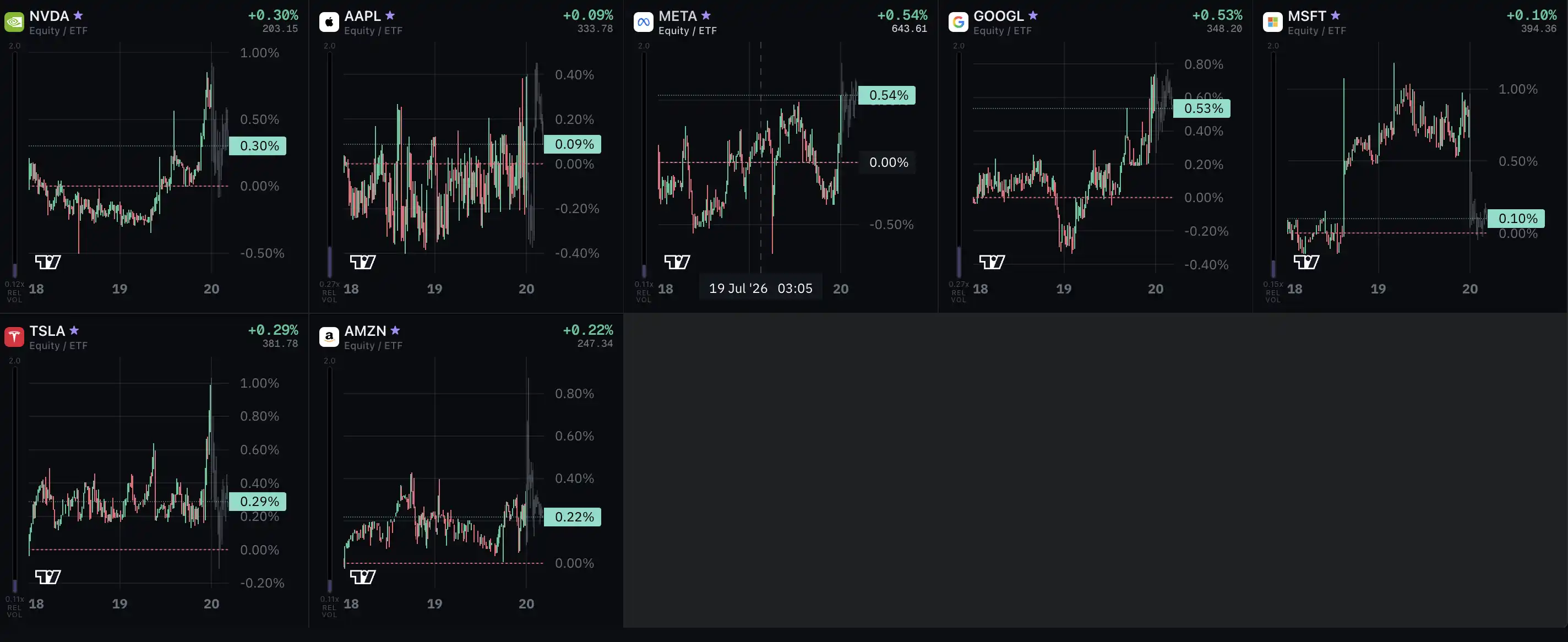
In contrast, the MAG7 remained relatively calm. The gains of NVIDIA, Apple, Meta, Google, Microsoft, Tesla, and Amazon were roughly between 0.09% and 0.54%. The heavyweight tech stocks did not experience significant gains, and the index did not show a distinct decline, further indicating that the weekend's geopolitical risks were temporarily limited to crude oil and a few related assets.
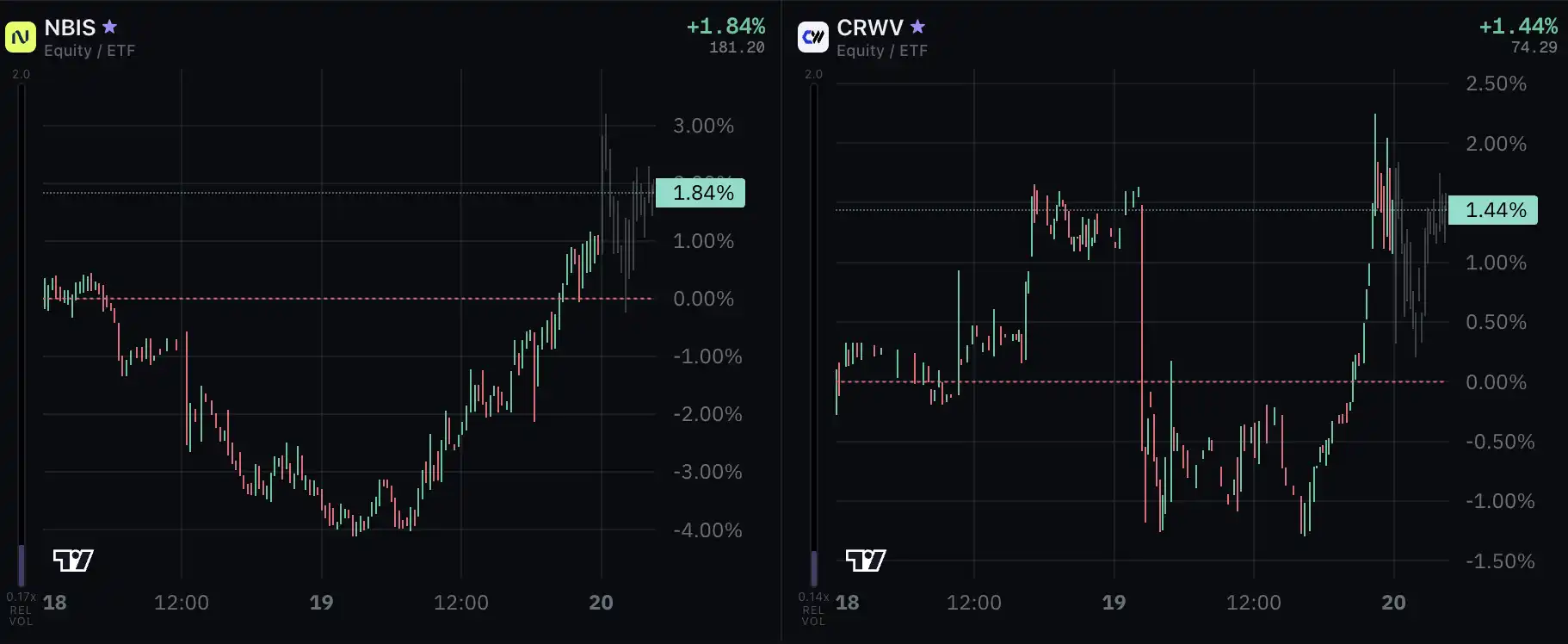
The Neocloud sector strengthened, with NBIS rising by 1.84% and CRWV by 1.44%. During the same period, Nebius completed its first $775 million secured debt financing, backed by deployed CPUs and contracted cash flows, with the funds intended to accelerate global data center construction. For Neocloud companies requiring continuous investment in computing power infrastructure, this financing provides a more definite source of funds for expansion.
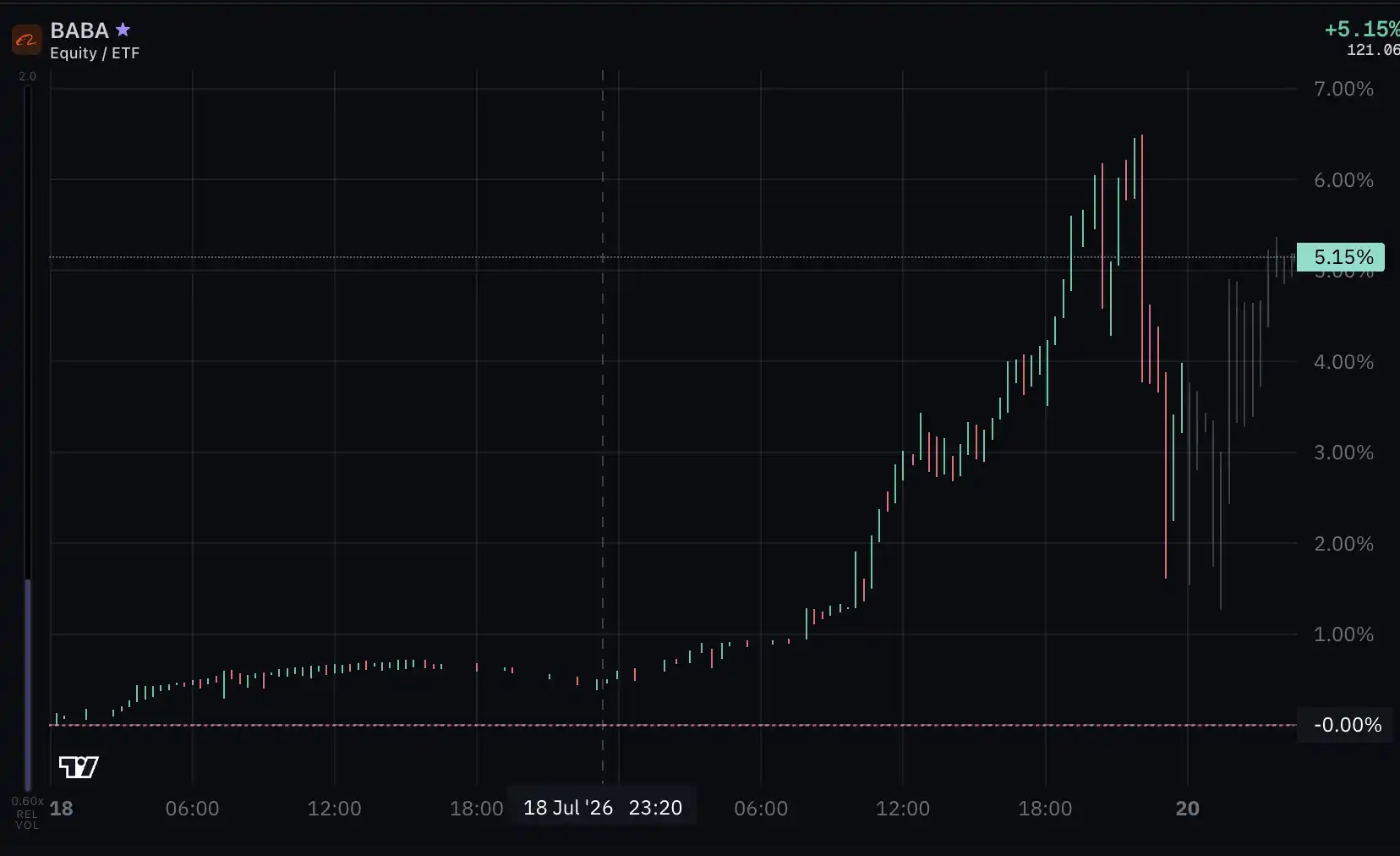
Alibaba was one of the standout single-stock performances over the weekend, with BABA rising by 5.15%, and the weekend gain once exceeded 6%. On July 19, Alibaba launched the Qwen3.8-Max preview version, announcing that the full version with 24 trillion parameters will be open-sourced soon, along with the introduction of the Token Plan subscription. Following Kimi K3, the market's expectations for China's cutting-edge large models have become even more optimistic.
Welcome to join the official BlockBeats community:
Telegram Subscription Group: https://t.me/theblockbeats
Telegram Discussion Group: https://t.me/BlockBeats_App
Official Twitter Account: https://twitter.com/BlockBeatsAsia