After Banking: Neobanks and the Great Financial Power Shift
Original Title: "Beyond Banks: Neobanks and the Great Financial Power Migration"
Original Author: Emily, Researcher at Bitget Wallet
Introduction
Banks have not disappeared; they are merely being unbundled.
Looking back at nearly two decades of financial innovation history, we find an interesting yet long-overlooked phenomenon: all the stories that have been called "financial innovation" in the past, whether it is digital banks, super payment apps, stablecoins, or the rapidly emerging on-chain wallets today, are essentially not about creating new banks but about continuously unbundling the various powers that traditional banks once monopolized.
For over a century, the reason why commercial banks have been able to become the most core organization in the modern economic system is not because they are inherently more efficient than other institutions, but because they have long held four key financial capabilities concurrently: they are both account managers and payment organizers, responsible for currency circulation, and also control the ultimate clearing network. For ordinary users, completely different financial behaviors such as savings, remittances, consumption, investment, and loans have all been packaged into a product called a "bank account," making it easy for people to have the misconception that banks should naturally assume all financial functions.
However, after the 2008 financial crisis, this century-old financial organizational structure began to show its first cracks.
When Lehman Brothers collapsed, Citibank faced a crisis, and the global financial system needed unprecedented government assistance to continue operating, people first realized that banks might not be the only possible form of financial service organization. It was also at the same historical moment that two routes, which later profoundly changed the global financial industry, began to emerge:
· One route attempted to redesign the banking experience using mobile internet technology, giving rise to the first generation of Neobanks represented by Revolut, Monzo, Nubank, and Chime;
· The other route attempted to redesign the currency and clearing system more fundamentally, starting with Satoshi Nakamoto's "Bitcoin Whitepaper," eventually evolving into stablecoins, DeFi, and the on-chain financial account system that is rapidly developing today.
Looking back at the evolution of the past 18 years, we will find that the history of Neobanks has never been just a history of digitizing banks but a history of the continual migration of financial power.
This migration has roughly gone through four stages:
· In the first stage, first-generation Neobanks shifted financial power from bank licenses to the user interface;
· In the second stage, native payment Neobanks separated the payment and settlement networks from the bank's exclusive financial power;
· In the third stage, native stablecoin Neobanks detached the global digital dollar system from the bank's financial power;
· And in the fourth stage currently unfolding, native on-chain Neobanks are attempting to complete the final migration—returning financial power directly to the user.
We believe that understanding this process may be more important than understanding the business model of any specific company.
First-Generation Neobank: When Banks First Became Internet Products
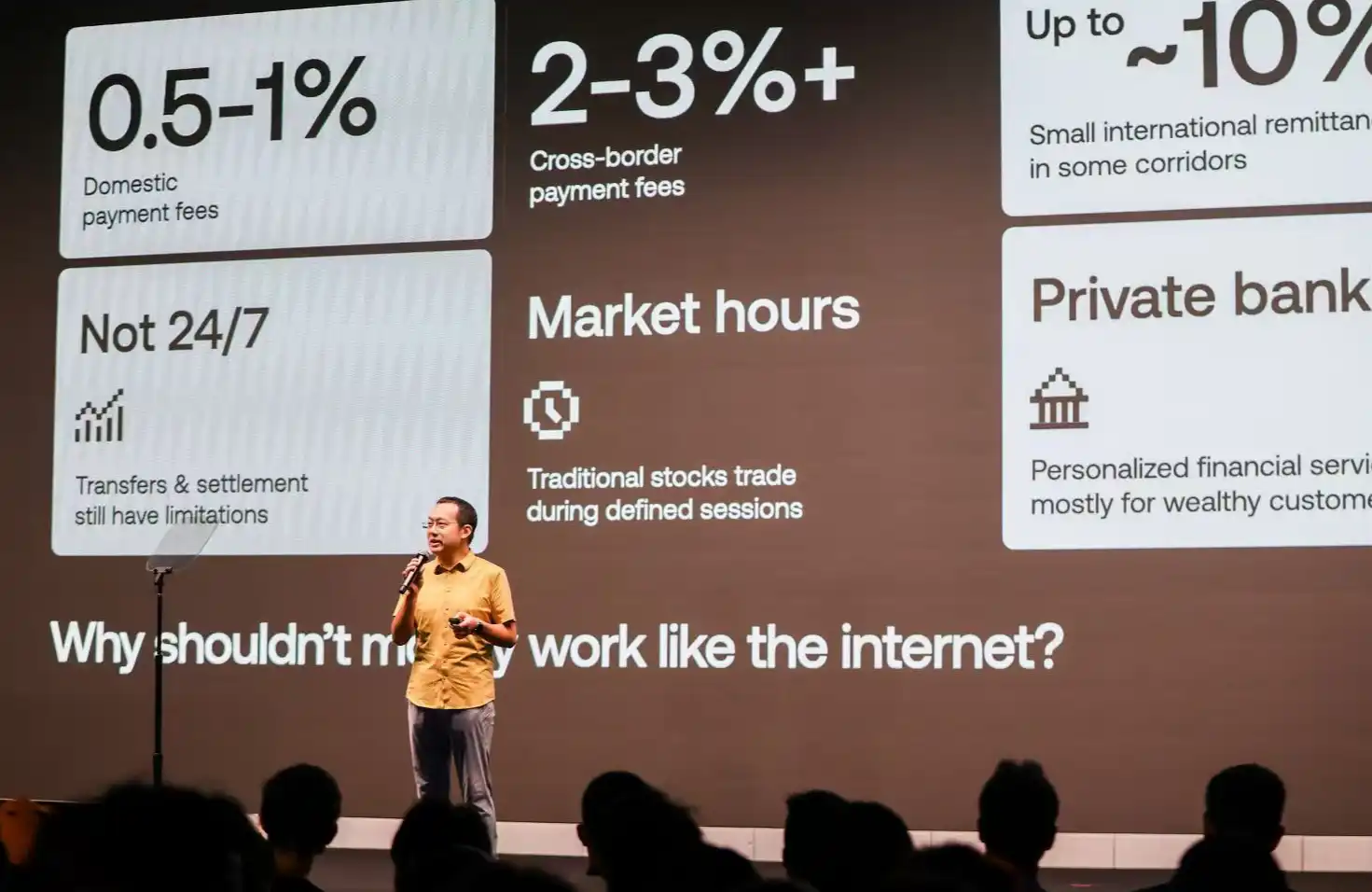
What is a Neobank? Literally, it means a "new type of bank," but the term actually carries a much broader meaning.
Technically defined, a Neobank is a completely digital-first financial services institution that operates without relying on physical branches, offering seamless account opening, transfers, financial management, spending, and cross-border remittance services through mobile apps or web platforms. Although many Neobanks do not possess a traditional bank's "banking license," they can provide users with nationally insured financial services through deep partnerships with traditional banks holding regulatory licenses.
Today, when people talk about the primary representatives of Neobanks such as Revolut, Nubank, or Chime, they often habitually refer to them as digital banks. However, if we go back to the founding of these companies, what they truly aimed to solve was not banking business per se but user experience.
Because before 2010, the user experience of the vast majority of global banking products was extremely poor.
Account opening required appointments, transfers involved waiting periods, cross-border remittances incurred high fees, credit card application processes often lasted for weeks, and bank systems themselves operated on core systems built decades ago. For many young users, banks increasingly resembled a kind of mandatory public infrastructure rather than a genuine consumer product.
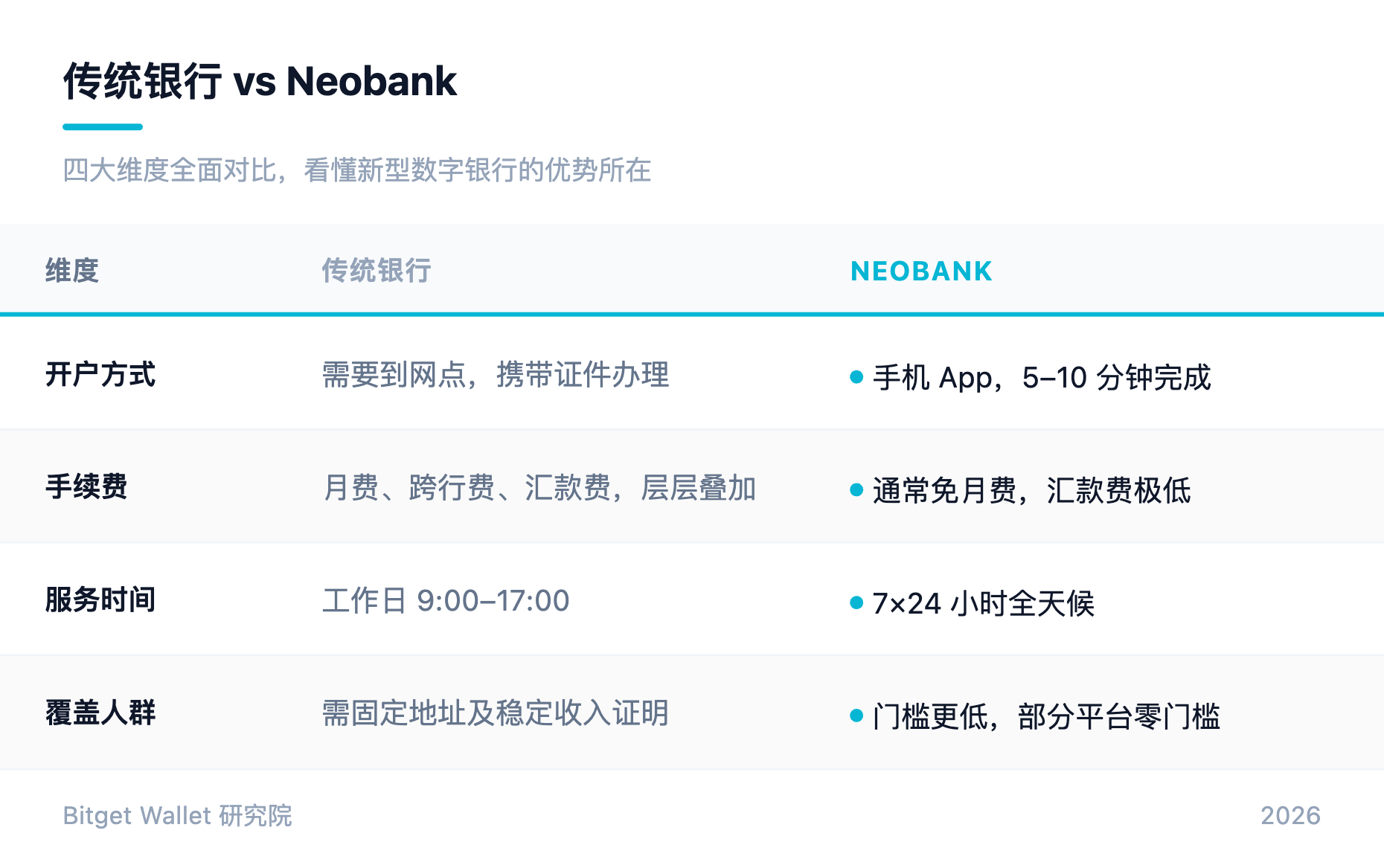
The most important insight for first-generation Neobank entrepreneurs was that they realized users do not love banks; they only need financial services. Therefore, if banking could be repackaged as a mobile internet product, user loyalty would no longer belong to the bank's license but to the product itself.
This logic was first validated in the UK.
Founded in the UK in 2015, Revolut initially addressed a very simple problem: why are cross-border payments so expensive?
In the traditional banking system, an international remittance often had to go through multiple correspondent banks and clearing institutions, taking not only several days but also incurring fees usually as high as several percentage points. Revolut's solution was not to reinvent money but to compress the originally complex cross-border payment experience into a single mobile operation through a mobile app, multi-currency accounts, and a more efficient foreign exchange settlement system.
Ten years later, Revolut has become the world's largest Neobank by scale. According to Revolut's disclosure, as of the end of 2025, Revolut had become one of the world's largest digital banks, with 68.3 million global retail users, 767,000 business customers, customer asset balances of $675 billion, annual revenue of $60 billion, pre-tax profit of $23 billion, annual transaction volume of $17 trillion, and profitability exceeding most traditional commercial banks in Europe.
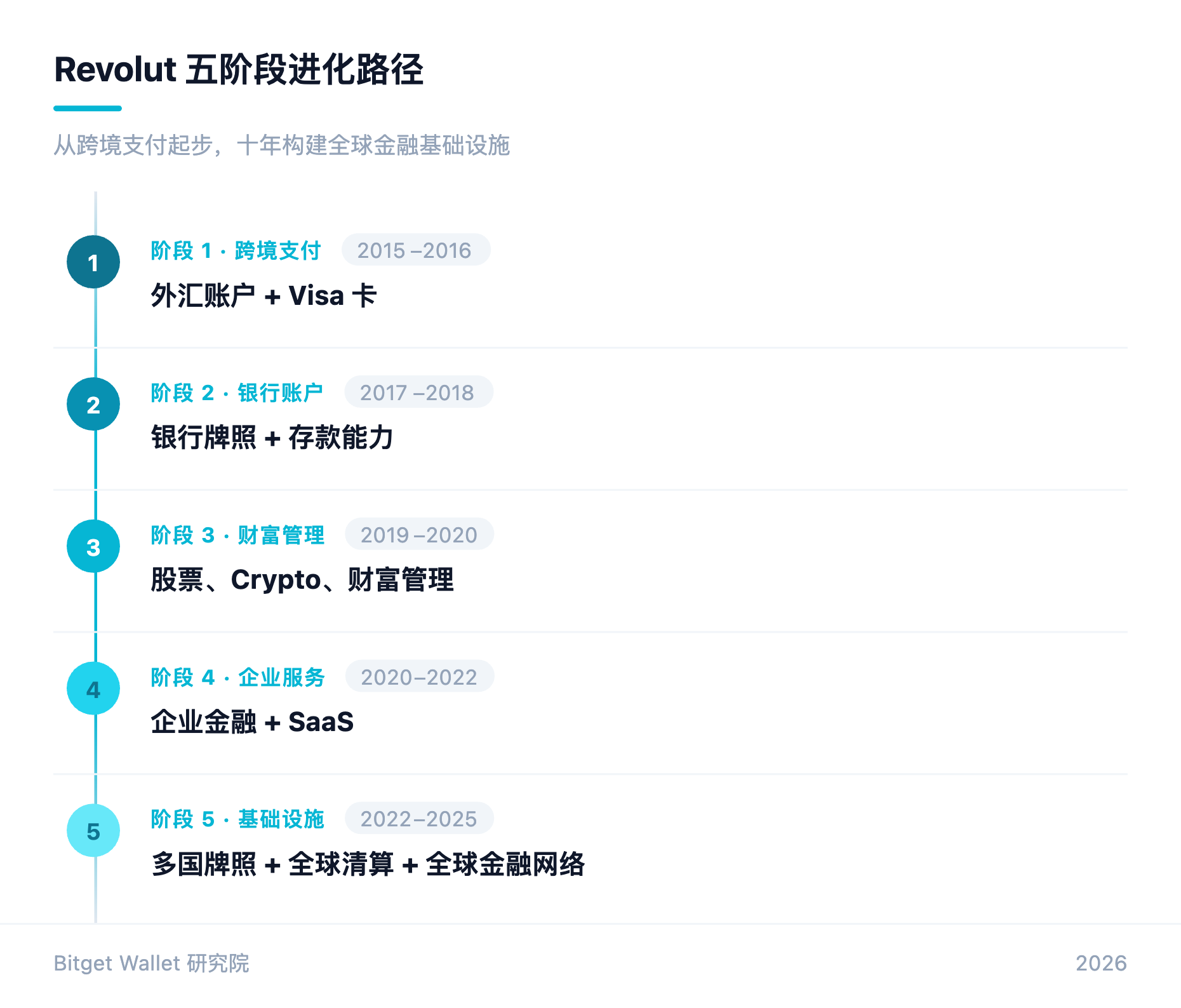
However, from an analysis of financial power perspective, we will find that what Revolut truly accomplished was not a banking revolution, but the first attempt to transfer and divest banking power.
In terms of control over the clearing pathways, Revolut is no longer a digital bank in the early sense. After a decade of evolution, it has gradually established its global multi-currency ledger system, internal forex matching engine, corporate payment network, and partial merchant settlement capabilities, thereby gaining a considerable degree of Payment Orchestration. However, whether it is bank card consumption, cross-border transfers, or final fund settlement, its underlying infrastructure still heavily relies on traditional financial infrastructures such as Visa, Mastercard, SEPA, Faster Payments, which means that although Revolut has partially gained control over the payment pathways, the ultimate clearance authority still resides in national and international payment networks.
In terms of treasury management capabilities, Revolut's business model has undergone a fundamental change. Unlike early reliance on forex spreads and interbank card interchange fees, by 2025, its revenue structure has gradually shifted towards customer fund deposits, wealth management, corporate finance, subscription services, and interest income from interest rate environments. With customer asset size growing to $675 billion, Revolut has acquired capital operation capabilities similar to traditional commercial banks and asset management institutions, with a pre-tax profit margin of about 38%, and its profitability even surpassing many traditional European banks.
However, at the account architecture level, Revolut has not changed the most fundamental organizational principle of the modern financial system, which is that the account ultimately belongs to the financial institution rather than the user. While users have gained an unprecedented financial experience and global service capability, their assets essentially still exist within Revolut's controlled centralized ledger system, and ownership, portability, and ultimate control of the account have not fundamentally changed. In this sense, Revolut has redefined the user experience of banking but has not redefined the account itself.
A similar story has also taken place in Latin America.
Founded in 2013, Nubank succeeded not by creating new financial products but by realizing that Latin America's hundreds of millions of people have long lacked high-quality financial services. In Brazil, traditional banks have long maintained a high-cost, high-threshold, and low-efficiency operating model, while Nubank quickly built a large customer base through a fully digital user experience and extremely low service costs.
By the end of 2025, Nubank's user base has exceeded 131 million, making it the world's largest digital bank. Its annual revenue reached around $16.3 billion, with a net profit of $2.9 billion and customer deposits reaching $41.9 billion. More importantly, Nubank's monthly active user ratio has reached a level that traditional banks find hard to reach. In its core market Brazil, about 60% of users have already made Nubank their primary bank account. For a digital bank that is just over a decade old, this level of user stickiness no longer belongs to the traditional banking category but is closer to a financial platform covering payments, savings, lending, investing, and wealth management.
However, like Revolut, Nubank, although winning user adoption, still does not have control over the ultimate payment and clearing network. It relies on the Brazilian PIX system, bank card networks, and traditional financial infrastructure to operate, so what it has achieved is still only the first stage of financial power shift: users are starting to move away from bank licenses, but funds are still within the traditional financial realm.
The U.S. market provides another interesting case.
Chime's success proves that even a banking license itself may no longer be crucial. By partnering with chartered banks, Chime has outsourced all regulation and clearing, focusing all its resources on user growth and product experience. As of now, Chime's user base has exceeded 25 million, and its business model is essentially more akin to a consumer internet company than a traditional bank.
Looking back at the competition of the first generation Neobanks, we will find that what they truly accomplished was not a banking revolution, but an account access revolution.
They proved for the first time that bank account access did not necessarily have to belong to a bank by nature, but could belong to an app; financial services did not have to revolve around a licensed entity, but could revolve around a user-centric organization; and the biggest moat for a bank was not the license itself, but the user relationships.
However, as the first generation Neobanks acquired tens of millions or even hundreds of millions of users, a new issue began to surface: while they had the users, they did not own the truly profitable part of the financial system.
Because what truly controls the financial world has never been the accounts, but the clearing.
Native Payment Neobank: When Financial Power Shifts from Bank Accounts to Payment Networks
After the first generation Neobanks acquired tens of millions of users, a counterintuitive fact began to emerge: while users had started to move away from traditional banks, the most profitable, stable, and monopolistic part of the financial industry still remained firmly in the hands of another set of companies.
By 2025, Revolut's global user base has exceeded 68 million, Nubank has over 130 million users, and Chime has over 25 million users. In terms of user numbers, they have become one of the largest financial platforms globally. However, these companies quickly realized that every transaction, every transfer, every cross-border remittance, every fund settlement still had to go through another, larger, more invisible, and more profitable infrastructure network.
This network is not banks. It is payment networks.
For a long time, people have been accustomed to thinking of Visa and Mastercard as credit card companies, but this understanding severely underestimates their true position. Visa has never issued loans or directly managed client assets, and Mastercard does not own user accounts. However, by the 2025 fiscal year, Visa's total global payment transaction volume has reached $167 trillion, processing a total of 257.5 billion transactions annually, with nearly 4.9 billion effective payment credentials, annual revenue exceeding $40 billion, net profit surpassing $20 billion, and a net profit margin maintained at around 50%; at the same time, Mastercard's global transaction volume has also exceeded $10 trillion, with annual revenue exceeding $30 billion, and a net profit margin consistently around 45%.
What has enabled them to become the world's most profitable financial companies is not because they have users, but because they possess another even more important power: control over the clearing pathway.
In the traditional financial system, an account is merely the starting point for funds, while the true decider of how funds flow, where they go, and how much is charged is the clearing network itself. The success of Visa and Mastercard is essentially built on an extremely elegant business model: they do not take on credit risk, they do not bear balance sheet risk, nor do they engage in the competition for fund ownership, but instead focus on becoming the global toll road for fund movement.
This is particularly evident in the field of cross-border remittances.
Founded in 2011, Wise (formerly TransferWise) can be said to be one of the most representative companies in the native payment Neobank space. Unlike Revolut's attempt to redesign bank accounts, Wise never tried to become a bank from the outset; it only tackled one problem: why is cross-border remittance so complex?
The core assets of traditional cross-border remittance are: a banking license, the SWIFT network, and the correspondent banking system; whereas Wise's core assets are local clearing accounts, a liquidity pool, and an algorithmic matching system.
This means that in Wise's world, cross-border payments are no longer just international transactions but a combination of local transactions.
In the traditional SWIFT network, an international remittance often needs to pass through several correspondent banks, taking not only several days but also incurring fees at each intermediate node. Therefore, what seems like a simple cross-border transfer actually conceals behind it a vast and inefficient global correspondent banking network.
Wise's innovation is not about reinventing currency but reorganizing clearing. By establishing local fund pools and local clearing networks worldwide, funds that originally needed to move across borders are now offset and matched within multiple countries, significantly reducing the cost and time of cross-border payments.
According to The Wall Street Journal, as of 2026, Wise has reached 18.9 million active users, a 21% year-on-year growth; customer fund balances have reached $39 billion, a 40% increase; annual cross-border transfer volume has reached $243.5 billion; pre-tax profit has reached $660 million, with a profit margin of 26%. Its core competitive advantage comes not from a banking license but from its established global local clearing network.
This means that financial power is undergoing a second migration.
The first generation of Neobanks competed for accounts. The second generation of financial infrastructure is competing for fund flows.
And those who truly control fund flows often earn more than those with accounts.
This logic is even more evident in the U.S. market.
PayPal has over 440 million active accounts, Cash App has over 60 million monthly active users, and Venmo's annual payment volume has exceeded $330 billion. Although these products may appear to be payment tools, they are essentially competing for the same thing: access to users' fund inflows.
Looking back at this stage of development, we find an increasingly clear pattern: banks are responsible for asset management, payment networks are responsible for flow management, and flow is often more important than assets.
However, even Visa, Mastercard, and Wise still cannot solve a fundamental question: why must the U.S. dollar rely on the existence of banks and payment networks?
This question is ultimately answered by stablecoins.
Native Stablecoin Neobank: When the Dollar Begins to Detach from Bank Existence
For the past century, the U.S. dollar has always been tied to the banking system's existence. Whether for savings, remittances, payments, or international trade, the dollar must flow through commercial banks, central banks, and global clearing networks.
If the first generation Neobank detached bank accounts and the second-generation financial infrastructure detached payment networks, then the third-generation Native Stablecoin Neobank truly detaches from the most important financial consensus of the past century: the dollar must be tied to bank existence.
As of the first half of 2026, the global stablecoin circulation market value has reached approximately $250-270 billion, with USDT's circulation size exceeding $160 billion and USDC's circulation size nearing $65 billion. The annual global stablecoin transaction volume has reached trillions of dollars, beginning to surpass many traditional payment networks. Stablecoins have proven for the first time that the dollar can achieve global circulation and settlement on a large scale without relying on commercial bank accounts, the SWIFT network, or national payment systems, thus becoming a truly independent new currency infrastructure outside the traditional banking system.
This shift first occurred in the areas where the traditional banking system was most fragile, such as Argentina. Over the past decade, the Argentine peso has depreciated by over 99%. Many residents have effectively started to view USDT as a true savings account rather than a cryptocurrency.
A similar situation has also emerged in Nigeria, Turkey, Venezuela, Indonesia, and the Philippines. This is why most third-generation Neobanks were born in emerging markets.
Take RedotPay, for example. It is not a traditional digital bank but a consumer finance platform with a stablecoin account at its core. Users do not need to have a US dollar bank account; they only need to hold USDT to be able to manage assets, make cross-border remittances, and engage in daily spending. By 2025, its services have already covered over 150 countries and regions, with a user base reaching millions.
Kast's approach goes even further. Kast is attempting to combine a stablecoin account with yield-generating assets like US Treasury bonds, allowing users to hold digital dollars and earn on-chain returns while completing real-world spending through the Mastercard network. If successful, this would mean that the deposit-taking, payment, and asset management businesses on which traditional banks rely have been dismantled and reassembled for the first time.
Meanwhile, Felix Pago has become one of Latin America's most representative stablecoin remittance networks. It uses WhatsApp as the front-end interface and leverages USDC and blockchain as the underlying settlement infrastructure, significantly reducing the cost and time of cross-border remittances from the US to Mexico. Users can enjoy the efficiency brought by the digital dollar network without even needing to understand how stablecoins and blockchain work.
By comparing them along several dimensions, it can be seen that native stablecoin Neobanks have fundamentally differentiated themselves from first-generation Neobanks:
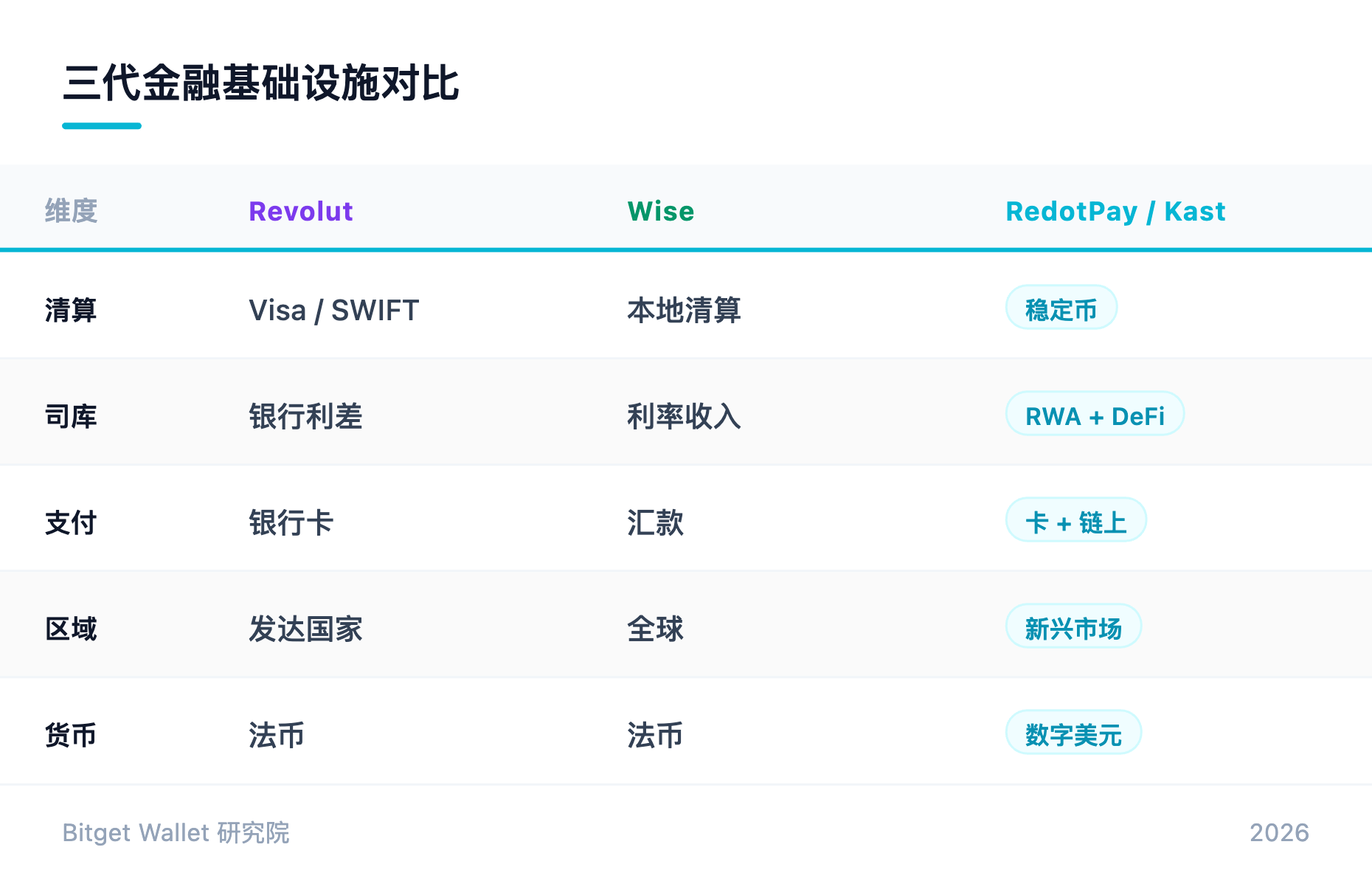
They have proven for the first time that the dollar does not need a bank. The most important asset in the financial system may not be a bank account but a global digital dollar account.
Yet, one final question remains unanswered.
If money has divorced itself from the existence of banks, why must accounts still belong to banks?
Native On-Chain Neobank: Accounts Begin to Belong to Users Themselves
If the previous three financial power shifts were essentially redistributions of power between institutions, the direction of the fourth shift is entirely different.
Because this time, power starts to flow back to the users themselves.
By 2026, the global non-custodial wallet user base has exceeded hundreds of millions. MetaMask users have surpassed 100 million, Trust Wallet has also reached a scale of billions, and Bitget Wallet is rapidly building an integrated financial ecosystem covering transactions, payments, yields, and spending. Together, they prove one thing: wallets are no longer just tools for storing coins but are evolving into global financial accounts.
What Bitget Wallet, Gnosis Pay, Ether.fi Cash, Coinbase Wallet, MetaMask, and OKX Wallet represent is not a new payment product or a new banking product but a brand-new way of financial organization.
The biggest innovation of Gnosis Pay is not issuing a Visa card but for the first time enabling a Visa card to be directly linked to the user's on-chain account. In the past, whether it was a bank account or a digital bank account, assets ultimately resided in a database controlled by a financial institution. However, in the Gnosis Pay system, user assets always remain in their on-chain wallet, and the bank card is just an entry point connecting to the real-world payment network. When a user makes a card payment, the system instantly reads the user's on-chain assets and settles the transaction automatically. This means that for the first time, a bank card does not correspond to a bank but to an account owned and controlled by the user.
This means that user assets do not need to be entrusted to any bank or recharged into any centralized account to complete real-world spending directly. If Revolut changed the banking experience, Gnosis Pay is attempting to change the ownership of accounts.
Similarly, Ether.fi Cash is attempting to unify stablecoins, ETH yield assets, on-chain rewards, and real-world spending capabilities into a single on-chain account and is gradually exploring the inclusion of real-world assets such as U.S. Treasury bonds into this system.
The true innovation of Bitget Wallet as a native on-chain Neobank representative is not creating another digital bank but for the first time, attempting to unify accounts, payments, yields, transactions, global asset allocation, and real-world spending into a financial operating system owned and controlled by the user. Within this system, the wallet is no longer just a tool for storing coins but is evolving into a new financial infrastructure itself.
· The core asset of the first-generation Neobank is: the user
· The core asset of the second-generation payment infrastructure is: Settlement Network
· The core asset of the third-generation native stablecoin Neobank is: Digital Dollar
· As for the core asset of the fourth-generation native on-chain Neobank, it has become: The user-owned global financial account itself
From the Neobank analysis perspective, for the first time, it simultaneously possesses:
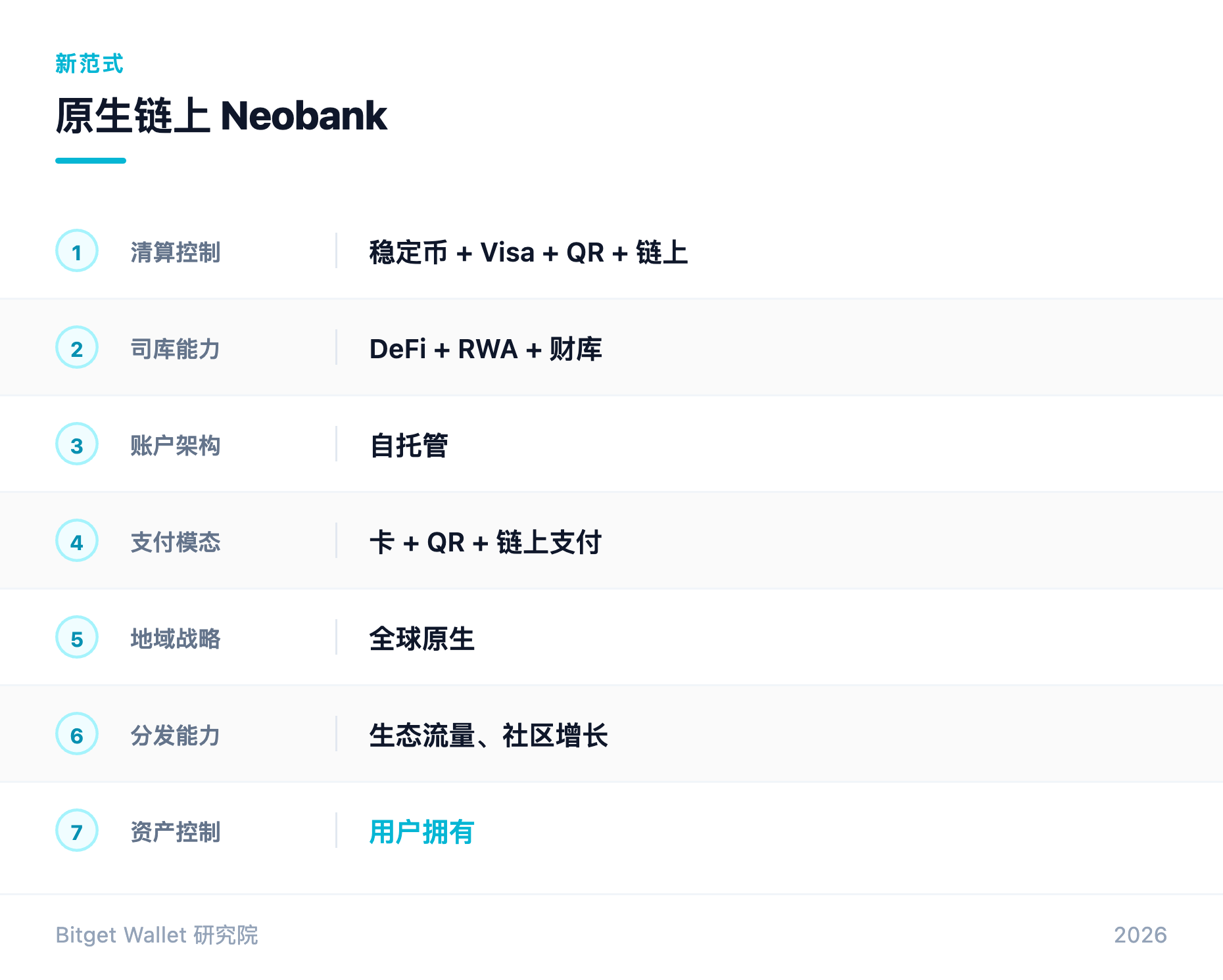
Most importantly, for the first time, it has integrated: accounts, assets, payments, yields, identity into a single system.
This means that the wallet's true competitor has never been other wallets. Its true competitor is: a bank account, Revolut, PayPal, Cash App, Apple Wallet.
Because it is not competing for a particular financial function, but for: the user's unique global financial account.
The endpoint of Neobank may not be a bank at all
Looking back at the twenty-year history of financial innovation, we will eventually find a clear pattern.
· The first-generation Neobank redefined the bank account;
· The native payment Neobank redefined payments and settlement;
· The native stablecoin Neobank redefined currency;
· And the native on-chain Neobank is now redefining account ownership itself.
Therefore, the history of Neobank has never been just a history of digital banks, but a history of continuous financial power shifts.
Over the past twenty years, this shift has followed a clear path: from bank charter to user interface, from user interface to payment network, from payment network to stablecoin, and today, it is moving to a global on-chain account.
If this trend continues, the most important question of the next decade may no longer be: Which bank will become the largest digital bank?
Not even: Which stablecoin will become the global currency?
The real question may be: As banks, payments, currency, and accounts all begin to disintermediate from each other, who can become everyone's unique global financial account?
And that answer may no longer be a bank.
But a wallet.
Original Article Link
Welcome to join the official BlockBeats community:
Telegram Subscription Group: https://t.me/theblockbeats
Telegram Discussion Group: https://t.me/BlockBeats_App
Official Twitter Account: https://twitter.com/BlockBeatsAsia