SpaceX Too Pricey to Invest In? Unpacking the Investment Opportunity of the Full Supply Chain
Original Title: "Did SpaceX Miss Out on the Lottery? Take a Look at SpaceX's Complete Supply Chain!!!"
Original Author: nini, Crypto Analyst
If you missed the Apple supply chain in 2010, missed the Tesla supply chain in 2020, and even missed the Nvidia supply chain that made you regret these two years,
SpaceX's supply chain is just beginning now.
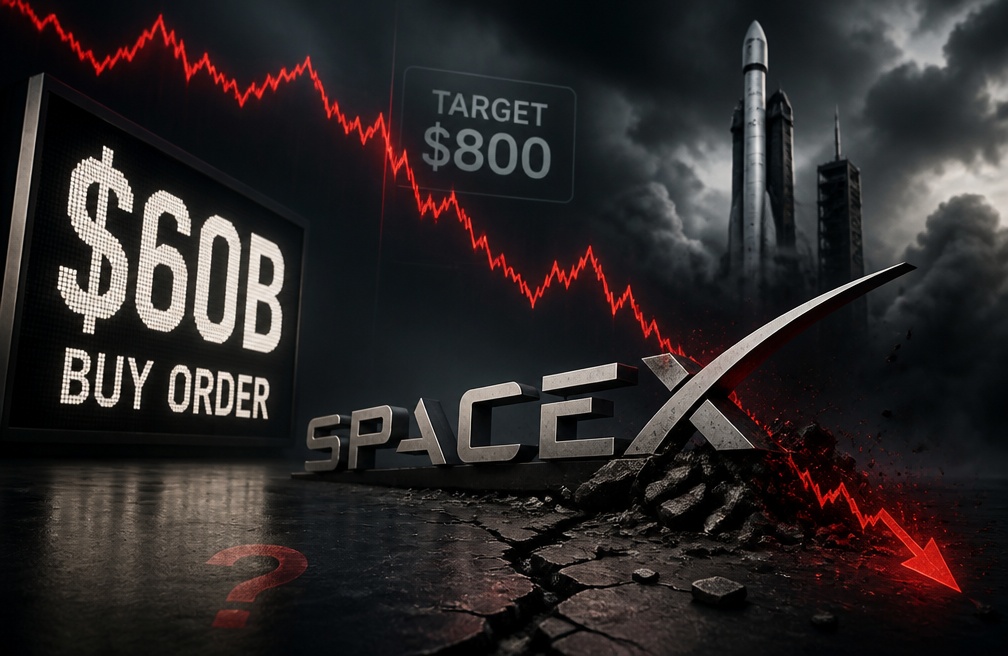
Of course, I think it doesn't seem very cost-effective to simply chase after SpaceX itself. On its IPO day, it rose by 19%, priced at 135 and surged to 160, with a P/S ratio close to 100 times, and the company is still in huge losses. Retail investors rushed in on the first day of listing, and the pressure is not small.
So what I want to say is about those companies that supply to it.
History has repeatedly verified the same logic: the frenzy of a super terminal feeds back to the industrial chain behind it. In 2010, Apple released the iPhone 4, Luxshare Precision had a revenue of 1 billion that year, and ten years later, it reached 92.5 billion, with its stock price increasing by 30 times. In 2019, Tesla's Shanghai factory started production, CATL had a market value just over 100 billion, and five years later, it exceeded one trillion. Nvidia has been on fire these two years, and JCET went from tens of billions to a market value of over a trillion.
Apple, Tesla, Nvidia—every time the super terminal stands in the limelight, but what truly makes a group of people earn big money is the supply chain companies behind them.
SpaceX spends hundreds of billions of dollars each year, buying chips, materials, parts, and industrial gases. These purchase orders gradually turn into tangible revenue in certain companies' accounts. After the IPO prospectus was made public, this supply chain has data that can be traced for the first time.
Let's first see where SpaceX's money comes from and where it goes
Its business is mainly in these three parts. The first part is Starlink. With a revenue of 11.3 billion last year, accounting for 60% of the group, with over 10 million global subscribers—this is the only part of SpaceX that consistently makes money, and it can even be said that all the money-burning areas behind it rely on it to cover the costs.
The second part is Rockets. The annual R&D investment in Falcon and Starship is 3 billion dollars, in exchange for the lowest global commercial launch cost. There are plans to launch 100 times by 2026, with a demand for 1,500 Raptor engines. The third part is AI. It lost over 6 billion last year, currently building the Colossus supercomputer on the ground, stacking 220,000 GPUs, and planning orbital data centers in the sky.
So, the flow of money is quite simple: money earned from Starlink → invested in rockets to bring down the launch cost → low-cost launches deliver AI hardware to space → rent out AI computing power to earn money back. It's approximately this kind of cycle.
This loop pours out tens of billions of dollars in annual procurement orders, so whose pockets are all this money going into?
Suppliers are divided into three categories based on their replaceability.
Category One: Those Irreplaceable in the Short Term
1. NVIDIA, with Colossus supercomputer's 220,000 GPUs all belonging to it. However, NVIDIA's true moat is not its hardware but CUDA. Almost all AI training worldwide is done using this software ecosystem. While hardware can be replaced, the migration cost of a decade-old codebase cannot be made up in one or two years. We can understand that as long as SpaceX is still building supercomputers, NVIDIA is making money.
2. Eutelsat, with the SATS code. It holds the satellite communication radio spectrum. What is a spectrum? You can think of it as lanes in the sky, and the laws of physics dictate that there are only a few, and whoever occupies them first owns them. No matter how strong your technology is, you cannot create a segment out of thin air.
Musk's satellite-direct mobile phone feature must pass through it. Without paying the toll, the signal will collide with others' satellites. SATS also holds about 3% of SpaceX's shares. Its price rose by 11% the day before going public, with options trading volume 11 times higher than usual.
3. Filtronic, with the FTC code, is listed on the London Stock Exchange—note that you can't find it on the US stock market. It provides Starlink satellites with millimeter-wave signal amplifiers to extend signal transmission range and clarity. It signed a £47.3 million contract in 2024, with SpaceX contributing 83% of its revenue and also holding up to 10% of the share subscription rights.
Although this may seem small, aerospace-grade certification requires several years of repeated testing under vacuum, radiation, and extreme temperature differences. Once certified, SpaceX will not easily switch suppliers because the recertification cycle cannot keep up with the pace of production ramp-up. Additionally, Filtronic's stock price has nearly doubled in a year.
4. Materion, with the MTRN code. It is the world's only fully integrated beryllium metal producer, controlling approximately 56% of the global supply. Beryllium is one-third lighter than aluminum, six times stronger than steel, with a melting point near 1300 degrees Celsius. There are only a few metals on Earth that are both lightweight, strong, and high-temperature resistant.
It is used in the F-35 fighter jet, the James Webb Space Telescope's mirrors, and the Starship's load-bearing structure. The US Department of Defense classifies beryllium as a strategic material, and Materion is the exclusive certified supplier for the F-35, with certification lasting over a decade. This indicates its scarcity.
5. STMicroelectronics, with the STM code. It produces phased-array antenna chips for SpaceX, with over 5 billion chips delivered, covering more than 10,000 satellites. STM predicts that its low-earth-orbit satellite business will reach $2 billion by 2028 and $2.9 billion by 2030.
Category 2: Technically Exchangeable, but Cost of Exchange is Too High
1. Honeywell, stock symbol HON. Provides rocket flight control and inertial navigation systems—the rocket knows where it is, where it's going, and how to stay oriented, all controlled by it. Accumulated over decades from Apollo to the Space Shuttle to commercial spaceflight. Changing suppliers would be like transplanting the rocket's brain, requiring a complete rewrite of the foundational code, and a restart of the certification process. SpaceX launches over a hundred times a year, and it's not feasible to pause the launch schedule to save on procurement costs.
2. Carpenter Technology, stock symbol CRS. Produces special steel alloys for the Falcon engines. Utilizing vacuum melting and repeated purification to control impurities at the parts-per-million level. A slight deviation could lead to disaster in the combustion chamber. This material process cannot be easily transferred from drawings alone, and establishing a similar production line could take more than several decades.
3. Hexcel, stock symbol HXL. Supplies aerospace-grade carbon fiber, where every kilogram reduced in the rocket's structure adds an extra kilogram to the payload. Carbon fiber used in the airframe is half the weight of metal but with no loss in strength. Collaborating with SpaceX for over a decade, the material composition and weaving process have been specifically tailored to meet SpaceX's requirements. If a new supplier were to be chosen, the entire material system would need to be revalidated from scratch.
4. Broadcom, stock symbol AVGO, responsible for 10+ gigabit data exchange between space and Earth. For high-speed data routing without congestion, it relies on this. Lindy Group has invested $100 million to build an air-separation plant near the Texas Starport by 2025, dedicated to providing liquid oxygen and liquid nitrogen for rockets. The closer the proximity, the lower the cost due to the substantial industrial gas consumption during rocket launches; this site selection itself acts as a moat.
Category 3: Requires Stable Mass Production with Lowest Costs
You may have never seen a Starlink dish physically, but imagine this—it needs to be deployed globally to a whopping 30 million units. Each unit contains thousands of components and undergoes dozens of processes, needing to be produced on the assembly line akin to manufacturing a smartphone, all while enduring aerospace-grade vibration and temperature differentials.
At this scale, technology is not the primary factor; the most crucial aspect is who can consistently deliver, and who can minimize costs.
The logic behind Foxconn's manufacturing for Apple applies here as well. Accton Technology, stock symbol 6285, operates the world's largest factory for Starlink terminals and routers. The quality control standards were honed over several years with SpaceX, so it's not a factory one can simply engage with.
Moving up, we have several A-share companies. Suntar Communication, stock code 300136, exclusively supplies the high-frequency connectors in Starlink terminals globally, with approximately $1.05 billion in SpaceX-related orders by 2025. Parker New Material, stock code 605123, is the sole Chinese supplier of forged parts for the Starship and engines, with orders totaling about $680 million, constituting 35% of the company's revenue. Western Superconducting Technologies, stock code 002149, has the exclusive contract for the Falcon engine's niobium alloy, with orders around $1.02 billion. Applied Materials, stock code 603308, produces the core castings for the Falcon turbopump, representing 42% of its own revenue—SpaceX's orders have become the largest income source for this company.
Shrink it even more. Tianyin Electromechanical, can be likened to the star sensor on the Starlink satellite, which the satellite relies on to observe the stars to determine its orientation, with a market share of over 60%. Tongyu Communication, making Starlink ground antenna modules, with expected orders of 300 million by 2026.
There are also several companies on the U.S. stock market. Trimble, with the ticker symbol TRMB, manages time. With tens of thousands of satellites flying in the sky, each satellite's clock must be synchronized to the same beat, as a one-microsecond difference would lead to communication errors. Astronics, with the ticker symbol ATRO, manages rocket power distribution. CTS, with the ticker symbol CTSH, manages heat dissipation. These are not groundbreaking technologies, but they are all indispensable cogs in the entire system.
You might ask, these companies have always been around, why now?
Three reasons.
· First, procurement volume has just begun to increase. There are plans for 100 launches in 2026, Starship is accelerating testing, and AI data centers are set to be deployed into space by 2028. Starlink's target is 30 million terminals, but currently only has 10 million subscribers. SpaceX's spending spree is far from over.
· Second, transparency has now been established. Previously, SpaceX was a private company, and procurement data was a black box. After going public, quarterly and annual reports will continuously disclose information, allowing the order growth of supply chain companies to be tracked and verified.
· Third, following a historical rhyme. Apple's supply chain took ten years from the iPhone 4 to its peak. Tesla's supply chain took seven years from mass-producing the Model 3 to the present. The position of SpaceX's supply chain today is more akin to Tesla in 2018, just beginning mass production, with suppliers just settling, and order growth starting to steepen. Starship is still in testing, Starlink is gradually expanding, AI data centers are yet to be built; it's equivalent to SpaceX's 2018.
Finally
Buying SpaceX on its IPO day, I believe, is buying into Musk's dream, and it's a space dream with a premium price tag. Of course, you could also say you just believe in Musk, which is also your dream.
But perhaps we can look at it from a different perspective,
Following the supply chain, what we are betting on is something else because regardless of how SpaceX's stock price moves, someone has to handle its annual tens of billions of dollars in procurement. These orders are unrelated to stock prices; it's the revenue that arrives on time every month.
This article is not investment advice. There are still some issues to address, such as the cyclical nature of beryllium metal, fabs facing geopolitical discounts, small companies lacking liquidity, and certifications potentially being reshuffled due to technological iterations. Each company needs to be assessed individually.
But if you missed out on getting shares of SpaceX on the day it went public,
you can approach it differently, don't chase the price up; let's go see those who quietly supply.
The rocket has already been launched, and this time, the shovel is within your reach~
Original Post Link
Welcome to join the official BlockBeats community:
Telegram Subscription Group: https://t.me/theblockbeats
Telegram Discussion Group: https://t.me/BlockBeats_App
Official Twitter Account: https://twitter.com/BlockBeatsAsia

 Related Articles