SpaceX's Sky-High Valuation | Rewire News Morning Edition

SpaceX Prices Record $1.77 Trillion IPO, Three Institutions Call Out AI Bubble on the Same Day. The market is pricing in the future and pricing in fear.
1 | SpaceX Prices IPO at $135 Per Share, $1.77 Trillion Valuation in the Largest IPO in History, Morningstar Says It's Worth Half
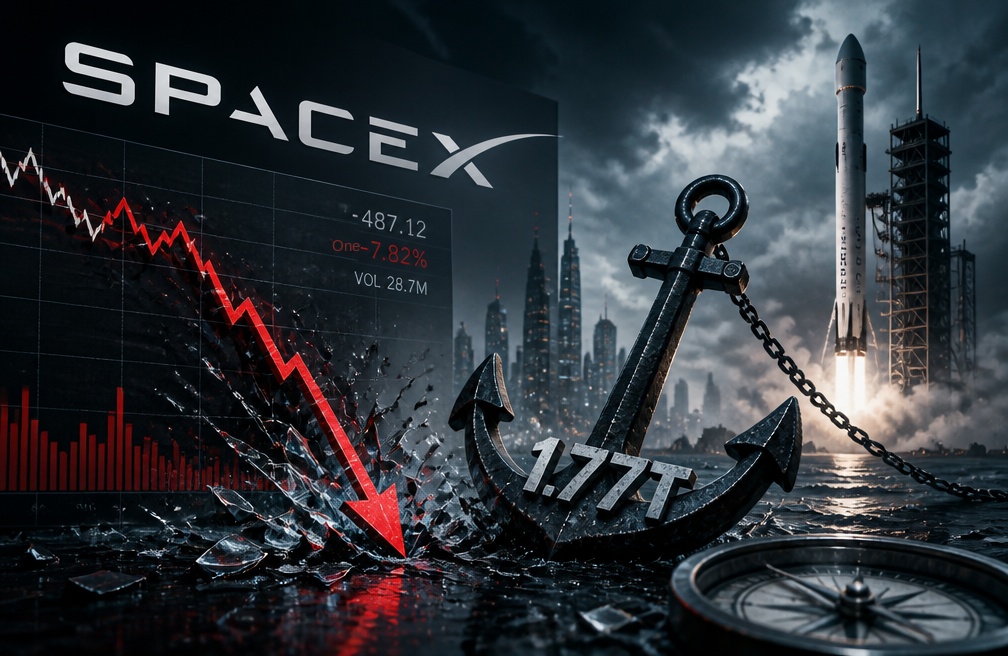
SpaceX filed an amended S-1 with the SEC, revealing the IPO price: $135 per share, 5.556 billion shares of Class A common stock, with a valuation of approximately $1.77 trillion and plans to raise $750 billion. The listing is set for June 12, under the symbol SPCX, with the roadshow launching today. This is 2.5 times Saudi Aramco's 2019 IPO record ($29.4 billion). A fixed price instead of a price range is a rare move, reflecting absolute confidence in demand.
However, Morningstar analyst Owens pointed out on the same day that SpaceX's actual value is around $780 billion, 55% lower than the IPO valuation. With a projected 2025 merged revenue of $18.7 billion and operating losses of $2.6 billion, the $1.77 trillion valuation's core support is not cash flow but a narrative premium of Starlink's 9 million users plus the xAI merger. On the same day, a San Francisco homeowner listed a $3 million residence, stating they would accept Anthropic or OpenAI shares as payment. Private tech company equity is turning into an alternative currency. (Continued from yesterday's report)
(Source: Fortune / Axios / SEC / Morningstar / CoinDesk)
2 | Google's Financing Raised to $850 Billion, Setting a Global Record, Meta Sells AI via Tokens on WhatsApp on the Same Day
Google has increased its equity financing from $800 billion to $847.5 billion, setting a new global record for the largest equity issuance, surpassing Petrobras' $70 billion in 2010. Berkshire Hathaway subscribed to $10 billion of it. The financing is all directed toward AI computing infrastructure. On the same day, Google announced that Gemini's monthly active users surpassed 900 million, doubling from the same period last year, and Gemini 3.5 Pro is expected to launch in June. The full-year capital expenditure guidance remains unchanged at $180 billion to $190 billion.
On the same day, Meta's WhatsApp AI Business Bot officially launched globally, billing via tokens. This is the first time a large tech company has adopted OpenAI-style token pricing for consumer-grade AI products. During pilots in India, Mexico, and Brazil, over 1 million merchants have already joined. The Business Bot can handle customer inquiries, recommend products, make appointments, and complete transactions. Large tech companies are simultaneously doing two things: setting record-breaking AI infrastructure financing and starting to charge based on usage for AI products. Signals are being sent out on both the spending and revenue sides in the same week.
(Source: TechCrunch / Bloomberg / Financial Times / SEC / 36Kr)
3|Dalio, DoubleLine, Morgan Stanley Issue AI Bubble Warning on Same Day, "Chipflation" Spreads to Consumer Electronics
Dalio, DoubleLine's Chief Investment Officer Cohen, and Morgan Stanley all warned of the AI bubble risk on the same day. Bridgewater estimated that Google, Amazon, Meta, and Microsoft will spend $650 billion on AI infrastructure in 2026, a 59% increase from $410 billion in 2025. Bridgewater's Co-CIO Jensen stated that the cycle has entered a "more dangerous phase" as the companies most able to fund AI happen to be the largest index weights, and once investors believe that spending is outpacing returns, the pressure from a few giants can drag down the entire market.
Cohen from DoubleLine pointed out that the AI bubble is spreading to the credit market. Morgan Stanley coined the term "Chipflation." AI demand has driven memory chip prices up 6-fold over the past year, with manufacturers prioritizing high-margin capacity for data centers, leading to a surge in memory costs for consumer electronics. Smartphone and PC makers are forced to raise prices or accept thinner margins. Three independent macro voices pointed to the same conclusion within 24 hours: AI spending has grown large enough to become a macro variable.
(Source: Bloomberg / Morgan Stanley / BNN Bloomberg)
4|Iran Attacks Kuwait Airport, Killing 1; House Passes War Powers Resolution Against Trump for First Time
An Iranian drone attacked the Kuwait International Airport passenger terminal, causing 1 fatality and significant damage to the facilities. Kuwait suspended flight operations and expelled Iranian diplomats. On the same day, Iran launched missiles and drones at Bahrain. This is the first time since the late February U.S.-Israel joint strike on Iran that the conflict has spilled over to the civilian infrastructure of Gulf allies.
On the same day, the U.S. House of Representatives passed a war powers resolution by 215-208, demanding Trump cease military action against Iran, with 4 Republican defections. Fitzpatrick invoked the War Powers Act's 60-day limit stating, "It's either comply with the law or change the law; you cannot break the law." While the resolution is unlikely to pass the Senate and face a presidential veto, it marks the first time in over three months that Congress has passed such a final vote. The Republican anti-war crack has, for the first time, turned into a voting record.
(Source: Al Jazeera / NPR / Fortune / CNN / The Washington Post)
5|EU Unveils Technology Sovereignty Package to "Ensure No One Holds the Kill Switch"
The European Commission has released the "European Technology Sovereignty Package," directly addressing the reliance on American technology. Currently, over 80% of the EU's key digital products, services, and infrastructure come from non-EU countries. The three-pillared plan includes the Chips Act 2.0, Cloud and AI Development Act, and Open Source Strategy, aiming to establish advanced semiconductor fabs within Europe, double data center capacity within 5 to 7 years, and expand open-source alternatives for cloud and cybersecurity.
EU officials told CNBC, "We must ensure that no one holds the kill switch." This is not a narrative of catching up; Europe does not believe it can outpace Silicon Valley in AI or chips, but it is buying insurance for a worst-case scenario. When a U.S. president can change tech company behavior boundaries through executive orders and chip export controls become a geopolitical weapon, reliance itself is a risk exposure. Europe is codifying this judgment into legislation.
(Source: European Commission / CNBC / Bloomberg / The New York Times)
Also Worth Knowing ↓
AI music company Suno, valued at $5.4 billion, has completed a $400 million Series D funding round, doubling its valuation from November last year. The round was led by Bond Capital. After reaching a copyright cooperation agreement with Warner Music last year, Suno will launch the first AI model developed jointly with the music industry. The pricing of copyright lawsuits is undergoing a transformation. (Source: Bloomberg / Variety)
Stripe, Visa, and Mastercard are jointly building a stablecoin payment platform, with Coinbase also in talks to join. The three companies, over the past two years, each acquired Bridge (Stripe, $1.1 billion) and BVNK (Mastercard) and are now transitioning from individual developments to collaborative infrastructure building. Traditional payment networks are viewing stablecoins as a settlement upgrade rather than a competitive threat. (Source: CoinDesk / PYMNTS)
The ongoing impact of Trump's AI executive order continues, with IBM's CEO supporting light regulation, and Ultraman set to testify in Congress against the model approval system. However, Ars Technica points out that DOGE has trimmed personnel from security assessment agencies like CISA, calling into question the execution capability of the 30-day voluntary review framework. The gap between the political signal of the executive order ("I'm overseeing AI") and its actual enforcement capabilities continues to widen. (Source: Axios / Reuters / Ars Technica / NPR)
Google has open-sourced Gemma 4, a 12B model with 119.5 billion parameters, under the Apache 2.0 license, capable of running on a standard 16GB laptop locally. While most vendors are chasing after larger models, Google is filling the gap in the small-model end of the product line. On the same day, Gemini surpassed 9 billion in monthly active users, with the 3.5 Pro expected to be released in June. (Source: VentureBeat / Ars Technica / 36Kr)
The World Semiconductor Trade Statistics organization predicts that the global chip market will reach $1.511 trillion by 2026, a nearly 90% year-on-year increase. The storage chip sector will see a 249.5% growth, surpassing $800 billion in size, overtaking the overall semiconductor market size in 2025. AI is reshaping the value distribution of the entire chip industry. (Source: CCTV Finance / 36Kr)
Microsoft has unveiled Project Solara AI, an enterprise device platform from the chip to the cloud, designed for AI agents. Concept reference devices include desktop companions and wearable badges, with the hardware designed to run AI agents rather than traditional applications. (Source: Tom's Hardware)
Bitcoin has touched the Power Law model's low point, a position in history that often foreshadows a rebound. However, Citigroup analysts believe that the lack of new investors is the core issue at present, suggesting that the Strategy's initial sell-off is just a trigger rather than the reason. (Source: CoinDesk / Citigroup)
Welcome to join the official BlockBeats community:
Telegram Subscription Group: https://t.me/theblockbeats
Telegram Discussion Group: https://t.me/BlockBeats_App
Official Twitter Account: https://twitter.com/BlockBeatsAsia
 Related Articles