error
This also explains why Web3 infrastructure is starting to be included in AI discussions. As AI Agents transition from "conversation tools" to "executing entities," they may need to interact with APIs, initiate payments, manage assets, complete settlements, and even participate in multi-party collaborative processes in the future. In these scenarios, traditional centralized systems and on-chain verifiable infrastructure may complement each other.
Blockchain's programmable assets, automated settlement, verifiable state, and on-chain auditing capabilities directly address the trust issues that AI Agents face in financial, payment, and enterprise collaboration scenarios. Therefore, Tencent Cloud's AI event in Singapore placing the public chain ecosystem, cloud services, payment growth, and fintech representatives in the same discussion arena also sends a signal: the next stage of AI competition is shifting from single-point technical capabilities to composite infrastructure competition.
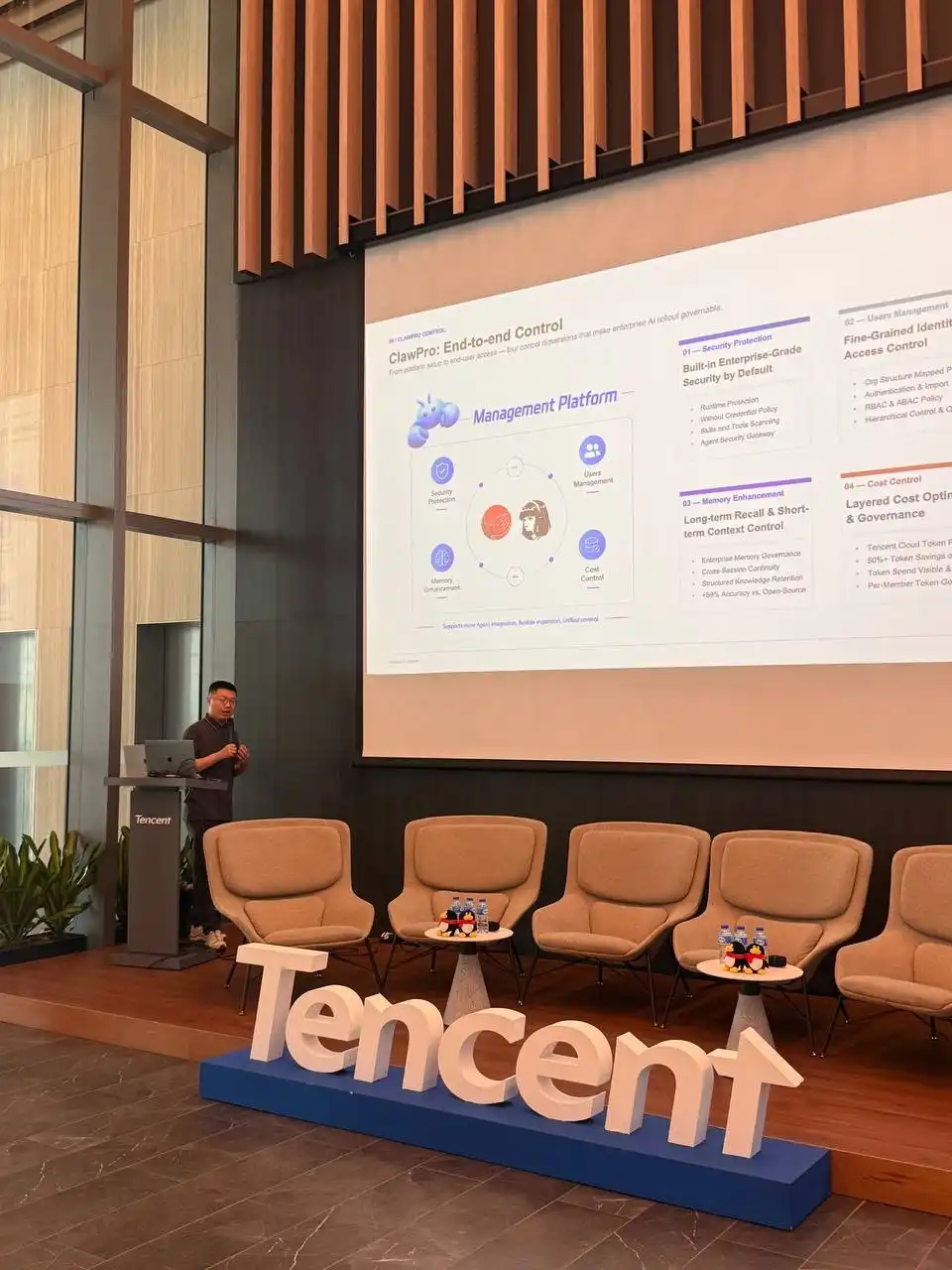
Why Was Bitroot, which is not yet live, invited?
For Bitroot, being invited to this event is quite significant. Unlike mature public chains like Solana that already have a mature mainnet and a large ecosystem, Bitroot is currently in the testnet and ecosystem expansion phase before the mainnet launch. The fact that an emerging Web3 project that has not yet launched its mainnet can be included in the attendee list of Tencent Cloud's AI event in Singapore indicates that its technical direction and narrative angle have already caught the attention of some industry participants.
From an industry logic perspective, the reason Bitroot was invited may not necessarily lie in its current ecosystem size but in the alignment of its infrastructure focus with the demands of the AI era.
Firstly, AI Agents and on-chain automated execution require a higher-performance underlying network. Traditional public chains still have certain limitations in throughput, latency, and cost, while AI Agents are expected to bring higher-frequency, more continuous, and more automated interaction requirements in the future. This means that the underlying chain needs to have stronger concurrency capabilities and lower execution costs.
Secondly, developer compatibility remains a key factor in whether a new public chain can establish an ecosystem. Bitroot has chosen the EVM compatibility route, which means that it is not attempting to make developers completely migrate to a new environment but rather aims to provide a higher-performance execution environment while retaining the Ethereum developer toolchain. For a new public chain still in its early stages, this approach helps reduce the difficulty of cold-starting the ecosystem.
Thirdly, AI-native architecture is becoming an important differentiating direction for the next generation of infrastructure projects. Rather than simply emphasizing TPS or transaction fees, Bitroot focuses more on AI Agents, on-chain automated applications, and verifiable execution scenarios. This positioning makes it easier for Bitroot to enter the discussion context of AI and Web3 integration, rather than just being another high-performance public chain.
Therefore, from an industry observation perspective, it at least indicates that some cloud services, fintech, and Web3 ecosystem participants are paying attention to new infrastructure projects that have not yet launched their mainnet, especially those designed around AI-native capabilities, high-performance execution, and developer compatibility as a Layer 1 network.
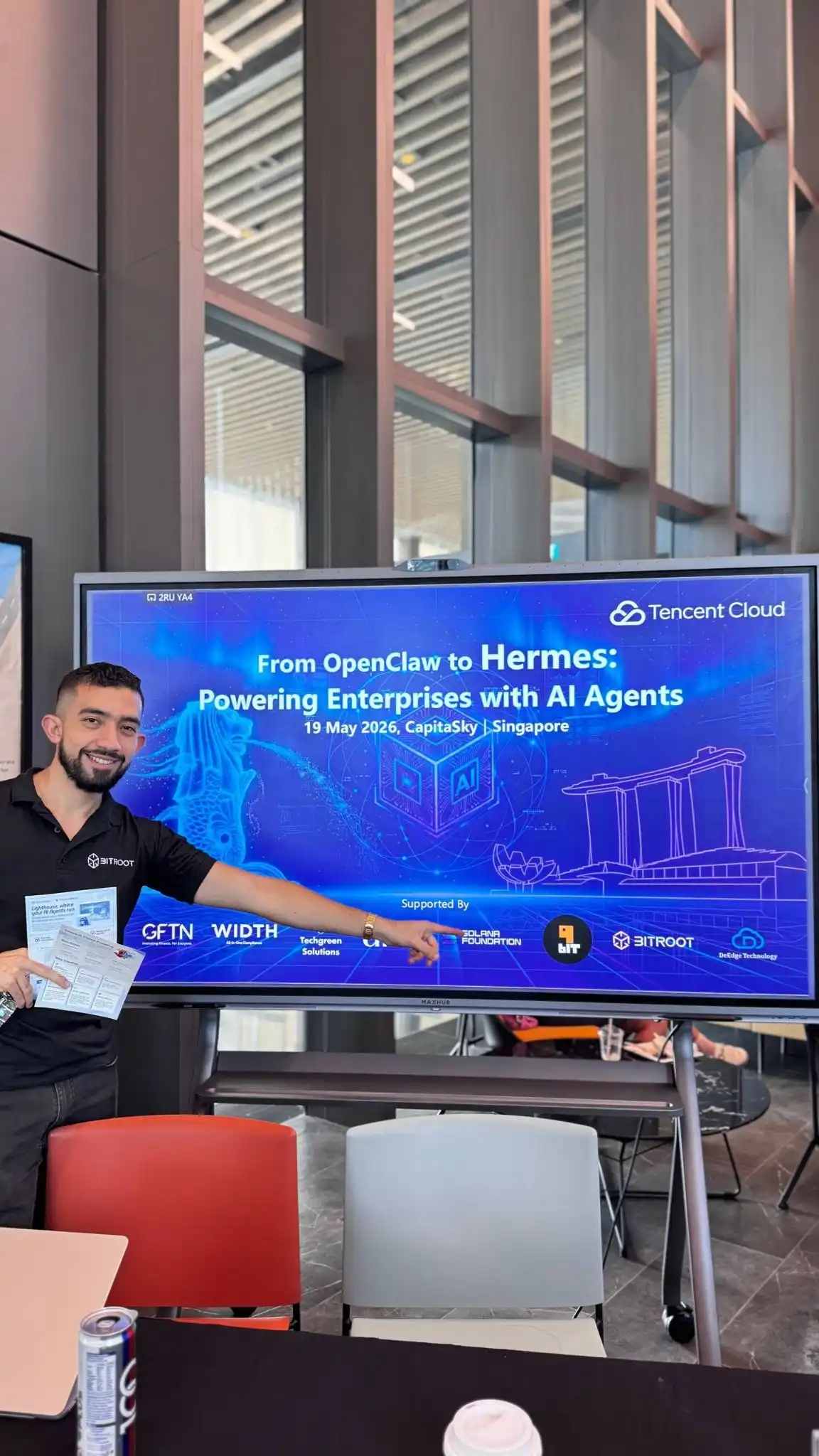
In Discussion with Solana Blockchain, the Observational Value of Emerging Layer 1 Networks
In this event, the participation of Anna Zhang, Head of Asia Pacific Growth at the Solana Foundation, added a perspective on mature blockchain ecosystems and on-chain payments to the conference. Solana has been advancing in the direction of a high-performance blockchain, payments, and consumer-level applications in recent years, making it a key example in the Web3 infrastructure space.
Bitroot and representatives from mature ecosystems like Solana participated in the same discussion, and this joint exchange itself holds observational significance. It reflects that against the backdrop of the integration of AI and Web3, the industry is not only focused on established blockchain networks but is also considering new variables that may emerge in the next generation of infrastructure.
For emerging Layer 1 networks like Bitroot, the fact that the mainnet has not yet launched implies that their technical roadmap is still malleable. If their parallel execution, EVM compatibility, and AI-native design can be validated in subsequent testnets and the mainnet, then they have the opportunity to establish a differentiated position in AI agents, on-chain automated execution, and high-frequency application scenarios.
Especially as AI gradually becomes mainstream in the industry, market demands for blockchain may undergo a transformation. While past blockchain competition revolved more around DeFi, NFTs, GameFi, and asset issuance, the future may focus more on Agent execution, on-chain settlement, automated finance, data oracles, and verifiable computation. Bitroot's entry into industry discussions at this juncture is precisely why it deserves attention.
Juan Jose: The Competition in AI Will Shift from Models to Data, Scenarios, and Trust
During the roundtable discussion, Bitroot CEO Juan Jose stated that in the future, the gap between AI enterprises may no longer be just about model performance or parameter scale but rather a comprehensive competition involving data, scenarios, and trust mechanisms.
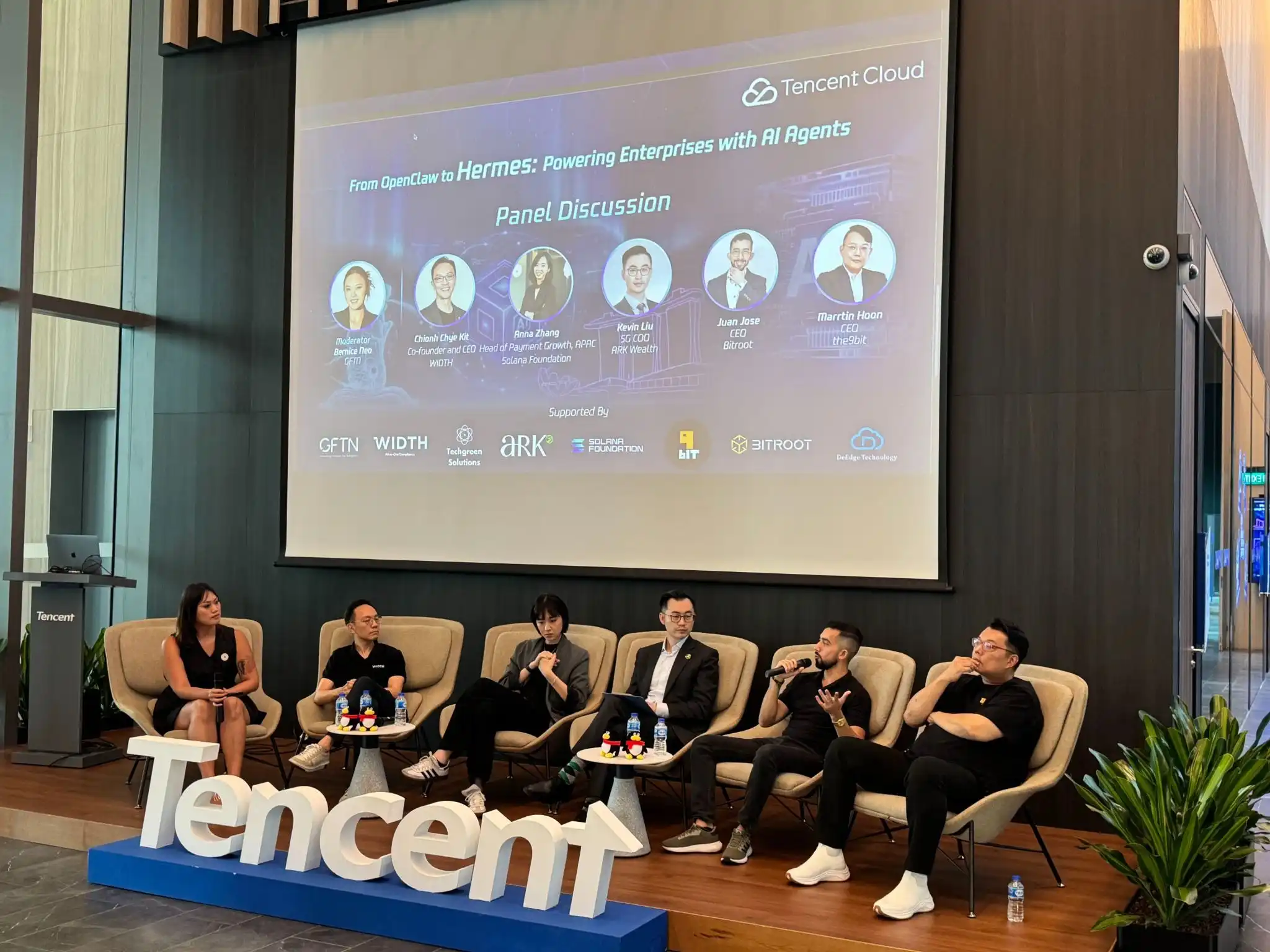
He believes that with the continuous iteration of the open-source model and the closed-source model, the capability of the models themselves is accelerating commercialization. The real long-term moat for enterprises comes from whether they have high-quality industry data, whether they can delve into specific business processes, and whether they can build long-term trust at the user and institutional levels.
This assessment is consistent with the current trends in the AI industry. More and more enterprises are beginning to realize that the value of AI lies not only in generating content or answering simple questions but in whether it can integrate into real business processes and continuously produce results in a controllable, auditable, and evaluable environment.
Juan Jose further pointed out that enterprise AI implementation still faces challenges such as reliability, data infrastructure, and organizational transformation. Especially in high-risk scenarios such as finance, payments, and auditing, AI systems cannot merely pursue the upper limit of capabilities but must also meet requirements for stability, permission control, and auditing.
AI Agents Need a High-Performance and Verifiable Execution Environment
AI Agents are another important focus of this event's discussion. Juan Jose stated that the industry is still in the "assistant-type Agent" stage, and achieving true enterprise-level autonomy will take time. This is because once an Agent enters an enterprise system, it will face issues such as the accumulation of errors in multi-step tasks, security permissions, legal liabilities, and explainability.
However, in the long term, the direction of AI Agents is relatively clear. In the future, Agents will not only provide recommendations but may also invoke services, manage accounts, initiate transactions, execute strategies, and complete settlements. This means that the underlying infrastructure must support more frequent interactions and more trustworthy execution.
At this point, Bitroot's technical narrative is strongly associated with industry requirements. According to the project team, Bitroot follows an EVM-compatible path and aims to provide a high-performance, low-cost on-chain execution environment for AI Agents, DeFi, and Web3 applications through designs such as optimistic parallel EVM, Pipeline BFT consensus mechanism to enhance on-chain execution efficiency.
For the AI + Web3 scenario, performance is not just a technical metric but a prerequisite for whether the application can be viable. If an Agent requires high fees and long confirmation times for every operation, many automated scenarios will have difficulty scaling. On the contrary, a low-latency, low-cost, and high-throughput on-chain environment may become a crucial foundation for AI Agents to move towards real-world applications.
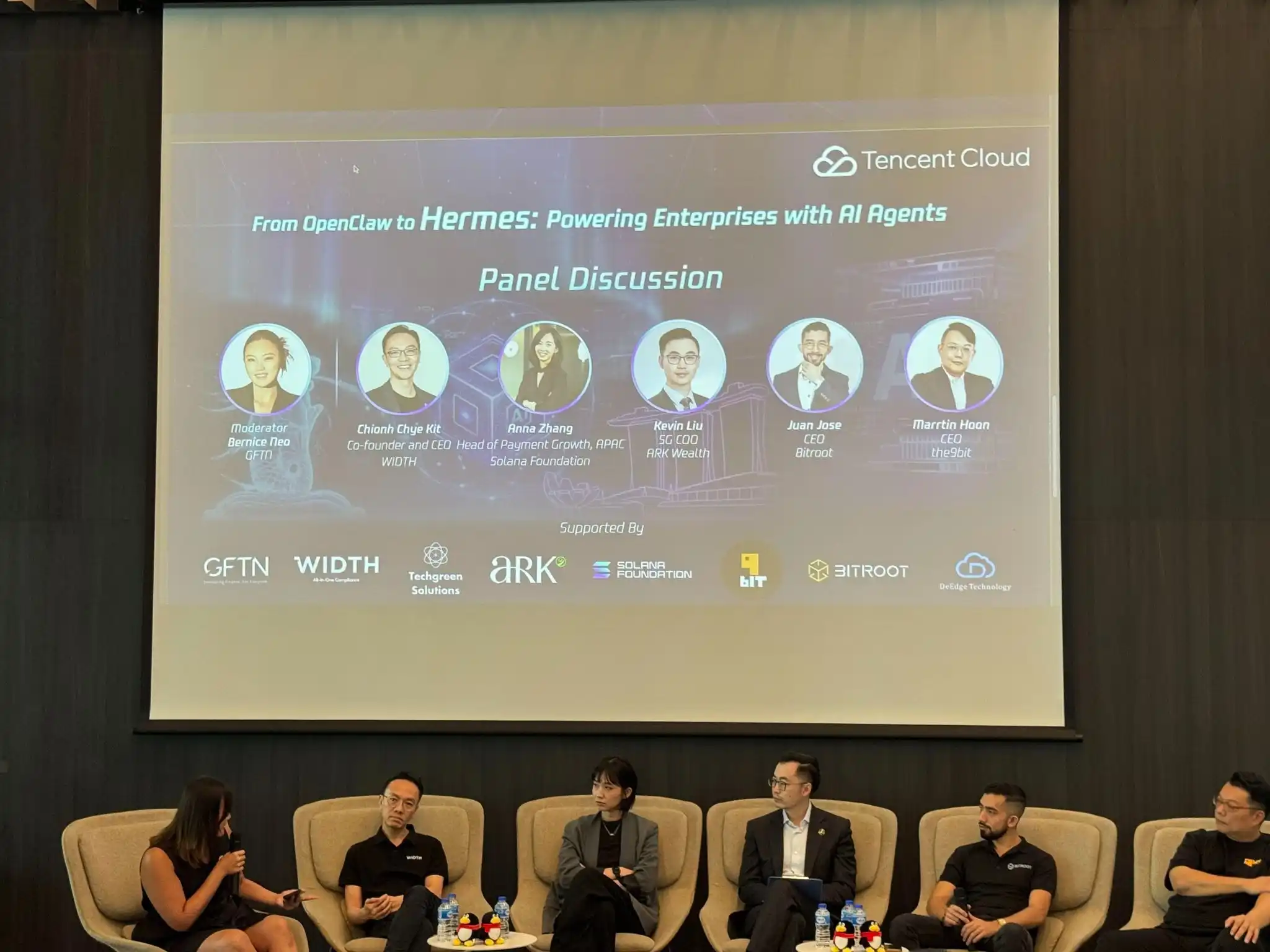
Testnet Phase to Become Key Validation Window for Bitroot
Bitroot has recently been advancing its testnet and ecosystem infrastructure. According to the project team, its testnet has entered the 5.0 phase, with upgrades related to network performance, cross-chain components, ecosystem application deployment, and node optimization.
From the testnet data, Bitroot has demonstrated its technical capabilities: testnet addresses exceeding 1 million, daily on-chain transaction volume exceeding 50,000, peak TPS reaching 50,000, and average block time of approximately < 0.3 seconds.
For emerging public blockchains that have not yet launched their mainnet, the testnet phase holds dual significance. On the one hand, it serves as a validation window for the technical roadmap, where developers can observe network performance, contract compatibility, tooling maturity, and node stability. On the other hand, it is also a crucial stage for ecosystem bootstrapping, allowing community users and developers to participate in network development through early interactions.
Industry Insights: Competition Landscape of High-Performance AI Native Public Blockchains
Discussions from this summit indicate that the integration of AI and Web3 is transitioning from conceptual narratives to specific issues at the infrastructure level. In this race, different projects have chosen various technical paths:
Solana is known for its high-speed execution and mature ecosystem, having established a large developer community and DeFi ecosystem; Monad focuses on parallel EVM performance optimization; Aptos achieves optimistic parallel execution through Block-STM. Bitroot's differentiation lies in not only pursuing the ultimate breakthrough in public chain performance but also natively integrating AI computing power into the chain's foundational architecture — from the consensus layer's useful proof of work, to the execution layer's parallelized EVM, and to the application layer's distributed training and inference network, constructing a complete decentralized AI Stack.
For next-generation infrastructure projects, supporting more complex AI application invocations while maintaining security and decentralization will be the core proposition of future competition.
Conclusion
Signals from the Singapore AI-themed summit indicate that AI is becoming the main theme of the next stage of technological industry evolution, and the new demands arising from AI Agents, automated finance, on-chain data, and verifiable execution are placing higher requirements on underlying infrastructure.
High-performance infrastructure is not merely a narrative choice of a single project but is the inevitable direction as AI and Web3 move towards scaled applications. Bitroot has entered this race with a full-stack architecture of "parallelized EVM + AI native computing network," appearing alongside mature ecosystems like Solana at the Tencent Cloud Summit, showcasing the technical depth and industry ambition of the next-generation AI public chain.
In the future, a fundamental network that can simultaneously balance performance, compatibility, security, and verifiability will have a greater opportunity to support next-generation use cases and play a key role in the long-term trend of AI and blockchain integration. Bitroot's performance is worth continuous attention.
About Bitroot
Bitroot is a Layer 1 public chain project that focuses on parallel execution and AI-native architecture. Bitroot adopts an EVM-compatible technical route and explores providing an on-chain execution environment with high performance and low cost for AI Agents, DeFi, and Web3 applications through parallel execution mechanisms, consensus optimization, and AI-related interface design.
This article is contributed content and does not represent the views of BlockBeats
Welcome to join the official BlockBeats community:
Telegram Subscription Group: https://t.me/theblockbeats
Telegram Discussion Group: https://t.me/BlockBeats_App
Official Twitter Account: https://twitter.com/BlockBeatsAsia