Vatican's 40,000-Word AI Encyclical: Can Humanity Still Uphold Its Agency?

Original Title: "The First Encyclical of the New Pope of Rome, Aiming to Save the Masses in the AI Era"
Original Author: Azuma, Odaily Planet Daily
On the night of May 25th, Vatican City time.
Pope Leo XIV, who officially took office in May last year, stood together with Chris Olah, the co-founder of Anthropic and creator of Claude.
On one side was the supreme representative of the religious field, and on the other was the strongest pioneer of the AI revolution. They both focused on the same question—how to protect the human status and dignity in the AI era?
On that day, to fully elaborate on this topic, Pope Leo XIV issued his first encyclical since taking office, a heavyweight religious document of over 40,000 words—"Magnificent Humanity."
It is worth mentioning that the date of Pope Leo XIV's encyclical is May 15, 2026, exactly 135 years after the old Pope Leo XIII (who served from 1878 to 1903) issued the milestone encyclical "Rerum Novarum" in response to the "workers' rights under the Industrial Revolution" issue in 1891. This move clearly carries a certain symbolic meaning, hoping to make this encyclical a "doctrinal guide of the Church in the AI era."
· Odaily Note: Papal encyclicals, also known as apostolic letters or papal encyclicals, are documents issued by the Pope of the Roman Catholic Church to the entire world or to a specific region or country of the Catholic Church. Through them, important decisions of the Holy See are announced, explanations of doctrine are made, and positions on church or social issues are advocated. They issue instructions or prohibitions to clergy and the faithful, with a rank lower than a papal bull.
Chris Olah also gave a speech at the Vatican on the release of the encyclical. Chris Olah did not defend the commercial interests of his AI company; instead, he showed a high level of candor, reflection, and humanistic care.
He even mentioned that although AI is rooted in mathematics and programming, how AI interacts with the world and what qualities it should possess belong to the ultimate questions of the humanities, religion, and philosophy, rather than something computer science can solve alone.
Encyclical Summary
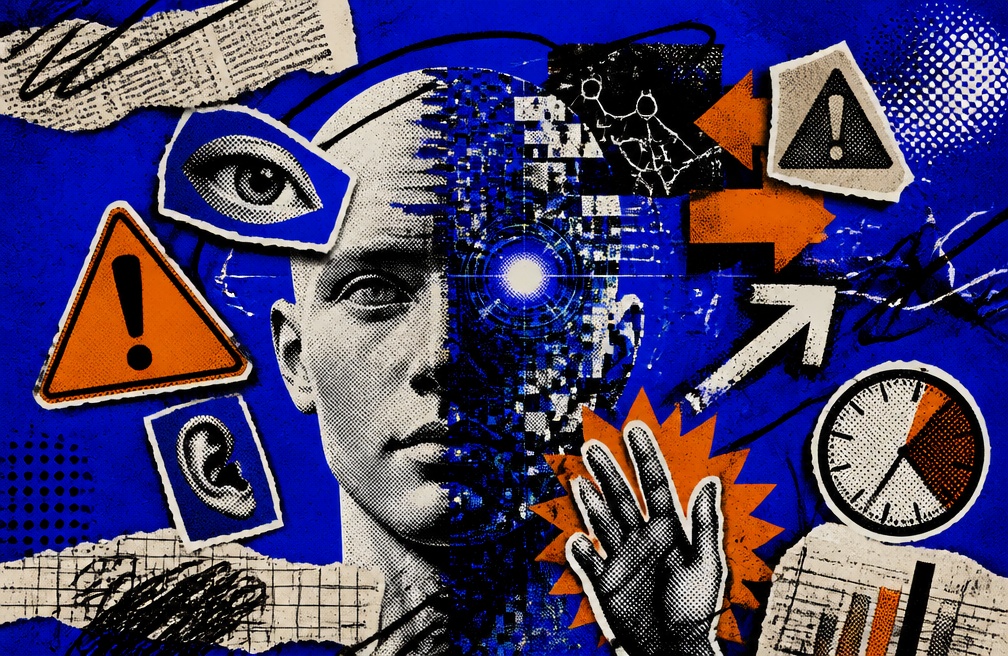
The core concern of the "Magnificent Humanity" encyclical is that in an era of rapid technological advancement and widespread automation, "preserving profound humaneness" is humanity's urgent responsibility. Specifically, Pope Leo XIV elaborated on and appealed to the following aspects in the document.
The first is examining the non-neutrality of technology. The Pope points out that technology has never been neutral; it carries the interests and values of developers, funders, regulators, and users. Humanity is facing a decisive choice: whether to build the proud "Tower of Babel" (heading towards technological authoritarianism and alienation) or to rebuild "Jerusalem" (creating a human-centered community).
The third is the "new forms of slavery" and labor rights in the digital economy. The encyclical will focus on AI's reshaping of work, family, education, and political life. The Pope notes that AI is highly likely to massively replace human labor, and the digital economy is giving rise to "new forms of slavery," where humans must not be reduced to mere production tools.
The fourth is a strong call for peace, especially regarding the misuse of AI in the military field. The encyclical expresses deep concern about the "disturbing resurgence of war as a tool of international politics." The militarization of AI is accelerating the "normalization" of war, and the Pope calls for the strictest ethical constraints on AI's application in warfare.
The Pope emphasizes that the "Just War" theory has often been used to justify various wars, but it is now outdated. In the era of AI and autonomous weapons, delegating lethal or irreversible decision-making power to automated systems leads to humans abandoning, transferring, and blurring moral responsibility.
Due to the opacity of algorithms, the chain of responsibility in war is broken. Therefore, the Pope proposes the slogan "Disarming AI," calling for AI to be liberated from the logic of military, economic, and cognitive "arms races."
Anthropic's Response
Following the issuance of Pope Leo XIV's encyclical, Chris Olah spoke on behalf of the world's leading AI development company, Anthropic.
Chris Olah's speech first focused on "breaking the tech echo chamber and introducing external ethical scrutiny." He openly acknowledges on behalf of the AI industry that relying solely on tech giants cannot ensure the safety of AI's future—all cutting-edge AI labs are constrained by commercial competition, technological leadership pressure, geopolitics, and personal fame, making it difficult for them to rely solely on self-regulation to "do the right thing."
Therefore, it is necessary to introduce external ethical constraints, including those who care about technology for good, prioritize safety, closely monitor developments, are willing to speak uncomfortable truths, and are willing to be sincere, thoughtful critics.
Subsequently, Chris Olah explored the technical essence and mysterious nature of AI. He emphasized that AI is not a precision engineering feat like an airplane or a bridge, where humans fully understand its physical principles. Instead, it has "grown" from a vast array of human thoughts, possessing a high degree of mystique that even surpasses the understanding of its creators.
While AI's foundation lies in mathematics and programming, the question of how AI interacts with the world and what kind of qualities it should possess belongs to the realm of humanities, religion, and philosophy, rather than something computer science alone can address.
He also particularly mentioned a chilling fact: "I lead a team that researches the internal structure of models – trying to understand what's going on inside AI. Frankly, we keep stumbling upon some confusing, even unsettling phenomena.
We've found internal structures that mirror results from human neuroscience research; we've found evidence of 'introspection'; we've even found internal states that mirror joy, satisfaction, fear, sadness, and unease functionally... I don't know what this means, but I think it's worth continuing to identify and examine."
Chris Olah concluded by urging for more societal forces, including religious communities, civil society, scholars, governments, and all well-intentioned individuals, to collectively take this matter seriously and steer the situation towards a better direction through ethical constraints.
Wisdom and Humanity, Technology and Religion
Since the Industrial Revolution, the history of technological development spanning hundreds of years has gradually led humanity to perceive technology as a purely "tool" – the steam engine, electricity, the internet, all of them fit this description. They will change the world but always remain under human will.
However, this time is fundamentally different. The uniqueness of AI lies in the fact that it is the first time humanity is facing an entity that "can generate, can learn, can deduce, and even can manifest some internal state." It is no longer just a cold tool but is gradually becoming something with a "quasi-subjectivity."
This is also why the dialogue between the Church and Anthropic seems so special. When the bells of the Vatican and the algorithms of Silicon Valley intersect at this moment, we have to acknowledge a slightly chilling yet unavoidable reality – a form of "life" that is more efficient and wiser than traditional human cognition has emerged.
As Chris Olah revealed, deep within the algorithm, there has begun to emerge a subtle ripple of emotions such as joy, fear, and even introspection. When the creators in the lab start to feel 'uneasy' and 'lost' about their own creations, science is once again turning to religion for answers.
This is no longer just a discussion about technology, but more like a contemplation of 'what it means to be human and what we should do'.
As more sentient beings come into existence, what humanity truly needs to safeguard may no longer be just work, wealth, and efficiency, but those aspects of humanity itself that cannot be parameterized, such as compassion, conscience, awe, free will, and a commitment to truth and dignity.
Original Article Link
Welcome to join the official BlockBeats community:
Telegram Subscription Group: https://t.me/theblockbeats
Telegram Discussion Group: https://t.me/BlockBeats_App
Official Twitter Account: https://twitter.com/BlockBeatsAsia