Rate Cut Unlikely + Positive News Exhausted, Will BTC Revisit Market Bottom Again?

Original Article Title: "No Rate Cut in Sight + Positive News Exhausted, Will BTC Test Market Bottom Again?"
Original Article Author: Mah, Foresight News
On May 18, Bitcoin continued to drop below $77,000, marking a four-day decline. Ethereum also fell to around $2,100, while mainstream coins like Solana and XRP experienced a general decline. According to Coinglass data, the total amount liquidated in the past 24 hours reached $657 million, with long liquidations accounting for $584 million.
Most of these liquidated positions were built on long bets above $80,000. Once the price broke through this psychological level, algorithmic trading systems and institutional risk management protocols automatically triggered sell-offs, leading to a typical liquidity spiral. CoinMarketCap data shows that today's fear index dropped to 39, indicating a sense of panic in the market.
Macroscopically, the cryptocurrency market faced no mercy. The U.S. 10-year Treasury yield held steady around 4.43%, S&P 500 futures fell by 0.19%, Nasdaq 100 futures saw a decline of 0.29%, and the Dow Jones Industrial Average dropped by 0.29%. Most of the seven tech giants in the U.S. stock market have already released their Q1 earnings reports, with many beating expectations (especially in AI-related revenue). Nvidia's earnings report is scheduled to be released after market close on May 20 (Wednesday).
The Middle East situation—particularly the risk of blockades in the Strait of Hormuz—is driving energy prices to new highs. According to Bitget's market data, Brent crude oil has risen to $112.9. The risk correlation between traditional and cryptocurrency markets has been vividly demonstrated this week: as the market anticipates a tightening of U.S. dollar liquidity, Bitcoin's high-risk asset nature is amplified indefinitely, rather than its role as "digital gold" for hedging.
No Hope for Fed Rate Cuts
The key macro driver of this round of decline is a complete reassessment of market expectations for the Federal Reserve's monetary policy. At the FOMC meeting that ended on May 1, the Federal Open Market Committee voted 10-2 to keep the federal funds rate unchanged in the range of 3.50% to 3.75%. More crucially, this was the most dissenting meeting since October 1992—three regional Fed presidents publicly dissented against the implied "rate-cut bias" in the post-meeting statement.
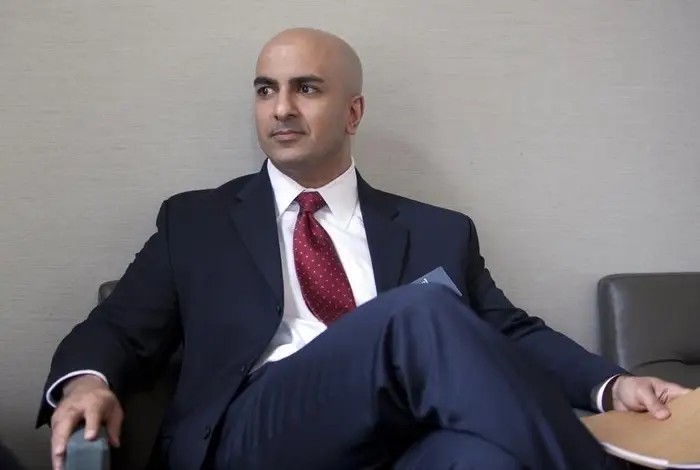
Neel Kashkari
Minneapolis Fed President Neel Kashkari is one of the most prominent voices in this regard. Serving as a 2026 rotating voting member, Kashkari made it clear during a May 3rd interview on CBS's Face the Nation that due to the energy price shock from the Iran war, "we all need to keep an open mind about the direction of interest rates. If things get worse, we may need to move in the opposite direction"—meaning hiking rates instead of cutting them.
He specifically noted that the longer the Strait of Hormuz remains closed, the greater the input pressure on U.S. inflation, and the Fed must defend the credibility of its 2% inflation target.
DoubleLine Capital CEO Jeffrey Gundlach emphatically stated that the possibility of Fed rate cuts this year has essentially evaporated, as stubborn inflation and signals from the interest rate market have blocked the space for monetary easing.
On May 18, according to Bloomberg, during an interview on Fox News's Sunday Morning Futures, Gundlach pointed out that the market had previously expected two rate cuts this year, but inflation data has consistently not cooperated. He bluntly stated, "With the two-year U.S. Treasury yield nearly 50 basis points higher than the federal funds rate, rate cuts are not even a possibility in my view."
Previously, the U.S. saw a 3.8% year-over-year surge in April CPI, the fastest pace since May 2023, and Gundlach warned that the next CPI data will "start with a 4."
Meanwhile, the Iran war has driven oil prices sharply higher, further transmitting to U.S. inflation data, exacerbating the already challenging price pressures. Gundlach also issued warnings about various market risks such as stock market overvaluation and private credit risks, indicating that overall market risks are quietly accumulating.
Additionally, Israeli media reported on May 17 that Israeli Prime Minister Netanyahu and U.S. President Trump had a phone call that day to discuss the possibility of resuming military action against Iran. Netanyahu and Trump talked for about half an hour, mainly discussing the possibility of resuming military strikes against Iran. An official stated that if the U.S. resumes military action against Iran, it is expected that the two countries will jointly launch airstrikes.
Recent Kalshi data shows that the probability of the Fed staying put this year has risen to 66.9%, while the probability of a rate cut has dropped to 17.8%.
For the crypto market, this may signify the formal bankruptcy of the "rate cut narrative" that has persisted for over two years.
Every major Bitcoin rally in the past has been accompanied by Fed balance sheet expansion or a decrease in real interest rates; when this liquidity engine sputters, BTC longs lose their most reliable macro moat.
CLARITY Act Breakthrough, All Positive News Priced In
In the early hours of May 15th Beijing time, the U.S. Senate Banking Committee passed the CLARITY Act review by a vote of 15 to 9, making it the first legislation in U.S. history to establish a comprehensive regulatory framework for digital assets.
The bill clearly delineates the SEC's jurisdiction over token issuance and the CFTC's jurisdiction over secondary market trading, ending years of the "regulate by enforcement" era. Major industry participants such as Coinbase and Circle expressed support for the compromise terms in the bill regarding stablecoin yields.
However, the market's response was a textbook case of "buy the rumor, sell the news." Before the bill was passed, BTC briefly rose to $82,000, but after the bill's passage, it quickly dropped to $78,000.
Subsequently, there was a four-day consecutive daily decline, dropping to $76,735 at one point.
Prior to the bill's passage, regulatory clarity had already been priced in, but the provisions in the bill regarding DeFi developer liability, stablecoin yield restrictions, and anti-money laundering standards actually increased compliance costs.
From a sentiment indicator perspective, the selling of coins on positive news was fully validated.
Santiment's post stated that after news of the Senate Banking Committee advancing the CLARITY Act spread, there was a frenzy of enthusiasm for Bitcoin on social media. This brought BTC and cryptocurrencies one step closer to final approval.
Historical data suggests that when the number of bullish cryptocurrency market cap comments is 1.55 times that of bearish comments, caution is advised. Market trends usually turn out contrary to popular expectations.
Furthermore, Santiment believes that any measures pushing forward the CLARITY Act should be viewed as positive for cryptocurrencies in the long run, as it may ultimately bring clearer rules to the U.S. cryptocurrency industry. However, if the market value of many of the largest stocks has already been "digested" to some extent before the CLARITY Act officially takes effect, it should not come as a surprise.
Institutions View Bounce as Exit Opportunity
On May 14, glassnode stated in a post that the 7-day simple moving average of net inflows into US-listed Bitcoin spot ETFs dropped to -$88 million per day, marking the largest outflow since mid-February. The outflows in February occurred during a period of price weakness. This wave of selling pressure occurred during a price rally, with the BTC trading price nearing $80,000.
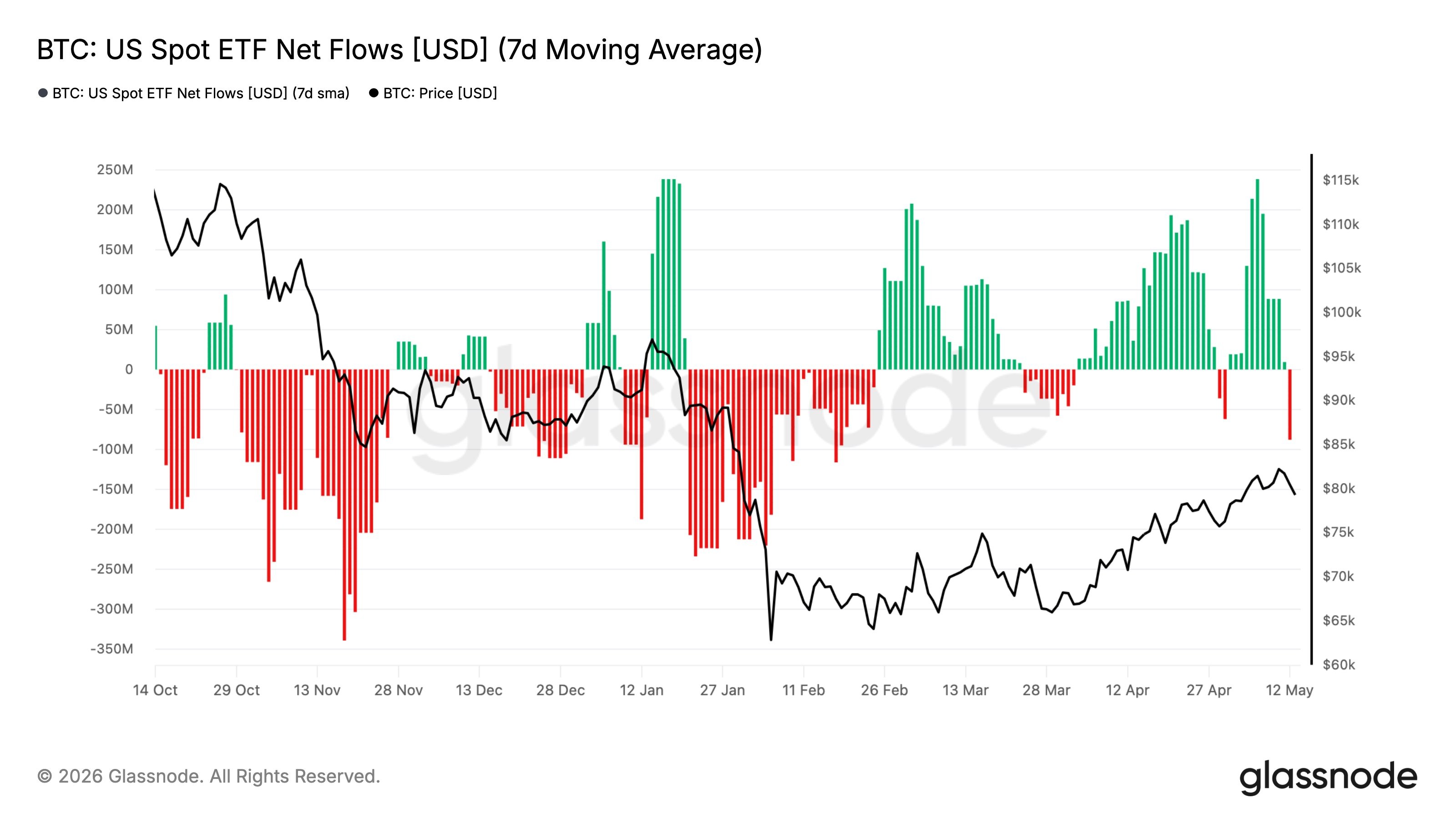
Recent bounce days have been used by institutional participants as an exit opportunity rather than a reaction to fear.
According to SoSoValue data, Bitcoin spot ETFs have seen net outflows of hundreds of millions of dollars since May 7, with May 13 recording a daily net outflow of $635.23 million, marking the highest daily outflow in several months.
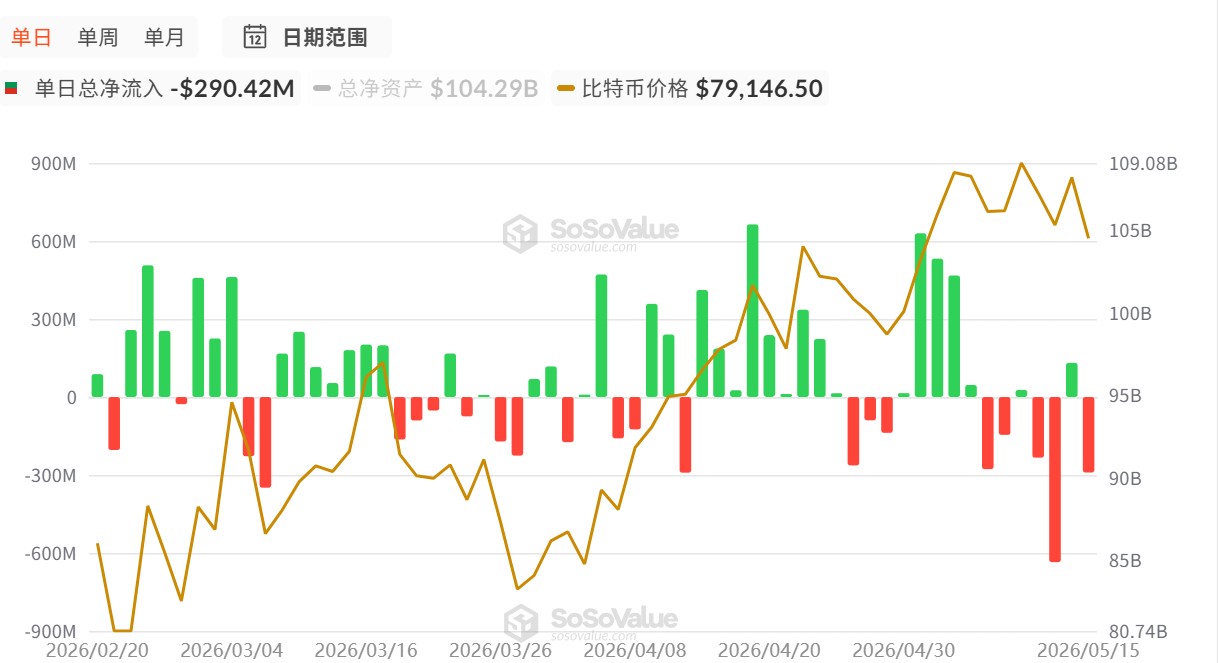
Amid ongoing outflows, Bitcoin's price rise has been losing steam.
Subsequent Market Performance
BitMEX co-founder Arthur Hayes stated in a post a few days ago that he expects USD and RMB liquidity to continue to rise, benefiting Bitcoin and cryptocurrencies. With Bitcoin having bottomed out earlier this year at $60,000 and buoyed by the imminent creation of trillions of USD and RMB, reclaiming $126,000 is a foregone conclusion.
Many haters will refuse to participate in this Bitcoin bull run, as it has significantly lagged behind tech stocks and gold over the past 24 months. Many fail to see the relevance of Bitcoin as a hedge against rampant money printing. However, it will show its sensitivity to fiat liquidity expansion.
Hayes predicts that the bull run will intensify, as after breaking $90,000, many bearish options sellers will rush to close out their positions, making the price trajectory explosive. He has no clue how high Bitcoin can go, but will push the investment portfolio of Maelstrom to the max risk unless something crazy changes.
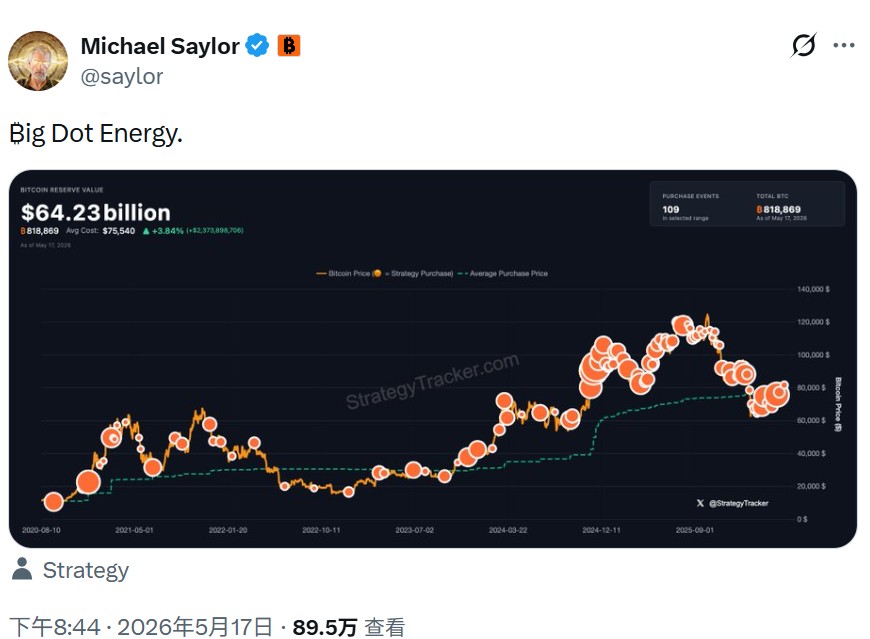
MicroStrategy founder Michael Saylor, on the other hand, opted for a more straightforward approach. On May 17, he once again shared Bitcoin Tracker-related information.
Weiss Crypto analyst Juan M. Villaverde believes that BTC is unlikely to see a significant drop from its current levels, instead expecting a modest pullback, with the $70,000 support level holding. A significant low point may occur before the end of July this year.
Original Article Link
Welcome to join the official BlockBeats community:
Telegram Subscription Group: https://t.me/theblockbeats
Telegram Discussion Group: https://t.me/BlockBeats_App
Official Twitter Account: https://twitter.com/BlockBeatsAsia