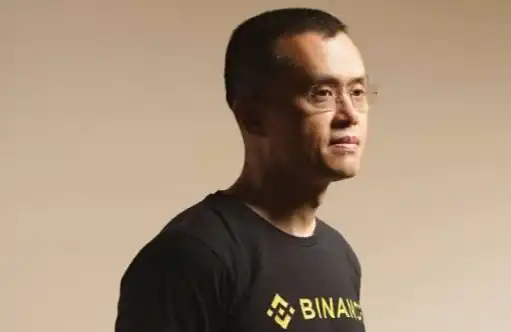
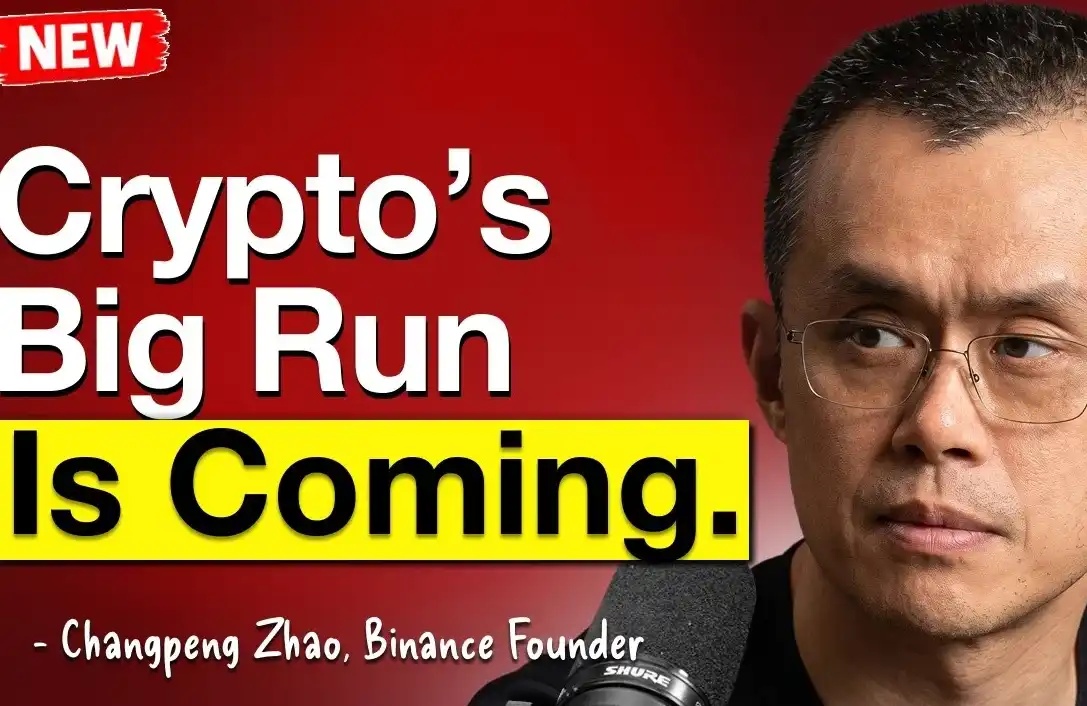
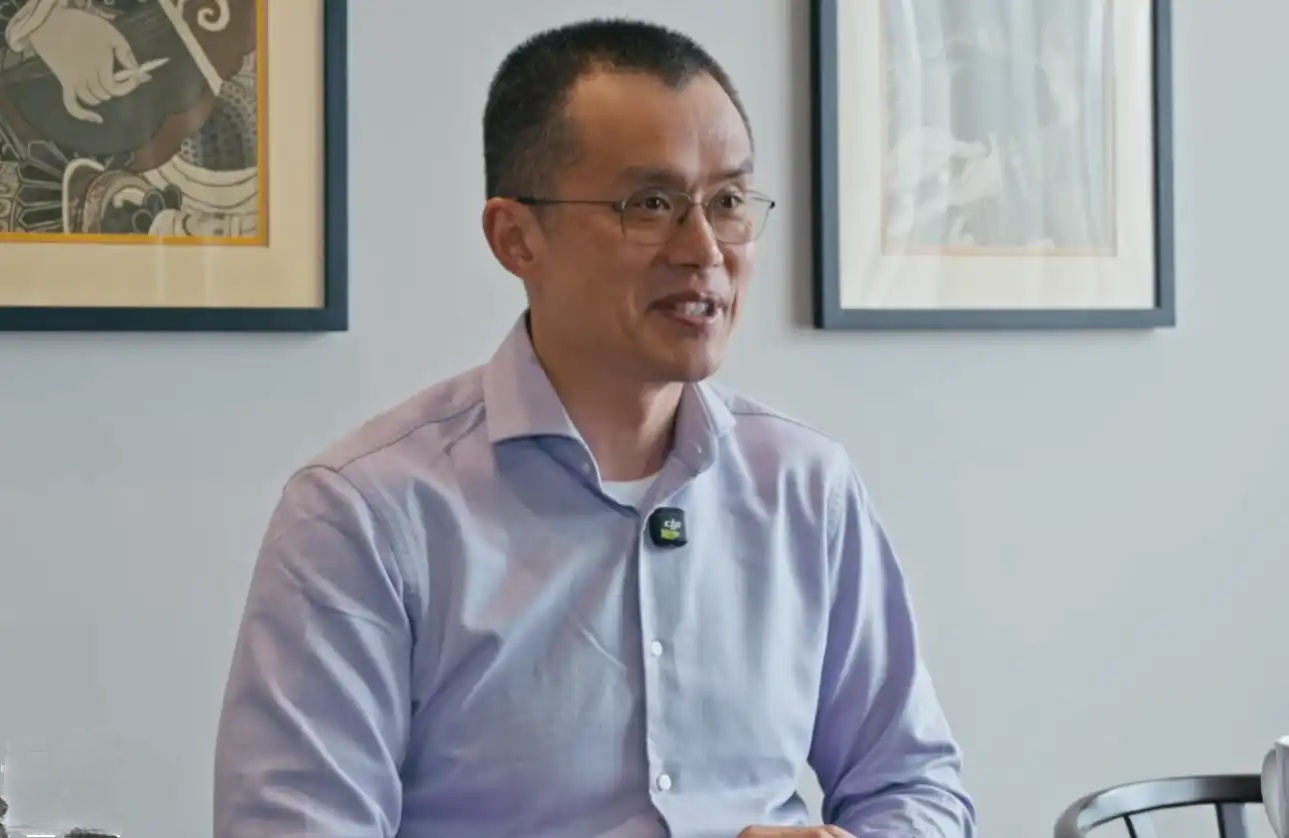
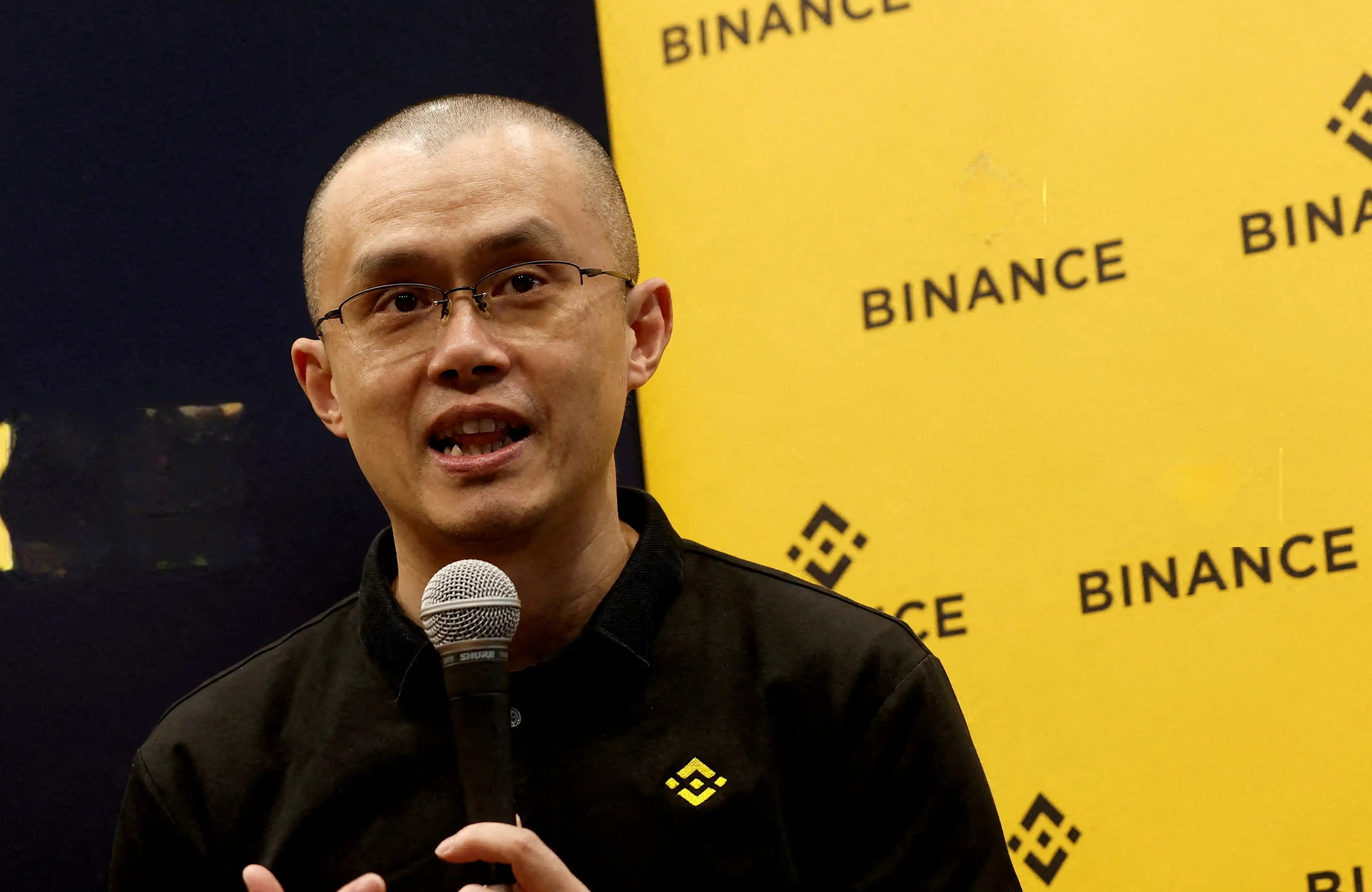
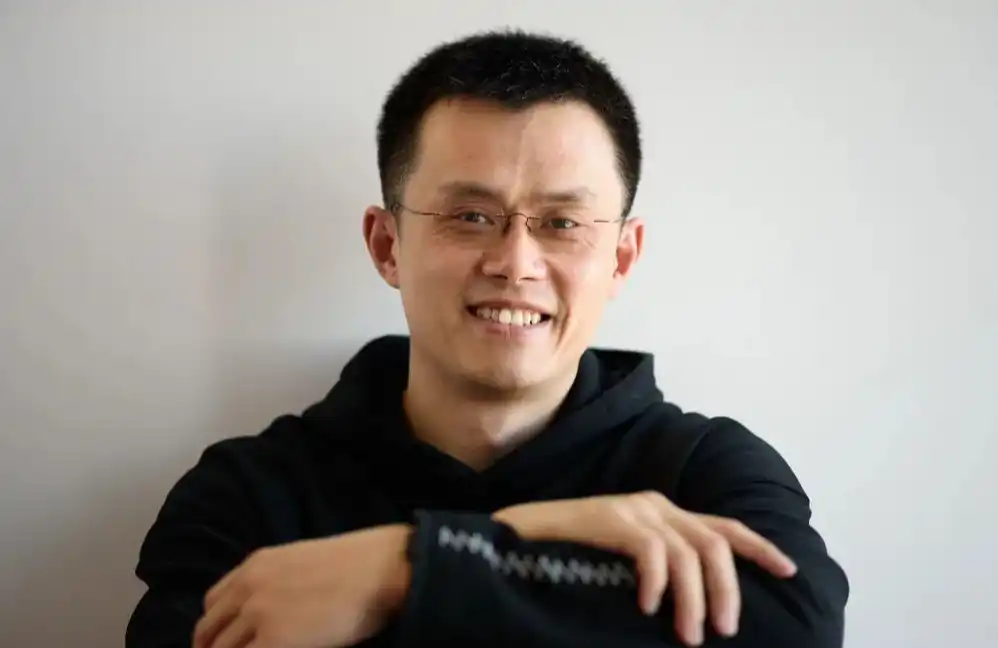
CZ's Latest Interview: 76 Days in Jail for Mindset Reset, Still Devoting 80% of Energy to Blockchain
Original Video Title: CZ Life Before and After Prison, Crypto's Future & The Freedom Of Money
Original Video Source: Crypto Banter, Crypto Insider
Original Text Translation: Deep TechFlow
Key Points Summary
In this exclusive interview, Ran Neuner engaged in a deep conversation with Binance founder CZ, discussing his new book "CZ's Life" (English version The Freedom of Money), his prison experience, the pardon process, family relationships, and the future of the crypto industry.
CZ recalled the process of writing a book in a U.S. prison, dealing with uncertainty, and reassessing life priorities. He also explained why he still devotes 80% to 90% of his time and energy to blockchain.
In his view, the AI Agent era will usher in a financial transaction network far larger than today, with blockchain likely to become an irreplaceable settlement rail. Towards the end of the interview, CZ also discussed his understanding of wealth, children, investments, health, and legacy: money is not the end goal, but rather using one's abilities and resources to improve the world.
Highlights Summary
Regarding the 76-day Prison Experience and Mindset Reframing
· "I started writing in prison, where I had a lot of time but very limited contact with the outside world. I had no internet, only a very basic terminal that would kick me offline every 15 minutes. The terminal couldn't copy and paste, so I had to type everything out myself."
· "Newspapers wrote that I was the richest person to enter a U.S. prison, and the only person to be imprisoned for a single violation of the Bank Secrecy Act. So before going in, my lawyer told me, 'You are the key target of extortion.'"
· "No one in U.S. history has been imprisoned for a single violation of the Bank Secrecy Act, not even today. I am the only one, the first one, and the only one. So I am very unique, and they treated me uniquely. I didn't know what other 'special treatment' there would be."
· "After being released, I wrote in the book that I actually don't care about reputation or even legacy. I don't care how others see me. What I care about is how I view myself when I grow old."
·“It’s very clear, it’s humans. I miss my family, my kids, my lover, and my friends. When everything is taken away, you will figure out what you miss the most.”
On Pardon, Citizenship, and U.S. Crypto Regulation Business Competition
·“There is absolutely no deal to get the pardon. My lawyer has made it very clear to me that you don’t want to get into more trouble trying to get a pardon.”
·“We did face very strong lobbying, anti-lobbying, reverse lobbying. Some of our U.S. perceived competitors did not want me to get a pardon. Other U.S. crypto exchanges did not want me to get a pardon because they were worried about Binance coming back to the U.S. This is business competition.”
·“It has nothing to do with negotiations. I was offered to be a citizen of the UAE. … But I have not used the UAE citizenship. I don’t want to use it as a tool for ‘I’m just going to hide here.’ Getting it actually made me want to address things in the U.S. more, rather than rely on it.”
·“When you were convicted initially, one of the things was you can no longer operate Binance. After the pardon, that disappeared for me personally, so I have no restrictions. But for the company, there may or may not be some restrictions.”
Business Reflection: CZ Looks Back on His Biggest Business Mistake
·“If I could go back now, I would have two platforms from day one: one Binance US, one Binance Global, and block U.S. users from day one. This would have caused much fewer issues.”
·“The U.S. users never exceeded 30% of the user base at any point, roughly 10%, 20%, 30% in different stages. … We made profits within 3 months, and the profits were high. So even if we miss 30%, we would probably survive.”
·“But I learned later that the U.S. looks back many years. They will look back at what you did before.”
·“I am much more cautious in business, but I wouldn’t have every tweet reviewed by lawyers. … I now involve more lawyers on the business side, that’s what I learned. Law is my weakness; I'm not from a legal background.”
Crypto x AI: Why the Crypto Trajectory is Severely Undervalued
·“Blockchain is about money; it's a technology about money. We always need money and will need more and more, more efficient, more liberating money.”
· "I still put 80% to 90% of my time, money, and energy into blockchain. AI and biotech are fine, but that's not my expertise."
· "From what I've seen today, Bitcoin still holds a dominant position and has the endurance to continue dominating. There is currently nothing that can replace Bitcoin."
· "This is not just transactions between AIs; it's an AI representing one person transacting with another AI representing another person on the other side of the world. I don't see an alternative; this money has to be in crypto."
· "It will definitely exceed $2 trillion by far and will also far exceed our current monetary system. The future monetary system will be much larger than today's monetary system."
Wealth, Trusts, and the Hardcore Numbers of Financial Freedom
· "I won't give a lot of money to my children. For example, those children who are already adults, I tell them, if you want to live comfortably for the rest of your life, I can support you. But if you want luxury, if you want sports cars, private planes, yachts, big houses, then you have to earn it yourself."
· "I won't leave them tens of billions of dollars. I might leave them assets in the tens of millions of dollars range, arranged through a trust, where they receive a certain amount each year when young, less as they get younger, and more as they get older."
· "I want to use most of the money while I'm still alive. I'm not a big believer in 'donating to charity at the end of life.' I think that's a terrible way to use funds because by then you can't really control it."
· "For almost everyone on Earth, $90 million is enough... but I think if you want to live an ordinary life, $10 million is enough to achieve financial freedom. When I say $100 million, I mean that after that number, it really doesn't make much of a difference. If you have $100 million and say you are not happy, that $200 million would make you happier, that's absurd, it doesn't hold up."
· "Once you exceed $50 million, the difference is negligible. If you are fixated on making yourself happy with money, you will be unhappy."
· "When I am old, lying sick in bed, I hope to look back and say: I tried to make a contribution to the world I came into. I want to leave this world a little better than when I arrived."
YZi Labs' Screening Logic and Elon Musk's "Alien Theory"
· "I don't look at shiny things, nor do I look at fancy 'great brands' or 'genius new ideas,' I look at very basic things."
· "What I look for is people who truly believe in their mission, who would do it even without money. If you are only looking to make money, I think you would stop at a relatively successful place, but you would not become a great company in history. So it's these two things: ability and mission."
· "I think Elon doesn't care about money. My theory is that he's an alien, he wants to go back to his home planet, and Mars is just a transit station. That's my theory, half-joking, half-serious."
《The Freedom of Money》: CZ's New Book Release
Host Ran Neuner: When did you write your book "The Freedom of Money"?
CZ: I started writing it in prison, where I had a lot of time but not many external channels. I didn't have internet, I could only use a very rudimentary terminal, 15 minutes at a time, and I would be kicked offline when the time was up. That terminal couldn't copy and paste, so I had to type everything myself. I couldn't easily delete either; if I deleted something, I had to retype it. So basically, I just poured out what was in my mind and then emailed it to my assistant and a friend.
After getting out of prison, it took me about another year and a half to complete it fully. I probably took about 6 months to write the book, but there were many rounds of revisions afterward. Each round of revision was a 400-page document that took 2 to 3 weeks.
Host Ran Neuner: What goes through your mind before writing a book? Why write one? You were in prison, possibly feeling scared, anxious, and nervous. Why was your first reaction to write a book? What were you thinking at that time?
CZ: There are several reasons. Firstly, in prison, I wanted to keep myself busy, and writing a book was a good project that didn't require anything else; it just needed to stay in my mind and be written out. So I always wanted to line up for the computer.
More importantly, some say writing a book is actually writing to yourself; you are having a conversation with yourself, reflecting on your life, considering what's important, what's meaningful, what's not important, what's interesting, and then putting it down.
After getting out of prison, I also felt that it was a natural turning point in my life, a place where a chapter turned. I originally wanted to publish right after getting out of prison, but it took longer than expected. In the following months, I applied for a pardon, not knowing when it would come. Later, the pardon actually came, and I was quite surprised. I felt that this would be a good ending point for a book.
Host Ran Neuner: Tell me about what it was like to write a book in prison. You mentioned that sometimes you could use a computer. People outside actually don't know what it's like inside; we've only seen it in movies. If you wanted to write a book, did you write with pen and paper? Was there only one computer inside? Could the computer access the internet? How did it work exactly?
CZ: Our unit had 200 inmates, and there were 4 terminals there. You had to line up to use the computer. Once you went up, you only had 15 minutes. The computer had no internet access, only a messaging app to send messages to pre-approved contacts, up to 30 people. I only had two contacts, one was my assistant, and the other was my friend.
So every time I went up for 15 minutes. After the time was up, I had to wait for several hours before I could use it again, and then line up again. I could use it about 3 to 4 times a day. I also had paper and a pen, but I just wrote down the key points of what I wanted to write next on a page. When I got on the computer, I would write the content as quickly as possible, and this writing process lasted for about a few months.
Host Ran Neuner: You spent 4 months there, was the task of writing a book just to keep yourself busy? Was it like counting down day 1, day 2, day 3, to keep your mind engaged?
CZ: More or less. Strictly speaking, I was in prison for 76 days. After that, I went to a halfway house, where I could come out to the office, but my movement was still restricted; I couldn't go wherever I wanted. I stayed there for about 3 to 4 weeks, and then I was sent back to prison for the last 14 days before release. I wrote about this in the book. In the last 14 days, I couldn't write because I couldn't have access to anything.
Host Ran Neuner: What was the most frightening part of being in prison? Was it the moment you walked in, or some point while you were inside?
CZ: Before going in, you actually don't know what will happen. The newspapers wrote that I was the richest person to enter a U.S. prison, and the only person to go to jail for a single violation of the Bank Secrecy Act. So before going in, my lawyer told me, "You are a prime extortion target." The question was, how do I protect myself from extortion? I didn't know in what form extortion would appear. What if someone held a knife or a metal stick to my neck? How do I avoid it? So at that time, I made a lot of preparations and brought a lot of mental anxiety. The book actually does not write much about this part.
errorBut soon everyone realized that I was relatively well-off. Most people in prison don't receive any money from the outside and are truly poor. They have to find ways to make money inside, such as doing things for others, providing services, various odd jobs.
Of course, I had family support. They would send me $80 or $90 every two weeks, which is the maximum allowed in prison. For me, this was already good inside prison. So they would say this person is doing okay, and then the news would spread.
Someone would come and ask me what crime I committed, and I would say it was a financial crime. The moment you say financial crime, they automatically assume it's fraud. At first, I tried to explain that it wasn't fraud, but they didn't care, they would think you are relatively wealthy, so even if they didn't know who I was, there would be some level of respect. Later, everyone slowly found out that this person seemed to be quite something. Not because they read it in the news, but through word of mouth.
The Most Fearful and Rewarding Moment in Prison
Host Ran Neuner: What was the scariest thing you experienced in prison? Was there a night, a moment, or the scariest thing you saw?
CZ: Relatively speaking, I didn't spend a long time there, although it felt very long at the time, but there were many new things inside, a lot of uncertainty. Once, a guard called me into a small room, didn't tell me what was happening, and I sat in there for two hours.
Later, I found out that I seemed to have violated some kind of dress code, I was wearing the wrong clothes in the hallway. It's these little things, you would suddenly be caught, they wouldn't explain, just make you sit in a small room about 1 meter by 1 meter for two hours, these kinds of mind games would happen constantly.
I didn't face physical threats, nor did I get into any fights. I saw a few fights, but nothing too serious, no knives. I think the U.S. prison system, at least the one I was in, controls physical violence quite strictly, but the guards would play mind games with you, which is another story.
Host Ran Neuner: Did you make friends in there?
CZ: Yes, I am still in touch with two of them.
Host Ran Neuner: You can make friends anywhere you go. What crimes did they commit?
CZ: One of them robbed 12 banks. He was originally a Cisco developer, and he carried a gun during the robberies, so he was sentenced to 45 years. Because he was armed and also contested the case, his sentence was very heavy.
He is the kind of person who reads The Wall Street Journal, The New York Times, and Bloomberg. He subscribes to magazines in prison. His bank robbery method was very interesting. For example, if he lost thousands of dollars playing poker, the next day at noon he would go rob a bank. He had no research, no preparation. He wore the same T-shirt to rob multiple banks, and it was because of this that the police linked these cases together. He did not use a gun; he was a gentle person, an IT guy, of Vietnamese descent, a very good person.
Host Ran Neuner: Are you angry in prison? Outside, you are a big shot, but inside, you are a prisoner, you should be treated like an ordinary prisoner. This is a big adjustment. You are used to being important somewhere, but when you step into another place, you are treated like a number, which doesn't feel good. Do you feel any anger or resentment?
CZ: I don't really care about how I am treated. In fact, I hope to be treated like everyone else. I even hope no one knows who I am, and no one treats me specially. I just want to get through these four months. In prison, I don't want to be a big shot, nor do I want to run things there. I prefer to be an ordinary person, which is actually a good thing.
The U.S. federal prison is actually quite normal in its treatment of people. I did not receive any special treatment on either the good or bad side. What really stresses me out is the psychological aspect. I just want it to end, I don't want it to be prolonged, I just want to get back to my family.
Host Ran Neuner: What do you miss the most? When sitting in prison, what do you miss the most?
CZ: It's very clear, it's people. I miss my family, children, loved ones, and friends. When everything is taken away, you figure out what you miss the most. You also miss food, miss your bed, miss a more comfortable shower, but what you miss the most is people.
Host Ran Neuner: Have you had a moment where you thought, once I get out, I really need to change myself, spend more time with these people, and less time elsewhere?
CZ: There is one thing. At that time, I did tell myself that once I'm out, I must spend more time with my family. I didn't spend enough time with them before. I will also reduce the time spent on random people. Some things outside that people think they would miss, like parties, events, you actually won't miss at all. Those luxurious things, you won't miss either.
Host Ran Neuner: Do you miss social validation? Do you miss likes, retweets, and social validation?
CZ: Not really. I have seriously thought about this. After getting out of jail, I wrote in the book, I actually don't care about fame, or even legacy. I don't care how others see me. I care about how I see myself when I grow old.
Host Ran Neuner: Is this different from before you went to jail?
CZ: I think fundamentally it's the same, but it wasn't as clear before. Especially after stepping down as Binance CEO, I have started to think about what to do next, what is important, what I care about.
Host Ran Neuner: Did the entire jail experience bring anything good? If you summarize this experience, of course, going to jail is not a good thing, but did it bring any positive results?
CZ: There are some positive results. The most basic point is, I've become stronger. I exercised in prison and decided to continue after my release. Another thing is, it makes you clearer on what is important and also changed the way I do things afterwards. It also makes me cherish life more.
Before, I basically worked 20 hours a day, continuously for six or seven or eight years. It was fun back then.
Host Ran Neuner: Do you regret it? Do you regret working 20 hours a day, not spending enough time with loved ones? Or do you think those experiences have led you to where you are today?
CZ: I have no regrets. I think it was a very good experience, and I quite enjoyed it. But I am also happy that I was forced to pivot, forced to rest. You do different things at different stages of life. I still work very hard now, but not as intensely as when I was running Binance.
I have no regrets; it was a fantastic experience. I was younger then, and my health was better. Working like that for several years took a toll on my body. Life at different stages brings different experiences.
Host Ran Neuner: Do you now miss that kind of busyness? I remember you were very busy managing Binance, dealing with the management team, European operations, and legal issues. Today, you seem much more relaxed.
CZ: I am still quite busy, but indeed much less than before. I also participate in the Giggle Academy, which is very interesting. They work on solving various issues, such as how to increase children's retention on learning apps and how to ensure they keep coming back to learn.
YZi Labs also makes a lot of investments, so there are many projects to review and many founders to talk to. I also collaborate with many governments to help them design cryptocurrency regulatory frameworks, which also requires a lot of time.
Life After Prison and Family Connection
Host Ran Neuner: Let's unpack CZ's life. I imagine before this "vacation," CZ’s life was probably 95% Binance and 5% everything else. You now appear more relaxed and stronger. So how is your 100% allocated today? Here, 100% does not necessarily refer to time but to brain space.
CZ: Now, there are mainly four things that occupy relatively equal attention: Giggle Academy, YZi Labs, matters related to BNB Chain, and government consultations. This is at the work level. Work takes up about 80% to 90% of my time, with the remaining 10% to 20% for family, relaxation, and rest.
Host Ran Neuner: What new things are you doing with your family that you didn't do before when you are together?
CZ: Just spending more time with them. I can't pinpoint specific activities, but my philosophy is that as long as I'm with them, it should be quality time—for example, when I'm with them, I don't look at my phone or multitask by messaging while being with them.
Host Ran Neuner: Do you feel guilty about your older children? Do you think you didn't spend enough time with them before? How do you make up for it in later stages of life?
CZ: I don't feel such a strong sense of guilt. I believe everyone has a different path to growth. The environment they grew up in was much better than mine back then. Even though I didn't spend as much time with them, I still care a lot about them and would help them. I believe they can feel that.
Now that they are older, they face various issues that young adults encounter, asking me about job prospects, financial advice, and the like. We always chat. I don't think they resent me, and I don't see it as a problem.
Host Ran Neuner: I ask this because I also work very hard and have young children. I'm always balancing: Am I spending enough time? Will I regret working so hard now in the future? In fact, I don't need to work; I do it because I really enjoy it.
CZ: There's another side to this as well. You can spend high-quality time, but if you spend too much time, too much pampering the child, it may actually make the child weaker. Overprotecting a child may not help them become resilient.
Family Wealth Management and Financial Freedom Choices
Host Ran Neuner: You have a lot of money now and may be one of the richest people in the world. So what about your children? How do you ensure they don't lose their drive and become spoiled rich kids?
CZ: I agree more with Warren Buffett's philosophy. He has a famous saying that roughly means give your children enough money to feel like they can do anything, but don't give them so much that they feel they don't have to do anything. I mostly agree with this idea.
I won't give my children a lot of money. For example, for those children who are already adults, I tell them, if you want to live comfortably for the rest of your life, I can support you. But if you want luxury, like sports cars, private jets, yachts, big houses, then you must earn it yourself. I will ensure that even if you can't earn anything, you still receive basic support to get through this life.
Host Ran Neuner: Do you think your children will still have a hunger? They are children of one of the richest people in the world; will they still have that drive?
CZ: The two older kids look quite driven. They are very eager to find jobs, ask me for advice on various job opportunities, and seek financial advice. They also seem quite hungry.
Host Ran Neuner: How do the kids view their dad going to jail? This was a highly publicized financial case. What impact did it have on them at a social level?
CZ: I don't think it had much of an impact. I have always been very open, so they understand these issues. They understand why I went to jail and the circumstances at the time. I am the only person who went to jail for violating bank secrecy laws, no fraud, no more serious crimes. I am a special case. My kids also don't really talk about me with their friends, and I encourage them to keep a low profile.
Host Ran Neuner: When you walk into a college, a school, knowing that your dad was taken to jail two weeks ago, people will talk.
CZ: Actually, not that much. I think only close friends know who their dad is. And close friends are naturally very supportive. Children these days are also very smart; they will look at my case. I haven't lost the respect of my children, their friends, or my friends because of my time in jail.
Host Ran Neuner: What will you leave for your kids? When you leave this world, you may leave behind tens of billions of dollars and many businesses.
CZ: I won't leave them tens of billions of dollars. I might leave them assets in the tens of millions of dollars range. I hope to arrange this through a trust, with a certain amount each year when they are young, less as they get younger, and more as they get older. The logic is that if by the age of 45 or 50, they haven't achieved much, then they will receive more.
Host Ran Neuner: But wouldn't this become a sort of disincentive to work hard?
CZ: No, it's to motivate them to accomplish something. If they are already successful, by then, the money shouldn't mean much to them.
Host Ran Neuner: So how do you plan to handle your money?
CZ: I will work hard to make money work. Money is an enabler, and I want to use money to have a positive impact on the world, which is actually quite difficult. Simply giving money away, or allocating it to a cause to create a positive impact, is not easy. I want to use most of the money while I am still alive.
I don't really believe in the idea of "donating to charity at the end of life." I think that is a terrible way to allocate funds because at that point, you can't truly control it. I hope to have several decades left to continue trying to deploy money to places with a positive impact.
Host Ran Neuner: The average person lives about 28,800 days. The first 5,000 days and the last 5,000 days are not easy to calculate, as the early days are formative. So there are roughly 18,800 days in the middle, and you are now at the midpoint of these 18,800 days. This means you probably have about 9,000 days left. You have to use them all. You mentioned wanting to invest money in things that will have a social return, so what specifically are you referring to?
CZ: Of course, charity is an option, and giving money directly to people can have a positive impact, but I believe that is not the greatest impact. The greatest impact is in advancing the technology we have. So I place great importance on investing in AI and biotechnology. For example, you mentioned we have about 9,000 days left; maybe we can heavily invest in biotechnology to make these 9,000 days longer and of higher quality.
I believe we are in a phase where AI can process vast amounts of data, find patterns, conduct experiments; whereas in the field of biotechnology, our understanding of the human body is not deep enough. So I can use money to make an impact in these areas, even though I am not a biologist.
The Ultimate Truth About Money: Global Bitcoin Adoption, AI, and Blockchain
Host Ran Neuner: Are you still passionate about blockchain, crypto, and cryptocurrency?
CZ: Absolutely, I am. After I became an adult, I experienced three foundational technologies: the Internet, blockchain, and AI. AI is new and sexy, but that does not mean we no longer do the Internet and blockchain. Blockchain is about money; it is a technology about money, and we will always need money, and we will need more and more, increasingly efficient, and increasingly free money.
Host Ran Neuner: What do you think will be the killer use case of blockchain? Will it be an AI Agent currency?
CZ: The AI Agent Currency is one of them. Let's rephrase it: What is the killer application of currency? It has many directions. Currency drives the economy, propels innovation, and is the system that powers the global financial operation. You look at a company in one country, then you look at a company in another country, but currency is supposed to be global, so blockchain has many different use cases.
I still devote 80% to 90% of my time, money, and energy to blockchain. AI and biotech are great, but that's not my expertise. I think a person should do what they are good at, what they are interested in, and what is useful to others, the intersection of these three is paramount.
Host Ran Neuner: Do you think Bitcoin will still become the global currency? Bitcoin has been around for so many years, we know its issues, we know about quantum risk. Do you still think Bitcoin will become the global currency? Or has your view changed?
CZ: It has not changed. As far as the information I see today, Bitcoin still holds the dominance and has the endurance to continue to dominate. There is still nothing that can replace Bitcoin. There may be a better Bitcoin-like currency in the future, but I haven't seen it today.
Host Ran Neuner: Blockchain has developed to this day, about 15 or 16 years. The killer applications we have created, one is Bitcoin as a store of value, but it's not entirely money; another is bringing fiat onto the chain, making it tradable at any time; and another is creating digital value and trading, where anyone can create and trade digital value. But it can also be said that we still do not have a real, definitive killer use case, we have not reached the ChatGPT moment yet.
CZ: I agree with this view. But it is also important to understand that for the past 15 years, Crypto, blockchain, and Bitcoin have been under heavy government suppression. It is only in the past year and a half that we have seen the U.S. truly shift towards supporting crypto. In other words, we only had a year and a half in a government-supported development environment.
It has been suppression all along, and almost every country has been like this, with the UAE being one of the few exceptions, and now we are slowly seeing governments turning towards support.
They also realize that even under suppression, this technology is still growing. Bitcoin has risen from 5 cents to today's $80,000. Even with suppression, it has grown like this. So many killer applications have not had the opportunity to grow up and have already been stifled. Payments, microtransactions, Agent payments, Agentic Money, all of these will come.
Host Ran Neuner: All of this will take place in an AI world, where there will be billions of Agents. So, in the future, what currency will these Agents use? Will it be the Bitcoin chain? Will it be a stablecoin on-chain?
CZ: These details are hard to predict. There are several possibilities, and I don't know which one will prevail. One possibility is that they will use Bitcoin, perhaps via the Lightning Network or other L2 solutions on Bitcoin, enabling instant, low-cost microtransactions.
Host Ran Neuner: The advantage of this scenario is that we know it works, it has network effects, it is global, and it cannot be controlled by any single country. So, we end up with a borderless global Agent world. What are the other options?
CZ: Another extreme would be more centralized. Today's AI companies are highly centralized, with only a few truly top AI models, perhaps less than 10, maybe 3 to 4. At least for now, the AI landscape is very centralized. In the future, whether open-source models will prevail, no one knows. But within a highly centralized structure, AI companies could introduce their own blockchain or their own crypto token, not an AI token but a crypto token. This could be a new chain or a more private or enterprise-level blockchain, which is also a possibility.
I think in the future, there will be many different attempts in various fields, and then we will see where it all ends up.
Host Ran Neuner: Over the past period, especially after October 10th, I have seen crypto sentiment hit rock bottom. I would think Bitcoin might be hit by quantum threats, but apparently, nobody
Original Article Link
Welcome to join the official BlockBeats community:
Telegram Subscription Group: https://t.me/theblockbeats
Telegram Discussion Group: https://t.me/BlockBeats_App
Official Twitter Account: https://twitter.com/BlockBeatsAsia

 Related Articles