The Last FOMC Meeting: Powell Leaves Three Surprises for the Market

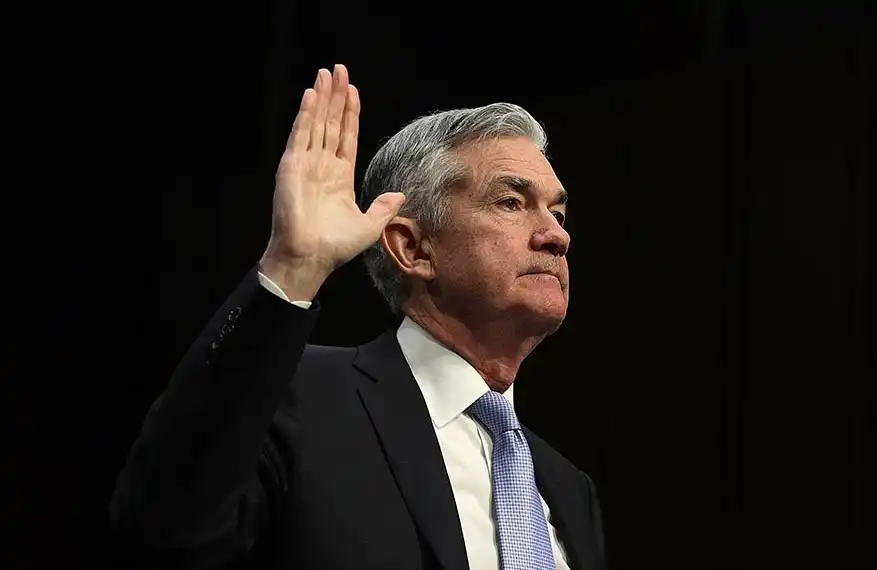
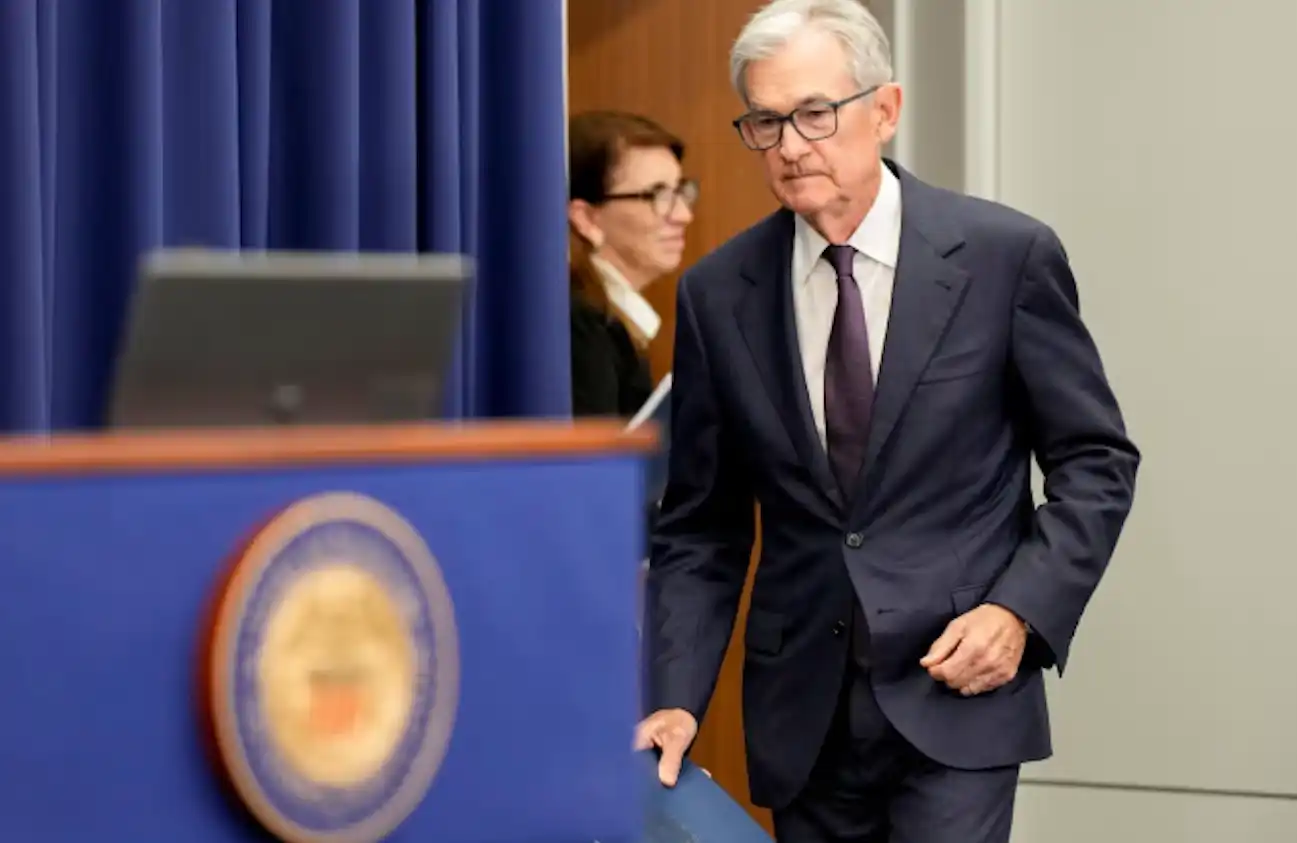
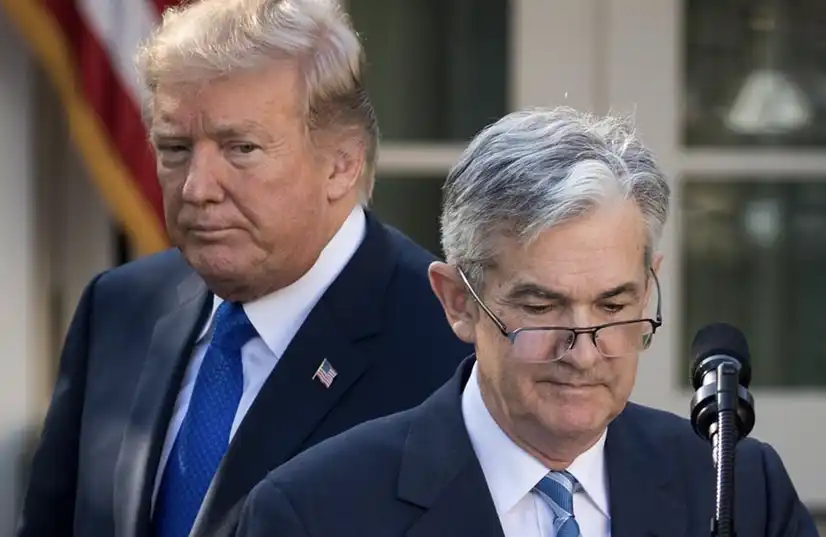
“Thank you all very much, I won't see you next time.” This was the last sentence Chair Powell said to everyone at this morning's FOMC press conference.
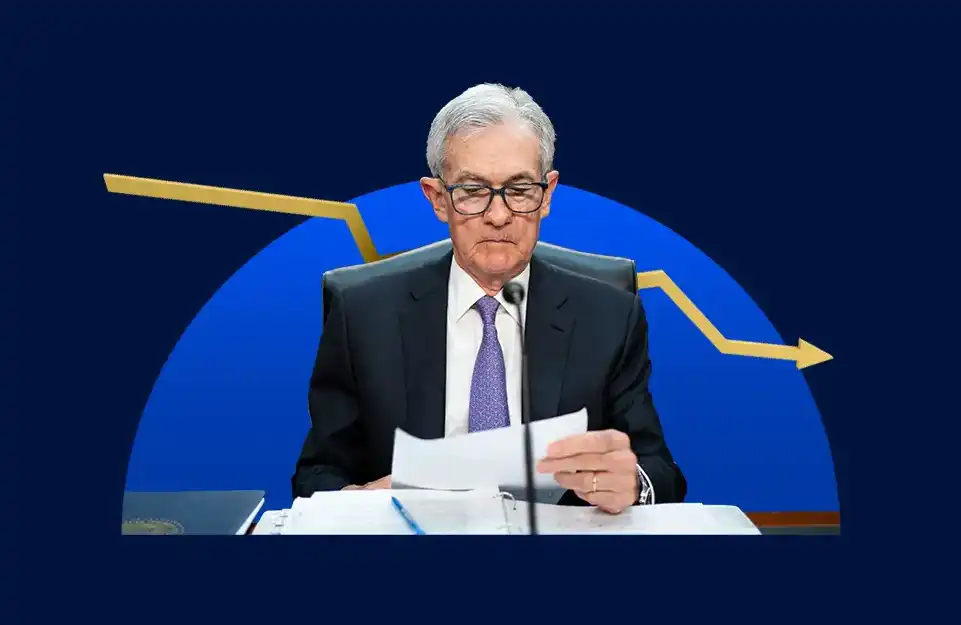
It was supposed to be a smooth farewell. Rates held steady at 3.5% to 3.75%, no dot plot, no updated forecasts, Chair stepping down, congratulations to Wash. The market had priced these two hours as a mere formality.
But Chair Powell's last appearance on stage still held a few surprises for people.
He's Not Leaving
The first thing was the final paragraph of his opening statement. After going through the usual content on inflation, employment, and rates, Powell announced that after stepping down as Chair on May 15, he would continue serving as a Governor. The term is “indefinite.”
His reason was not personal but institutional. “My real concern is a series of legal attacks on the Fed that threaten our ability to conduct monetary policy without regard to political considerations,” Powell said. “The legal actions taken by this administration are unprecedented in our 113-year history.”
He drew a clear line. He will not leave the Board of Governors until the Justice Department's investigation into the Fed is “thorough, transparent, and conclusively resolved.” Even though the case was dropped by the Justice Department last Friday, Powell pointed out that the dismissal statement contained a line saying, “If necessary, she will not hesitate to reopen the investigation.” Powell deliberately brought up this line.
At the same time, he also made it clear that he would not become a “shadow chair.” He will return in the capacity of a Governor, respect the role of the Chair, and “support the Chair as much as I can when I can and where I can't, I can't.”
He didn't say he would oppose Wash, but he also didn't commit not to. He chose to stay and linked the statement “the Fed's independence is at risk” to his own presence. It's a continued presence. As long as he is sitting at that table, that statement remains valid.
Powell's term as Chair ends on May 15. But his term as Governor extends to 2028.
The Most Divided FOMC Since 1992
This FOMC meeting ended with 4 dissents. This is the first time since October 1992 that the Fed has seen such internal division at a single meeting.
Powell himself explained this as: “This in part is a natural outgrowth of how we've dealt with enormously severe supply-side shocks over the last five to six years.”
In a dissent of 4 votes, 3 of which pointed to the same issue, the FOMC statement retained the phrase "accommodative stance." Three members believed that in the current inflation environment, this stance should no longer be maintained and should be changed to neutral, implying an equal possibility of rate hikes and cuts.
Why? Because inflation is moving in the wrong direction. Powell himself, in his description, used a less common word to characterize inflation, "misbehaving."
Supporting this assessment are the facts presented by Powell himself. March headline PCE rose 3.5% year-on-year, driven by the surge in global oil prices due to the Middle East conflict. Core PCE rose 3.2% year-on-year, which he believes largely reflects the impact of tariffs on prices in the goods sector. Oil prices have not peaked yet. A reporter mentioned on-site that Brent crude oil is approaching $120 per barrel, significantly exceeding Bank of America's previous baseline forecast of $100 per barrel. However, Powell himself still opposes an immediate change in guidance, sticking to the statement, "The path ahead is highly uncertain, we have much to learn, and there is no need to rush into decisions now."
He also added a historical reason. The U.S. economy has actually experienced four supply shocks: the pandemic, the Russia-Ukraine conflict, tariffs, and the current Iran crisis and surge in oil prices. Each supply shock has the ability to drive up inflation and unemployment, making it difficult for the central bank to know what to do. The challenge is how the committee will interpret the current situation after the four shocks have piled up. Some think inflation is stubborn and needs to be tighter; some think it is a transmission lag of cumulative shocks and needs to wait; and some think the current interest rate level is already tight enough. Powell said, "If everyone's views were completely aligned, that would be surprising."
But the level of disagreement is the most severe since 1992, which in itself is a signal. He knows the committee is moving closer to a neutral position. However, he chooses to leave the decision of whether to make a change to the next meeting. The next meeting is on June 16-17, but he will no longer be the chair.
What Powell handed over to Powell isn't a united FOMC. This machinery had already begun to split internally on the eve of the handover, with no consensus on the current situation and policy path, not even on whether the "forward guidance" should continue; the committee is close to overturning.
The Two Gifts He Left for Powell
The third thing was not in the opening statement but scattered in his answers to several different questions. In two hours, Powell did two things in opposite directions, preparing an endorsement for Powell while drawing a red line.
The endorsement points to the communication framework.
Regarding the dot plot, Powell said, "I am not the biggest fan of the dot plot." He acknowledged that during last year's review of communication, the committee had considered modifying the Summary of Economic Projections (SEP) but "could not get broad agreement within the committee," so he himself had to give up. Regarding the possibility of Chair Powell adjusting the communication approach, he commented that every new chair will examine the communication approach, which is a very healthy thing, and clearly stated that if such a situation were to occur, it would be "entirely appropriate."
Putting these sentences together, the meaning is very clear: he wanted to make a change himself but couldn't, it would be reasonable for Chair Powell to want to make a change, and if Chair Powell were to abandon the dot plot at the June meeting, it would also be entirely appropriate.
The red line points in another direction.
In a recent speech, Governor Waller opposed the government's dismissal of a regional Federal Reserve Bank president based on differences in monetary policy views. The Reserve Bank president is not a Federal Reserve Board governor but a president of one of the 12 regional Federal Reserve Banks, appointed by the regional board of directors, independent of government personnel.
When asked about his opinion on the Waller incident, Powell voluntarily emphasized, "If every administration could intervene and do this, that would be the beginning of the end of the Federal Reserve's independence to set monetary policy, and at that point, you would just be another cabinet agency."
The weight of this statement lies in its placement. From a slightly operational issue, Powell took the opportunity to state the most critical red line of the entire press conference, akin to issuing a memorandum in person. Chair Powell can change the communication framework, can abandon forward guidance, can rebuild the inflation framework, but a Reserve Bank president cannot be fired for having a differing opinion, and the Federal Reserve cannot become another cabinet agency.
He laid out these two boundaries in the final press conference.
The last sentence of the press conference, "I won't see you next time," was directed at the journalists, not at the Federal Reserve. Powell will step down as chair on May 15, but will not be leaving the building.
Welcome to join the official BlockBeats community:
Telegram Subscription Group: https://t.me/theblockbeats
Telegram Discussion Group: https://t.me/BlockBeats_App
Official Twitter Account: https://twitter.com/BlockBeatsAsia
 Related Articles